~1 min
Average Reply Time
~1 hour
To Be Matched With A Tutor
1 Trial
75% Find Their Tutor On The 1st Trial
$1
Your First 30 Minutes
Hire The Best PyTorch Tutor
Top Tutors, Top Grades. Without The Stress!





Related Subjects
Your PyTorch model runs without errors but produces garbage outputs — and you have no idea why. That’s where most students get stuck, and where a live tutor makes all the difference.
PyTorch Tutor Online
PyTorch is an open-source deep learning framework developed by Meta AI, used to build and train neural networks in Python. It equips practitioners to implement models for computer vision, NLP, and research experimentation using dynamic computation graphs.
If you’re searching for a PyTorch tutor near me, MEB connects you with verified specialists in software engineering and machine learning who work 1:1 with you on your exact project, course, or research goal. Sessions run over Google Meet with a digital pen-pad — live, interactive, and built around your current sticking point. No fixed curriculum. No generic walkthroughs.
- 1:1 online sessions tailored to your course, project, or research requirement
- Expert-verified tutors with hands-on PyTorch and deep learning experience
- Flexible time zones — US, UK, Canada, Australia, Gulf
- Structured learning plan built after a diagnostic session
- Guided project support — we explain the logic, you write and submit the code
52,000+ students across the US, UK, Canada, Australia, and the Gulf have used MEB since 2008 — including students working on software engineering subjects like PyTorch, Keras tutoring, and scikit-learn help.
Source: My Engineering Buddy, 2008–2025.
How Much Does a PyTorch Tutor Cost?
Most PyTorch tutoring sessions run between $20 and $40 per hour. Graduate-level deep learning or custom research model work can run up to $100/hr depending on complexity. Not sure if it’s worth it? Start with the $1 trial — 30 minutes live, no registration required.
| Level / Need | Typical Rate | What’s Included |
|---|---|---|
| Undergraduate / Coursework | $20–$35/hr | 1:1 sessions, project guidance, concept walkthroughs |
| Graduate / Research / Specialist | $40–$100/hr | Custom model architecture, research-level depth |
| $1 Trial | $1 flat | 30 min live session or one project problem explained in full |
Tutor availability tightens around semester end-dates and project submission deadlines. Book early if your deadline is within two weeks.
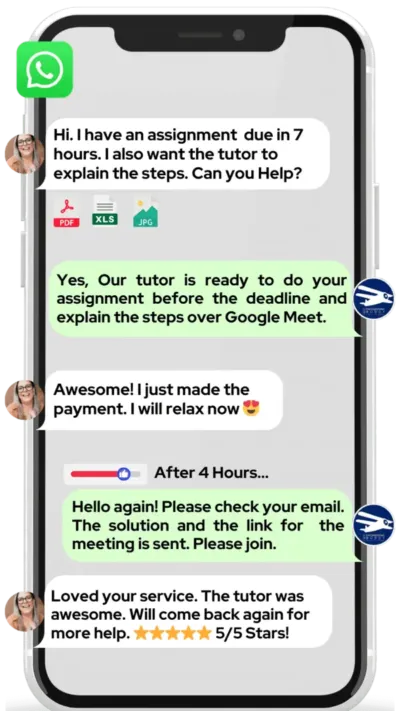
WhatsApp MEB for a quick quote — average response time under 1 minute.
Who This PyTorch Tutoring Is For
PyTorch sits at the intersection of mathematics, software engineering, and applied machine learning. It’s not hard to start — but it is hard to debug, optimise, and deploy without structured guidance.
- Undergraduate CS or data science students building their first neural network for a course project
- Graduate and PhD students implementing custom architectures for dissertation or lab work
- Students whose model training is diverging and can’t figure out why
- Students who have already failed a project submission and need to resubmit correctly
- Working developers transitioning into ML engineering and learning PyTorch on the job
- Students at MIT, Stanford, Carnegie Mellon, ETH Zurich, Imperial College London, University of Toronto, or EPFL where deep learning coursework uses PyTorch directly
If your deadline is four weeks out and your loss curve still isn’t dropping, the $1 trial is the fastest way to diagnose what’s wrong.
At MEB, we’ve found that most PyTorch confusion comes down to three things: tensor shape mismatches, incorrect loss function choice, and forgetting to zero gradients. These aren’t conceptual failures — they’re pattern-recognition problems that a tutor spots in minutes and a student can stare at for hours.
1:1 Tutoring vs Self-Study vs AI vs YouTube vs Online Courses
Self-study works if you’re disciplined and your errors are surface-level. AI tools like ChatGPT explain concepts quickly but can’t watch you debug a training loop live and catch the exact line where your gradient flow breaks. YouTube is useful for architecture overviews and stops being useful the moment your specific dataset causes unexpected behaviour. Online courses — fast.ai, Coursera, Udemy — give structure but move at a fixed pace that ignores your actual gaps. 1:1 PyTorch tutoring with MEB is live, calibrated to your exact course or project, and corrects errors in the moment — including the silent ones that only show up at inference time.
Outcomes: What You’ll Be Able To Do in PyTorch
After working with an online PyTorch tutor through MEB, you’ll be able to build and train feedforward and convolutional networks from scratch, debug gradient flow issues using torch.autograd, implement custom loss functions for domain-specific tasks, apply transfer learning with pretrained models from torchvision or HuggingFace, and explain your model’s architecture and training decisions clearly in a viva or technical interview. These aren’t abstract outcomes — each one maps to a real deliverable in coursework or research.
Based on feedback from 40,000+ sessions collected by MEB from 2022 to 2025, students working 1:1 on PyTorch consistently report faster debugging cycles, clearer understanding of backpropagation mechanics, and greater confidence presenting model decisions — progress that self-directed practice alone rarely produces at the same pace.
Source: MEB session feedback data, 2022–2025.
Try your first session for $1 — 30 minutes of live 1:1 tutoring or one project problem explained in full. No registration. No commitment. WhatsApp MEB now and get matched within the hour.
What We Cover in PyTorch (Syllabus / Topics)

Track 1: Core PyTorch Fundamentals
- Tensors — creation, indexing, broadcasting, and device management (CPU/GPU)
- Autograd and dynamic computation graphs
- Building models with
nn.Module— layers, forward pass, parameter management - Loss functions — CrossEntropyLoss, MSELoss, BCELoss — and when to use each
- Optimisers — SGD, Adam, AdamW — learning rate scheduling
- Training loops — zero_grad, forward, loss.backward, optimizer.step
- Saving and loading models with
torch.saveandstate_dict
Core references: Deep Learning with PyTorch by Eli Stevens et al. (Manning), Programming PyTorch for Deep Learning by Ian Pointer (O’Reilly).
Track 2: Computer Vision and CNNs
- Convolutional layers, pooling, padding — spatial dimension arithmetic
- Building and training CNNs on CIFAR-10, MNIST, custom datasets
- Transfer learning with ResNet, VGG, EfficientNet via
torchvision.models - Data loading pipelines —
Dataset,DataLoader, custom transforms - Debugging common CV failures — overfitting, class imbalance, data leakage
- Visualising filters, feature maps, and Grad-CAM outputs
Core references: Deep Learning with PyTorch (Stevens et al.), PyTorch official documentation and IEEE Computer Society publications on vision benchmarks.
Track 3: NLP, Transformers, and Research-Level Work
- Text preprocessing — tokenisation, embeddings, padding, batching
- RNNs, LSTMs, and GRUs — sequence modelling fundamentals
- Attention mechanisms and the Transformer architecture from scratch
- Fine-tuning HuggingFace models (BERT, GPT-2) using PyTorch
- Custom training loops for research — gradient clipping, mixed precision
- Distributed training basics —
torch.distributedand DataParallel - Debugging research code — reproducibility, seed setting, experiment tracking with Weights & Biases
Core references: Natural Language Processing with Transformers by Lewis Tunstall et al. (O’Reilly), HuggingFace documentation, original Attention Is All You Need paper.
Platforms, Tools & Textbooks We Support
PyTorch projects run across multiple environments and MEB tutors are fluent in all of them. Whether your coursework runs locally or in the cloud, your tutor meets you where your code lives.
- Google Colab — GPU-backed notebook environment used in most university courses
- Jupyter Notebook — local and server-based development
- PyCharm — full IDE for larger PyTorch projects
- Anaconda — environment management for PyTorch dependencies
- Weights & Biases, MLflow — experiment tracking and hyperparameter logging
- AWS and Google Cloud Platform — cloud GPU training environments
- HuggingFace Hub — pretrained model access for NLP and vision tasks
What a Typical PyTorch Session Looks Like
The tutor opens by checking the previous session’s task — say, implementing a custom Dataset class — and the student shares their screen. From there, the session works through the live problem: maybe your DataLoader is returning batches with the wrong shape, or your validation loss is plateauing three epochs in. The tutor uses a digital pen-pad to annotate the computation graph directly on screen, showing exactly where dimensions collapse or where gradient flow stops. You replicate the fix, then explain it back. The session ends with a concrete task — retrain with a corrected architecture and log the loss curves — and the next topic noted: regularisation with dropout and weight decay.
How MEB Tutors Help You with PyTorch (The Learning Loop)
Diagnose: In the first session, the tutor reviews your existing code or asks you to implement a small model from scratch. They identify whether the gap is conceptual (backpropagation mechanics) or procedural (incorrect API usage) — because the fix is different in each case.
Explain: The tutor works through the problem on screen using a digital pen-pad or iPad with Apple Pencil — drawing computation graphs, annotating forward passes, and showing why a particular tensor reshape breaks the gradient chain.
Practice: You write the corrected code with the tutor watching. Not copy-paste. You type it, narrate what each line does, and catch your own errors before they compile.
Feedback: The tutor reviews what you wrote and explains precisely where marks or points would have been lost in an assessment — whether it’s wrong dimensionality, a missing .detach(), or a training loop that never validates.
Plan: Each session ends with a specific next topic — not vague “keep practising.” The tutor builds the sequence: fundamentals → CNNs → transfer learning → custom architectures → deployment — and adjusts based on your project deadline.
Sessions run over Google Meet. The tutor uses a digital pen-pad or iPad and Apple Pencil for live annotation. Before your first session, share your course outline or project brief and any code you’ve already written. The first session acts as a diagnostic — expect to spend 15–20 minutes identifying the actual gap before any new content is introduced. Start with the $1 trial — 30 minutes of live tutoring that also serves as your first diagnostic.
Students consistently tell us that the biggest unlock in PyTorch isn’t learning a new concept — it’s having someone watch them code live and say “there — that’s where your tensor loses its batch dimension.” That kind of real-time error correction doesn’t happen in a video course or a forum thread.
Tutor Match Criteria (How We Pick Your Tutor)
Not every ML engineer can teach PyTorch effectively. MEB matches on four criteria.
Subject depth: Tutors hold postgraduate degrees or have direct industry experience in deep learning, computer vision, or NLP — not just general Python knowledge. They’ve built real models in PyTorch, not just followed tutorials.
Tools: Every tutor uses Google Meet plus a digital pen-pad or iPad with Apple Pencil for live annotation. No static slides, no passive screensharing.
Time zone: Matched to your region — US, UK, Gulf, Canada, or Australia — so scheduling works around your course calendar, not ours.
Goals: Whether you need help with a single debugging session, a full project build, conceptual depth for a viva, or ongoing weekly support through a semester, the tutor is matched to that specific scope.
Unlike platforms where you fill out a form and wait, MEB responds in under a minute, 24/7. Tutor match takes under an hour. The $1 trial means you test before you commit. Everything runs over WhatsApp — no logins, no intake forms.
Pricing Guide
PyTorch tutoring starts at $20/hr for undergraduate coursework. Graduate-level model architecture, research code review, or dissertation support runs $40–$100/hr depending on the tutor’s background and your timeline.
Rate factors: project complexity, level of PyTorch expertise required, tutor availability, and how close you are to a submission deadline. Sessions booked within 48 hours of a hard deadline carry a premium during peak periods.
For students targeting roles at top ML research labs, FAANG engineering teams, or PhD programmes with deep learning requirements, tutors with direct research or industry backgrounds are available at higher rates — share your specific goal and MEB will match the tier to your ambition.
Start with the $1 trial — 30 minutes, no registration, no commitment. WhatsApp MEB for a quick quote.
MEB has operated since 2008 and covers 2,800+ advanced subjects — from TensorFlow project help and Apache Spark tutoring to niche research tools. Verified tutors. Real subject depth. No generalists.
Source: My Engineering Buddy, 2008–2025.
FAQ
Is PyTorch hard to learn?
The basics — tensors, a simple feedforward network, a training loop — are accessible within a week. The hard part is debugging: shape mismatches, vanishing gradients, and overfitting are non-obvious and require pattern recognition that builds through practice with feedback.
How many sessions will I need?
For a specific project or debugging task, two to four sessions often resolves the issue. For a full course covering CNNs, NLP, and transfer learning, eight to twelve sessions over a semester gives you consistent progress with structured review between submissions.
Can you help with projects and portfolio work?
MEB provides guided project support — the tutor explains concepts, reviews your approach, and helps you understand why your implementation works or doesn’t. All code is written and submitted by you. See our Policies page and Why MEB page for full details on what we help with and what we don’t.
Will the tutor match my exact syllabus or exam board?
Yes. Share your course outline, university, and any existing project brief before the first session. MEB matches tutors who know the specific framework and depth your course requires — not a generic ML tutor who will walk you through a beginner tutorial.
What happens in the first session?
The first session is a diagnostic. The tutor reviews what you’ve already built or asks you to implement something small from scratch. From that, they identify exactly where the gap is and build a session plan — so no time is wasted on topics you already understand.
Are online PyTorch lessons as effective as in-person?
For a code-based subject like PyTorch, online is often better. Screen sharing, live annotation on a pen-pad, and real-time code review in a shared environment covers everything in-person would — without the logistics of finding someone local who has the right depth.
PyTorch vs TensorFlow — can MEB help me understand the difference before I commit to one?
Yes. Many students spend their first session on exactly this question. The tutor walks through the practical differences — dynamic vs static graphs, research vs production deployment, ecosystem support — so you start the right framework for your course or project goal.
My model trains fine but performs badly on the test set. Can a tutor help?
This is one of the most common PyTorch requests MEB handles. Overfitting, data leakage, incorrect train/test splits, and distribution shift all produce this pattern. A tutor reviews your pipeline and identifies the exact cause — usually within the first 30 minutes.
Can I get PyTorch help at midnight or on weekends?
Yes. MEB operates 24/7 across time zones. WhatsApp MEB at any hour and a tutor match typically happens within 60 minutes. Students in the US, Gulf, and Australia regularly book late-night sessions around their submission deadlines.
Do you support PyTorch Lightning and other PyTorch-based frameworks?
Yes. MEB tutors cover PyTorch Lightning, HuggingFace Transformers, torchvision, torchaudio, and other libraries built on top of the core PyTorch framework. Share the specific library your course or project uses when you book.
How do I get started?
WhatsApp MEB — share your course level, the problem you’re stuck on, and your deadline. You’ll be matched with a verified tutor, usually within an hour. The first session is the $1 trial: 30 minutes live or one project problem explained in full. Three steps: WhatsApp → matched → start trial.
Trust & Quality at My Engineering Buddy
Every MEB tutor goes through subject-specific vetting: a live demo session, review of their academic or professional background, and ongoing feedback monitoring after each student session. Tutors covering PyTorch hold postgraduate degrees in machine learning, computer vision, or a closely related field, or have direct industry experience building production-grade models. Rated 4.8/5 across 40,000+ verified reviews on Google.
MEB tutoring is guided learning — you understand the work, then submit it yourself. For full details on what we help with and what we don’t, read our Academic Integrity policy and Why MEB.
MEB has served 52,000+ students across the US, UK, Canada, Australia, the Gulf, and Europe in 2,800+ subjects since 2008. Within software engineering, that includes subjects like Docker tutoring, Kubernetes help, and machine learning tutoring — subjects that often run alongside PyTorch in the same degree programme. Learn more about our approach at MEB’s tutoring methodology.
MEB tutors are matched by subject depth, not availability. For PyTorch, that means someone who has debugged a real training loop — not someone who passed an online ML course last month.
Source: My Engineering Buddy internal tutor vetting process, 2008–2025.
A common pattern our tutors observe is that students who struggle with PyTorch have solid Python skills but haven’t yet built a mental model of how data flows through a network at the tensor level. Once that model clicks — usually within two sessions — everything else accelerates.
Explore Related Subjects
Students studying PyTorch often also need support in:
Next Steps
Getting started takes under five minutes.
- Share your course level, project brief or syllabus, and your submission or exam deadline
- Share your availability and time zone — sessions are matched to your schedule
- MEB matches you with a verified PyTorch tutor, usually within 24 hours
- First session starts with a diagnostic so every minute is used on your actual gap
Before your first session, have ready: your course outline or project brief, any code you’ve already written (working or broken), and your submission or exam date. The tutor handles the rest.
Visit www.myengineeringbuddy.com for more on how MEB works.
WhatsApp to get started or email [email protected].
52,000+ Happy Students From Various Universities






Reviewed by Subject Expert
This page has been carefully reviewed and validated by our subject expert to ensure accuracy and relevance.