Mastering the GMAT: A Blueprint for Business School Success

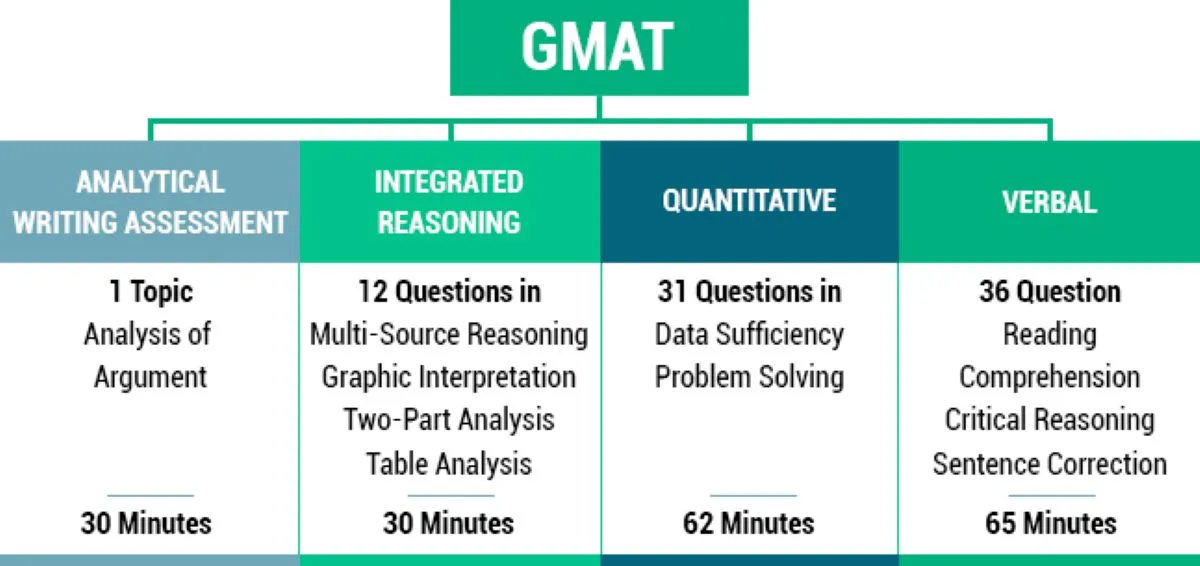
- The GMAT tests four reasoning skills: analytical writing, integrated reasoning, quantitative, and verbal.
- Top 50 U.S. MBA programs consistently average above 700 on the GMAT.
- Score plateaus often signal a need for diagnostic-led, targeted study strategies.
- Personalized tutoring outperforms generic self-study through customized feedback and strategy.
- Online GMAT tutoring offers flexibility and access to a wider pool of expert tutors.
 Meet Sarah. A brilliant marketing manager with her sights set on a top-tier MBA program. She had the ambition, the work experience, and the glowing recommendations. The only thing standing in her way was a 3-hour and 7-minute standardized test: the GMAT.Like many aspiring business leaders, Sarah initially thought she could tackle it alone. She bought the official guides, downloaded apps, and dedicated her weekends to studying.A few weeks in, however, the confidence began to wane. The Data Insights section felt like a cryptic puzzle, and the Quantitative Reasoning questions were trickier than she remembered from her college days. Her practice scores plateaued, and frustration started to build. Sarah’s story is a common one, a familiar hurdle on the path to an MBA. The GMAT is more than just a test; it’s a gatekeeper to the world’s best business schools, and preparing for it requires a unique strategy.
Why the GMAT Still Reigns Supreme
In an ever-evolving admissions landscape, the Graduate Management Admission Test (GMAT) remains a critical component of the MBA application. Why? Because it provides business schools with a standardized measure of skills essential for success in their rigorous programs. According to the Graduate Management Admission Council (GMAC), the creators of the exam, the GMAT assesses higher-order reasoning skills like analytical writing, integrated reasoning, quantitative reasoning, and verbal reasoning.To truly master the exam, you must first understand its architecture. The GMAT is built on four distinct pillars of reasoning: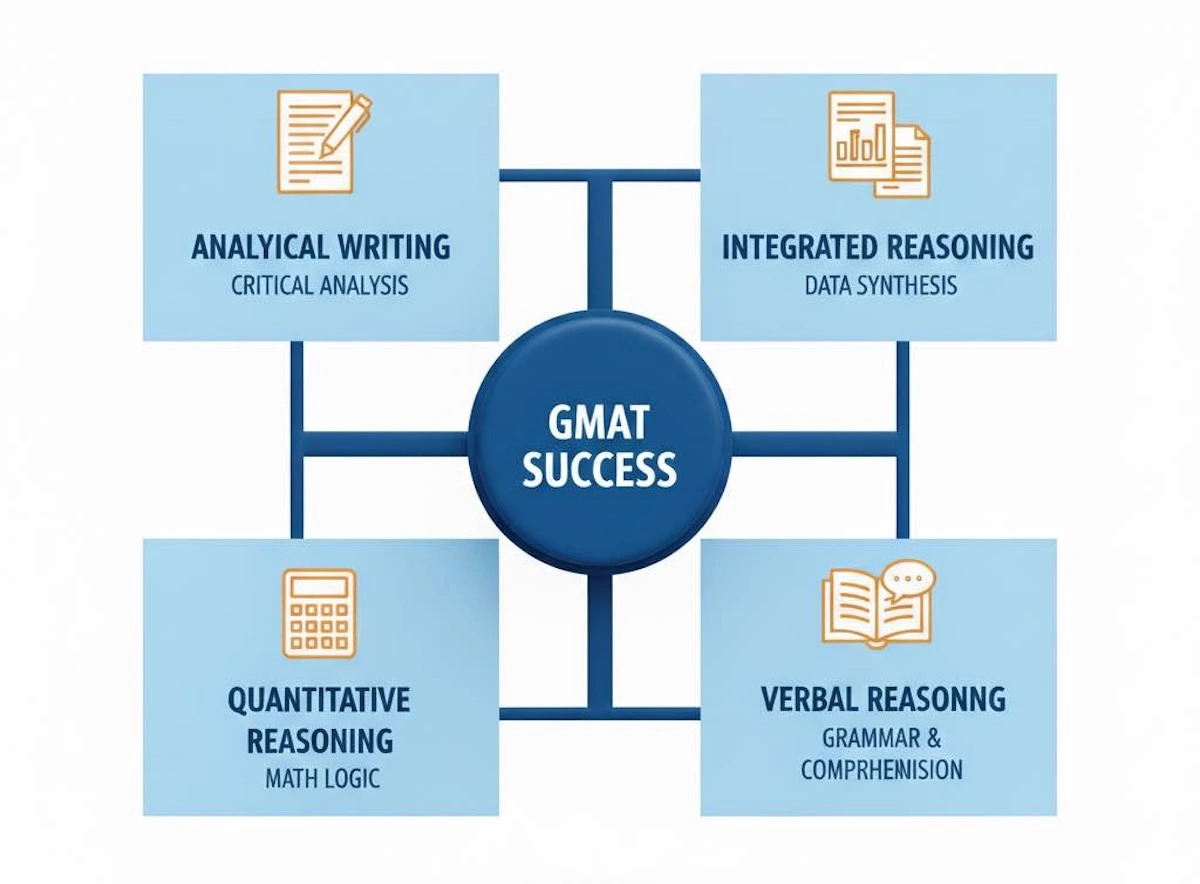
Mastering these four pillars is essential for speaking the unique “language” of the GMAT exam.
The Common Roadblocks in GMAT Preparation
Many students, like Sarah, encounter similar challenges on their GMAT journey. Recognizing these hurdles is the first step toward overcoming them.Challenge 1: The Plateau Effect
You study for weeks, your scores go up, and then suddenly, they stop improving. This is the dreaded plateau. It often happens when you’ve mastered the basic concepts but struggle with the test’s more nuanced and complex questions.You might be making the same type of logical errors repeatedly without even realizing it. This is a sign that your current study method isn’t addressing the root of your weaknesses.Breaking this cycle requires a shift from passive study to active diagnosis. Here is the workflow for turning a plateau into a breakthrough: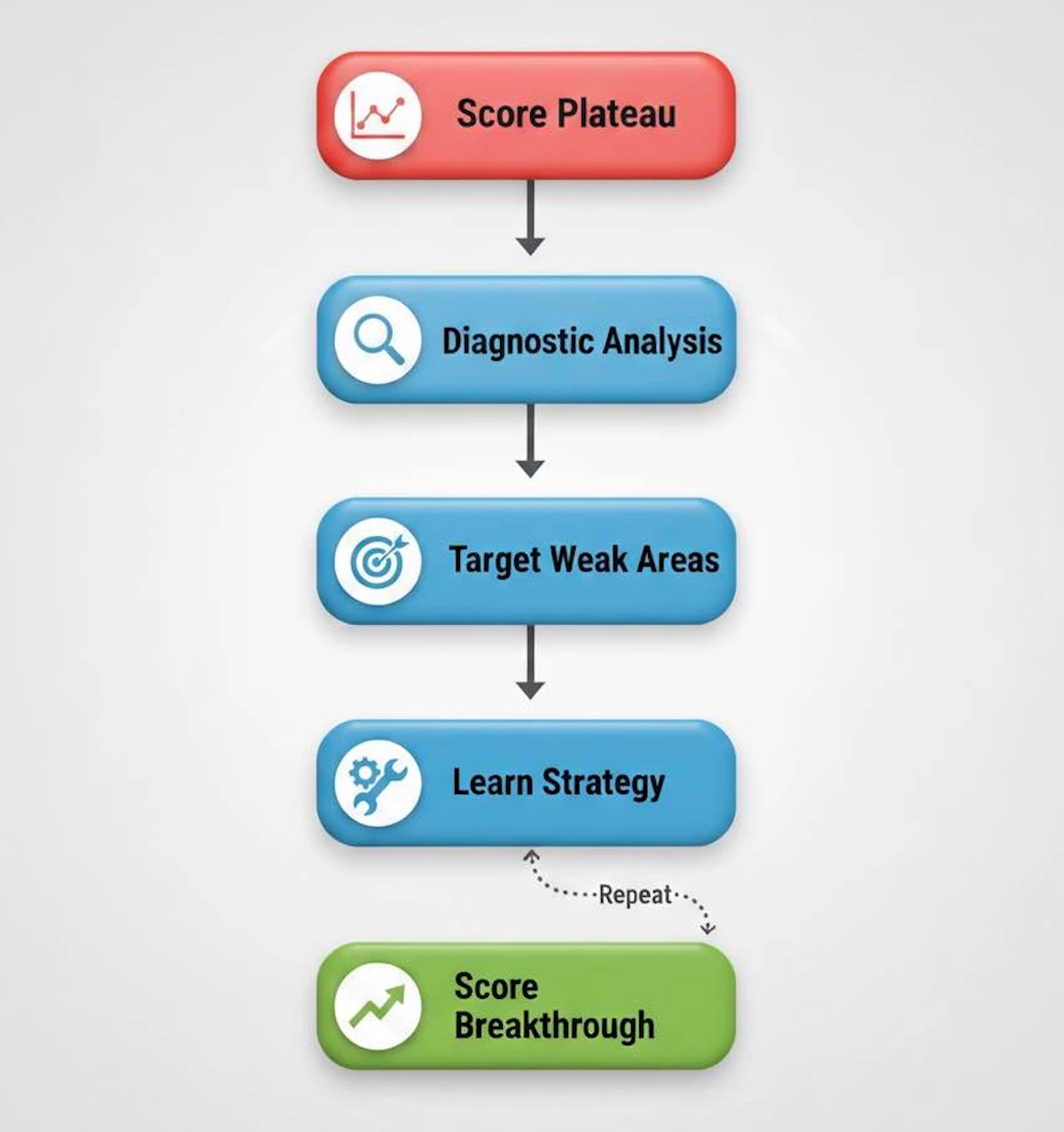
Break the cycle of stagnation by moving from repetitive study to a strategic diagnostic loop.
Challenge 2: Time Management Under Pressure
The GMAT is a race against the clock. You have just over 90 seconds per question in the Quantitative section. Many test-takers know how to solve the problems but can’t do it fast enough. Effective GMAT teaching focuses not just on accuracy, but also on speed and efficiency, helping you identify shortcuts and recognize question patterns instantly.Understanding how test-design logic works across standardized exams can sharpen your instincts; students who have also studied for the MCAT often note that timed-reasoning discipline transfers across high-stakes tests.Challenge 3: Tackling Weak Areas
Everyone has a GMAT Achilles’ heel. For some, it’s the complex sentence corrections in the Verbal section; for others, it’s the data sufficiency problems in Quant. Using a one-size-fits-all study guide can mean you spend too much time on your strengths and not enough on the areas that are actually pulling your score down. A more focused approach targeting specific weak areas is essential for breaking through.Analytical reasoning under pressure is a skill that also appears in language-based admissions tests; candidates preparing for the MLAT face a similar challenge of diagnosing and addressing precise conceptual gaps. Likewise, test-takers who have worked through high-volume question banks for the NCLEX-RN understand how targeted practice by question type accelerates score gains.The Power of a Personalized Approach: The Role of a Tutor
After hitting a wall, Sarah realized her self-study plan wasn’t working. She needed someone who could diagnose her specific issues and provide a tailored strategy. This is when she decided to look for a GMAT tutor online. The experience transformed her preparation.A great GMAT tutor does more than just explain concepts. They act as a coach, a strategist, and a mentor. Here’s how personalized GMAT tutoring can make a difference:- Diagnostic Precision: An experienced GMAT teacher can quickly identify why you are getting questions wrong. Are you misinterpreting the question? Is there a gap in your conceptual knowledge? Are you falling for common traps? This diagnosis is crucial for breaking through a plateau.
- Customized Study Plan: Forget generic study schedules. A tutor will build a plan around your unique strengths, weaknesses, and scoring goals. This means you focus your precious study time where it will have the most impact. This level of personalization is something that books and apps simply can’t offer.
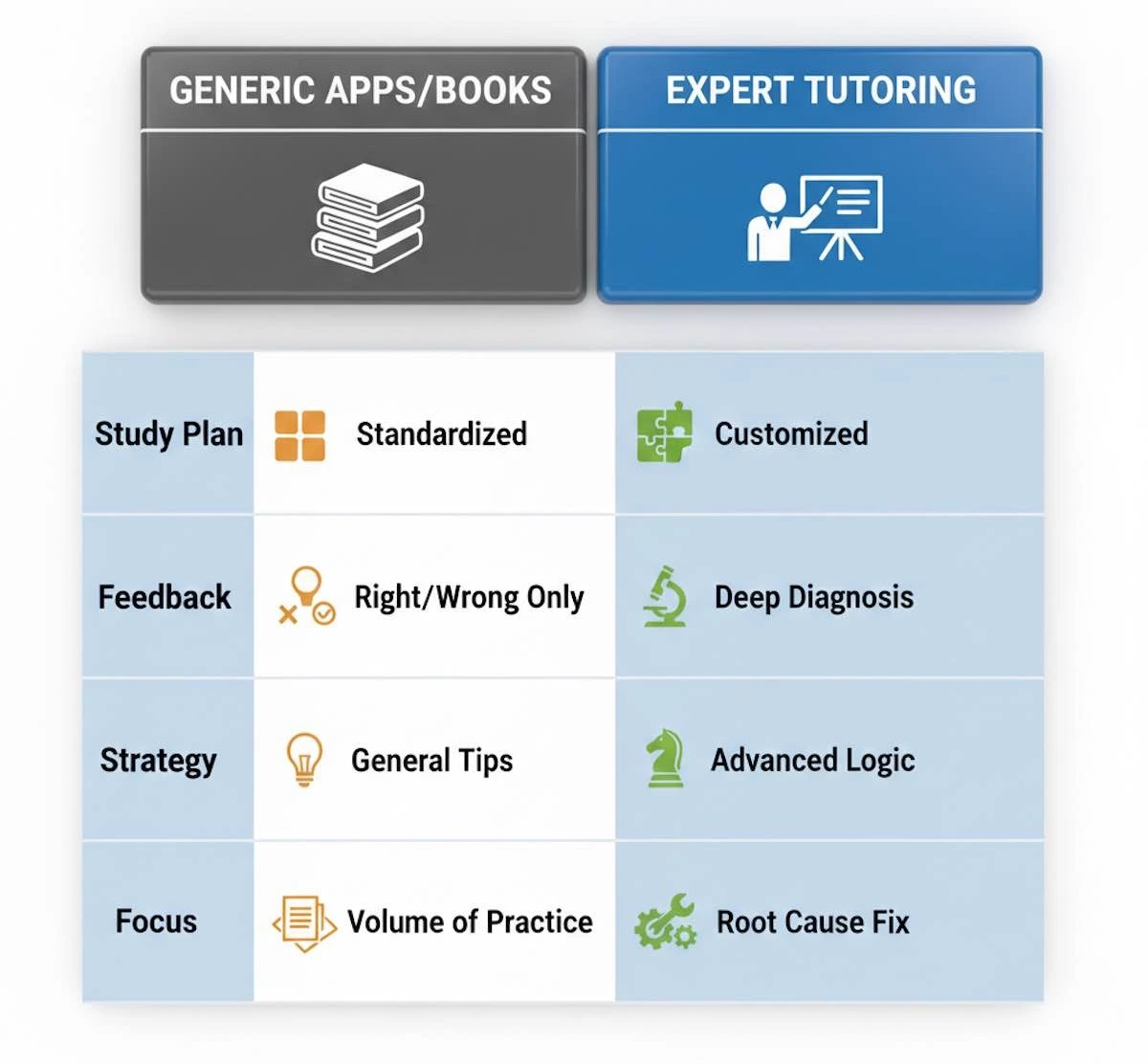
While apps provide volume, personalized tutoring offers the customized strategy needed for top-tier scores.
- Advanced Strategies: Top-scoring students don’t just solve problems; they out-think the test. A tutor can teach you advanced strategies for everything from number properties to critical reasoning, helping you solve questions faster and more accurately. They provide the kind of insights that come from years of analyzing the exam.
- Accountability and Motivation: It’s easy to lose momentum when studying alone. Regular sessions with a tutor keep you accountable and motivated. Having a dedicated expert in your corner can be a powerful psychological boost, especially when you feel overwhelmed.
Finding the Right Support: What to Look for in GMAT Help
The decision to seek a GMAT tutor is a significant one, and finding the right fit is crucial. The boom in online education means you have more options than ever before, making GMAT tutoring online an accessible and effective choice for students worldwide, from the USA and UK to the Gulf countries.Qualities of an Excellent GMAT Mentor
When searching for help, whether it’s for comprehensive prep or targeted section work, consider the following:- Expertise and Experience: Look for a tutor with a proven track record of success. They should not only have a high GMAT score themselves but also have extensive experience in teaching the exam. A great test-taker isn’t always a great teacher.
- Teaching Philosophy: Do they rely on rote memorization or do they teach you the underlying logic of the questions? The best tutors empower you to think critically, a skill that is valuable not just for the GMAT, but for business school and beyond.
- Adaptability: Your needs will change as you progress. A good tutor will adapt their teaching style and focus as you move from building foundational knowledge to fine-tuning your test-day strategy.
- Resourcefulness: An effective tutor provides more than just lessons. They should offer practice questions, performance analytics, and strategic homework that reinforces what you’ve learned.

Ensure your GMAT mentor possesses these four non-negotiable traits for maximum preparation efficiency.
Your GMAT Score is a Launchpad, Not a Label
It’s important to remember that the GMAT is a beatable test. It is not an IQ test or a measure of your worth. It is a test of how well you can prepare for a specific set of challenges under timed conditions. Your score is a key that can unlock doors to incredible opportunities, and investing in the right preparation is investing in your future.Sarah eventually walked into the test center feeling prepared and confident. She wasn’t just hoping for the best; she was equipped with a strategy. Her final score was 40 points higher than her initial goal, opening the door to the business school of her dreams. Her journey shows that with the right approach and expert guidance, achieving an elite GMAT score is within reach.Whether you’re just starting your preparation or you’ve hit a frustrating plateau, don’t be afraid to seek help. The right guidance can demystify the exam, turning a daunting challenge into a manageable and conquerable goal.Exam strategy skills also transfer to other high-pressure assessments. Students who have studied A-Level Mechanics exam traps that cost students marks or reviewed Mechanics past paper techniques for A-Level grades will recognize the same pattern: knowing the traps is as important as knowing the content.Frequently Asked Questions About the GMAT
Is hiring a GMAT tutor really worth the investment?
A great GMAT tutor can significantly raise your score by providing personalized strategies, making it a high-return investment for your career.How long does it take to prepare for the GMAT?
Most GMAT candidates study for 100-120 hours, but this varies based on your starting point and score goal.Can I get help for just one section of the GMAT?
Yes, many online tutoring services offer targeted help for specific GMAT sections like Quant, Verbal, or Data Insights.What is a good GMAT score?
A GMAT score above 650 is generally considered good, while scores above 700 are competitive for top-tier business schools.Are online GMAT tutors as effective as in-person ones?
Yes, online GMAT tutoring offers flexibility and access to a wider pool of expert tutors, making it equally or even more effective for many students.When should I consider getting additional GMAT help?
Seek help when you’re consistently stuck on certain GMAT problem types or when your practice scores are no longer improving.Related Subjects
GMAT Data Insights GMAT Quantitative (Math) GMAT Verbal ReasoningRelated Reading
******************************
This article provides general educational guidance only. It is NOT official exam policy, professional academic advice, or guaranteed results. Always verify information with your school, official exam boards (College Board, Cambridge, IB), or qualified professionals before making decisions. Read Full Policies & Disclaimer , Contact Us To Report An Error