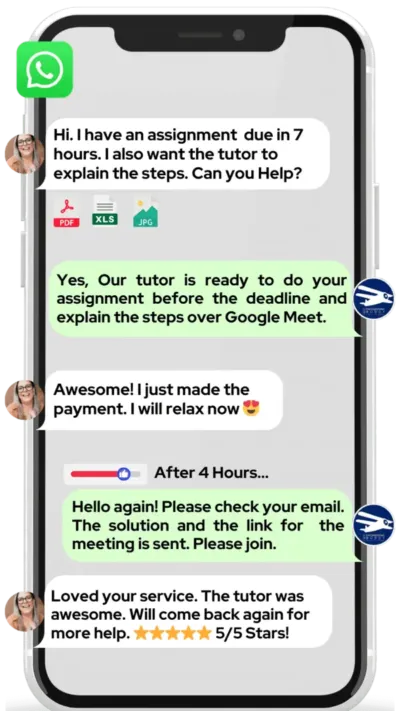
~1 min
Average Reply Time
~1 hour
To Be Matched With A Tutor
1 Trial
75% Find Their Tutor On The 1st Trial
$1
Your First 30 Minutes
Hire The Best Docker (software) Tutor
Top Tutors, Top Grades. Without The Stress!




Related Subjects
Your containers keep crashing and your Kubernetes pods won’t start — a Docker tutor fixes that in one session.
Docker (software) Tutor Online
Docker is an open-source containerisation platform that packages applications and their dependencies into portable containers, enabling consistent deployment across development, testing, and production environments. A Docker tutor online helps students and professionals master images, containers, volumes, networks, and orchestration.
MEB offers 1:1 online tutoring and project help in Docker — part of our broader software engineering tutoring catalogue covering 2,800+ advanced subjects. Whether you’re debugging a broken Compose file at 11 pm or building a multi-container microservices stack for a university project, searching for a Docker tutor near me ends here. Tutors are matched within the hour, and the first session starts with a diagnostic so no time is wasted.
- 1:1 online sessions tailored to your course, project brief, or certification syllabus
- Expert-verified tutors with hands-on Docker and containerisation experience
- Flexible time zones — US, UK, Canada, Australia, Gulf
- Structured learning plan built after a diagnostic session
- Guided project support — we explain how it works, you build it yourself
52,000+ students across the US, UK, Canada, Australia, and the Gulf have used MEB since 2008 — across Software Engineering subjects like Docker, Kubernetes tutoring, and DevOps help.
Source: My Engineering Buddy, 2008–2025.
How Much Does a Docker (software) Tutor Cost?
Docker tutoring starts at $20–$40/hr for most undergraduate and bootcamp-level work. Advanced topics — Kubernetes orchestration, multi-cloud deployments, Docker Swarm at scale — run up to $100/hr. Before committing to a full package, you can test with the $1 trial: 30 minutes of live tutoring or one project problem explained in full.
| Level / Need | Typical Rate | What’s Included |
|---|---|---|
| Standard (bootcamp / undergrad) | $20–$40/hr | 1:1 sessions, project guidance |
| Advanced / Specialist | $40–$100/hr | Expert tutor, niche depth (Swarm, K8s, CI/CD) |
| $1 Trial | $1 flat | 30 min live session or 1 project question |
Tutor availability tightens around semester project deadlines and certification exam windows — early booking is worth it.
WhatsApp MEB for a quick quote — average response time under 1 minute.
Who This Docker (software) Tutoring Is For
Docker sits at the intersection of development, operations, and cloud infrastructure. Students arrive from very different starting points — CS undergrads hitting containerisation for the first time, DevOps bootcamp participants stuck on networking, and working engineers preparing for Docker Certified Associate or Kubernetes certification.
- Undergraduate and postgraduate CS students with a Docker module or cloud computing assignment due
- Bootcamp participants who’ve hit a wall with volumes, bind mounts, or multi-container Compose setups
- Students enrolled in DevOps or cloud architecture programmes needing hands-on container support
- Engineers preparing for the Docker Certified Associate (DCA) or Kubernetes certification exams
- Students retaking a cloud or infrastructure module after a failed first attempt — the tutor starts from where the failure happened, not from the beginning of the course
- Parents supporting a computer science student whose project grade is slipping alongside their confidence
Students studying at institutions including MIT, Georgia Tech, Carnegie Mellon, University of Toronto, University of Edinburgh, TU Delft, and KAUST regularly use MEB for applied software and infrastructure support.
At MEB, we’ve found that Docker struggles almost always come down to one of three things: misunderstood networking, incorrect volume mounts, or a broken mental model of what a container actually is versus a virtual machine. Fix the mental model first. Everything else follows.
1:1 Tutoring vs Self-Study vs AI vs YouTube vs Online Courses
Self-study: works if you read docs carefully, but there’s no one to tell you why your bridge network isn’t routing. AI tools: fast at generating Dockerfiles, poor at diagnosing why yours specifically fails in your environment. YouTube: solid for overviews of the Docker architecture, useless when you’re two hours into a broken Compose dependency chain. Online courses: give you the theory; skip the messy real-world edge cases. 1:1 tutoring with MEB: a tutor who has debugged Docker in production looks at your exact setup, your exact error, and corrects the gap — live.
Outcomes: What You’ll Be Able To Do in Docker (software)
After working with a Docker tutor online through MEB, you’ll be able to build and optimise multi-stage Dockerfiles that produce lean, secure production images. You’ll analyse container networking — bridge, host, overlay — and apply the right model to a given architecture. You’ll solve volume and bind-mount problems without guessing. You’ll write Docker Compose files that spin up multi-service stacks reliably from a single command. And you’ll explain container isolation, the role of namespaces and cgroups, and the difference between an image layer and a running container — in an exam, a viva, or a technical interview.
Based on feedback from 40,000+ sessions collected by MEB from 2022 to 2025, 58% of students improved by one full grade after approximately 20 hours of 1:1 tutoring in subjects like Docker (software). A further 23% achieved at least a half-grade improvement.
Source: MEB session feedback data, 2022–2025.
Start with the $1 trial — 30 minutes of live Docker tutoring that doubles as your first diagnostic session.
What We Cover in Docker (software) (Syllabus / Topics)

Track 1: Docker Core — Images, Containers & Storage
- Docker architecture: daemon, client, registry, and runtime
- Building images with Dockerfiles — instructions, layers, caching
- Multi-stage builds for smaller, more secure images
- Managing containers: run, stop, exec, inspect, logs
- Volumes vs bind mounts vs tmpfs — when to use each
- Docker Hub, private registries, and image tagging strategies
- Image scanning and basic security hardening
Core texts: Docker Deep Dive by Nigel Poulton; Using Docker by Adrian Mouat. Official Docker documentation at arXiv Computer Science also indexes relevant containerisation research for students working at graduate level.
Track 2: Docker Networking & Multi-Container Applications
- Container networking models: bridge, host, none, overlay, macvlan
- Docker Compose — service definitions, dependencies, environment variables
- Inter-container communication and DNS resolution
- Expose vs publish — port mapping explained clearly
- Debugging broken networks with
docker network inspect - Running databases, caches, and web servers together in Compose
- Environment-specific Compose overrides (dev vs prod)
Recommended reading: Docker in Action by Jeff Nickoloff and Stephen Kuenzli; The Docker Book by James Turnbull. Pair with hands-on labs using Ansible tutoring for configuration management alongside containers.
Track 3: Docker in CI/CD Pipelines & Orchestration Fundamentals
- Docker in Jenkins and GitLab CI/CD pipelines — building and pushing images automatically
- Docker Swarm: services, tasks, replicas, rolling updates
- Transition from Swarm to Kubernetes — conceptual bridge
- Health checks, restart policies, and container lifecycle management
- Secrets management in Docker and Swarm
- Logging drivers and integration with monitoring tools
Useful references: Kubernetes and Docker: An Enterprise Guide by Scott Surovich and Marc Boorshtein; Docker’s own official certification study guide for DCA candidates. Students preparing for CI/CD roles often combine this with Terraform help.
Platforms, Tools & Textbooks We Support
Docker tutoring sessions at MEB cover the full toolchain: Docker Desktop (Mac, Windows, Linux), Docker Engine on Ubuntu and CentOS, Docker Compose v2, Docker Hub, and private registries (AWS ECR, Google Artifact Registry). Tutors also support integration work with AWS, Microsoft Azure, and Google Cloud Platform for cloud-native deployments.
- Docker Desktop, Docker Engine, Docker CLI
- Docker Compose v2
- Docker Hub, AWS ECR, Google Artifact Registry
- VS Code with Docker extension, IntelliJ Docker plugin
- Portainer for container management UI
- Minikube for local Kubernetes alongside Docker
- Datadog and Prometheus for container monitoring
What a Typical Docker (software) Session Looks Like
The tutor opens by reviewing where the previous session ended — usually a specific Compose file or a failed image build. You share your screen over Google Meet and paste the exact error: maybe a network not found on a custom bridge, or a layer cache miss inflating your image size. The tutor uses a digital pen-pad to annotate the Dockerfile line by line, showing which instruction creates which layer and why the cache is breaking. You rebuild it together. Then you explain the fix back in your own words — that’s where understanding gets confirmed, not assumed. The session closes with a concrete task: write a multi-stage build for a Node.js app that keeps the final image under 100 MB, push it to Docker Hub, and document the layer diff.
How MEB Tutors Help You with Docker (software) (The Learning Loop)
Diagnose: In the first session, the tutor asks you to walk through a recent Docker problem you couldn’t solve. They’re listening for the gap — whether you misunderstand the image-container relationship, have incorrect assumptions about networking, or are simply missing a command flag. The diagnostic usually takes 15 minutes and shapes every session that follows.
Explain: The tutor works through the concept live — drawing the Docker daemon architecture on a digital pen-pad, annotating your Dockerfile, or stepping through a Compose YAML field by field. No slides. No pre-recorded content. Live, responsive explanation calibrated to your actual confusion.
Practice: You attempt a parallel problem while the tutor watches. This is where most students realise their understanding was shallower than they thought — and where the real learning happens. The tutor doesn’t jump in immediately. They let you work through it.
Feedback: When you’re stuck or wrong, the tutor explains not just what you did but why it failed and what the correct mental model is. For project work, they trace exactly where the marks would be lost and how to recover them.
Plan: Each session ends with a clear next step — a specific task, a topic to read, a Compose scenario to build independently before the next session. Progress doesn’t happen between bookings; it’s built across them.
All sessions run over Google Meet with a digital pen-pad or iPad + Apple Pencil for annotation. Before your first session, have ready: your course outline or project brief, the specific error or task you’re stuck on, and your deadline or exam date. “Start with the $1 trial — 30 minutes of live Docker tutoring that also serves as your first diagnostic.” Whether you need a quick catch-up before a project deadline, structured preparation over 4–8 weeks for a certification, or ongoing weekly support through a cloud computing module, the tutor maps the plan after the first diagnostic.
Try your first session for $1 — 30 minutes of live 1:1 tutoring or one homework question explained in full. No registration. No commitment. WhatsApp MEB now and get matched within the hour.
Tutor Match Criteria (How We Pick Your Tutor)
Not every Docker tutor is the right match for every student. Here’s what MEB looks at.
Subject depth: The tutor must have practical Docker experience at or above the level you’re working at — bootcamp project, undergraduate module, or DCA certification prep are different briefs requiring different tutors.
Tools: Every tutor uses Google Meet and a digital pen-pad or iPad + Apple Pencil. No exceptions — annotation is how Docker concepts become clear on screen.
Time zone: Matched to your region. US East Coast, UK, Gulf, Canada, and Australia students are all served within their working hours.
Goals: A student who needs to pass a cloud module next week gets a different tutor brief than one preparing for DCA over two months. MEB matches on goal specificity, not just subject name.
Unlike platforms where you fill out a form and wait, MEB responds in under a minute, 24/7. Tutor match takes under an hour. The $1 trial means you test before you commit. Everything runs over WhatsApp — no logins, no intake forms.
MEB has been running since 2008. The screening process for tutors is ongoing — not just at onboarding. A tutor who gets repeated negative feedback is reassigned or removed, regardless of their credentials.
Source: My Engineering Buddy internal quality process, 2008–2025.
Pricing Guide
Docker tutoring fees run $20–$40/hr for most undergraduate and bootcamp contexts. Graduate-level work — distributed systems design using containers, multi-cloud orchestration, DCA exam prep — starts at $40 and can reach $100/hr depending on tutor seniority and timeline urgency.
Rate factors: topic complexity (Compose networking vs raw daemon internals), timeline pressure, and tutor availability at your preferred time zone.
Availability tightens in April–May and November–December, when university project deadlines and certification exam windows overlap. Book early if your deadline is within four weeks.
For students targeting roles at cloud-first companies or pursuing Docker Certified Associate status, tutors with professional DevOps and SRE backgrounds are available at higher rates — share your specific goal and MEB will match the tier to your ambition.
Start with the $1 trial — 30 minutes, no registration, no commitment. WhatsApp MEB for a quick quote.
FAQ
Is Docker hard to learn?
The basics — running containers, pulling images — take a day. The hard parts are networking models, volume persistence across restarts, and multi-service Compose orchestration. Most students struggle not with Docker itself but with the Linux and networking concepts underneath it.
How many sessions are needed?
For a single project or assignment gap, two to four sessions usually close it. For DCA certification prep or a full cloud module, expect 10–20 sessions spread over 4–8 weeks. The tutor estimates this after the diagnostic.
Can you help with Docker projects and portfolio work?
Yes. MEB provides guided learning support — the tutor explains the architecture, the commands, and the debugging process. You build and submit the project yourself. MEB tutoring is guided learning: you understand the work, then produce it independently. See our Academic Integrity policy and Why MEB page for full details on what we help with and what we don’t.
Will the tutor match my exact syllabus or exam board?
Yes. Before matching, MEB asks for your course outline, university module code, or certification target (DCA, CKA, AWS certifications). The tutor is selected based on specific fit — not just “knows Docker.”
What happens in the first session?
The tutor runs a 15-minute diagnostic: you walk through a recent problem, they identify the root gap. The remaining time covers the highest-priority topic. You leave with a specific task and a session plan for what follows.
Are online Docker sessions as effective as in-person?
For a tool-based subject like Docker, online is often better. You share your actual terminal, your actual Dockerfile, your actual error. The tutor annotates directly on your screen. There’s no whiteboard-and-hope involved — the tutor sees exactly what you see.
What is the difference between Docker and a virtual machine — and do I need to understand that for my course?
Yes, almost certainly. Examiners and interviewers test this distinction directly. Containers share the host OS kernel; VMs run a full guest OS. Docker uses Linux namespaces and cgroups for isolation. Your tutor will make this precise and exam-ready in the first session.
Can I get Docker help at midnight if my project deadline is tomorrow?
Yes. MEB operates 24/7. WhatsApp MEB at any hour — average response time is under a minute. A tutor can be matched and a session started within the hour, even late at night before a morning submission.
How do I find a Docker tutor in my city?
You don’t need to. MEB Docker tutors work entirely online over Google Meet, matched to your time zone — US, UK, Canada, Australia, Gulf. City location is irrelevant. The tutor sees your terminal, your code, your error in real time.
What if I don’t like my assigned tutor?
Tell MEB via WhatsApp immediately. A replacement is arranged, usually within the same day. The $1 trial exists precisely for this — you evaluate fit before committing to a full package.
Docker Compose vs Docker Swarm vs Kubernetes — which should I learn first, and can MEB help with all three?
Learn Compose first — it’s the foundation. Swarm adds orchestration concepts. Kubernetes is the industry standard for production scale. MEB tutors cover all three and will guide you through the right progression based on your course requirements or career target.
How do I get started?
Start with the $1 trial: 30 minutes of live Docker tutoring or one project problem explained in full. Three steps — WhatsApp MEB, get matched within the hour, start your trial session. No registration, no forms, no commitment required.
Trust & Quality at My Engineering Buddy
MEB tutors are screened through subject-specific vetting — not a generic technical test. Every Docker tutor must demonstrate hands-on containerisation experience, complete a live demo session review, and maintain positive session feedback on an ongoing basis. Tutors with sustained negative feedback are reassigned or removed from the platform regardless of their formal credentials. Rated 4.8/5 across 40,000+ verified reviews on Google.
MEB provides guided learning support. All project work is produced and submitted by the student. See our Policies page for details.
MEB has served 52,000+ students across the US, UK, Canada, Australia, Gulf, and Europe in 2,800+ subjects since 2008. Within Software Engineering, subjects like microservices help, infrastructure as code tutoring, and site reliability engineering support sit alongside Docker in MEB’s applied technology catalogue. Read more about how MEB matches tutors and runs sessions at our tutoring methodology page.
Students consistently tell us that the biggest shift in their Docker understanding comes not from reading the docs more carefully — but from having someone watch them type a command, catch the wrong assumption in real time, and explain the underlying Linux behaviour that makes it matter.
Explore Related Subjects
Students studying Docker often also need support in:
Next Steps
Getting started takes three things from you: your course outline or project brief, the specific Docker error or task you’re stuck on, and your exam or deadline date.
- Share your project scope, current blocker, and time zone via WhatsApp
- MEB matches you with a verified Docker tutor — usually within the hour
- Your first session starts with a 15-minute diagnostic so every remaining minute is used on the right problem
Before your first session, have ready: your course outline or module brief, a recent project attempt or specific error message you’re stuck on, and your submission or exam date. The tutor handles the rest.
Visit www.myengineeringbuddy.com for more on how MEB works.
WhatsApp to get started or email [email protected].
A common pattern our tutors observe is that students who struggle with Docker aren’t struggling with Docker — they’re struggling with the networking and OS layer underneath it. One session on namespaces and cgroups typically unlocks weeks of stalled progress.
52,000+ Happy Students From Various Universities






Reviewed by Subject Expert
This page has been carefully reviewed and validated by our subject expert to ensure accuracy and relevance.