

Hire Verified & Experienced
Design of Experiments Tutors
4.8/5 40K+ session ratings collected on the MEB platform
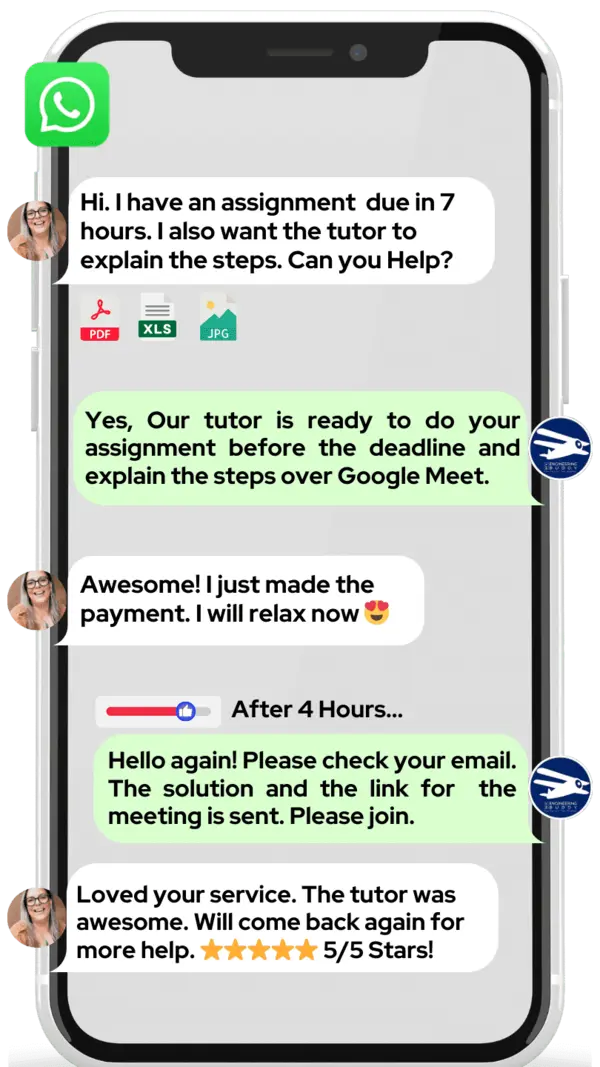



Hire The Best Design of Experiments Tutor
Top Tutors, Top Grades. Without The Stress!
52,000+ Happy Students From Various Universities






How Much For Private 1:1 Tutoring & Hw Help?
Private 1:1 Tutoring and HW help Cost $20 – 35 per hour* on average.
Most students hit a wall at factorial designs. If you can’t explain why you’re confounding factors or how to read a residual plot, you’re not alone — and you won’t pass by re-reading the textbook.
Design of Experiments Tutor Online
Design of Experiments (DOE) is a branch of applied statistics tutoring that teaches students to plan, conduct, and analyse controlled experiments — identifying which factors affect outcomes and by how much, using methods like factorial designs, ANOVA, and response surface methodology.
If you’ve searched for a Design of Experiments tutor near me, MEB’s 1:1 online tutoring connects you with verified subject specialists who know exactly where students struggle — interaction effects, randomisation, blocking, and the jump from theory to software output. Whether you’re working through an engineering statistics module, a graduate research methods course, or a quality engineering certification, an online Design of Experiments tutor from MEB builds your understanding session by session, not just for the next deadline.
- 1:1 online sessions tailored to your exact course and syllabus
- Expert vetted tutors with degree-level and industry DOE experience
- Flexible time zones — US, UK, Canada, Australia, Gulf
- Structured learning plan built after a diagnostic session
- Ethical homework and assignment guidance — you understand before you submit
52,000+ students across the US, UK, Canada, Australia, and the Gulf have used MEB since 2008 — including students in Statistics subjects like Design of Experiments, ANOVA, and regression analysis.
Source: My Engineering Buddy, 2008–2025.
How Much Does a Design of Experiments Tutor Cost?
Most Design of Experiments tutoring sessions run $20–$40/hr. Graduate-level or specialist industrial DOE support reaches up to $100/hr depending on complexity and tutor background. New students can start with the $1 trial — 30 minutes live or one homework question explained in full.
| Level / Need | Typical Rate | What’s Included |
|---|---|---|
| Undergraduate (most levels) | $20–$35/hr | 1:1 sessions, homework guidance |
| Graduate / Specialist DOE | $35–$100/hr | Expert tutor, research-level depth |
| $1 Trial | $1 flat | 30 min live session or 1 homework question |
Tutor availability tightens around semester exam periods — particularly November–December and April–May. Book early if your deadline is within four weeks.
WhatsApp MEB for a quick quote — average response time under 1 minute.
Who This Design of Experiments Tutoring Is For
DOE is taught across engineering, life sciences, business, and social research programmes — but the gap between lecture slides and actually setting up a correct experiment is wide. This tutoring is built for students at that gap.
- Undergraduate engineering or science students hitting factorial design problems for the first time
- Graduate students designing experiments for a thesis or dissertation — and needing the statistical rationale to be airtight
- Students retaking after a failed first attempt who need to understand where their design logic broke down
- Students with a university conditional offer depending on passing a statistics or methods module
- Professionals pursuing quality engineering or Six Sigma certifications who need DOE depth beyond what exam prep books provide
- Parents watching a child’s confidence drop alongside their grades in a required statistics course
Students come from programmes at institutions including MIT, Georgia Tech, Imperial College London, the University of Toronto, ETH Zürich, TU Delft, UNSW Sydney, and King Abdullah University of Science and Technology. DOE features in engineering, pharmaceutical sciences, industrial management, and applied statistics programmes across all these institutions.
1:1 Tutoring vs Self-Study vs AI vs YouTube vs Online Courses
Self-study: works if you’re disciplined, but DOE has too many interlocking concepts — you won’t know what you’ve misunderstood until the exam. AI tools: fast at explaining terms, can’t diagnose why your specific design is flawed. YouTube: solid for introductions to 2k factorial designs, useless when you’re debugging a confounded block structure. Online courses: structured, fixed pace, no one to ask when your Minitab output doesn’t match the textbook. 1:1 tutoring with MEB: live, calibrated to your exact course, corrects errors in the moment — including the difference between replication and repetition that trips up most students.
Outcomes: What You’ll Be Able To Do in Design of Experiments
After working with a Design of Experiments tutor from MEB, you’ll be able to design a full factorial or fractional factorial experiment with correct randomisation and blocking, analyse main effects and interaction effects using ANOVA tables without relying on software to tell you what they mean, apply response surface methods to optimise a process with multiple factors, interpret residual plots and diagnostic checks to validate model assumptions, and explain your experimental rationale clearly in a lab report, thesis chapter, or exam answer. These aren’t generic skills. They map directly to the assignments and exam questions your course actually sets.
Try your first session for $1 — 30 minutes of live 1:1 tutoring or one homework question explained in full. No registration. No commitment. WhatsApp MEB now and get matched within the hour.
Based on feedback from 40,000+ sessions collected by MEB from 2022 to 2025, 58% of students improved by one full grade after approximately 20 hours of 1:1 tutoring in subjects like Design of Experiments. A further 23% achieved at least a half-grade improvement.
Source: MEB session feedback data, 2022–2025.
What We Cover in Design of Experiments (Syllabus / Topics)

Foundations: Principles and Single-Factor Designs
- Principles of experimental design: randomisation, replication, blocking
- Completely randomised designs (CRD) and one-way ANOVA
- Randomised complete block designs (RCBD) and Latin square designs
- Contrasts, multiple comparisons, and Tukey/Dunnett tests
- Fixed vs random effects models
- Sample size and power calculations for designed experiments
Key texts: Montgomery, Design and Analysis of Experiments (9th ed.); Dean, Voss & Draguljić, Design and Analysis of Experiments. Tutors work directly from your assigned course textbook.
Factorial and Fractional Factorial Designs
- 2k full factorial designs: main effects, interactions, effect estimation
- Confounding in 2k designs and block confounding strategies
- 2k-p fractional factorial designs: resolution, defining relations, aliases
- Plackett-Burman designs for screening experiments
- Taguchi methods and parameter design concepts
- Normal probability plots of effects
- Centre points and curvature detection
Key texts: Box, Hunter & Hunter, Statistics for Experimenters (2nd ed.); Wu & Hamada, Experiments: Planning, Analysis, and Optimization.
Response Surface Methods and Optimisation
- Central composite designs (CCD) and Box-Behnken designs
- First- and second-order response surface models
- Path of steepest ascent/descent
- Canonical analysis and ridge systems
- Multiple response optimisation and desirability functions
- Mixture designs and simplex-centroid methods
- Analysis using Minitab, R, and JMP — Minitab tutoring and R programming help available
Key texts: Myers, Montgomery & Anderson-Cook, Response Surface Methodology (4th ed.); Khuri & Mukhopadhyay, Response Surface Methodology.
What a Typical Design of Experiments Session Looks Like
The tutor opens by checking what happened with the previous topic — usually interaction effects from a 2³ factorial design or a confounding pattern that the student couldn’t interpret from lecture notes alone. From there, the session moves into the live problem. The student shares their screen or a scanned assignment. The tutor works through the design matrix, effect estimates, and ANOVA table using a digital pen-pad — annotating each step as the student watches. The student then replicates the analysis or explains the reasoning back. Common sticking points like alias structures in fractional factorials, or why a residual plot shows non-constant variance, get resolved in real time with hypothesis testing help woven in where needed. The session closes with a specific practice problem — usually one exam-style question — and the next topic noted for the following session.
How MEB Tutors Help You with Design of Experiments (The Learning Loop)
Diagnose: In the first session, the tutor identifies exactly where your understanding breaks — whether that’s the difference between replication and repetition, constructing a design matrix for a 2k-p design, or interpreting ANOVA output correctly. Most students arrive with one or two core misconceptions that are causing most of their lost marks.
Explain: The tutor works through live problems on Google Meet using a digital pen-pad. You see the factor effects being calculated step by step, not just the final number. The explanation matches your course’s notation and the software your exam expects you to use — whether that’s Minitab, R, JMP, or SPSS.
Practice: You attempt the next problem with the tutor present. This is where most of the learning happens — not watching, but doing, with someone able to catch the error at the moment it occurs.
Feedback: The tutor explains exactly why a step was wrong and what the marker would have expected. DOE exam questions are highly structured — partial credit often hinges on method, not just the final answer.
Plan: After each session, the tutor notes the next topic in sequence and sets a targeted practice task. Progress is tracked session to session, not just before exams.
Sessions run over Google Meet. The tutor uses a digital pen-pad or iPad with Apple Pencil to annotate designs, draw factor diagrams, and work through ANOVA tables live. Before your first session, share your course outline, any past paper attempts, and your exam or assignment date. Start with the $1 trial — 30 minutes of live tutoring that also serves as your first diagnostic.
At MEB, we’ve found that Design of Experiments students who struggle most are usually missing one foundational concept — often the relationship between degrees of freedom and the ANOVA table. Once that’s fixed in a single session, the rest of the course clicks into place faster than they expect.
Tutor Match Criteria (How We Pick Your Tutor)
MEB doesn’t assign tutors by availability alone.
Subject depth: tutors are matched to your exact level — undergraduate DOE, graduate experimental design, or industrial quality engineering — and to your specific exam board or course structure. Tools: every tutor works on Google Meet with a digital pen-pad or iPad and Apple Pencil. Time zone: matched to your region — US, UK, Canada, Australia, or Gulf. Goals: whether you need to pass a semester exam, complete a research methodology assignment, or build depth for a dissertation, the tutor is matched to that goal specifically.
Unlike platforms where you fill out a form and wait, MEB responds in under a minute, 24/7. Tutor match takes under an hour. The $1 trial means you test before you commit. Everything runs over WhatsApp — no logins, no intake forms.
Study Plans (Pick One That Matches Your Goal)
After the diagnostic session, the tutor builds a specific sequence based on your gaps, not a generic syllabus checklist. Three plans fit most students: Catch-up (1–3 weeks) for students behind on factorial designs or ANOVA before a fast-approaching exam; Exam prep (4–8 weeks) for structured revision covering the full DOE syllabus with past paper practice; Weekly support for ongoing help aligned to semester deadlines, coursework submissions, and lab reports. The tutor adjusts the pace after every session.
Pricing Guide
Design of Experiments tutoring starts at $20/hr for standard undergraduate modules and scales to $100/hr for graduate-level experimental design, research methodology support, or industrial DOE for quality engineering certification. Rate factors include topic complexity, academic level, your timeline, and tutor availability.
Tutor slots fill quickly in the weeks before final exams and dissertation submission deadlines. If your exam is within six weeks, book now rather than later.
For students targeting top-ranked research programmes, engineering doctoral programmes, or professional quality certifications like Six Sigma Black Belt, tutors with industrial or academic research backgrounds in experimental design are available at higher rates — share your specific goal and MEB will match the tier to your need.
Start with the $1 trial — 30 minutes, no registration, no commitment. WhatsApp MEB for a quick quote.
Students consistently tell us that what they expected to take three weeks to understand — usually the alias structure in fractional factorial designs — clicked in a single 90-minute session when someone walked them through it live. The format matters as much as the content.
FAQ
Is Design of Experiments hard?
DOE is conceptually demanding because it combines experimental logic, linear algebra, and statistical inference simultaneously. Students who struggle usually have a gap in one area — often ANOVA or matrix notation — not all three. A tutor identifies which gap is causing the most damage and fixes that first.
How many sessions are needed?
Most students need 8–15 sessions for a full undergraduate DOE module. Students with a specific assignment or exam component — like mastering 2k-p fractional factorials — often see the difference in 3–5 targeted sessions. The tutor maps this out after the diagnostic.
Can you help with homework and assignments?
Yes. MEB tutoring is guided learning — you understand the work, then submit it yourself. The tutor explains the method, works through a similar example, and checks your reasoning. See our Academic Integrity policy and Why MEB page for full details on what we help with and what we don’t.
Will the tutor match my exact syllabus or exam board?
Yes. Before the first session, share your course outline, textbook, and any past papers. The tutor matches the syllabus notation, the software expected in your exam, and the specific exam format — whether that’s a university module, a graduate course, or a professional certification.
What happens in the first session?
The tutor runs a short diagnostic — asking you to walk through a recent problem or explain a concept — to locate exactly where your understanding breaks. The session then covers the highest-priority gap. By the end, you’ll have a clear plan for what to work on and in what order.
Is online tutoring as effective as in-person?
For DOE specifically, online is often better. The tutor can annotate design matrices and ANOVA tables on screen in real time, share Minitab or R output alongside worked solutions, and replay the session if your platform allows it. The digital pen-pad replicates a whiteboard more effectively than most in-person setups.
What’s the difference between a full factorial and a fractional factorial design — and when do I use each?
A full 2k factorial runs every combination of k factors at two levels — precise but expensive as k grows. A fractional factorial (2k-p) runs a fraction of those combinations, sacrificing some ability to separate certain effects (aliasing) to save resources. Your tutor covers both, including how to choose the resolution your experiment needs.
Do I need to know R or Minitab before starting sessions?
No prior software experience is required. MEB tutors cover DOE analysis in Minitab, R, JMP, or SPSS depending on what your course uses. If your course requires software output in assignments, the tutor integrates that directly into sessions — software is treated as a tool, not a separate course.
Can you help with DOE for a thesis or dissertation?
Yes. Graduate students working on experimental design for dissertations are a significant part of MEB’s DOE sessions. The tutor helps with design justification, sample size calculations, choice of design type, and interpretation of results — all areas examiners scrutinise closely. Get applied statistics help alongside DOE if your dissertation spans both areas.
Can you help at midnight or on weekends?
Yes. MEB operates 24/7 across time zones. Students in the Gulf, Australia, and North America regularly start sessions late in their local evening. WhatsApp MEB at any hour — average first response is under a minute, and tutor matching happens within an hour for most subjects including Design of Experiments.
What if I don’t get on with my assigned tutor?
Tell MEB on WhatsApp and a replacement is arranged — usually within the same day. The $1 trial exists precisely so you test the fit before spending more. No forms, no complaints process — one WhatsApp message is enough.
How do I get started?
Three steps: WhatsApp MEB, get matched with a verified Design of Experiments tutor — usually within 24 hours — then start the $1 trial. Thirty minutes live or one homework question explained in full. No registration, no commitment required to continue.
Trust & Quality at My Engineering Buddy
Every MEB tutor goes through subject-specific screening — a live demo session evaluated by a senior reviewer, degree verification, and ongoing feedback review based on student ratings after each session. Tutors covering Design of Experiments hold postgraduate qualifications in statistics, engineering, or a related quantitative discipline, and many have industry experience in quality engineering, pharmaceutical R&D, or academic research. Rated 4.8/5 across 40,000+ verified reviews on Google. MEB has served 52,000+ students since 2008 — 18 years of consistent delivery in advanced quantitative subjects.
MEB tutoring is guided learning — you understand the work, then submit it yourself. For full details on what we help with and what we don’t, read our Academic Integrity policy and Why MEB.
MEB covers 2,800+ subjects across Statistics — including engineering statistics tutoring, Bayesian statistics help, and advanced statistics tutoring — serving students across the US, UK, Canada, Australia, Gulf, and Europe. The MEB tutoring methodology is built around diagnostic-first, structured learning — not open-ended chat sessions.
MEB’s 18-year track record in quantitative subjects, combined with a 4.8/5 rating from students in Design of Experiments, biostatistics, and multivariate statistics, reflects a consistent standard of subject-specific tutor matching — not a general tutoring pool.
Source: My Engineering Buddy, 2008–2025.
A common pattern our tutors observe is that students who arrive for Design of Experiments help have often already spent 10+ hours re-reading notes without improvement. Targeted sessions fix specific misunderstandings — not just reteach what the lecture already covered.
Explore Related Subjects
Students studying Design of Experiments often also need support in:
- Causal Inference
- Clinical Trials
- Computational Statistics
- Descriptive Statistics
- Inferential Statistics
- Probability Distribution
- Linear Regression
- Survey Sampling
Next Steps
To get matched with the right Design of Experiments tutor, have three things ready: your exam board or course outline, a recent past paper attempt or assignment you struggled with, and your exam or deadline date.
- Share your exam board, hardest component, and current timeline
- Share your availability and time zone
- MEB matches you with a verified tutor — usually within 24 hours
Before your first session, have ready: your exam board and syllabus (or course outline), a recent past paper attempt or homework you struggled with, and your exam or deadline date. The tutor handles the rest.
Visit www.myengineeringbuddy.com for more on how MEB works.
WhatsApp to get started or email meb@myengineeringbuddy.com.
Reviewed by Subject Expert
This page has been carefully reviewed and validated by our subject expert to ensure accuracy and relevance.
