

Hire Verified & Experienced
Descriptive Statistics Tutors
Email: [email protected]
4.8/5 40K+ session ratings collected on the MEB platform



Hire The Best Descriptive Statistics Tutor
Top Tutors, Top Grades. Without The Stress!
Most students don’t fail descriptive statistics because it’s too hard — they fail because nobody showed them when to use mean versus median, and why it actually matters.
Descriptive Statistics Tutor Online
Descriptive statistics is a branch of statistics that summarises and organises raw data using measures of central tendency, variability, and distribution — equipping students to interpret datasets accurately across academic and professional contexts.
If you’ve searched for a descriptive statistics tutor near me, MEB connects you with a 1:1 online descriptive statistics tutor who works to your exact course, dataset, and deadline. Part of our broader statistics tutoring provision, descriptive statistics help at MEB means live sessions, real problem sets, and a tutor who knows the difference between a student who’s confused about variance and one who’s never understood what a distribution actually represents. No one-size-fits-all curriculum. No generic notes.
- 1:1 online sessions tailored to your course, dataset, or exam board
- Expert-vetted tutors with subject-specific knowledge in statistics and data analysis
- Flexible time zones — US, UK, Canada, Australia, Gulf
- Structured learning plan built after a diagnostic session
- Ethical homework and assignment guidance — you understand the work before you submit it
52,000+ students across the US, UK, Canada, Australia, and the Gulf have used MEB since 2008 — including students in Statistics subjects like Descriptive Statistics, inferential statistics tutoring, and hypothesis testing help.
Source: My Engineering Buddy, 2008–2025.
How Much Does a Descriptive Statistics Tutor Cost?
Rates run from $20–$40/hr for most undergraduate and pre-university levels. Graduate and highly specialised work goes up to $100/hr. You can also start with the $1 trial — 30 minutes of live tutoring or one homework question explained in full, before any commitment.
| Level / Need | Typical Rate | What’s Included |
|---|---|---|
| Standard (most levels) | $20–$35/hr | 1:1 sessions, homework guidance |
| Advanced / Specialist | $35–$70/hr | Expert tutor, graduate-level depth |
| $1 Trial | $1 flat | 30 min live session or 1 homework question |
Tutor availability tightens significantly around semester-end and exam periods. Book early if you’re working to a fixed deadline.
WhatsApp MEB for a quick quote — average response time under 1 minute.
Who This Descriptive Statistics Tutoring Is For
Descriptive statistics shows up in almost every quantitative discipline — psychology, economics, biology, engineering, business, public health. Students run into trouble at different points, and the sessions are built around where you actually are, not where a syllabus assumes you should be.
- Undergraduates encountering statistics as a required module for the first time
- Students retaking after a failed first attempt who need gaps closed fast
- Graduate students whose research methodology requires solid descriptive analysis before moving to inferential tests
- Students with a coursework or report submission deadline approaching and specific sections still to work through
- Parents watching a child’s confidence drop alongside their grade in a quantitative course
- Students at universities including MIT, UCLA, the University of Toronto, University College London, the University of Melbourne, ANU, and NYU who need support outside of office hours
If you’re struggling to choose between measures of central tendency, can’t interpret a box plot, or don’t know when skewness matters — this is the right session.
At MEB, we’ve found that the most common point of failure in descriptive statistics isn’t the formulas — it’s the decision layer. Students know how to calculate a mean. What trips them up is knowing when the mean is the wrong measure entirely, and what to use instead.
1:1 Tutoring vs Self-Study vs AI vs YouTube vs Online Courses
Self-study works if you’re disciplined, but there’s no one to tell you when your interpretation of a histogram is off. AI tools give fast explanations and can’t diagnose why your specific dataset keeps producing unexpected skew. YouTube covers the concepts well and stops the moment your question gets course-specific. Online courses are structured but move at a fixed pace regardless of where you’re stuck. With 1:1 tutoring at MEB, the session adjusts to the exact dataset, assignment, or exam question in front of you — in descriptive statistics, that difference is the difference between a worked example and an actual answer.
Outcomes: What You’ll Be Able To Do in Descriptive Statistics
After working with an MEB descriptive statistics tutor, you’ll be able to select and apply appropriate measures of central tendency for skewed versus symmetric distributions, analyze frequency distributions and construct accurate histograms and stem-and-leaf plots, explain the practical difference between variance and standard deviation in a real dataset context, present summary statistics clearly in written reports using correct terminology, and apply descriptive tools to your own course datasets rather than textbook examples.
Supporting a student through Descriptive Statistics? MEB works directly with parents to set up sessions, track progress, and keep coursework on schedule. WhatsApp MEB — average response time is under a minute, 24/7.
Based on feedback from 40,000+ sessions collected by MEB from 2022 to 2025, 58% of students improved by one full grade after approximately 20 hours of 1:1 tutoring in subjects like Descriptive Statistics. A further 23% achieved at least a half-grade improvement.
Source: MEB session feedback data, 2022–2025.
What We Cover in Descriptive Statistics (Syllabus / Topics)
Track 1: Measures of Central Tendency and Variability
- Mean, median, and mode — selection criteria and when each misleads
- Range, interquartile range, variance, and standard deviation
- Coefficient of variation and relative dispersion
- Weighted averages and trimmed means
- Outlier identification and its effect on summary statistics
- Comparing variability across datasets with different scales
Core texts: Statistics by Freedman, Pisani & Purves; Introductory Statistics by OpenStax; Business Statistics by Berenson, Levine & Krehhbiel.
Track 2: Distributions, Shape, and Visualisation
- Frequency distributions, relative frequency, and cumulative frequency
- Histograms, stem-and-leaf plots, and frequency polygons
- Skewness and kurtosis — interpretation and calculation
- Box plots, five-number summaries, and whisker interpretation
- Normal distribution properties and the empirical rule (68-95-99.7)
- Identifying distribution shape from raw data and graphical output
Core texts: The Art of Statistics by David Spiegelhalter; Naked Statistics by Charles Wheelan; Statistics by Freedman et al.
Track 3: Bivariate Descriptive Analysis and Data Summarisation
- Scatter plots and direction, form, and strength of association
- Pearson correlation coefficient — calculation and interpretation limits
- Contingency tables and cross-tabulation for categorical data
- Summary statistics in software — SPSS, R, Excel, Minitab
- Communicating findings: tables, charts, and written interpretation
- Data cleaning concepts — missing values, errors, and their effect on summaries
Core texts: R for Data Science by Hadley Wickham; SPSS Survival Manual by Julie Pallant; Practical Statistics for Data Scientists by Bruce & Bruce.

What a Typical Descriptive Statistics Session Looks Like
The tutor opens by checking the previous topic — usually where the student got stuck on variance versus standard deviation, or couldn’t interpret a box plot correctly. From there, the session moves into the current problem: the student shares their screen or dataset, and the tutor works through a live example using a digital pen-pad, annotating each step — calculating the interquartile range, identifying outliers, sketching the distribution shape. The student then replicates the method on a parallel problem while the tutor watches and corrects in real time. The session closes with a specific practice task — typically two or three dataset questions at the same difficulty level as the upcoming assignment — and the next topic is noted for the following session.
How MEB Tutors Help You with Descriptive Statistics (The Learning Loop)
Diagnose: In the first session, the tutor identifies exactly where your understanding breaks down — whether that’s selecting the wrong measure of centre, misreading a histogram’s skew, or calculating variance without understanding what it represents.
Explain: The tutor works through live examples on a digital pen-pad, building each concept from the ground up. No slides. No pre-recorded content. The explanation is built around the exact question or dataset causing problems.
Practice: You attempt a problem while the tutor is present. This is where most tutoring platforms stop — MEB keeps going, watching how you work through each step rather than just checking the final answer.
Feedback: Step-by-step error correction follows immediately. The tutor explains not just what went wrong, but which part of the reasoning caused it — and why that matters for the next question.
Plan: Each session ends with a clear next topic, specific practice questions, and a progression sequence tied to your deadline or exam date.
Sessions run over Google Meet. The tutor uses a digital pen-pad or iPad with Apple Pencil for live annotation. Before your first session, share your course outline or assignment brief and any recent work you’ve struggled with. The first session is diagnostic — expect the tutor to ask pointed questions before diving into content. Start with the $1 trial — 30 minutes of live tutoring that also serves as your first diagnostic.
Try your first session for $1 — 30 minutes of live 1:1 tutoring or one homework question explained in full. No registration. No commitment. WhatsApp MEB now and get matched within the hour.
Tutor Match Criteria (How We Pick Your Tutor)
Not every statistics tutor knows descriptive statistics at the level your course demands. Here’s how MEB matches you.
Subject depth: Tutors are matched to your specific level — first-year undergraduate, postgraduate research, AP Statistics, or professional context — and to the software your course uses (R, SPSS, Excel, Minitab).
Tools: Every tutor runs sessions on Google Meet with a digital pen-pad or iPad and Apple Pencil — annotation is live, not pre-prepared.
Time zone: Matched to your region. US, UK, Gulf, Canada, and Australia sessions are available around the clock.
Goals: Whether you need exam preparation, help with a specific assignment, conceptual grounding, or research-level support — the tutor match reflects that.
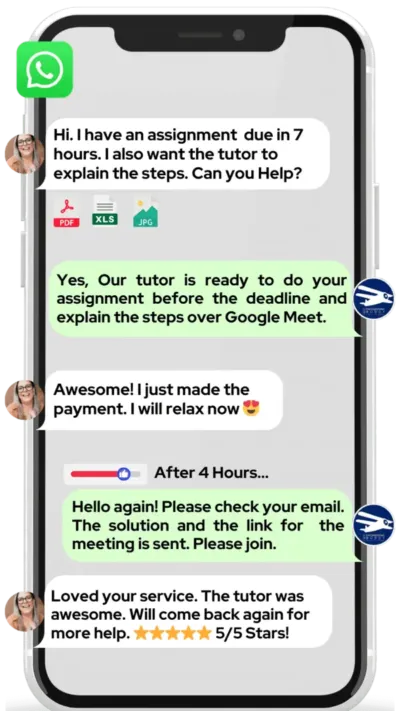
Unlike platforms where you fill out a form and wait, MEB responds in under a minute, 24/7. Tutor match takes under an hour. The $1 trial means you test before you commit. Everything runs over WhatsApp — no logins, no intake forms.
Students working with an applied statistics tutor or on data visualisation help at MEB often begin with descriptive statistics — it’s where the data analysis skill set is actually built.
Source: My Engineering Buddy, 2008–2025.
Study Plans (Pick One That Matches Your Goal)
The tutor builds the exact session sequence after the diagnostic, but here’s the framework. Catch-up (1–3 weeks): for students with a submission or test approaching and specific gaps — mean, median, variance, distribution shape — still to close. Exam prep (4–8 weeks): structured revision through every topic area, timed practice on dataset questions, and written interpretation work. Weekly support: ongoing sessions aligned to your semester schedule, covering each new topic as it’s introduced in lectures. The tutor adjusts the sequence based on how each session goes.
Pricing Guide
Most descriptive statistics sessions run at $20–$40/hr. Graduate-level work, research support, or sessions requiring software-specific expertise (R, SPSS, Minitab) may go higher — up to $100/hr for niche or advanced combinations.
Rate factors include your level, the complexity of the dataset or topic, how close your deadline is, and tutor availability. Availability gets tighter around semester-end assessments and exam periods — the earlier you book, the more flexibility you’ll have on timing and tutor choice.
For students targeting top postgraduate programmes or research positions where quantitative analysis skills are assessed directly, tutors with academic research backgrounds are available at higher rates — share your specific goal and MEB will match the right tier.
Start with the $1 trial — 30 minutes, no registration, no commitment. WhatsApp MEB for a quick quote.
FAQ
Is descriptive statistics hard?
It’s less about difficulty and more about whether the logic of summarising data has been made explicit. Most students who struggle haven’t been shown why different measures exist, not just how to calculate them. One session usually changes the picture.
How many sessions are needed?
Students filling a specific gap before an assignment typically need two to four sessions. Those building from foundational level across a full semester usually work weekly — six to twelve sessions across the term depending on course load and starting point.
Can you help with homework and assignments?
MEB tutoring is guided learning — you understand the work, then submit it yourself. See our Academic Integrity policy and Why MEB page for full details on what we help with and what we don’t. The tutor works through the method with you; the work is yours.
Will the tutor match my exact syllabus or exam board?
Yes. Tutors are matched to your specific course — AP Statistics, a first-year undergraduate module, a postgraduate research methods unit, or a professional qualification. Share your course outline when you contact MEB and matching is done before the first session.
What happens in the first session?
It’s diagnostic. The tutor asks about your course structure, recent work, and where you’ve lost marks or felt stuck. From that, the tutor builds the first session plan and the broader progression sequence. No time is spent on topics you already understand.
Is online tutoring as effective as in-person?
For statistics, often more so. The tutor can annotate your actual dataset on screen, correct your software output live, and share worked examples in real time. Students across the US, UK, and Australia consistently report the format is easier to follow than a whiteboard session in a room.
Can I get descriptive statistics help at midnight?
Yes. MEB operates 24/7. Tutors are available across multiple time zones, so late-night sessions — common before assignment deadlines — are standard. WhatsApp MEB at any hour and you’ll get a response within a minute.
What if I don’t like my assigned tutor?
Request a change. MEB matches you with a different tutor, usually within the same day. The $1 trial exists precisely so you can test the fit before committing to a longer block of sessions. No awkward conversations required.
Do I need to know software like SPSS or R before starting?
No. If your course uses software, the tutor can cover the statistical concepts and the software together. Whether you’re working in Excel, SPSS, R, or Minitab, the tutor adapts. Software competence is part of the session, not a prerequisite for it.
What’s the difference between descriptive and inferential statistics, and do you cover both?
Descriptive statistics summarises what’s in your dataset. Inferential statistics tutoring covers drawing conclusions about a population from a sample. MEB covers both — many students need grounding in descriptive analysis before inferential work makes sense.
How do I get started?
WhatsApp MEB, share your course and deadline, and you’re matched with a tutor — usually within an hour. The first session starts with a diagnostic. The $1 trial gives you 30 minutes of live tutoring or one assignment question explained in full before any further commitment.
Why do students confuse mean and median, and how does a tutor fix that?
Most students are taught to calculate both without being told when each is appropriate. A tutor works through real datasets — income data, exam scores, skewed distributions — where the wrong choice produces a misleading summary. That decision logic is what the session makes concrete and repeatable.
Trust & Quality at My Engineering Buddy
Every MEB tutor goes through subject-specific vetting — not just a CV check. Tutors complete a live demo session evaluated against real student-facing problems in descriptive statistics before they’re matched with any student. Ongoing session feedback is reviewed against quality benchmarks, and tutors with declining ratings are pulled from matching. Rated 4.8/5 across 40,000+ verified reviews on Google.
MEB tutoring is guided learning — you understand the work, then submit it yourself. For full details on what we help with and what we don’t, read our Academic Integrity policy and Why MEB.
MEB has served 52,000+ students across the US, UK, Canada, Australia, the Gulf, and Europe since 2008 — across 2,800+ subjects. In Statistics, that includes students working on probability distribution tutoring, regression analysis help, and research methodology tutoring — alongside descriptive statistics at every level from first-year undergraduate to PhD support. See how MEB tutoring works for the full methodology behind session structure and tutor standards.
Khan Academy’s AP Statistics resources are useful for foundational revision — MEB tutoring goes further, adapting live to your specific course, dataset, and current exam gaps in real time.
Source: Khan Academy.
Explore Related Subjects
Students studying Descriptive Statistics often also need support in:
- ANOVA
- Bayesian Statistics
- Biostatistics
- Business Statistics
- Linear Regression
- Multivariate Statistics
- Time Series Analysis
Next Steps
Before your first session, have ready: your course outline or exam board, a recent assignment or homework problem you struggled with, and your deadline or exam date. The tutor handles the rest.
- Share your exam board or course module, the topics causing most difficulty, and your current timeline
- Share your availability and time zone — MEB covers US, UK, Gulf, Canada, and Australia
- MEB matches you with a verified descriptive statistics tutor — usually within 24 hours
- First session starts with a diagnostic so every minute is used on what actually matters
Visit www.myengineeringbuddy.com for more on how MEB works.
WhatsApp to get started or email [email protected].
52,000+ Happy Students From Various Universities



How Much For Private 1:1 Tutoring & Hw Help?
Private 1:1 Tutoring and HW help Cost $20 – 35 per hour* on average.
Reviewed by Subject Expert
This page has been carefully reviewed and validated by our subject expert to ensure accuracy and relevance.

