Hire Verified & Experienced
Excel VBA Programming Tutors
4.8/5 40K+ session ratings collected on the MEB platform
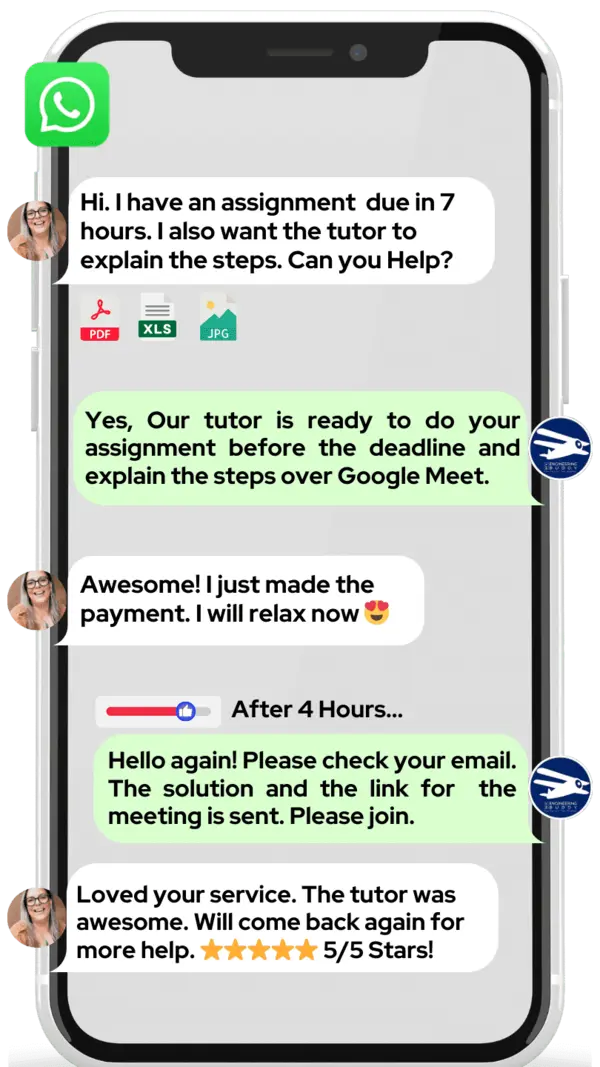



Hire The Best Excel VBA Programming Tutor
Top Tutors, Top Grades. Without The Stress!
52,000+ Happy Students From Various Universities




How Much For Private 1:1 Tutoring & Hw Help?
Private 1:1 Tutoring and HW help Cost $20 – 35 per hour* on average.
Most Excel VBA errors aren’t logic problems — they’re gaps in how the object model was explained the first time.
Excel VBA Programming Tutor Online
Excel VBA (Visual Basic for Applications) is a macro programming language built into Microsoft Excel, used to automate repetitive tasks, build custom functions, and control spreadsheet behaviour through event-driven code.
If you’re searching for an Excel VBA Programming tutor near me, MEB connects you with verified tutors who know the object model, understand where students get stuck, and work through your actual code — not generic examples. Part of our wider computer programming tutoring provision, Excel VBA help at MEB is 1:1, online, and built around your specific course or project. One session can close gaps that hours of forum-searching hasn’t.
- 1:1 online sessions tailored to your course, project, or employer workflow
- Expert verified tutors with hands-on VBA and Excel automation experience
- Flexible time zones — US, UK, Canada, Australia, Gulf
- Structured learning plan built after a diagnostic session
- Ethical homework and assignment guidance — you understand the code before you submit it
52,000+ students across the US, UK, Canada, Australia, and the Gulf have used MEB since 2008 — including students in Computer Programming subjects like Excel VBA Programming, Visual Basic, and VB.NET.
Source: My Engineering Buddy, 2008–2025.
How Much Does an Excel VBA Programming Tutor Cost?
Rates start at $20–$40/hr for most levels. Specialist tutors covering advanced automation, large-scale workbook architecture, or integration with Power Query and Office 365 APIs go up to $100/hr. The $1 trial gives you 30 minutes of live tutoring or one fully explained homework question — no registration needed.
| Level / Need | Typical Rate | What’s Included |
|---|---|---|
| Standard (most levels) | $20–$35/hr | 1:1 sessions, homework and project guidance |
| Advanced / Specialist | $35–$100/hr | Expert tutor, complex automation, niche APIs |
| $1 Trial | $1 flat | 30 min live session or 1 homework question explained in full |
Tutor availability tightens during semester deadlines and corporate training cycles. Book early if your submission date is within three weeks.
WhatsApp MEB for a quick quote — average response time under 1 minute.
Who This Excel VBA Programming Tutoring Is For
Excel VBA sits in an awkward middle ground — it’s taught in university data courses, expected in finance and operations roles, and assigned in business school projects, but rarely explained well in any of those contexts. If you’ve been handed a macro to modify and have no idea where to start, you’re not alone.
- Undergraduate and graduate students with Excel-based assignments or data projects
- Business school students working on financial modelling or reporting automation tasks
- Professionals expected to build or maintain VBA macros at work with no formal training
- Students retaking a data analytics or IS module after failing the practical component
- Parents supporting a student whose coursework submission deadline is approaching and the macro simply isn’t running
- Students with a conditional offer from institutions like NYU Stern, Warwick Business School, or ESADE that requires demonstrated Excel proficiency
Whether the goal is passing a university module at Toronto, completing a capstone at Melbourne Business School, or landing an analyst role that requires clean VBA, MEB tutors calibrate to your actual situation. The $1 trial is the fastest way to check the fit.
1:1 Tutoring vs Self-Study vs AI vs YouTube vs Online Courses
Self-study works if you’re disciplined — but VBA errors without a feedback loop become bad habits fast. AI tools explain syntax quickly yet can’t watch you write code live and catch why your loop is throwing a type mismatch. YouTube covers the basics well; it stops when your specific workbook won’t run. Online courses give structure but fixed pace — no one pauses to debug your actual file. 1:1 tutoring with MEB means a tutor is watching your code in real time, catching the exact line where the object reference breaks, and explaining why — not just what to change. For Excel VBA Programming specifically, that live correction on event procedures and range objects is where most students turn the corner.
Outcomes: What You’ll Be Able To Do in Excel VBA Programming
After targeted 1:1 sessions, students can write and debug Sub and Function procedures from scratch, apply loops and conditional logic to process large datasets without manual intervention, build UserForms that collect and validate input cleanly, use the Workbook and Worksheet object model to automate cross-sheet reporting, and explain their code line by line — which matters when submitting assessed work or presenting a solution in a job interview. These aren’t abstract skills. They show up directly in finance internship tasks, IS coursework submissions, and business analytics capstones at institutions like London Business School and UNSW.
Based on feedback from 40,000+ sessions collected by MEB from 2022 to 2025, 58% of students improved by one full grade after approximately 20 hours of 1:1 tutoring in subjects like Excel VBA Programming. A further 23% achieved at least a half-grade improvement.
Source: MEB session feedback data, 2022–2025.
What We Cover in Excel VBA Programming (Syllabus / Topics)

Track 1: VBA Fundamentals and the Excel Object Model
- The VBA Editor (VBE): modules, the Immediate Window, and the Project Explorer
- Variables, data types, and scope (Dim, Public, Private, Static)
- Sub procedures vs Function procedures — when and why
- The Excel Object Model: Application, Workbook, Worksheet, Range, Cell
- Working with Ranges: .Value, .Offset, .Resize, .Find
- Conditional logic: If/ElseIf/Else, Select Case
- Loops: For Next, For Each, Do While, Do Until — and when each fails
Recommended references: Excel VBA Programming for Dummies (Walkenbach/Bluttman); Excel 2019 Power Programming with VBA (Alexander & Kusleika).
Track 2: Automation, Events, and UserForms
- Recording and editing macros — why recorded code breaks at scale
- Workbook and Worksheet events: Open, BeforeClose, Change, SelectionChange
- Building UserForms: controls, properties, validation, and data transfer to sheets
- Error handling: On Error GoTo, On Error Resume Next, Err object
- Working with multiple workbooks and external files via VBA
- Automating charts, pivot tables, and conditional formatting through code
- Interacting with SQL databases and external data sources via ADO
Recommended references: Excel VBA Programming for Dummies (Walkenbach/Bluttman); Professional Excel Development (Bullen, Bovey & Green).
Track 3: Advanced VBA and Integration
- Arrays: static, dynamic, multidimensional — faster than range loops for large data
- Class modules and object-oriented patterns in VBA
- Regular expressions in VBA via the VBScript.RegExp object
- Interacting with other Office applications: Word, Outlook, Access via early and late binding
- Connecting VBA to Power Query and modern Excel features
- Writing and reading text files, CSVs, and XML from VBA
- Performance optimisation: Application.ScreenUpdating, .Calculation, .EnableEvents
Recommended references: Professional Excel Development (Bullen, Bovey & Green); Excel 2019 Power Programming with VBA (Alexander & Kusleika); Microsoft’s own World Economic Forum reports on automation and digital skills highlight VBA as a core competency in finance and operations roles globally.
At MEB, we’ve found that the fastest VBA progress happens when a student stops copying code from Stack Overflow and starts reading error messages deliberately. Most runtime errors in student macros — type mismatches, subscript out of range, object not set — trace back to two or three object model misconceptions that one session can fix permanently.
What a Typical Excel VBA Programming Session Looks Like
The tutor opens by checking the previous topic — usually something like loop logic or event procedure scope. You share your screen or paste the code into a shared document, and the tutor reads it before you run it. When the macro throws an error — a “Subscript out of range” on a Worksheet reference, say — the tutor walks through the object hierarchy live using a digital pen-pad, marking exactly where the reference breaks. You fix it, then write a variation from scratch while the tutor watches. By the end of the session, you’ve got a working solution and a short debugging checklist for the next time the same pattern appears. The tutor notes the next topic — often UserForms or array optimisation — and sets a specific practice task before the next session.
How MEB Tutors Help You with Excel VBA Programming (The Learning Loop)
Diagnose: In the first session, the tutor asks you to walk through a piece of code you’ve written or attempted. That conversation reveals whether the gap is conceptual — not understanding the object model — or procedural, like not knowing how to step through code in the debugger.
Explain: The tutor works through a live example using a digital pen-pad, annotating the object hierarchy or loop logic on screen. No slide decks. The explanation is tied to your specific file or assignment brief.
Practice: You attempt a parallel problem while the tutor watches. Writing code with someone present who can catch a scope error in real time is different from writing it alone and wondering why it breaks at runtime.
Feedback: The tutor steps through your code line by line, identifies where logic diverges from intent, and explains what the Excel application actually does at each step — not just what to change, but why the original version failed.
Plan: Each session ends with a clear next topic, a practice task, and a note on where you are against the overall goal — whether that’s a submission deadline, a module exam, or a work deliverable.
Sessions run over Google Meet with a digital pen-pad or iPad and Apple Pencil. Before the first session, share your course outline or project brief, a sample of code you’ve been working on (even if it doesn’t run), and your deadline. The first session functions as a diagnostic — every minute is directed at your actual gaps. Start with the $1 trial — 30 minutes of live tutoring that also serves as your diagnostic.
Students consistently tell us that the moment VBA clicks is usually when they see the object model drawn out rather than described. Once you understand that a Range is an object with properties and methods — not just a cell reference — the rest of the syntax starts to make sense without memorisation.
Tutor Match Criteria (How We Pick Your Tutor)
Not every programmer makes a good VBA tutor. MEB matches on specifics.
Subject depth: Tutors are matched to your exact context — undergraduate IS coursework, business school financial modelling, or professional automation at work. A tutor handling advanced array and class module work is different from one covering fundamentals.
Tools: All sessions use Google Meet with a digital pen-pad or iPad and Apple Pencil. Tutors can view your code, annotate it live, and demonstrate fixes in a shared environment.
Time zone: Tutors are matched to your region — US, UK, Gulf, Canada, or Australia. Late-night sessions are available across all zones.
Goals: Whether the target is passing a module, completing a work project, or building reusable automation tools, the tutor brief reflects that before the first session starts.
Unlike platforms where you fill out a form and wait, MEB responds in under a minute, 24/7. Tutor match takes under an hour. The $1 trial means you test before you commit. Everything runs over WhatsApp — no logins, no intake forms.
Study Plans (Pick One That Matches Your Goal)
Most Excel VBA students fall into one of three situations. Catch-up (1–3 weeks): you have a submission or practical exam coming and core concepts aren’t solid — sessions focus on the highest-impact gaps first. Exam or project prep (4–8 weeks): structured progression through the syllabus or project brief, with regular review checkpoints. Ongoing weekly support: one or two sessions per week aligned to your module schedule or evolving work requirements. The tutor builds the specific session sequence after the first diagnostic — not before.
Pricing Guide
Most Excel VBA Programming tutoring runs at $20–$40/hr. Graduate-level automation work, large-scale workbook architecture, or cross-application Office integration can reach $100/hr depending on tutor experience and topic complexity. Timeline urgency and tutor availability during peak semester periods also affect rate.
For students targeting roles at top-tier finance firms, consulting houses, or technology companies where Excel automation is assessed in technical interviews, tutors with professional financial modelling or enterprise Excel development backgrounds are available at higher rates — share your specific goal and MEB will match the tier to your ambition.
Start with the $1 trial — 30 minutes, no registration, no commitment. WhatsApp MEB for a quick quote.
MEB has been running since 2008 and covers 2,800+ subjects — from Python tutoring and Java help to niche automation languages most platforms have never heard of.
Source: My Engineering Buddy, 2008–2025.
Try your first session for $1 — 30 minutes of live 1:1 tutoring or one homework question explained in full. No registration. No commitment. WhatsApp MEB now and get matched within the hour.
FAQ
Is Excel VBA Programming hard?
The basics — recording macros, simple loops, basic conditionals — are accessible within a few hours. The difficulty spikes when students hit the object model, event procedures, and error handling. Most students who find it hard were never shown the underlying structure clearly. One or two sessions fixes that.
How many sessions are needed?
For a specific assignment or debugging task, one to three sessions is typical. Building solid working knowledge of loops, events, UserForms, and the object model usually takes eight to fifteen hours of 1:1 work, depending on starting level and how much independent practice happens between sessions.
Can you help with homework and assignments?
Yes — MEB tutoring is guided learning. The tutor explains the logic, walks through the approach, and helps you understand the code. You write and submit it yourself. MEB does not write or submit work on your behalf. See our Academic Integrity policy and Why MEB page for full details on what we help with and what we don’t.
Will the tutor match my exact syllabus or exam board?
Yes. Before the first session, share your course outline, module guide, or project brief. The tutor matches to your specific requirements — whether that’s a university IS module, a business analytics capstone, or a workplace automation project with defined deliverables and tools.
What happens in the first session?
The tutor reviews any code or brief you share in advance, then runs a short diagnostic — asking you to walk through your reasoning or attempt a problem live. From there, the session focuses on the most urgent gap. A plan for subsequent sessions is outlined at the end.
Is online tutoring as effective as in-person?
For VBA specifically, online is often better. Screen sharing means the tutor sees your exact workbook, your VBE layout, and the error message in context. Digital pen annotation on code is more precise than writing on a whiteboard. Students in MEB sessions report faster resolution of specific bugs than in face-to-face lab settings.
Can I get Excel VBA help at midnight?
Yes. MEB operates across all time zones with tutors available around the clock. If you’re in the US, UK, Gulf, Canada, or Australia and your macro is failing at 11pm the night before a deadline, WhatsApp MEB — average response time is under one minute regardless of the hour.
What if I don’t like my assigned tutor?
Tell MEB via WhatsApp and a replacement is arranged immediately — no forms, no waiting period, no explanation required. The $1 trial exists partly for this reason: you find out in the first session whether the match works before spending anything significant.
Do you cover both 32-bit and 64-bit VBA compatibility issues?
Yes. Tutors cover the PtrSafe keyword, Declare statements, and the specific compatibility differences between 32-bit and 64-bit Excel environments — a common source of errors when code written on one system breaks on another. This is especially relevant for students working across institution and personal machines.
Can a tutor help me understand why my macro runs slowly on large datasets?
Absolutely. Performance optimisation is a dedicated track. Tutors cover Application.ScreenUpdating, disabling automatic calculation, using arrays instead of range loops, and avoiding Select and Activate calls — the four changes that typically reduce runtime by 80–90% on large workbooks.
How do I get started?
Three steps: WhatsApp MEB, get matched with a verified Excel VBA tutor within the hour, then start the $1 trial — 30 minutes of live 1:1 tutoring or one question explained in full. No registration. No commitment. The first session is also your diagnostic.
Can you help with VBA that interacts with other Office applications like Outlook or Word?
Yes. MEB tutors cover Office automation via early and late binding — writing VBA from Excel that opens Word documents, sends Outlook emails, or queries Access databases. This is covered in Track 3 and is particularly relevant for students in business automation or IS coursework where cross-application integration is assessed.
Trust & Quality at My Engineering Buddy
Every MEB tutor goes through subject-specific vetting: a live demo session, review of academic or professional credentials, and ongoing feedback monitoring after sessions begin. Tutors covering Excel VBA Programming hold degrees in computer science, information systems, or quantitative finance, and many have worked in roles where Excel automation was a core deliverable — not just an academic exercise. Rated 4.8/5 across 40,000+ verified reviews on Google.
MEB tutoring is guided learning — you understand the work, then submit it yourself. For full details on what we help with and what we don’t, read our Academic Integrity policy and Why MEB.
MEB has served 52,000+ students across the US, UK, Canada, Australia, the Gulf, and Europe since 2008 in 2,800+ subjects. In Computer Programming specifically, that includes Excel VBA Programming alongside PowerShell tutoring, PL/SQL help, and dozens of other languages and tools. See our tutoring methodology for how sessions are structured across all subjects.
MEB tutors work across every level of the Computer Programming family — from first-year syntax to graduate-level automation architecture. The match is made to your specific gap, not your subject name.
Source: My Engineering Buddy, 2008–2025.
Explore Related Subjects
Students studying Excel VBA Programming often also need support in:
Next Steps
Before your first session, have ready: your course outline or project brief, a recent piece of code or homework you’ve been stuck on, and your submission or exam date. The tutor handles the rest.
- Share your exam board or module, the specific topic causing problems, and your current timeline
- Share your availability and time zone
- MEB matches you with a verified Excel VBA tutor — usually within the hour
A common pattern our tutors observe is that students who share their actual broken code before the first session make faster progress than those who start from scratch in session one. Even a macro that doesn’t run tells a tutor a great deal about where to begin.
Visit www.myengineeringbuddy.com for more on how MEB works.
WhatsApp to get started or email meb@myengineeringbuddy.com.
Reviewed by Subject Expert
This page has been carefully reviewed and validated by our subject expert to ensure accuracy and relevance.