Hire Verified & Experienced
NMR Spectroscopy Tutors
4.8/5 40K+ session ratings collected on the MEB platform
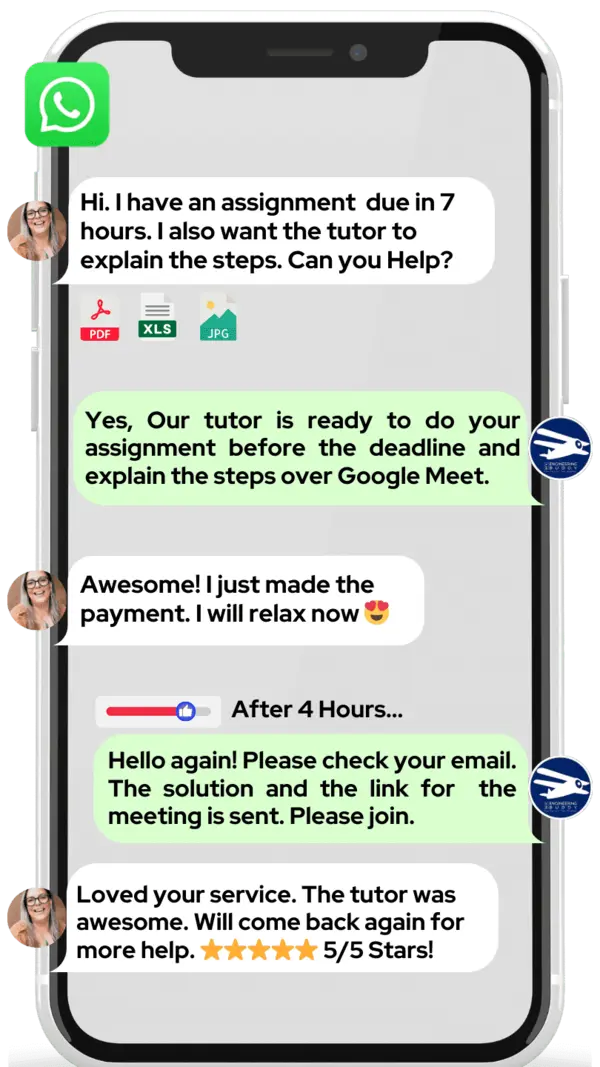



Hire The Best NMR Spectroscopy Tutor
Top Tutors, Top Grades. Without The Stress!
52,000+ Happy Students From Various Universities






How Much For Private 1:1 Tutoring & Hw Help?
Private 1:1 Tutoring and HW help Cost $20 – 35 per hour* on average.
Most students don’t fail NMR Spectroscopy because they’re bad at chemistry — they fail because no one ever walked them through a real spectrum, peak by peak.
NMR Spectroscopy Tutor Online
NMR Spectroscopy (Nuclear Magnetic Resonance Spectroscopy) is an analytical technique used to determine the structure of organic and inorganic molecules by measuring the magnetic properties of atomic nuclei, primarily ¹H and ¹³C, in a magnetic field.
If you’ve searched for a NMR Spectroscopy tutor near me and ended up with generic chemistry platforms that don’t know the difference between COSY and HSQC, MEB is different. Our chemistry tutoring covers the full analytical toolkit — and for NMR specifically, we match you with tutors who work spectrum interpretation problems live, not just theory slides. Since 2008, we’ve helped 52,000+ students across the US, UK, Canada, Australia, and the Gulf get from confused to confident in advanced chemistry subjects.
- 1:1 online sessions tailored to your exact course and syllabus
- Expert-verified tutors with subject-specific NMR knowledge
- Flexible time zones — US, UK, Canada, Australia, Gulf
- Structured learning plan built after a diagnostic session
- Ethical homework and assignment guidance — you understand before you submit
How Much Does a NMR Spectroscopy Tutor Cost?
Most NMR Spectroscopy tutoring sessions run $20–$40/hr. Graduate-level or specialist spectral analysis work can reach up to $100/hr. Not sure if it’s right for you? The $1 trial lets you test a live session before committing to anything.
| Level / Need | Typical Rate | What’s Included |
|---|---|---|
| Undergraduate (most levels) | $20–$35/hr | 1:1 sessions, homework guidance |
| Graduate / Specialist | $35–$100/hr | Expert tutor, advanced spectral analysis |
| $1 Trial | $1 flat | 30 min live session or 1 homework question explained |
Tutor availability tightens around exam windows and lab report deadlines — book early if you’re within six weeks of a submission.
WhatsApp MEB for a quick quote — average response time under 1 minute.
52,000+ students across the US, UK, Canada, Australia, and the Gulf have used MEB since 2008 — including students in Chemistry subjects like NMR Spectroscopy, Mass Spectrometry, and Organic Chemistry.
Source: My Engineering Buddy, 2008–2025.
Who This NMR Spectroscopy Tutoring Is For
NMR Spectroscopy shows up at undergraduate level in organic and analytical chemistry courses, and gets significantly harder at graduate level when 2D experiments enter the picture. Whether you’re working through your first ¹H spectrum or interpreting NOESY data for a research project, this is built for you.
- Undergraduate students in organic chemistry tutoring who need to interpret spectra for exams or lab reports
- Graduate and PhD students running structural elucidation on novel compounds
- Students retaking after a failed first attempt at an analytical chemistry module
- Students with a lab report or coursework submission deadline approaching
- Parents watching a child’s confidence drop alongside their chemistry grades
- Students at universities including MIT, UCL, University of Toronto, ETH Zürich, University of Melbourne, and ANU who need support outside office hours
The $1 trial is a practical first step — especially if you’ve tried a different platform and got nowhere.
1:1 Tutoring vs Self-Study vs AI vs YouTube vs Online Courses
Self-study works if you’re disciplined, but NMR interpretation needs real-time feedback — you can’t self-correct a wrong peak assignment until it’s too late. AI tools explain concepts quickly but can’t watch you work through a spectrum and catch where your reasoning breaks down. YouTube is genuinely useful for introductory concepts, but it stops helping the moment you’re stuck on a real ¹³C DEPT spectrum from your own lab. Online courses move at a fixed pace with no room for the specific confusion you’re carrying into this week’s problem set. 1:1 tutoring with MEB is live, corrects errors in the moment, and is calibrated to your exact course — whether that’s an undergraduate analytical module or a graduate-level structural elucidation assignment.
Outcomes: What You’ll Be Able To Do in NMR Spectroscopy
After working with an MEB NMR Spectroscopy tutor, students can analyze ¹H and ¹³C spectra confidently, assign chemical shifts to functional groups, and explain coupling constants and splitting patterns without second-guessing every step. You’ll be able to solve structure elucidation problems that combine NMR with mass spectrometry data, apply DEPT experiments to distinguish CH, CH₂, and CH₃ carbons, and write up spectral assignments in lab reports with the correct terminology. Students working at graduate level learn to interpret 2D experiments — COSY, HMBC, HSQC — and present structural evidence in thesis chapters and research papers.
Based on feedback from 40,000+ sessions collected by MEB from 2022 to 2025, 58% of students improved by one full grade after approximately 20 hours of 1:1 tutoring in subjects like NMR Spectroscopy. A further 23% achieved at least a half-grade improvement.
Source: MEB session feedback data, 2022–2025.
Try your first session for $1 — 30 minutes of live 1:1 tutoring or one homework question explained in full. No registration. No commitment. WhatsApp MEB now and get matched within the hour.
What We Cover in NMR Spectroscopy (Syllabus / Topics)
Track 1: Foundations of NMR — ¹H and ¹³C Spectroscopy
- Principles of nuclear spin and magnetic resonance
- Chemical shift: shielding, deshielding, and reference standards (TMS)
- Spin-spin coupling and the n+1 rule for splitting patterns
- Integration and proton counting from ¹H spectra
- ¹³C NMR interpretation — broad-band decoupled and DEPT experiments
- Identifying functional groups from chemical shift tables
- Combining NMR with IR and mass spectrometry help for full structure determination
Core texts: Spectroscopic Methods in Organic Chemistry (Silverstein, Webster, Kiemle); Organic Structural Analysis (Crews, Rodríguez, Jaspars).
Track 2: Advanced 1D and 2D NMR Techniques
- DEPT-135 and DEPT-90 for carbon multiplicity assignments
- COSY (Correlation Spectroscopy) — mapping vicinal proton-proton coupling
- HSQC and HMQC — one-bond heteronuclear correlations
- HMBC — long-range ¹H-¹³C correlations for quaternary carbon assignment
- NOESY and ROESY — through-space coupling and stereochemistry determination
- Variable temperature NMR for dynamic processes and conformational exchange
- Solvent selection and its effect on chemical shift values
Recommended texts: Modern NMR Spectroscopy (Sanders and Hunter); Two-Dimensional NMR Spectroscopy (Croasmun and Carlson).
Track 3: Structure Elucidation and Research Applications
- Systematic approach to unknown compound identification using combined spectral data
- Natural product structure determination — worked examples from terpenes and alkaloids
- Protein NMR basics — chemical shift perturbation and backbone assignment concepts
- Solid-state NMR — principles and applications in solid-state chemistry tutoring
- Quantitative NMR (qNMR) for purity determination and concentration measurement
- NMR in drug discovery and medicinal chemistry contexts
Reference texts: Protein NMR Spectroscopy (Cavanagh et al.); NMR of Natural Products (Breitmaier).

At MEB, we’ve found that students who struggle most with NMR aren’t confused by chemistry — they’re confused by the order of operations. Which spectrum do you read first? How do you cross-reference COSY and HMBC data without going in circles? The tutors who get the best results teach a repeatable decision framework, not a list of rules to memorise.
What a Typical NMR Spectroscopy Session Looks Like
The tutor opens by checking where you left off — usually the previous session’s practice spectrum, whether that was a ¹H problem involving an ester or a DEPT-135 assignment from a lab report. From there, you work through a new problem on screen together: the tutor annotates the spectrum using a digital pen-pad, walks through chemical shift assignments, then hands the reasoning back to you. You explain your logic out loud — where you’d place the methyl doublet, why that quartet suggests an ethyl group, what the integration ratio tells you. The tutor catches errors in real time, not the day after you’ve submitted. The session closes with a specific practice spectrum set for before the next meeting and a note on which experiment type — COSY, HMBC, or full elucidation — comes next.
How MEB Tutors Help You with NMR Spectroscopy (The Learning Loop)
Diagnose: In the first session, the tutor works through a short set of problems with you — typically a mix of ¹H integration questions and a basic structure assignment. The goal is to find exactly where your reasoning breaks: is it chemical shift tables, coupling pattern logic, or the jump to 2D correlation data?
Explain: The tutor works problems live on a digital pen-pad, showing every step — not just the answer. For NMR, this means annotating the spectrum directly: circling multiplets, labelling integration curves, drawing out the coupling tree.
Practice: You attempt the next problem while the tutor watches. Not after. Not for homework. Right there in the session, so errors surface immediately.
Feedback: Step-by-step correction — not “that’s wrong” but “you assigned that shift at 3.5 ppm as an alcohol OH, but look at the integration and the coupling; it’s more consistent with a methoxy group.” That distinction is exactly what exam mark schemes reward.
Plan: Each session ends with a clear next topic — whether that’s moving from 1D to COSY, tackling a full elucidation problem, or reviewing a past exam paper question on spectral analysis from your specific university module.
Sessions run over Google Meet. Tutors use a digital pen-pad or iPad with Apple Pencil. Before your first session, share your course syllabus or module outline, a recent spectrum problem you found difficult, and your upcoming deadline or exam date. The first session covers diagnosis and your first worked problem — every minute is used.
Start with the $1 trial — 30 minutes of live tutoring that also serves as your first diagnostic.
Khan Academy’s organic chemistry resources give a useful foundation in functional groups and bonding — but for NMR interpretation at exam and research level, live worked examples with real spectra make the difference between recognising a pattern and being able to reproduce it under pressure.
Source: Khan Academy.
Tutor Match Criteria (How We Pick Your Tutor)
Not every chemistry tutor can handle NMR at graduate level. Here’s what MEB checks before matching.
Subject depth: Tutors are matched by the level and type of NMR work you need — undergraduate 1D interpretation, advanced 2D methods, or research-grade structural elucidation. A tutor covering HMBC and NOESY assignments for a PhD student is a different match than one supporting a second-year organic chemistry module.
Tools: All sessions use Google Meet with a digital pen-pad or iPad and Apple Pencil — spectrum annotation requires handwriting, not typing.
Time zone: Matched to your region. US, UK, Gulf, Canada, and Australia are all covered with tutors available across time zones.
Goals: Whether you need exam score improvement, conceptual depth for a thesis chapter, or ongoing support through a semester of analytical chemistry tutoring, the match reflects your actual goal — not a generic chemistry category.
Unlike platforms where you fill out a form and wait, MEB responds in under a minute, 24/7. Tutor match takes under an hour. The $1 trial means you test before you commit. Everything runs over WhatsApp — no logins, no intake forms.
Students consistently tell us that the biggest difference with MEB isn’t the tutor’s qualifications — it’s that the tutor actually looked at their specific spectrum or past paper before the session started. Showing up prepared for your exact problem is how we run every session.
Study Plans (Pick One That Matches Your Goal)
After a diagnostic first session, your tutor builds the sequence around one of these tracks. Catch-up (1–3 weeks): for students with specific gaps — a problem set due, a lab report spectral section, or a module exam within the month. Exam prep (4–8 weeks): structured revision covering all NMR question types for your specific course assessment. Weekly support: ongoing, aligned to your lecture schedule and lab report deadlines through the semester. The tutor maps the exact session plan after seeing where you are in week one.
Pricing Guide
NMR Spectroscopy tutoring starts at $20/hr for standard undergraduate work. Graduate-level 2D NMR and structural elucidation support runs $35–$100/hr depending on the complexity and tutor background. Rate factors include the level of NMR technique required, your timeline, and tutor availability.
Availability is limited during exam windows and lab report submission periods — if you’re within six weeks of a deadline, book sooner rather than later.
For students targeting research positions, PhD programmes, or roles in medicinal chemistry tutoring and drug discovery, tutors with professional research backgrounds in NMR-heavy fields are available at higher rates — share your goal and MEB will match the tier to what you actually need.
Start with the $1 trial — 30 minutes, no registration, no commitment. WhatsApp MEB for a quick quote.
FAQ
Is NMR Spectroscopy hard?
It’s conceptually layered. Most students find ¹H integration and simple splitting patterns manageable after a few hours of practice. 2D methods — COSY, HMBC, HSQC — are where most people hit a wall. Consistent worked examples with a tutor accelerate the pattern recognition significantly.
How many sessions are needed?
Students with a specific exam or lab report deadline typically need 4–8 sessions. Those building from scratch toward graduate-level structural elucidation usually work over a full semester. The diagnostic first session gives a clearer estimate for your specific situation.
Can you help with homework and assignments?
MEB tutoring is guided learning — you understand the work, then submit it yourself. If you have a spectral assignment or structure elucidation problem, the tutor explains the method and works through a parallel example. See our Academic Integrity policy and Why MEB page for full details on what we help with and what we don’t.
Will the tutor match my exact syllabus or exam board?
Yes. Before matching, MEB asks for your university, module name, and course level. Undergraduate organic chemistry NMR, graduate analytical coursework, and research-level structural work all require different tutor profiles — the match reflects this.
What happens in the first session?
The tutor runs a short diagnostic — usually two or three spectrum problems covering ¹H and ¹³C interpretation. This identifies exactly where your reasoning breaks down. From there, the session moves directly into targeted work on your weakest area.
Is online tutoring as effective as in-person?
For NMR, yes — spectrum annotation on a digital pen-pad is as clear as a whiteboard, and Google Meet lets the tutor share and mark up spectral data in real time. Most MEB students report that screen-based annotation is easier to follow than a physical board from three rows back in a lecture hall.
What’s the difference between ¹H NMR and ¹³C NMR, and do I need help with both?
¹H NMR gives you proton count, chemical environment, and coupling data. ¹³C NMR maps the carbon skeleton. Real structure elucidation problems use both together, often alongside DEPT. Most students who struggle with one also need targeted work on the other — your tutor will assess this in the first session.
Can MEB tutors help with 2D NMR experiments like COSY, HMBC, and HSQC?
Yes. This is one of the most common requests from second-year undergraduates and graduate students. Tutors work through correlation maps live — showing how to extract connectivity information from COSY cross-peaks and long-range correlations from HMBC in a logical, reproducible sequence.
Do you offer group NMR Spectroscopy sessions?
No. MEB sessions are 1:1 only. Group sessions lose the diagnostic precision that makes NMR tutoring effective — two students rarely make the same error on the same spectrum, so shared sessions waste time for both.
Can I get NMR Spectroscopy help at midnight?
Yes. MEB operates 24/7 via WhatsApp. Tutors are available across time zones, so whether you’re in the US, UK, or the Gulf with a lab report due tomorrow morning, you can reach a tutor tonight. Average response time is under one minute.
How do I get started?
Three steps: WhatsApp MEB, get matched with a verified NMR tutor — usually within an hour — then start the $1 trial. The trial is 30 minutes of live tutoring or one full homework question explained. No forms, no registration, no commitment beyond that first dollar.
Trust & Quality at My Engineering Buddy
Every MEB tutor goes through a multi-stage screening process: subject knowledge assessment, a live demo session evaluated by senior tutors, and ongoing review based on student feedback. NMR tutors specifically are assessed on their ability to annotate and interpret real spectra — not just recite theory. Rated 4.8/5 across 40,000+ verified reviews on Google.
MEB tutoring is guided learning — you understand the work, then submit it yourself. For full details on what we help with and what we don’t, read our Academic Integrity policy and Why MEB.
MEB has served 52,000+ students across the US, UK, Canada, Australia, the Gulf, and Europe since 2008 — across 2,800+ subjects including Chemistry, physical chemistry tutoring, and quantum chemistry help. Our tutoring methodology is built around the diagnostic-to-practice loop that makes the difference between passive review and genuine exam-day performance.
MEB has been running since 2008. That’s 17 years of refining how tutors are matched, how sessions are structured, and how students in Chemistry, Analytical Chemistry, and Organic Chemistry move from struggling to scoring.
Source: My Engineering Buddy, 2008–2025.
A common pattern our tutors observe is that students who arrive with “I just don’t get NMR” have usually been taught the rules without ever being shown how to use them in sequence. The fix isn’t more rules — it’s one well-guided elucidation problem from start to finish.
Explore Related Subjects
Students studying NMR Spectroscopy often also need support in:
- Chromatography
- Stereochemistry
- Biophysical Chemistry
- Natural Products Chemistry
- Organometallic Chemistry
- Computational Chemistry
- Inorganic Chemistry
Next Steps
Before your first session, have ready: your exam board and syllabus (or course outline), a recent spectrum problem or homework you struggled with, and your exam or deadline date. The tutor handles the rest.
- Share your module name, hardest NMR topic, and current timeline
- Share your availability and time zone
- MEB matches you with a verified tutor — usually within 24 hours
First session starts with a diagnostic so every minute is used well. Visit www.myengineeringbuddy.com for more on how MEB works.
WhatsApp to get started or email meb@myengineeringbuddy.com.
Reviewed by Subject Expert
This page has been carefully reviewed and validated by our subject expert to ensure accuracy and relevance.