

Hire Verified & Experienced
Open Channel Flow Tutors
Email: [email protected]
4.8/5 40K+ session ratings collected on the MEB platform



Hire The Best Open Channel Flow Tutor
Top Tutors, Top Grades. Without The Stress!
Most students fail their Open Channel Flow exam on Manning’s equation and hydraulic jump calculations — not because the physics is hard, but because no one walked them through it step by step.
Open Channel Flow Tutor Online
Open Channel Flow is the study of liquid flow — typically water — in channels with a free surface exposed to the atmosphere, covering uniform flow, gradually varied flow, hydraulic jumps, and channel design principles applied in civil and hydraulic engineering.
If you’ve searched for an Open Channel Flow tutor near me, MEB connects you with verified 1:1 online tutors who know exactly what your syllabus demands — whether that’s Manning’s equation, specific energy diagrams, or HEC-RAS modelling. Our civil engineering tutoring covers the full breadth of hydraulic and structural subjects, and Open Channel Flow sits at its core. One tutor, your exact course, zero wasted sessions.
- 1:1 online sessions tailored to your course outline and exam board
- Expert-verified tutors with hydraulic engineering backgrounds
- Flexible time zones — US, UK, Canada, Australia, Gulf
- Structured learning plan built after a diagnostic session
- Ethical homework and assignment guidance — you understand before you submit
52,000+ students across the US, UK, Canada, Australia, and the Gulf have used MEB since 2008 — including students in Civil Engineering subjects like Open Channel Flow, hydrology tutoring, and water resources engineering help.
Source: My Engineering Buddy, 2008–2025.
How Much Does an Open Channel Flow Tutor Cost?
Rates run $20–$40/hr for most undergraduate and graduate levels. Specialist tutors with research or consulting backgrounds in hydraulics are available up to $100/hr. The $1 trial gets you 30 minutes of live tutoring or a full explanation of one homework question — no registration required.
| Level / Need | Typical Rate | What’s Included |
|---|---|---|
| Standard (most UG levels) | $20–$35/hr | 1:1 sessions, homework guidance |
| Advanced / Graduate | $35–$70/hr | Expert tutor, research-level depth |
| Specialist / Niche | Up to $100/hr | Consulting-background tutor |
| $1 Trial | $1 flat | 30 min live session or 1 HW question |
Tutor availability tightens sharply in April–May and November–December. Book early if your exams or project submissions land in those windows.
WhatsApp MEB for a quick quote — average response time under 1 minute.
Who This Open Channel Flow Tutoring Is For
Open Channel Flow trips up students who are solid on statics and basic fluid mechanics but hit a wall the moment gradually varied flow profiles or hydraulic jump energy equations appear. This tutoring is built for that gap.
- Undergraduate civil and environmental engineering students taking Hydraulics or Fluid Mechanics modules
- Graduate students working on channel design, flood routing, or irrigation system problems
- Students retaking after a failed first attempt who need a completely different explanation
- Students 4–6 weeks from finals with Manning’s equation, specific energy, and GVF profiles still unclear
- Students with a coursework or project submission deadline approaching fast
- Parents watching a child’s confidence drop alongside their hydraulics grade
- Engineers pursuing professional certification who need to revisit channel hydraulics theory
Students from Cornell, Georgia Tech, Imperial College London, University of Toronto, UNSW Sydney, TU Delft, and McGill regularly use MEB for hydraulic engineering support.
At MEB, we’ve found that Open Channel Flow struggles almost always start in the same place — students memorise Manning’s equation without understanding what the hydraulic radius physically represents. Fix that one conceptual gap and the rest of the topic opens up quickly.
1:1 Tutoring vs Self-Study vs AI vs YouTube vs Online Courses
Self-study works if you’re disciplined — but Open Channel Flow derivations have no feedback loop. AI tools explain Manning’s equation fast but can’t catch where your specific energy diagram reasoning breaks down. YouTube is useful for overviews of uniform flow, then stops when you’re stuck on a specific GVF profile classification. Online courses move at a fixed pace that ignores your deadline. 1:1 tutoring with MEB is live, matched to your exact syllabus, and corrects the mistake in real time — before it costs you marks on your next problem set.
Outcomes: What You’ll Be Able To Do in Open Channel Flow
After working with an MEB Open Channel Flow tutor, you’ll solve Manning’s equation problems with full confidence in selecting roughness coefficients and computing discharge. You’ll analyze gradually varied flow water surface profiles and correctly classify M1, M2, S1, S2, and other GVF curves. You’ll apply the specific energy concept to identify critical depth and predict hydraulic jump location and energy loss. You’ll model real channel scenarios using HEC-RAS outputs and interpret results for design purposes. You’ll present channel design calculations clearly — dimensions, slopes, lining — in a format your examiners expect.
Based on feedback from 40,000+ sessions collected by MEB from 2022 to 2025, 58% of students improved by one full grade after approximately 20 hours of 1:1 tutoring in subjects like Open Channel Flow. A further 23% achieved at least a half-grade improvement.
Source: MEB session feedback data, 2022–2025.
Supporting a student through Open Channel Flow? MEB works directly with parents to set up sessions, track progress, and keep coursework on schedule. WhatsApp MEB — average response time is under a minute, 24/7.
Try your first session for $1 — 30 minutes of live 1:1 tutoring or one homework question explained in full. No registration. No commitment.
WhatsApp MEB now
and get matched within the hour.
What We Cover in Open Channel Flow (Syllabus / Topics)

Track 1: Fundamentals of Open Channel Flow
- Types of flow: steady, unsteady, uniform, non-uniform
- Froude number, critical flow, subcritical vs supercritical classification
- Manning’s equation: derivation, roughness coefficient n, hydraulic radius
- Chezy’s formula and its relationship to Manning’s
- Best hydraulic section design: rectangular, trapezoidal, circular channels
- Continuity equation applied to open channels
- Flow measurement: weirs, flumes, and orifices in open channels
Core texts: Chaudhry’s Open Channel Hydraulics, Sturm’s Open Channel Hydraulics, and Akan’s Open Channel Hydraulics cover this track well.
Track 2: Energy, Momentum, and Hydraulic Jumps
- Specific energy diagram: construction, interpretation, critical depth
- Energy losses at channel transitions and constrictions
- Hydraulic jump: sequent depths, energy dissipation, jump classification
- Momentum equation applied to channel flow problems
- Forced hydraulic jumps: stilling basins and apron design concepts
- Channel transitions: humps, contractions, and choked flow conditions
Refer to Chaudhry’s Open Channel Hydraulics and Chanson’s The Hydraulics of Open Channel Flow for worked examples across this track.
Track 3: Gradually Varied Flow and HEC-RAS Modelling
- Gradually varied flow (GVF) equation: derivation and assumptions
- GVF profile classification: M, S, C, H, A curves — identification and sketching
- Numerical methods: direct step method, standard step method
- Rapidly varied flow distinguished from GVF
- HEC-RAS: setting up cross-sections, entering Manning’s n, running steady-state simulations
- Flood routing: Muskingum method, reservoir routing basics
- Interpretation of HEC-RAS water surface profiles for design decisions
The HEC-RAS tutoring page covers the software side in depth; Sturm’s text handles the theoretical GVF derivations.
What a Typical Open Channel Flow Session Looks Like
The tutor opens by checking where you left off — usually the GVF profile you were classifying or the Manning’s equation problem set from last time. They pull up your current assignment or past paper on screen. You work through a hydraulic jump problem together: the tutor writes each step on the digital pen-pad, explaining why the sequent depth ratio depends on the upstream Froude number, not just the flow velocity. You replicate the calculation. When you get the energy loss wrong, they stop and show you exactly which sign in the momentum equation you misread. The session closes with two practice problems — one GVF profile classification, one channel design question — and a note of what’s next: specific energy diagrams or HEC-RAS cross-section setup.
How MEB Tutors Help You with Open Channel Flow (The Learning Loop)
Diagnose: In the first session the tutor identifies exactly where your understanding breaks. Is it the physical meaning of hydraulic radius? The GVF profile sign convention? Or HEC-RAS input structure? The starting point is always your specific gap, not a generic syllabus overview.
Explain: The tutor works through live problems on a digital pen-pad — writing derivations, sketching specific energy curves, and labelling control sections. Nothing is handed to you as a formula to memorise. You see where every term comes from.
Practice: You attempt a problem while the tutor watches. This is where most learning happens. The tutor sees your reasoning process, not just your final answer, and can catch the mistake at the step where it actually occurs.
Feedback: Step-by-step error correction with clear explanations of why marks get lost — misidentifying subcritical flow, applying Manning’s to non-uniform conditions, or sketching an M2 profile that looks like an M1. These are the specific errors that cost students a grade.
Plan: Each session ends with a topic progression note. The tutor tracks what’s been covered, what needs review, and what the next session will tackle. You’re never guessing what to study next.
Sessions run on Google Meet with a digital pen-pad or iPad and Apple Pencil. Before your first session, have your course syllabus or module outline, a recent problem set or exam paper you struggled with, and your submission or exam date. The first session is your diagnostic — start with the $1 trial and get 30 minutes that also maps your tutoring plan.
Students consistently tell us that the moment Manning’s equation clicks isn’t when they read the formula — it’s when a tutor draws the cross-section, labels the wetted perimeter, and asks them to compute the hydraulic radius themselves. That’s what a live session does that a textbook can’t.
Open Channel Flow is one of the most assignment-intensive modules in civil engineering — students working with an MEB tutor typically spend the first two sessions just recalibrating how they read GVF profile diagrams, then accelerate through the rest of the syllabus.
Source: My Engineering Buddy, 2008–2025.
Tutor Match Criteria (How We Pick Your Tutor)
Not every hydraulics engineer is the right tutor for your course. MEB matches on four criteria.
Subject depth: The tutor must have degree-level or higher training in hydraulic engineering, fluid mechanics, or civil engineering — with demonstrated experience in Open Channel Flow specifically, not just general hydraulics.
Tools: Every tutor uses Google Meet with a digital pen-pad or iPad and Apple Pencil. Hand-drawn diagrams and worked derivations are non-negotiable for this subject.
Time zone: Matched to your region — US, UK, Gulf, Canada, Australia — so sessions happen at reasonable hours without compromise on tutor quality.
Goals: Whether you need exam score improvement, conceptual depth for a thesis chapter, homework guidance, or HEC-RAS project support, the match prioritises tutor experience aligned to your specific goal.
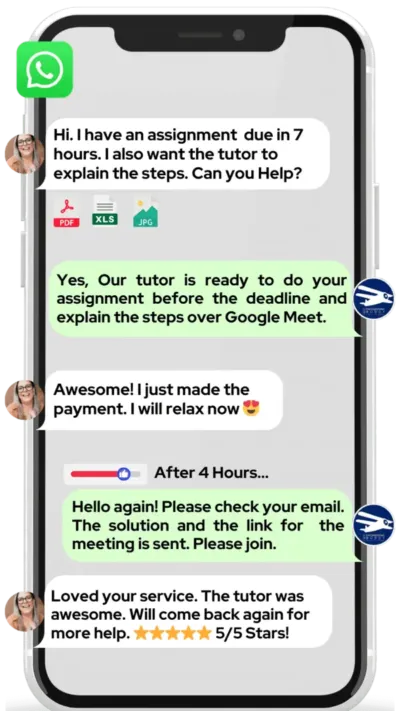
Unlike platforms where you fill out a form and wait, MEB responds in under a minute, 24/7. Tutor match takes under an hour. The $1 trial means you test before you commit. Everything runs over WhatsApp — no logins, no intake forms.
Study Plans (Pick One That Matches Your Goal)
After the diagnostic, your tutor builds the sequence. For most Open Channel Flow students, three plans work: a catch-up plan (1–3 weeks, closing specific gaps in Manning’s equation, GVF classification, or hydraulic jump before an exam); an exam prep plan (4–8 weeks, structured revision across the full syllabus with past paper practice); or weekly support throughout the semester, aligned to your module schedule and assignment deadlines. The tutor maps the exact session order after your first diagnostic — no generic templates.
Pricing Guide
Most Open Channel Flow tutoring runs $20–$40/hr. Graduate-level work involving HEC-RAS modelling, flood routing projects, or research-grade channel design typically falls in the $40–$70/hr range. Tutors with professional consulting or hydrological research backgrounds are available up to $100/hr — share your specific project goal and MEB matches you to the right tier.
Rate factors: your level, topic complexity, how quickly you need to start, and tutor availability at your preferred times. Availability is tightest in April–May and November–December — the closer to those windows, the sooner you should reach out.
For students targeting top civil engineering programmes at schools like Stanford, MIT, or ETH Zurich, tutors with professional hydraulics backgrounds are available at higher rates. Tell MEB your goal and they’ll match accordingly.
Start with the $1 trial — 30 minutes, no registration, no commitment. WhatsApp MEB for a quick quote.
FAQ
Is Open Channel Flow hard?
It’s conceptually demanding. Manning’s equation looks simple, but hydraulic radius, roughness coefficients, and GVF profile classification require solid physical intuition. Students who struggle usually lack that intuition — not mathematical ability. A tutor fixes this faster than self-study.
How many sessions are needed?
Most students need 8–15 sessions for full syllabus coverage. For targeted exam prep — just Manning’s, hydraulic jumps, and GVF profiles — 4–6 focused sessions often shift the grade by a full band. Frequency matters more than total hours.
Can you help with homework and assignments?
Yes — MEB tutoring is guided learning. The tutor explains the method, you work through the problem, and you submit your own solution. See our Academic Integrity policy and Why MEB page for full details on what we help with and what we don’t.
Will the tutor match my exact syllabus or exam board?
Yes. Before matching, MEB asks for your university, module code, and syllabus document if available. Tutors are selected based on familiarity with your specific course structure — not just general Open Channel Flow knowledge.
What happens in the first session?
The tutor runs a short diagnostic — asking you to explain a Manning’s equation problem or sketch a GVF profile. This locates the exact gap. The rest of the session addresses it directly. You’ll leave with a clear plan for the following sessions.
Is online tutoring as effective as in-person for Open Channel Flow?
Yes, for this subject. The digital pen-pad replicates whiteboard instruction completely. Most Open Channel Flow problems are calculation and diagram-based — exactly what a shared screen and real-time pen input handles well. Many students prefer the flexibility.
Can I get Open Channel Flow help at midnight?
Yes. MEB operates 24/7 across time zones. WhatsApp MEB at any hour and someone responds within minutes. Tutors are available across US, UK, Gulf, Canadian, and Australian time zones — late-night sessions before a deadline are common.
What if I don’t like my assigned tutor?
Tell MEB via WhatsApp and you’ll be matched with a different tutor — no questions, no forms, no delay. The $1 trial exists partly for this reason: you test the fit before committing to a full package.
How do I find an Open Channel Flow tutor in my city?
You don’t need to. All sessions are online via Google Meet with a digital pen-pad. MEB tutors cover every major city’s time zone — New York, London, Toronto, Dubai, Sydney, Amsterdam — without location being a barrier to tutor quality.
What’s the difference between Open Channel Flow and Pipe Flow — and can tutors help with both?
Open Channel Flow has a free surface; pipe flow runs under pressure. They share continuity and energy principles but diverge sharply on Froude number, hydraulic jumps, and GVF. MEB tutors cover both — and the distinction itself is a common exam question worth understanding precisely.
Do MEB tutors support HEC-RAS alongside the theoretical side?
Yes. Tutors help with HEC-RAS setup, cross-section input, Manning’s n selection, and interpreting water surface profile outputs for design decisions. See the HEC-RAS tutor page for dedicated software support. Theory and software sessions can be combined or kept separate.
How do I get started?
Start with the $1 trial — 30 minutes of live tutoring or one full homework question explained. Three steps: WhatsApp MEB, get matched with a verified Open Channel Flow tutor within the hour, and start your trial session. No registration, no commitment.
Trust & Quality at My Engineering Buddy
Every MEB tutor goes through subject-specific vetting: degree-level or higher qualification in a relevant engineering discipline, a live demo evaluation session, and ongoing review based on student feedback. Tutors without demonstrated Open Channel Flow depth — even if strong in general fluid mechanics — are not matched to this subject. Rated 4.8/5 across 40,000+ verified reviews on Google.
MEB tutoring is guided learning — you understand the work, then submit it yourself. For full details on what we help with and what we don’t, read our Academic Integrity policy and Why MEB.
MEB has served 52,000+ students across the US, UK, Canada, Australia, the Gulf, and Europe in 2,800+ subjects since 2008. Civil Engineering is one of MEB’s largest subject areas — covering everything from Open Channel Flow to geotechnical engineering tutoring, structural engineering help, and environmental engineering tutoring. If it appears in a civil engineering curriculum, MEB has a tutor for it. Read more about our approach at MEB’s tutoring methodology.
Our experience across thousands of sessions shows that Open Channel Flow students who attempt at least two timed practice problems before each session make faster measurable progress than those who review notes only. The tutor catches more in less time when you’ve already tried — and failed — on your own first.
Explore Related Subjects
Students studying Open Channel Flow often also need support in:
- Hydrology
- Water Resources Engineering
- Irrigation Engineering
- Groundwater Engineering
- Dam Engineering
- Coastal Engineering
- EPANET
- Water Supply Engineering
Next Steps
Before your first session, have ready: your exam board and syllabus or course outline, a recent past paper attempt or homework problem you struggled with, and your exam or submission deadline. The tutor handles the rest.
- Share your module name, university, and hardest topic so far
- Share your availability and time zone
- MEB matches you with a verified Open Channel Flow tutor — usually within an hour
Visit www.myengineeringbuddy.com for more on how MEB works.
WhatsApp to get started or email [email protected].
52,000+ Happy Students From Various Universities






How Much For Private 1:1 Tutoring & Hw Help?
Private 1:1 Tutoring and HW help Cost $20 – 35 per hour* on average.
Reviewed by Subject Expert
This page has been carefully reviewed and validated by our subject expert to ensure accuracy and relevance.
