~1 min
Average Reply Time
~1 hour
To Be Matched With A Tutor
30 Min Trial
75% Find Their Tutor On The 1st Trial
$20-35+/hr
Premium Yet Affordable Learning
Most students who struggle with oral pathology aren’t underprepared — they’re under-supported. Slide after slide of lesion histology, disease classifications that look nearly identical, and exams that punish shallow memorisation. What works is someone who can walk you through the logic in real time.
Oral Pathology Tutor Online
Oral pathology is the dental science discipline concerned with the diagnosis, causes, and management of diseases affecting oral and maxillofacial structures, equipping students to recognise, classify, and interpret pathological conditions from clinical and histological evidence.
MEB provides 1:1 online tutoring and homework help in 2,800+ advanced subjects, including dentistry and its sub-disciplines. If you’ve searched for an oral pathology tutor near me, you’re in the right place — MEB matches you with a verified specialist tutor, typically within the hour. Sessions are calibrated to your exact syllabus, your weakest topics, and your exam date.
- 1:1 online sessions tailored to your dental school course and exam board
- Expert-verified tutors with oral pathology and dental science backgrounds
- Flexible scheduling across US, UK, Canada, Australia, and the Gulf
- Structured learning plan built after a diagnostic session
- Ethical homework and assignment guidance — you understand the work, then submit it yourself
52,000+ students across the US, UK, Canada, Australia, and the Gulf have used MEB since 2008 — including students in Dentistry subjects like Oral Pathology, Oral Histology, and Oral Medicine and Radiology.
Source: My Engineering Buddy, 2008–2025.
How Much Does an Oral Pathology Tutor Cost?
Most oral pathology tutoring sessions run at $20–$40/hr. Specialist tutors with postgraduate research or clinical backgrounds are available at higher rates. The $1 trial gives you 30 minutes of live tutoring or one full homework question explained — before you commit to anything.
| Level / Need | Typical Rate | What’s Included |
|---|---|---|
| Undergraduate (BDS / DMD) | $20–$35/hr | 1:1 sessions, homework guidance, case-based review |
| Postgraduate / Research Level | $40–$100/hr | Expert tutor, histopathology depth, thesis support |
| $1 Trial | $1 flat | 30 min live session or one full homework question |
Tutor availability tightens sharply in the weeks before dental board exams and end-of-year OSCEs. Book ahead if your deadline is within six weeks.
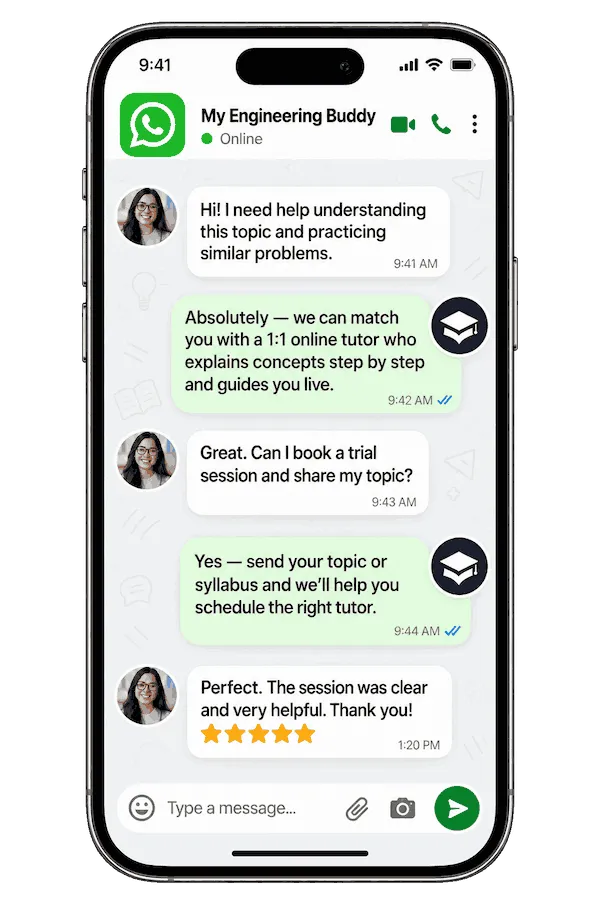
WhatsApp MEB for a quick quote — average response time under 1 minute.
Who This Oral Pathology Tutoring Is For
Oral pathology is one of the most content-heavy subjects in any dental programme. Students often find the gap between understanding a condition in lecture notes and applying it under exam pressure is wider than expected.
- BDS, DMD, or dental hygiene students behind on lesion classification and histological diagnosis
- Students retaking after a failed first attempt in oral pathology or oral medicine
- Students with a university conditional offer that depends on passing this module
- Students 4–6 weeks from an OSCE or written exam with significant gaps still to close
- Parents watching a student’s confidence drop as the pathology workload builds
- Graduate students needing support with oral pathology components of board exams or specialist training
Students from dental schools across the US (NYU, Tufts, USC, UNC), UK (King’s College London, UCL, Sheffield, Manchester), Canada (Toronto, UBC), Australia (Melbourne, Sydney), and the Gulf (KSAU-HS, Hamdan Bin Mohammed) have worked with MEB tutors on oral pathology.
1:1 Tutoring vs Self-Study vs AI vs YouTube vs Online Courses
Self-study works if you’re disciplined, but oral pathology’s visual pattern recognition doesn’t develop well without feedback. AI tools explain concepts quickly but can’t look at your case description and tell you where your differential diagnosis logic broke down. YouTube is useful for overviews of conditions like ameloblastoma or pemphigus vulgaris, but stops short when you’re stuck on a specific histological feature in your own notes. Online courses move at a fixed pace — no adjustment for the topics where you’re actually weak. With a 1:1 MEB tutor, the session is built around your exact syllabus and the three lesion categories you keep confusing. Errors get corrected the moment they happen.
Outcomes: What You’ll Be Able To Do in Oral Pathology
After working with an oral pathology tutor through MEB, you’ll be able to apply diagnostic criteria to distinguish between reactive, inflammatory, and neoplastic lesions. You’ll analyse histopathological slides and explain the cellular changes that define conditions like oral squamous cell carcinoma, fibroma, or dentigerous cysts. You’ll write structured differential diagnoses for clinical case scenarios. You’ll present findings in the format your dental school expects — whether that’s a viva, written paper, or OSCE station. You’ll solve classification problems under timed conditions without second-guessing yourself.
Supporting a student through oral pathology? MEB works directly with parents to set up sessions, track progress, and keep coursework on schedule. WhatsApp MEB — average response time is under a minute, 24/7.
Based on feedback from 40,000+ sessions collected by MEB from 2022 to 2025, 58% of students improved by one full grade after approximately 20 hours of 1:1 tutoring in subjects like Oral Pathology. A further 23% achieved at least a half-grade improvement.
Source: MEB session feedback data, 2022–2025.
At MEB, we’ve found that oral pathology clicks fastest when students stop trying to memorise lists and start building decision trees. Once a student can work from “where is the lesion, what does it look like, who is the patient” to a short differential, the whole subject reorganises itself. That shift usually happens in two or three focused sessions.
What We Cover in Oral Pathology (Syllabus / Topics)

Track 1: Inflammatory and Reactive Lesions
- Aphthous ulcers — types, triggers, and clinical features
- Reactive hyperplasias: fibroma, pyogenic granuloma, peripheral giant cell granuloma
- Denture-induced stomatitis and angular cheilitis
- Oral candidiasis — pseudomembranous and erythematous forms
- Geographic tongue and fissured tongue: diagnosis and significance
- Viral infections: herpes simplex, herpes zoster, herpangina
Core references: Neville et al., Oral and Maxillofacial Pathology (4th ed.); Regezi, Sciubba & Jordan, Oral Pathology: Clinical Pathologic Correlations.
Track 2: Cysts and Tumours of the Jaws and Oral Soft Tissues
- Odontogenic cysts: dentigerous, radicular, lateral periodontal, OKC (keratocystic)
- Non-odontogenic cysts: nasopalatine duct, nasolabial, dermoid
- Odontogenic tumours: ameloblastoma, odontoma, CEOT, adenomatoid odontogenic tumour
- Benign soft tissue tumours: lipoma, neurofibroma, haemangioma, lymphangioma
- Potentially malignant disorders: leukoplakia, erythroplakia, oral submucous fibrosis
- Oral squamous cell carcinoma — staging, risk factors, histological grading
Core references: Neville et al., Oral and Maxillofacial Pathology; Sapp, Eversole & Wysocki, Contemporary Oral and Maxillofacial Pathology.
Track 3: Bone Pathology, Salivary Gland Disease, and Haematological Conditions
- Fibro-osseous lesions: fibrous dysplasia, cemento-ossifying fibroma, Paget’s disease
- Salivary gland disorders: mucocele, ranula, Sjögren’s syndrome, sialadenitis
- Salivary gland tumours: pleomorphic adenoma, Warthin’s tumour, mucoepidermoid carcinoma
- Oral manifestations of systemic disease: anaemia, leukaemia, diabetes, HIV
- Vesiculobullous disorders: pemphigus vulgaris, mucous membrane pemphigoid, erythema multiforme
- Pigmented lesions: melanotic macule, Addison’s disease, amalgam tattoo, melanoma
Core references: Regezi, Sciubba & Jordan, Oral Pathology; Soames & Southam, Oral Pathology (4th ed.).
What a Typical Oral Pathology Session Looks Like
The tutor opens by checking the previous topic — say, the histological distinction between OKC and dentigerous cyst — and asking you to explain the difference before anything new is introduced. From there, the session moves into the current focus: you might work through a clinical case together, with the tutor sharing annotated histology images on screen and asking you to identify the cell type, the pattern, and the likely diagnosis. You use a shared digital workspace; the tutor writes reasoning steps with a pen-pad while you replicate the logic in your own notes. The session closes with one or two practice case questions you’ll attempt independently before the next session — and a note on which condition family you’re covering next time. Get endodontics help from MEB if your sessions extend into pulp pathology and periapical disease.
How MEB Tutors Help You with Oral Pathology (The Learning Loop)
Diagnose: In the first session, the tutor identifies exactly where your understanding breaks — whether it’s histological slide interpretation, disease classification logic, or the clinical feature descriptions you’re mixing up under pressure. This sets the entire session sequence.
Explain: The tutor works through live examples using digital pen-pad annotation. A case like mucoepidermoid carcinoma gets broken down by cell types, grade criteria, and distinguishing features — not summarised in a list, but walked through visually so the pattern sticks.
Practice: You attempt the next case or classification question with the tutor present. Not after the session. During it. The tutor watches where your reasoning goes wrong before it becomes a habit.
Feedback: Every error gets traced back to the step where it started. If you called a lesion benign when it wasn’t, the tutor pinpoints which feature you read incorrectly and why — and drills that feature specifically.
Plan: At the end of each session, the tutor notes which condition families are solid, which need another pass, and what you’re covering next. You leave with a specific task and a clear next step, not a vague “keep revising.”
Sessions run over Google Meet with a shared digital pen-pad or iPad and Apple Pencil. Before your first session, have your syllabus or module guide, a past exam or case question you’ve already attempted, and your exam date ready. The first session is diagnostic — it sets the map. Start with the $1 trial, which is 30 minutes of live tutoring and also serves as your first diagnostic.
Students consistently tell us that oral pathology feels unmanageable until they have a reliable system for working through a differential. Once that framework is in place, new conditions slot in rather than pile up. The subject doesn’t get easier — the student gets faster.
Tutor Match Criteria (How We Pick Your Tutor)
Not every dental science tutor is the right fit for oral pathology. MEB matches on four specific criteria.
Subject depth: Tutor must have postgraduate training or demonstrated teaching experience in oral pathology, including histopathology interpretation and case-based diagnosis — not just general dental sciences.
Tools: All tutors use Google Meet and a digital pen-pad or iPad with Apple Pencil for annotated visual work, which is essential for histology-based sessions.
Time zone: Matched to your region — US, UK, Gulf, Canada, or Australia — so scheduling doesn’t require middle-of-the-night sessions.
Goals: Whether you need exam score improvement, help with OSCE preparation, homework guidance for specific case studies, or deeper conceptual grounding for board exams, the tutor is selected to match that specific goal.
Unlike platforms where you fill out a form and wait, MEB responds in under a minute, 24/7. Tutor match takes under an hour. The $1 trial means you test before you commit. Everything runs over WhatsApp — no logins, no intake forms.
Study Plans (Pick One That Matches Your Goal)
Catch-up (1–3 weeks): for students who’ve fallen behind on lesion families or histology and need to close specific gaps before an exam. Exam prep (4–8 weeks): structured revision across the full oral pathology syllabus, timed to your written exam, viva, or OSCE date. Weekly support: ongoing sessions aligned to your dental school’s semester and coursework deadlines. The tutor builds your specific session sequence after the diagnostic — it’s never a generic revision plan.
Pricing Guide
Oral pathology tutoring starts at $20/hr for undergraduate-level support and runs to $40/hr for most students. Tutors with postgraduate research backgrounds, clinical specialisms in oral medicine, or board exam preparation experience are available up to $100/hr. Rate factors include your academic level, the complexity of the topics you need to cover, your timeline, and tutor availability.
Availability tightens in the four to six weeks before dental board exams and year-end assessments. If your exam is within that window, book early.
For students targeting residency programmes or specialist dental board certifications, tutors with professional clinical and research backgrounds are available at higher rates — share your specific goal and MEB will match the tier to your ambition.
Start with the $1 trial — 30 minutes, no registration, no commitment. WhatsApp MEB for a quick quote.
MEB has supported dental science students in oral pathology, operative dentistry, and periodontology across 18 years — with tutors who know the difference between a syllabus that requires classification recall and one that demands case-based reasoning under exam conditions.
Source: My Engineering Buddy, 2008–2025.
FAQ
Is oral pathology hard?
It’s content-heavy and visually demanding. The challenge is not just memorising conditions but learning to distinguish them from each other under exam pressure. Students who build a systematic differential diagnosis framework early find it more manageable than those who rely on lists alone.
How many sessions are needed?
Most students see a clear improvement within 8–12 sessions. If you have a specific exam in 4–6 weeks, a focused intensive of 2–3 sessions per week typically closes the main gaps. The first diagnostic session makes the plan precise rather than estimated.
Can you help with homework and assignments?
MEB tutoring is guided learning — you understand the work, then submit it yourself. The tutor explains the pathological reasoning, walks you through case analysis, and checks your approach. See our Academic Integrity policy and Why MEB page for full details on what we help with and what we don’t.
Will the tutor match my exact syllabus or exam board?
Yes. MEB tutors cover oral pathology as taught in BDS and DMD programmes across the US, UK, Canada, Australia, and the Gulf. Share your module guide or past paper when you get in touch and the tutor is matched to your specific curriculum and exam format.
What happens in the first session?
The first session is diagnostic. The tutor asks you to work through a short case or classification problem to identify where your reasoning breaks down. From that, a session plan is built. You leave the first session knowing exactly which condition families to prioritise.
Is online oral pathology tutoring as effective as in-person?
For oral pathology, yes — particularly because digital annotation tools allow the tutor to mark up histology images and clinical case slides in real time on screen. Many students find visual annotation clearer online than leaning over a printed textbook together in person.
Can I get oral pathology help at midnight or on weekends?
MEB operates 24/7 across all time zones. If you’re in the Gulf, US, or Australia and your deadline is tomorrow, WhatsApp MEB now. Tutor availability is highest outside peak exam periods, but late-night and weekend sessions are standard — not exceptions.
What if I don’t connect with my assigned tutor?
If the first session doesn’t feel like a good match, tell MEB over WhatsApp and a replacement tutor is arranged. No penalty, no lengthy process. The $1 trial is specifically designed so you test the fit before committing to a full session package.
How do I tell the difference between similar lesions in oral pathology exams?
This is one of the most common exam failure points. Tutors use comparison tables, annotated histology, and worked case questions to train you to spot the two or three distinguishing features that separate, for example, OKC from dentigerous cyst or pemphigus from pemphigoid. Pattern drilling is central to how MEB tutors teach this subject.
Do oral pathology tutors cover board exam preparation?
Yes. MEB tutors support dental board exam preparation in the US (NBDE Part I / INBDE), UK (ORE), and equivalent assessments in Canada and Australia. Oral pathology is typically a significant component of these exams. Share your target exam and date when you contact MEB.
How do I get started?
Use the $1 trial: 30 minutes of live tutoring or one full homework question explained from start to finish. Three steps: WhatsApp MEB, get matched with an oral pathology tutor, start your trial session — usually within the hour.
Trust & Quality at My Engineering Buddy
Every MEB tutor goes through subject-specific screening before their first session. For oral pathology, that means verifying postgraduate dental qualifications or clinical teaching experience, running a live demo evaluation, and checking ongoing session feedback. Tutors without demonstrated depth in oral histopathology and diagnostic case work don’t make the match list. Rated 4.8/5 across 40,000+ verified reviews on Google.
MEB tutoring is guided learning — you understand the work, then submit it yourself. For full details on what we help with and what we don’t, read our Academic Integrity policy and Why MEB.
MEB has been serving students in Dentistry and related disciplines — including oral surgery tutoring, orthodontics tutoring, and prosthodontics help — since 2008. The platform covers 2,800+ advanced subjects with tutors across the US, UK, Canada, Australia, Gulf, and Europe. You can read more about how sessions are structured at MEB’s tutoring methodology page.
A common pattern our tutors observe is that students arrive with a very detailed set of notes and almost no confidence applying them. Oral pathology exams don’t reward the student who wrote the most — they reward the one who trained on cases. That shift from passive review to active problem-solving is what the tutoring is designed to build.
Explore Related Subjects
Students studying oral pathology often also need support in:
The Australian Medical Association recognises oral and dental health as a core component of overall health outcomes — reflecting the clinical seriousness that oral pathology training demands of students at every level.
Source: Australian Medical Association.
Next Steps
Here’s what to do now:
- Share your dental school, module or exam you’re preparing for, and the topics giving you the most trouble
- Share your availability and time zone
- MEB matches you with a verified oral pathology tutor — usually within 24 hours, often faster
- First session starts with a diagnostic so every minute is used on what actually matters
Before your first session, have ready:
- Your module guide or syllabus (or the course outline from your dental school)
- A recent past paper attempt, case question, or homework you struggled with
- Your exam or deadline date
The tutor handles the rest.
Visit www.myengineeringbuddy.com for more on how MEB works.
WhatsApp to get started or email [email protected].
Reviewed by Subject Expert
This page has been carefully reviewed and validated by our subject expert to ensure accuracy and relevance.