Contact MEB Today To Get The Best
Oral Medicine and Radiology Tutoring Online
Email: [email protected]



~1 min
Average Reply Time
~1 hour
To Be Matched With A Tutor
30 Min Trial
75% Find Their Tutor On The 1st Trial
$20-35+/hr
Premium Yet Affordable Learning
Struggling to connect radiographic findings with clinical diagnoses? That gap costs marks — and in dentistry, it costs patient safety too.
Oral Medicine and Radiology Tutor Online
Oral Medicine and Radiology is a dental specialty covering the diagnosis and management of oral diseases, mucosal conditions, and the interpretation of dental and maxillofacial radiographic images used in clinical decision-making.
If you are searching for an Oral Medicine and Radiology tutor near me, MEB matches you with a verified dental tutor who knows your exact syllabus — whether you are working through a BDS programme in the UK, Australia, or Canada, or completing a dental degree in the US or Gulf. Our dentistry tutoring covers the full clinical spectrum, and 1:1 Oral Medicine and Radiology tutoring is one of the areas where students see the sharpest turnaround. You get a tutor who can walk you through radiographic interpretation, lesion classification, and clinical case reasoning — live, on screen, in real time.
- 1:1 online sessions tailored to your BDS module, clinical year, or postgraduate programme
- Expert-verified tutors with subject-specific knowledge in oral diagnosis and dental imaging
- Flexible time zones — US, UK, Canada, Australia, Gulf
- Structured learning plan built after a diagnostic session
- Ethical homework and assignment guidance — you understand the work before you submit it
52,000+ students across the US, UK, Canada, Australia, and the Gulf have used MEB since 2008 — including students in Dentistry subjects like Oral Medicine and Radiology, Oral Pathology, and Oral Surgery.
Source: My Engineering Buddy, 2008–2025.
How Much Does an Oral Medicine and Radiology Tutor Cost?
Most Oral Medicine and Radiology sessions run at $20–$40/hr. Graduate-level or specialist radiology interpretation sessions can reach $70–$100/hr depending on tutor background and topic complexity. The $1 trial gets you 30 minutes of live tutoring or a full explanation of one question — no registration required.
| Level / Need | Typical Rate | What’s Included |
|---|---|---|
| Standard BDS / Undergraduate | $20–$40/hr | 1:1 sessions, homework guidance, case review |
| Advanced / Postgraduate / Specialist | $40–$100/hr | Expert tutor, radiology depth, clinical reasoning |
| $1 Trial | $1 flat | 30 min live session or one homework question explained |
Tutor availability narrows during final-year BDS exam periods — particularly April through June and November. Book early.
WhatsApp MEB for a quick quote — average response time under 1 minute.
Who This Oral Medicine and Radiology Tutoring Is For
Oral Medicine and Radiology sits at the intersection of clinical diagnosis, imaging science, and systemic medicine. It is not a subject you can revise the night before. Students who struggle here usually hit the same two walls: reading radiographs without a system, and linking clinical presentations to underlying pathology.
- BDS students working through oral diagnosis and dental imaging modules
- Students retaking after a failed first attempt at an Oral Medicine or Radiology OSCE station
- Dental graduates preparing for postgraduate entry or licensing exams
- Students 4–6 weeks from finals with significant gaps in radiograph interpretation still to close
- Students with a clinical case submission or portfolio deadline approaching
- Students at institutions such as King’s College London, University of Melbourne, University of Toronto, NYU College of Dentistry, University of Queensland, or Qatar University Faculty of Dentistry who need support outside scheduled clinics
At MEB, we’ve found that the biggest Oral Medicine and Radiology gap is not content knowledge — it is the absence of a systematic radiographic reading method. Students who learn a consistent step-by-step approach for periapical, bitewing, and panoramic films start catching findings they used to miss entirely within a few sessions.
1:1 Tutoring vs Self-Study vs AI vs YouTube vs Online Courses
Self-study works if you are disciplined, but radiograph interpretation needs feedback you cannot give yourself. AI tools explain concepts quickly but cannot look at your actual film and tell you what you missed. YouTube covers technique overviews, then stops when you need to reason through a specific lesion. Online courses move at a fixed pace — yours doesn’t. With a 1:1 online Oral Medicine and Radiology tutor, the session adapts to what you just misread, corrects your reasoning in the moment, and ties the radiographic findings directly to the clinical case in front of you.
Outcomes: What You’ll Be Able To Do in Oral Medicine and Radiology
After focused 1:1 Oral Medicine and Radiology tutoring, you will be able to apply a systematic reading sequence to periapical, bitewing, and panoramic radiographs and document findings accurately. You will analyse mucosal lesions and match clinical presentations to the correct diagnostic categories — including potentially malignant disorders. You will explain the biological basis of bone loss patterns seen on dental radiographs and connect them to differential diagnoses. You will solve clinical case questions under exam conditions, writing structured responses that address aetiology, diagnosis, investigation, and management. You will present radiographic findings in a clinical setting with the confidence that comes from repetition, not guesswork.
“Based on feedback from 40,000+ sessions collected by MEB from 2022 to 2025, 58% of students improved by one full grade after approximately 20 hours of 1:1 tutoring in subjects like Oral Medicine and Radiology. A further 23% achieved at least a half-grade improvement.”
Source: MEB session feedback data, 2022–2025.
Supporting a student through Oral Medicine and Radiology? MEB works directly with parents to set up sessions, track progress, and keep coursework on schedule. WhatsApp MEB — average response time is under a minute, 24/7.
What We Cover in Oral Medicine and Radiology (Syllabus / Topics)

Track 1: Oral Medicine — Diagnosis and Management of Oral Disease
- Classification and clinical features of oral mucosal lesions (ulcers, white patches, red lesions)
- Potentially malignant disorders: oral submucous fibrosis, leukoplakia, erythroplakia
- Oral manifestations of systemic diseases (diabetes, anaemia, HIV, autoimmune conditions)
- Salivary gland disorders — xerostomia, sialadenitis, salivary calculi
- Temporomandibular disorders: clinical assessment, differential diagnosis, management approaches
- Pain conditions — orofacial pain, atypical facial pain, burning mouth syndrome
- Biopsy techniques, histopathological correlation, and referral criteria
Core texts: Oral Medicine by Scully & Flint; Burket’s Oral Medicine by Glick et al. — both widely used across BDS programmes in the UK, US, and Australia.
Track 2: Dental and Maxillofacial Radiology
- Radiation physics — X-ray production, beam characteristics, exposure factors
- Radiographic techniques: periapical (paralleling, bisecting angle), bitewing, occlusal
- Panoramic radiography (OPG): indications, anatomy, common artefacts, errors
- CBCT and advanced imaging: when to refer, radiation dose considerations
- Systematic radiographic interpretation — bone pattern, lamina dura, PDL space, root morphology
- Radiographic diagnosis of caries, periodontal bone loss, periapical pathology, and jaw lesions
- Radiation protection: ALARA principle, regulations, patient and operator safety
Core texts: Oral Radiology: Principles and Interpretation by White & Pharoah; Dental Radiography by Iannucci & Howerton — standard references across North American and Australian BDS programmes.
Track 3: Clinical Case Reasoning and Exam Technique
- Structuring clinical case answers: aetiology, diagnosis, investigations, management plan
- Radiographic viva technique — how to present findings under examination conditions
- Differential diagnosis frameworks for common and rare oral conditions
- Integration of oral histology and pathology into clinical reasoning
- OSCE station preparation for Oral Medicine and Radiology components
Supporting reference: Clinical Problem Solving in Dentistry by Odell — used widely in UK and Australian dental schools for structured case practice.
Students consistently tell us that Oral Medicine and Radiology OSCEs feel manageable once they have a fixed verbal script for presenting radiographs. The tutor helps you build and rehearse that script — so under exam pressure, the structure is automatic and you can focus on the actual findings.
What a Typical Oral Medicine and Radiology Session Looks Like
The tutor opens by revisiting the previous topic — usually a radiographic finding or lesion category you found difficult, such as distinguishing a dentigerous cyst from an odontogenic keratocyst on an OPG. From there, you and the tutor work through a new case together on screen: the tutor shares a radiograph or clinical image, and you describe what you see using the systematic approach you are building. The tutor uses a digital pen-pad to annotate directly on the image — marking the PDL space, outlining a radiolucency, highlighting a cortical break. You replicate the reasoning aloud, explaining your differential. Corrections happen in real time. The session closes with a short case you complete independently, a list of the next two topics to cover, and a specific structure to practise before the following session.
How MEB Tutors Help You with Oral Medicine and Radiology (The Learning Loop)
Diagnose: In the first session, the tutor identifies exactly where your reading breaks down — whether that is at the density/pattern stage of radiograph interpretation, at lesion classification, or at the clinical reasoning step where findings have to map to a management plan. This shapes every session that follows.
Explain: The tutor works through live cases using a digital pen-pad — annotating radiographs, drawing classification tables, and building differential diagnosis trees on screen. You watch the reasoning unfold, not just the conclusion.
Practice: You attempt the next case with the tutor present. No net. No moving on until the reasoning is right, not just the answer.
Feedback: The tutor shows you exactly where marks are lost — missing the ALARA principle in a radiation safety question, describing a lesion without specifying the border character, or failing to mention the biopsy indication. These are the specific errors examiners mark against.
Plan: Each session ends with a topic sequence for the next two weeks, tied to your exam date or submission deadline. The tutor adjusts the plan when new weaknesses surface.
Sessions run over Google Meet. The tutor uses a digital pen-pad or iPad with Apple Pencil for real-time annotation. Before your first session, have your syllabus or module guide, a recent case question or past paper section you found difficult, and your exam or OSCE date. The first session is your diagnostic — every minute is used to map the gaps. Whether you need a quick catch-up before an OSCE, structured revision over six weeks, or ongoing support through your clinical year, the tutor maps the session plan after that first diagnostic. Start with the $1 trial — 30 minutes of live tutoring that also serves as your first diagnostic.
Try your first session for $1 — 30 minutes of live 1:1 tutoring or one homework question explained in full. No registration. No commitment. WhatsApp MEB now and get matched within the hour.
Tutor Match Criteria (How We Pick Your Tutor)
Not every dental tutor is right for Oral Medicine and Radiology. MEB matches on four criteria.
Subject depth: The tutor must have demonstrable knowledge of oral diagnosis, mucosal disease, and radiographic interpretation at your specific level — BDS year 3–5, postgraduate, or licensing exam preparation.
Tools: Every tutor uses Google Meet with a digital pen-pad or iPad and Apple Pencil — essential for annotating radiographs and clinical images live in the session.
Time zone: Matched to your region — US Eastern or Pacific, UK GMT/BST, Gulf AST, Canada EST/PST, or Australian AEST.
Goals: Whether you need to pass an OSCE station, improve written exam marks, work through a specific radiograph type, or build clinical case reasoning for finals — the match reflects your actual target, not a generic dental tutor profile.
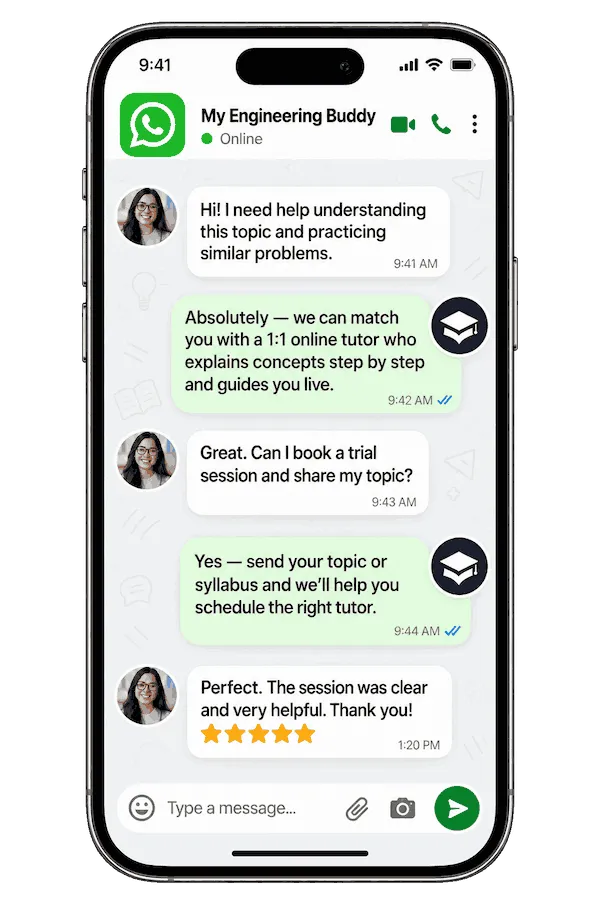
Unlike platforms where you fill out a form and wait, MEB responds in under a minute, 24/7. Tutor match takes under an hour. The $1 trial means you test before you commit. Everything runs over WhatsApp — no logins, no intake forms.
Study Plans (Pick One That Matches Your Goal)
After the diagnostic session, your tutor builds the sequence. Three common structures: Catch-up (1–3 weeks) — intensive sessions targeting the highest-yield gaps before an OSCE or written exam. Exam prep (4–8 weeks) — systematic coverage of all Oral Medicine and Radiology components, with weekly case practice and radiograph interpretation drills. Ongoing weekly support — aligned to your semester schedule and clinical placement, with sessions timed around portfolio submissions and case-based learning assignments. The tutor adjusts the plan as your performance data from each session comes in.
Pricing Guide
Standard Oral Medicine and Radiology tutoring runs $20–$40/hr. Postgraduate-level or specialist radiology interpretation — including CBCT analysis or licensing exam preparation — is available up to $100/hr depending on tutor background and session complexity.
Rate factors: year of study, specific topic complexity (radiograph interpretation typically runs slightly higher than oral medicine content), timeline urgency, and tutor availability.
For students targeting postgraduate dental programmes, fellowship examinations such as FDSRCS, or specialist training entry, tutors with clinical and academic backgrounds in oral medicine or maxillofacial radiology are available at higher rates — share your specific goal and MEB will match the tier to your ambition.
Demand peaks during final BDS exam periods and OSCE preparation windows. Availability shrinks fast in those weeks. Start with the $1 trial — 30 minutes, no registration, no commitment. WhatsApp MEB for a quick quote.
MEB has supported dental students across the UK, US, Canada, Australia, and the Gulf since 2008 — with 1:1 online tutoring in Endodontics, Periodontology, Oral Medicine and Radiology, and dozens of related dental subjects. 52,000+ students. 18 years of trust.
Source: My Engineering Buddy, 2008–2025.
FAQ
Is Oral Medicine and Radiology hard?
It is demanding because it combines two distinct skill sets — clinical diagnosis of mucosal and systemic conditions, and radiographic interpretation. Students who struggle usually lack a systematic reading method for films. With a structured approach and practice on real cases, the subject becomes manageable within a few weeks.
How many sessions are needed?
Most students working toward an OSCE or written exam see meaningful improvement in 8–12 sessions over 4–6 weeks. Students with larger gaps or earlier start points benefit from 16–20 sessions. The tutor sets the pace after the first diagnostic session.
Can you help with homework and assignments?
MEB tutoring is guided learning — you understand the work, then submit it yourself. Tutors help you reason through case-based assignments, radiograph interpretation tasks, and structured clinical questions. See our Academic Integrity policy and Why MEB page for full details on what we help with and what we don’t.
Will the tutor match my exact syllabus or exam board?
Yes. Before the first session, you share your module guide, programme year, and institution. The tutor works to your specific curriculum — whether that is a UK BDS, an Australian dental degree, a North American DMD programme, or a Gulf dental faculty syllabus.
What happens in the first session?
The first session is a diagnostic. The tutor identifies your strongest and weakest areas across oral medicine and radiology, works through one or two cases with you live, and maps the topics to address in order of priority. You leave with a session plan and a clear picture of where your marks are currently being lost.
Is online tutoring as effective as in-person?
For Oral Medicine and Radiology, yes — and in some ways more effective. The tutor annotates radiographs and clinical images directly on screen using a digital pen-pad. You can share your own past paper questions or OSCE cases instantly. There is no travel, no scheduling friction, and sessions are available 24/7 across all time zones.
Can I get Oral Medicine and Radiology help at midnight?
Yes. MEB tutors are available across multiple time zones, including late-night slots for students in the US, Gulf, and Australia. WhatsApp MEB at any hour — median response time is under a minute, and tutor matching typically completes within 60 minutes of your first message.
What if I don’t like my assigned tutor?
Request a change. MEB assigns a replacement tutor — usually within the same day. There is no penalty, no form to fill in, and no minimum session requirement before you can switch. The $1 trial exists precisely so you can test the match before committing to a paid schedule.
Do you cover radiograph interpretation specifically, or only the oral medicine content?
Both — and the tutor treats them as connected, not separate. Radiograph interpretation sessions cover periapical, bitewing, panoramic, and advanced imaging. Oral medicine sessions work through lesion classification, differential diagnosis, and clinical case reasoning. Most students need both, and the tutor integrates them into a single coherent session plan.
How do I find an Oral Medicine and Radiology tutor in my city?
You don’t need to. MEB tutoring is fully online — Google Meet, digital pen-pad, real-time annotation on radiographs and clinical images. Students in London, Toronto, Sydney, Dubai, and Houston all access the same tutor pool. Location is irrelevant. Time zone is matched, always.
What is the difference between Oral Medicine and Oral Pathology tutoring?
Oral Medicine focuses on clinical diagnosis, patient management, and systemic connections. Oral Pathology tutoring covers the microscopic and histological basis of disease. Many students need both — MEB tutors can work across both subjects, or you can request a tutor with strength in the one you need most.
How do I get started?
WhatsApp MEB, share your programme year, institution, and the area you are struggling with. MEB matches you with a verified Oral Medicine and Radiology tutor — usually within an hour. The first session is the $1 trial: 30 minutes live or one question explained in full. Three steps: WhatsApp → matched → start trial.
Trust & Quality at My Engineering Buddy
Every MEB tutor goes through subject-specific vetting — not a generic tutor registration. For Oral Medicine and Radiology, that means a live demo session covering radiograph interpretation and clinical case reasoning, degree and qualification verification, and ongoing performance review based on student session feedback. Rated 4.8/5 across 40,000+ verified reviews on Google. Tutors are matched to your level and programme — not assigned by availability alone.
MEB tutoring is guided learning — you understand the work, then submit it yourself. For full details on what we help with and what we don’t, read our Academic Integrity policy and Why MEB.
MEB has operated since 2008, serving 52,000+ students across the US, UK, Canada, Australia, the Gulf, and Europe in 2,800+ subjects. Dentistry is one of our strongest subject families — including 1:1 support in Orthodontics tutoring, Prosthodontics tutoring, and Operative Dentistry help alongside Oral Medicine and Radiology. You can also read about our tutoring methodology to understand how sessions are structured from diagnostic through to exam readiness.
A common pattern our tutors observe is that dental students underestimate the radiograph interpretation component until an OSCE or written exam reveals the gap. By that point, the exam is often weeks away. The students who do best are the ones who start systematic radiograph practice early — even 6–8 sessions before finals makes a measurable difference.
Explore Related Subjects
Students studying Oral Medicine and Radiology often also need support in:
- Dental Occlusion
- Dental Anatomy
- Dental Materials
- Oral Histology
- Periodontology
- Prosthodontics
- Operative Dentistry
Next Steps
Getting started takes under two minutes. Have these ready:
- Your exam board, programme year, and the specific component you are struggling with — radiograph interpretation, oral lesion diagnosis, clinical case writing, or all three
- Your availability and time zone
- Your exam date, OSCE window, or assignment deadline
Before your first session, also have ready: your module guide or syllabus, a recent past paper section or case question you found difficult, and your exam or OSCE date. The tutor handles the rest.
MEB matches you with a verified Oral Medicine and Radiology tutor — usually within 24 hours. The first session starts with a diagnostic so every minute is used well. Visit www.myengineeringbuddy.com for more on how MEB works.
WhatsApp to get started or email [email protected].
Reviewed by Subject Expert
This page has been carefully reviewed and validated by our subject expert to ensure accuracy and relevance.