Hire Verified & Experienced
Signal Processing Tutors
4.8/5 40K+ session ratings collected on the MEB platform



Hire The Best Signal Processing Tutor
Top Tutors, Top Grades. Without The Stress!

52,000+ Happy Students From Various Universities






How Much For Private 1:1 Tutoring & Hw Help?
Private 1:1 Tutoring and HW help Cost $20 – 35 per hour* on average.
Signal Processing Online Tutoring & Homework Help
What is Signal Processing?
Signal processing is the science of analyzing, modifying and synthesizing signals such as sound, images or biological measurements. It underpins technologies from smartphone audio filters to MRI image reconstruction. Digital Signal Processing (DSP) combines math and algorithms to extract, compress or enhance information in real‑time or offline applications.
Also called time‑series analysis, spectral analysis, transform analysis or signal filtering. Some specialists refer to it simply as “data acquisition and processing” in engineering contexts.
Key topics include sampling theory and the Nyquist‑Shannon theorem, Fourier and Laplace transforms for frequency‑domain analysis, convolution, digital filters (FIR and IIR), Fast Fourier Transform (FFT) algorithms, adaptive filtering, wavelet transforms, statistical signal processing (estimators, detectors), multirate processing, and image processing techniques. Real‑world examples range from ECG denoising in biomedical devices to echo cancellation in telephony and JPEG compression for photos.
Joseph Fourier’s 1807 work on heat conduction first introduced the Fourier series, laying the groundwork for frequency analysis. In 1948 Harry Nyquist and Claude Shannon formulated the sampling theorem, defining how to digitize analog signals without losing information. The Cooley‑Tukey FFT algorithm (1965) revolutionized computation speed. By the 1970s, digital filters ran on minicomputers. Wavelet theory emerged in the 1980s, boosting image compression and data analysis. Today signal processing drives MRI scans, speech recognition and 5G wireless networks—it's used everyday.
How can MEB help you with Signal Processing?
Do you want to learn Signal Processing? At MEB, our private 1:1 online tutoring makes hard topics easy. A dedicated tutor will work with you step by step so you can get top grades on assignments, lab reports, live assessments, projects, essays or dissertations.
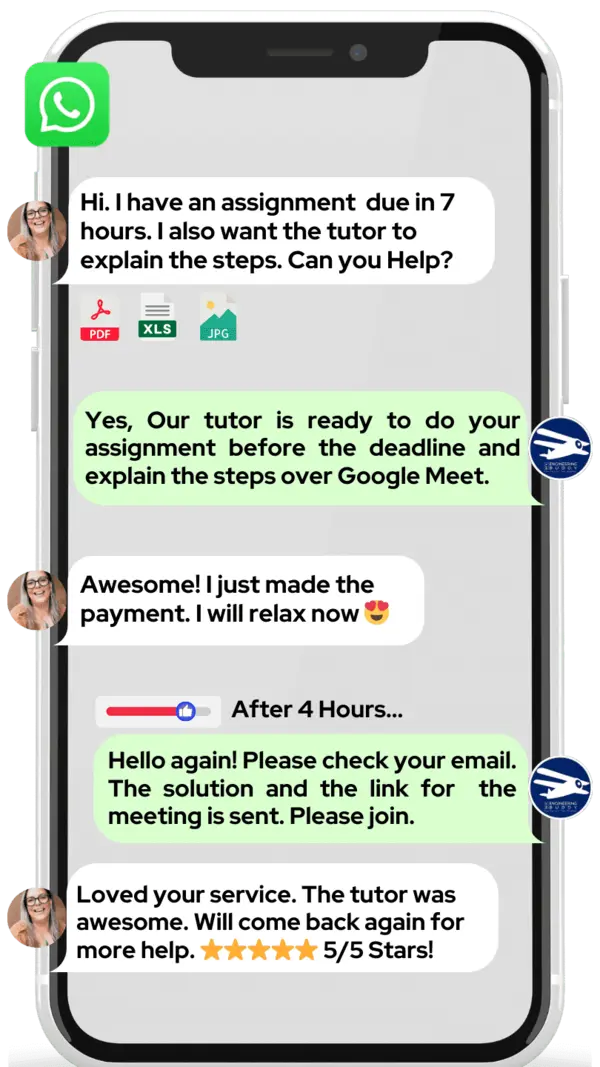
We are ready to help 24 hours a day, 7 days a week. You can chat with us on WhatsApp. If you don’t use WhatsApp, send an email to meb@myengineeringbuddy.com
Students from the USA, Canada, the UK, the Gulf, Europe and Australia trust us because Signal Processing can be tough. Many students have busy schedules, health issues, missed classes or part‑time jobs that make learning harder.
Parents, if your ward is finding Signal Processing difficult, contact us today. Our tutors will help your student feel confident and do their best on exams and homework. They will thank you!
MEB also offers help in over 1000 other subjects. Our expert tutors make learning simple and help every student succeed without stress.
DISCLAIMER: OUR SERVICES AIM TO PROVIDE PERSONALIZED ACADEMIC GUIDANCE, HELPING STUDENTS UNDERSTAND CONCEPTS AND IMPROVE SKILLS. MATERIALS PROVIDED ARE FOR REFERENCE AND LEARNING PURPOSES ONLY. MISUSING THEM FOR ACADEMIC DISHONESTY OR VIOLATIONS OF INTEGRITY POLICIES IS STRONGLY DISCOURAGED. READ OUR HONOR CODE AND ACADEMIC INTEGRITY POLICY TO CURB DISHONEST BEHAVIOUR.
What is so special about Signal Processing?
Signal processing is special because it focuses on turning raw electrical or biological data into clear, useful information. Unlike many subjects, it studies how to filter, compress, and analyze time-based signals like heartbeats or brain waves. This makes it essential in biomedical engineering. Its unique mix of math, computer tools, and real-world data gives students practical skills to solve health and technology challenges.
Compared to other subjects, signal processing links software with real-world data, helping produce clear medical images and fast results. But it can be tough because it demands solid math, programming skills, and signal theory. Its abstract algorithms and heavy calculations may feel challenging for students who prefer hands-on lab work or simpler, theory-based courses in other fields.
What are the career opportunities in Signal Processing?
Signal processing offers graduate degrees like an M.S. or Ph.D. in biomedical engineering, electrical engineering or computer science with a focus on medical imaging, computational neuroscience and telehealth. Specialized certificates cover machine learning, AI, robotics and genomics for cross‑disciplinary research.
Common roles include signal processing engineer, biomedical imaging specialist, data scientist and algorithm developer. Daily tasks involve designing filters, creating reconstruction algorithms, developing real‑time monitoring systems, analyzing sensor data and collaborating with clinicians to improve diagnostic tools.
We study signal processing to understand how to capture, analyze and transform biomedical signals like ECG or EEG. Test preparation builds strong foundations in Fourier transforms, filtering and statistical analysis, ensuring readiness for research, technical interviews and projects.
Applications span MRI, CT, ultrasound imaging, ECG/EEG analysis, wearable health monitors and telemedicine. Key advantages include noise reduction, enhanced image quality, real‑time data processing and automated analysis. New trends integrate AI, the Internet of Medical Things and personalized health monitoring for better patient outcomes.
How to learn Signal Processing?
Start by building a strong base in math and basic engineering concepts. Review algebra, calculus, complex numbers, and linear systems. Move on to fundamental topics like time‐domain and frequency‐domain analysis, Fourier and Laplace transforms, and sampling theory. Follow a structured plan: watch introductory videos, read short chapters, then solve practice problems. Use simulation tools like MATLAB or Python to visualize signals and filters. Tackling small projects, such as designing a simple digital filter, helps cement ideas.
Signal Processing can seem tough because it mixes theory, proofs, and hands‐on work. Its math—especially transforms—and abstract concepts can feel challenging at first. However, most students find it manageable when they focus on understanding core ideas rather than memorizing formulas. Regular practice, clear examples, and relating topics to real signals (audio, images, sensors) make it much easier over time.
You can learn many Signal Processing topics on your own, especially with free online courses and textbooks. Self‑study works if you’re disciplined about reading, practicing, and checking solutions. But a good tutor speeds up learning by answering questions, pointing out pitfalls, and guiding you through tricky problems. Tutors help you avoid wasted time and keep you motivated.
At MEB, we offer 24/7 one‑on‑one tutoring and assignment support in Signal Processing. Our tutors hold degrees in Biomedical Engineering and related fields, so they’ll give you clear explanations, stepwise solutions, and tips customized to your course or exam. We also assist with assignments, projects and exam prep at fees that fit most student budgets.
How long it takes depends on your background and goals. If you’re refreshing basics and need an exam review, 4–6 weeks with 8–10 hours per week is practical. For deeper mastery—covering analog and digital processing, algorithms and hands‑on tools—plan on 3–6 months of steady study. Adjust your timeline based on course pace and how complex your projects are.
For quick learning, check out these resources: • YouTube: MIT OpenCourseWare Signals and Systems, Brian Douglas’s DSP channel, and Acoustics Engineering tutorials. • Websites: Coursera’s “Digital Signal Processing” by EPFL, Khan Academy for transforms, dsprelated.com for forums. • Books: “Discrete‑Time Signal Processing” by Oppenheim & Schafer, “Digital Signal Processing” by Proakis & Manolakis, and “Theory and Application of Digital Signal Processing” by Rabiner & Gold.
College students, parents, tutors from USA, Canada, UK, Gulf etc: if you need a helping hand, be it online 1:1 24/7 tutoring or assignments, our tutors at MEB can help at an affordable fee.
Reviewed by Subject Expert
This page has been carefully reviewed and validated by our subject expert to ensure accuracy and relevance.