~1 min
Average Reply Time
~1 hour
To Be Matched With A Tutor
30 Min Trial
75% Find Their Tutor On The 1st Trial
$20-35+/hr
Premium Yet Affordable Learning
Hire The Best SQLite Tutor


Your SQLite queries are failing in production and your deadline is in 48 hours. That’s exactly when MEB’s tutors pick up.
SQLite Tutor Online
SQLite is a self-contained, serverless relational database engine widely used in mobile apps, embedded systems, and coursework projects. It uses standard SQL syntax and equips learners to design schemas, write queries, and manage local databases without a server setup.
If you’re searching for a SQLite tutor near me, MEB connects you with a verified 1:1 online SQLite tutor within the hour — no intake forms, no waiting lists. As part of MEB’s broader Software Engineering tutoring offering, SQLite help covers everything from basic SELECT statements to complex JOIN logic, transaction management, and real project integration. One session often closes the gap that three hours of documentation-reading couldn’t.
- 1:1 online sessions tailored to your course syllabus or project requirements
- Expert-verified tutors with hands-on SQLite and database experience
- Flexible time zones — US, UK, Canada, Australia, Gulf
- Structured learning plan built after a diagnostic session
- Guided project support — we explain, you build
52,000+ students across the US, UK, Canada, Australia, and the Gulf have used MEB since 2008 — including students in Software Engineering subjects like SQLite, MySQL tutoring, and PostgreSQL help.
Source: My Engineering Buddy, 2008–2025.
How Much Does a SQLite Tutor Cost?
Most SQLite tutoring sessions run $20–$40/hr depending on level and project complexity. Graduate-level or niche integration work can reach $60–$100/hr. Not sure if it’s worth it? The $1 trial gets you 30 minutes of live tutoring or one project question explained in full — before you spend anything else.
| Level / Need | Typical Rate | What’s Included |
|---|---|---|
| Standard (most undergrad/bootcamp levels) | $20–$35/hr | 1:1 sessions, project guidance |
| Advanced / Graduate / Specialist | $35–$100/hr | Expert tutor, architecture & performance depth |
| $1 Trial | $1 flat | 30 min live session or 1 project question |
Tutor availability tightens around end-of-semester deadlines and capstone submission windows. Book early if your timeline is under two weeks.
WhatsApp MEB for a quick quote — average response time under 1 minute.
Who This SQLite Tutoring Is For
SQLite catches people off guard. It looks simple until you’re three layers deep in a schema design with cascading foreign keys and no idea why your INSERT is silently failing. This is for anyone who has hit that wall.
- Undergraduate and graduate CS or data science students with SQLite coursework or project components
- Bootcamp students integrating SQLite into a Python, Django, or Flask project
- Students with a capstone or final project submission deadline approaching fast
- Developers moving from MySQL or PostgreSQL and confused by SQLite’s type affinity and missing features
- Students retaking a database module after a failed first attempt — this is one of the most common reasons people contact MEB for SQLite help
- Self-taught developers building mobile apps with SQLite via Android or iOS and running into query performance issues
Students have come to MEB from programmes at institutions including MIT, the University of Toronto, Imperial College London, Georgia Tech, the University of Melbourne, and NYU. The tutor matches your course context — not a generic database curriculum.
1:1 Tutoring vs Self-Study vs AI vs YouTube vs Online Courses
Self-study works if you already know what you don’t know. AI tools like ChatGPT give fast answers but can’t watch you write a broken JOIN and tell you exactly where your logic went wrong. YouTube covers SQLite basics well but stops the moment your specific schema gets complicated. Online courses move at a fixed pace — they don’t wait while you’re stuck on WAL mode or trigger behaviour. 1:1 tutoring with MEB is live, calibrated to your actual project or assignment, and corrects errors before they become habits. For SQLite specifically, where silent errors and type coercion issues mislead even experienced developers, real-time feedback is the difference between guessing and understanding.
Outcomes: What You’ll Be Able To Do in SQLite
After working with an MEB SQLite tutor, students consistently leave with capabilities they can use the same day. You’ll be able to write and debug complex SELECT, INSERT, UPDATE, and DELETE queries without relying on trial and error. You’ll be able to design normalised schemas with appropriate primary keys, foreign keys, and constraints for real application data. You’ll be able to explain SQLite’s type affinity system — why it behaves differently from MySQL and PostgreSQL, and when that matters. You’ll be able to implement transactions and understand ACID guarantees in the context of SQLite’s concurrency model. You’ll be able to integrate SQLite with Python, Django, Flask, or Android confidently, knowing your data layer won’t break under realistic conditions.
These aren’t abstract goals. They’re what students report being able to do after roughly 8–12 hours of focused 1:1 work.
Based on feedback from 40,000+ sessions collected by MEB from 2022 to 2025, 58% of students improved by one full grade after approximately 20 hours of 1:1 tutoring in subjects like SQLite. A further 23% achieved at least a half-grade improvement.
Source: MEB session feedback data, 2022–2025.

What We Cover in SQLite (Syllabus / Topics)
Core SQL and Database Fundamentals
- SELECT, WHERE, GROUP BY, HAVING, ORDER BY — syntax and logic
- JOIN types: INNER, LEFT, CROSS, and self-joins
- Subqueries, CTEs (WITH clause), and nested queries
- INSERT, UPDATE, DELETE with constraint handling
- Primary keys, foreign keys, UNIQUE, NOT NULL, CHECK constraints
- Indexes: when to create them, how SQLite uses them, covering indexes
- Views and virtual tables
Core references: SQLite Documentation (sqlite.org), Priya Pedamkar’s SQLite Tutorial series, and Database System Concepts by Silberschatz, Korth & Sudarshan.
SQLite Architecture and Advanced Features
- SQLite’s serverless, file-based architecture vs client-server databases
- Type affinity: TEXT, NUMERIC, INTEGER, REAL, BLOB — and why SQLite is dynamically typed
- Transactions: BEGIN, COMMIT, ROLLBACK, SAVEPOINT
- WAL (Write-Ahead Logging) mode vs journal mode — when each matters
- Triggers: BEFORE, AFTER, INSTEAD OF
- Full-text search with FTS5
- PRAGMA statements for schema inspection and performance tuning
Key references: The Definitive Guide to SQLite by Mike Owens & Grant Allen, and the official SQLite PRAGMA documentation.
Integration and Applied Projects
- Python sqlite3 module: connecting, cursor operations, parameterised queries
- SQLite with Django ORM and Flask-SQLAlchemy — when raw SQL beats ORM
- Android SQLite integration: SQLiteOpenHelper, ContentProviders
- iOS with Core Data and direct SQLite via FMDB or SQLite.swift
- Data migration: importing CSV, JSON into SQLite; schema versioning
- Testing SQLite-backed applications: in-memory databases for unit tests
Applied references: Flask Web Development by Miguel Grinberg, Android Programming: The Big Nerd Ranch Guide, and the Python sqlite3 standard library documentation.
At MEB, we’ve found that SQLite confusion almost never starts with syntax. It starts with a gap in understanding how SQLite’s type system and concurrency model differ from other databases students learned first. Fix that gap early and the rest of the subject clicks into place.
Platforms, Tools & Textbooks We Support
SQLite work spans several environments and MEB tutors are comfortable across all of them. Sessions are adapted to wherever your project lives.
- DB Browser for SQLite (SQLiteStudio alternative)
- Python (sqlite3 module, SQLAlchemy, pandas read_sql)
- Django and Flask frameworks
- Android Studio with SQLiteOpenHelper
- Xcode with SQLite.swift or FMDB
- Jupyter Notebook with sqlite3 and ipython-sql
- DBeaver (multi-database GUI supporting SQLite)
What a Typical SQLite Session Looks Like
The tutor opens by checking what you covered last time — often the WHERE clause logic or a JOIN you were building. You share your screen or paste your current schema and query. The tutor works through it with you on a digital pen-pad, annotating the SQL in real time. When something’s wrong — a missing GROUP BY, an unindexed column slowing your query, a transaction that isn’t rolling back as expected — the tutor stops and explains the why, not just the fix. You rewrite it yourself while the tutor watches. The session closes with one or two practice queries to attempt before next time, and a note on what topic comes next: usually either subqueries, trigger logic, or the specific integration point your project needs.
How MEB Tutors Help You with SQLite (The Learning Loop)
Diagnose: In the first session, the tutor identifies exactly where your understanding breaks down. For SQLite, that’s usually one of three places — schema design, JOIN logic, or the type affinity system. The diagnostic takes 10–15 minutes and shapes every session that follows.
Explain: The tutor works through live problems using a digital pen-pad, showing the query being built step by step. You see the reasoning, not just the answer. For SQLite specifically, tutors often compare behaviour side-by-side with MySQL or PostgreSQL to make the differences concrete.
Practice: You attempt a modified version of the problem while the tutor watches. This is where most of the learning happens — not in the explanation, but in the attempt.
Feedback: Every error gets a diagnosis, not just a correction. If your subquery returns unexpected rows, the tutor explains the execution order, not just the fix. If your index isn’t being used, you learn why the query planner ignored it.
Plan: Each session ends with a clear next topic, a short practice task, and a check on your deadline. The tutor keeps the sequence moving toward your actual goal — a passing grade, a working app, or a confident project demo.
Sessions run on Google Meet. The tutor uses a digital pen-pad or iPad with Apple Pencil to annotate queries and schemas in real time. Before your first session, share your project brief or assignment description, a sample of the SQL you’ve written so far, and your deadline. Start with the $1 trial — 30 minutes of live tutoring that also serves as your first diagnostic. Whether you need a quick catch-up before a submission, structured work over 4–8 weeks, or ongoing support through a semester-long project, the tutor maps the session plan after that first session.
Students consistently tell us that the moment SQLite finally clicks is when they stop memorising syntax and start thinking about what the database engine is actually doing with their query. That shift usually happens in a single session with the right tutor.
MEB has served students across the US, UK, Canada, Australia, and the Gulf since 2008 — in MongoDB tutoring, RDBMS help, and SQLite project support at undergraduate and graduate level.
Source: My Engineering Buddy, 2008–2025.
Tutor Match Criteria (How We Pick Your Tutor)
Not every database tutor is right for every SQLite student. Here’s what MEB matches on:
Subject depth: The tutor must have direct experience with SQLite — not just general SQL. That means understanding type affinity, WAL mode, and the specific quirks that trip up students coming from MySQL or PostgreSQL.
Tools: Every tutor uses Google Meet with a digital pen-pad or iPad and Apple Pencil. You see the query being built, not just a finished answer.
Time zone: Matched to your region — US, UK, Gulf, Canada, or Australia. No mismatched schedules.
Goals: Whether you need to pass a module, finish a capstone project, or get your Django or Android app’s data layer working correctly, the tutor is briefed on your specific context before session one.
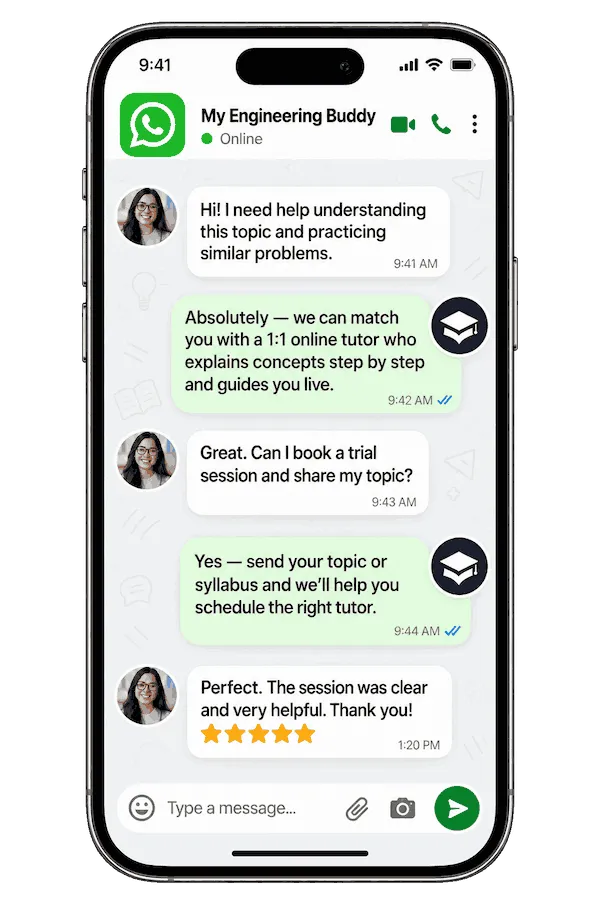
Unlike platforms where you fill out a form and wait, MEB responds in under a minute, 24/7. Tutor match takes under an hour. The $1 trial means you test before you commit. Everything runs over WhatsApp — no logins, no intake forms.
Pricing Guide
SQLite tutoring runs $20–$40/hr for most undergraduate and bootcamp-level work. Graduate-level architecture, performance optimisation, or complex integration projects can reach $100/hr depending on tutor expertise and timeline pressure.
Rate factors: topic complexity (basic queries vs. WAL-mode tuning), your deadline, tutor availability, and level of study. Demand spikes in April–May and November–December — book ahead if your project submission falls in those windows.
For students targeting roles at companies where SQLite expertise is expected — mobile app studios, embedded systems teams, fintech firms — tutors with professional software engineering backgrounds are available at higher rates. Share your specific goal and MEB will match the tier to your ambition.
Start with the $1 trial — 30 minutes, no registration, no commitment. WhatsApp MEB for a quick quote.
FAQ
Is SQLite hard to learn?
SQLite’s syntax is standard SQL, so the basics come quickly. The difficulty is in its non-obvious behaviour — type affinity, missing features like RIGHT JOIN in older versions, and WAL concurrency. Most students hit a wall at those points, not at SELECT.
How many sessions will I need?
Most students see meaningful progress in 4–6 sessions. A full project build or module rescue typically takes 10–20 hours. The tutor scopes this after the first diagnostic — you won’t be kept on longer than you need.
Can you help with projects and portfolio work?
Yes — MEB provides guided learning support. The tutor explains the logic, walks through the approach, and helps you understand the solution. All project work is produced and submitted by you. See our Policies page for details.
Will the tutor match my exact syllabus or exam board?
Yes. Before matching, MEB asks for your course outline or project brief. If your module uses a specific framework — Django, Flask, Android — the tutor is briefed accordingly. Generic database tutoring isn’t what MEB does.
What happens in the first session?
The first 10–15 minutes are diagnostic. The tutor reviews your current code, schema, or query attempts and identifies the exact gap. The rest of the session is live problem-solving. You leave with a working understanding, not just a fixed file.
Is online SQLite tutoring as effective as in-person?
For a code-based subject like SQLite, online is often better. Screen sharing, real-time query annotation with a pen-pad, and the ability to paste SQL directly into the session make the feedback loop faster than sitting next to someone at a whiteboard.
SQLite vs MySQL vs PostgreSQL — which should I be learning?
SQLite is the right choice for embedded apps, mobile development, and coursework projects that don’t need a server. If your course or project specifies SQLite, that’s your answer. MEB tutors also cover MySQL and PostgreSQL — and can explain the tradeoffs so you understand when each fits.
Can I get SQLite help at midnight or over the weekend?
Yes. MEB operates 24/7 across time zones. WhatsApp is the fastest contact method — average first response is under one minute. Weekend and late-night sessions are common, especially near submission deadlines.
What if I don’t get on with my assigned tutor?
Request a switch via WhatsApp. MEB keeps a pool of verified SQLite tutors and will rematch you without delay. The $1 trial is partly designed for this — you evaluate fit before spending more.
How do I get started?
Three steps: WhatsApp MEB with your subject and deadline, get matched with a verified SQLite tutor — usually within the hour — then start the $1 trial. Thirty minutes live or one question explained, before you commit to anything further.
Why does SQLite behave differently from the SQL I learned in class?
SQLite uses dynamic typing and type affinity rather than strict column types. It also lacks some SQL features — no RIGHT JOIN in versions before 3.39.0, no native FULL OUTER JOIN. These gaps aren’t bugs; they’re design choices for a serverless engine. A tutor explains which differences matter for your specific project and which you can safely ignore.
Can MEB help me optimise a slow SQLite query in a real app?
Yes. The tutor reviews your schema, checks index usage with EXPLAIN QUERY PLAN, and identifies whether the bottleneck is a missing index, a poorly structured JOIN, or a WAL-mode configuration issue. This is one of the most requested applied SQLite topics at MEB.
Try your first session for $1 — 30 minutes of live 1:1 tutoring or one homework question explained in full. No registration. No commitment. WhatsApp MEB now and get matched within the hour.
Trust & Quality at My Engineering Buddy
Every MEB tutor goes through subject-specific screening — not a general interview. For SQLite, that means demonstrating working knowledge of schema design, query optimisation, and at least one integration environment (Python, Android, or iOS). Tutors complete a live demo session before being matched with students. Ongoing session feedback is reviewed and tutors with declining ratings are removed. Rated 4.8/5 across 40,000+ verified reviews on Google.
MEB provides guided learning support. All project work is produced and submitted by the student. For full details on what we help with and what we don’t, read our Academic Integrity policy and Why MEB.
MEB has been running since 2008 and has served 52,000+ students across the US, UK, Canada, Australia, the Gulf, and Europe in 2,800+ subjects. Within Software Engineering, that includes back-end development tutoring, Docker help, and SQLite project support at every level from first-year coursework to graduate capstone. The platform is built around one principle: the tutor who shows up knows the subject well enough to diagnose your specific gap in the first 15 minutes.
MEB tutors cover the full Software Engineering stack — from system design tutoring to database-layer work in SQLite, across undergraduate, graduate, and professional development contexts.
Source: My Engineering Buddy, 2008–2025.
A common pattern our tutors observe is students arriving with a working query that produces wrong results. They’ve tested it, it runs — but the output is silently wrong. That kind of bug takes five minutes to spot with a tutor and five hours alone.
Explore Related Subjects
Students studying SQLite often also need support in:
Next Steps
Getting started takes less than five minutes.
- Share your project brief, assignment, or course outline — and your exam board or module code if applicable
- Share your availability and time zone
- MEB matches you with a verified SQLite tutor — usually within an hour, sometimes faster
- First session starts with a diagnostic so every minute is used on what actually matters
Before your first session, have ready: your course outline or project brief, a sample of the SQL or schema you’ve written so far (even if it’s broken), and your deadline date. The tutor handles the rest.
Visit www.myengineeringbuddy.com for more on how MEB works.
WhatsApp to get started or email [email protected].
Reviewed by Subject Expert
This page has been carefully reviewed and validated by our subject expert to ensure accuracy and relevance.