How Storage Systems Impact Workflow in Australian Facilities

Storage systems are not passive infrastructure. In Australian warehouses, manufacturing plants, and distribution centers, storage design directly determines how fast goods move, how safely people work, and how efficiently space is used.
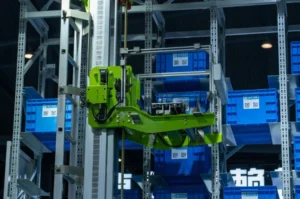
Workflow is not just about people and processes, it is shaped by racking layouts, material handling equipment, and increasingly, software-driven coordination systems.
Across Australia, where logistics costs, labor availability, and facility space all carry measurable constraints, storage systems are being treated as operational tools rather than static installations.
The shift is practical, not theoretical. Better storage design leads to faster throughput, lower handling time, and fewer errors.
Check Out: Get Personalized Online Tutoring
The Link Between Storage Design and Workflow Efficiency
At the most basic level, storage systems define movement. Where items are stored, how they are accessed, and how they are transported determines the entire workflow sequence.
Pallet racking systems are the standard foundation. They organize inventory into defined locations, making it easier to retrieve and move goods without unnecessary searching or repositioning. This structured layout reduces congestion and improves access speed, especially when paired with forklifts and automated systems.
The impact becomes clearer when looking at space utilization. Australian facilities increasingly rely on vertical storage to avoid expanding floor area.
High-density racking allows businesses to store more inventory within the same footprint, which directly shortens travel distances and reduces idle time between tasks.
There is also a safety component tied to workflow. Organized storage reduces clutter, which improves traffic flow and lowers accident risk.
This is not just a compliance issue, it affects operational continuity. Facilities with fewer disruptions maintain more consistent throughput.
In practice, storage systems define how work flows through a facility, from receiving to dispatch.
The Ultimate Guide to Online Tutoring 2026: Expert Tips, Pricing & Platform Reviews
Material Handling Equipment and Workflow Integration
Storage systems do not operate alone. They are tightly connected to material handling equipment, particularly forklifts.
Forklifts are central to Australian warehouse operations because they compress multiple tasks into a single workflow step. Loading, unloading, and internal transport can all be handled by one operator, which reduces labor requirements and speeds up processing times.
Their ability to move goods quickly between storage locations and transport points directly affects cycle times. Faster movement means shorter delays between receiving inventory and making it available for picking or shipping.
This is where equipment selection becomes part of storage design. Different forklift types support different workflows.
Reach trucks enable high vertical storage, narrow aisle forklifts increase storage density, and electric models support indoor operations with lower emissions.
For facilities evaluating or upgrading their handling systems, suppliers like a well-known local firm All Lift Forklifts provide access to equipment configurations that align with specific storage layouts and operational requirements.
The key point is that storage systems and handling equipment must be designed together. Mismatches between the two create bottlenecks that slow down the entire operation.
Automation and Its Effect on Workflow
Automation is becoming a defining factor in Australian storage systems, particularly in larger facilities.
Automated racking systems replace or supplement traditional forklift-based workflows. Instead of operators retrieving goods manually, shuttle systems or robotic units handle storage and retrieval. This reduces handling time and increases accuracy, especially in high-volume environments.
Automation also improves consistency. Human-operated workflows can vary depending on experience, fatigue, or workload. Automated systems operate with predictable timing, which stabilizes output rates.
The integration of warehouse execution systems adds another layer. These systems coordinate inventory movement in real time, directing both human workers and machines to optimize flow across the facility.
In Australian logistics, where efficiency margins are often tight, this level of coordination can significantly improve performance.
However, automation introduces its own constraints. It requires upfront investment, system integration, and ongoing maintenance. Not all facilities benefit equally, particularly smaller operations where flexibility may be more valuable than full automation.
How Online Tutoring Enhances Test Prep for Standardized Exams
Layout Decisions That Change Everything
The layout of a storage system is one of the most underestimated factors in workflow efficiency.
Aisle width is a key variable. Narrow aisles increase storage density but require specialized equipment. Wider aisles allow faster movement but reduce total storage capacity. The trade-off is operational, not just spatial.
Clear pathways are equally important. Obstructions, poor layout design, or inconsistent storage practices can disrupt traffic flow, leading to delays and increased accident risk.
Vertical expansion is another trend in Australian facilities. Instead of expanding outward, many warehouses are increasing racking height, sometimes reaching 15 meters or more with the appropriate equipment.
This approach maximizes space but requires precise coordination between storage systems and handling equipment.
These layout decisions are not isolated. They interact with every part of the workflow, from picking speed to equipment utilization.
The Role of Scalability in Storage Systems
Australian facilities often deal with fluctuating demand, particularly in sectors like retail, manufacturing, and agriculture. Storage systems need to adapt to these changes without requiring complete redesigns.
Modular racking systems allow for adjustments in configuration as inventory levels or product types change. This flexibility supports long-term workflow efficiency by avoiding disruptions during scaling.
Forklift fleets can also be scaled through rental or hire models, allowing businesses to adjust capacity without committing to permanent assets. This approach aligns storage capability with actual demand, rather than fixed assumptions.
Scalability is not just about growth. It is about maintaining consistent workflow under changing conditions.
Also Read: 24/7 Premium 1:1 Tutoring For Standardized Tests
Where Workflow Breaks Down
Even well-designed storage systems can fail if certain factors are not managed properly.
One common issue is misalignment between storage density and accessibility. High-density systems can increase capacity but slow down retrieval if not properly configured.
Another issue is underutilized vertical space. Facilities that rely too heavily on floor storage often experience congestion and inefficient movement patterns.
There is also the challenge of integration. Storage systems, equipment, and software must work together. If one component is outdated or incompatible, it can create delays across the entire workflow.
These breakdowns are not theoretical. They are measurable in terms of time lost, increased labor costs, and reduced throughput.
Check Out: Top 10 Common Myths About Online Tutoring
What Australian Facilities Are Moving Toward
The direction is clear. Storage systems in Australia are becoming more integrated, more vertical, and more data-driven.
Facilities are combining high-density racking with advanced forklifts and selective automation. They are using software to coordinate movement and optimize resource allocation in real time.
At the same time, there is a focus on safety and compliance. Organized storage reduces injury risk, which is both a regulatory requirement and an operational advantage.
The result is a shift from static storage to dynamic systems that actively shape workflow.
The Practical Takeaway
Storage systems are not just about where goods sit. They determine how goods move.
In Australian facilities, workflow efficiency is directly tied to how storage is designed, how equipment is selected, and how systems are integrated. Improvements in any one of these areas can produce measurable gains in productivity, safety, and cost control.
The facilities that perform best are not necessarily the largest or the most automated. They are the ones where storage systems, handling equipment, and workflow processes are aligned.
******************************
This article provides general educational guidance only. It is NOT official exam policy, professional academic advice, or guaranteed results. Always verify information with your school, official exam boards (College Board, Cambridge, IB), or qualified professionals before making decisions. Read Full Policies & Disclaimer , Contact Us To Report An Error