Space-Saving Toilet Layouts and Fixtures for Small Bathrooms Explained

- In small bathrooms, layout planning matters as much as fixture choice.
- Measure clearances, door swing, and stack placement before buying any toilet.
- Compact, wall-hung, and corner toilets each suit different space constraints.
- Architectural education teaches human-scale design principles applicable to real bathrooms.
- Professional installation is essential for wall-hung and basement toilet setups.
In places like Montreal, Laval, or any of the older suburbs, space can be a luxury. Several homes, including the duplexes and triplexes, were designed with compact bathrooms. Residents in those properties may face problems when they have to install a new toilet. It is not just about picking a model — you need to make the most of every square inch.
You may think that a toilet is a simple fixture. However, the truth is that in a small bathroom, poor layout, or a wrong model can lead to usage issues. This may sound like a headache. However, the good thing is that you can overcome it by doing proper research and selecting the right plumbing service provider. This will make it easy to installer une toilette.
Students studying civil engineering will recognise these spatial constraints immediately — the same principles of load paths, drainage gradients, and systems integration that govern large structures apply at the scale of a single bathroom.
The Importance of Layout in Small Bathrooms
A bathroom is more than pipes and porcelain tiles! This is extensively used all over the year. If you live in an older property with outdated design features, renovating the bathroom will be necessary. You also need to focus on getting the right toilet.
When you want to install a new toilet, the layout is important. Here’s why:
- You have to look at easy mobility.
- The plumbing flow has to be good with water supply lines, drains, and vents, properly aligned.
- It should be well-suited for people with larger body types.
When the toilet layout is poor, daily routines turn into frustrations.
To avoid these frustrations, you need to systematically check your space before buying any fixtures. The flowchart below outlines the critical layout checks you must perform first.
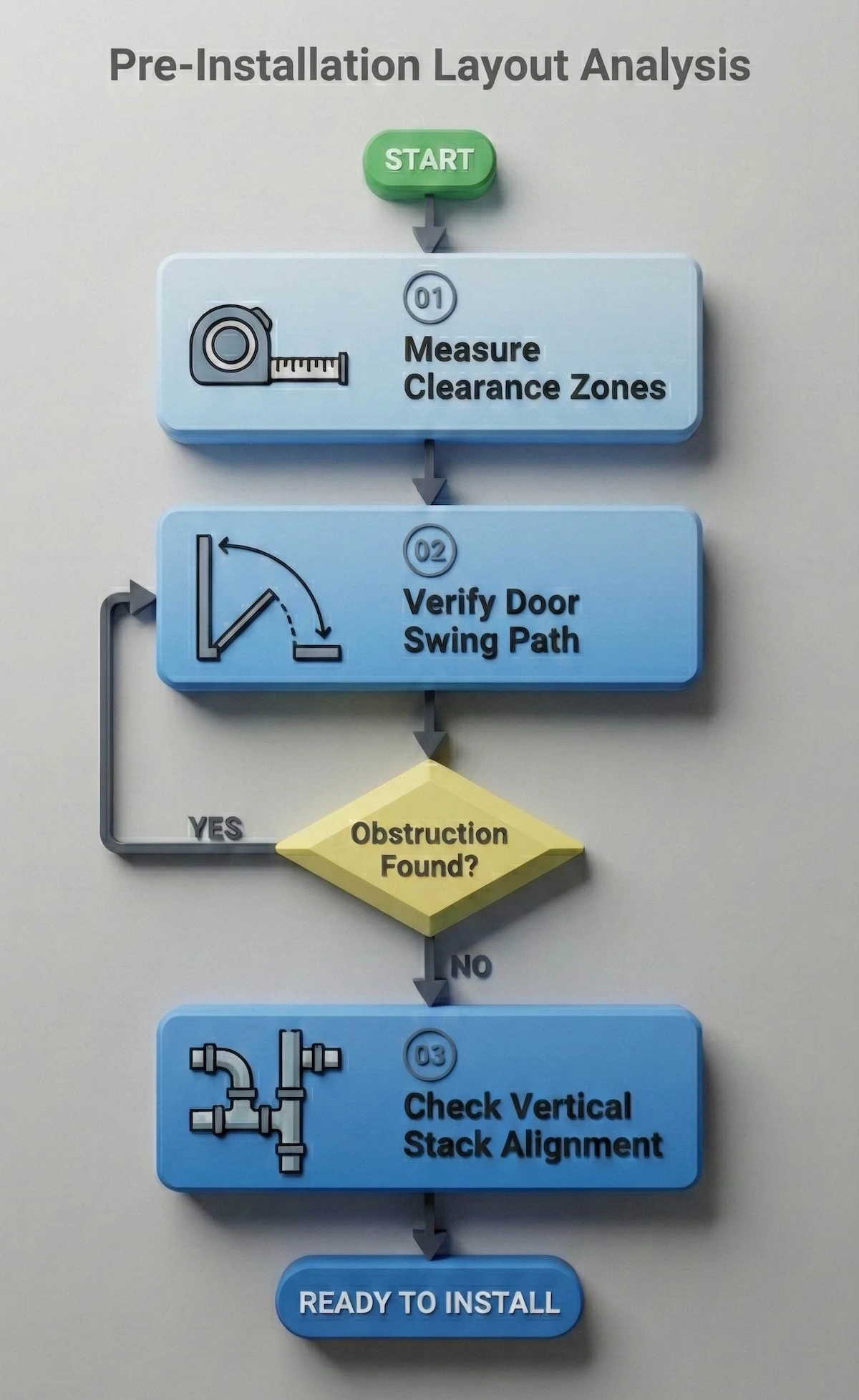
This workflow ensures you check critical clearance and plumbing factors before installation begins.
By verifying these three specific zones—clearance, door swing, and stack alignment—you prevent the most common installation headaches.
And this is exactly the kind of thing design students learn early in architectural education. Tiny bathrooms are like puzzles. A professor might hand over a 6’x8′ plan and say, “Make it work.” That means accounting for door swings, toilet clearances, vent pipes, and still keeping the space human-friendly.
Major Layout Issues to Analyze Before Toilet Installation
Make sure that you consider these aspects:
First, measure the space carefully. In small bathrooms, every inch counts. The space behind and to the sides of the toilet does matter. A veteran plumber will be able to guide you in this regard.
Think of the way the door opens or swings, as that can take up some space. When you choose a new toilet unit, keep this aspect in mind.
When you add a toilet to a second floor or basement, think of the stack placement. For a toilet upstairs, rerouting the plumbing may be necessary to tie into vertical stacks. A basement toilet might need a sewage ejector pump.
Students of architecture call this part “systems integration.” Plumbing lines, ventilation ducts, structural framing—they all fight for space in older buildings. Good planning avoids a situation where you end up with a cramped corner toilet that nobody really wants to use.
It can be hard to visualize how these hidden elements compete for the same space inside your walls. This diagram breaks down the ‘systems integration’ conflict points you need to watch for.
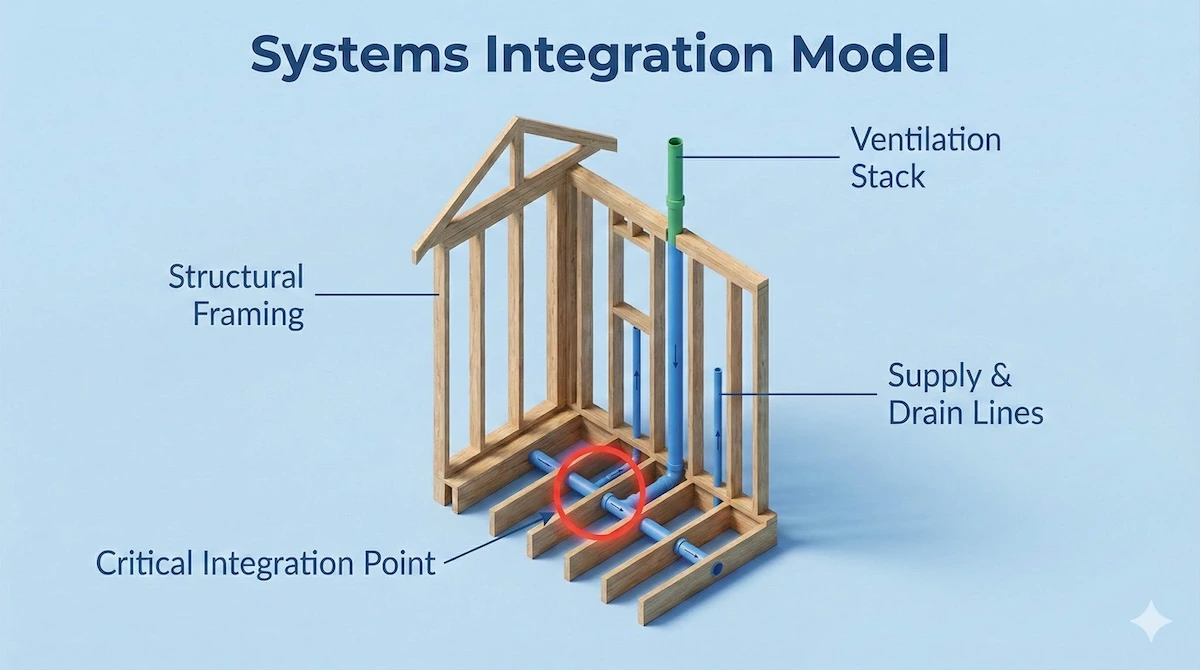
Understanding how plumbing, vents, and framing interact inside the wall prevents costly installation errors.
Notice how the plumbing stack (blue) and ventilation (green) must navigate around the structural framing (brown) without compromising the wall’s integrity.
The same systems-thinking approach is central to mechanical engineering tutoring, where students learn to manage competing constraints — fluid flow, thermal loads, and structural limits — within a confined envelope.
Smart Fixture Choices You Will Benefit From
You can certainly go for modern and compact toilet models to suit your usage needs better. Take advice from top plumbing entities to find out what works best for your situation.
- Compact toilets fit well into smaller rooms. The round-bowl models fit the bill better here.
- In the modern condos across Montreal, you will find wall-hung toilets. The tank is hidden, and the benefit is more space inside the bathroom. The wall framing must be good, and you will need professional installation.
- Corner Toilet is a popular option for people with small bathrooms.
Choosing between these options depends on your specific constraints—whether it’s floor space, installation skill, or maintenance. Use this comparison table to decide which fixture matches your renovation capabilities.
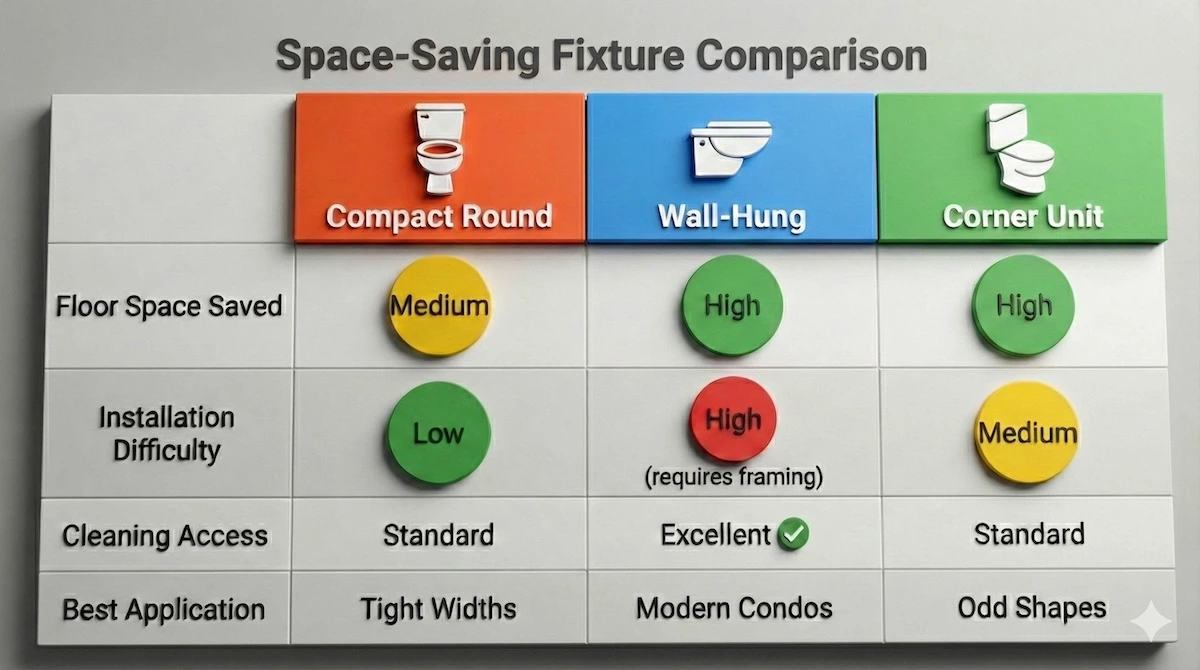
Compare installation difficulty and space savings to choose the right fixture for your layout.
As you can see, while wall-hung models offer the most space savings, they require significantly more complex installation work compared to standard compact units.
This is where the overlap between architecture school and real-world plumbing becomes obvious. Wall-hung toilets are often used as teaching examples because they free up floor space, make cleaning easier, and shift the design language of the bathroom. On paper it looks great, but in reality, you need strong framing and a skilled plumber. Education covers the concept; tradespeople make it real.
Understanding material behaviour and load-bearing requirements in wall-hung installations is also a topic covered when students seek help with organic chemistry as it relates to polymer-based sealants and adhesives used in modern bathroom construction.
Why Architectural Education Matters in Bathroom Design
Courses on residential design often highlight bathrooms as “critical nodes.” They’re small but used constantly. They demand a balance of efficiency and comfort.
Students learn that proportionality matters: the toilet has to align with the human body, not just the floor plan. They also study accessibility—how layouts can adapt for mobility aids or future retrofits.
Lessons often come down to three takeaways:
- Scale everything to the human body first, not the drawing sheet.
- Avoid creating traffic jams where doors, fixtures, and people collide.
- Think long-term: today’s trendy layout may not suit tomorrow’s needs.
These educational principles aren’t just abstract theories; they dictate how a human body interacts with the room. Here is how architects visualize ‘Human Scale’ design to ensure comfort and accessibility.
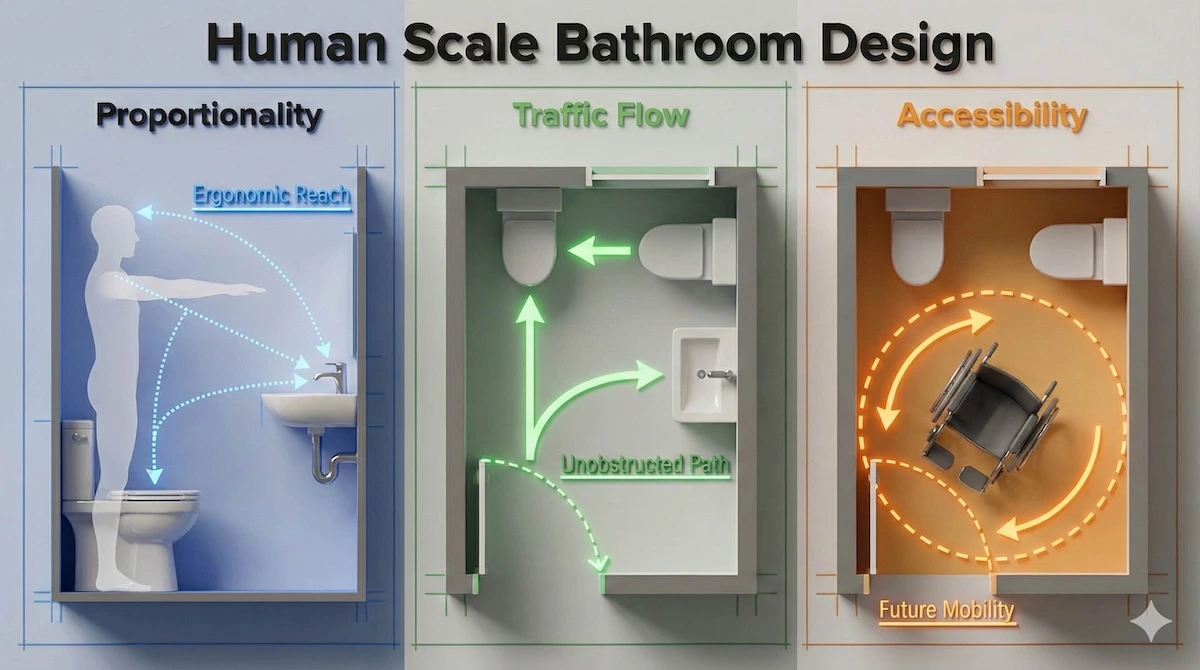
Architectural design focuses on human ergonomics and future accessibility, not just fitting fixtures.
Designing for ‘Future Mobility’ ensures your bathroom remains functional for aging residents or guests with disabilities, adding long-term value to the home.
So while homeowners may just want “a toilet that fits,” architects in training are sketching ways to make a cramped room feel like it belongs to the house, not just a leftover corner.
The ergonomic and anatomical principles behind human-scale design connect directly to fields like human anatomy tutoring, where understanding body proportions and movement ranges informs everything from furniture height to bathroom clearance standards.
For students exploring how language and regional design traditions shape architectural vocabulary, this deep dive into A-Level French offers useful context on how Francophone design culture influences spaces like those found in Montreal’s older housing stock.
Summing It Up
You can choose a one or two-unit toilet for renovation or installation. However, get it done by a professional plumbing company and avoid the DIY route. Only top plumbing service entities can get everything right, including modifying the plumbing network and using proper ventilation, etc. For a better idea of professional plumbing services, you can check out https://www.plomberie5etoiles.com/.
And if you step back, it’s clear that small bathrooms aren’t just a plumbing challenge. They’re an architectural lesson. They prove that design education and trade skills need each other—blueprints can’t flush a toilet, and pipes alone can’t make a space livable. It’s when the two worlds meet that even the tiniest Montreal bathroom starts to feel just right.
Readers interested in how structured learning supports complex design thinking may also find value in this Masterclass review covering pricing, features, and alternatives for online education platforms.
Those navigating multilingual design documentation or international building standards might benefit from exploring this comprehensive guide to mastering A-Level German, particularly relevant for students working across European architectural traditions.
For students balancing design coursework with broader academic demands, online Gujarati tutoring is one example of how language support can complement technical study programmes.
Understanding how policy and regulation shape building codes is another dimension of architectural education; this guide to A-Level Politics explores how governance frameworks influence real-world design decisions.
Related Reading
******************************
This article provides general educational guidance only. It is NOT official exam policy, professional academic advice, or guaranteed results. Always verify information with your school, official exam boards (College Board, Cambridge, IB), or qualified professionals before making decisions. Read Full Policies & Disclaimer , Contact Us To Report An Error