Everything You Need to Know About Taking Private Exams in the UK

For many students across the United Kingdom, exams mark an important milestone in their academic journey. But not every learner follows the same path. Some may be homeschooled, studying independently, or re-sitting exams to improve their grades.
For these candidates, taking private exams provides a flexible and accessible route to achieving their educational goals.
If you’re planning to register as a private candidate, this guide will walk you through everything you need to know from choosing the right exam centre to preparing effectively for exam day.
Check Out: Get Personalized Online Tutoring
1. What Are Private Exams?
Private exams are official qualifications such as GCSEs, IGCSEs, A Levels, or Functional Skills taken by students who are not enrolled in a traditional school or college for those particular subjects.
Private candidates arrange their own exam entries and sit their papers at an approved exam centre. These centres are authorised by major UK awarding bodies such as AQA, Edexcel (Pearson), OCR, and Cambridge Assessment International Education.
This system allows independent learners, adult students, and home-educated pupils to gain the same recognised qualifications as school students. The certificate you receive is identical to one awarded to any school-based pupil there is no distinction on the certificate itself.
Private exams are also sometimes called external candidate exams or independent candidate exams. The terminology varies by exam board, but the process and outcome are the same.
2. Who Can Take Private Exams?
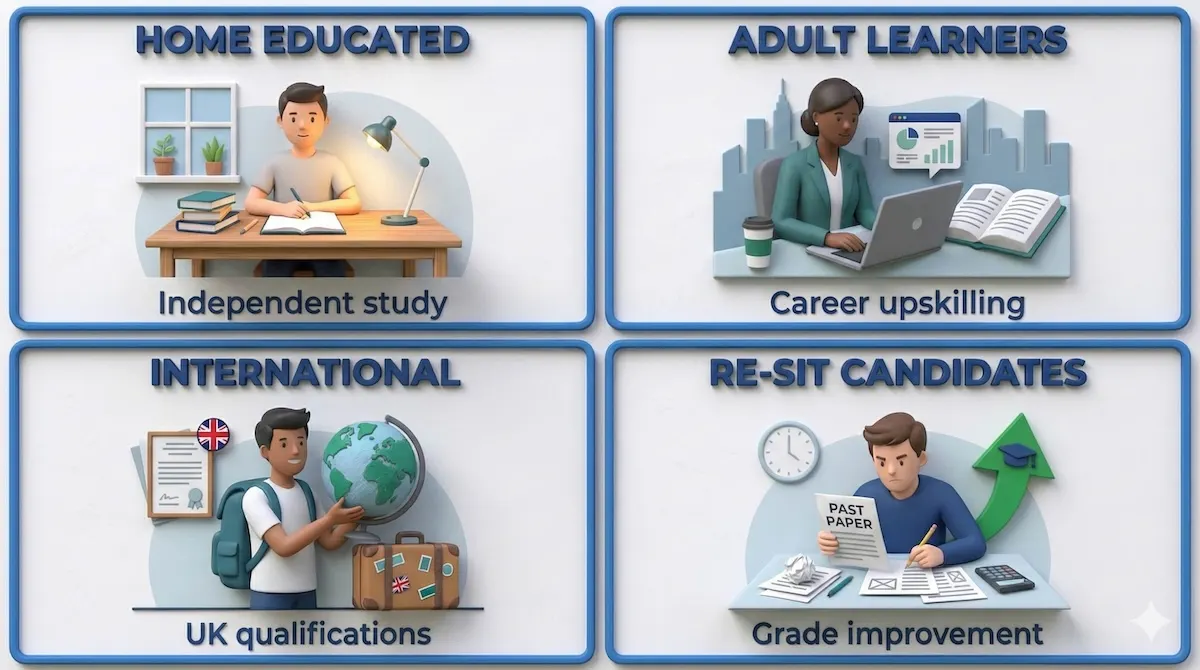
Private exams are suitable for a wide range of learners, including:
- Home-educated students who study outside of mainstream schools.
- Adult learners looking to gain or improve qualifications for career advancement.
- International students residing temporarily in the UK who want recognised British qualifications.
- Re-sit candidates aiming to improve previous exam results.
- University or job applicants needing specific subjects to meet entry requirements.
Private exams are open to everyone, from home-schoolers to adults looking to upgrade their careers. No matter which category you fall into, the qualification you receive is identical to that of a school-based student.
Private exam entry gives you the freedom to learn at your own pace while still earning official qualifications.
3. Types of Private Exams You Can Take
Private exam centres in the UK offer a broad range of qualifications, including:
- GCSEs and IGCSEs — Available in subjects such as Mathematics, English Language, Science, History, and more.
- A Levels — Offered in traditional academic subjects for university entrance.
- Functional Skills — Ideal for learners seeking practical qualifications in English, Maths, and ICT.
- University Admission Tests — Such as BMAT, UCAT, or LNAT (availability varies by centre).
- Language Proficiency Exams — Like IELTS or ESOL tests for non-native English speakers.
Always check with your chosen exam centre to confirm which boards and subjects they offer, as not every centre is registered with every awarding body.
Some specialist subjects particularly those with practical or coursework components such as Art, Music performance, or Design Technology may have limited availability at private exam centres. If your subject has a coursework component, contact the centre well in advance to clarify their arrangements.
The Ultimate Guide to Online Tutoring 2026: Expert Tips, Pricing & Platform Reviews
4. How to Register for a Private Exam
Registering for a private exam is usually straightforward. Most exam centres follow a similar process:
- Select your exam subjects and awarding body. Decide whether you’ll be sitting with AQA, Edexcel, OCR, or Cambridge.
- Contact an approved exam centre. Provide your details, subjects, and preferred exam session (summer or autumn).
- Complete the registration form. You’ll need to supply personal information and identification (like a passport or ID card).
- Pay the exam fees. Fees vary depending on the subject, exam board, and level.
- Receive your confirmation and timetable. The centre will confirm your entry and share details about your exam dates, times, and location.
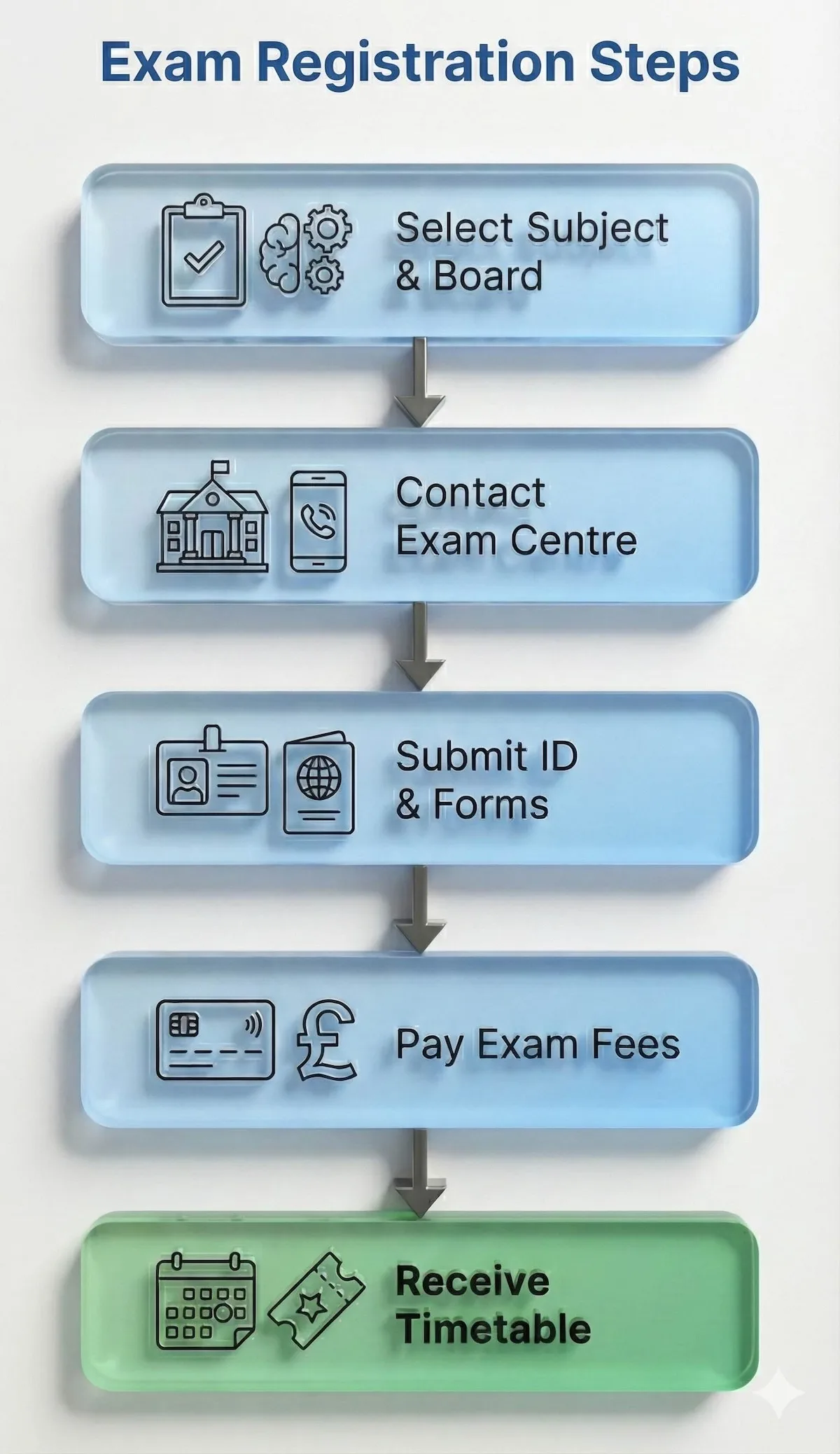
Completing these steps early ensures you avoid late fees and secure your preferred exam centre. It’s best to register well in advance of the entry deadlines. Here are the typical registration windows you should plan around:
| Exam Session | Entry Deadline (Typical) | Late Entry Deadline | Results Release |
|---|---|---|---|
| Summer (May/June) | Mid-February | Late March | Mid-August |
| Autumn (October/November) | Early September | Late September | January |
Deadlines vary slightly between exam boards and centres, so always confirm with your chosen centre directly. Late entries typically incur an additional fee of £20–£50 per subject depending on the board.
How Online Tutoring Enhances Test Prep for Standardized Exams
5. Choosing the Right Exam Centre
Selecting a reliable and experienced exam centre is essential for a smooth experience. Here’s what to look for:
- Accreditation: Make sure the centre is approved by major UK awarding bodies.
- Range of subjects: A good centre should offer a wide variety of GCSEs, A Levels, and vocational qualifications.
- Support services: Some centres offer extra help such as invigilation, coursework submission, or special arrangements for students with additional needs.
- Location and accessibility: Choose a centre that’s easy to reach and offers comfortable exam facilities.
- Reputation: Check reviews and feedback from other candidates to ensure reliability and professionalism.
For instance, Exam Centre Birmingham Limited is a well-established private exam centre that provides professional support and flexible booking options for students across the UK. Centres like this help ensure your exam experience is well-organised and stress-free.
When comparing centres, keep this checklist in mind to ensure you choose a facility that meets professional standards.
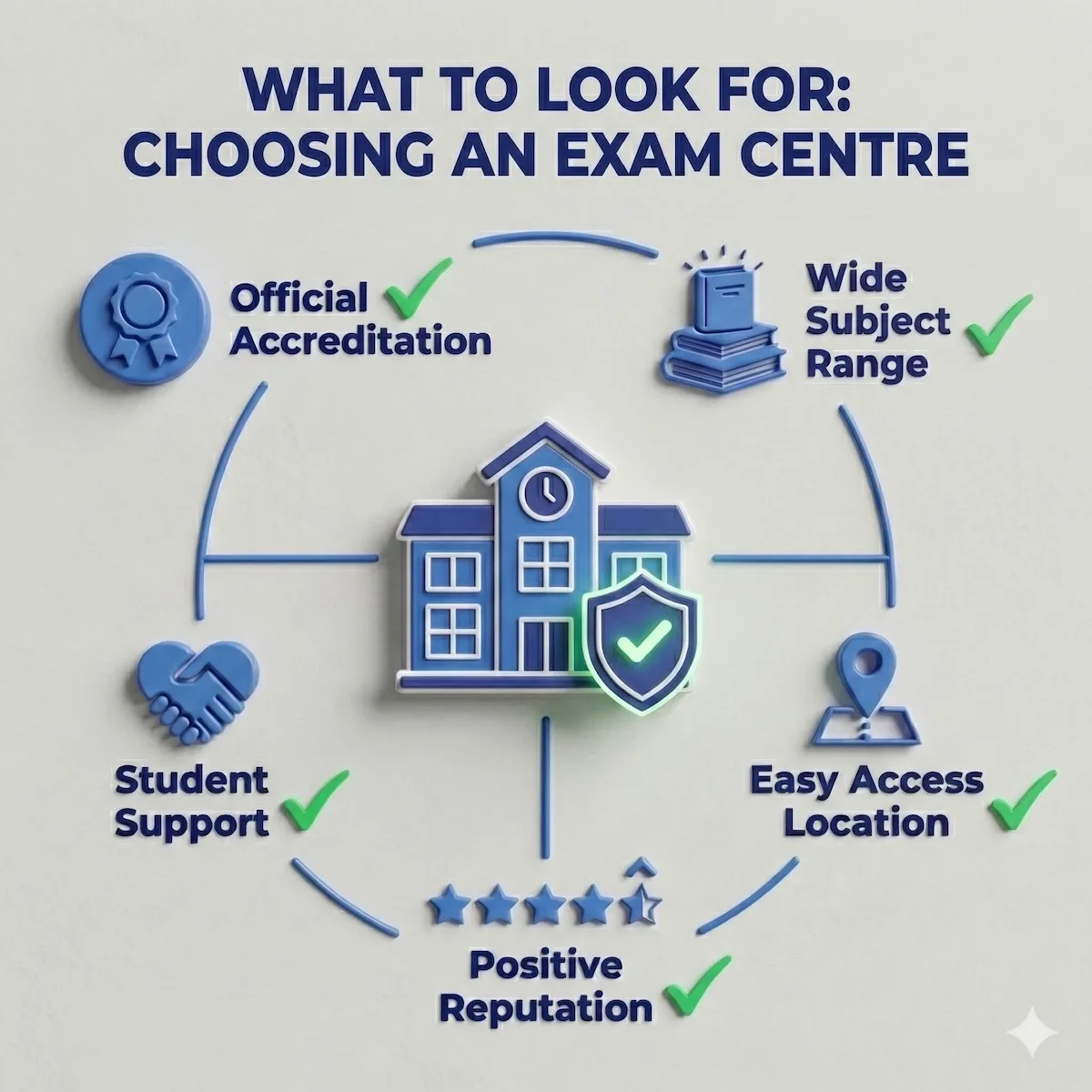
A centre ticking all these boxes will provide the reliable environment you need to perform your best.
Also Read: 24/7 Premium 1:1 Tutoring For Standardized Tests
6. How Much Do Private Exams Cost?
Exam fees for private candidates depend on several factors, including the subject, level, and exam board. Costs are generally higher than those paid by school students because exam centres charge an administration fee on top of the base entry fee charged by the awarding body.
| Qualification | Typical Cost Per Subject | Additional Fees |
|---|---|---|
| GCSE / IGCSE | £100 – £180 | Practical assessment: +£20–£50 |
| A Level | £150 – £250 | Coursework moderation: +£30–£60 |
| Functional Skills (Level 1/2) | £80 – £120 | Retake fees may apply |
| IELTS Academic | £185 – £210 | Remarking available at extra cost |
| Late Entry (any level) | Standard fee + £20–£50 | Per subject |
Budgeting for your future: Estimated costs per subject for major UK qualifications.
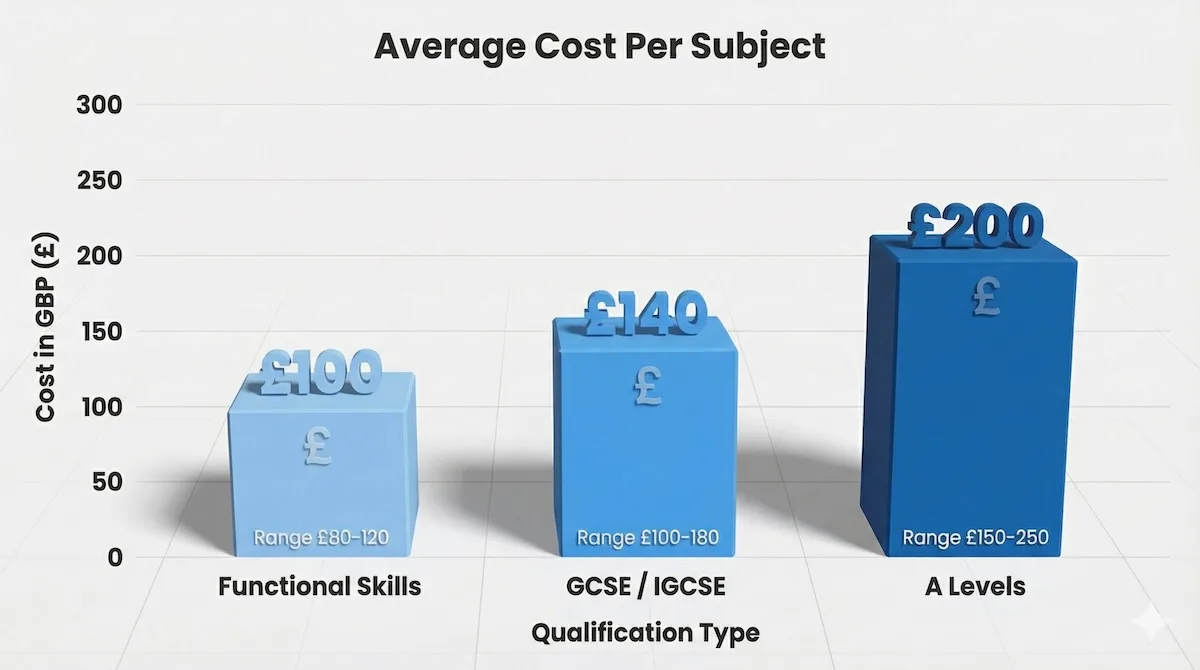
Remember to factor in potential extra costs for practicals or late entries when planning your budget. Additional fees may apply for practical assessments, coursework moderation, or late registrations.
While private exams do come with costs, they provide flexibility and independence making them a worthwhile investment for many learners. If budget is a concern, contact your local council or an education charity to ask whether any funding or subsidy schemes apply to your situation.
7. How to Prepare for Your Private Exams
Since private candidates usually study independently, preparation is key. Here are a few tips:
- Use official exam board materials. Visit your exam board’s website for past papers, mark schemes, and exam specifications.
- Create a realistic study schedule. Plan regular revision sessions and track your progress.
- Seek tutoring or online support. Platforms like My Engineering Buddy connect students with expert tutors for GCSE, IGCSE, and A Level subjects, helping them strengthen concepts and prepare effectively for exams.
- Practise under timed conditions. Simulate real exam scenarios to build confidence.
- Stay organised. Keep all exam information, timetables, and identification ready ahead of time.
If you choose an exam centre that offers additional academic support, take advantage of their guidance to ensure you’re fully prepared.
Consider forming a study network with other private candidates or joining online communities where independent learners share resources and revision tips. Studying privately doesn’t have to mean studying alone.
Read More: StudyX Online Tutoring Review: Features, Pricing, and Alternatives
8. What Happens on Exam Day
When exam day arrives, follow your centre’s instructions carefully. Generally:
- Arrive at least 30 minutes early.
- Bring your photo ID and any permitted stationery.
- Listen carefully to the invigilators’ instructions.
- Stay calm and focused throughout the paper.
- Once finished, check that your details are correctly filled in before submitting your script.
Knowing exactly what to expect can reduce nerves. Here is your protocol for the morning of the exam.
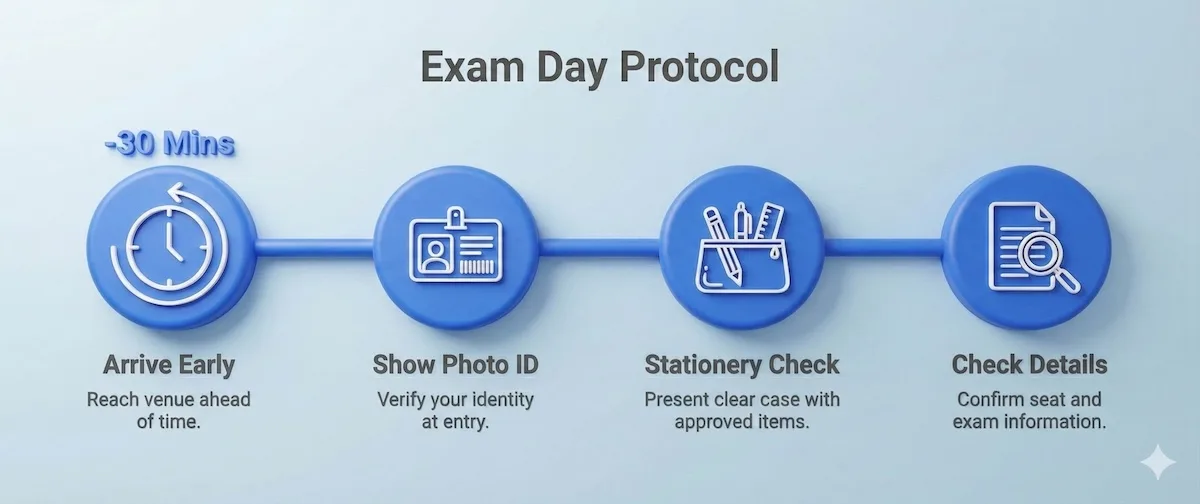
Following this simple routine allows you to focus entirely on answering the questions rather than worrying about logistics. Most centres will post or email your results on the same day they are released nationally by the awarding bodies (usually mid-August for summer exams).
9. Why Private Exams Are a Great Option
Taking exams privately offers several key advantages:
- Flexibility in choosing when and where to take your exams.
- Control over your own study schedule and resources.
- Accessibility for home-educated, adult, or international learners.
- Opportunities to re-sit and improve grades.
- Personalised support from professional exam centres that understand the needs of independent candidates.
Whether you’re pursuing higher education, changing careers, or simply completing unfinished studies, private exams can open the door to new opportunities. Many universities and employers accept private exam results on exactly the same basis as school-based results, so your route to qualification is entirely legitimate and respected.
Read More: Top 10 Online Tutoring Websites Worldwide
Conclusion
Private exams in the UK give students the freedom to learn and achieve qualifications on their own terms. With the support of a trusted exam centre, independent candidates can successfully complete their GCSEs, A Levels, or other qualifications with confidence.
If you’re ready to take your next step, start by exploring accredited exam centres in your area and registering for your chosen subjects. With careful preparation and the right guidance, success is well within your reach.
For expert one-to-one support as you prepare, visit My Engineering Buddy’s A Level tutoring page to connect with a qualified tutor who can help you achieve the grade you need. You can also explore the full range of subjects and support options at My Engineering Buddy.
Frequently Asked Questions
Can anyone take a private exam in the UK?
Yes. Any individual can register as a private candidate for UK qualifications including GCSEs, IGCSEs, A Levels, and Functional Skills. There are no age restrictions for most qualifications. You simply need to find an approved exam centre, register before the deadline, and pay the relevant fees. Schools and colleges are not involved in the process.
How do I find an approved private exam centre near me?
You can search for approved centres on the websites of UK awarding bodies including AQA, Edexcel (Pearson), OCR, and Cambridge Assessment International Education. Each awarding body maintains a list of centres authorised to accept private candidates. Centres like Exam Centre Birmingham Limited also accept students from across the UK and may offer options for students who cannot find a local provider.
How much does it cost to sit a GCSE or A Level privately?
GCSE and IGCSE exams typically cost between £100 and £180 per subject. A Level exams range from approximately £150 to £250 per subject. These fees include the exam centre’s administration charge on top of the base awarding body fee. Practical components and late entries may incur additional charges. Always confirm total costs with your chosen centre before registering.
What is the registration deadline for private exams?
For summer exams (May/June), the typical entry deadline is mid-February, with a late entry window extending to late March. For autumn resits (October/November), entries usually close in early September. Exact deadlines vary between awarding bodies and individual centres, so always verify with your centre as soon as possible to avoid missing the window.
Will my private exam certificate look different from a school student’s?
No. The certificate issued to a private candidate is identical to the one issued to a school-based student. There is no indication on the certificate that the exam was taken privately. Universities, employers, and professional bodies treat private exam results in exactly the same way as school-issued results.
Can I get extra time or special arrangements as a private candidate?
Yes, but you need to request these in advance. Private exam centres can apply to the relevant awarding body for access arrangements such as extra time, a scribe, or a separate room. You will typically need supporting documentation such as a letter from a doctor, psychologist, or specialist teacher. Contact your exam centre as early as possible these requests take time to process and must be approved before the exam.
******************************
This article provides general educational guidance only. It is NOT official exam policy, professional academic advice, or guaranteed results. Always verify information with your school, official exam boards (College Board, Cambridge, IB), or qualified professionals before making decisions. Read Full Policies & Disclaimer , Contact Us To Report An Error