What Is the SAT Exam? Complete Guide for Beginners

- The SAT is scored out of 1600, split equally between Math and Reading/Writing.
- The digital SAT (2024+) is adaptive and takes approximately 2 hours 14 minutes.
- Top engineering programmes typically require a composite of 1480+ and Math 750+.
- SAT Subject Tests were discontinued in 2021; only the SAT Reasoning Test remains.
- Official College Board and Khan Academy practice materials are available free of charge.

The SAT is a standardised college admissions exam used by universities across the United States and increasingly by international applicants to provide a common academic benchmark alongside high school grades and extracurricular activities.
It measures college readiness in two core areas: reading and writing, and mathematics. For students targeting engineering programmes, the SAT carries particular weight because the Math section directly reflects the quantitative skills that top engineering schools prioritise in their admissions. Students who want structured support can work with an SAT tutor to build those skills systematically.
This guide covers what the SAT is, how the current digital format works, what the sections contain, how scoring works, what score you need for top engineering colleges, and a structured preparation approach for beginners.
Beyond the Books: How Smart SAT Prep is Changing the College Admissions GameSAT Basics: Purpose, Types, and Who Should Take It
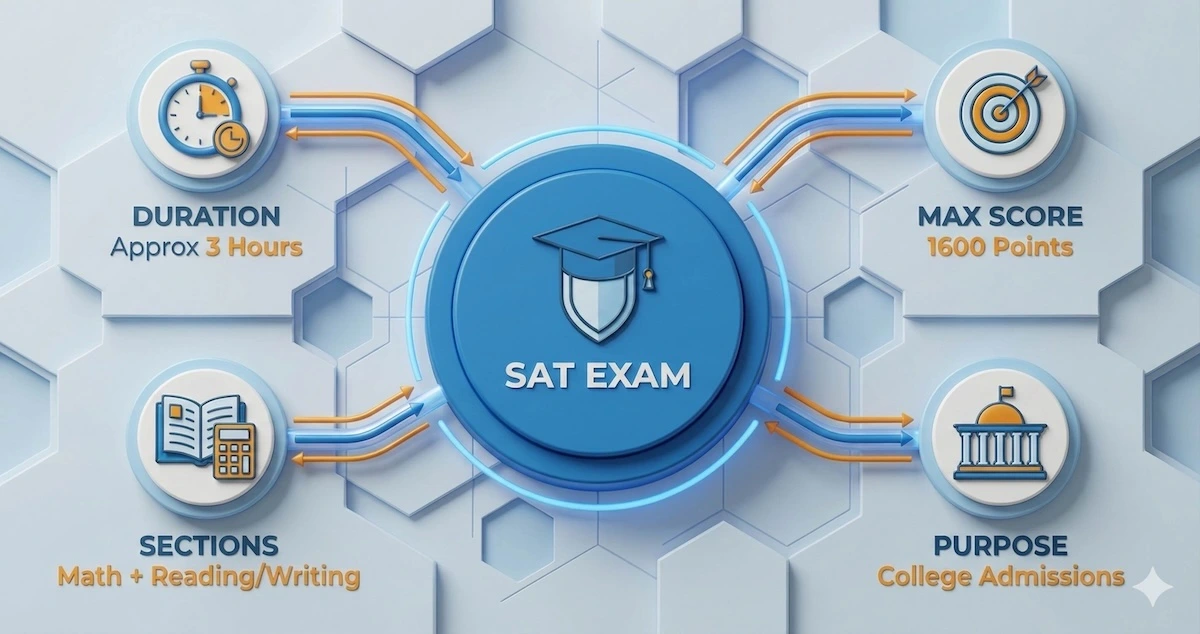
The SAT was developed by the College Board and is taken by approximately 2 million students per year. It is accepted by virtually all four-year colleges and universities in the United States as part of the admissions process. Many students also submit SAT scores when applying to international programmes and scholarships.
The SAT is most commonly taken by high school students in Years 11 and 12 (equivalent to Sixth Form in the UK or Class 11–12 in India), with many students sitting it more than once to improve their score before college deadlines. It is also taken by:
- International students applying to US colleges who need a standardised academic metric
- Students applying for merit scholarships that specify a minimum SAT score
- Students seeking to demonstrate academic readiness for selective programmes
SAT vs SAT Subject Tests
The College Board discontinued SAT Subject Tests in 2021. The term “SAT” now refers exclusively to the SAT Reasoning Test. There is no longer a separate Subject Test option; students who need to demonstrate subject-specific competence for admissions should check whether their target institution accepts AP (Advanced Placement) exam scores instead. Students preparing for AP-level work may also benefit from working with an AP Seminar tutor to strengthen their analytical and evidence-based reasoning skills.
SAT Format, Sections, and Timing
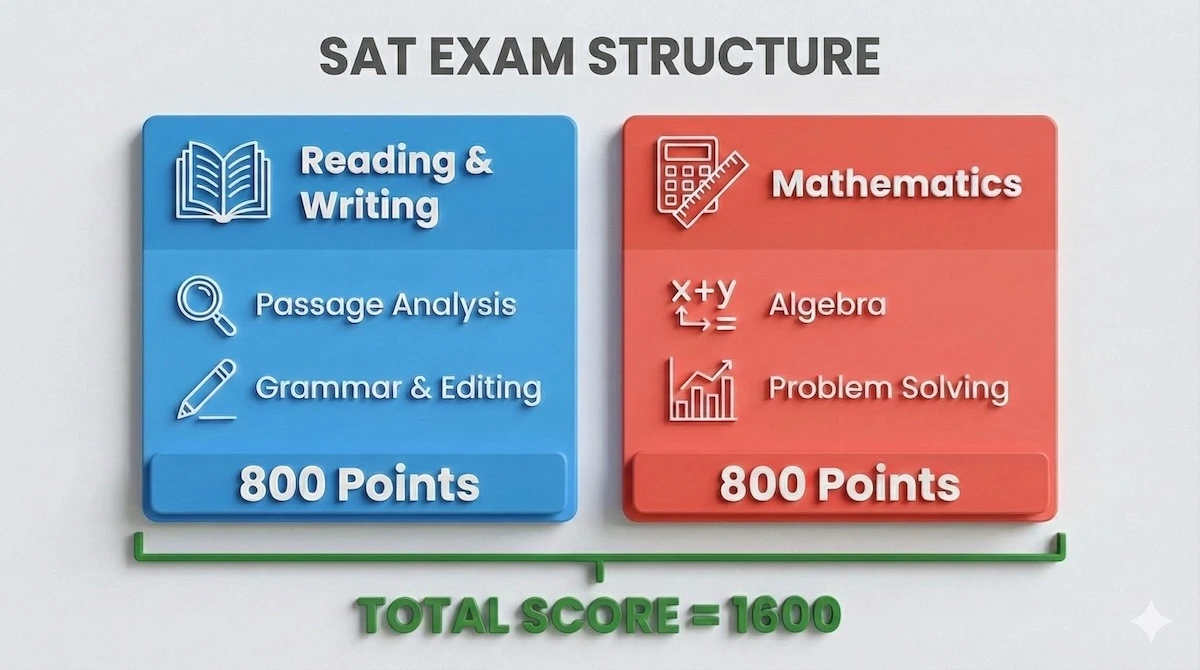
The SAT became fully digital in 2024. The current digital SAT is shorter than the previous paper-based version and uses an adaptive testing format, meaning the difficulty of the second module in each section adjusts based on your performance in the first module.
The digital SAT has two main sections:
| Section | Questions | Time Allowed | Score Range |
|---|---|---|---|
| Reading and Writing | 54 questions (2 modules of 27) | 64 minutes (32 min per module) | 200–800 |
| Math | 44 questions (2 modules of 22) | 70 minutes (35 min per module) | 200–800 |
| Total | 98 questions | ~2 hours 14 minutes | 400–1600 |
The adaptive format means there is no fixed “easy” or “hard” version of the test. All students begin with the same first module; students who perform better in Module 1 are routed to a harder Module 2, which gives access to higher score ranges. Students who perform less well in Module 1 receive an easier Module 2 but face a lower ceiling on their final score. This means that strong performance in Module 1 is critical.
Reading and Writing Section in Detail
The Reading and Writing section tests comprehension, vocabulary in context, editing and expression, grammar, and evidence-based reasoning. Questions are presented as short passages (25–150 words each) followed by a single question. Topics span literature, history, social studies, and science.
For engineering applicants, the STEM-themed passages are particularly familiar questions about scientific processes, data interpretation from graphs, and technical prose appear regularly.
Math Section in Detail
The Math section covers four main content areas:
- Algebra — linear equations, inequalities, systems of equations (approximately 35% of questions)
- Advanced Math — quadratic equations, polynomial functions, rational expressions (approximately 35%)
- Problem-Solving and Data Analysis — ratios, percentages, statistics, data interpretation (approximately 15%)
- Geometry and Trigonometry — area, volume, coordinate geometry, right triangles, basic trig (approximately 15%)
A calculator is permitted for the entire Math section on the digital SAT (Desmos graphing calculator is built in). Approximately 75% of questions are multiple choice; the remaining 25% are student-produced response (fill in your own answer) questions. Students who want to strengthen their algebra and calculus foundations ahead of the SAT may find it useful to work with an A-Level Mathematics tutor to consolidate the underlying concepts.
How the SAT Is Scored and What Is a Good SAT Score

The SAT is scored on a scale of 400–1600. Each section (Reading and Writing, Math) is scored between 200 and 800, and the two section scores are added together for the composite score. There is no penalty for wrong answers on the digital SAT; every question answered has either a positive score contribution or zero.
Score benchmarks to understand:
- National average: approximately 1050 (based on recent College Board data)
- Competitive threshold for selective universities: 1400+
- Top-tier engineering school threshold: 1480–1580 (see full table below)
- Perfect score: 1600
Scores are reported within 2–4 weeks of the test date. You can choose to send your score to colleges before seeing it, or withhold it and decide after you receive it. The College Board’s Score Choice policy allows you to select which test date scores to send, so retaking the SAT to improve your score does not require revealing lower previous attempts to all colleges.
What SAT Score Do You Need for Top Engineering Colleges?
For engineering applicants, the SAT Math score carries the most weight in admissions decisions at selective engineering programmes. Most top engineering schools publish their middle 50% SAT score range, meaning 50% of admitted students fall within these bounds — 25% scored lower and 25% scored higher.
| Engineering College | Middle 50% SAT Composite | Middle 50% SAT Math | Acceptance Rate |
|---|---|---|---|
| MIT | 1510–1580 | 790–800 | ~4% |
| Caltech | 1530–1580 | 790–800 | ~3–4% |
| Stanford | 1500–1570 | 780–800 | ~4% |
| Carnegie Mellon (Engineering) | 1480–1570 | 780–800 | ~11% |
| UC Berkeley (Engineering) | 1350–1540 | 730–800 | ~11% |
| University of Michigan (Engineering) | 1340–1530 | 720–790 | ~17% |
| Georgia Tech | 1330–1520 | 720–790 | ~16% |
| Purdue (Engineering) | 1250–1480 | 670–780 | ~43% (engineering varies) |
Note: Score ranges are approximate based on most recently available data. Always verify current requirements directly with each institution, as ranges can shift by admission cycle.
A score in the bottom quarter of a school’s range is not automatically disqualifying, particularly if other parts of the application are strong. However, for engineering programmes specifically, a weak SAT Math score below 700 for schools where the median is 750+ will require compensating strength elsewhere (GPA, AP Calculus/Physics grades, engineering project experience).
For students targeting the most selective engineering programmes, a Math score of 780–800 is the realistic target. Students considering aerospace or aviation engineering pathways can also explore what aerospace engineering tutoring involves to understand the quantitative demands ahead.
Unlocking Your Future: A Deep Dive into Conquering the EmSATSAT Prep Tips for Engineering Applicants
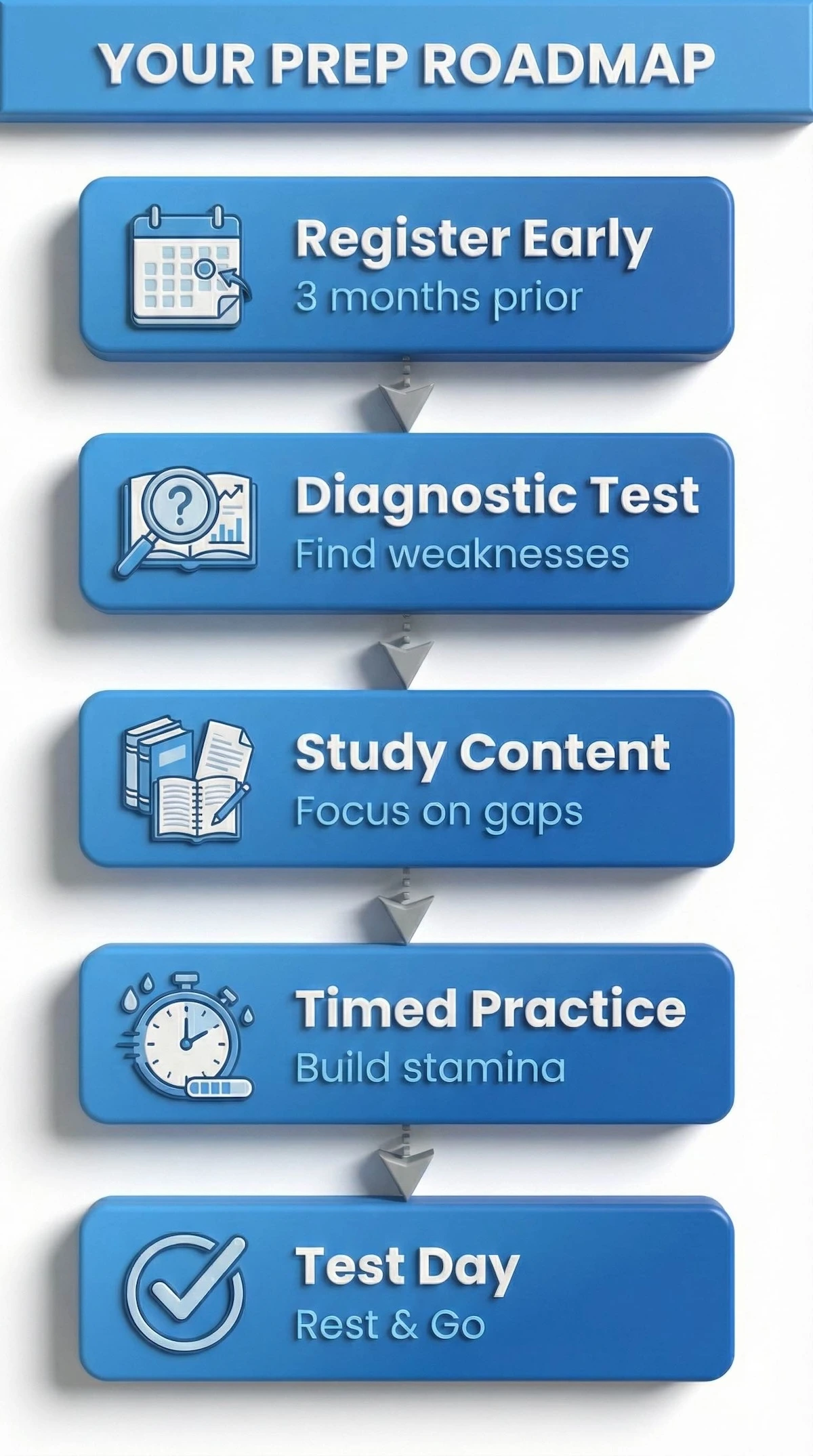
Preparation for engineering applicants is different from general SAT prep in one important respect: the Math section should receive disproportionate attention. For applicants targeting engineering programmes with a 750+ Math threshold, maximising the Math score is the most efficient use of study time.
Step 1: Diagnose First
Take a full official practice test (available free from the College Board and Khan Academy’s digital SAT platform) under timed conditions before beginning any content study. Your section scores will identify whether your gap is primarily in Math or in Reading and Writing. Engineering applicants who already have a strong maths background often find Reading and Writing is the larger gap; close that gap first if your Math score is already above 720.
Step 2: Work Through Math by Topic
The Math section’s four topic areas are not weighted equally in terms of difficulty: Algebra and Advanced Math together make up approximately 70% of questions. Work through these systematically. For engineering students, the Algebra content (linear equations, quadratics, systems) should feel familiar.
Advanced Math (polynomial functions, rational expressions, exponential models) is where most students lose points this is the area to prioritise for score gains above 700. For students who want to review the broader landscape of online learning platforms before committing to a prep course, this overview of the top online tutoring websites worldwide is a useful starting point.
Step 3: Take Timed Practice Tests Every Two to Three Weeks
A single untimed review session does not simulate test conditions. Take at least 4–6 full timed practice tests in the 12 weeks before your exam. Use official College Board adaptive practice tests where available, as the difficulty calibration mirrors the actual exam more accurately than third-party tests. Score improvement of 50–100 points across multiple tests indicates a trajectory consistent with meaningful final score improvement.
Step 4: Build Systematic Error Review
After each practice test, log every question you answered incorrectly and identify the specific concept or error pattern. For the Math section, errors typically fall into a small number of recurring categories: sign errors in algebra, misreading data from graphs, or unfamiliarity with specific function types. Addressing these recurring patterns is more efficient than reviewing topics you already understand.
Step 5: Practice Reading and Writing Actively
Reading and Writing questions are passage-based, with one question per passage. Speed is the key constraint 32 minutes for 27 questions leaves approximately 70 seconds per question including reading time.
Engineering students who are less accustomed to analytical reading under time pressure should practise answering questions without re-reading passages in full: read once, mark key information, answer. Vocabulary-in-context questions (selecting the word that best fits a sentence’s meaning) respond well to daily reading of dense non-fiction: science journalism, editorial writing, or academic abstracts.
PrepScholar SAT/ACT Prep: Reviews, Pricing, and Insights in 2025Registration, Test Dates, and Practical Tips to Prepare
The SAT is offered seven times per year in the United States: typically in August, October, November, December, March, May, and June. International test dates are available but fewer in number.
Registration is done through the official SAT website (College Board). Standard registration deadlines fall approximately 4–5 weeks before each test date; late registration (with an additional fee) closes approximately 3 weeks before.
Practical registration tips:
- Register early: popular test centres fill quickly register as soon as the date opens
- Plan for at least one retake: most students sit the SAT twice; register for your target date and a backup date in the same cycle
- Check score submission deadlines: plan your test date(s) so results arrive before your earliest college application deadline
- Fee waivers: eligible US students (income-based) can take the SAT for free; the College Board provides fee waiver certificates through school counsellors
Students exploring broader academic support options alongside SAT prep may find this review of Extramarks and its alternatives a helpful comparison of available platforms.
Final Tips and Recommended Next Steps
For students just starting out, the most important thing to understand is that the SAT is a learnable test. Its format and question types are consistent and well-documented preparation time converts more reliably into score improvement here than on most academic assessments. Students who invest 40–80 hours in structured practice over 3–4 months typically see meaningful score gains.
For engineering applicants specifically: target at least 750 in Math for most top-30 engineering programmes, and 780+ for the most selective. Use the free resources available College Board practice tests and Khan Academy’s free SAT prep before considering paid courses.
The College Board and Khan Academy partnership provides the most accurate practice material at no cost.
For further support with the subjects that appear in SAT Math algebra, geometry, and data interpretation visit My Engineering Buddy for additional study resources. For test-specific exam help and preparation support, Scholarly Help provides structured SAT guidance.
Students interested in technical career pathways beyond engineering may also want to understand what aircraft maintenance tutoring covers as a specialist discipline. For a broader perspective on how tutoring can support academic and professional development, this piece on how business administration tutoring can shape your future offers useful context.
For students curious about the science behind how people learn and retain information under exam pressure, this deep dive into biopsychology explores the cognitive mechanisms at work.
AI for STEM Learning Using Generative Tools to Make Math and Engineering Concepts EasierFrequently Asked Questions About the SAT Exam
What is the SAT exam?
The SAT is a standardised college admissions test developed by the College Board. It measures college readiness in two sections: Reading and Writing (800 points) and Mathematics (800 points), for a composite score out of 1600. It is accepted by virtually all US four-year colleges and universities as part of the admissions process.
What is on the SAT exam?
The digital SAT has two sections. Reading and Writing tests comprehension, grammar, vocabulary in context, and evidence-based reasoning using short passages. Math tests algebra, advanced math (quadratics, polynomials), problem-solving and data analysis, and geometry and trigonometry. A built-in calculator is available for the entire Math section.
When should I take the SAT exam?
Most students take the SAT in Year 11 (junior year) for a first attempt, then again in Year 12 (senior year) if they want to improve before college application deadlines. For engineering applicants, sitting the SAT no later than October of Year 12 allows time for a retake before most early application deadlines in November.
What is a good SAT score?
The national average SAT score is approximately 1050. A score of 1200+ puts you in the top third of test-takers; 1400+ is competitive for selective universities. For top engineering programmes, a composite of 1480+ with a Math score of 750+ is the practical target.
SAT or ACT: which should I take?
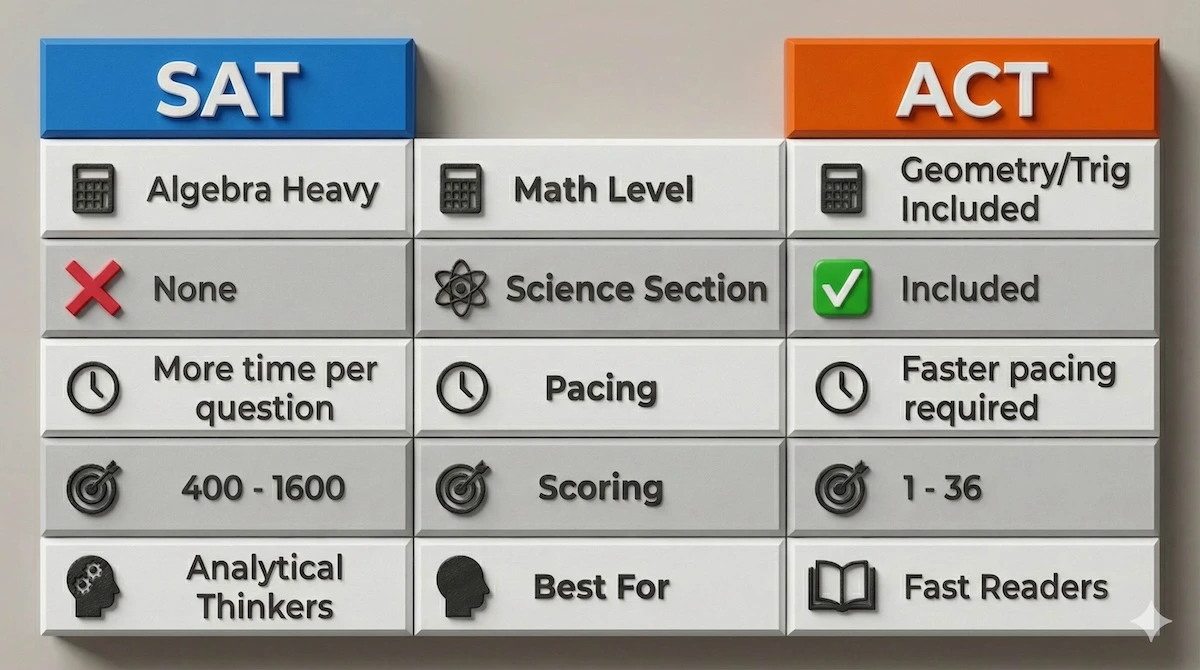
Take a full practice test for each under timed conditions before deciding. The SAT and ACT cover similar content but differ in emphasis: the ACT has a dedicated Science section and a slightly faster pace overall, while the SAT Math has more algebraic reasoning and no science section. Both are accepted at virtually all US colleges. Engineering applicants with a strong algebra background often find SAT Math slightly more comfortable; students who are fast readers and comfortable with data interpretation sometimes prefer the ACT.
Related Reading
******************************
This article provides general educational guidance only. It is NOT official exam policy, professional academic advice, or guaranteed results. Always verify information with your school, official exam boards (College Board, Cambridge, IB), or qualified professionals before making decisions. Read Full Policies & Disclaimer , Contact Us To Report An Error