5 Strategies to Master Cambridge Biblical Studies Essays

- Use the Thesis-Critique-Synthesis framework for every analytical paragraph.
- Cite scholars specifically to support or challenge arguments, not just list names.
- Deploy the Synoptic Link to cross-reference Biblical Studies, Ethics, and Philosophy.
- Treat the Bible as a historical-critical source, noting authorship, context, and genre.
- Write conclusions as a decisive verdict, not a restatement of previous points.
Cambridge Biblical Studies essays, whether for A-Level or undergraduate preparation, demand a high standard of precision, scholarship, and critical engagement. These papers move beyond simply recounting theological or historical facts. They require students to construct a sustained, analytical argument supported by both biblical primary texts and secondary scholarly sources. If you are also working through quantitative subjects alongside your humanities coursework, a A-Level mathematics tutor can help you manage the broader academic load. The difference between a high pass and a top grade often comes down to mastering academic methodology.
This guide details five verified strategies to elevate your essay writing, focusing on the core assessment objectives for high-stakes Biblical Studies and Theology examinations.
Student Pulse: The Essay Anxiety
On academic forums like Reddit and The Student Room (TSR), recurring student challenges with Biblical Studies essays center on three areas. Students preparing for other rigorous standardised assessments often face similar structural challenges; a useful parallel can be found in this deep dive into HSPT prep and why it matters.
- Structure: How to transition from a descriptive answer to an analytical, evaluative essay, especially under strict time limits.
- Scholarship: Knowing which scholars to cite and how to integrate their views effectively without them overpowering the student’s own argument.
- Criticality: Struggling to move beyond “what I believe” or “what the text says” to “what are the implications and valid criticisms of this interpretation?”
Addressing these pain points requires a methodological approach. Students sitting O-Level examinations face comparable analytical demands; those who also need support with quantitative work may benefit from an O-Level Mathematics tutor.
Strategy 1: Implement the Thesis-Critique-Synthesis Framework
Top-scoring essays are not literature reviews; they are tightly focused arguments. Instead of a general introduction, lead with a clear, contentious thesis statement that answers the specific question posed.
The body of the essay must then follow a balanced analytical flow, which can be visualized as a cycle for each key paragraph. To consistently hit the higher mark bands, you need a repeatable structure. The flowchart below illustrates the ‘Thesis-Critique-Synthesis’ cycle you should replicate for every main body paragraph.
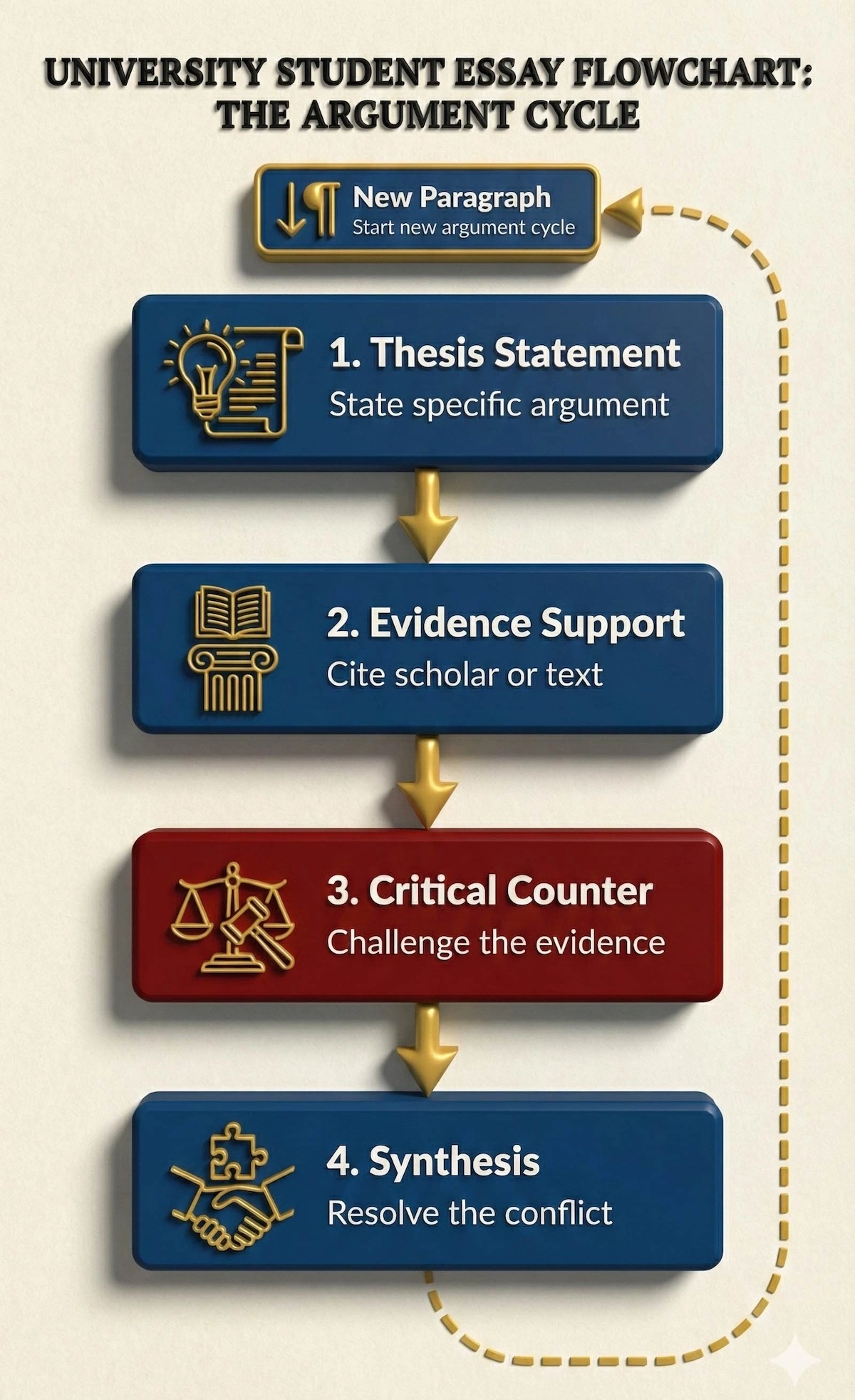
Notice how the cycle loops back? Once you complete the synthesis, you are ready to introduce the next thesis point, ensuring your essay maintains a continuous chain of reasoning.
- Thesis/Position: State the specific argument for that paragraph (e.g., “The Documentary Hypothesis provides a strong historical basis for P source’s legal codes.”)
- Support: Introduce verified evidence (e.g., cite the primary text, specific verses, or a scholar like Wellhausen).
- Critique: Immediately evaluate this evidence using a counter-argument or a differing scholarly perspective (e.g., “However, more recent canonical criticism, such as that by Brevard Childs, argues against this atomization of the text.”)
- Synthesis: Conclude the paragraph by explaining why the argument you favor is stronger, or what the overall implications of the conflict are.
This framework forces critical engagement rather than merely listing points.
Strategy 2: Master the Integration of Verified Scholarship
The mark schemes for high-level exams explicitly reward the use of appropriate, verified secondary scholarship. Scholars are not padding; they are the foundation of academic debate.
- Be Specific: Do not just name a scholar. State their specific argument or contribution related to the question. Instead of “St. Augustine wrote a lot about ethics,” write: “Augustine’s concept of libido in relation to the original sin offers a theological counterpoint to Pelagian self-determination.”
- Use Scholars Strategically: Integrate scholarship to support your argument, to present a counter-argument that you can then critique, or to define a concept.
- Primary Text First: Always ground your analysis in the primary biblical text before introducing secondary scholarship. The Bible itself is your main source, and scholars merely offer interpretations of it.
Many students lose marks by simply ‘name-dropping’ scholars without purpose. This comparison table highlights the critical difference between descriptive citation and the evaluative engagement required for top grades.
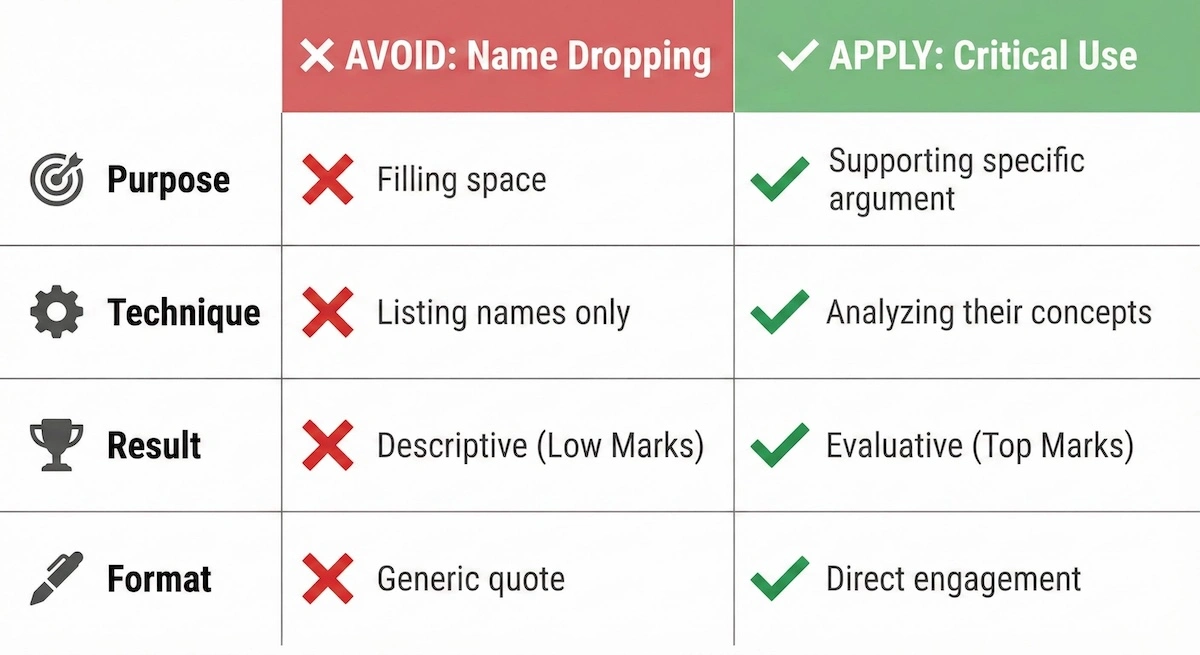
Aim for the approach on the right: treat scholars as conversation partners to be critiqued, not just authorities to be quoted.
A verified citation rule for academic Biblical Studies is to use an accepted academic style (like SBL Handbook or a modified Harvard system) consistently. In the essay body, this means mentioning the scholar and the work in context, avoiding disruptive footnotes in timed exams unless specified. Students who also study languages alongside theology may find it useful to work with an IGCSE Arabic teacher to strengthen their broader humanities skill set.
Strategy 3: Deploy the Synoptic Link (Cross-Referencing)
The “Synoptic Link” is a high-level assessment objective, particularly in UK-based A-Level exams, that bridges different study units for a more holistic answer. This skill is expected at the Cambridge undergraduate level. It requires you to draw connections between seemingly separate areas of study to deepen your evaluation.
- Example 1 (Ethics to Philosophy): When discussing Natural Law Theory (Ethics), draw a link to Aquinas’s cosmological arguments (Philosophy of Religion).
- Example 2 (Biblical Text to Theology): When analyzing a difficult passage in the Gospel of Mark (Biblical Studies), link the pericope’s theological meaning to a concept like Christology or the development of the doctrine of the Trinity.
Linking concepts demonstrates a comprehensive understanding of the entire subject, which examiners reward heavily.
It can be difficult to visualize how to connect separate modules like Philosophy and New Testament studies. The diagram below visualizes the ‘Synoptic Link’ as a bridge between these distinct academic ‘islands’. Students navigating similarly complex multi-part examinations may also find value in this deep dive into conquering the EmSAT.
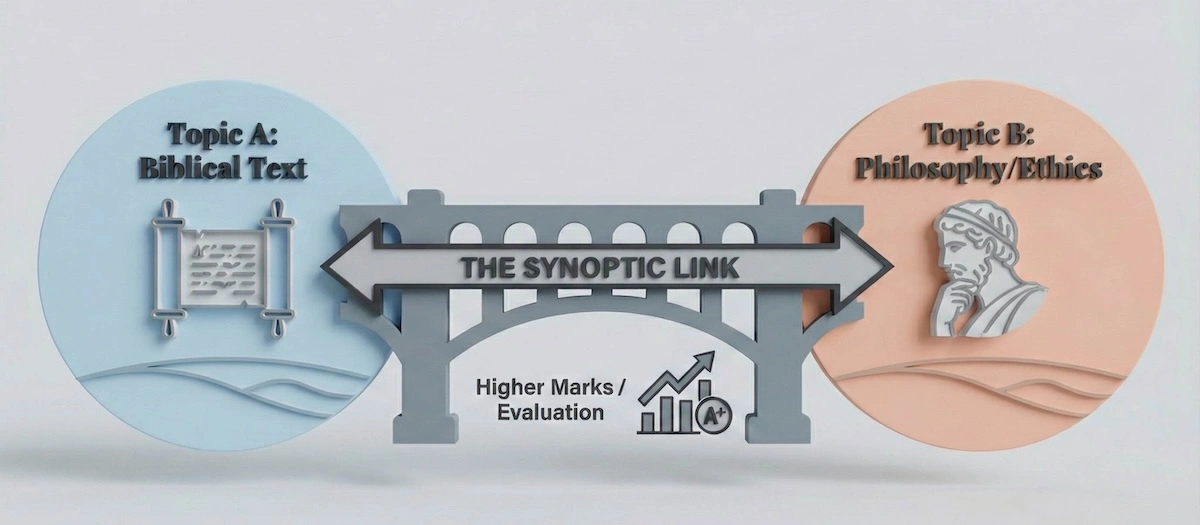
Building these bridges demonstrates a holistic understanding of the course, differentiating a standard A-grade candidate from an A* student. Candidates who also sit Further Mathematics papers can apply the same cross-topic reasoning; support is available from a Further Mathematics tutor.
Strategy 4: Handle Biblical Text with Historical-Critical Precision
Treating the biblical text as a primary source requires awareness of historical context and critical method. The key is to demonstrate awareness of source criticism (who wrote it), form criticism (what genre is it), and redaction criticism (who edited it and why).
Confusing these critical methods is a common error in exam conditions. Use the following breakdown to memorize the specific focus of Source, Form, and Redaction criticism.
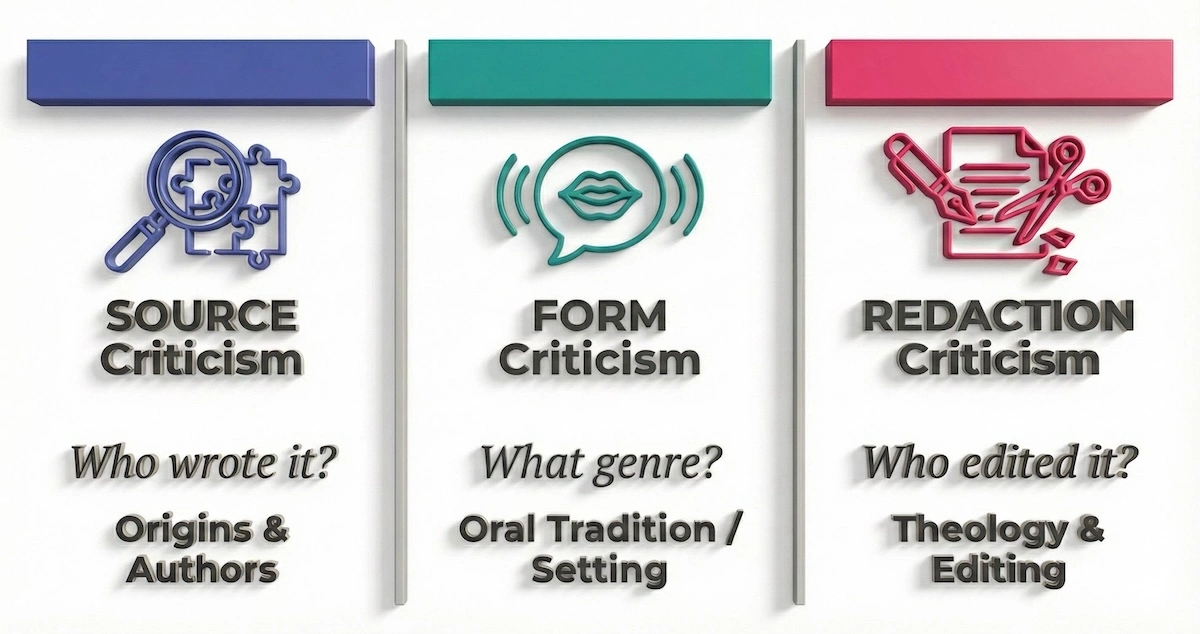
Memorize these three distinct ‘lenses.’ When analyzing a text, explicitly state which lens you are using to gain extra credit for methodological precision.
For instance, when quoting a passage from the Gospel of John, high-scoring essays show awareness that John is usually dated later than the Synoptics and has a distinct theological agenda (e.g., high Christology). This level of critical engagement elevates the essay beyond simple summary. Students preparing for other high-stakes professional admissions tests can find a comparable analytical framework in this strategic guide to conquering the LSAT.
Strategy 5: Write the Conclusion as a Verdict, Not a Summary
In a time-constrained essay, the conclusion is where you explicitly demonstrate closure and answer the question asked in your introduction. Do not simply restate your main points.
- Revisit the Thesis: Begin by restating your main thesis, but using more sophisticated language informed by the body paragraphs.
- Offer a Verdict: State a decisive judgment, weighing the strengths and weaknesses of the arguments presented. Explain which perspective is most robust academically and why it resolves the tension posed by the essay question.
- Avoid New Information: Do not introduce new biblical passages, scholars, or concepts in the conclusion. Use it only for consolidation and final judgment.
Practical Application
Download 9484 past papers/mark schemes. Time essays: 40 mins each. Self-mark using Table A/B from schemes. Revise set texts weekly. For Oct/Nov 2025, focus Paper 4 essays on God/life themes.
Putting it all together requires a systematic approach during your exam prep. Here is the complete roadmap to mastering the Cambridge Biblical Studies essay style. Students who also sit AP examinations can find structured preparation guidance through AP exam tutoring.
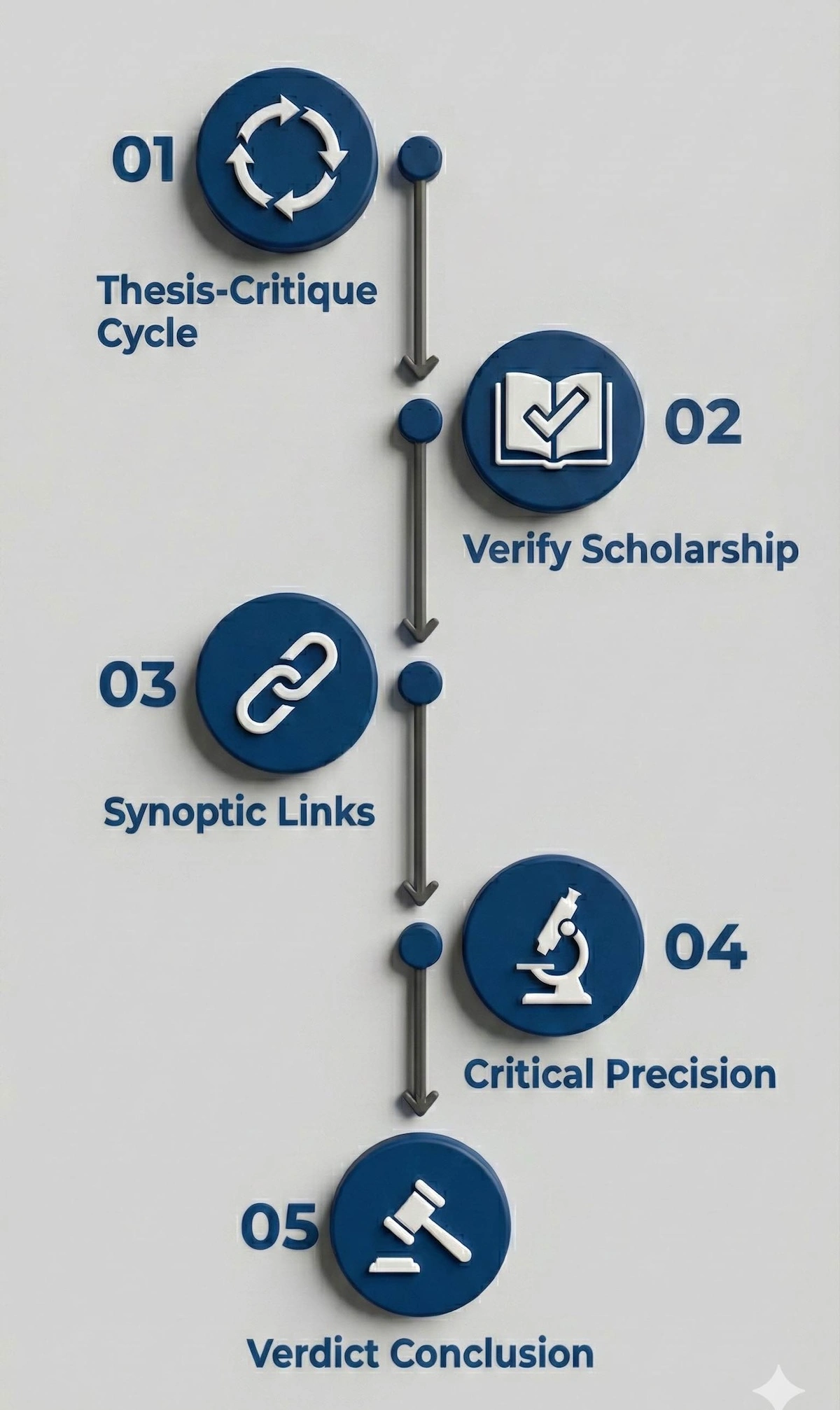
By following these five milestones in order, you move beyond simple storytelling and enter the realm of serious academic theology. For those preparing for science-based admissions tests, this ultimate guide to conquering the DAT applies many of the same disciplined preparation principles.
Related Reading
******************************
This article provides general educational guidance only. It is NOT official exam policy, professional academic advice, or guaranteed results. Always verify information with your school, official exam boards (College Board, Cambridge, IB), or qualified professionals before making decisions. Read Full Policies & Disclaimer , Contact Us To Report An Error