Cambridge IGCSE Explained: Curriculum, Exams, and Global Recognition

- Cambridge IGCSE is offered in 145+ countries across 4,800+ schools worldwide.
- Students choose from 70+ subjects, including 30+ languages, in any combination.
- Exams use an A* to G grading scale with Core and Extended curriculum options.
- Exams are offered twice yearly: a June series and a November series.
- UK NARIC benchmarks Cambridge IGCSE as comparable to the UK GCSE standard.
What is Cambridge IGCSE?
Cambridge IGCSE (International General Certificate of Secondary Education) is an internationally recognized exam program for students roughly ages 14–16. It is often described as “the world’s most popular international qualification” for this age group. Schools in more than 145 countries and over 4,800 schools offer Cambridge IGCSE subjects, which makes it truly global.The aim is to develop a solid foundation in a variety of subjects, from Math and Science to Languages and Humanities, helping students prepare for higher education or career paths. Because Cambridge IGCSE is recognized internationally, top universities and employers around the world value the exam results as evidence of strong secondary education.It can be difficult to grasp just how massive this educational network is. The graphic below illustrates the global scale of the Cambridge IGCSE community.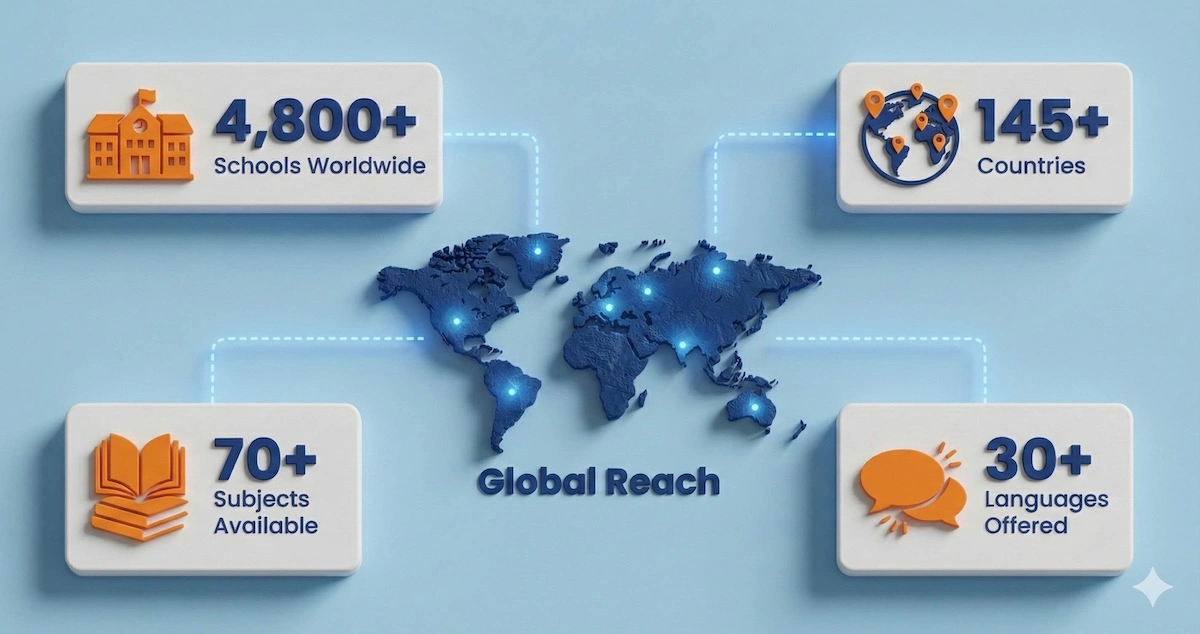
The Cambridge IGCSE curriculum connects students globally, offering vast subject choices across 145 countries.
Core Features of Cambridge IGCSE
One of the hallmarks of Cambridge IGCSE is its flexibility and depth. Students can choose from over 70 subjects, including about 30 languages, and mix them in any combination to suit their interests. The curriculum is designed to be engaging and “stimulating” for students. It is explicitly created to be international in outlook but locally relevant, avoiding cultural bias and encouraging a global perspective.The learning process emphasizes more than just memorizing facts. For example, Cambridge IGCSE helps students develop creative thinking, problem-solving and inquiry skills through its coursework and exam questions. If you are curious how technology is reshaping learning environments like this one, see this look at how technology is changing the dynamics of traditional education.- Flexible Curriculum: Cambridge IGCSE offers a wide range of subjects and supports schools in building a program around students’ needs. Learners can combine STEM, humanities, languages, and arts based on what motivates them.
- Skills Development: A key goal is to balance knowledge with skills. IGCSE syllabuses explicitly target skills like applying knowledge to new situations, intellectual enquiry, flexibility, and effective communication. Teachers often say this prepares students well for further study.
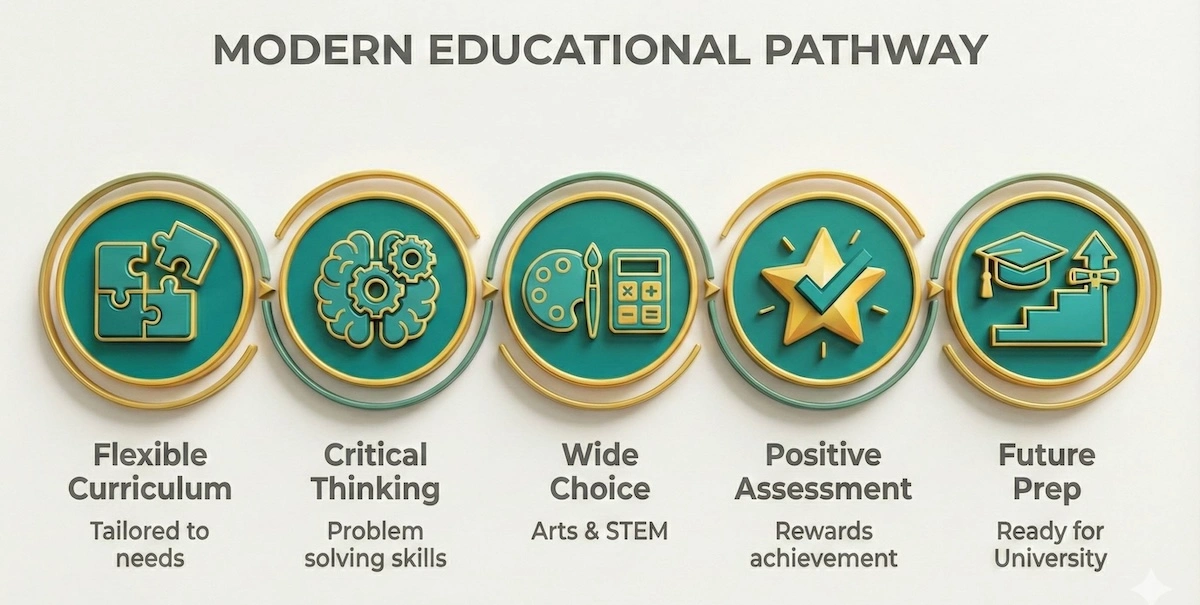
These five core pillars ensure Cambridge IGCSE students develop a balanced mix of knowledge and practical skills.
- Wide Subject Choice: Students can pick from over 70 subjects, which includes 30 languages. This breadth allows everyone to study their strengths (e.g. focusing on science and math) or pursue their passions (like art or literature).
- Positive Assessment: The exam system rewards what students know and can do, rather than focusing on mistakes. In fact, Cambridge’s philosophy is that “students are rewarded for positive achievement like what they know, understand, and can do, rather than being penalized for an accumulation of errors”.
- Preparation for the Future: Cambridge IGCSE is intended as a springboard to higher qualifications (AS/A Levels, IB, US AP). The curriculum builds strong study habits, inquiry skills, and background knowledge, so students are ready for challenging pre-university programs. Students considering the IB pathway may also find it useful to explore support for the IB MYP program.
Global Reach and Recognition
Imagine stepping into an exam hall in Dubai, London or Singapore — Cambridge IGCSE is the curriculum under which those students are testing. Over 10,000 schools in more than 160 countries offer Cambridge programs. Every year, nearly one million students take Cambridge Pathway exams, many of them at the IGCSE level. This global uptake means Cambridge IGCSE is fully accepted around the world.Importantly, UK NARIC (the national agency for international qualifications) has benchmarked Cambridge IGCSE to be comparable to the UK’s GCSE standard. In practical terms, this means a Cambridge IGCSE grade is treated as equivalent to a high-school diploma subject in many countries. Universities in the US, UK, Gulf countries, and beyond recognize Cambridge IGCSE as a proof of strong foundation, especially when combined with further Cambridge International AS/A Levels or AICE Diploma.Preparing for Cambridge IGCSE Exams
Cambridge IGCSE exams are offered twice a year, allowing students to choose a session that fits their pace. For example, in the US and many other regions, there is a June series (exams held in May/June) and a November series (exams in Oct/Nov). Schools guide students on which session to take.Timing is everything when planning your revision schedule. This timeline shows the two key opportunities you have to sit your exams each year.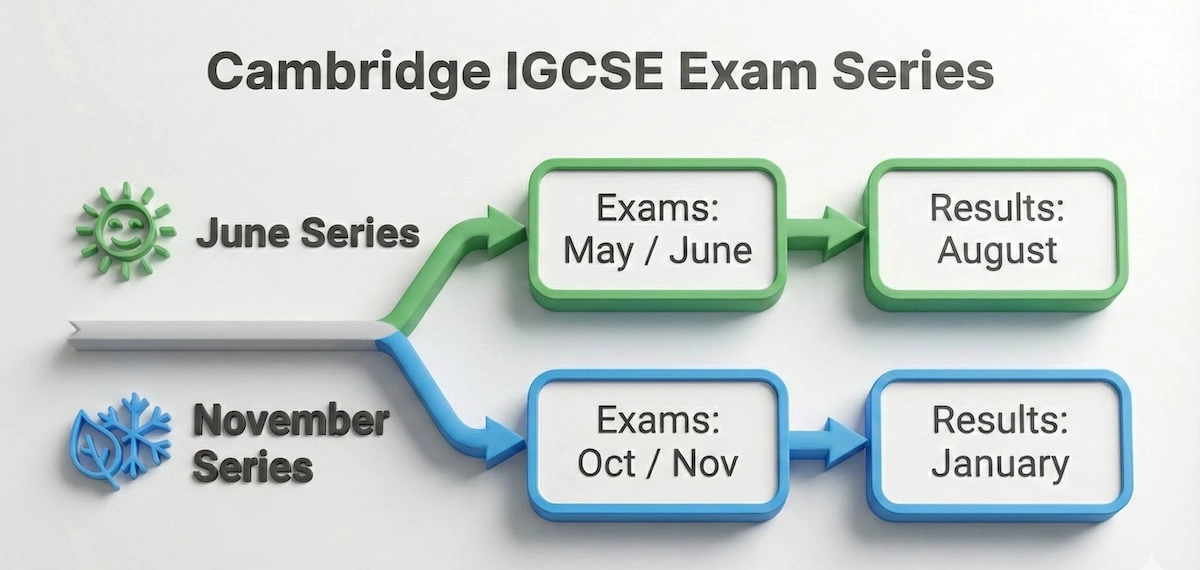
Choose between the June or November exam series to best fit your school year and preparation schedule.
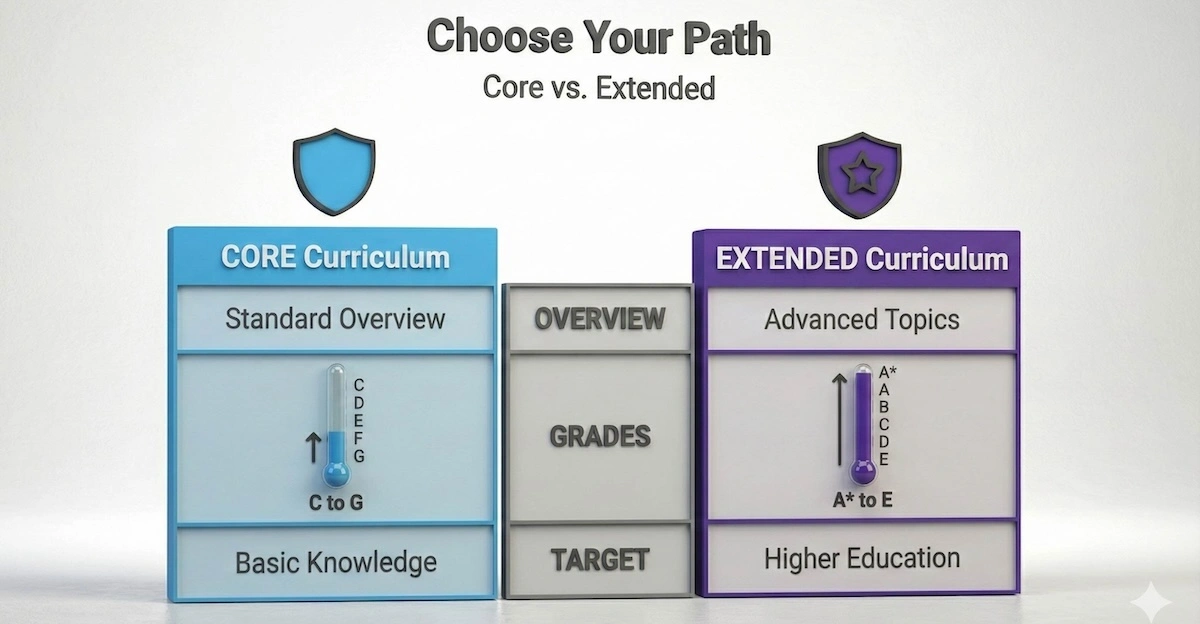
Understanding the difference between Core and Extended curriculums helps students target the right grade range for their goals.
Support for IGCSE Students
While Cambridge IGCSE can be very rewarding, it often pushes students to think more deeply than a standard curriculum. Parents and students frequently seek extra help to excel. This is why online support for Cambridge IGCSE subjects is so popular. A good tutor or teacher familiar with the Cambridge syllabus can provide personalized attention in weak areas, whether it’s understanding a tricky math concept or improving English language skills. Students looking for an IGCSE Chemistry tutor will find that subject-specialist support makes a measurable difference in exam preparation.In Gulf countries or other international hubs, you’ll find students using local and global platforms to connect with certified Cambridge IGCSE teachers. Even in a busy city like New York or London, online tutors can offer flexibility, letting a tutor in one time zone teach a student across the world. Schools themselves often encourage this as Cambridge provides professional development for teachers so they can deliver high-quality instruction and use the best materials.But outside the classroom, student-led resources like video lessons, study guides, and problem-solving forums also play a big role. Services that connect students with qualified tutors and official study materials help students stay on track with deadlines and understand exactly what examiners expect. For a broader look at the platforms available, this review of top online tutoring websites covers the leading options in detail.Finding the Right Cambridge IGCSE Tutor
Given the importance of individual learning, what should students look for in a Cambridge IGCSE teacher or tutor? Ideally, a tutor should be knowledgeable about the Cambridge curriculum and exam format. They might be teachers at Cambridge schools or certified tutors who specialize in specific subjects like IGCSE Physics or IGCSE English. Many parents read reviews or get recommendations, for instance, by searching for “Cambridge IGCSE tutoring” or “Cambridge IGCSE tutor online” and then search for credentials.It’s wise to find someone who has taught the exact syllabuses you need. Good tutors use real Cambridge exam papers and syllabus guides to create study plans. They also teach exam-taking strategies and time management. For casual questions, students sometimes even google “Cambridge IGCSE homework help” and stumble upon helpful forums and study groups. However, for deeper learning, a structured tutor session or homework guidance from a reliable service ensures guidance matches the official curriculum.Not all tutors are familiar with the specific nuances of the Cambridge system. Keep this checklist handy when interviewing potential tutors.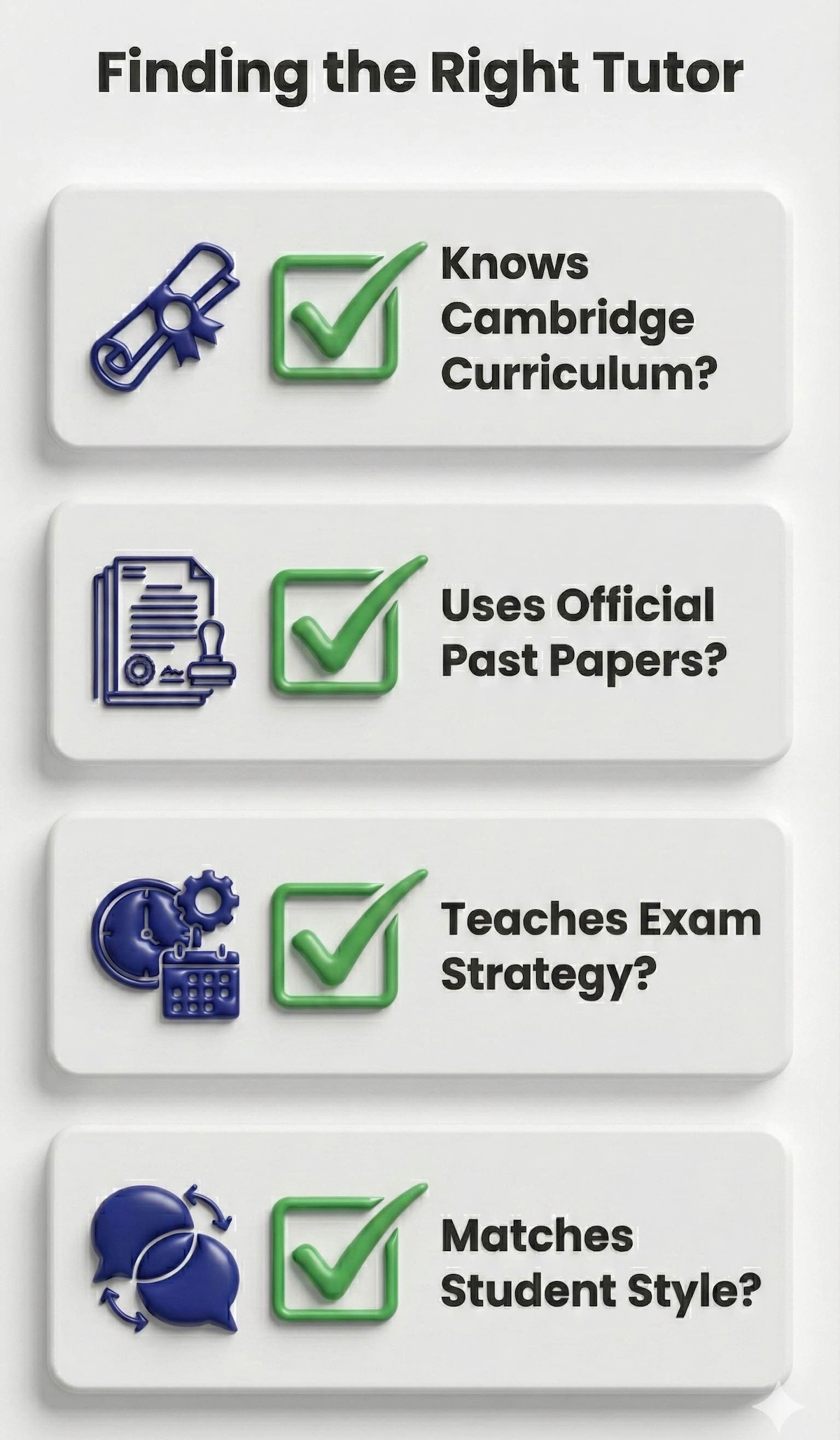
Use this checklist to ensure your tutor has the specific experience needed for Cambridge IGCSE success.
Conclusion
Cambridge IGCSE is a balanced, globally respected program that prepares young learners for the challenges of higher education. Its flexible curriculum and focus on critical skills have made it a top choice in many countries. At the same time, its rigor means many students benefit from guidance. Whether through strong Cambridge IGCSE teaching in schools or supplemental help from tutors and online resources, students can unlock the full potential of the IGCSE. For parents and students navigating this path, remember that structured study, quality teaching, and timely support make the Cambridge IGCSE journey a story of learning success.Related Reading
******************************
This article provides general educational guidance only. It is NOT official exam policy, professional academic advice, or guaranteed results. Always verify information with your school, official exam boards (College Board, Cambridge, IB), or qualified professionals before making decisions. Read Full Policies & Disclaimer , Contact Us To Report An Error