
How to Choose Reliable Homework Help Websites: 5 Red Flags to Avoid

Finding trustworthy homework help online shouldn’t feel like navigating a minefield. Yet thousands of students each semester discover often too late that the website they trusted with their assignments and money turned out to be a scam. According to the Better Business Bureau, students are increasingly falling victim to homework help extortion schemes, with some paying hundreds of dollars only to face threats of being reported to their schools.
It can be difficult to tell legitimate services from scams at a quick glance, but there are distinct patterns you can look for. The comparison table below highlights the key differences between a trustworthy academic partner and a risky operator.
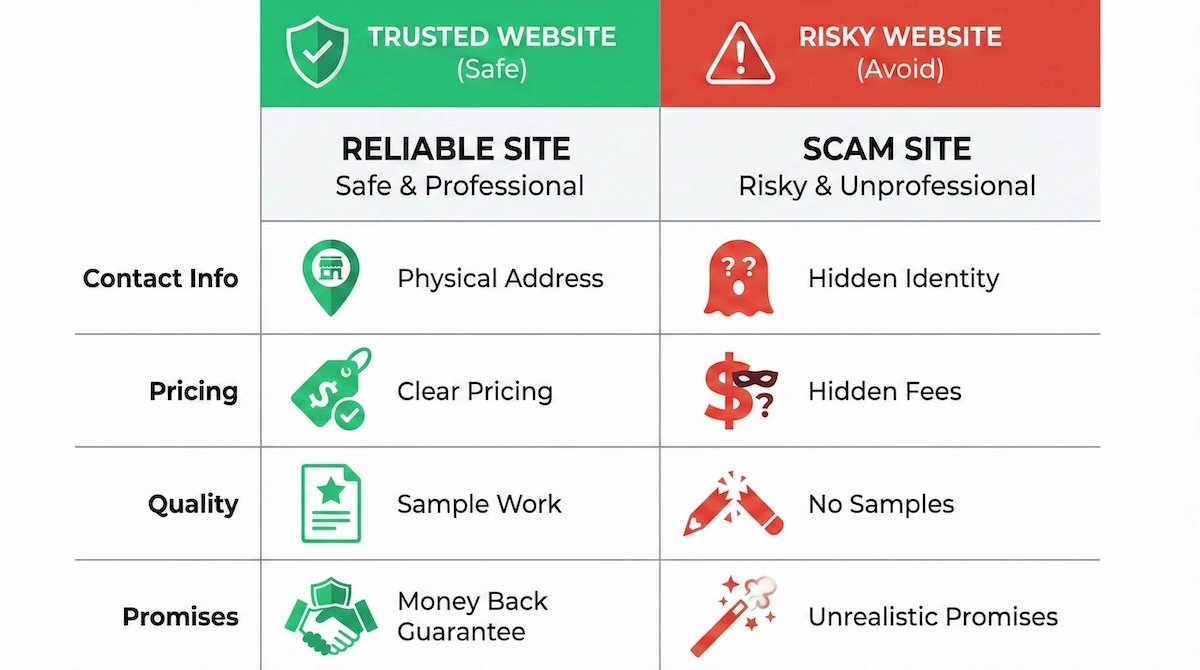
Spot the difference instantly: Use this guide to separate legitimate tutoring services from potential scams.
By keeping these differences in mind, you can quickly filter out the majority of unsafe websites before you even create an account.
The homework help industry has exploded in recent years, but not all platforms operate with students’ best interests in mind. Some deliver subpar work that damages your grades, while others engage in outright fraud. The good news? Scam websites follow predictable patterns. By learning to recognize these red flags, you can protect yourself, your money, and your academic standing.
Read more to get quick, reliable support for any homework
Student Pulse: What Students Are Asking About Homework Help
Across Reddit forums like r/EngineeringStudents and college discussion boards, students consistently voice similar concerns about homework help websites. The most common questions reveal deep anxiety:
“How do I know if a homework help service is legitimate?” appears in dozens of threads, with students sharing horror stories of paying for help only to receive threatening messages demanding more money. Many report feeling trapped—afraid to ask for refunds because scammers threaten to contact their universities.
Another recurring theme centers on quality concerns. Students describe receiving work that appears AI-generated, contains numerous errors, or completely misses assignment requirements. One literature student shared her experience: after paying nearly $900 for an IT project, she received work so off-topic that she had to complete it herself, then faced extortion threats when requesting a refund.
The pattern is clear: students desperately need homework assistance but lack the tools to distinguish reliable platforms from predatory ones. Let’s change that.
Follow the flow—start small and document everything.
Red Flag #1: Vague or Hidden Pricing Structures
Legitimate homework help websites display transparent pricing upfront. You should know exactly what you’re paying before committing to anything. Scam sites, however, operate differently.
Scammers often rely on high-pressure tactics and impossible guarantees to lure students in. Here is a visual guide to the specific marketing phrases that should immediately trigger your suspicion.
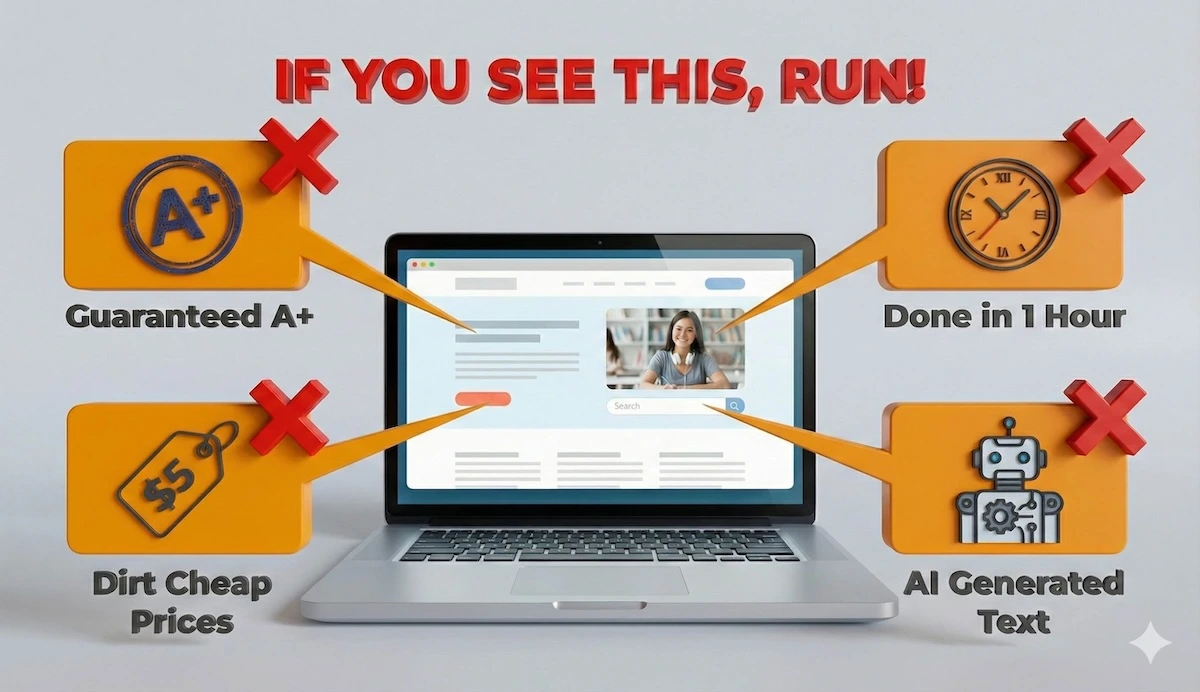
If a website promises impossible results like ‘Guaranteed A+’ or ‘1-hour delivery,’ treat it as a major red flag.
If you see any of these claims on a homepage, it is safer to close the tab immediately rather than risk your academic reputation on a promise they cannot keep.
What This Looks Like:
The website requires you to submit your assignment details and personal information before revealing any pricing. Once you’ve invested time filling out forms, they present inflated quotes you feel pressured to accept. Some sites advertise low base prices but add mysterious “processing fees,” “research charges,” or “quality assurance costs” that weren’t disclosed initially.
In documented cases, students paid an initial fee of $200-400 for homework help, only to receive demands for an additional $499 for supposed “research purposes.” When students refused these surprise charges, the extortion began.
Why It’s a Red Flag:
Honest businesses don’t hide their costs. Vague pricing allows scammers to manipulate you psychologically—once you’ve invested time and shared personal details, you’re more likely to pay whatever they demand. It’s also a setup for the extortion trap: they can always claim you “agreed” to additional charges in fine print you never saw.
What to Look For Instead:
Reliable platforms display clear pricing calculators or rate structures on their homepage. You should be able to estimate costs based on assignment complexity, deadline, and page count before creating an account. Legitimate sites like Chegg and Khan Academy are upfront about subscription costs or free service limitations.
Red Flag #2: Too-Good-To-Be-True Guarantees
“Guaranteed A+ grade!” “100% success rate!” “Perfect scores or your money back!” These promises sound appealing—especially when you’re stressed about a difficult assignment—but they’re mathematically impossible and ethically questionable.
What This Looks Like:
The website prominently displays grade guarantees, claims perfect accuracy rates, or promises that every customer receives top marks. Some sites even guarantee they’ll “take your entire online course” or “complete your exams” for you.
Why It’s a Red Flag:
No legitimate educational service can guarantee specific grades because they don’t control how your professor evaluates work. Academic assessment involves subjective judgment, rubric interpretation, and factors beyond any service’s control. Sites making these promises are either lying or planning to have you submit work that could trigger plagiarism detection.
Moreover, services offering to complete exams or entire courses on your behalf aren’t providing “help” they’re facilitating academic misconduct. These arrangements often end badly, with companies threatening to expose students as cheaters if they don’t pay additional fees.
Check out top-rated online tutoring to boost your learning speed
What to Look For Instead:
Trustworthy platforms focus on learning support rather than grade promises. They might offer “satisfaction guarantees” (free revisions until you’re satisfied) or “quality assurance” (work reviewed by experts), but they won’t guarantee specific grades. Look for language about “understanding concepts,” “step-by-step explanations,” or “learning support” these indicate educational intent rather than cheating facilitation.
Red Flag #3: Unprofessional Website Design and Functionality
A company’s website reflects its professionalism and commitment to quality. Scam homework help sites often reveal themselves through poor digital presence.
What This Looks Like:
The website appears outdated, with broken links, inconsistent formatting, grammatical errors throughout, or missing pages. Contact information is sparse or suspicious (only a generic email address, no phone number, no physical address). The site lacks essential pages like “About Us,” “Terms of Service,” or “Privacy Policy”—or these pages contain obviously copied content with another company’s name still visible.
Security indicators are absent: no SSL certificate (you’ll see “Not Secure” in your browser), no secure payment processing, or requests to send money through unusual channels like wire transfer or cryptocurrency.
Why It’s a Red Flag:
Legitimate academic services invest in professional, user-friendly websites because they’re building long-term businesses. Scammers create quick, cheap sites designed to collect payments before disappearing. Poor website quality suggests the company lacks resources, expertise, or intention to deliver quality service.
Reputable assignment help websites invest in user-friendly, professional-looking platforms, while scam websites often lack polished appearance with poorly designed interfaces, broken links, and grammatical errors.
What to Look For Instead:
Professional homework help sites feature clean, modern design with intuitive navigation. They display proper security certificates (look for the padlock icon in your browser’s address bar). Contact information is comprehensive, including multiple communication methods. You can find detailed information about the company, its policies, and how the service works without hunting through confusing menus.
Red Flag #4: Absence of Verifiable Reviews and Testimonials
Every legitimate business accumulates genuine customer feedback over time. Scam sites either have no reviews or only fake ones they’ve created themselves.
What This Looks Like:
The website displays only glowing 5-star reviews directly on their homepage with no way to verify authenticity. When you search for the company name on independent review platforms (Trustpilot, Sitejabber, Better Business Bureau, Reddit), you find nothing—or you discover numerous complaints about scams, poor quality, or extortion attempts.
Sometimes you’ll find suspiciously similar positive reviews posted on the same dates, using generic language, or from “reviewers” whose profiles only contain that single review. Multiple reviews might praise completely different services under the same company name, suggesting purchased fake reviews.
Why It’s a Red Flag:
Genuine businesses operating for any significant time accumulate real customer feedback—both positive and negative—across multiple independent platforms. Scammers control what appears on their own website but can’t control independent review sites where victims share warnings.
The pattern is revealing: legitimate services have mixed reviews (no business is perfect), while scam sites have either exclusively fake positive reviews on their site or overwhelmingly negative warnings on independent platforms they don’t control.
What to Look For Instead:
Search for the company name plus “review,” “scam,” or “complaints” on Google. Check multiple independent platforms. Legitimate services will have reviews on sites like Trustpilot, Sitejabber, or the Better Business Bureau that include both praise and constructive criticism. Look for detailed reviews describing specific experiences rather than generic “great service!” comments.
Reddit is particularly valuable—search subreddits like r/HomeworkHelp or r/college for mentions of the service. Students often share honest warnings about scams in these communities. If you find recent discussions warning against a service, take them seriously.
Red Flag #5: Pressure Tactics and Aggressive Communication
Legitimate educational services respect your decision-making process and timeline. Scam operations use psychological pressure to rush you into paying before you can think critically.
What This Looks Like:
The customer service representative immediately creates urgency: “This price is only available for the next hour!” or “We only have one expert available—you need to decide now!” They push for immediate payment before you’ve had time to review their terms, compare alternatives, or consult the assignment requirements carefully.
Communication becomes aggressive if you ask detailed questions, request guarantees in writing, or express hesitation. Some scammers will contact you repeatedly through multiple channels (email, text, phone calls) after you’ve expressed initial interest, refusing to respect boundaries when you say you need time to decide.
The most dangerous pressure tactic emerges if you’ve already paid but request a refund or revision. Students report that when asking for refunds due to poor quality work, companies threatened to contact their schools to report academic misconduct, using this fear to extort additional payments.
Why It’s a Red Flag:
Ethical businesses understand that choosing academic support is a significant decision. They provide information, answer questions, and give you time to decide. High-pressure tactics suggest the company knows that given time to investigate, you’d discover problems and choose not to use their service.
Threatening behavior—especially extortion threats—is criminal activity, not business practice. Any service that threatens to expose you to your school is operating a blackmail scheme, not a homework help business.
What to Look For Instead:
Professional services communicate respectfully and patiently. Representatives answer your questions thoroughly without creating artificial urgency. They’re happy to provide information in writing, explain their revision and refund policies clearly, and give you time to make an informed decision. When you have concerns about completed work, they address them professionally through their official dispute resolution process rather than with threats.
Common Mistakes Students Make When Choosing Homework Help
Even knowing these red flags, students sometimes make decisions that increase their vulnerability:
Choosing Based Solely on Price: The cheapest option is rarely the best. Extremely low prices often indicate either terrible quality or a scam designed to add surprise charges later. Balance affordability with quality indicators.
Skipping the Research Phase: Desperation leads to hasty decisions. Always spend at least 30 minutes researching a service before sharing personal information or payment details, regardless of how urgent your deadline feels.
Ignoring Your Instincts: If something feels off—the representative is evasive, the website seems sketchy, the promises sound unrealistic—trust that instinct. Your subconscious often detects warning signs before you consciously recognize them.
Not Reading Terms of Service: Yes, they’re boring and long. But they reveal crucial information about refund policies, revision rights, and what happens if you’re dissatisfied. Five minutes reading terms can save hours of frustration later.
Sharing Excessive Personal Information Upfront: Legitimate services need some information to provide quotes and complete work, but be cautious about sharing your student ID number, school email password, or other sensitive details before verifying the platform’s legitimacy.
Check out expert test prep guidance to improve your scores
Practical Application: How to Vet Homework Help Websites
Before trusting any homework help platform with your assignment and money, follow this verification process:
Once you have found a potential website, don’t just hand over your money; you need to verify their legitimacy first. Follow this step-by-step decision tree to vet the service thoroughly.
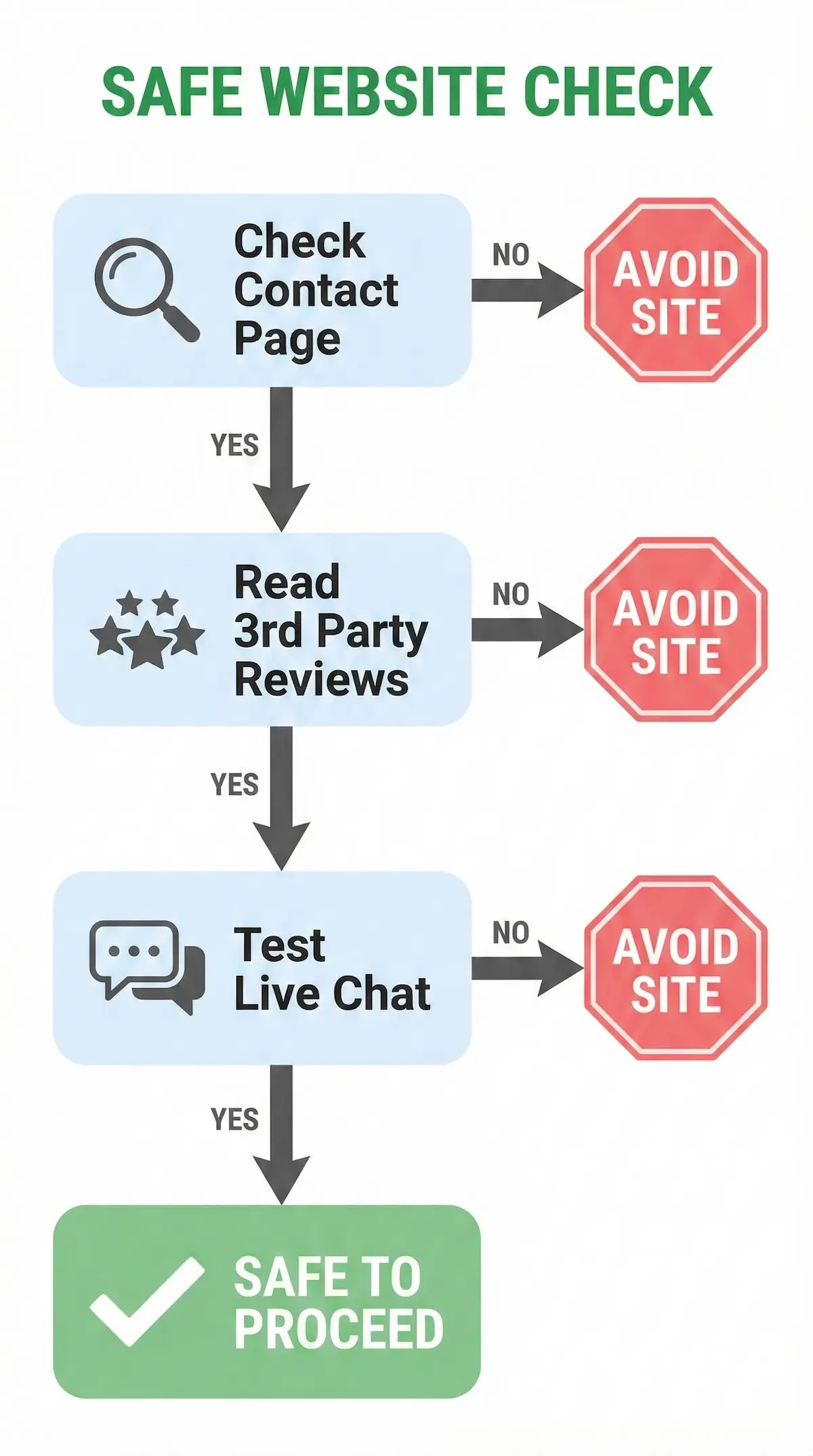
Follow this simple 3-step flowchart to verify if a service is legitimate before you hand over your assignment.
Taking these three simple steps takes less than five minutes but can save you from days of stress and lost money.
- Conduct the Independent Review Search
Spend 15-20 minutes searching “[Company Name] + review,” “[Company Name] + scam,” and “[Company Name] + Reddit” on Google. Check at least three independent review platforms. Look for patterns in complaints. One negative review isn’t necessarily disqualifying, but multiple students reporting identical problems (extortion, poor quality, fake promises) indicate systematic issues.
- Verify Business Legitimacy
Check if the company appears in the Better Business Bureau database. While absence doesn’t automatically mean scam (newer or smaller companies might not be listed), presence provides valuable information about complaint history and resolution patterns. Look for actual business registration information—legitimate companies typically provide details about where they’re legally established.
- Test Communication Quality
Before committing, send a detailed question through their contact system. Evaluate response time, quality, and professionalism. Ask specific questions about their process: “How do you ensure work quality?” “What happens if I’m unsatisfied?” “Who will actually complete my assignment?” Vague, rushed, or evasive answers suggest problems.
- Review Sample Work
Many legitimate platforms provide sample completed assignments. Examine these carefully for quality, formatting, and depth of explanation. If no samples are available or they seem generic and superficial, that’s concerning.
- Start Small
If you decide to try a service, begin with a small, low-stakes assignment rather than your most important paper. This test run reveals work quality, communication patterns, and whether they deliver as promised all with limited risk.
- Document Everything
Screenshot all pricing information, promises, and communications before paying. If problems arise, you’ll need this documentation for disputes or refund requests.
Key Takeaways
Before you make your final decision, do a final quality check to ensure you haven’t missed anything. Use the checklist below as your final ‘safety pass’ before entering any payment details.
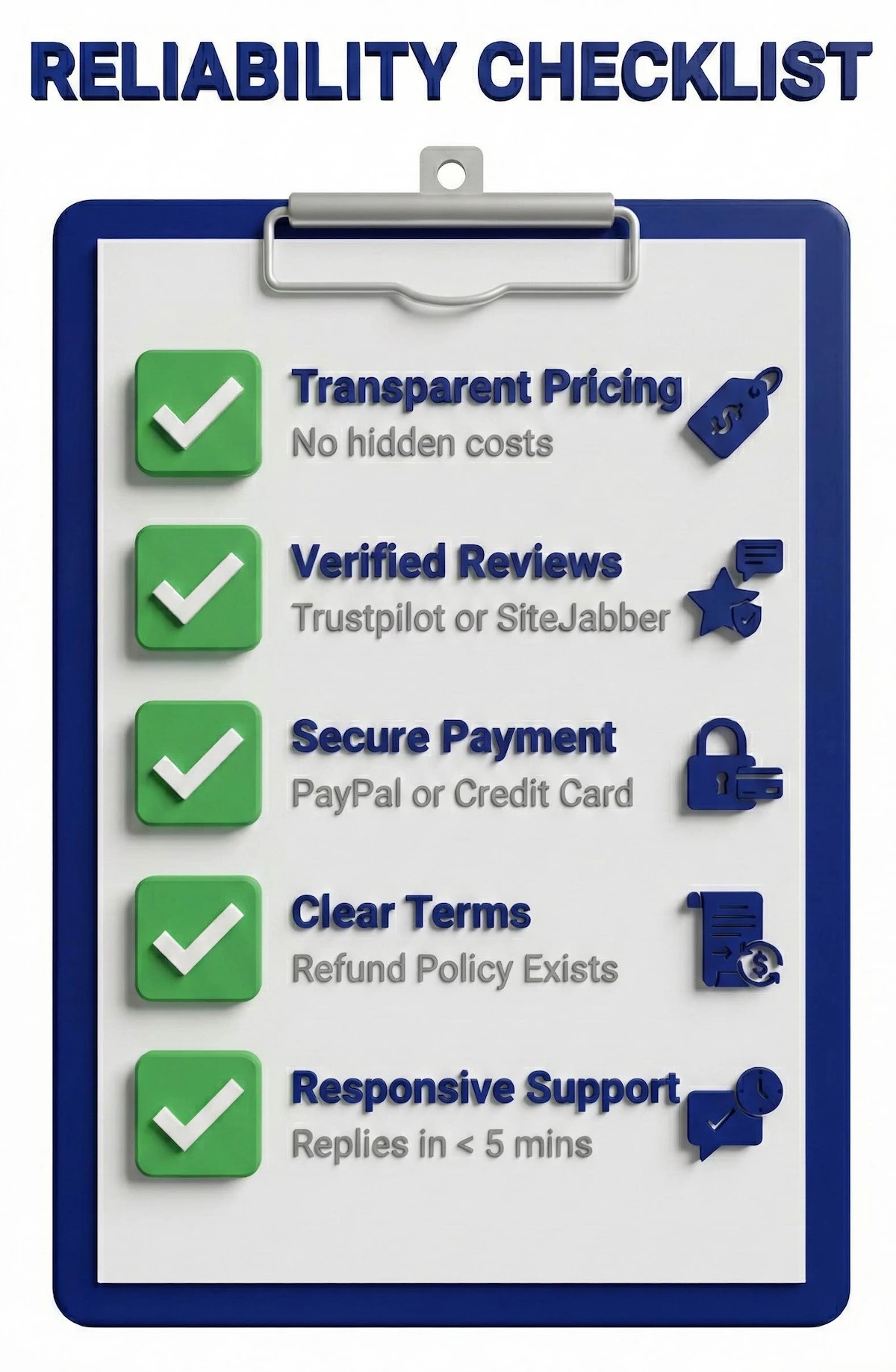
Does the website pass the test? Ensure your chosen service ticks all 5 boxes on this reliability checklist.
If a website cannot check off every box on this list, it is not worth the risk—keep looking for a more reliable alternative.
Transparent pricing is non-negotiable. If you can’t see clear costs before submitting personal information, walk away.
Grade guarantees indicate either fraud or cheating facilitation. Legitimate services support learning, not make impossible promises.
Website quality reflects business credibility. Professional platforms invest in secure, well-designed sites; scammers create quick, cheap setups.
Independent reviews reveal reality. Always check multiple review platforms beyond the company’s own website.
Pressure tactics signal danger. Ethical businesses respect your decision timeline and never threaten students who request refunds.
Your academic success matters too much to risk on unreliable platforms. By recognizing these five red flags, you can confidently navigate the homework help landscape, avoiding scams while finding legitimate support when you genuinely need assistance. Remember: a few extra minutes of research before choosing a service can save you from academic problems, financial loss, and significant stress.
******************************
This article provides general educational guidance only. It is NOT official exam policy, professional academic advice, or guaranteed results. Always verify information with your school, official exam boards (College Board, Cambridge, IB), or qualified professionals before making decisions. Read Full Policies & Disclaimer , Contact Us To Report An Error