
Khanmigo Reviews, Alternatives, Pricing, & Offerings in 2025

Khanmigo is Khan Academy’s new AI-powered tutor and teaching assistant that launched in 2023. It aims to give students a personal 24/7 tutor and help teachers with tasks. In this article, we’ll review Khanmigo’s user feedback, pricing, how it works, and how it compares to other tutoring options. We’ll also cover its unique features, drawbacks, and answer common questions. Our goal is to help students and parents (especially in the US, UK, Gulf, Canada, and Australia) understand if Khanmigo is worth it and what alternatives exist for quality tutoring.
Khanmigo Reviews and Testimonials
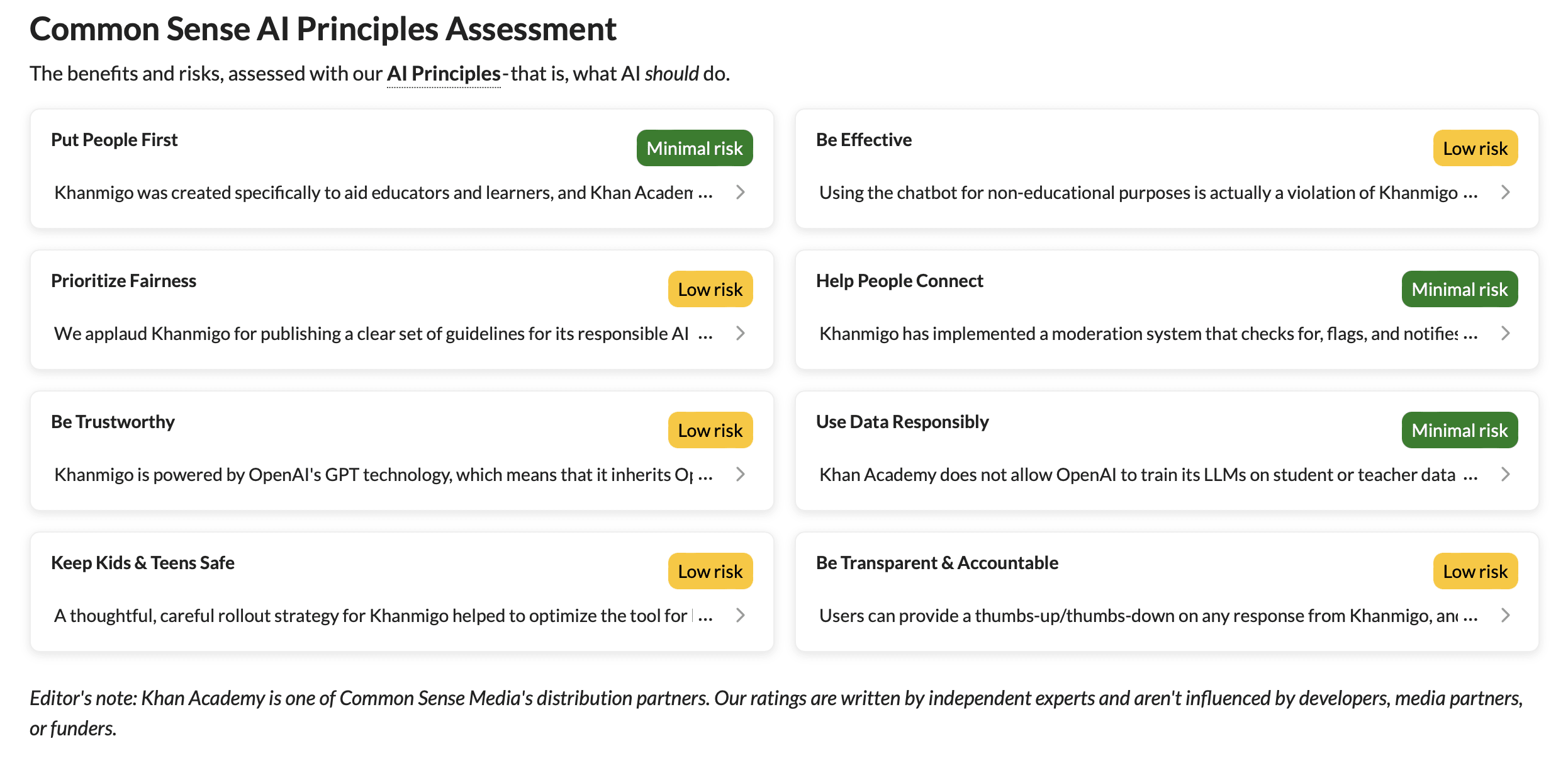
Overall Reception: Khanmigo has earned praise from some educators and parents, but also faced criticism from early users. In their evaluation as a top educational AI tool by Common Sense Media, Khanmigo scored high for transparency, safety, learning, and privacy, outranking general AI chatbots like ChatGPT and Bard. This suggests that experts see Khanmigo as a trustworthy learning aid.
Khan Academy highlights teacher anecdotes of students asking Khanmigo more questions than they normally would in class, indicating high engagement. On Khanmigo’s site, a homeschool parent said it “completely revolutionized our homeschool” by efficiently answering her curious kids’ endless “why” questions. These positive testimonials paint Khanmigo as an effective, engaging tutor for many users.
User Ratings: On public review sites, feedback is more mixed. As Khanmigo is a recent launch by its parent organisation, Khan Academy, most of the review websites don’t seem to have separate reviews and ratings for Khanmigo. Instead, its reviews and ratings are part of Khan Academy’s reviews.
Khan Academy’s overall user ratings are 2.8 to 3.8 out of 5 stars. For example, on Sitejabber Khan Academy (including Khanmigo) has a 2.8 ★ rating from 88 reviews, suggesting many users were dissatisfied. Some complain about incomplete answers or technical issues. On Trustpilot, Khan Academy is rated 3.8 out of 5. However, these general ratings largely reflect Khan Academy’s older offerings, not just Khanmigo.
On Reddit and forums, early Khanmigo users had varied opinions. One Reddit user (a teacher) tried Khanmigo in late 2023 and found it “falls far short” of expectations – noting it struggled with a geometry problem and had a very limited set of historical characters it could role-play as. He felt it wasn’t worth the ~$100/year price at the time and recommended sticking with free tools like ChatGPT or Bing for now.
On the other hand, some students rave about Khanmigo. A high school student reviewer said “Khanmigo is a great tool for students and super helpful for homework!” She loved that it guides step-by-step and encourages deeper questions instead of just giving answers. Another Reddit user in Australia was so impressed by Khanmigo’s “incredible” help (even on non-Khan subjects) that they tried to bypass region locks with a VPN to subscribe! This shows that many who actually used Khanmigo found value in its approach.
Tutor Quality and Helpfulness: The consensus is that Khanmigo won’t do your work for you, but it will coach you. Khanmigo’s tutoring style is Socratic – it asks guiding questions and gives hints. Some students initially find this frustrating if they expected direct answers, but many educators praise it for teaching “with limitless patience,” not just handing out solutions. For example, a Reddit commenter who used Khanmigo during an MIT online course said “It is great because it nudges you to the answer. It doesn’t give you the answer immediately.”
This method helps learners actually understand concepts, which is Khanmigo’s goal. Of course, as an AI it can make mistakes or be “wordy.” Khan Academy acknowledges that early on Khanmigo struggled with some math and could occasionally produce errors or biased content. They’ve been actively improving it – for instance, refining its math solving and adding moderation to keep responses accurate and appropriate.
Is Khanmigo legit?: Overall, Khanmigo appears legitimate and safe – it’s a product of the reputable nonprofit Khan Academy, with backing from organizations like Microsoft (which partnered to improve Khanmigo). There are no signs of scam behavior; it’s a real educational service. The main question is whether its guidance approach and current capabilities match a student’s needs.
In summary, reviews suggest Khanmigo can be an excellent learning aid for motivated students who want to learn deeply, while those looking for quick answers or dealing with very advanced problems may find it lacking. Its legitimacy is solid, but its effectiveness depends on user expectations.
Khanmigo Pricing
Pricing Range
Khanmigo’s pricing is straightforward and very affordable compared to human tutoring. Teachers get free access to Khanmigo’s AI tools (thanks to grants and partnerships). For individual students or parents, Khanmigo costs $4 USD per month (or $44 per year) for a subscription. This low fee – roughly the price of a couple of coffees – provides unlimited use of the AI tutor. The annual plan basically gives two months free (12 months for the price of 11). There are no premium tiers or upsells – just the single subscription that unlocks all Khanmigo features for one user.
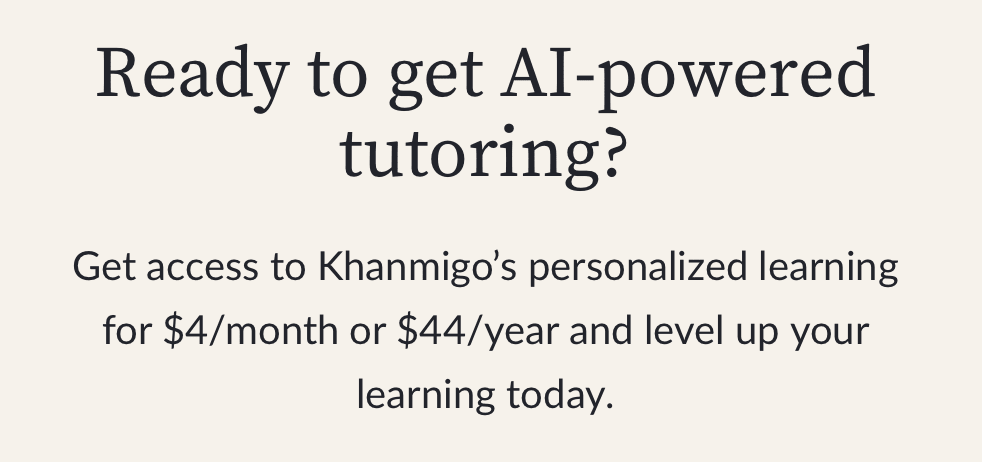
Parents who subscribe can add up to 10 child accounts at no extra charge, which is great for families with multiple kids:. (Each child needs to be under 18 and linked to the parent’s Khan Academy account.) Do keep in mind sales tax may apply on the $4, depending on your location. Even with tax, the cost is far below any human tutoring service. In summary, Khanmigo’s price ranges from free for educators to only ~$4/month for learners – making it one of the most budget-friendly tutoring options available.

What Students Say About Khanmigo Pricing
Student opinions on Khanmigo’s pricing are generally positive, especially after the price reduction. Many acknowledge that $4 a month is a very low cost for unlimited help. For comparison, similar homework-help services often charge $15–$40 per month or charge per question. By contrast, Khanmigo’s subscription lets you ask questions and practice as much as you want without worrying about running up a bill.
Early on, some students and teachers felt the original pricing (~$10/month) was too steep if the AI wasn’t fully polished. One teacher-tester said it wasn’t worth $100/year when Khanmigo sometimes gave wrong answers or couldn’t handle certain tasks. But now at $4/month, we haven’t seen such complaints about cost – it’s almost impulse-buy territory for most families.
In fact, in online forums, users in countries where Khanmigo wasn’t yet available were trying to find workarounds to pay for it. A Reddit user in Australia was eager to pay $9 USD/month and even attempted foreign payment methods because Khanmigo wasn’t officially open in their region at the time. This shows students abroad saw the price as reasonable.
Some frugal students still ask if Khanmigo can be free (since much of Khan Academy is free). Currently, there’s no free version for learners – it requires that small subscription. However, Khan Academy emphasizes that the fee supports the nonprofit and covers the AI’s costs (GPT-4 access is not free).
In summary, most students seem to feel Khanmigo’s pricing is a good value, given the breadth of help it offers for only a few dollars. The key is that you actually use it; a few users noted any subscription is “wasted money if you sign up and barely use it.” If you take advantage of Khanmigo regularly for homework and studying, it delivers great bang for your buck.
Hidden Costs
One nice thing about Khanmigo is that there are no significant hidden costs. The $4/month subscription is all-inclusive – it grants access to all Khanmigo features, subjects, and future updates. There are no extra fees per question, usage limits, or add-on content to buy. This contrasts with some tutoring platforms that charge per session or have premium content behind additional paywalls. With Khanmigo, once you’ve subscribed, you can chat with the AI tutor as much as you want in any subject.
Khan Academy doesn’t require any separate textbooks or materials either – all the learning content is freely available on their site. The only “fine print” to note is that sales taxes or VAT may make the effective monthly cost slightly above $4 depending on your country. For instance, if your local tax is 5–10%, the charge might be $4.20–$4.40. Khan Academy is very transparent about this on the purchase page.
Another potential indirect cost is that Khanmigo works best with a computer or tablet and internet connection, but most students already have those for online learning. There is no charge for teachers at all, aside from their time spent getting training if needed. Khan Academy and Microsoft’s sponsorship ensure educators globally can use Khanmigo free of charge.
In summary, Khanmigo’s pricing is refreshingly simple: aside from minor taxes, what you see is what you pay. You won’t be nickel-and-dimed with any hidden fees or forced upgrades. Just remember to cancel if you ever stop using it, so you’re not auto-charged unnecessarily.
How Khanmigo’s Pricing Works
Khanmigo’s pricing model is essentially a monthly donation model. Because Khan Academy is a nonprofit, they frame the subscription as a contribution that keeps the service running. The payment is handled via credit/debit card using Stripe (a secure payment processor). When you decide to subscribe, you go to your Khan Academy account settings and select a Khanmigo plan. If you choose the monthly plan, you’ll be billed ~$4 upon sign-up and then automatically each month until you cancel. If you choose the annual plan, you pay $44 upfront for the full year (which equates to $3.67 per month, a small discount).
The subscription can be managed online at any time – Khan Academy provides a Stripe customer portal link where you can update your card, see billing history, or cancel. They do not lock you into long-term contracts; even the annual plan is a one-time charge that you could choose not to renew the next year. Importantly, Khan Academy doesn’t try to upsell users on higher tiers – there is only one Khanmigo plan and it includes everything.
This is different from some competitors (for example, Chegg has various plans, and Course Hero has tiered pricing for different numbers of unlocks). Khanmigo keeps it simple. The funds from subscriptions are used to cover the cost of the AI (since running GPT-4 for many users isn’t free) and to support Khan Academy’s mission of providing free education content.
In essence, Khanmigo’s pricing works like a very low-cost membership: pay a small fee to get unlimited tutoring, and feel good that your money is helping a nonprofit too.
Free Trial
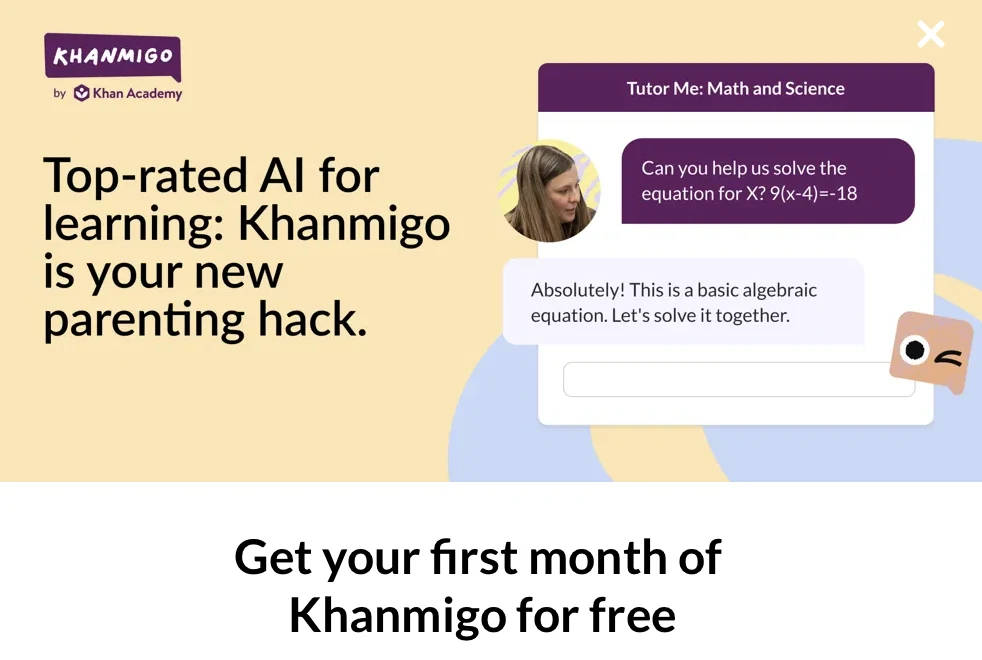
Currently, Khanmigo does offer a free trial for students or parents. Learners can try Khanmigo for FREE! They can submit their email to receive a coupon code to get their first month of Khanmigo for free.
Refund Policy
Khanmigo’s refund policy is a bit unclear, mainly because the cost is small and handled as a donation. Khan Academy’s general stance is that subscription charges are non-refundable once processed. If you forget to cancel and get billed for a new month you didn’t want, there’s no automatic refund – but you can try contacting Khan Academy support to request one. Their Help Center notes that you can cancel anytime to stop future billing, but it does not mention refunds for unused time.
For the monthly plan, canceling simply stops the next payment; you still get the remainder of the month you paid for. For the annual plan, you are committing to a full year – so be fairly sure you want Khanmigo long-term before paying $44 upfront, because pro-rated refunds for annual subscriptions are generally not offered (except perhaps in extreme circumstances).
Being a nonprofit, Khan Academy likely doesn’t have a lenient refund policy as, say, a retail product might. However, they do emphasize that if you have any issues, you should reach out to their support team for assistance. In practice, some users have reported difficulties getting refunds for other Khan Academy services, which suggests that it’s safer to assume “no refund” and only subscribe when you’re ready.
To avoid unwanted charges, set a reminder for yourself before your renewal date if you’re considering canceling. Overall, while Khanmigo is very affordable, remember that it’s a subscription – manage it actively. The lack of refunds is another reason why starting with a monthly plan is wise. Try it for a month ($4); if it’s not useful, you can cancel without having spent much at all. If it is useful, you can then commit to the annual plan to save a bit of money knowing you won’t need a refund.
Khanmigo Alternatives
If you’re exploring tutoring options, it’s worth comparing Khanmigo with other services. Khanmigo is unique as an AI tutor, whereas most alternatives are human-based tutoring or homework help platforms. Below we’ll look at several popular competitors – including Wyzant, Course Hero, Chegg, Varsity Tutors, and Tutor.com – and also My Engineering Buddy (MEB), a top-rated tutoring service. Each alternative has its own pricing model and features, which we’ll outline under their names. This will help illustrate where Khanmigo shines and where a different solution might better suit a student’s needs.
Wyzant
Wyzant is a large online marketplace that connects students with live private tutors. Unlike Khanmigo’s AI, Wyzant provides real human tutors for one-on-one lessons. The platform boasts over 65,000 tutors across 300+ subjects ranging from K-12 academics to college and test prep. You can browse tutor profiles, check their qualifications and reviews, and directly choose the tutor you want. This offers a high degree of personalization – you can find an expert in exactly the topic you need help with, whether that’s high school calculus or college-level organic chemistry.
Pricing: Wyzant has no subscription fees; instead, you pay by the hour for tutoring sessions. Tutors set their own hourly rates, and Wyzant adds a small service fee (~9%) on top. Rates vary widely based on the tutor’s experience and subject. You can find some tutors for as low as ~$10–$20/hour (often new or tutoring basic subjects), while highly experienced tutors (or those teaching advanced subjects) may charge $100/hour or more.
On average, most Wyzant tutors charge around $35–$80 per hour, which means an hour of help costs about 10–20 times what a month of Khanmigo costs. Wyzant doesn’t require buying a package – you can just pay for a single hour if needed. They even have an option for instant drop-in tutoring where you pay by the minute.
Pros vs Khanmigo: With Wyzant, you get a human who can adapt to your learning style, use voice/video, and directly answer your specific questions (no AI guardrails). For difficult subjects or when you need accountability, a live tutor can be more effective. Wyzant’s huge selection means you can likely find someone who matches your schedule and budget.
Cons: Cost is the biggest con; regular tutoring on Wyzant can get expensive fast, especially for long-term or frequent help. Also, the quality can vary – you need to read reviews and maybe try a couple tutors to find a perfect fit. There’s no guarantee every tutor is great, though Wyzant does have a “Good Fit Guarantee” that gives a credit if your first hour with a tutor doesn’t go well.
In summary, Wyzant is a great alternative if you need human interaction and expert guidance and are willing to pay significantly more. Many students use Khanmigo for routine homework and Wyzant for the occasional tough topic that needs a real teacher’s touch.
Course Hero
Course Hero is quite different from Khanmigo – it’s primarily a repository of study materials and a Q&A platform. Course Hero offers millions of course-specific documents (like study guides, practice problems, past assignments) that students have uploaded. If you’re stuck on a homework problem, you can often find a similar solved example or explanation on Course Hero. It also has an “ask a tutor” feature where you can post a question and get a written answer from a tutor.
Pricing: Course Hero operates on a subscription or credit model. They have a free basic membership with very limited access (you might get a few document unlocks by uploading your own notes, for example), but to really use it you need a paid Premier membership. The Premier plan costs $24.95 for 1 month, $59.85 for 3 months, or $119.40 for 12 months.
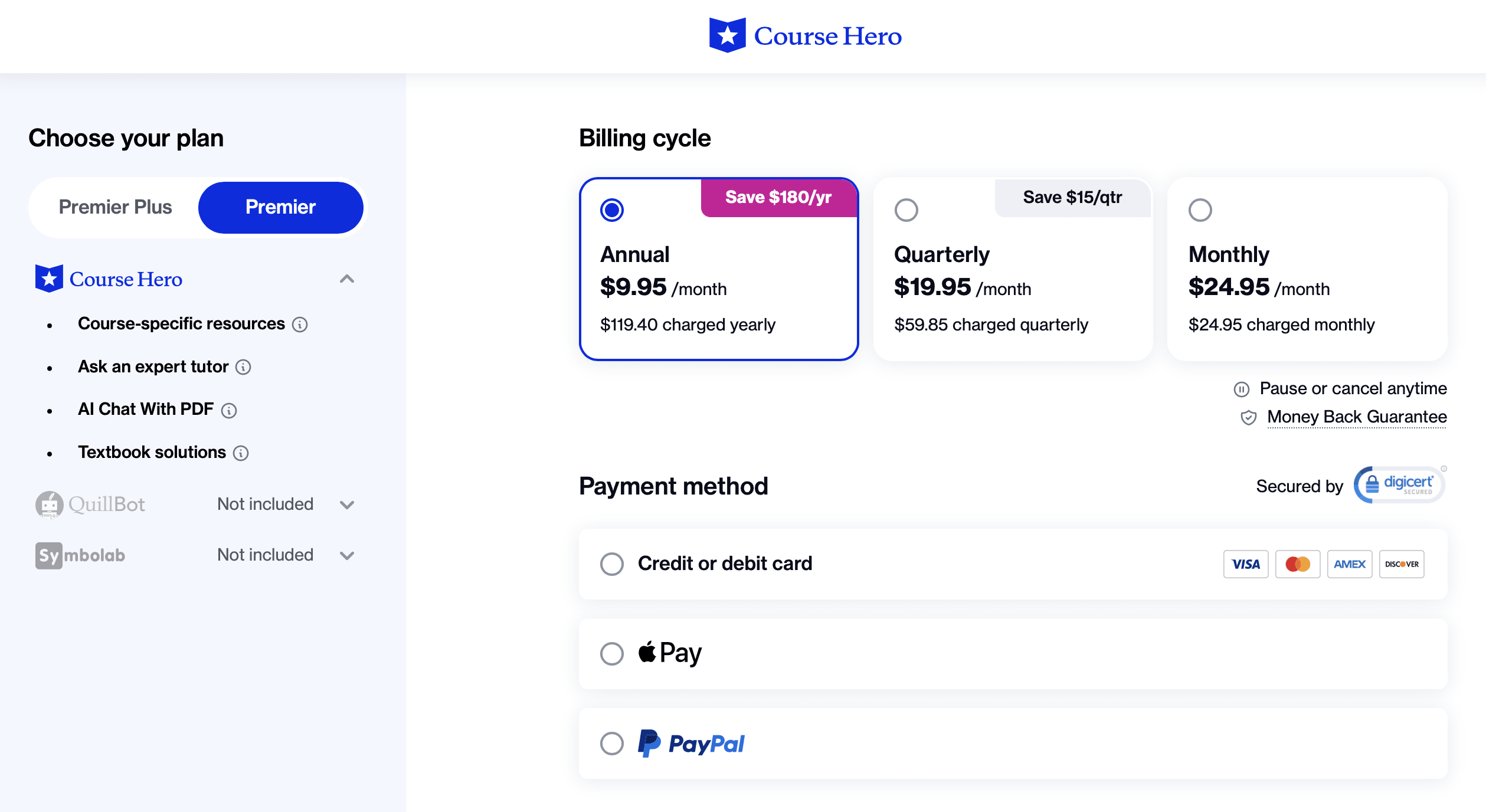
The monthly plan gives you a set number of “unlocks” (around 10 documents) and up to 10 tutor question submissions. Longer plans give more questions/unlocks (e.g. annual gives ~40 questions). In essence, you’re paying around $10–$20 per month and can only ask a limited number of questions in that time. If you exceed that (or want more documents), you might pay extra for additional credits.
Pros vs Khanmigo: Course Hero is useful if you want quick answers or existing solutions. For example, if you have a textbook problem, chances are someone has asked it on Course Hero or uploaded the solution. You can get an answer without the back-and-forth – essentially an expert or another student just gives you the solution or explanation.
It’s available 24/7 in the sense that the library is always there, though getting a new question answered might take some hours. It covers a wide range of subjects (especially popular college courses). Another benefit is that Course Hero can save time when you need to see how a specific problem is solved or need notes for a class.
Cons: The help from Course Hero is not interactive or personalized like Khanmigo. It won’t guide you step-by-step or check if you understand; it simply provides answers or existing materials. This can be a drawback pedagogically (you might be tempted to copy answers rather than learn). Quality can be hit or miss – many users complain that some answers are incorrect or too brief.
Also, Course Hero’s pricing can end up high if you only need help occasionally; ~$40 for one month is steep if you just needed one tough question answered. Some users also reported getting charged for renewal unexpectedly because the subscription auto-renews (so be careful to cancel). Compared to Khanmigo’s $4 for unlimited Q&A (guided), Course Hero is far more expensive per question if you do the math.
In summary, Course Hero is an alternative to consider if you want a vast library of answers and notes at your fingertips, and don’t mind a more passive, answer-oriented approach. It can complement Khanmigo: you might use Khanmigo to understand concepts and Course Hero to double-check solutions or get past solutions for practice. But for real learning, Khanmigo’s method may serve you better, and at a fraction of the cost.
Chegg
Chegg is a well-known student help service that offers textbook rentals, homework help, and other study tools. The aspect comparable to Khanmigo is Chegg Study, which is Chegg’s subscription that provides step-by-step homework solutions and expert Q&A. With Chegg Study, you can look up solutions from their database for popular textbooks, or ask your own homework question to get an expert answer (usually within an hour or two).
Pricing: Chegg Study costs about $15.95 per month for the basic plan. This lets you ask up to 20 questions per month to Chegg’s experts, and also view their library of millions of textbook solutions. They also have a bundle called Chegg Study Pack (~$19.95/month) which includes the Q&A plus extras like a math solver, plagiarism checker, and proofreading for papers. There’s no annual discount; Chegg is typically month-to-month. They do often have free trial offers for 1 week.
Pros vs Khanmigo: Chegg’s strength is accurate, detailed answers. Their experts (often tutors or subject pros) provide written explanations that are usually high quality, especially for math, science, and engineering problems. If you have a specific homework question, Chegg will effectively do it and explain it for you – which some students find invaluable when stuck.
It’s also very popular for having a huge archive: you can often find that your exact homework problem (from a textbook or assignment) is already answered on Chegg, saving you time. Chegg also covers many college-level subjects that Khan Academy (and thus Khanmigo) might not fully cover. For example, advanced engineering, finance, etc., are well represented in Chegg’s Q&A.
Cons: Like Course Hero, Chegg can encourage answer-copying if misused. It doesn’t engage you in a dialog or ensure you truly grasp the material – it’s up to you to study the solution. Another con is the cost relative to usage: ~$16 a month for 20 questions means you’re paying about $0.80 per question answered. If you have lots of questions every day, you’ll outstrip Chegg’s limits or need to pay more, whereas Khanmigo would handle unlimited questions for $4.
Chegg has also faced issues with honor code violations – many schools consider using Chegg cheating if used on graded work. (Khanmigo, by contrast, avoids just giving answers, which keeps it more on the educational up-and-up.) Additionally, Chegg’s availability of live tutoring diminished after they discontinued their tutoring service (they focus on the written Q&A now). So you won’t get interactive teaching from Chegg, just answers and tools.
In summary, Chegg is a powerful homework solver and can be an alternative if you primarily need step-by-step solutions or textbook answers on demand. It pairs well as a supplement – for instance, use Khanmigo to learn a concept, and Chegg to verify answers or handle tough problems beyond Khanmigo’s scope. Just be mindful of the cost and ethical use of Chegg’s solutions.
Varsity Tutors
Varsity Tutors is a premium tutoring service that provides personalized live tutoring and classes. They have a large network of screened tutors and use a matching system to connect students with an appropriate tutor. Varsity offers one-on-one tutoring in thousands of subjects, as well as group classes, test prep courses, and even a free learning library.
Pricing: Varsity Tutors tends to be on the high end price-wise. You can find out the pricing by providing the details of your requirements for academic help here. They often sell tutoring in packages or membership form. For example, they offer monthly subscription packages like 4 hours per month for $276, or 8 hours for $499. Those packages equate to roughly $62–$69 per hour.
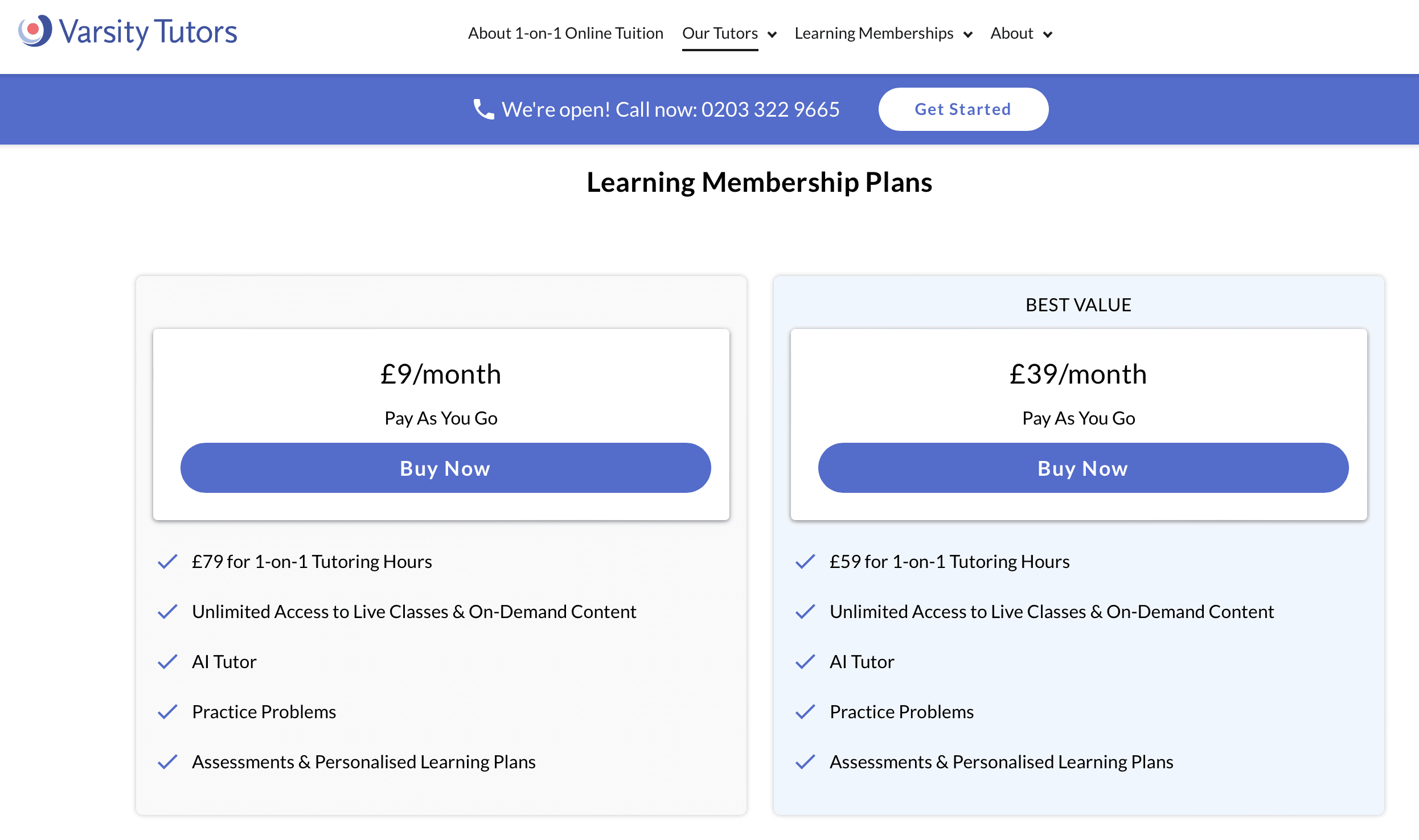
In general, hourly rates start around $60/hour and can go up to ~$100/hour for specialized subjects. They also have instant tutoring by the minute, and small group classes which can be cheaper per session. But expect to invest a few hundred dollars for a package if you go with Varsity Tutors. There is no “unlimited” use; you get the hours you pay for.
Pros vs Khanmigo: Varsity Tutors provides a high-touch, human service. They handle the work of finding a vetted tutor for you, and you often get a dedicated academic advisor who checks in on progress. The tutors are professionals, and Varsity stands by their quality with guarantees (like a tutor satisfaction guarantee). If you’re prepping for a major exam (SAT, ACT, etc.) or need long-term support in a hard class, Varsity Tutors can deliver comprehensive help including homework support, test strategies, and mentorship that an AI can’t match emotionally.
They also have a lot of scheduling flexibility and a custom-built online platform with capabilities like live video, virtual whiteboard, etc. Another advantage is accountability – having a regular appointment with a human tutor can motivate students to stay on top of work.
Cons: Cost is a major barrier. At over $60/hour, regular tutoring from Varsity is out of reach for many students unless the family has a substantial budget for education. It’s an investment closer to hiring a professional tutor privately. Additionally, because Varsity sells packages, you might end up paying for hours you don’t use if your needs change (though they may have some refund policies for unused hours).
In contrast to Khanmigo’s on-demand nature, Varsity usually requires scheduling in advance (except the instant tutoring feature). There’s also no AI or automated help – if it’s late at night and you have one question, you might not have your tutor immediately available.
In summary, Varsity Tutors is an alternative for those who want the highest quality human tutoring experience and are willing/able to pay for it. It’s almost the opposite of Khanmigo’s model: high-cost but high-touch, versus low-cost but self-driven. Some students might use Khanmigo for quick daily help, and engage a Varsity tutor occasionally for deep dives into challenging topics or test prep. For many families, Khanmigo serves as a budget-friendly first line of help, while Varsity (or similar services) are a backup if needed for more intensive support.
Tutor.com
Tutor.com, now a part of The Princeton Review is an online tutoring service that offers on-demand tutoring 24/7 with professional tutors. It’s a bit of a hybrid between the marketplace model and a company like Varsity. Tutor.com hires tutors (many are teachers or experts) and makes them available around the clock for live one-on-one sessions in a virtual classroom. Many libraries and schools provide Tutor.com as a free service to students, but individuals can subscribe as well.
Pricing: For personal plans, Tutor.com has subscription packages. Their rates start around $39.99 per hour for occasional use. For example, you might get a package of 5 hours per month for around $175 (just an illustrative figure). The pricing can range roughly from $20 to $40 per hour depending on how many hours you commit to and the subjects. Some plans allow a certain number of minutes per month rather than hours. Compared to Khanmigo, this is very expensive – essentially you pay per hour similar to Wyzant/Varsity pricing.
Pros vs Khanmigo: The big advantage of Tutor.com is instant human help at any time. It’s 11 PM, you’re stuck on a calculus problem – you can log in to Tutor.com and within a few minutes get connected to a tutor who will walk you through it in real time. This immediacy and convenience is something scheduled tutoring can’t match. Also, Tutor.com tutors are vetted and trained, and you can often reconnect with tutors you like.
They cover all core subjects and many college subjects as well. The service has been around for a long time (Tutor.com started in 2000) and has a solid reputation. They also offer support in Spanish for some subjects. Essentially, Tutor.com can act like an on-demand homework hotline staffed by educators.
Cons: Once again, cost is the downside. Paying ~$40 for a one-hour session to get help with homework is not feasible for everyday use for most students, whereas Khanmigo’s $4 monthly fee can support nightly homework help. Tutor.com’s model makes you conscious of the clock – you might feel pressure to hurry through problems so you don’t use up your minutes.
Another limitation is that while Tutor.com tutors can guide you, they might not always teach concepts deeply if you’re just asking for quick homework help; experiences can vary depending on the tutor you get. There is also a regional limitation – direct consumer subscriptions are mainly available in the US and Canada (However, many US students have access for free via their school or library, which is worth checking.) Compared to Khanmigo, which is more about guiding you to think, Tutor.com tutors might, if you insist, give you more direct answers – but they try to follow a Socratic method too and won’t do your entire assignment for you.
In summary, Tutor.com is a strong alternative if you need a live person on demand and money is not a big concern, or if you’re lucky to have free access through an institution. It provides the human touch and immediate clarification that Khanmigo (being AI) can’t always give. But for routine use, the cost makes Khanmigo a far more economical choice. Many students might combine the two: use Khanmigo daily and save Tutor.com for the occasional really tough question or essay review that needs a human eye.
My Engineering Buddy (MEB)
My Engineering Buddy (MEB) is a top-rated online tutoring service that specializes in engineering and technical subjects, while also covering math, science, and more. MEB is a platform where expert human tutors provide one-on-one tutoring or homework help, particularly for college and advanced high school courses. It’s included here as an alternative because for STEM students, especially in engineering majors, Khanmigo might not handle the depth or specific problem-solving needed – that’s where MEB shines.
Pricing: MEB’s tutoring starts at about $20 per hour for one-on-one sessions. The exact rate can vary by subject and tutor expertise; advanced subjects or urgent homework help may cost more. They sometimes offer a trial session for $1 and have package deals.
Compared to US-based services, MEB is quite affordable – often 20–50% cheaper than typical US tutor rates – because many of their tutors are based in countries where tutoring costs are lower (but they are highly qualified, often with advanced degrees and excellent academic track records). There are no monthly subscriptions; you simply pay for the tutoring help you need.
Pros vs Khanmigo: MEB provides 100% human tutoring with a focus on tough subjects. If you’re tackling college-level engineering (like circuits, thermodynamics, structural analysis, etc.) that Khanmigo might not fully grasp, an MEB tutor can give you step-by-step solutions and detailed explanations. They can also assist with complex calculations, diagrams, and software tools which an AI might struggle with. Uniquely, MEB advertises “Zero AI, 100% Human” – meaning their help is personalized and you won’t run into the limitations of an AI that refuses to give direct answers.
This can be a lifesaver for difficult assignments or exam prep. MEB tutors are available globally and offer 24/7 service, similar to Tutor.com’s on-demand nature. The service is very highly rated (4.8–4.9/5) by hundreds of students, indicating strong satisfaction. Another pro is that MEB covers niche engineering subjects that general platforms don’t – for instance, if you need help with a specific programming assignment or an advanced statistics problem, they likely have a specialist.
Cons: While cheaper than many Western tutors, MEB is still more expensive than Khanmigo – it’s human labor after all. You wouldn’t use MEB for every single easy homework question due to cost. Instead, you’d save it for difficult problems or whenever you hit a wall self-studying. Also, scheduling can be a factor: you usually message MEB (they even allow contact via WhatsApp) and they assign a tutor, which can sometimes happen within minutes, but at very busy times it might take a bit to schedule a session. It’s not an instant click like Khanmigo chat.
Additionally, relying on human help carries the usual caveats – you must ensure you abide by academic integrity (they will help you understand and solve, but you shouldn’t just copy their work blindly either). In comparison to something like Khanmigo, MEB is a more direct “we will help solve your problem” service. In conclusion, My Engineering Buddy is an excellent alternative for students who need expert human help in challenging subjects – particularly engineering and higher-level math/science – which might be beyond Khanmigo’s current AI capabilities.
Many savvy students might use Khanmigo as a first attempt to learn a concept or get hints, and if that’s not enough, turn to MEB for a thorough walkthrough by an expert. MEB also positions itself as a more reliable, personalized option, and as Khanmigo’s popularity grows, MEB is sometimes promoted as a strong alternative for those seeking a human touch. It’s certainly a service to consider if you want top-tier tutoring with great reviews, especially for technical courses.
How it Works?
For Students
Using Khanmigo as a student is simple and intuitive. You start by logging into your Khan Academy account (you’ll need to have an active Khanmigo subscription on that account). Once logged in, you’ll see a menu of activities or modes you can choose from. For example, Khanmigo’s interface lists options like “Tutor me: Math and science,” “Tutor me: Humanities,” “Practice: General subjects,” “SAT prep,” “Coding help,” etc. You can pick a mode or just type a question to begin. When you initiate a session, Khanmigo greets you in a friendly tone and often asks how it can help.
From there, you simply ask your question or describe what you need help with. You might say, “I’m struggling with this algebra equation,” or “Can you help me plan an essay about climate change?” The AI will then respond in a conversational way. For a math problem, Khanmigo will typically start by encouraging you to explain what you know so far or by breaking down the first step.
It won’t just spit out the answer – instead, it might say, “Okay, let’s work through this. What does the problem ask for?” and then “Great, how might we approach solving for x?” This guiding approach keeps you engaged. If you get something wrong, Khanmigo responds gently and gives hints for correction. You can see an in depth demo of Khanmigo here.
Students can also use special Khanmigo features. One popular feature is the ability to “talk” to characters – for instance, you can have Khanmigo pretend to be a historical figure or a book character to have an interactive Q&A in context. A student reviewer mentioned this as a “cool feature” that made learning history more fun.
For coding, Khanmigo provides a code sandbox where you can write code and get real-time feedback or debugging help. For writing assignments, Khanmigo can act as a writing coach, prompting you with ideas and even role-playing as an audience or editor to improve your essay.
Throughout all these interactions, Khanmigo’s aim is to keep the student thinking critically. It will ask follow-up questions like “Why do you think that?” or “What if we try this approach?”, turning the session into a dialogue rather than a one-sided answer delivery. Students really benefit from this because it mimics how a good human tutor would engage them. See a typical
Importantly, you’re never limited to just one question – you can continue the conversation as long as needed, asking Khanmigo to elaborate or clarify until you understand. The chat interface keeps a history, so you can scroll up to review earlier hints, and Khanmigo remembers context within a session. Khan Academy also provides access to your past chat sessions, so you can review how you solved something later on.
To illustrate a typical use case: imagine a student has a calculus problem they can’t solve. They open Khanmigo and type the problem. Khanmigo responds, “Let’s tackle this step by step. First, what does the problem ask us to find?” The student answers. Khanmigo might then say, “Okay, what information do we have? Maybe try using a certain formula.” If the student is stuck, they can ask Khanmigo for a hint. Khanmigo might provide a hint or an example of a similar solved problem (since it’s integrated with Khan Academy’s content library, it can draw on the 100,000+ practice exercises to give relevant guidance).
Eventually, through back-and-forth, the student arrives at the answer. Khanmigo then often encourages them, “Great job! We found the answer. Do you understand why that method worked?”, reinforcing the learning. The student ends the session having actually learned how to solve it, rather than just getting the answer. In terms of accessibility, Khanmigo is available on the Khan Academy website (and works on a computer browser or tablet browser; there’s no separate app yet). Conversations are text-based, so students type and read – though one can imagine voice integration in the future, currently it’s all written.
The interface also clearly warns students not to share personal data in the chat (for safety) and reminds them the conversation is recorded for moderation. Overall, for students, Khanmigo feels like having a super-patient tutor in your computer, ready to help anytime you get stuck or curious. You guide the pace: you can solve one quick homework question in 5 minutes, or have a 2-hour study session moving through multiple topics. Khanmigo adapts to your needs, which is quite empowering for self-learners.
For Tutors (Teachers)
Khanmigo isn’t just for students – it’s also a powerful assistant for teachers and tutors. If you’re an educator, Khanmigo works as an AI teaching aide that can save you planning time and provide insights on student work. Here’s how it works from a teacher’s perspective. First, teachers sign up for Khanmigo through their Khan Academy teacher account. As mentioned, it’s free for educators (Khanmigo verifies teacher status usually by your account type or email domain). Once you have access, you’ll find a set of “teacher tools” or activities in Khanmigo’s menu. These are specifically designed to help with common teaching tasks.
For example, Khanmigo can generate lesson plans tailored to a topic and standard – you just tell it what topic or standard you’re teaching, and it will produce a differentiated lesson plan with objectives, activities, and even assessment questions. It’s like having a co-planner that works lightning fast. Teachers can also ask Khanmigo to create quizzes or test questions on a given topic, and it will generate items at various difficulty levels.
Need a quick rubric for an assignment? Khanmigo can draft one in seconds. Want an exit ticket question to gauge understanding at the end of class? It can give you a couple of creative suggestions. These planning aids normally might take a teacher hours – Khanmigo does them almost instantly, allowing the teacher to then tweak or personalize as needed.
Khanmigo also provides a feature called “Class Snapshot” or progress analysis. A teacher can ask Khanmigo to summarize how their class is doing on Khan Academy assignments. Because Khanmigo is integrated with Khan Academy’s platform, it can access data like which questions students struggled with, or which skills are not yet mastered. The AI then produces a report highlighting areas where the class might need extra help and even suggests how to group students for differentiation (e.g. which students could use remediation on a concept).
This kind of data-driven insight is super valuable for teachers, and Khanmigo delivers it in an easy-to-digest format. It’s like having a teaching assistant that combs through the data and tells you, “Here’s what to focus on.” Additionally, Khanmigo can help teachers refresh their own content knowledge. If an educator is about to teach a lesson on, say, DNA replication and they want a quick review or a way to explain it simply, they can ask Khanmigo. It will provide a clear explanation or analogy the teacher might use in class.
To use Khanmigo in a classroom setting, teachers currently cannot just turn it on for all students (unless through a special pilot). Instead, teachers might use it on a projector or interactive board as part of instruction. For instance, a teacher might say to the class, “Let’s ask Khanmigo to generate a few practice problems on what we learned.” Then in real time, they use Khanmigo to produce problems and solve them with the class. Some teachers have reported students are actually intrigued and ask more questions to Khanmigo than they might to a human teacher, since it feels more game-like.
Khanmigo for teachers is available in English (and recently Spanish and Hindi for some regions), which means if you teach in one of 70+ supported countries, you can use it in your language of instruction too. There are no special technical skills needed – Khanmigo’s interface for teachers is the same chat box, just preloaded with teacher-oriented prompts. Khan Academy even offers a short AI training course for teachers to learn how to best use Khanmigo in teaching, so you can get the hang of prompting it effectively.
In summary, for tutors and teachers, Khanmigo works as a tireless assistant: it handles the grunt work of planning, generates ideas and materials, and provides data insights, all in one place. This frees up teachers to spend more time actually interacting with students and less time on paperwork and planning. Many educators find that with Khanmigo’s help, they can craft more engaging lessons and address student needs more promptly – making teaching a bit less overwhelming in the process.
Khanmigo: Company Information
Khanmigo is a product of Khan Academy, a well-known U.S.-based nonprofit educational organization. To understand Khanmigo’s background, it helps to know Khan Academy’s story. Khan Academy was founded in 2008 by Salman (Sal) Khan, initially as a series of YouTube math tutorials for his cousins. It grew into a massive platform with the mission of providing a “free, world-class education for anyone, anywhere.”
Today, Khan Academy offers lessons in math, science, humanities, and more for K-12 and some college level content. It has over 130 million registered users worldwide and is used in classrooms across the globe. Khan Academy’s content library (which Khanmigo draws upon) includes 100,000+ practice exercises and videos in topics from basic arithmetic to calculus, history to physics, SAT prep, etc. Khan Academy is a nonprofit 501(c)(3), supported by donations from philanthropies (Bill & Melinda Gates Foundation, Google, etc.) and individual donors.
Khanmigo itself was launched in 2023 as an experimental feature within Khan Academy. Sal Khan announced Khanmigo in March 2023 during a TED talk and a partnership with OpenAI. The name “Khanmigo” is a play on “amigo” (friend) – implying it’s your learning friend at Khan Academy. Technically, Khanmigo is built on advanced AI language models (specifically OpenAI’s GPT-4). Khan Academy was among the first to get early access to GPT-4, and their team customized it with special prompts and guardrails to make it student-friendly.
Khanmigo was initially rolled out to a limited number of users (those who donated or signed up for a waitlist) as a pilot to test its effectiveness in classrooms. Early feedback from that pilot helped refine the AI’s behavior. For instance, they fine-tuned how Khanmigo handles math problems (since out-of-the-box AI can sometimes make calculation errors). They also built in moderation filters so that Khanmigo stays on educational topics and won’t answer inappropriate questions.
As of 2025, Khanmigo is still technically in “pilot” mode but has expanded greatly in availability. Microsoft partnered with Khan Academy in 2024, providing cloud resources (via Azure) to scale Khanmigo and offering funding to make it free for teachers. This partnership also involves developing a custom math AI model (Project “Phi-3”) to further improve Khanmigo’s math tutoring abilities.
In terms of team size, Khan Academy has a few hundred employees, and the Khanmigo project is handled by a subset of their engineering and content teams along with input from educators (Khan Academy’s Chief Learning Officer, Kristen DiCerbo, is heavily involved in guiding Khanmigo’s educational design). Khanmigo leverages Khan Academy’s existing content – for example, if a student is using Khanmigo for algebra help, it knows about Khan Academy’s algebra videos and exercises and can recommend those or use them in its guidance.
Currently, Khanmigo covers subjects broadly similar to what Khan Academy covers: math (from elementary math up to calculus), science (biology, chemistry, physics basics), humanities (history, literature), computer science (it can help with coding exercises in several languages), and test prep (like SAT, where it can play roles in reading passages or pose practice problems). It’s aimed mostly at K-12 students and early college. For very advanced subjects or specialized topics, it might not have training data or might be restricted. Remember, its primary purpose is to enhance learning, not just provide answers, in line with Khan Academy’s mission.
USP of Khanmigo
Khanmigo’s Unique Selling Propositions (USP) lie in its blend of cutting-edge AI with pedagogical expertise from an established education provider. Here are the key things that make Khanmigo stand out:
- Guided Learning, Not Just Answers: Unlike generic AI chatbots or answer sites, Khanmigo is designed to teach you how to solve problems rather than just give the solution. It asks questions, offers hints, and uses the Socratic method to ensure you actually learn. This approach helps build understanding and critical thinking. In other words, Khanmigo acts like a personal coach or mentor, with infinite patience. Many other services simply provide answers or completed work, which might not help in the long run.
- Integration with World-Class Content: Khanmigo is the only AI tutor integrated into Khan Academy’s extensive content library. This means it has context about curricula, exercises, and educational standards. It can reference relevant Khan Academy videos or practice problems, ensuring that its help aligns with proven learning materials. For example, if you’re stuck on a math concept, Khanmigo might walk you through a similar Khan Academy exercise step-by-step. Other AI tools like ChatGPT or Bard don’t have this targeted educational content integration.
- Affordability and Accessibility: At just $4 a month (and free for teachers), Khanmigo is dramatically more affordable than personal tutoring. This low cost makes it accessible to a wide range of students, including those who could never pay for human tutors. It aligns with Khan Academy’s nonprofit mission of education for all. Essentially, it democratizes tutoring – historically a resource available mainly to wealthier families – by offering a tutor-like experience for the price of a snack.
- 24/7 Availability & Instant Support: Khanmigo is always available, anytime a student wants to study. There’s no need to schedule sessions or wait for office hours. If you get stuck on homework at midnight, Khanmigo is there. This immediacy is a huge plus for today’s learners who often do work on off-hours. It’s like having a tutor on-call at all times, which is something human tutors cannot economically provide.
- Safe and Student-Friendly Design: Khanmigo was built with student safety and educational value as top priorities. It has guardrails to avoid inappropriate content and to prevent just giving away answers without explanation. Common Sense Media’s independent review gave Khanmigo very high scores for kids’ safety, learning, and privacy (all in the 4-5 star range). Parents and teachers can trust that Khanmigo won’t lead students astray. Additionally, features like parent accounts with monitoring (parents can review what their kids are asking and Khanmigo’s responses) add an extra layer of accountability.
- Enhances Teaching, Doesn’t Replace It: Uniquely, Khanmigo is pitched not as a replacement for teachers, but as a tool for teachers as well. Its dual role as a teaching assistant helps differentiate it from other AI tutors. Teachers can save time and improve their classrooms with Khanmigo’s help in planning and feedback. This symbiotic design – supporting teachers and students – sets Khanmigo apart. Many ed-tech tools focus on one or the other, but Khanmigo tries to do both.
In short, Khanmigo’s USP is that it marries the power of AI (personalization, instant help) with the credibility and pedagogy of Khan Academy. It’s not just a chatbot; it’s an AI tuned to be a top-notch educator that’s affordable and accessible to anyone with an internet connection.
Drawbacks of Khanmigo
While Khanmigo is innovative, it does have some drawbacks and limitations to be aware of:
- Not a Human, Lacks True Understanding: At the end of the day, Khanmigo is an AI. It doesn’t truly understand material the way a human teacher does, nor can it provide the emotional support or motivation a person might. It can’t observe non-verbal cues or adapt its tone as intuitively as a human. Some educators (like prominent math teacher Dan Meyer) have criticized that “Khanmigo does not love students” – meaning it doesn’t have the genuine care or empathy a human teacher brings. If a student is frustrated or needs encouragement beyond text prompts, an AI can fall short.
- Sometimes Gives Wrong or Shallow Answers: Especially in its early stage, Khanmigo can occasionally make mistakes. Large Language Models like GPT-4, while very advanced, are not infallible. They might “hallucinate” incorrect facts or solve a math problem incorrectly if the prompt confuses them. Khan Academy has mitigated this for many academic cases, but users have noted errors here and there. For example, if you push Khanmigo outside the scope of Khan Academy’s content, it might give less reliable answers (one Reddit user tested veterinary nursing questions and found Khanmigo did surprisingly well, but that might not always be the case). Also, its answers in humanities or open-ended questions might not be as deep or nuanced as a teacher’s feedback. It’s trained on general knowledge up to a point, so very new developments or extremely niche questions could trip it up.
- Limited by Design (No Spoilers, Restricted Topics): Khanmigo purposefully won’t just hand out direct answers, which can be a drawback if a student truly just needs the answer to check their work. Some impatient students might get annoyed that Khanmigo is dragging them through steps when they think they already know their mistake. Additionally, Khanmigo is limited to educational topics – it won’t engage in unrelated chit-chat or do things like write your English essay for you (it will guide you to write it, but not compose full paragraphs for an assignment). It also currently only handles text-based interactions (no voice or image input as of now), so if you have a geometry diagram or a complex chemical structure problem, you can’t just show it – you have to describe it in text, which is cumbersome. And as one pilot tester pointed out in 2023, Khanmigo’s “role-play a historical figure” feature was limited to about 60 preset figures and wouldn’t work outside those – so it wasn’t as flexible as a human in pretending or going beyond its programmed scenarios.
- Requires Internet & English Proficiency: Khanmigo is an online tool, so you need a reliable internet connection. In areas or times when internet is down, Khanmigo is inaccessible, unlike a downloaded app or offline textbook. Also, currently English is the main language for Khanmigo (with some activities available in other languages). If a student isn’t comfortable in English, Khanmigo might not be as helpful. The AI probably can manage some other languages (GPT-4 is multilingual to an extent), but Khan Academy’s content and the moderation are primarily English-focused, so non-English use isn’t officially supported yet.
- Not Personalized to Student’s Work (Unless in Khan ecosystem): Khanmigo doesn’t know the student’s specific class or personal progress unless the student is doing exercises on Khan Academy. For instance, it can’t look at your school homework and grade it or give feedback on a specific essay you wrote (unless you copy-paste text into it, and even then it provides general feedback). It’s not like some platforms that integrate with school LMS and pull in your scores. It’s somewhat siloed – very powerful within its domain, but it won’t automatically know what your classroom teacher taught you yesterday. Without that, it sometimes gives generic help that might not perfectly align with your class’s approach.
- Potential Overreliance and Academic Integrity Concerns: While Khanmigo tries not to give direct answers, a savvy student might still misuse it by slowly coaxing the answer out step-by-step without thinking (e.g., just clicking “I don’t know, next hint” repeatedly). There’s a risk students might rely on it too much and not develop independent problem-solving skills. Teachers also worry: if students use Khanmigo on take-home assignments, is it cheating or a learning aid? These are debates happening now. Khan Academy positions Khanmigo as a tool, but individual schools might have varying policies. It’s a grey area – not a fault of Khanmigo per se, but something to consider.
In summary, Khanmigo’s drawbacks are mostly the flip side of its strengths: it’s an AI, so it’s fast and available but not human; it guides rather than gives answers, which is great for learning but can frustrate those wanting quick solutions; it’s tuned to Khan Academy content, which ensures quality in scope but limits flexibility. Recognizing these limitations is important so you know when Khanmigo is the right tool and when you might need a different approach (like a live tutor or a specific textbook). No single tool is perfect, and Khanmigo is no exception – it’s a valuable aid, but not a magic wand.
Comparison with My Engineering Buddy
Now let’s directly compare Khanmigo vs. My Engineering Buddy (MEB), since MEB is one of the notable alternatives and likely of interest to readers looking for tutoring solutions:
- AI Tutor vs. Human Tutor: The most fundamental difference is that Khanmigo is an AI-based tutor while My Engineering Buddy provides live human experts. Khanmigo can handle general concepts and guide you through structured problems using its trained knowledge base. MEB, on the other hand, connects you with a real tutor (often an engineer or subject matter expert) who can personally interact with you, adapt on the fly, and solve novel problems. For straightforward questions and practicing concepts, Khanmigo is great. But if you have a very complex, unorthodox engineering problem, a human from MEB can understand context and requirements in a way AI might not. MEB tutors can also physically write out solutions, draw diagrams, or use specific methodologies preferred by your course – Khanmigo is limited to text and general methods.
- Subjects and Level of Help: Khanmigo is targeted primarily at high school level and some early college content. It excels in algebra, basic calculus, physics principles, etc. However, if you ask Khanmigo about a highly specialized engineering topic (say, finite element analysis or a detailed coding project), it might lack the depth or could even refuse if it’s beyond its safety scope. My Engineering Buddy, as the name implies, specializes in advanced engineering and STEM subjects. They cover hundreds of subjects including advanced ones (Mechanical, Electrical, Civil engineering, programming, statistics, etc.). Their tutors can help with complex college assignments, lab reports, or projects – areas Khanmigo may not handle well. Essentially, Khanmigo covers the breadth of standard curriculum; MEB covers the depth of specialized topics that STEM students encounter in university.
- Cost Structure: Khanmigo is extremely affordable – $4/month flat for all usage. MEB is pay-as-you-go, typically $20/hour and up for tutoring. If you tried to get 10 hours of help, Khanmigo still costs $4 while MEB would be ~$200. That said, with MEB you get intensive one-on-one time where the tutor might even help solve entire problem sets or do customized explanations. So you’re paying for a different level of service. For a student on a tight budget who just needs daily homework support, Khanmigo is unbeatable on price. For a student who’s willing to invest in occasional expert help for really tough situations, MEB’s cost can be justified by the results (especially if it helps pass a critical class). One way to combine them could be: use Khanmigo for regular studying and call on MEB for a couple hours before exams or for an assignment that’s really challenging.
- Speed and Availability: Khanmigo is instantaneous – you type, it responds in seconds. MEB requires scheduling or at least contacting and getting matched with a tutor. They are quite responsive (often can start help within minutes or hours, due to having tutors around the world), but it’s not as immediate as Khanmigo’s replies. However, once you’re in a session with an MEB tutor, you can cover a lot quickly – for example, you could probably get through a set of problems much faster with a human who can cut to the chase, whereas Khanmigo might take you through more steps slowly. In terms of 24/7 help, Khanmigo is always awake. MEB offers 24/7 service too (they advertise round-the-clock availability with tutors in different time zones). But if it’s 3 AM, Khanmigo might be the simpler go-to for a hint, whereas waking an MEB tutor for a minor question might not be practical. For urgent last-minute needs, Khanmigo’s always there; for planned study sessions or emergency assignment rescue, MEB can be there with a bit of coordination.
- Reliability and Accuracy: Khanmigo strives to be accurate but can occasionally mislead if the AI errs. MEB’s human tutors, if they are truly experts, might provide more reliably correct solutions because they’re accountable and you can clarify with them in real time. That said, no one’s perfect – an MEB tutor might make a mistake too, but you can ask them to double-check. With Khanmigo, if you suspect an answer is wrong, you have to discern that and prompt it differently or consult another source. MEB is also very highly reviewed in terms of customer satisfaction, implying that students generally find their help effective. Khanmigo, being newer, doesn’t have an equivalent “review score,” but the feedback is mixed – great for some tasks, not as great for others. So if your priority is absolutely getting the correct answer and method, a human might edge out. If your priority is learning process and practice, Khanmigo is engineered for that and won’t just hand you answers on a plate.
- Learning Experience: Using Khanmigo is a self-driven learning experience. You need to engage, think, and answer its questions. It’s fantastic for learning how to learn. MEB can be a more passive experience if you choose – you can ask the tutor to walk you through every detail or even to show the full solution and then explain it. Some students learn better with a person talking them through it or by seeing a human solve it live. Khanmigo is a bit more text-heavy and might feel like solving a puzzle with hints. Depending on the student’s learning style, one or the other could be more effective. Many might find a combination helpful: Khanmigo for practice and concept clarity, MEB for in-depth clarification and personalized tricks/techniques shared by a tutor who’s “been there, done that.”
In summary, Khanmigo vs My Engineering Buddy is really AI vs Human, breadth vs depth, low-cost vs premium-cost. Khanmigo is wonderful for continuous support, foundational learning, and affordability. My Engineering Buddy is ideal when you need that human insight, especially for advanced topics or when an AI’s guidance isn’t enough. They don’t necessarily conflict; rather, they can complement each other. If Khanmigo is your everyday study buddy, MEB can be your specialist tutor for the hard stuff. Students who leverage both smartly will likely have the best of both worlds.
Customer Support and Policies
Khanmigo (Khan Academy) Support: As a user of Khanmigo, your main avenue for help or issues is Khan Academy’s support system. Khan Academy has an online Help Center where you can search FAQs or submit a support ticket. For instance, if you encounter a technical bug with Khanmigo or a payment issue, you’d use the “Report a Problem” or contact form on their support site. They do not have personalized tutors to talk to you (since Khanmigo itself is the tutor), but they have community forums where you can discuss with other users or Khan Academy staff.
There’s also an official Khan Academy Community on Reddit and other platforms where one might get informal tips. Khan Academy’s customer service has a reputation of being decent but not instantaneous, since it’s a free nonprofit service for the most part. You generally won’t have phone support (except perhaps for school/district partners who have a representative). However, given that Khanmigo is paid, I suspect their support tries to prioritize any subscription issues. They’ve provided clear instructions in the Help Center on how to manage subscriptions (via the Stripe portal), which is straightforward.
As for policies: Khanmigo usage falls under Khan Academy’s Terms of Service and Privacy Policy. Khan Academy is committed to student privacy – they don’t sell personal data, and they limit tracking (no ads on the learning platform). All Khanmigo conversations are recorded and monitored to improve the AI and for safety moderation. If a student asks something inappropriate or outside the scope, Khanmigo will refuse and possibly flag it. They also have safeguards to prevent the AI from giving harmful advice or being used maliciously.
For educators and schools, Khan Academy has a Districts Partnership program with Khanmigo, which likely comes with formal agreements and support. For example, if a school district buys Khanmigo access for all their students, Khan Academy provides a dedicated support manager and training. They even mention a “dedicated customer success manager” for districts. This shows that on an enterprise level, they do have robust support channels.
My Engineering Buddy Support: Since MEB is a smaller company focused on tutoring services, their customer support is quite personalized. They are known to be very responsive via WhatsApp and email – the website prominently features a “Let’s WhatsApp” button for quick contact. Customers can chat with an MEB coordinator almost instantly to arrange tutoring or resolve issues. MEB’s policies include things like a satisfaction guarantee (if a session wasn’t helpful or an assignment help was wrong, they often address it, sometimes offering refunds or extra help).
They also have a high satisfaction rate and 15+ years of trust, indicating they prioritize keeping their clients happy. One thing to note is that services like MEB have to deal with academic integrity policies as well – they usually help with understanding and solving, but they might refuse if asked to just do an entire graded exam for a student (reputable services draw that line). It’s always good for students to clarify expectations with such services.
In terms of policies on usage: Students using Khanmigo are subject to Khan Academy’s honor code. Khanmigo’s design inherently discourages cheating – it won’t just output an essay or complete exam answers. My Engineering Buddy, being human-based, relies on students to use their service ethically (e.g., they provide “homework help” which presumably means guidance and solutions for learning purposes). Both Khanmigo and MEB want students to learn, but tools can be misused, so they each have disclaimers that the help is for understanding, not just copying.
Cancellations and refunds: We touched on Khanmigo’s refund policy (basically no automatic refunds; cancel any time to stop future billing). My Engineering Buddy likely handles refunds on a case-by-case basis – e.g., if a tutor missed a session or did a poor job, they might refund or offer a free replacement session. Since MEB sessions are one-time payments, you don’t have subscriptions to cancel; you just choose not to book more sessions if you’re done or not satisfied.
On Khanmigo’s side, if you cancel your subscription, you’ll still have access until the end of the paid period and then it stops (no partial refunds for canceling mid-month). One must also note Khanmigo is still technically a pilot – if something were to go awry (say, the program ended), Khan Academy would likely communicate and make appropriate adjustments for subscribers.
Overall, customer support for Khanmigo is moderate but improving (especially as more paying users join, Khan Academy will invest in support). Customer support for MEB is highly responsive and hands-on, given their business model. Policies are transparent for Khanmigo (terms available on their site), and MEB’s policies revolve around delivering quality service (they highlight trust and satisfaction metrics on their site, which suggests a customer-first approach).
In any case, if you use either service, don’t hesitate to reach out to their support channels – Khan Academy’s team is very mission-driven and usually helpful, and MEB’s team literally builds their reputation on being helpful and available to students in need.
Global Reach and Localization
Both Khanmigo and various tutoring alternatives are expanding globally, but their reach and localization vary:
- Khanmigo’s Global Availability: Initially, Khanmigo was only available in the United States during its early pilot in 2023. Over time, thanks to partnerships, Khan Academy has expanded Khanmigo access to many other countries. As of early 2025, Khanmigo for Teachers is available in many countries in multiple languages. This includes most of North America, much of Europe, parts of Asia (for example, Khanmigo launched in India in late 2024), Latin America (launched in Spanish in early 2025), and others. For individual learners (students/parents), Khanmigo is also becoming available in many of these countries, though it might lag slightly behind the teacher rollout. Practically, if you live in the UK, Canada, Australia, or Gulf countries, you should be able to subscribe to Khanmigo (the payment system accepts international cards as long as Khan Academy supports your country). A year ago, some international users had to use VPNs or couldn’t pay due to country restrictions, but those barriers are being removed. Khan Academy’s vision is indeed “for anyone, anywhere,” so we can expect Khanmigo to continue spreading globally.
- Localization (Languages and Content): Khanmigo started in English, but Khan Academy has significant content in other languages (they have a Spanish platform, Brazilian Portuguese, French, etc., maintained by partner organizations). With Khanmigo now piloting Spanish, it means Spanish-speaking students can get tutoring in their native language. The Common Sense Media rating praised Khanmigo but did note some early instances of it unintentionally reinforcing biases; Khan Academy has asked for feedback to fix those, showing they are keen on making it culturally sensitive. In terms of curriculum localization, Khanmigo doesn’t yet tailor by country’s curriculum (e.g., it won’t specifically say “this is for CBSE grade 10” or “for UK GCSEs”). It mostly follows general concepts. But since it’s integrated with Khan Academy content, and Khan Academy does map content to certain standards (like US Common Core, NGSS, etc.), it ensures that the tutoring stays aligned to widely recognized learning goals. Over time, they may localize more – possibly adding region-specific modes or aligning with local exam preparations (maybe eventually you’ll see modes for “UK A-Levels” or “IB Diploma” if demand is high).
- Alternatives’ Global Reach: Other services have their own footprints. Wyzant and Varsity Tutors are heavily US-focused – tutors and users are mostly in the US, though online tutoring can be accessed anywhere English is spoken. Course Hero and Chegg are global in that any student around the world can sign up (their resources are mainly in English, but students worldwide use them for textbook solutions if their textbooks are in English). My Engineering Buddy, interestingly, is actually quite global – it was founded by tutors in India but serves students from the US, Middle East, Europe, etc. MEB’s marketing is in English and they cater to international students frequently. They mention offering help “to higher-level students studying engineering and advanced courses” globally. So alternatives like MEB or Chegg likely have users across the high-income countries we focus on (e.g., many Gulf country students use online tutoring like MEB or Chegg for university courses).
- Internet and Technology Access: In high-income countries, internet penetration is high, so using these digital services is usually not an issue. Khanmigo doesn’t require heavy bandwidth – it’s just text – so even moderate connections work. This accessibility, plus its low cost, means that an English-speaking student in, say, the UAE or Singapore, can leverage Khanmigo effectively as long as it’s available to sign up. And if it’s not officially supported yet, it likely will be soon, as Khan Academy tends to roll things out widely after pilot testing. They already included numerous small nations and territories in their August 2024 expansion (like Palau, Botswana, etc.), showing an intent to cover everyone, not just big markets.
- Cultural Relevance: One aspect of localization is whether the tutor (AI or human) understands local context or curriculum specifics. An AI like Khanmigo might not get local slang or region-specific questions (e.g., a history question about a local historical event might not be in its knowledge base). Human tutors from MEB or Wyzant can also face this if they are from a different country than the student. However, for core academic subjects, this is usually not a huge problem. Khanmigo’s “personalize my interests” feature lets it adapt to a student’s interests/career ideas, which could include recognizing where a student is from and what context they have, but that’s fairly general. As a global user, one might sometimes have to clarify to Khanmigo if a question is country-specific. For example, if a student in the UK asks about “maths coursework,” Khanmigo (trained mostly on American English) might not immediately get the nuance of “coursework” vs exam, but it will likely still assist with the math problem itself. These are minor issues that will improve as the AI learns from a more diverse user base.
In conclusion, Khanmigo’s global reach is rapidly expanding, with strong efforts to localize into other languages (Spanish being a major one given its global prevalence, and Hindi covering a huge student population as well). It is well on its way to serving students in high-income countries and beyond. Alternatives vary, but the beauty of online platforms is that boundaries are few – a student in London can hire a tutor in New York via Wyzant, or a student in Dubai can get help from an MEB tutor in India, etc. What matters is language compatibility and curriculum understanding, and for our target audience (who likely follow international curricula or English-medium instruction), these services are quite viable. Khanmigo is basically bringing the “AI tutor for every student on Earth” dream closer to reality, and its global roll-out indicates that soon geography won’t limit educational support.
Khanmigo’s Future Plans
Khanmigo is an evolving platform, and there are exciting plans and possibilities on the horizon for 2025 and beyond. Here are some of the expected future directions for Khanmigo:
- Continued AI Improvement: Khan Academy will keep refining Khanmigo’s AI to be smarter and more helpful. With Microsoft’s partnership, they are working on integrating new AI models like Phi-3 for enhanced math tutoring. This could make Khanmigo even better at step-by-step math reasoning, perhaps eliminating errors and handling complex multi-step problems more reliably. Also, OpenAI’s models will likely get upgrades (GPT-5 or other future models), and Khanmigo will benefit by adopting those while retaining its educational customizations. In Sal Khan’s words, they’re approaching development with “educated bravery” – acknowledging AI’s risks but forging ahead to harness its benefits. So expect Khanmigo to become more accurate, more context-aware, and faster over time as the tech advances.
- Deeper Personalization: Right now, Khanmigo more or less treats users the same, aside from what mode you choose or what you tell it about your interests. In the future, Khanmigo might leverage a student’s history on Khan Academy to personalize its guidance even more. For example, if it knows you struggle with fractions, it could proactively give more hints when a problem involves fractions. Or it could remember that you enjoy sports analogies and use them in explanations. The goal would be to simulate a tutor who really knows the student. Khan Academy already has data on what skills each user has mastered through their exercises – integrating that with Khanmigo could yield a powerful adaptive learning experience.
- Expanded Subjects & Capabilities: We will likely see Khanmigo broaden to cover more subjects and tasks. For instance, Khan Academy has content for early reading/grammar and more arts/humanities content (it started with math but now there are U.S. history, economics courses, etc.). Khanmigo might develop special modes for these, like a “Literature Analyzer” mode where it can discuss novels or help with literary analysis. It already does some of this, but it could be fine-tuned. Another area is test preparation – Khanmigo could get modes tailored to specific standardized tests (imagine an SAT coach that not only answers questions but times you and gives strategy tips). On the technical side, Khanmigo might incorporate multimodal abilities once available – meaning it could possibly interpret images or equations written by hand. OpenAI’s newer models can handle images; if Khanmigo gains that, a student could upload a photo of a math problem or diagram and Khanmigo could help, which would be a game changer for geometry or graph-based questions.
- Classroom Integration and Group AI Activities: Khan Academy might explore ways Khanmigo can facilitate group learning. One concept floating around is having Khanmigo simulate a debate or a group discussion with students. For example, two students and Khanmigo could have a three-way conversation about a science concept, with Khanmigo moderating or adding ideas. Another idea is using Khanmigo to help teachers create differentiated paths: by future, maybe each student in a class has Khanmigo giving them slightly different problems based on their level, all coordinated by the teacher’s dashboard. Also, as more districts adopt it, Khanmigo could integrate into learning management systems (like appearing within Google Classroom or Microsoft Teams so students can call on it without leaving their workflow).
- Language Expansion: We saw pilot expansions to Spanish and Hindi. The future likely holds support for many more languages – Khan Academy content exists in French, Portuguese, etc., so Khanmigo could learn to tutor in those as well. This would open up massive new user bases. Sal Khan has mentioned the dream of AI tutors in every major language guiding students through Khan Academy’s curriculum. It’s reasonable to expect progress toward that in the coming years, effectively making Khanmigo a multilingual tutor that preserves all its educational quality across languages.
- Addressing Limitations and Ethical AI Leadership: Khan Academy is very mindful of AI ethics. Future plans likely include making Khanmigo even more robust against biased or inappropriate outputs. They’re actively soliciting examples from reviewers (like Common Sense Media) of any biases so they can correct them. They may also implement features like student emotion detection – maybe Khanmigo can sense if a student is getting frustrated (perhaps by analyzing response latency or language used) and then adjust its approach or alert the teacher. Additionally, Khan Academy might share research on Khanmigo’s effectiveness. If studies show certain areas where it falls short, they’ll plan improvements. Already, early data indicated students engaged more questions to Khanmigo, which is promising. Future studies could influence how Khanmigo is tuned (for example, making it more concise if feedback says it’s too verbose, or vice versa).
On a broader scope, Sal Khan’s vision is that Khanmigo could level the playing field by giving every student a personal tutor akin to Aristotle for Alexander the Great, as he often references. So future plans aren’t just technical – they’re also about scaling distribution. We can anticipate Khanmigo being pushed out to more public school systems, possibly with government partnerships, so that it becomes a common classroom tool. Microsoft’s involvement hints at deeper integration – Khanmigo might be accessible directly through tools like Microsoft Teams for Education, as noted in the partnership news. In five years, it wouldn’t be surprising if Khanmigo (or its evolved form) is as common in classrooms as SmartBoards or projectors are today.
In summary, the future of Khanmigo is geared towards becoming more intelligent, more personal, more widespread, and more inclusive. It’s an evolving tutor that will keep getting better at teaching and reach more learners. And as it does, it will continue to be compared with and complemented by human-based services like My Engineering Buddy. But with each iteration, Khanmigo is closing the gap between what an AI can do and what a human tutor can do, which is something we’ll be watching closely as education enters this new AI-assisted era.
FAQs About Khanmigo
What is Khanmigo and how is it different from ChatGPT?
Answer: Khanmigo is an AI-powered personal tutor and teaching assistant developed by Khan Academy. It uses the same underlying technology (GPT-4 from OpenAI) that ChatGPT uses, but it’s been customized extensively for education. Unlike ChatGPT, which is a general-purpose AI that will answer just about anything, Khanmigo is focused on learning. It won’t simply give you answers to homework questions; instead, it guides you to find the answers yourself through hints and questions.
Khanmigo is integrated with Khan Academy’s content, so it stays on-topic with math, science, humanities, etc., and can refer to relevant educational materials. It’s also designed with safety in mind – there are guardrails to prevent it from veering into inappropriate or irrelevant territory for students. In short, Khanmigo is like a tutor version of ChatGPT that is curriculum-aware and pedagogy-oriented, whereas ChatGPT is a more open-ended AI assistant.
If you ask ChatGPT a math problem, it might just solve it and give the answer (which could be wrong if it misinterprets). If you ask Khanmigo, it will walk you through solving it, ensuring you learn the steps. For learning effectiveness, Common Sense Media rated Khanmigo higher than ChatGPT or Bard, precisely because it’s built to teach, not just tell.
How much does Khanmigo cost and is it free for anyone?
Answer: Khanmigo’s pricing is very simple: it costs $4 USD per month (or $44 per year) for students and parents. This subscription gives you unlimited access to the AI tutor. There is no completely free version for students at the moment – unlike the rest of Khan Academy which is free, Khanmigo requires this small fee to cover the AI’s operating costs. However, K-12 teachers can use Khanmigo for free. Thanks to support from sponsors like Microsoft, any verified teacher can sign up and get Khanmigo’s features without paying, so they can use it as a teaching aid.
Khan Academy decided to keep a nominal fee for learners (the $4) to fund the continued development and maintain quality (since AI usage incurs costs per interaction). The fee is essentially treated as a donation to the nonprofit. Occasionally, Khan Academy might offer promotional free trials or discounts (for example, early donors got to try it), but generally if you’re a student or parent, you’ll need to subscribe. The good news is that $4/month is very affordable compared to traditional tutoring – it’s one of the lowest-cost education subscriptions out there. And you can cancel anytime; there’s no long-term contract.
Teachers, librarians, and district admins should note: if you’re implementing Khanmigo in a school, it’s free for your educators, and student access can be arranged via the district partnership (pricing for districts varies and is handled separately, often funded by the school or district rather than individual students).
Is Khanmigo worth it? Does it really help students learn?
Answer: In many cases, yes, Khanmigo is worth it – especially given its low cost – but it depends on how the student uses it. If a student is motivated to learn and engages with Khanmigo’s guidance, it can be extremely helpful. It provides instant support, never gets frustrated, and encourages the student to think critically. Teachers who’ve used Khanmigo reported that some students asked more questions and explored more deeply with the AI tutor than they normally would in class. That suggests it can boost curiosity and confidence.
A high school student who reviewed Khanmigo said it helped her understand calculus problems step-by-step and she could keep asking questions until she “got it”. This kind of patient, thorough explanation is definitely beneficial for learning. Additionally, Khanmigo’s approach of not giving answers directly but guiding the student is aligned with educational best practices – it’s like the student is doing assisted self-study, which tends to result in better retention than just reading an answer key.
On the other hand, if a student isn’t willing to put in effort and just clicks through Khanmigo’s prompts or ignores its questions, then it won’t magically impart knowledge. Also, Khanmigo is not a magic bullet for every subject; for extremely advanced college material or highly hands-on tasks, a human might still be needed. Early user feedback shows mixed experiences: some absolutely love it and say it improves their learning, others were underwhelmed if they expected a more straightforward answer service.
But at just $4 to try for a month, many find it’s worth it to see if it matches their learning style. In summary, for the vast majority of middle school to college intro-level topics, Khanmigo can be a great learning companion if used properly. It’s like anything – the more you put into the learning process, the more you get out. Khanmigo sets up a process that is conducive to learning; the student still needs to participate actively. When they do, the results (understanding material more deeply, improving problem-solving skills) show that Khanmigo is indeed “worth it.”
Is Khanmigo safe for my child to use?
Answer: Yes, Khanmigo is safe for children to use. It’s developed by Khan Academy, a trusted nonprofit that’s been around for over 15 years, known for providing quality educational resources.
Khanmigo isn’t a scam or some fly-by-night app; it’s backed by major organizations (even Microsoft and OpenAI are partnered in its development). So you can trust that it’s a real educational tool designed with good intent.
Safety: Khan Academy has implemented several measures to ensure Khanmigo is student-friendly. All Khanmigo interactions are moderated – the AI has filters to prevent inappropriate language or topics, and it will refuse to engage in off-limits requests (for example, anything overtly sexual, hateful, or dangerous). The platform also records the chats, so if anything ever did slip through or if a student encountered an issue, Khan Academy can review it.
Additionally, for children under 18, Khanmigo is typically enabled through a parent account, and parents can monitor their child’s Khanmigo conversations and even get alerts for certain content. This transparency is a great feature – it’s like how parents can see browsing history, here they can see learning history. Common Sense Media gave Khanmigo a top rating for “Kids’ safety” and “Privacy”, noting it as one of the most trustworthy AI tools for kids.
Unlike some online forums or tutoring chats, there’s no possibility of strangers interacting with your child – it’s just the AI. Of course, remind your child (as Khanmigo itself does) not to share personal information in the chat. The AI doesn’t need to know their full name or address, etc., to help them with homework. But even if a kid blurted something out, that data is protected under Khan Academy’s strict privacy policy (they’re FERPA compliant and take student data seriously).
In summary, Khanmigo is as safe as it gets for an online educational assistant. It’s legit, well-monitored, and focused on learning. As a parent, you can feel comfortable that it’s a constructive environment – essentially, it’s like a tutor that only talks academics and nothing inappropriate.
Can Khanmigo do my homework or write essays for me?
Answer: No, not in the way you might mean. Khanmigo isn’t designed to do your homework outright; it’s designed to help you do your homework. For problem-solving questions (like math or science homework), Khanmigo will guide you step by step, but you have to do the work of entering answers or performing calculations. It won’t just hand over the final answer on a silver platter – in fact, it often answers a question with another question or hint, to nudge you in the right direction.
This is great for learning, but if you were hoping to copy answers without effort, Khanmigo will disappoint you (which is actually a good thing academically!). For essay writing or open-ended assignments, Khanmigo acts like a writing coach but will not write the full essay for you. It might help brainstorm ideas, create an outline, suggest how to improve a paragraph, or even role-play as an audience to give feedback on your draft, but you have to provide the content. If you try to make it write an entire essay from scratch, it will either refuse or produce something very generic that wouldn’t fit your assignment (and it reminds you not to cheat).
Khan Academy explicitly set Khanmigo to not be a cheating tool. So if you say, “Khanmigo, what’s the answer to problem #5 on my worksheet?” it will respond with something like, “Let’s work on it together – what do you think about this step first?” Likewise, if you say “Write my English essay about Hamlet,” Khanmigo might respond with an outline or ask what themes you want to focus on rather than giving a completed essay. It’s trained to prioritize ethics and learning.
So, in conclusion, Khanmigo won’t do your homework for you, but it will definitely help you do it yourself. Think of it as a tutor sitting next to you: the tutor isn’t going to write your answers, but they will explain, ask you questions, and keep you on the right track so that you can finish your homework with understanding.
How do I access and use Khanmigo?
Answer: To use Khanmigo, you’ll need a Khan Academy account and a Khanmigo subscription (if you’re a student/parent). Here’s a step-by-step:
- Create a Khan Academy account: If you don’t have one, sign up for free at KhanAcademy.org. If you’re a student under 13, a parent or teacher may need to create an account and add you as a child account due to COPPA rules.
- Subscribe to Khanmigo: Once logged in, go to your profile/settings and look for the Khanmigo section, or navigate to the Khanmigo page on Khan Academy. You’ll see an option to “Get Khanmigo.” Choose the monthly or annual plan and enter payment details (handled securely via Stripe). If you’re a teacher, when you indicate your role, it should allow you to activate Khanmigo for free without payment.
- Start Khanmigo Chat: After subscribing, you can launch Khanmigo. On the Khan Academy site, there may be a Khanmigo icon or you can go to the Subjects menu (Khanmigo might be listed as a subject/offering). Click it, and you’ll enter the Khanmigo interface – a screen with a chat area. There might be some initial tutorial or introduction from Khanmigo itself explaining how to use it.
- Choose an Activity or Ask a Question: Khanmigo might present you with choices like “Tutor me in math,” “Help with writing,” etc., via a sidebar or menu. If you have a specific question, you can just type it into the chat box. For example: “I need help with this algebra equation: 2x + 5 = 17.” If you’re not sure how to start, you could type something like, “I don’t understand photosynthesis, can you explain it?” Khanmigo will then respond and the tutoring dialogue begins.
- Interact: Use Khanmigo by following its prompts, or asking further questions. You type, it responds, and so on. It’s best to be as specific as you can. If Khanmigo gives a hint and you still don’t get it, tell it that. For instance, “I’m still confused” or “Can you break that step down more?” It will adjust and elaborate. If you feel you’ve got a handle on the problem, you can also ask, “So the answer should be X, right?” and Khanmigo will confirm or gently correct you. Essentially, treat it like you’re chatting with a tutor – be interactive. You can also reset or start a new topic at any time by indicating you want to try a different subject or problem.
- End or Review Session: There’s no formal “end” – you just stop typing when you’re done. Khanmigo sessions are saved (you can view your past conversations via the “chat history” link). This is useful for reviewing how you solved something later. If you want to switch subjects, you can just ask a totally new question. Khanmigo might then say “Sure, let’s talk about that new topic” and effectively start fresh context on that.
In summary, accessing Khanmigo is as easy as logging in and opening a chat. It’s integrated into Khan Academy’s site, so you don’t need to download anything special. Just make sure you use a modern browser and have internet access. One tip: if you’re using Khan Academy for coursework (e.g., doing practice exercises), you can have Khanmigo open alongside – but note Khanmigo might not directly give answers to official Khan Academy exercises (because that would defeat the learning purpose).
Use it to ask for help on steps you’re stuck on instead. Also, feel free to just explore Khanmigo by asking general knowledge questions or for creative learning activities (like “Give me a fun math riddle to solve”) – it can do those too. Enjoy your learning with your new AI study buddy!
Can multiple people use one Khanmigo subscription (for example, siblings)?
Answer: Yes, Khanmigo has a family-friendly setup. A single Khanmigo subscription on a parent’s Khan Academy account can be shared with up to 10 child accounts (under 18) linked to that parent. This means if you’re a parent with two kids, you can subscribe once ($4/month or $44/year) and then enable Khanmigo for both children’s accounts without paying extra. Each child will have their own login and can use Khanmigo independently, and you (the parent) can monitor their usage.
However, you should not share one account between different individuals (like two siblings using the exact same login) – Khan Academy would prefer each child has their own profile for accuracy and safety. But the subscription cost covers up to 10, so practically it’s like a family plan by default. For two siblings both in college (18+), technically you’d each need your own subscription because the sharing feature is meant for parent/child accounts.
Also, note that the teacher account free access is separate – a teacher account can’t be used for multiple students to do their personal work; it’s intended for the teacher’s use (and classroom demos). So in summary: within a household, one paid plan can cover multiple kids via the parent account’s family feature. Just set up child profiles for each kid on Khan Academy, subscribe on the parent profile, and toggle Khanmigo access on for each child in the settings. Each child gets their own Khanmigo experience, and you only pay once, which is great value.
Conclusion
Khanmigo represents a new era of learning tools – it’s like having a personal tutor available anytime, helping students learn by doing and guiding rather than giving away answers. In 2025, we find Khanmigo to be an affordable, innovative supplement to a student’s education, especially for those in high-income countries where internet access is readily available. It has garnered positive reviews for its educational approach and has addressed many initial kinks, though it’s not a total replacement for human interaction. We saw that while Khanmigo can coach through algebra or writing an essay outline at 10 PM, there are times when a student might still say, “I just need someone to show me this directly.”
That’s where My Engineering Buddy (MEB) comes in as a strong alternative and complement. MEB, with its expert human tutors and excellent track record, can provide the direct, personalized help that an AI sometimes cannot – particularly for complex college-level engineering and math problems. Throughout this article, we compared Khanmigo with several services. Many of the traditional ones (Wyzant, Chegg, Course Hero, etc.) have their uses, but each comes with trade-offs like higher cost or the risk of encouraging rote answers.
MEB distinguishes itself by combining the best of both worlds: it’s an online platform (so it has on-demand convenience like Khanmigo) but powered by real people who can adapt and genuinely ensure understanding like a great teacher. Their reviews speak to their quality and legitimacy, so students and parents looking for reliable help – especially for tough STEM courses – should definitely consider MEB.
In the end, the best strategy for academic success might be a blend: use Khanmigo as a day-to-day study buddy to reinforce concepts and practice problems, and know that you have My Engineering Buddy or similar human tutoring services in your back pocket for the times you need that extra push or a different explanation that only a human can provide. Khanmigo can make learning more engaging and self-driven, potentially reducing how often expensive tutoring is needed.
And when a student does turn to a tutor like MEB, they’ll likely be better prepared to ask the right questions and make the most of that session, having already worked through the basics with Khanmigo. Education is not one-size-fits-all; it’s about building a support system of resources. With Khanmigo, Khan Academy has added a remarkable AI resource to that system. And with alternatives like My Engineering Buddy, students truly have a wealth of help at their fingertips.
Bottom line: Khanmigo is transforming tutoring with AI – it’s legit, safe, and effective for active learners. But it’s not the only option. Evaluate your needs: if you crave interactive practice and guidance, Khanmigo is a no-brainer to try. If you need in-depth assistance or a human touch (or you just prefer talking to a person), platforms like My Engineering Buddy are ready to help. I
n fact, many students will benefit from using both. By leveraging Khanmigo for what it does best and My Engineering Buddy for what humans do best, students can have a comprehensive support system that was unimaginable just a few years ago. And that means more confident learners, better understanding, and ultimately better academic outcomes – which is the goal we all share.
******************************
This article provides general educational guidance only. It is NOT official exam policy, professional academic advice, or guaranteed results. Always verify information with your school, official exam boards (College Board, Cambridge, IB), or qualified professionals before making decisions. Read Full Policies & Disclaimer , Contact Us To Report An Error