
The Role of Artificial Intelligence in Modern Cybersecurity

Why AI Is Becoming Essential in Cyber Defense
Cyberattacks are growing in speed, complexity, and automation. Traditional security systems can’t keep up with modern threats like zero-day attacks, deepfakes, or AI-generated phishing campaigns. This is why Artificial Intelligence (AI) has become a game-changer in cybersecurity, helping organizations detect, predict, and respond to threats faster than ever before.
To better understand the magnitude of this shift, the comparison below highlights the fundamental differences between legacy systems and modern AI-driven defense.
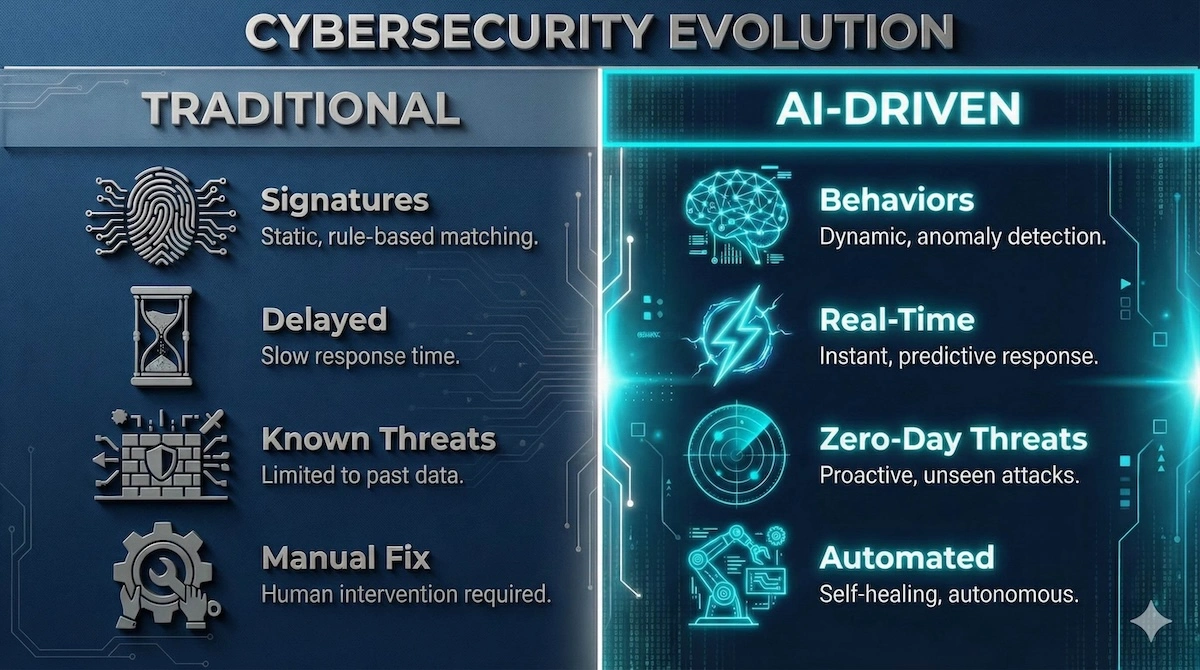
Compare how AI-driven defense outperforms traditional security by detecting unknown threats and automating responses.
As shown above, the transition from reactive signature matching to proactive behavior analysis is what allows AI to stop threats that human teams might miss.
AI-powered cybersecurity tools analyze patterns across massive datasets, detect anomalies in real time, and automate responses that required hours of manual investigation. For professionals, enrolling in a Cyber Security Course that includes AI-driven defense training is now an essential step toward future-ready security expertise.
How AI Transforms Cybersecurity Operations
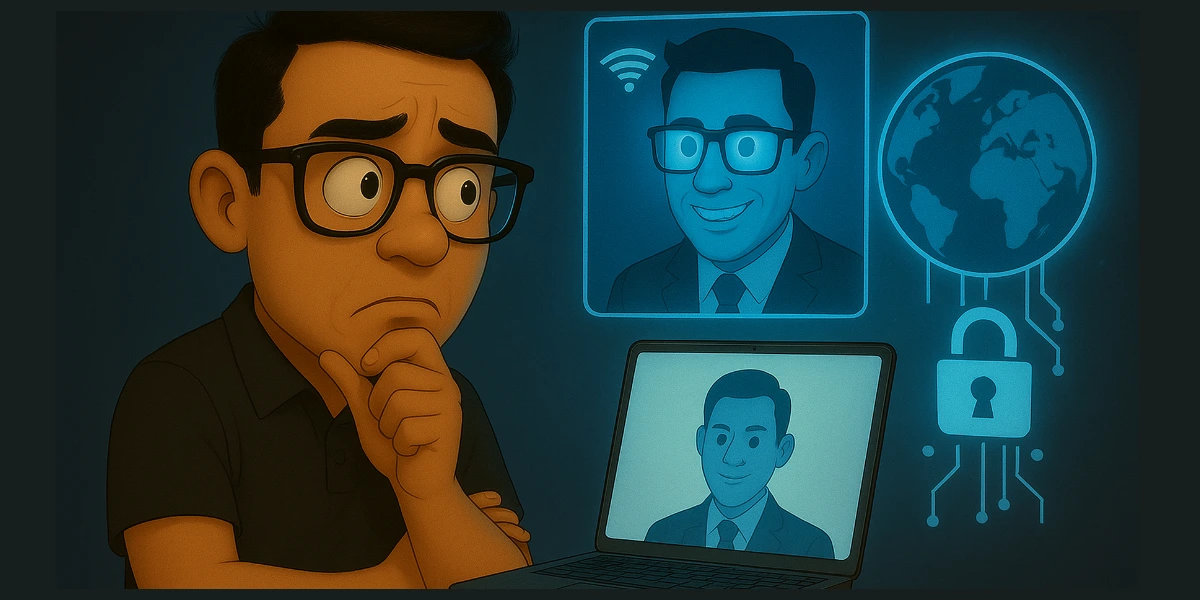
AI doesn’t just improve speed , it enhances accuracy and adaptability. Here’s how it’s reshaping modern cybersecurity:
- Threat Detection and Prediction
Machine learning algorithms study network traffic and identify suspicious behavior before it turns into an attack. For example, AI can detect a ransomware signature even if it’s never been seen before. - Incident Response Automation
With AI-based SOAR (Security Orchestration, Automation, and Response) systems, alerts are prioritized, false positives are reduced, and automated actions isolate infected systems instantly.
This automated process—often referred to as SOAR—follows a precise logical flow to handle threats at machine speed.
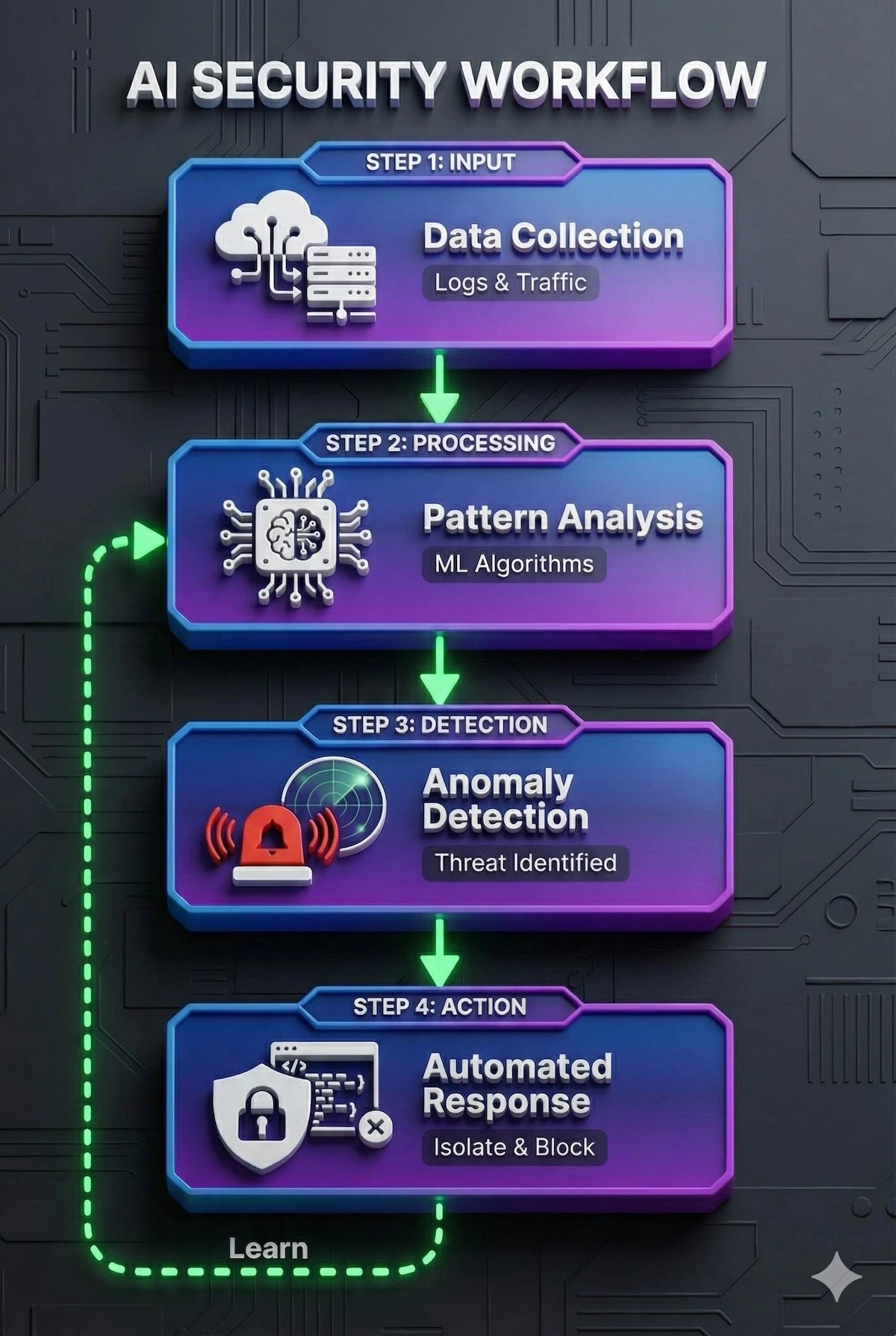
This workflow illustrates how AI systems automate the cycle of detecting and neutralizing cyber threats in real-time.
By automating the detection and isolation steps illustrated here, security analysts can focus their energy on complex investigations rather than routine alerts.
- User Behavior Analytics (UBA)
AI tracks login patterns, device usage, and behavior anomalies, alerting security teams if a legitimate user’s account is compromised. - Malware Detection and Prevention
Instead of relying on signature-based antivirus systems, AI models detect malware by analyzing its behavior, providing better protection against polymorphic and zero-day threats.
Read More: AI Chatbots: The Future of Interactive Lead Generation
The Human-AI Collaboration in Cybersecurity

While AI improves accuracy, it doesn’t replace human intelligence. Ethical hackers and security analysts provide critical reasoning, creativity, and ethical judgment that machines cannot replicate. AI can identify suspicious files — but a human expert determines whether the activity is malicious or harmless. This collaboration creates a hybrid defense system, combining machine precision with human expertise — now the industry standard for security operations.
It is crucial to visualize this relationship not as a replacement, but as a powerful partnership where each side contributes unique strengths.
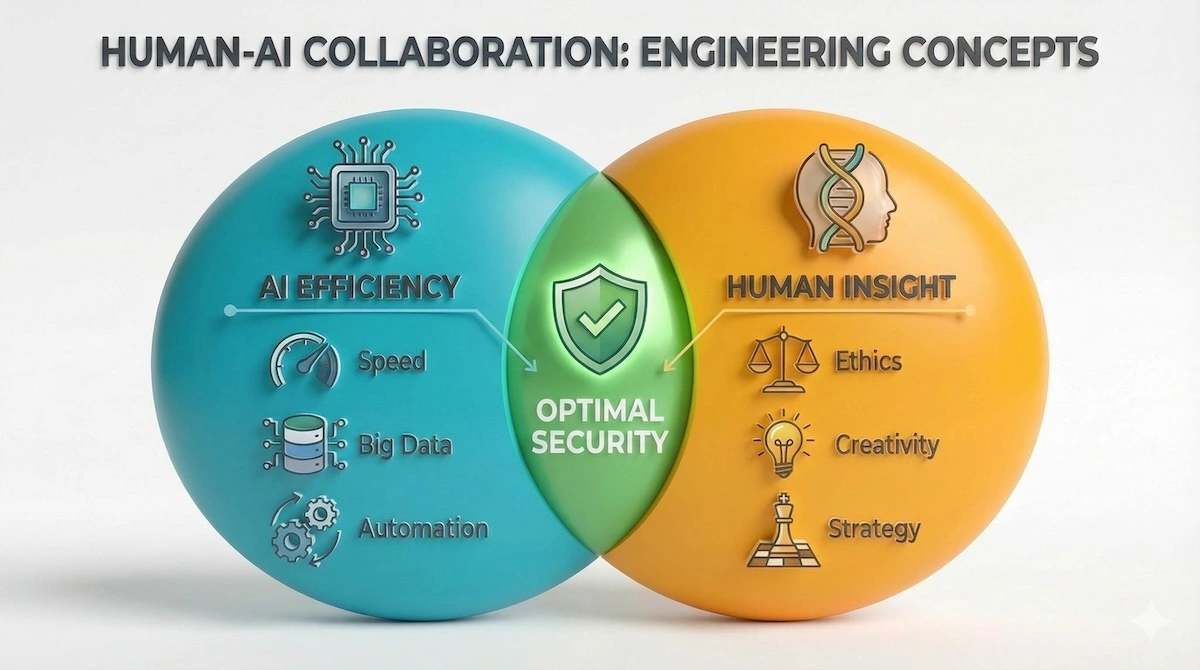
Effective cybersecurity relies on a hybrid model where AI handles data processing while human experts provide strategic oversight.
This hybrid model ensures that while machines handle the speed and scale of data, human experts retain control over ethics and strategy.
Professionals trained through a Cyber Security Course that integrates both AI tools and ethical hacking methods gain a huge advantage in modern threat management roles.
AI in Ethical Hacking: Smarter Testing and Analysis
Ethical hackers now leverage AI for advanced penetration testing and vulnerability management. AI tools simulate thousands of attacks in minutes, identify weak points in applications, and generate detailed risk assessments automatically.
Some popular AI-assisted hacking and defense tools include:
- Darktrace – Real-time anomaly detection
- Cylance – Predictive AI for malware prevention
- IBM QRadar Advisor – Integrates Watson AI for incident analysis
Students enrolled in a Cyber Security Course in Pune or other major cities are increasingly trained on these tools to prepare for future industry demands.
Online learning platforms like My Engineering Buddy also connect students with expert tutors in AI, data science, and cybersecurity fundamentals — helping learners strengthen their technical foundation before diving into advanced defense systems.
Challenges and Limitations of AI in Cybersecurity
Despite its strengths, AI also introduces new risks.
Adversarial attacks can manipulate AI models with poisoned data; privacy issues may arise from large-scale data collection, and overdependence on automation can reduce human vigilance. The best cybersecurity strategies balance AI-driven defense with human oversight to maintain adaptability and resilience.
Building a Career in AI-Driven Cybersecurity
The demand for professionals who understand both AI and cybersecurity is growing rapidly. According to a recent Gartner report, 60% of enterprises plan to implement AI-based security systems within the next year, creating massive demand for skilled experts.
The industry data confirms this rapid market shift, signaling a critical window of opportunity for new learners.
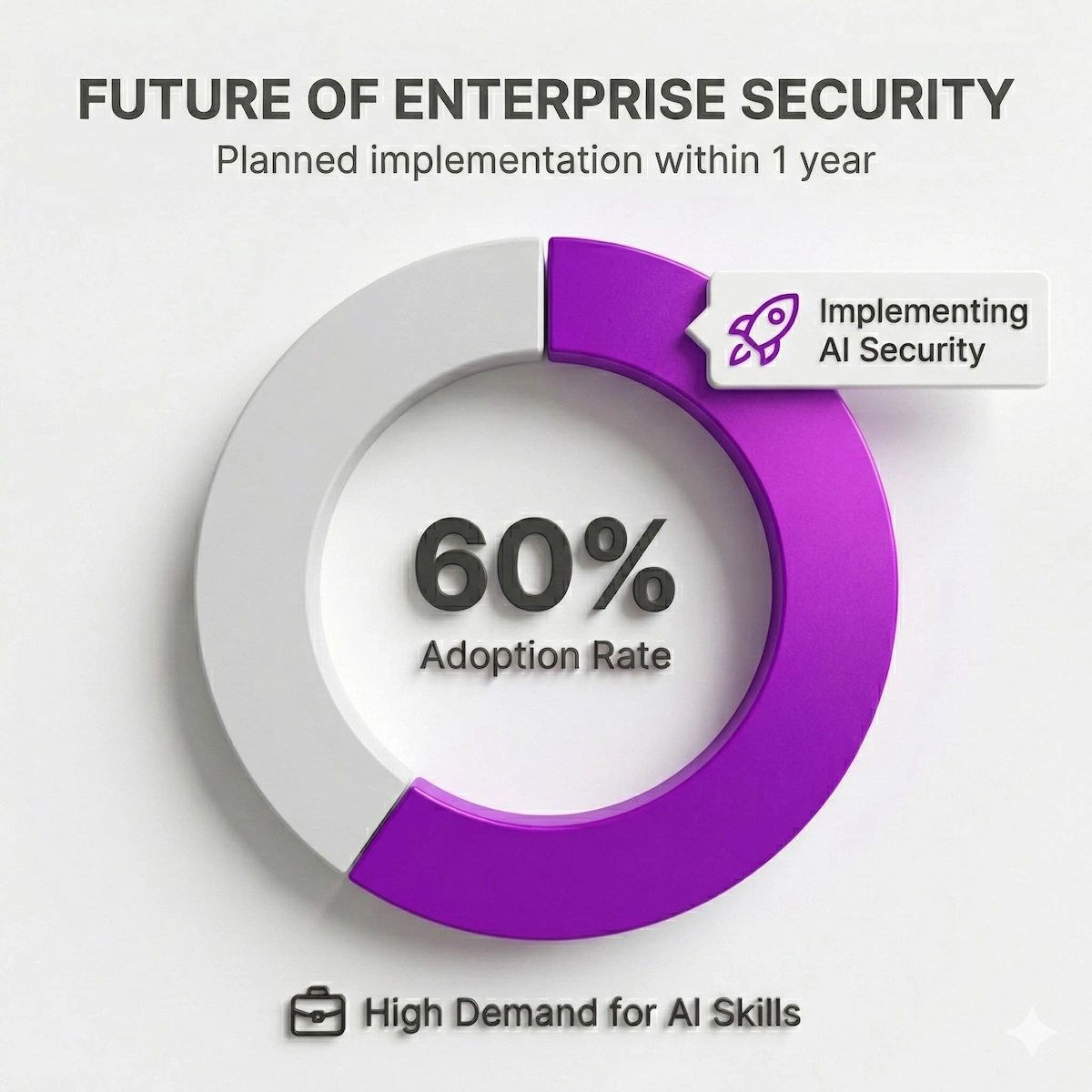
With 60% of enterprises moving toward AI security, the demand for professionals with these skills is rapidly increasing.
With nearly two-thirds of enterprises moving this direction, gaining AI skills is no longer optional—it is a prerequisite for the best roles in the industry.
If you’re planning to enter this field, a professional Cyber Security Course that includes modules on AI, machine learning, and data-driven security can help you build these skills effectively. Training covers topics like AI in network monitoring, machine learning for intrusion prevention, cloud and IoT security, and AI-assisted ethical hacking.
The Role of Boston Institute of Analytics (BIA)
The Boston Institute of Analytics (BIA) offers a future-focused Cyber Security Course designed to combine traditional defense methods with AI-powered techniques. Students gain practical experience with live labs, penetration testing simulations, and exposure to AI-based tools used by top global security teams. The institute ensures an industry-relevant curriculum and mentorship from certified cybersecurity professionals, preparing learners for real-world challenges.
Final Thoughts
AI is no longer just a buzzword; it’s the backbone of modern cybersecurity defense. But it’s only truly powerful when combined with human ethical hacking skills and judgment. As cyber threats evolve, professionals equipped with both AI knowledge and cybersecurity expertise will lead the next generation of digital defenders, protecting systems, data, and organizations worldwide.
******************************
This article provides general educational guidance only. It is NOT official exam policy, professional academic advice, or guaranteed results. Always verify information with your school, official exam boards (College Board, Cambridge, IB), or qualified professionals before making decisions. Read Full Policies & Disclaimer , Contact Us To Report An Error