~1 min
Average Reply Time
~1 hour
To Be Matched With A Tutor
30 Min Trial
75% Find Their Tutor On The 1st Trial
$20-35+/hr
Premium Yet Affordable Learning
Hire The Best Art History Tutor

Struggling with iconography, formal analysis, or essay structure in Art History? Most students who fail aren’t short on interest — they’re short on feedback.
Art History Tutor Online
Art History is the academic study of visual art and architecture across cultures and time periods, examining style, meaning, and historical context. It equips students to analyze, interpret, and write critically about works of art using established methodological frameworks.
Finding a reliable Art History tutor near me — one who actually knows the difference between formal analysis and iconographic interpretation, and can help you write under exam pressure — is harder than it sounds. MEB connects you with 1:1 online Art History tutoring and homework help across AP, A Level, IB, undergraduate, and graduate programmes. Our tutors know the Fine Arts curriculum inside out, from Paleolithic cave painting to postmodern theory. One tutor. Your syllabus. Your timeline.
- 1:1 online sessions tailored to your exact course and exam board
- Expert-verified tutors with subject-specific Art History knowledge
- Flexible time zones — US, UK, Canada, Australia, Gulf
- Structured learning plan built after a diagnostic session
- Ethical homework and assignment guidance — you understand the work before you submit it
52,000+ students across the US, UK, Canada, Australia, and the Gulf have used MEB since 2008 — including students in Fine Arts subjects like Art History, Music History, and Art.
Source: My Engineering Buddy, 2008–2025.
How Much Does an Art History Tutor Cost?
Most Art History tutoring sessions at MEB run $20–$40/hr depending on level — AP and undergraduate coursework sits in that range, while graduate seminars or dissertation support can reach $70–$100/hr. The $1 trial gives you 30 minutes of live 1:1 tutoring or a full explanation of one essay question or homework problem before you commit to anything.
| Level / Need | Typical Rate | What’s Included |
|---|---|---|
| Standard (AP, A Level, IB, early undergrad) | $20–$35/hr | 1:1 sessions, essay and homework guidance |
| Advanced / Specialist (graduate, dissertation, niche periods) | $35–$100/hr | Expert tutor, research depth, thesis support |
| $1 Trial | $1 flat | 30 min live session or 1 essay question explained |
Tutor availability tightens around AP exam windows in May and A Level exam periods in May–June. Book early if your deadline is within six weeks.
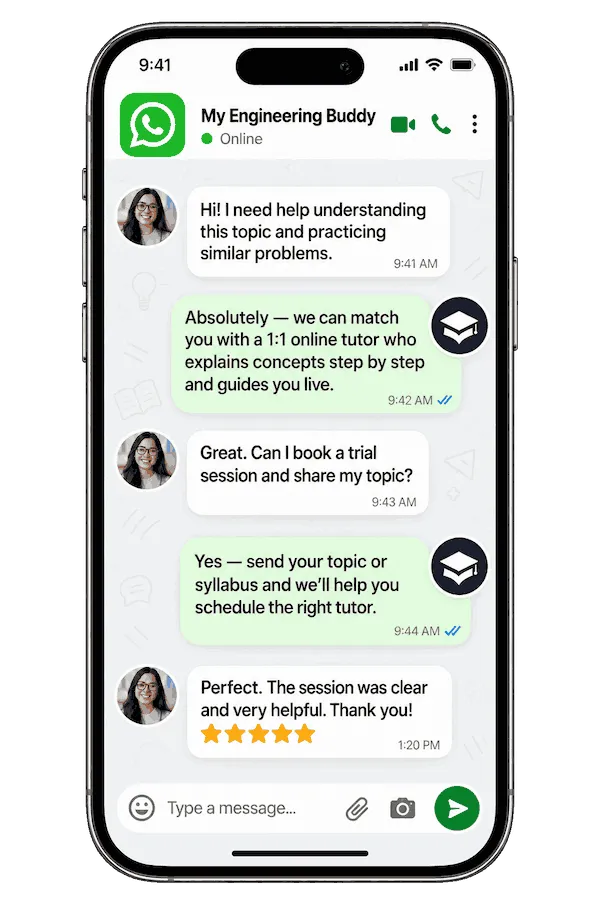
WhatsApp MEB for a quick quote — average response time under 1 minute.
Who This Art History Tutoring Is For
Art History looks manageable until you’re staring at a slide you’ve never seen before and need to write a timed analysis in 30 minutes. The gap between “I understand the content” and “I can perform under exam conditions” is exactly where MEB tutors work.
- AP Art History students preparing for the DBQ, SAQ, and long essay sections
- A Level and IB students working through formal analysis and comparative essay skills
- Undergraduate students at institutions like Yale, Columbia, the Courtauld, University of Melbourne, University of Toronto, McGill, and the American University of Beirut who need support with art historical methodology
- Students retaking after a failed first attempt who need structured essay feedback, not just content review
- Students with a university conditional offer that depends on their AP or A Level grade
- Graduate students working on research papers, thesis chapters, or seminar presentations
- Parents watching a child’s confidence drop as exam essays come back marked down without clear feedback
At MEB, we’ve found that Art History students often know more than their grades suggest. The problem is nearly always essay structure, not content knowledge — and that’s something a tutor fixes faster than any textbook.
1:1 Tutoring vs Self-Study vs AI vs YouTube vs Online Courses
Self-study works if you’re disciplined, but Art History essay skills need external feedback — you can’t mark your own analysis objectively. AI tools explain concepts quickly but can’t tell you why your formal analysis paragraph lost marks on a specific exam board’s rubric. YouTube is useful for visual walkthroughs of individual artworks but stops short when you need timed practice with feedback. Online courses move at a fixed pace and offer no personalisation for your exam board or syllabus gaps. 1:1 tutoring with MEB is calibrated to your actual paper — AP, A Level, IB, or undergraduate — and corrects your essay structure in the session, not a week later.
Outcomes: What You’ll Be Able To Do in Art History
After working with an MEB Art History tutor, you’ll be able to analyze an unseen artwork using formal elements — line, colour, composition, scale — and connect them to historical and cultural context with confidence. You’ll write structured comparative essays that address exam-board criteria directly, not around them. Apply iconographic and contextual frameworks — Panofsky’s three levels, for instance — to works you haven’t studied before. Explain how movements like Impressionism, Abstract Expressionism, or Baroque relate to their political and social moment. Present a coherent argument about artistic meaning under timed conditions.
Supporting a student through Art History? MEB works directly with parents to set up sessions, track progress, and keep coursework on schedule. WhatsApp MEB — average response time is under a minute, 24/7.
Based on feedback from 40,000+ sessions collected by MEB from 2022 to 2025, 58% of students improved by one full grade after approximately 20 hours of 1:1 tutoring in subjects like Art History. A further 23% achieved at least a half-grade improvement.
Source: MEB session feedback data, 2022–2025.
What We Cover in Art History (Syllabus / Topics)

Track 1: AP Art History (College Board)
- Global prehistory and ancient Mediterranean art
- South, East, and Southeast Asian art across major dynasties and periods
- Indigenous Americas, Africa, and Pacific cultures
- European medieval, Renaissance, Baroque, and Rococo periods
- 19th-century movements: Neoclassicism, Romanticism, Realism, Impressionism
- Modern and contemporary art: Cubism, Surrealism, Abstract Expressionism, Postmodernism
- SAQ strategy, DBQ essay structure, and timed long-essay practice with AP rubric
Commonly used texts: Stokstad & Cothren’s Art History (Pearson), Gardner’s Art Through the Ages, and the Tate research archive for contextual depth on modern and contemporary works.
Track 2: A Level and IB Art History
- Close formal and contextual analysis of set works (varies by board — AQA, OCR, Edexcel, IB)
- Comparative essay writing across periods and cultures
- Independent research and extended essay (IB) methodology
- Themes: gender and the body, power and patronage, the sacred and the spiritual
- Non-Western art traditions integrated with Western canon
- Exam technique: timed essay planning, thesis construction, evidence selection
Commonly used texts: Honour & Fleming’s A World History of Art, Kleiner’s Gardner’s Art Through the Ages, and board-specific set works lists from AQA, OCR, or the IB.
Track 3: Undergraduate and Graduate Art History
- Art historical methodology: formalism, iconography, Marxist approaches, feminist theory, postcolonialism
- Seminar paper research, argument construction, and peer-review readiness
- Primary source analysis: exhibition catalogues, artist statements, critical reviews
- Thesis chapter drafting and supervisor-meeting preparation
- Historiography: tracing how interpretations of major works have shifted over decades
- Drawing and visual studies as supplementary practice for studio-integrated programmes
Commonly used texts: Preziosi’s The Art of Art History: A Critical Anthology, Elkins’s Stories of Art, and primary texts from Vasari through Greenberg to bell hooks.
Students consistently tell us that the turning point in Art History isn’t memorising more works — it’s learning to build an argument from visual evidence in under five minutes. That’s a skill. It’s teachable.
What a Typical Art History Session Looks Like
The tutor opens by checking where the previous session ended — usually a specific essay or a set of works from a period like Dutch Golden Age painting or Mesoamerican sculpture. From there, the student shares their most recent essay attempt or a past-paper question on screen. The tutor works through it paragraph by paragraph using a digital pen-pad, marking where the argument drifts from the evidence and where the formal analysis lacks specificity. The student rewrites a section live. The tutor checks the revision, explains the examiner’s expectation at that mark band, and sets a timed practice question for before the next session — usually a different period, same essay format.
How MEB Tutors Help You with Art History (The Learning Loop)
Diagnose: In the first session, the tutor reads a recent essay or asks the student to talk through an unseen image. Within 20 minutes, the tutor has a clear picture of whether the issue is formal analysis vocabulary, contextual depth, essay structure, or exam timing.
Explain: The tutor models the approach live — annotating an artwork or essay paragraph on screen with a digital pen-pad, showing exactly what a top-band answer demonstrates and why a mid-band answer falls short.
Practice: The student attempts a parallel task with the tutor present. No stepping away. No “try it at home and we’ll check next week.” The attempt happens in the session.
Feedback: The tutor corrects step by step — naming the specific mark criterion being missed, not just saying “be more analytical.” That precision is the difference between vague encouragement and genuine grade movement.
Plan: Each session closes with a defined next topic, a timed practice task, and a note of what the diagnostic identified as the next gap to close.
Sessions run over Google Meet. Tutors use a digital pen-pad or iPad with Apple Pencil for annotating essays and artworks. Before your first session, have your exam board confirmed, one recent essay attempt, and your exam date. The first session is diagnostic — every minute is used. Start with the $1 trial — 30 minutes of live tutoring that also serves as your first diagnostic.
Art History grades hinge on one transferable skill: building an argument from visual evidence, fast. That skill doesn’t come from reading more — it comes from practising under feedback from someone who knows the mark scheme.
Source: My Engineering Buddy tutor team observation, 2008–2025.
Tutor Match Criteria (How We Pick Your Tutor)
Not every Art History tutor is a match for every student. MEB matches on four criteria.
Subject depth: The tutor must know your specific exam board — AP College Board, AQA, OCR, Edexcel, or IB — and the set works or syllabus content for your year.
Tools: Every tutor uses Google Meet and a digital pen-pad or iPad with Apple Pencil. Essay annotation and artwork analysis happen live on screen.
Time zone: Matched to your region — US, UK, Gulf, Canada, or Australia. No sessions scheduled across a 12-hour gap that nobody can sustain.
Goals: Whether you’re targeting a 5 on the AP exam, a grade boundary jump on A Level, or finishing a graduate seminar paper, the tutor is selected for that specific outcome — not assigned generically.
Unlike platforms where you fill out a form and wait, MEB responds in under a minute, 24/7. Tutor match takes under an hour. The $1 trial means you test before you commit. Everything runs over WhatsApp — no logins, no intake forms.
Study Plans (Pick One That Matches Your Goal)
After the diagnostic, the tutor builds the session sequence around one of three timelines. A catch-up plan (1–3 weeks) targets students with specific essay weaknesses or a content gap to close before a paper. An exam prep plan (4–8 weeks) works through each section of the paper — SAQ, DBQ, long essay for AP; timed comparative essays for A Level — in a structured order aligned to the exam date. Weekly support runs alongside the school semester, synced to coursework deadlines and teacher feedback cycles. The tutor specifies the sequence after the first diagnostic; no generic plan gets sent before the gaps are known.
Pricing Guide
Art History tutoring at MEB starts at $20/hr for standard AP, A Level, and IB levels. Graduate-level research support and dissertation chapter work can reach $100/hr depending on tutor expertise and timeline urgency.
Rate factors include the student’s level, the complexity of the specific topic or essay type, how close the deadline is, and tutor availability at the requested time. Availability during AP exam season (April–May) and A Level season (May–June) is limited — early booking is the only way to secure consistent weekly slots.
For students targeting competitive art history programmes at institutions like the Courtauld Institute, Yale’s History of Art department, or the University of Edinburgh, tutors with postgraduate research backgrounds in specific periods are available at higher rates — share your specific target and MEB will match the tier to what you actually need.
Start with the $1 trial — 30 minutes, no registration, no commitment. WhatsApp MEB for a quick quote.
FAQ
Is Art History hard?
It depends on where the difficulty is. Content volume is high, but the real challenge is essay technique — constructing a formal analysis argument under timed conditions. Most students who struggle have been given content without structured essay practice. That’s fixable.
How many sessions are needed?
Students with a specific essay weakness typically see measurable improvement in 4–6 sessions. Closing a full content and skills gap for an exam in 6–8 weeks usually takes 10–16 hours of 1:1 time. The first diagnostic clarifies the realistic timeline for your situation.
Can you help with homework and assignments?
Yes — MEB tutoring is guided learning. You understand the essay argument, the analysis method, and the evidence before you write and submit it yourself. See our Academic Integrity policy and Why MEB page for full details on what we help with and what we don’t.
Will the tutor match my exact syllabus or exam board?
Yes. AP College Board, AQA, OCR, Edexcel, and IB each have different set works, essay formats, and mark schemes. MEB matches tutors to your specific board and year — not a generic Art History tutor who knows the broad content.
What happens in the first session?
The tutor runs a diagnostic — usually reviewing a recent essay or asking you to talk through an unseen image. By the end of the session you’ll have a clear picture of your weakest area and a defined plan for the next two to three sessions.
Is online tutoring as effective as in-person?
For Art History specifically, online is often better — the tutor can share high-resolution artwork images, annotate essays live on screen, and pull up exam mark schemes instantly. There’s no whiteboard in the world that beats a pen-pad annotation of a Velázquez on a shared screen.
Can I get Art History help at midnight?
Yes. MEB operates 24/7 across time zones. WhatsApp MEB at any hour — average response time is under a minute. If your tutor isn’t available, a matched alternative can be arranged. Essay deadline panic is not a reason to wait until morning.
What if I don’t like my assigned Art History tutor?
Request a change via WhatsApp. No forms, no argument. MEB will rematch you, usually within the hour. The $1 trial exists precisely to test the fit before you invest in a longer block of sessions.
Do you cover AP Art History specifically — including the image-based essay?
Yes. AP Art History tutors at MEB work through all three essay formats — SAQ, DBQ, and long essay — with specific attention to unseen image analysis, the 250-image required content list, and the College Board’s AP rubric. Timed practice with feedback is a core part of every session.
How does Art History tutoring handle works I’ve never seen before?
That’s the point of the unseen analysis component on most Art History exams. MEB tutors train you to apply a formal analysis framework — working through visual elements, then contextual inferences, then meaning — so you can handle any unfamiliar work systematically. It’s a method, not a memory exercise.
Can you help with the IB Art History extended essay?
Yes. MEB tutors support IB students with topic scoping, research methodology, argument structure, and draft review for the extended essay. Tutors familiar with the IB internal assessment criteria work through the rubric with you directly.
How do I get started?
WhatsApp MEB with your exam board, current level, and exam date. MEB matches you with a verified tutor — usually within the hour. Your first session is the $1 trial: 30 minutes live or one full essay question explained. Three steps: WhatsApp → matched → start trial.
Trust & Quality at My Engineering Buddy
Every MEB Art History tutor goes through a screening process that includes a subject knowledge review, a live demo session evaluation, and ongoing feedback monitoring. Tutors hold degrees in Art History, History of Art, Fine Arts, or closely related disciplines — and several have postgraduate research experience in specific periods, from Medieval iconography to 20th-century American modernism. Rated 4.8/5 across 40,000+ verified reviews on Google.
MEB tutoring is guided learning — you understand the work, then submit it yourself. For full details on what we help with and what we don’t, read our Academic Integrity policy and Why MEB.
MEB has served 52,000+ students across the US, UK, Canada, Australia, the Gulf, and Europe in 2,800+ subjects since 2008. Fine Arts is one of MEB’s strongest subject areas — tutors cover abstract art tutoring, painting tutoring, and colour theory help alongside Art History, with tutors who understand how visual arts disciplines overlap in coursework and research. See our tutoring methodology for details on how sessions are structured across these subjects.
Our experience across thousands of Art History sessions shows that students who practise unseen image analysis at least twice before their exam — with real-time feedback — score significantly better on the timed essay components than those who only review content.
Explore Related Subjects
Students studying Art History often also need support in:
Next Steps
Before your first session, have ready: your exam board and syllabus (or course outline), a recent past paper attempt or essay you struggled with, and your exam or deadline date. The tutor handles the rest.
- Share your exam board, hardest essay component, and current timeline
- Share your availability and time zone
- MEB matches you with a verified Art History tutor — usually within 24 hours
The first session starts with a diagnostic so every minute is used well. Visit www.myengineeringbuddy.com for more on how MEB works.
WhatsApp to get started or email [email protected].
Reviewed by Subject Expert
This page has been carefully reviewed and validated by our subject expert to ensure accuracy and relevance.