




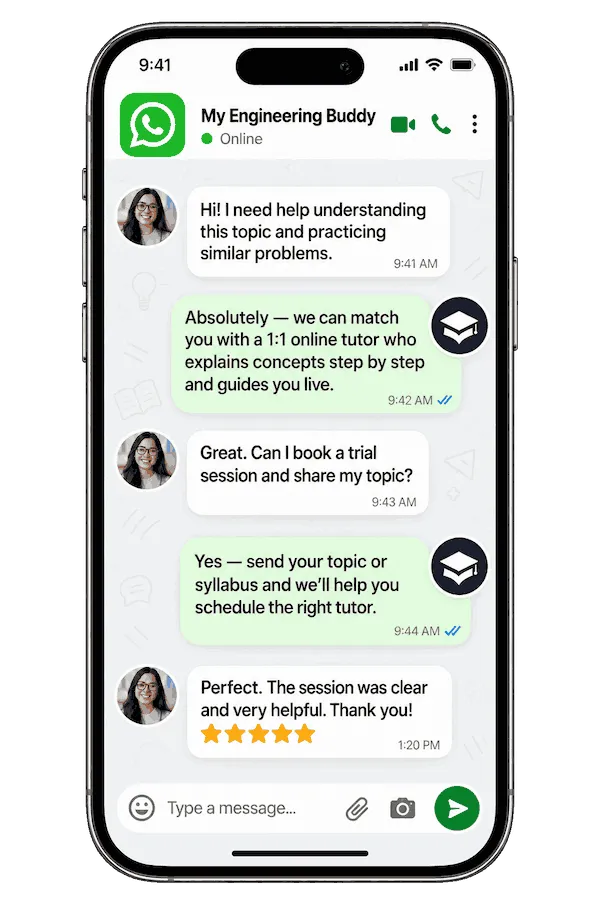
~1 min
Average Reply Time
~1 hour
To Be Matched With A Tutor
30 Min Trial
75% Find Their Tutor On The 1st Trial
$20-35+/hr
Premium Yet Affordable Learning
Hire The Best Digital Art Tutor
Your portfolio review is in three weeks and the linework still looks like a first draft. A 1:1 Digital Art tutor fixes that faster than any course or YouTube playlist.
Digital Art Tutor Online
Digital Art is the creation of visual artwork using digital tools — software such as Photoshop, Procreate, or Illustrator — spanning illustration, concept art, photo manipulation, and motion graphics, equipping students with technical and compositional skills for creative industries.
MEB connects you with a verified Digital Art tutor online for 1:1 private lessons across every major platform and skill level — from beginner brushwork to portfolio-ready concept art. If you’ve searched for a Digital Art tutor near me and come up short, online sessions with MEB cover every time zone, with tutors matched to your exact tools and goals within the hour. Part of our broader Fine Arts tutoring offer, Digital Art lessons at MEB are built around what you’re actually making, not a generic curriculum.
- 1:1 online sessions tailored to your software, style, and project brief
- Expert-verified tutors with industry or teaching backgrounds in digital media
- Flexible time zones — US, UK, Canada, Australia, Gulf
- Structured practice plan built after a diagnostic session
- Structured practice plans and progress tracking built into every session block
52,000+ students across the US, UK, Canada, Australia, and the Gulf have used MEB since 2008 — including students in Fine Arts subjects like Digital Art, Illustration, and Animation.
Source: My Engineering Buddy, 2008–2025.
How Much Does a Digital Art Tutor Cost?
Most Digital Art sessions run $20–$40/hr depending on skill level, software focus, and session frequency. The $1 trial gets you 30 minutes of live 1:1 tutoring or a full walkthrough of one piece you’re struggling with — no registration required.
| Level / Need | Typical Rate | What’s Included |
|---|---|---|
| Beginner / Hobbyist | $20–$30/hr | Tool basics, brush control, composition fundamentals |
| Intermediate / Portfolio Prep | $30–$45/hr | Character design, colour grading, portfolio critique |
| Advanced / Industry / Concept Art | $45–$100/hr | Professional pipeline, art direction, niche software depth |
| $1 Trial | $1 flat | 30 min live session or one piece reviewed in full |
Tutor availability tightens significantly around art school application deadlines in October–November and spring portfolio review periods. Book early.
WhatsApp MEB for a quick quote — average response time under 1 minute.
Who This Digital Art Tutoring Is For
Digital Art learners come to MEB at very different stages. Some are building a portfolio for art school applications. Others are enrolled in a university digital media programme and falling behind on software skills.
- Students preparing a portfolio for art school, design college, or university admission
- Early undergraduates in digital media, game design, or graphic design programmes who need to close software skill gaps fast
- Students with a portfolio submission deadline approaching — and work that isn’t yet at the standard required
- Hobbyists who have hit a ceiling with YouTube tutorials and need live feedback to break through
- Parents watching a child’s confidence drop alongside their grades in a digital arts or media course
- Working creatives brushing up on Procreate, Photoshop, or Illustrator for a new role or freelance pivot
Past MEB students have gone on to programmes at RISD, Parsons, the Savannah College of Art and Design, UAL, ArtCenter College of Design, and Emily Carr University. The $1 trial is available regardless of your current level.
1:1 Tutoring vs Self-Study vs AI vs YouTube vs Online Courses
Self-study works if you’re disciplined, but nobody tells you why your anatomy looks off. AI tools can explain blending modes in text — they can’t watch you draw and catch the wrist tension causing your linework to wobble. YouTube covers techniques in broad strokes; it stops when your specific piece doesn’t match the tutorial result. Online courses move at a fixed pace — you either rush or wait. 1:1 tutoring with MEB is live, calibrated to the exact software and style you’re working in, and corrects the actual errors visible on your canvas right now. In Digital Art especially, that real-time eye on your process is the difference between a portfolio that reads as amateur and one that doesn’t.
Outcomes: What You’ll Be Able To Do in Digital Art
After working with an MEB Digital Art tutor, students consistently make progress that shows up on the canvas — not just in theory. You’ll apply professional brush settings and layer management in Procreate or Photoshop to produce clean, submission-ready linework. You’ll analyse your own colour choices using colour theory principles — hue, saturation, temperature — and correct them without a second opinion. You’ll model lighting and shadow on 3D-referencing poses without relying on photo tracing. You’ll present a cohesive portfolio of 8–12 pieces that reflects a consistent visual voice. Progress varies by starting level and practice frequency, but the tutor works to close the gap between where your work is and where it needs to be.
Based on feedback from 40,000+ sessions collected by MEB from 2022 to 2025, students working 1:1 on Digital Art consistently report noticeably stronger technique, cleaner linework, and faster progress than self-directed practice alone. Progress varies by starting level and practice frequency.
Source: MEB session feedback data, 2022–2025.
Try your first session for $1 — 30 minutes of live 1:1 tutoring or one piece reviewed in full. No registration. No commitment. WhatsApp MEB now and get matched within the hour.
What We Cover in Digital Art (Syllabus / Topics)

Digital Drawing Foundations
- Pressure sensitivity, brush settings, and stylus control in Procreate and Photoshop
- Line confidence — gesture drawing, contour lines, and clean inking techniques
- Layer management: naming conventions, grouping, blending modes, and masking
- Proportion and anatomy basics for character and figure work
- Perspective — one-point, two-point, and atmospheric depth on a digital canvas
- Digital colour theory: warm/cool relationships, palette building, and colour harmony
Recommended references: The Digital Art Technique Manual by 3DTotal Publishing; How to Draw by Scott Robertson.
Illustration and Concept Art
- Character design pipeline — silhouette, detail pass, colour, and final render
- Environment and background painting: value sketches through to finished scenes
- Lighting studies — rim light, ambient occlusion, and three-point setups
- Texture and surface rendering: skin, metal, fabric, and organic forms
- Speed painting and ideation workflows for concept development
- Preparing files for print and digital submission — resolution, colour profiles, export settings
Recommended references: Framed Ink by Marcos Mateu-Mestre; Color and Light by James Gurney. Students working on drawing tutoring alongside Digital Art often progress faster in both.
Photo Manipulation and Graphic Design
- Non-destructive editing workflows in Photoshop — adjustment layers, smart objects
- Compositing: selections, masking, and blending photographs seamlessly
- Typography and layout principles applied to digital design briefs
- Vector illustration in Adobe Illustrator — paths, anchor points, and live trace
- Brand identity projects: logo design, colour palette, and style guide creation
- Portfolio curation — selecting, sequencing, and presenting work for industry review
Recommended references: Adobe Photoshop Classroom in a Book (Adobe Press); Thinking with Type by Ellen Lupton. Students who also need Photography tutoring benefit from combining both tracks.
Platforms, Tools & Textbooks We Support
Digital Art is defined by the software. MEB tutors work across the tools you already use — or help you get up to speed on one you need for a brief or course requirement. Sessions run on Google Meet with screen sharing, so the tutor sees exactly what’s on your canvas in real time.
- Procreate (iPad + Apple Pencil)
- Adobe Photoshop (raster painting, photo compositing)
- Adobe Illustrator (vector design, logo work)
- Clip Studio Paint (manga, comics, and webtoon workflows)
- Affinity Designer and Affinity Photo
- Krita (open-source digital painting)
- Canva (layout and social design basics)
What a Typical Digital Art Session Looks Like
The tutor opens by checking what you worked on since the last session — usually a specific piece or a set of gesture drawings. They ask you to pull up the file. From there, the session runs directly on your canvas: if you’re working on a character design, the tutor might annotate over your linework using their digital pen-pad, pointing out where the shoulder anatomy breaks, then walk you through a corrected construction method live. You replicate it while the tutor watches. For photo manipulation, they’ll screen-share to demonstrate a masking technique, then hand control back and watch you apply it to your own image. The session closes with a concrete task — finish the flat colours on this character, complete three timed gesture drawings, or resolve the background value study — plus a note on what the next session will tackle.
How MEB Tutors Help You with Digital Art (The Learning Loop)
Diagnose: In the first session, the tutor reviews a piece you’ve already made. They’re looking for the root cause — whether the problem is brush control, colour understanding, compositional instinct, or software literacy. They won’t just tell you the work needs improvement; they’ll name exactly why.
Explain: The tutor works through the fix live on screen using a digital pen-pad or iPad with Apple Pencil. You see the correction being made, not just described. For Digital Art, this is where most online courses fall short — you can’t learn brushwork from text.
Practice: You attempt the same technique or correction while the tutor watches. Mistakes get caught immediately, not after you’ve spent three hours reinforcing the wrong habit.
At MEB, we’ve found that the biggest gains in Digital Art come not from showing students new techniques, but from catching the one recurring error they’ve been making for months and don’t know is there. One session on that single issue often unlocks more progress than weeks of solo practice.
Feedback: The tutor explains exactly where the marks are being lost — in portfolio terms, why the piece reads as unfinished, why the lighting feels flat, or why the anatomy undermines an otherwise strong design. Specific, actionable, not vague encouragement.
Plan: Each session ends with a clear next step and a topic progression. The tutor tracks what’s been covered and builds forward — so session three doesn’t repeat session one.
Sessions run over Google Meet. You share your screen or the tutor annotates a shared canvas. Before your first session, have your most recent piece open and any brief or project spec ready. The first session is also your diagnostic — start with the $1 trial, 30 minutes live, and the tutor will map the plan from there.
Whether you need a quick catch-up before a portfolio deadline, a focused 4–8 week sprint on a specific brief, or ongoing weekly support through a digital media semester, the tutor maps the session sequence after that first diagnostic.
Tutor Match Criteria (How We Pick Your Tutor)
Not every strong artist is a strong teacher, and not every Photoshop expert knows Procreate. MEB matches on specifics.
Subject depth: Tutors are matched to your primary software and style — concept art tutors are not the same pool as graphic design tutors. Tools: All tutors use Google Meet with a digital pen-pad or iPad and Apple Pencil — they can annotate your work in real time. Time zone: Matched to your region — US, UK, Gulf, Canada, or Australia — so sessions happen at a reasonable hour. Goals: Portfolio submission, software proficiency, university coursework, or creative pivot — the match takes your specific aim into account.
Unlike platforms where you fill out a form and wait, MEB responds in under a minute, 24/7. Tutor match takes under an hour. The $1 trial means you test before you commit. Everything runs over WhatsApp — no logins, no intake forms.
Pricing Guide
Digital Art tutoring starts at $20/hr for foundational skill levels and runs to $100/hr for specialist tutors with professional industry backgrounds in game design, film concept art, or brand identity. Rate factors include your software focus, how niche the style or pipeline is, and how quickly you need to progress.
For students targeting admission to competitive art schools or design colleges, tutors with working industry portfolios are available at higher rates — share your specific school, deadline, and portfolio brief, and MEB will match the tier to your ambition.
Availability tightens in October and March when art school application deadlines cluster. Start with the $1 trial — 30 minutes, no registration, no commitment. WhatsApp MEB for a quick quote.
MEB has been matching students with subject-specific tutors since 2008. Rated 4.8 out of 5 across tens of thousands of sessions — the rating holds because the match process is taken seriously, not because it’s automated.
Source: My Engineering Buddy, 2008–2025.
FAQ
Is Digital Art hard to learn?
The fundamentals — line, form, value, colour — take real time to absorb. The software adds a second learning curve on top. Most students struggle not because they lack talent, but because they’re getting feedback too infrequently. Live 1:1 sessions compress that feedback loop.
How many sessions will I need?
For a portfolio of 8–12 pieces, most students work with a tutor for 10–20 sessions. Targeted software skills — learning Procreate from scratch, for example — can show clear results in 4–6 sessions depending on starting point and practice between sessions.
How do you structure practice between sessions?
The tutor sets a specific task at the end of every session — a timed gesture series, a value study, a defined piece to finish. Between sessions, you work on that task. The next session opens with a review. Consistent practice between sessions is where most of the real improvement happens.
Will the tutor match my current level and goals?
Yes. MEB matches on software, style, and objective — not just “Digital Art” as a category. A student prepping a concept art portfolio gets a different tutor than one learning Illustrator for graphic design coursework. The match happens before the first session.
What happens in the first session?
The tutor reviews a piece you’ve already made, identifies the primary weaknesses, and builds a session plan from there. Come with a file open and any brief or deadline in hand. The first session is diagnostic and practical — you’ll work on something real, not theory.
Are online lessons as effective as in-person?
For Digital Art, online is often better. Your canvas is on screen, the tutor annotates in real time with a digital pen-pad, and there’s no need to photograph your work. The feedback is immediate and visible on the exact file you’re submitting.
Can I get Digital Art help at short notice — even at midnight?
Yes. MEB operates 24/7 across time zones. WhatsApp response time averages under a minute. Tutor matching typically takes under an hour. If you have a deadline tomorrow, message now — don’t wait until morning.
What if I don’t connect with my assigned tutor?
Say so. MEB will rematch you. The $1 trial exists precisely so you can test the fit before committing to a block of sessions. No lengthy process — just WhatsApp MEB and request a different tutor.
Do you support students learning Procreate specifically, or only Photoshop?
Both — and Illustrator, Clip Studio Paint, Krita, and Affinity. Procreate on iPad with Apple Pencil is one of the most common requests. Tutors are matched to your primary tool, not assigned a generic “digital art” label.
How do I know if my portfolio is at the right standard for art school applications?
That’s exactly what the portfolio critique track is for. An MEB tutor with admissions-level experience reviews your pieces against what competitive programmes at schools like RISD, Parsons, and UAL expect — and tells you precisely what needs to change before you submit.
How do I get started?
Start with the $1 trial — 30 minutes of live tutoring or one piece reviewed in full. Three steps: WhatsApp MEB, get matched within the hour, and start your trial session. No registration, no commitment beyond the first dollar.
Trust & Quality at My Engineering Buddy
Every MEB tutor goes through subject-specific vetting — not a general competency screen. For Digital Art, that means demonstrating proficiency in the software they’ll teach, passing a live demo session evaluated by MEB, and holding either a formal qualification in digital media, illustration, or design, or a professional portfolio that shows active industry work. Rated 4.8/5 across 40,000+ verified reviews on Google. Ongoing session feedback is reviewed so tutors who underperform are replaced, not just flagged.
MEB tutoring is guided learning — you understand the work, then submit it yourself. For full details on what we help with and what we don’t, read our Academic Integrity policy and Why MEB.
MEB has served 52,000+ students across the US, UK, Canada, Australia, the Gulf, and Europe since 2008, covering 2,800+ subjects. Fine Arts is one of our strongest areas — students regularly come to us for Art tutoring, Painting tutoring, and Color Theory help alongside their Digital Art sessions. The breadth of the tutor network means niche software and style requests are covered without long waits. Read more about how sessions are structured at our Tutoring Methodology page.
Students consistently tell us that the shift from solo practice to 1:1 Digital Art sessions feels immediate — not because the tutor is doing the work, but because having a trained eye on your canvas every week removes the guesswork that stalls self-taught artists for months at a time.
Explore Related Subjects
Students studying Digital Art often also need support in:
Next Steps
Before your first session, have ready: your primary software and a file you’re currently working on, any project brief or portfolio spec, and your deadline or submission date. The tutor handles the rest.
- Share your software, style focus, and current goal via WhatsApp
- Share your availability and time zone
- MEB matches you with a verified Digital Art tutor — usually within the hour
The first session starts with a diagnostic review of your work, so every minute is used on what actually needs fixing — not a generic introduction.
Visit www.myengineeringbuddy.com for more on how MEB works.
WhatsApp to get started or email [email protected].
Reviewed by Subject Expert
This page has been carefully reviewed and validated by our subject expert to ensure accuracy and relevance.




