~1 min
Average Reply Time
~1 hour
To Be Matched With A Tutor
30 Min Trial
75% Find Their Tutor On The 1st Trial
$20-35+/hr
Premium Yet Affordable Learning
Most students who struggle with abstract art aren’t short on creativity — they’re missing a framework for making decisions on the canvas. That gap shows up fast when a critique hits and you can’t explain why you made a mark.
Abstract Art Tutor Online
Abstract art is a visual practice that uses form, colour, line, and composition to express ideas or emotions without representing recognisable subjects. It spans movements from Expressionism and Cubism to Minimalism, developing skills in intentional mark-making, conceptual thinking, and visual communication.
MEB connects you with a 1:1 fine arts specialist who understands abstract practice — not just technique theory. Whether you’re looking for an abstract art tutor near me or working entirely online, sessions are built around your body of work, your course requirements, and your current weaknesses. One session often shifts more than weeks of independent studio time.
- 1:1 online sessions tailored to your course or portfolio brief
- Expert-verified tutors with studio practice and academic subject knowledge
- Flexible time zones — US, UK, Canada, Australia, Gulf
- Structured learning plan built after an initial diagnostic session
- Structured practice plans and consistent progress tracking between sessions
52,000+ students across the US, UK, Canada, Australia, and the Gulf have used MEB since 2008 — including students in Fine Arts subjects like Abstract Art, painting, and art history.
Source: My Engineering Buddy, 2008–2025.
How Much Does an Abstract Art Tutor Cost?
Most abstract art sessions run $20–$40/hr. Niche or graduate-level work with specialist tutors can reach $100/hr. The $1 trial gives you 30 minutes of live 1:1 tutoring to test the match before committing to anything.
| Level / Need | Typical Rate | What’s Included |
|---|---|---|
| Foundation / Undergraduate | $20–$35/hr | 1:1 sessions, portfolio and studio guidance |
| Advanced / MFA / Specialist | $35–$100/hr | Expert tutor, conceptual depth, critique prep |
| $1 Trial | $1 flat | 30 min live session or one studio question explained |
Tutor availability tightens during portfolio submission windows and end-of-semester critique periods. Book early if your deadline is within four weeks.
WhatsApp MEB for a quick quote — average response time under 1 minute.
Who This Abstract Art Tutoring Is For
Abstract art sits at the intersection of instinct and decision-making. Students often hit a wall not because they lack ability but because nobody has explained the underlying logic of composition, gesture, or material choice in terms that apply to their own practice.
- Undergraduate fine arts students preparing a body of work for portfolio review or degree assessment
- Foundation year students building conceptual range before specialist applications
- MFA candidates working through artist statement development and critique preparation
- Students with a conditional offer to an art school programme depending on portfolio quality
- Students 4–6 weeks from a submission deadline with significant gaps still to close
- Parents watching a student’s confidence drop alongside their grades in studio art
- Self-directed learners moving from representational work into abstraction without formal guidance
MEB tutors have supported students progressing to programmes at institutions including the Slade School of Fine Art, Central Saint Martins, RISD, Parsons, and the School of the Art Institute of Chicago.
1:1 Tutoring vs Self-Study vs AI vs YouTube vs Online Courses
Self-study works if you have strong self-critique instincts — most abstract art students don’t yet. AI tools can explain colour theory definitions but can’t look at your canvas and tell you why the composition isn’t resolving. YouTube covers movements and artists well; it stops the moment your specific piece needs a decision. Online courses give structure but move at a fixed pace with no feedback on your actual work. 1:1 tutoring with MEB is live, calibrated to your current body of work, and catches the conceptual errors that derail abstract art students most — not knowing when a piece is finished, and not knowing why a mark isn’t working.
Outcomes: What You’ll Be Able To Do in Abstract Art
After working with an MEB abstract art tutor, you’ll be able to explain your compositional decisions under critique without reverting to “it felt right.” You’ll apply colour relationships — simultaneous contrast, temperature, saturation — deliberately across a series of works. You’ll analyse historical movements like Abstract Expressionism, Geometric Abstraction, and Lyrical Abstraction and locate your own practice within or against them. You’ll write a coherent artist statement that connects your materials and process to an idea. You’ll present a body of work that demonstrates intentional development rather than isolated experiments.
Based on feedback from 40,000+ sessions collected by MEB from 2022 to 2025, students working 1:1 on Abstract Art consistently report noticeably stronger conceptual clarity and greater confidence articulating their practice during critiques. Progress varies by starting level and practice frequency.
Source: MEB session feedback data, 2022–2025.
Try your first session for $1 — 30 minutes of live 1:1 tutoring or one studio question explained in full. No registration. No commitment. WhatsApp MEB now and get matched within the hour.
What We Cover in Abstract Art (Syllabus / Topics)

Foundations of Abstract Practice
- Principles of non-representational composition: balance, tension, rhythm, weight
- Colour theory applied to abstraction — Albers, Itten, simultaneous contrast
- Gestural mark-making: controlled and spontaneous approaches
- Material exploration: acrylic, oil, mixed media, encaustic
- Surface and ground preparation: canvas, board, paper, unconventional supports
- Process documentation and sketchbook development
Recommended texts: Interaction of Color by Josef Albers; The Elements of Painting by Keith Wicks; Composition of Outdoor Painting by Edgar Payne — selected chapters applied to abstraction.
Art Historical and Conceptual Contexts
- Abstract Expressionism: Pollock, de Kooning, Rothko — gesture vs field painting
- Geometric Abstraction and Hard-Edge painting: Mondrian, Albers, Kelly
- Minimalism and its relationship to abstract form: Judd, Morris, Flavin
- Lyrical Abstraction and post-war European movements
- Contemporary abstract practice: how current artists situate work in the field
- Connecting historical movements to your own material decisions
- Critical reading and visual analysis of abstract works
Recommended texts: Abstraction in the Twentieth Century by Mark Rosenthal; Abstract Art by Anna Moszynska; Art Since 1900 by Foster, Krauss, Bois, and Buchloh.
Portfolio Development and Critical Writing
- Building a coherent body of work around a sustained idea or inquiry
- Series development: how individual pieces speak across a set
- Artist statement writing: connecting process, material, and concept
- Critique preparation: language for defending and explaining abstract decisions
- Documentation: photographing 2D and 3D abstract work for submission
- Presentation formats for degree shows, applications, and gallery submissions
Recommended texts: Writing About Art by Marjorie Munsterberg; The Artist’s Way by Julia Cameron (process chapters); How to Write About Contemporary Art by Gilda Williams.
At MEB, we’ve found that abstract art students make the fastest progress when they stop treating each session as an isolated experiment and start treating their body of work as an ongoing argument. The tutor’s job is to help you build and sustain that argument across pieces.
What a Typical Abstract Art Session Looks Like
The tutor opens by reviewing what you worked on since the last session — usually a specific piece or series in progress, shared via photo or screen. If you were working on colour temperature relationships in a recent canvas, the tutor checks what decisions you made and why. From there, the session moves into the core problem: maybe your composition is resolving at the centre but leaking at the edges, or your mark weight is consistent when it needs variation. The tutor uses a digital pen-pad to annotate directly over your image — circling problem zones, drawing tension lines, comparing your piece to a relevant historical reference. You explain your reasoning, the tutor pushes back or confirms, and you work through an adjustment approach together. The session closes with a concrete task — a specific colour study, a new mark-making exercise, or a written paragraph for your artist statement — and a note on what the next session will address. Get drawing tutoring alongside abstract art sessions if foundational mark control is where your gaps are.
How MEB Tutors Help You with Abstract Art (The Learning Loop)
Diagnose: In the first session, the tutor looks at your existing work — not just the strongest pieces — and identifies the pattern behind your problems. Is it compositional indecision? Colour relationships that aren’t holding? A disconnect between your stated idea and what the work actually communicates? The diagnosis shapes every session that follows.
Explain: The tutor works through the problem live, using a digital pen-pad to annotate your work, draw compositional alternatives, and reference historical examples that speak directly to your current challenge. Not abstract advice — specific, visual, applied.
Practice: You attempt the adjustment or new approach with the tutor present. This might mean making a quick study on paper, repainting a section, or drafting a paragraph of your artist statement while the tutor observes and responds in real time.
Feedback: The tutor explains exactly where the work is succeeding and where it isn’t — and why. “The mark weight in the upper left is pulling the eye off the canvas because it’s heavier than anything else on that register” is the kind of specific feedback that self-directed study rarely produces.
Plan: Every session ends with a defined next step: a specific exercise, a reading, a piece to attempt, or a concept to test in your sketchbook before you meet again. Progress is tracked, not assumed.
Sessions run on Google Meet. Tutors use a digital pen-pad or iPad with Apple Pencil to annotate your work directly. Before your first session, share a photo of recent work, your course brief or portfolio requirements, and your submission date. The first session is a diagnostic — the tutor will tell you exactly what to fix and in what order. Start with the $1 trial — 30 minutes of live tutoring that also serves as your first diagnostic.
Students consistently tell us that the shift in abstract art happens when they stop asking “does this look good?” and start asking “does this do what I said it would do?” That’s the question MEB tutors train you to hold in every session.
Tutor Match Criteria (How We Pick Your Tutor)
Not every artist makes a good tutor. MEB matches on more than studio credentials.
Subject depth: tutors hold degrees in fine arts, visual arts, or related disciplines, with demonstrable experience in abstract practice — not just art education broadly. Tools: all tutors work on Google Meet with a digital pen-pad or iPad and Apple Pencil — annotation over your work is non-negotiable for abstract art feedback. Time zone: matched to your region across the US, UK, Canada, Australia, and the Gulf. Goals: whether you’re targeting portfolio quality, conceptual depth, critique preparation, or MFA-level research, the tutor is matched to your specific aim — not a generic art slot.
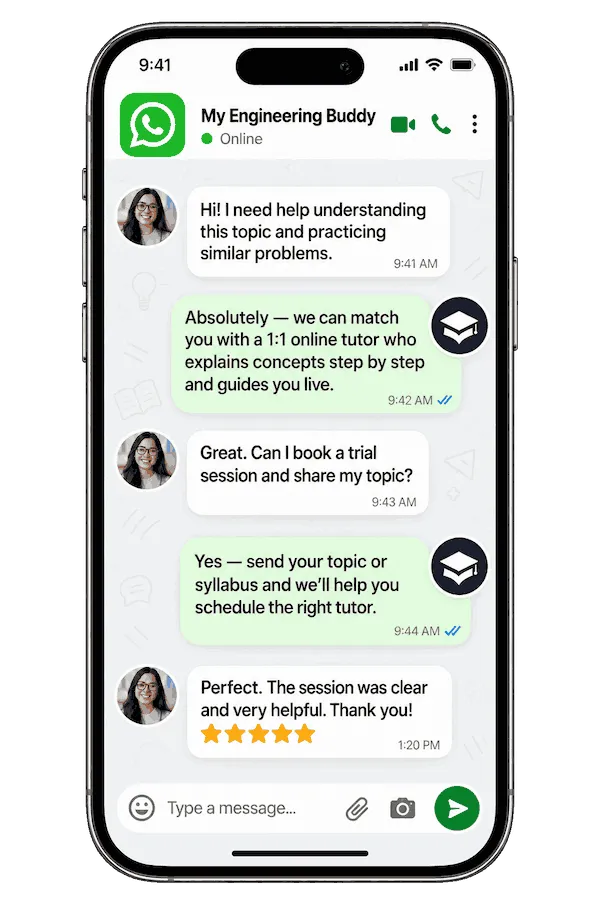
Unlike platforms where you fill out a form and wait, MEB responds in under a minute, 24/7. Tutor match takes under an hour. The $1 trial means you test before you commit. Everything runs over WhatsApp — no logins, no intake forms. If the match isn’t right, MEB replaces the tutor. See illustration tutoring if your abstract work has a strong graphic or visual narrative dimension.
Study Plans (Pick One That Matches Your Goal)
Catch-up (1–3 weeks): for students behind on a portfolio brief or facing an imminent critique — the tutor identifies the three highest-impact fixes and works through them fast. Exam or submission prep (4–8 weeks): structured development across composition, colour, conceptual writing, and documentation, mapped to your submission date. Weekly ongoing support: aligned to your semester, tracking progress across your full body of work. The tutor builds the specific sequence after the first diagnostic session — no generic plan applied before the work is seen.
Pricing Guide
Abstract art tutoring runs $20–$40/hr for most undergraduate and foundation-level students. MFA-level work, specialist critique preparation, and artist statement coaching with tutors from professional gallery or academic backgrounds can reach $100/hr.
Rate factors include your level, the complexity of the work, your timeline, and tutor availability in your time zone. For students targeting MFA programmes at competitive institutions or preparing work for gallery submission, tutors with professional exhibition and curatorial backgrounds are available at higher rates — share your goal and MEB will match the tier to your ambition.
Availability tightens during portfolio submission windows. Book at least three weeks ahead if your deadline is firm. Start with the $1 trial — 30 minutes, no registration, no commitment. WhatsApp MEB for a quick quote.
MEB has served 52,000+ students since 2008, with a 4.8/5 rating across 40,000+ reviews. The $1 trial is how most students decide — not a brochure, not a sales call. Thirty minutes of live tutoring in abstract art, and you’ll know.
Source: My Engineering Buddy, 2008–2025.
FAQ
Is abstract art hard to learn?
Abstract art is less about technical difficulty and more about decision-making under ambiguity. The challenge is knowing why you’re making each choice. With a tutor who can interrogate your reasoning live, most students find the conceptual framework clicks faster than expected.
How many sessions will I need?
Most students see meaningful improvement in compositional clarity and conceptual language within 6–10 sessions. Portfolio development for a full application or degree submission typically needs 12–20 sessions, depending on starting point and how much studio work happens between meetings.
How do you structure practice between sessions?
The tutor sets a specific task at the end of every session — a colour study, a series of gestural mark exercises, a sketchbook inquiry, or a draft artist statement paragraph. These aren’t optional extras; they’re what the next session builds on. Progress is tracked, not assumed.
Will the tutor match my current level and goals?
Yes. MEB matches on level, medium, conceptual focus, and your specific submission or portfolio brief. A foundation-year student and an MFA candidate have completely different needs, and the tutor pool reflects that. You won’t be handed a generic art tutor.
What happens in the first session?
The tutor reviews your existing work — shared via photo or screen — and identifies the core pattern behind your challenges. By the end of the first session you’ll have a clear diagnosis, a specific next step, and a session sequence mapped to your deadline or submission date.
Are online abstract art lessons as effective as in-person?
For critique, conceptual development, artist statement writing, and art history context, online sessions are equally effective. For hands-on material experimentation, you work in your own studio while the tutor observes and annotates via digital pen-pad. Most students report that the annotation tool adds clarity that in-person whiteboard sessions often miss.
Can I get abstract art help at midnight or on weekends?
Yes. MEB operates across time zones 24/7. Students in the Gulf, Australia, and the US West Coast regularly book late-night or early-morning sessions. WhatsApp MEB at any hour and you’ll typically be matched within 60 minutes.
What if the assigned tutor isn’t the right fit?
Tell MEB via WhatsApp after the first session. A replacement tutor will be matched within 24 hours — no paperwork, no waiting. The $1 trial is specifically designed so you test the fit before committing to paid sessions.
Do you offer group abstract art sessions?
No. Every session is 1:1. Abstract art critique is too individual — what applies to one student’s composition approach rarely transfers directly to another’s. Group formats dilute the feedback that makes abstract art tutoring actually work.
How do I find an abstract art tutor if I’m in a specific city?
All sessions are online — location doesn’t limit your tutor options. Whether you’re in New York, London, Dubai, Toronto, or Sydney, you’re matched from the same verified tutor pool. No “near me” geography applies. You get the best match for your level, not the nearest available person.
What’s the difference between abstract art and non-objective art — and does it matter for my course?
Abstract art typically starts from a recognisable subject and moves away from it; non-objective art has no representational starting point at all. Many courses and tutors use the terms interchangeably — share your course brief in your first session and the tutor will calibrate the terminology and focus to your exact programme.
How do I get started?
The $1 trial is the starting point — 30 minutes of live 1:1 abstract art tutoring, or one studio question explained in full. Three steps: WhatsApp MEB, get matched within the hour, start your trial session. No registration, no forms, no commitment beyond the first dollar.
Trust & Quality at My Engineering Buddy
Every MEB tutor goes through a subject-specific vetting process: degree verification, a live demo session assessed by senior tutors, and ongoing review based on student feedback. Abstract art tutors are assessed on both their studio practice and their ability to articulate and teach conceptual decision-making — not just demonstrate it. Rated 4.8/5 across 40,000+ verified reviews on Google. Get art tutoring or colour theory help from the same verified tutor network.
MEB tutoring is guided learning — you understand the work, then submit it yourself. For full details on what we help with and what we don’t, read our Academic Integrity policy and Why MEB.
MEB has been running since 2008, serving 52,000+ students across the US, UK, Canada, Australia, the Gulf, and Europe in 2,800+ subjects. Fine Arts is one of MEB’s strongest subject areas — tutors cover abstract art, sculpture tutoring, and printmaking help with the same level of subject-specific vetting applied across the platform. See our tutoring methodology for how the learning structure works.
Explore Related Subjects
Students studying Abstract Art often also need support in:
Next Steps
Before your first session, have ready: your course brief or portfolio requirements, a photo of recent work or a piece you’re stuck on, and your submission or critique date. The tutor handles the rest.
- Share your current body of work and your biggest compositional or conceptual challenge
- Share your availability and time zone
- MEB matches you with a verified abstract art tutor — usually within 24 hours
- First session starts with a diagnostic so every minute is used well
Visit www.myengineeringbuddy.com for more on how MEB works.
WhatsApp to get started or email [email protected].
Reviewed by Subject Expert
This page has been carefully reviewed and validated by our subject expert to ensure accuracy and relevance.