




~1 min
Average Reply Time
~1 hour
To Be Matched With A Tutor
1 Trial
75% Find Their Tutor On The 1st Trial
$1
Your First 30 Minutes
Hire The Best Automata theory Tutor
Top Tutors, Top Grades. Without The Stress!
Related Subjects
Finite automata on paper, Turing machines in your head, and an exam in three weeks — and none of it is clicking yet.
Automata Theory Tutor Online
Automata theory is a branch of theoretical computer science studying abstract machines — finite automata, pushdown automata, and Turing machines — and the formal languages they recognise, equipping students to reason about computability and algorithm limits.
MEB offers 1:1 online tutoring and homework help in 2,800+ advanced subjects, including a full range of Computer Science tutoring subjects. If you’ve searched for an automata theory tutor near me and want someone who knows DFA minimisation, context-free grammar proofs, and decidability arguments cold, you’re in the right place. Sessions are built around your exact course — not a generic textbook run-through.
- 1:1 online sessions tailored to your course syllabus and exam board
- Expert-verified tutors with graduate-level theoretical CS backgrounds
- Flexible time zones — US, UK, Canada, Australia, Gulf
- Structured learning plan built after a diagnostic session
- Ethical homework and assignment guidance — you understand the work before you submit
How Much Does an Automata Theory Tutor Cost?
Most automata theory sessions run $20–$40/hr depending on level and topic complexity. Graduate-level work — pumping lemma proofs, Rice’s theorem, complexity classes — sits at the higher end. You can test the fit for $1 before committing to anything.
| Level / Need | Typical Rate | What’s Included |
|---|---|---|
| Undergraduate (intro/mid) | $20–$35/hr | 1:1 sessions, homework guidance |
| Advanced / Graduate | $35–$100/hr | Expert tutor, proof-level depth |
| $1 Trial | $1 flat | 30 min live session or 1 homework question |
Tutor availability tightens significantly around end-of-semester exam periods. Book early if your deadline is within four weeks.
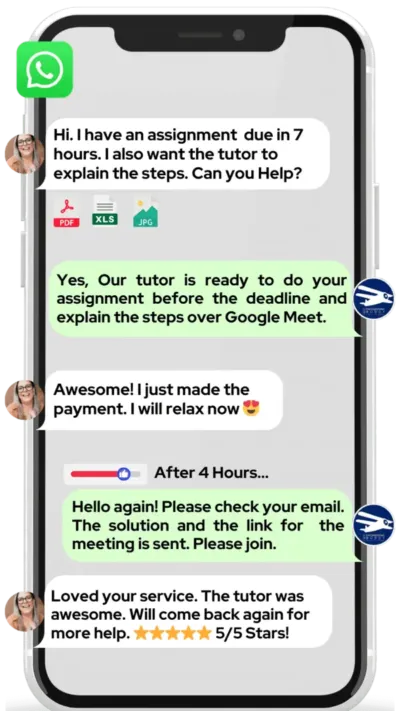
WhatsApp MEB for a quick quote — average response time under 1 minute.
52,000+ students across the US, UK, Canada, Australia, and the Gulf have used MEB since 2008 — including students in Computer Science subjects like Automata Theory, Theory of Computation, and Compiler Design.
Source: My Engineering Buddy, 2008–2025.
Who This Automata Theory Tutoring Is For
Automata theory sits in an awkward spot: it’s more mathematical than most CS students expect, and more abstract than most maths students are comfortable with. The proofs feel circular until they suddenly don’t. These sessions are for students at that tipping point.
- Undergraduates in CS, software engineering, or computer engineering hitting the theory requirement for the first time
- Graduate students who need a solid foundation before tackling complexity theory or compiler construction
- Students retaking after a failed first attempt — especially those who froze on NFA-to-DFA conversion or context-free grammar proofs
- Students at MIT, Carnegie Mellon, University of Toronto, ETH Zurich, Imperial College London, University of Melbourne, or any university with a rigorous theoretical CS curriculum
- Students with a coursework or assignment deadline approaching who need to close a specific gap fast
- Students who want homework guidance on problem sets — with full understanding before they submit
1:1 Tutoring vs Self-Study vs AI vs YouTube vs Online Courses
Self-study works if you’re disciplined, but automata theory proofs need someone to catch the logical gap you don’t see. AI tools give fast definitions of regular languages but can’t watch you build a transition table and tell you where your state naming is breaking the logic. YouTube is fine for the Chomsky hierarchy overview — it stops when you need to work through a specific pumping lemma contradiction. Online courses move at a fixed pace with no feedback on your actual proof technique. 1:1 tutoring with MEB is live, calibrated to your exact syllabus, and corrects errors in the moment — which matters enormously when the error is a wrong assumption about closure properties.
Outcomes: What You’ll Be Able To Do in Automata Theory
After working with an MEB automata theory tutor, students can construct and minimise deterministic finite automata for given regular languages, apply the pumping lemma to prove a language is not regular, design pushdown automata for context-free languages, and explain the difference between decidable and recognisable problems with precision. You’ll be able to write formal proofs of language membership and non-membership — the part most students lose marks on — and present the Church-Turing thesis argument coherently in an exam or viva setting.
Based on feedback from 40,000+ sessions collected by MEB from 2022 to 2025, 58% of students improved by one full grade after approximately 20 hours of 1:1 tutoring in subjects like Automata Theory. A further 23% achieved at least a half-grade improvement.
Source: MEB session feedback data, 2022–2025.
Try your first session for $1 — 30 minutes of live 1:1 tutoring or one homework question explained in full. No registration. No commitment. WhatsApp MEB now and get matched within the hour.
What We Cover in Automata Theory (Syllabus / Topics)
Finite Automata and Regular Languages
- Deterministic finite automata (DFA): construction, state diagrams, transition tables
- Non-deterministic finite automata (NFA) and the subset construction (NFA-to-DFA conversion)
- Regular expressions and their equivalence to finite automata
- DFA minimisation using Myhill-Nerode theorem and table-filling algorithm
- Closure properties of regular languages (union, concatenation, complement, intersection)
- Pumping lemma for regular languages — constructing contradiction proofs
- Formal languages hierarchy: Type 3 (regular) in the Chomsky classification
Core texts: Sipser Introduction to the Theory of Computation; Hopcroft, Motwani & Ullman Introduction to Automata Theory, Languages, and Computation.
Context-Free Languages and Pushdown Automata
- Context-free grammars (CFG): derivations, parse trees, ambiguity
- Chomsky Normal Form (CNF) and Greibach Normal Form (GNF) conversions
- Pushdown automata (PDA): stack transitions, acceptance by empty stack vs final state
- Equivalence of CFGs and PDAs
- Pumping lemma for context-free languages
- Closure and decidability properties of context-free languages
- Connection to parsing and syntax analysis in compilers
Core texts: Sipser (above); Kozen Automata and Computability; Lewis & Papadimitriou Elements of the Theory of Computation.
Turing Machines, Decidability, and Complexity
- Turing machine construction: multi-tape, non-deterministic, and universal variants
- Church-Turing thesis and its implications
- Decidable vs recognisable (recursively enumerable) languages
- Halting problem and undecidability proofs via diagonalisation and reduction
- Rice’s theorem and its applications
- Introduction to complexity classes P, NP, and NP-completeness reductions
- Connections to algorithms and design and analysis of algorithms
Core texts: Sipser (above); Arora & Barak Computational Complexity: A Modern Approach; Papadimitriou Computational Complexity.

At MEB, we’ve found that automata theory students lose the most marks not on definitions, but on proof structure. The student knows what the pumping lemma says. What they can’t do is set up the adversary argument cleanly. That’s what we drill — not the concept, the execution.
What a Typical Automata Theory Session Looks Like
The tutor opens by checking the previous session’s topic — say, NFA-to-DFA conversion — asking you to walk through one example before moving on. From there, you and the tutor work through new problems on screen: constructing a PDA for a given context-free language, or building a reduction proof to show a language is undecidable. The tutor uses a digital pen-pad to annotate state diagrams and proof steps in real time. You replicate the construction or explain each transition decision out loud. By the end, you have a specific practice set: three CFG-to-CNF conversions and one pumping lemma proof to attempt before the next session, with the next topic — Turing machine variants — already noted.
How MEB Tutors Help You with Automata Theory (The Learning Loop)
Diagnose: In the first session, the tutor identifies exactly where your understanding breaks down — whether that’s NFA epsilon transitions, ambiguous grammars, or the logic of a diagonalisation argument. Most students arrive thinking they understand regular expressions; the diagnostic often reveals the gap is in closure property proofs.
Explain: The tutor works through problems live on Google Meet using a digital pen-pad, drawing state diagrams and annotating proof steps as you watch. Turing machine tape configurations are traced step by step — not described in the abstract.
Practice: You attempt the next problem with the tutor present. For automata theory, this means constructing the DFA yourself, writing out the grammar derivation, or setting up the pumping lemma contradiction — not watching the tutor do it.
Feedback: The tutor corrects errors immediately and explains why a specific transition was wrong or why a proof step doesn’t hold. In automata theory, a single wrong assumption about determinism can cascade through an entire answer — catching it early is the point.
Plan: At the end of each session, you know exactly what to practise, which topic is next, and how the upcoming exam structure maps to what you’ve covered. The tutor holds the thread between sessions.
Sessions run on Google Meet. The tutor uses a digital pen-pad or iPad with Apple Pencil for all diagram and proof work. Before your first session, share your course syllabus or module outline, a recent homework problem you struggled with, and your exam date. The first session covers your diagnostic and the first topic gap — nothing is wasted.
Start with the $1 trial — 30 minutes of live tutoring that also serves as your first diagnostic.
Tutor Match Criteria (How We Pick Your Tutor)
Not every CS tutor can teach automata theory well. MEB matches on four criteria.
Subject depth: Tutors must demonstrate working knowledge of formal language theory, Turing computability, and complexity at the level your course requires — undergraduate intro or graduate-level.
Tools: Every tutor works on Google Meet with a digital pen-pad or iPad and Apple Pencil. State diagrams and proof annotations require a writing surface — typed notes don’t cut it for this subject.
Time zone: Matched to your region — US, UK, Gulf, Canada, or Australia — so session scheduling doesn’t require you to be awake at 3 a.m.
Goals: Whether you need exam score improvement, conceptual depth on decidability, or structured theory of computation homework help, the tutor is matched to that specific objective.
Unlike platforms where you fill out a form and wait, MEB responds in under a minute, 24/7. Tutor match takes under an hour. The $1 trial means you test before you commit. Everything runs over WhatsApp — no logins, no intake forms.
Students consistently tell us that automata theory felt like a different subject once someone showed them the pattern behind proof construction. The logic was always there — they just hadn’t seen it applied systematically to their own work before.
Study Plans (Pick One That Matches Your Goal)
The tutor builds your specific session sequence after the diagnostic, but most students fall into one of three plans: Catch-up (1–3 weeks) for students with a gap to close before finals — usually covering two or three tracks in rapid succession; Exam prep (4–8 weeks) for structured revision against a specific exam date, including past paper work on NFA constructions and undecidability proofs; or Weekly support for students who want ongoing coverage aligned to their semester pacing. The tutor maps the sequence after session one.
Pricing Guide
Standard automata theory tutoring runs $20–$40/hr for most undergraduate levels. Graduate-level work — complexity reductions, advanced decidability, Kolmogorov complexity — can reach $100/hr depending on tutor specialisation. Rate factors include course level, topic depth, your timeline, and tutor availability.
Availability is limited during end-of-semester exam periods, particularly in April–May and November–December. If your exam is within six weeks, book sooner rather than later.
For students targeting programmes at universities with strong theoretical CS requirements — MIT, Stanford, ETH Zurich, Cambridge — tutors with research backgrounds in formal methods and complexity are available at higher rates. Share your specific goal and MEB will match the tier to your ambition.
Start with the $1 trial — 30 minutes, no registration, no commitment. WhatsApp MEB for a quick quote.
MEB has supported students in Data Structures and Algorithms, Digital Logic Design, and Automata Theory since 2008 — across more than 52,000 sessions in theoretical and applied Computer Science subjects.
Source: My Engineering Buddy, 2008–2025.
FAQ
Is automata theory hard?
Yes, for most students. The difficulty is the shift from procedural programming thinking to formal mathematical proof. DFA construction is manageable; pumping lemma proofs and undecidability reductions are where most students hit a wall. Targeted 1:1 sessions close that gap faster than re-reading the textbook.
How many sessions are needed?
Most students need 8–15 sessions to cover the full course. Students with a specific gap — say, Turing machine construction or context-free grammar proofs — can see marked improvement in 3–5 focused sessions. The diagnostic after session one gives a clearer estimate for your situation.
Can you help with homework and assignments?
MEB tutoring is guided learning — you understand the work, then submit it yourself. The tutor walks you through the logic of an NFA construction or a decidability proof until you can complete it independently. See our Academic Integrity policy and Why MEB page for full details on what we help with and what we don’t.
Will the tutor match my exact syllabus or exam board?
Yes. Share your course outline or module syllabus before the first session and the tutor prepares accordingly — whether your course follows Sipser, Hopcroft-Motwani-Ullman, or a custom university curriculum. Topic order and depth are calibrated to your actual exam structure.
What happens in the first session?
The tutor runs a short diagnostic — asking you to explain or attempt a problem from each major topic area. This identifies where you’re solid and where the gaps are. The rest of the session covers the first priority topic. You leave with a clear plan and a practice task.
Is online tutoring as effective as in-person?
For automata theory, yes — often more so. The tutor annotates state diagrams and proof steps in real time on a shared digital whiteboard. You can pause, rewind a worked example, and review the annotated session notes afterward. No in-person session offers that.
What’s the difference between a DFA and an NFA, and why does it matter for my exam?
A DFA has exactly one transition per input symbol per state; an NFA allows multiple or none. They accept the same class of languages, but the NFA-to-DFA subset construction is a standard exam question. Understanding both models — and why they’re equivalent — is essential for conversion proofs and minimisation questions.
Do you cover the pumping lemma for both regular and context-free languages?
Yes. Both versions are standard exam content and consistently among the hardest topics. MEB tutors work through the adversary-argument structure for regular languages and the more complex three-way split for context-free languages, with multiple proof examples until the method is solid.
Can I get automata theory help at midnight or on weekends?
MEB operates across time zones, so late-night and weekend sessions are available — particularly for students in the US, Gulf, and Australia. WhatsApp MEB at any hour; average response time is under a minute, and the team will match you with an available tutor.
What if I don’t like my assigned tutor?
Say so on WhatsApp. MEB will rematch you, usually within the hour. The $1 trial exists specifically so you can test the fit before paying for a full block of sessions. No explanation needed — just ask for a different match.
How do I get started?
Three steps: WhatsApp MEB, get matched with a verified automata theory tutor, then start your $1 trial — 30 minutes of live 1:1 tutoring or one homework question explained in full. No registration, no intake form, no commitment beyond the first dollar.
Trust & Quality at My Engineering Buddy
Every MEB tutor is screened before their first session — degree-level or higher in the relevant field, a live demo evaluation, and ongoing review based on student feedback. Tutors covering automata theory are assessed on their ability to teach formal proofs, not just explain concepts. Rated 4.8/5 across 40,000+ verified reviews on Google. MEB has operated since 2008 and served 52,000+ students across the US, UK, Canada, Australia, the Gulf, and Europe.
MEB tutoring is guided learning — you understand the work, then submit it yourself. For full details on what we help with and what we don’t, read our Academic Integrity policy and Why MEB.
MEB covers 2,800+ subjects across Computer Science and related disciplines — including operating systems tutoring, concurrent programming help, and quantum computing tutoring. The same tutor-matching and diagnostic process that applies to Automata Theory applies across every subject in the catalogue. You can read more about how sessions are structured at MEB’s tutoring methodology page.
Our experience across thousands of sessions shows that students who share their actual course syllabus — not just the subject name — get matched faster and start their first session further ahead. Two minutes of preparation before you WhatsApp makes a measurable difference to session one.
Explore Related Subjects
Students studying Automata Theory often also need support in:
- Big O Notation
- Graph Algorithms
- Recursion
- Regex
- Distributed Algorithms
- Knowledge Representation
- Fuzzy Logic
Next Steps
Before your first session, have ready: your exam board and syllabus (or course outline), a recent homework problem or past paper question you struggled with, and your exam or deadline date. The tutor handles the rest.
- Share your syllabus, hardest topic, and current timeline
- Share your availability and time zone
- MEB matches you with a verified automata theory tutor — usually within an hour
Visit www.myengineeringbuddy.com for more on how MEB works.
WhatsApp to get started or email [email protected].
52,000+ Happy Students From Various Universities




Reviewed by Subject Expert
This page has been carefully reviewed and validated by our subject expert to ensure accuracy and relevance.
