

Hire Verified & Experienced
Clinical Research Tutors
Email: [email protected]
4.8/5 40K+ session ratings collected on the MEB platform



Hire The Best Clinical Research Tutor
Top Tutors, Top Grades. Without The Stress!
Clinical Research is failing students at the protocol design stage — most don’t know it until the exam.
Clinical Research Tutor Online
Clinical Research is the systematic study of human health interventions through structured trials, observational studies, and outcome analysis. It equips students to design protocols, evaluate evidence, interpret biostatistics, and apply regulatory and ethical frameworks to patient-centred research.
Finding a Clinical Research tutor near me who actually understands trial design, GCP compliance, and biostatistics — not just general biology — is the problem most students hit first. MEB connects you with a medicine specialist tutor who has worked within the Clinical Research subject area specifically. One outcome you can expect: sharper protocol reasoning and stronger exam answers within the first few sessions.
- 1:1 online sessions tailored to your course syllabus or institutional curriculum
- Expert-verified tutors with subject-specific knowledge in trial methodology and biostatistics
- Flexible time zones — US, UK, Canada, Australia, Gulf
- Structured learning plan built after a diagnostic session
- Ethical homework and assignment guidance — you understand the work before you submit
52,000+ students across the US, UK, Canada, Australia, and the Gulf have used MEB since 2008 — including students in Medicine subjects like Clinical Research, Pathophysiology, and Medical Ethics.
Source: My Engineering Buddy, 2008–2025.
How Much Does a Clinical Research Tutor Cost?
Most Clinical Research tutoring sessions run $20–$40/hr. Graduate-level or specialist topics — adaptive trial design, advanced pharmacokinetics, regulatory submissions — can reach up to $100/hr. Not sure where your topic lands? Start with the $1 trial and the tutor will assess your level in the first session.
| Level / Need | Typical Rate | What’s Included |
|---|---|---|
| Standard (most levels) | $20–$35/hr | 1:1 sessions, homework guidance, protocol review |
| Advanced / Specialist | $35–$100/hr | Expert tutor, regulatory depth, thesis support |
| $1 Trial | $1 flat | 30 min live session or 1 homework question explained in full |
Tutor availability tightens around dissertation submission windows and end-of-semester assessment deadlines. Book early if your timeline is under four weeks.
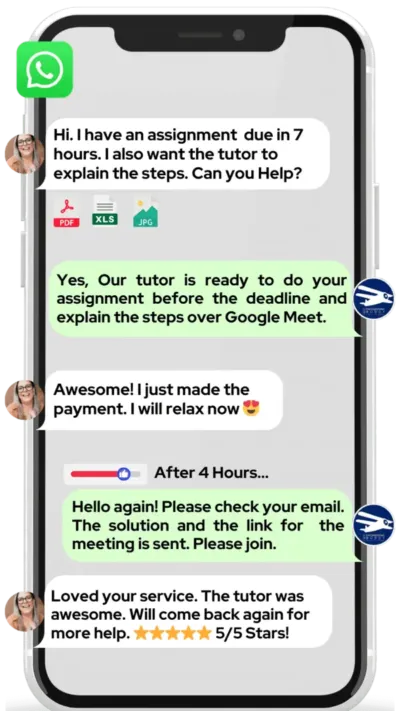
WhatsApp MEB for a quick quote — average response time under 1 minute.
Who This Clinical Research Tutoring Is For
Clinical Research draws students from medicine, pharmacy, nursing, public health, and life sciences. The subject is demanding because it combines statistical rigour with regulatory knowledge and ethical reasoning — and most courses expect you to hold all three at once.
- Undergraduate and graduate students taking Clinical Research as part of a health sciences programme
- Students struggling with biostatistics — sample size calculations, p-values, confidence intervals
- Students failing to connect GCP guidelines to actual trial protocol design
- Students with a dissertation or thesis submission deadline approaching — and significant methodology gaps still to close
- Students preparing for ICH-GCP certification or a clinical research coordinator role
- Students at institutions including Johns Hopkins, University of Toronto, King’s College London, University of Melbourne, Duke University, NYU, and the University of Amsterdam who need course-specific support
Parents supporting a student through a demanding health sciences programme: MEB works with families to set up sessions, track progress, and keep coursework on schedule. WhatsApp MEB — response time is under a minute, 24/7.
1:1 Tutoring vs Self-Study vs AI vs YouTube vs Online Courses
Self-study works if your textbook makes sense and you can check your own reasoning — most Clinical Research students can’t, especially on biostatistics and protocol design. AI tools give fast definitions but can’t tell you why your randomisation method is wrong for your specific study design. YouTube covers RCT basics well and stops there. Online courses are structured but run at a fixed pace with no one to catch your errors. With a 1:1 online Clinical Research tutor from MEB, the session is calibrated to your exact course — your tutor spots the gap in your IRB application or your power calculation, live, and corrects it before it costs you marks.
Outcomes: What You’ll Be Able To Do in Clinical Research
After consistent 1:1 sessions, you’ll be able to design a Phase II or Phase III trial protocol with appropriate controls and blinding, analyze survival data and interpret Kaplan-Meier curves, explain ICH-E6 GCP requirements and apply them to a case-based exam question, write a coherent patient consent framework, and present your study’s limitations in the structured way examiners expect. These are not generic skills. They are the specific competencies that separate a pass from a merit in most Clinical Research programmes.
Based on feedback from 40,000+ sessions collected by MEB from 2022 to 2025, 58% of students improved by one full grade after approximately 20 hours of 1:1 tutoring in subjects like Clinical Research. A further 23% achieved at least a half-grade improvement.
Source: MEB session feedback data, 2022–2025.
Students consistently tell us that the hardest part of Clinical Research isn’t the science — it’s knowing which statistical test to use and why. That’s the question we build the first three sessions around, every time.
What We Cover in Clinical Research (Syllabus / Topics)

Track 1: Trial Design and Methodology
- Types of clinical trials: Phase I–IV, RCTs, crossover, adaptive designs
- Observational study designs: cohort, case-control, cross-sectional
- Randomisation and allocation concealment methods
- Blinding strategies: single, double, triple-blind protocols
- Control group selection and placebo design
- Sample size and power calculations
- Study endpoints: primary, secondary, surrogate
Core texts for this track include Friedman, Furberg and DeMets’ Fundamentals of Clinical Trials and Pocock’s Clinical Trials: A Practical Approach.
Track 2: Biostatistics and Data Analysis
- Descriptive statistics, distributions, and data types in clinical contexts
- Hypothesis testing: t-tests, chi-square, ANOVA
- Survival analysis and Kaplan-Meier curves
- Regression models: logistic, Cox proportional hazards
- Intention-to-treat vs per-protocol analysis
- Interpreting confidence intervals, p-values, and odds ratios
- Meta-analysis and systematic review methodology
Standard references include Altman’s Practical Statistics for Medical Research and Hulley et al.’s Designing Clinical Research.
Track 3: Regulatory, Ethical, and GCP Frameworks
- ICH-E6 Good Clinical Practice (GCP) guidelines and their application
- Institutional Review Board (IRB) and Ethics Committee submissions
- Informed consent: principles, documentation, special populations
- FDA and EMA regulatory pathways for investigational products
- Adverse event reporting and pharmacovigilance basics
- Data integrity, audit trails, and GCP inspection readiness
Key resources include the Canadian Medical Association guidelines on research ethics and the ICH official guidance documents.
A common pattern our tutors observe is that students arrive knowing what an RCT is but not how to defend their choice of design in an exam. We spend time on the reasoning behind each decision — not just the definitions.
What a Typical Clinical Research Session Looks Like
The tutor opens by checking the previous session’s topic — usually sample size justification or a specific GCP principle that caused confusion. You share your screen or a PDF of the question you’re stuck on. The tutor works through the problem live using a digital pen-pad, annotating the protocol design or statistical output as you follow along. You then replicate the reasoning — not by copying, but by explaining your thinking out loud while the tutor listens for the gaps. If you’re working through a biopharmaceuticals case study or a drug metabolism question that crosses into your Clinical Research assessment, the tutor handles the overlap. The session closes with a specific practice task — one power calculation, one IRB application section, one data interpretation exercise — and the next topic is noted.
How MEB Tutors Help You with Clinical Research (The Learning Loop)
Diagnose: In the first session, the tutor identifies exactly where your understanding breaks down — whether that’s the statistical analysis plan, the ethics framework, or the difference between efficacy and effectiveness. Most students have one core gap that explains several surface-level errors.
Explain: The tutor works through real exam questions and protocol scenarios using a digital pen-pad. You see the reasoning built step-by-step — not just the answer, but why each decision was made at each stage of trial design.
Practice: You attempt the next problem with the tutor present. This is where most of the learning actually happens. Getting it wrong with a tutor watching is far more useful than getting it wrong alone.
Feedback: The tutor goes through each error specifically — not “this is wrong” but “you applied an intention-to-treat framework to a crossover design, and here’s why that loses marks.” That level of precision is what moves the grade.
Plan: After each session, the tutor sets the next topic and maps the sequence to your exam or submission date. You always know what’s next and why.
Sessions run on Google Meet. The tutor uses a digital pen-pad or iPad with Apple Pencil. Before your first session, send your course outline, a recent assignment or past paper attempt, and your exam or deadline date. The first session is a diagnostic — the tutor uses it to build a session plan, not to teach from a generic script. Start with the $1 trial — 30 minutes of live tutoring that also serves as your first diagnostic.
MEB has served students in public health, drug metabolism, and Clinical Research since 2008 — across more than 2,800 advanced subjects, with tutors matched by subject depth, not just availability.
Source: My Engineering Buddy, 2008–2025.
Try your first session for $1 — 30 minutes of live 1:1 tutoring or one homework question explained in full. No registration. No commitment. WhatsApp MEB now and get matched within the hour.
Tutor Match Criteria (How We Pick Your Tutor)
Not every tutor with a medical background can teach Clinical Research methodology. MEB matches on four criteria:
Subject depth: The tutor must have direct experience with the specific area you need — whether that’s biostatistics, GCP compliance, protocol writing, or regulatory submissions. A hematology tutor and a Clinical Research tutor are not interchangeable.
Tools: Every tutor uses Google Meet with a digital pen-pad or iPad and Apple Pencil — necessary for working through data outputs and protocol diagrams live.
Time zone: Matched to your region — US, UK, Gulf, Canada, or Australia. No scheduling across an 11-hour gap.
Goals: Whether you need exam-score improvement, dissertation methodology support, or GCP certification preparation, the tutor is matched to that specific objective.
Unlike platforms where you fill out a form and wait, MEB responds in under a minute, 24/7. Tutor match takes under an hour. The $1 trial means you test before you commit. Everything runs over WhatsApp — no logins, no intake forms.
Study Plans (Pick One That Matches Your Goal)
After the diagnostic session, your tutor builds a specific sequence. Three common formats: a catch-up plan (1–3 weeks) for students with an immediate gap to close before an assessment; an exam prep plan (4–8 weeks) built around your paper date, covering the highest-yield topics in order of weight; or weekly ongoing support aligned to your semester timetable and coursework submission schedule. The tutor doesn’t apply a template — the plan is built from your diagnostic results.
Pricing Guide
Clinical Research tutoring starts at $20/hr for standard undergraduate coursework. Graduate-level methodology support, regulatory framework depth, or dissertation review runs $35–$100/hr depending on tutor background and topic complexity. Rate factors include: level of study, how niche the topic is, your timeline, and tutor availability.
Availability tightens during dissertation submission periods and end-of-semester assessments. If you have less than three weeks, flag that when you message.
For students targeting roles at CROs, pharmaceutical companies, or academic research centres, tutors with direct industry or research backgrounds are available at higher rates — share your specific goal and MEB matches the tier to your ambition.
Start with the $1 trial — 30 minutes, no registration, no commitment. WhatsApp MEB for a quick quote.
FAQ
Is Clinical Research hard?
It’s demanding because it combines three disciplines — statistics, ethics, and regulatory science — simultaneously. Most students find biostatistics and the logic of trial design the steepest parts. With structured 1:1 support, both become manageable within a few sessions.
How many sessions are needed?
Students with a specific gap — one module, one statistical method — typically need 4–8 sessions. Students preparing for a full Clinical Research examination or dissertation defence usually work over 12–20 sessions, depending on starting level and pace.
Can you help with homework and assignments?
MEB tutoring is guided learning — you understand the work, then submit it yourself. See our Academic Integrity policy and Why MEB page for full details on what we help with and what we don’t. Tutors walk through the reasoning; you produce and submit the work.
Will the tutor match my exact syllabus or exam board?
Yes. Before matching, MEB asks for your institution, course code, and the specific components you’re struggling with. Tutors are matched to your exact curriculum — not assigned from a general medical sciences pool.
What happens in the first session?
It’s a diagnostic. The tutor asks you to walk through a problem you’ve already attempted, identifies where the reasoning breaks down, and uses the remaining time to start closing that gap. A session plan for the coming weeks is shared afterward.
Is online tutoring as effective as in-person?
For Clinical Research specifically, it’s often more effective — screen sharing lets the tutor annotate your actual protocol document, statistical output, or IRB draft in real time. In-person rarely offers that level of precision on complex research documents.
Can I get Clinical Research help at midnight?
Yes. MEB operates across time zones and responds on WhatsApp 24/7. Average response time is under one minute. Tutors are available across US, UK, Gulf, and Australian time zones — so midnight in London is working hours somewhere in the MEB network.
What if I don’t like my assigned tutor?
Message MEB and you’ll be rematched within the hour. The $1 trial exists precisely for this — you test the match before any meaningful commitment. No explanation required; no delay.
What is the difference between a Phase II and Phase III clinical trial, and do tutors cover this?
Phase II trials assess preliminary efficacy and dosing in a smaller group; Phase III trials confirm efficacy and safety in large, randomised populations before regulatory submission. Yes — trial phase distinctions, their design logic, and exam application are core topics every Clinical Research tutor covers.
Can MEB help with ICH-GCP certification preparation?
Yes. MEB tutors with regulatory backgrounds can work through the ICH-E6 GCP guidelines, standard operating procedures, adverse event reporting, and the case-based scenarios commonly tested in GCP certification exams. Share your exam format when you message.
How do I get started?
Three steps: WhatsApp MEB with your subject, course level, and exam date. You’re matched with a verified Clinical Research tutor — usually within 24 hours. Your first session is the $1 trial — 30 minutes of live tutoring or one question explained in full, no registration required.
Trust & Quality at My Engineering Buddy
Every MEB tutor goes through a multi-stage screening process: qualification check, subject-specific vetting, a live demo session evaluation, and ongoing review based on student feedback. Tutors are not accepted on credentials alone — they have to demonstrate how they teach, not just what they know. Rated 4.8/5 across 40,000+ verified reviews on Google.
MEB tutoring is guided learning — you understand the work, then submit it yourself. For full details on what we help with and what we don’t, read our Academic Integrity policy and Why MEB.
MEB has been serving students in the US, UK, Canada, Australia, the Gulf, and Europe since 2008 — across 2,800+ subjects in Medicine and related disciplines. That includes Clinical Research, preventive medicine tutoring, internal medicine help, and medical coding tutoring. Students come to MEB because the tutor knows the subject — not just the field.
MEB’s tutoring methodology is built around a diagnostic-first model — every tutor identifies the precise gap before teaching anything. It’s why the improvement rate across 40,000+ reviewed sessions is as high as it is.
Source: My Engineering Buddy, 2008–2025.
At MEB, we’ve found that students who bring a past paper or a failed assignment to the first session make faster progress than those who start from scratch. Come with something you’ve already tried — even if it’s wrong. Especially if it’s wrong.
Explore Related Subjects
Students studying Clinical Research often also need support in:
- Anesthesiology
- Cardiology
- Computer-Aided Drug Design (CADD)
- Gerontology
- Neurology
- Nursing
- Systemic Pathology
Next Steps
Before your first session, have ready: your course outline or institutional syllabus, a recent past paper attempt or assignment you struggled with, and your exam or dissertation deadline date. The tutor handles the rest.
- Share your exam board or course code, your hardest component, and your current timeline
- Share your availability and time zone
- MEB matches you with a verified Clinical Research tutor — usually within 24 hours
The first session starts with a diagnostic so every minute is used well. Visit www.myengineeringbuddy.com for more on how MEB works.
WhatsApp to get started or email [email protected].
52,000+ Happy Students From Various Universities






How Much For Private 1:1 Tutoring & Hw Help?
Private 1:1 Tutoring and HW help Cost $20 – 35 per hour* on average.
Reviewed by Subject Expert
This page has been carefully reviewed and validated by our subject expert to ensure accuracy and relevance.
