

Contact MEB Today To Get The Best
Computer-Aided Drug Design (CADD) Tutoring Online
Email: [email protected]



~1 min
Average Reply Time
~1 hour
To Be Matched With A Tutor
30 Min Trial
75% Find Their Tutor On The 1st Trial
$20-35+/hr
Premium Yet Affordable Learning
Hire The Best Computer-Aided Drug Design (CADD) Tutor


Most students who struggle with CADD aren’t failing the chemistry — they’re lost in the software, the scoring functions, or the gap between theory and a real docking run.
Computer-Aided Drug Design (CADD) Tutor Online
Computer-Aided Drug Design (CADD) is a computational approach to drug discovery that uses molecular modeling, docking simulations, and virtual screening to identify and optimise candidate drug molecules before laboratory synthesis, equipping students to work at the chemistry–biology–computing interface.
If you’ve searched for a Computer-Aided Drug Design (CADD) tutor near me and found nothing useful, you’re not alone — CADD sits across three disciplines at once, and generic tutors rarely cut it. MEB connects you with expert 1:1 online medicine and CADD tutors who know the tools, the theory, and the exam or coursework structure you’re working within. One session can close the gap between guessing at AutoDock outputs and genuinely understanding what the binding affinity score means.
- 1:1 online sessions tailored to your course syllabus or research project
- Expert-verified tutors with hands-on CADD and computational chemistry backgrounds
- Flexible time zones — US, UK, Canada, Australia, Gulf
- Structured learning plan built after a diagnostic session
- Ethical academic guidance — you understand the work, then submit it yourself
52,000+ students across the US, UK, Canada, Australia, and the Gulf have used MEB since 2008 — including students in Medicine subjects like Computer-Aided Drug Design, Molecular Modeling & Drug Design tutoring, and Drug Metabolism.
Source: My Engineering Buddy, 2008–2025.
How Much Does a Computer-Aided Drug Design (CADD) Tutor Cost?
Most CADD tutoring sessions run $20–$40/hr for undergraduate-level work, rising toward $60–$100/hr for graduate, doctoral, or specialist computational chemistry support. Not sure if it’s worth committing? Start with the $1 trial — 30 minutes live or one question explained in full.
| Level / Need | Typical Rate | What’s Included |
|---|---|---|
| Undergraduate (most levels) | $20–$40/hr | 1:1 sessions, homework guidance, docking walkthroughs |
| Graduate / Specialist | $40–$100/hr | Expert tutor, research-level CADD, software depth |
| $1 Trial | $1 flat | 30 min live session or one homework question explained |
Tutor availability tightens around semester-end project deadlines and dissertation submission periods. Book early if your timeline is within four weeks.
WhatsApp MEB for a quick quote — average response time under 1 minute.
Who This Computer-Aided Drug Design (CADD) Tutoring Is For
CADD sits at the intersection of medicinal chemistry, structural biology, and computational science. Most students hit a wall not because they can’t handle the concepts, but because no single course teaches all three legs at once.
- Undergraduate pharmacy, chemistry, or biochemistry students with a CADD module they weren’t prepared for
- Masters and PhD students running docking studies or virtual screening pipelines for the first time
- Students retaking after a failed first attempt at a computational chemistry or drug design unit
- Researchers who need to interpret AutoDock Vina, Schrödinger, or MOE outputs for a thesis chapter
- Students at universities including MIT, UCL, University of Toronto, University of Melbourne, and ETH Zürich where CADD appears in advanced pharmaceutical science and chemical biology programmes
- Parents watching a student’s confidence drop as CADD project deadlines approach and the software feels impenetrable
At MEB, we’ve found that CADD students often arrive knowing the theory of receptor-ligand binding but having never run a full docking workflow from protein preparation to result interpretation. Bridging that gap is exactly what the first two sessions are for.
1:1 Tutoring vs Self-Study vs AI vs YouTube vs Online Courses
Self-study works if you’re disciplined — but CADD has too many software-specific steps where a single wrong parameter silently breaks everything. AI tools give fast explanations but can’t watch you set up a docking grid and catch the error live. YouTube is useful for overviews of molecular docking concepts, but stops the moment your specific protein file throws an error. Online courses are structured yet fixed-pace, with no one to tell you why your binding pose looks wrong. 1:1 CADD tutoring with MEB is live, calibrated to your exact software version and course expectations, and corrects errors the moment they happen — not after you’ve spent three hours going in circles.
Outcomes: What You’ll Be Able To Do in Computer-Aided Drug Design (CADD)
After working with an MEB CADD tutor, students routinely describe a shift from confusion to control. You’ll be able to set up and run a full structure-based docking workflow in AutoDock Vina or a comparable platform. You’ll analyze binding affinity scores and pose geometry with enough confidence to defend your choices in a written report. You’ll apply pharmacophore modeling logic to filter a compound library in ligand-based design tasks. You’ll explain ADMET property predictions and connect them to lead optimization decisions. And you’ll present virtual screening results clearly — whether that’s in a seminar, a dissertation chapter, or a research group meeting.
Based on feedback from 40,000+ sessions collected by MEB from 2022 to 2025, 58% of students improved by one full grade after approximately 20 hours of 1:1 tutoring in subjects like Computer-Aided Drug Design (CADD). A further 23% achieved at least a half-grade improvement.
Source: MEB session feedback data, 2022–2025.
Try your first session for $1 — 30 minutes of live 1:1 tutoring or one homework question explained in full. No registration. No commitment. WhatsApp MEB now and get matched within the hour.
What We Cover in Computer-Aided Drug Design (CADD) (Syllabus / Topics)

Structure-Based Drug Design (SBDD)
- Protein structure preparation: PDB file retrieval, water removal, protonation state assignment
- Active site identification and grid box definition
- Molecular docking with AutoDock Vina, Glide, or GOLD
- Binding pose analysis: hydrogen bonds, hydrophobic contacts, pi-stacking
- Scoring function interpretation and ranking of docked compounds
- Induced fit docking and flexible receptor methods
- Validation of docking protocols using known co-crystal structures
Core texts: Drug Design: Structure- and Ligand-Based Approaches (Merz, Ringe & Reynolds); An Introduction to Bioinformatics Algorithms (Jones & Pevzner) for algorithmic context.
Ligand-Based Drug Design (LBDD)
- Pharmacophore modeling: feature identification, hypothesis generation, and validation
- QSAR (Quantitative Structure-Activity Relationship) model building and interpretation
- 3D-QSAR methods including CoMFA and CoMSIA
- Molecular fingerprints and similarity searching in compound libraries
- Virtual screening workflows using ligand-based filters
- ADMET prediction: absorption, distribution, metabolism, excretion, toxicity
Core texts: The Practice of Medicinal Chemistry (Wermuth et al.); Molecular Modelling: Principles and Applications (Leach).
Molecular Dynamics and Lead Optimisation
- MD simulation setup using GROMACS or AMBER: force fields, solvent boxes, equilibration
- MM-GBSA and MM-PBSA binding free energy calculations
- Lead optimisation strategies: bioisosteric replacement, scaffold hopping
- Fragment-based drug design principles
- Selectivity profiling and off-target prediction
- Connecting CADD outputs to experimental SAR data
Core texts: Computational Drug Discovery and Design (Baron, ed.); Molecular Dynamics Simulation (van Gunsteren & Berendsen). The Nobel Prize in Chemistry has recognised computational approaches to molecular systems — see the Nobel Prize Chemistry page for context on the field’s scientific standing.
Platforms, Tools & Textbooks We Support
CADD is deeply software-dependent. MEB tutors work directly in the tools students are actually using — not abstract theory disconnected from the interface. Supported platforms and tools include:
- AutoDock and AutoDock Vina
- Schrödinger Suite (Glide, Prime, LigPrep, Maestro)
- MOE (Molecular Operating Environment)
- GROMACS and AMBER for molecular dynamics
- PyMOL and UCSF Chimera for structure visualisation
- RDKit and Open Babel for cheminformatics workflows
- Protein Data Bank (PDB) for structure retrieval
What a Typical Computer-Aided Drug Design (CADD) Session Looks Like
The tutor opens by checking where you left off — usually the protein preparation step or a specific docking result that wasn’t making sense. You share your screen and walk through the workflow together: the tutor watches how you define the grid box, spots whether you’ve correctly removed water molecules and added polar hydrogens, and asks you to explain why you set the exhaustiveness parameter where you did. When you hit the docking run, you analyse the output together — binding energies, pose geometry, key interactions in the active site. The tutor uses a digital pen-pad to annotate structures and highlight interaction patterns in real time. By the end, you have a concrete task: repeat the run with a modified ligand, or write up the binding analysis for one compound before the next session.
How MEB Tutors Help You with Computer-Aided Drug Design (CADD) (The Learning Loop)
Diagnose: In the first session, the tutor identifies exactly where your understanding breaks down — whether that’s the conceptual basis of docking scoring functions, the practical software steps, or the ability to interpret and write up results. No two CADD students arrive at the same gap.
Explain: The tutor works through live examples on screen — running a real docking workflow, annotating a binding pose, or walking through a QSAR model step by step. The digital pen-pad makes structural chemistry visual and traceable, not abstract.
Practice: You take over. The tutor watches you set up the next workflow or answer the next question while still present. Errors surface immediately — not three days later when you’re submitting.
Feedback: The tutor explains every error at the reasoning level, not just the correct answer. If your binding pose is wrong, you learn why — which interaction you missed, which parameter you set incorrectly, and what the examiner or supervisor is actually looking for.
Plan: Each session ends with a clear next topic, a specific task, and a note on where the following session starts. Progress in CADD is sequential — you can’t skip protein preparation and expect docking to make sense later.
Sessions run on Google Meet. Tutors use a digital pen-pad or iPad with Apple Pencil to annotate structures and workflows live. Before your first session, have your software version, a specific protein target or assignment brief, and any output files you’re struggling to interpret. Start with the $1 trial — 30 minutes of live tutoring that also works as your first diagnostic.
Whether you need a quick catch-up before a project deadline, structured support over 4–8 weeks, or ongoing weekly help through a semester-long CADD module, the tutor maps the session sequence after the first diagnostic.
A common pattern our tutors observe is that students understand receptor-ligand binding in lectures but freeze when faced with an actual PDB file, a docking grid, and software that gives no feedback when something is set up incorrectly.
Source: MEB tutor observations across CADD sessions, 2022–2025.
Tutor Match Criteria (How We Pick Your Tutor)
Not every computational chemistry tutor knows CADD in the specific form you’re studying it. MEB matches on four criteria.
Subject depth: Tutors hold graduate-level credentials in medicinal chemistry, pharmaceutical sciences, computational biology, or a directly adjacent field — and have hands-on experience with the software stack your course uses.
Tools: Every session runs on Google Meet with a digital pen-pad or iPad and Apple Pencil — essential for annotating 3D structures and docking outputs live.
Time zone: Matched to your region — US, UK, Gulf, Canada, or Australia. No booking a session at an impractical hour just because that’s who’s available.
Goals: Whether you need exam-grade conceptual understanding, help finishing a specific docking project, or support writing up a dissertation chapter on virtual screening results, the tutor is matched to that specific goal.
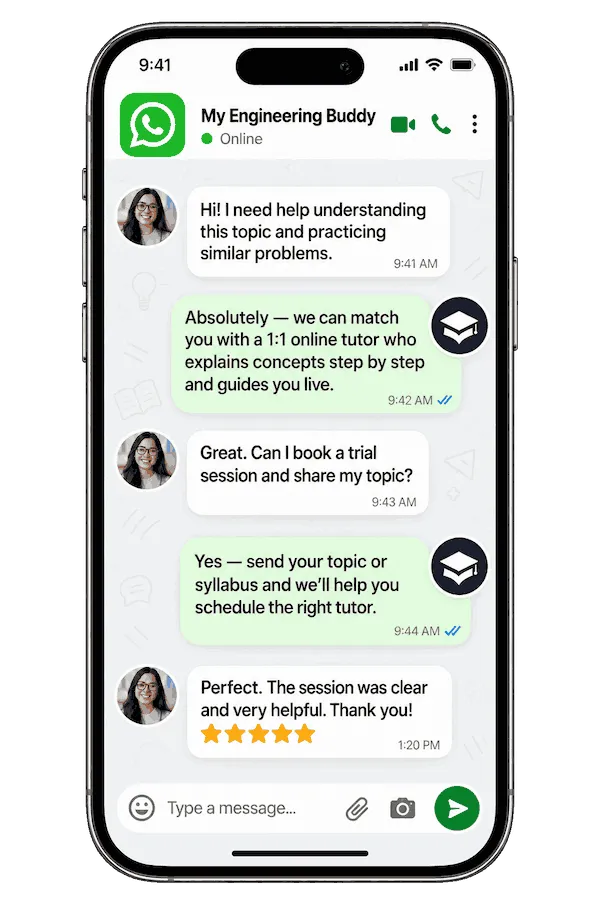
Unlike platforms where you fill out a form and wait, MEB responds in under a minute, 24/7. Tutor match takes under an hour. The $1 trial means you test before you commit. Everything runs over WhatsApp — no logins, no intake forms.
Pricing Guide
CADD tutoring starts at $20/hr for undergraduate-level module support. Graduate and doctoral-level work — particularly MD simulations, binding free energy calculations, or research-grade virtual screening pipelines — typically runs $60–$100/hr depending on tutor specialisation and project complexity.
Rate factors include: academic level, software complexity, how tight the deadline is, and tutor availability during peak project seasons.
For students targeting pharmaceutical industry roles, graduate research positions, or competitive PhD programmes at institutions like Imperial College London or the University of Michigan, tutors with active computational drug discovery research backgrounds are available at higher rates — share your specific goal and MEB will match accordingly.
Start with the $1 trial — 30 minutes, no registration, no commitment. WhatsApp MEB for a quick quote.
FAQ
Is Computer-Aided Drug Design (CADD) hard?
Yes, for most students. CADD requires simultaneous competence in structural biology, medicinal chemistry, and computational software. The difficulty isn’t any one concept — it’s holding all three together. Focused 1:1 sessions make that manageable by tackling each layer in the right order.
How many sessions are needed?
Students with a specific project or assignment typically need 4–8 sessions. Those working through a full CADD module or dissertation chapter often find 10–15 sessions sufficient for strong, independent performance. The first session diagnostic shapes the plan.
Can you help with homework and assignments?
MEB tutoring is guided learning — you understand the work, then submit it yourself. If you have a docking assignment or a written report on virtual screening results, the tutor walks you through the reasoning until you can complete and defend it independently. See our Academic Integrity policy and Why MEB page for full details on what we help with and what we don’t.
Will the tutor match my exact syllabus or exam board?
Yes. Before matching, MEB asks for your course outline, university, and specific software or textbook. Tutors are matched to your exact tools and assessment structure — not a generic CADD curriculum.
What happens in the first session?
The tutor runs a short diagnostic: asks about your course structure, checks your current software setup, reviews any output you’ve already generated, and identifies the most important gaps. Every minute after that is directed by what was found in those first ten minutes.
Is online tutoring as effective as in-person for CADD?
For software-heavy subjects like CADD, online tutoring is often more effective. You share your actual screen, the tutor sees the exact interface you’re using, and annotations go directly onto your docking output. There’s no travelling to a room with a whiteboard that has nothing to do with AutoDock Vina.
What’s the difference between structure-based and ligand-based CADD, and do tutors cover both?
Structure-based design uses a known protein structure to guide docking; ligand-based design works from known active compounds when no structure is available. Both are covered. Most university CADD courses include both tracks, and tutors adapt to whichever your assignment or module focuses on.
Can you help me interpret AutoDock Vina or Schrödinger Glide outputs I’ve already run?
Yes — this is one of the most common requests. Students run a docking job, get numbers out, and don’t know what to do with them. A single session focused on output interpretation, binding pose analysis, and report writing is often enough to unblock a stalled project entirely.
Can I get CADD help at short notice or late at night?
MEB operates 24/7 across time zones. WhatsApp MEB with your question and availability — average response time is under a minute. Tutors are available in US, UK, Gulf, Canadian, and Australian time zones, including evenings and weekends.
Do you offer group CADD sessions?
No. MEB is 1:1 only. Group sessions slow down to the pace of the least prepared student and can’t address individual software errors in real time. Every CADD session is built entirely around one student’s specific tools, dataset, and deadline.
How do I find a CADD tutor in my city?
You don’t need to. All sessions are online via Google Meet. Students in New York, London, Dubai, Toronto, and Sydney all access the same tutor pool. Location is irrelevant — timezone and subject match are what matter.
How do I get started?
WhatsApp MEB with your course details and the specific CADD topic you’re stuck on. MEB matches you with a verified tutor — usually within the hour. Your first session starts with a $1 trial: 30 minutes live, or one question explained in full. Three steps: WhatsApp → matched → start.
Trust & Quality at My Engineering Buddy
Every MEB tutor goes through subject-specific vetting — not a generic screening process. For CADD, that means verifying graduate-level credentials in computational chemistry, pharmaceutical sciences, or structural biology, plus a live demo evaluation covering actual docking workflows and output interpretation. Tutor performance is monitored through ongoing session feedback. Rated 4.8/5 across 40,000+ verified reviews on Google.
MEB tutoring is guided learning — you understand the work, then submit it yourself. For full details on what we help with and what we don’t, read our Academic Integrity policy and Why MEB.
MEB has served 52,000+ students since 2008 across 2,800+ subjects in the US, UK, Canada, Australia, Gulf, and Europe. In Medicine and pharmaceutical sciences, that includes students needing drug metabolism tutoring, biopharmaceuticals help, and pathophysiology tutoring — all subjects that frequently appear alongside CADD in pharmacy and biomedical science programmes. See our tutoring methodology for how sessions are structured.
Explore Related Subjects
Students studying Computer-Aided Drug Design (CADD) often also need support in:
Next Steps
Before your first session, have ready: your exam board and syllabus (or course outline), a recent past paper attempt or homework you struggled with, and your exam or deadline date. The tutor handles the rest.
- Share your course outline, the specific CADD software or module you’re working on, and your deadline
- Share your availability and time zone
- MEB matches you with a verified CADD tutor — usually within 24 hours
The first session starts with a diagnostic so every minute is used well. Visit www.myengineeringbuddy.com for more on how MEB works.
WhatsApp to get started or email [email protected].
Reviewed by Subject Expert
This page has been carefully reviewed and validated by our subject expert to ensure accuracy and relevance.




