Hire Verified & Experienced
Computational Chemistry Tutors
4.8/5 40K+ session ratings collected on the MEB platform



Hire The Best Computational Chemistry Tutor
Top Tutors, Top Grades. Without The Stress!





52,000+ Happy Students From Various Universities






How Much For Private 1:1 Tutoring & Hw Help?
Private 1:1 Tutoring and HW help Cost $20 – 35 per hour* on average.
DFT convergence errors at 2 a.m., a submission due in six days, and no one who can explain what went wrong with your basis set. That’s exactly when MEB’s computational chemistry tutors pick up.
Computational Chemistry Tutor Online
Computational chemistry applies mathematical models, quantum mechanics, and software simulation — including methods like DFT, molecular mechanics, and ab initio calculations — to predict and analyse molecular structure, reactivity, and properties without sole reliance on physical experiments.
MEB offers 1:1 online tutoring and homework help in 2,800+ advanced subjects, including computational chemistry at undergraduate, postgraduate, and research levels. Whether you need a computational chemistry tutor near me who works across your time zone or specialist help with Gaussian, VASP, or ORCA output files, MEB matches you with a verified expert — fast. Students who start with a diagnostic session leave knowing exactly what to fix and in what order.
MEB’s chemistry tutoring covers the full spectrum — from foundational physical chemistry through to graduate-level simulation methods.
- 1:1 online sessions tailored to your course syllabus and software environment
- Expert-verified tutors with subject-specific knowledge in quantum chemistry, molecular modelling, and force-field methods
- Flexible time zones — US, UK, Canada, Australia, Gulf
- Structured learning plan built after a diagnostic session
- Ethical homework and assignment guidance — you understand the work before you submit
52,000+ students across the US, UK, Canada, Australia, and the Gulf have used MEB since 2008 — including students in Chemistry subjects like Computational Chemistry, quantum chemistry, and physical chemistry.
Source: My Engineering Buddy, 2008–2025.
How Much Does a Computational Chemistry Tutor Cost?
Most computational chemistry sessions run $20–$40/hr depending on level and topic complexity. Graduate-level DFT coursework or ORCA troubleshooting can reach $70–$100/hr for specialist tutors. The $1 trial gets you 30 minutes of live 1:1 tutoring or one homework question explained in full — no registration required.
| Level / Need | Typical Rate | What’s Included |
|---|---|---|
| Undergraduate (intro comp chem) | $20–$35/hr | 1:1 sessions, homework guidance, software orientation |
| Advanced / Postgraduate | $35–$70/hr | DFT, ab initio methods, ORCA/VASP troubleshooting |
| Research / PhD support | $70–$100/hr | Expert tutor, niche depth, manuscript-level guidance |
| $1 Trial | $1 flat | 30 min live session or one full homework question explained |
Tutor availability tightens during end-of-semester submission windows and exam periods. Book early if your deadline is within three weeks.
WhatsApp MEB for a quick quote — average response time under 1 minute.
Who This Computational Chemistry Tutoring Is For
Computational chemistry sits at the intersection of quantum mechanics, programming, and chemical intuition. Most students hit a wall somewhere in that triangle — usually when theory meets a software error they can’t interpret.
- Undergraduate chemistry or biochemistry students taking their first computational module
- Students retaking after a failed first attempt at a computational methods course
- Master’s students running DFT jobs whose output files make no sense
- PhD students needing help structuring a computational chapter or troubleshooting Gaussian/ORCA convergence
- Students with a coursework submission deadline approaching and significant conceptual gaps still to close
- Students who have tried YouTube tutorials for Gaussian or VASP and got stuck at the input file stage
MEB tutors have worked with students at universities including MIT, Cambridge, ETH Zürich, Imperial College London, University of Toronto, University of Melbourne, and Caltech — across undergraduate, masters, and doctoral programmes in chemistry, chemical engineering, and materials science.
1:1 Tutoring vs Self-Study vs AI vs YouTube vs Online Courses
Self-study works if you’re disciplined, but computational chemistry has too many interdependencies — a gap in quantum mechanics will silently corrupt your DFT interpretation. AI tools give fast definitions but can’t run your input file, spot your basis set mismatch, or explain why your geometry optimisation diverged. YouTube covers conceptual overviews well and stops completely when you need someone to read your ORCA output. Online courses are structured but move at a fixed pace with no room for your specific error messages. 1:1 tutoring with MEB is calibrated to your exact software stack, your course’s method requirements, and the actual problem in front of you — correcting errors as they happen, not after you’ve submitted.
Outcomes: What You’ll Be Able To Do in Computational Chemistry
After consistent 1:1 sessions, students can set up and run geometry optimisation and frequency calculations in Gaussian or ORCA with confidence. They can analyse molecular orbital diagrams, interpret frontier orbital energies, and connect DFT results to experimental spectroscopic data. Students learn to apply the right level of theory — DFT, MP2, or semi-empirical — to a given problem without overspending computational resource. They can write up computational methodology sections clearly, explain their choice of basis set, and critically evaluate simulation outputs in assignments and dissertations.
Based on feedback from 40,000+ sessions collected by MEB from 2022 to 2025, 58% of students improved by one full grade after approximately 20 hours of 1:1 tutoring in subjects like Computational Chemistry. A further 23% achieved at least a half-grade improvement.
Source: MEB session feedback data, 2022–2025.
At MEB, we’ve found that students in computational chemistry don’t usually struggle with the chemistry itself — they struggle with the gap between a textbook equation and a working input file. Bridging that gap is where the real tutoring happens.
What We Cover in Computational Chemistry (Syllabus / Topics)

Quantum Mechanical Methods
- Schrödinger equation: time-independent form, Born-Oppenheimer approximation
- Hartree-Fock theory: Slater determinants, self-consistent field procedure
- Density Functional Theory (DFT): exchange-correlation functionals (B3LYP, PBE, M06-2X)
- Basis sets: STO-3G through to cc-pVTZ and plane-wave basis sets
- Post-HF methods: MP2, CCSD, and when to use them vs DFT
- Excited state methods: TD-DFT, CIS, and their limitations
- Geometry optimisation, transition state searches, and IRC calculations
Core texts: Szabo & Ostlund Modern Quantum Chemistry; Jensen Introduction to Computational Chemistry; Cramer Essentials of Computational Chemistry.
Molecular Mechanics and Force Field Methods
- Force field components: bond stretching, angle bending, torsional, non-bonded terms
- Common force fields: AMBER, CHARMM, OPLS, UFF — when each applies
- Energy minimisation algorithms: steepest descent, conjugate gradient, Newton-Raphson
- Molecular dynamics (MD) simulations: NVT and NPT ensembles, thermostat/barostat settings
- Monte Carlo methods: sampling conformational space, Metropolis criterion
- QM/MM approaches: partitioning schemes, link atoms, practical setup
Core texts: Leach Molecular Modelling: Principles and Applications; Frenkel & Smit Understanding Molecular Simulation.
Software, Simulation Workflows, and Data Analysis
- Gaussian: input file structure, route section keywords, checkpoint files, error diagnosis
- ORCA: block input syntax, parallelisation, common convergence failures and fixes
- VASP: plane-wave DFT for periodic systems, INCAR/POSCAR/KPOINTS setup
- Avogadro and GaussView: structure building, visualising MOs and vibrational modes
- Python scripting for output parsing: using cclib, ASE, and pandas for property extraction
- Thermochemical analysis: zero-point energy corrections, enthalpy, Gibbs free energy from frequency jobs
- Benchmarking: comparing computational predictions against experimental IR, NMR, or UV-Vis data
Core texts: Young Computational Chemistry: A Practical Guide for Applying Techniques to Real World Problems; official ORCA and Gaussian documentation.
Computational chemistry sits at the intersection of quantum chemistry tutoring and applied software — a combination that standard lecture-only courses rarely cover well enough for students to work independently.
Source: My Engineering Buddy, 2008–2025.
Platforms, Tools & Textbooks We Support
Computational chemistry is one of the few chemistry disciplines where the software environment is as important as the theory. MEB tutors work directly inside your chosen platform — sharing screens, reading your input and output files live, and diagnosing errors in real time. Supported platforms and tools include:
- Gaussian 09 / 16 and GaussView
- ORCA (all recent versions)
- VASP (Vienna Ab initio Simulation Package)
- GROMACS and AMBER for molecular dynamics
- Avogadro, Molden, and VMD for visualisation
- Python with ASE, cclib, RDKit, and NumPy/SciPy for scripting and analysis
- Jupyter Notebooks for documented workflows
What a Typical Computational Chemistry Session Looks Like
The tutor opens by checking where the previous topic ended — usually whether the student successfully ran a geometry optimisation or got stuck on a convergence error. From there, the session moves to the specific problem: the tutor and student pull up the input and output files on screen, and the tutor uses a digital pen-pad to annotate the relevant sections — explaining why a particular error keyword appears and what parameter to change. The student then modifies the input file themselves, reruns the job, and talks through what changed. By the end, the tutor sets a concrete task: rerun the frequency calculation with a corrected functional, extract the thermochemical data, and prepare a short written interpretation. Next session topic — transition state search — is noted before the call ends.
How MEB Tutors Help You with Computational Chemistry (The Learning Loop)
Diagnose: In the first session, the tutor asks you to show your current working — an input file, an error message, or a method selection decision you’re unsure about. Within 15 minutes, the tutor identifies whether the gap is conceptual (e.g. you don’t know what a basis set is doing), procedural (e.g. wrong route section keywords), or interpretive (e.g. you can’t connect your MO diagram to the chemistry).
Explain: The tutor works through the problem live — annotating your actual output file, drawing orbital diagrams on the pen-pad, and walking through the equation behind the method. Nothing is explained in the abstract when a real example is available.
Practice: You attempt the next step yourself while the tutor watches. This might mean writing a new input file, running an energy scan, or interpreting a frequency output. The tutor does not do it for you — they watch and respond to what you do.
Feedback: The tutor explains exactly where an error occurred, why it cost marks or caused divergence, and what the correct reasoning looks like. This is step-by-step correction, not a verdict at the end.
Plan: At the close of each session, the tutor maps the next topic in sequence and sets a specific task — not “revise DFT” but “run a single-point energy calculation on the optimised geometry and compare B3LYP/6-31G* vs M06-2X/def2-TZVP results.” Accountability is built in.
Sessions run over Google Meet. The tutor uses a digital pen-pad or iPad with Apple Pencil for live annotation. Before your first session, share your course syllabus or assignment brief, the software you’re using, and any error messages or output files you’re stuck on. The first session acts as your diagnostic — no time is wasted on topics you already understand.
Start with the $1 trial — 30 minutes of live tutoring that also serves as your first diagnostic.
Students consistently tell us that the moment they stop copying input files from tutorials and start understanding what each keyword does, the whole subject opens up. That shift usually happens in one session — if the tutor is explaining the right thing.
Tutor Match Criteria (How We Pick Your Tutor)
Not every tutor who knows chemistry can explain why a DFT job diverged. MEB matches on specifics.
Subject depth: Tutors are matched to your exact level — undergraduate molecular modelling, postgraduate ab initio methods, or PhD-level periodic DFT with VASP. They hold degrees in computational chemistry, theoretical chemistry, chemical physics, or materials science and have hands-on experience with the software you’re using.
Tools: Every tutor works via Google Meet with a digital pen-pad or iPad and Apple Pencil — no static slides, no talking over a PDF.
Time zone: Matched to your region — US, UK, Gulf, Canada, or Australia. Sessions available across all major time zones, including late evening slots.
Goals: Whether you need to pass an end-of-year exam, complete a computational dissertation chapter, or understand a specific method well enough to defend it in a viva, the tutor is selected for that goal — not assigned generically.
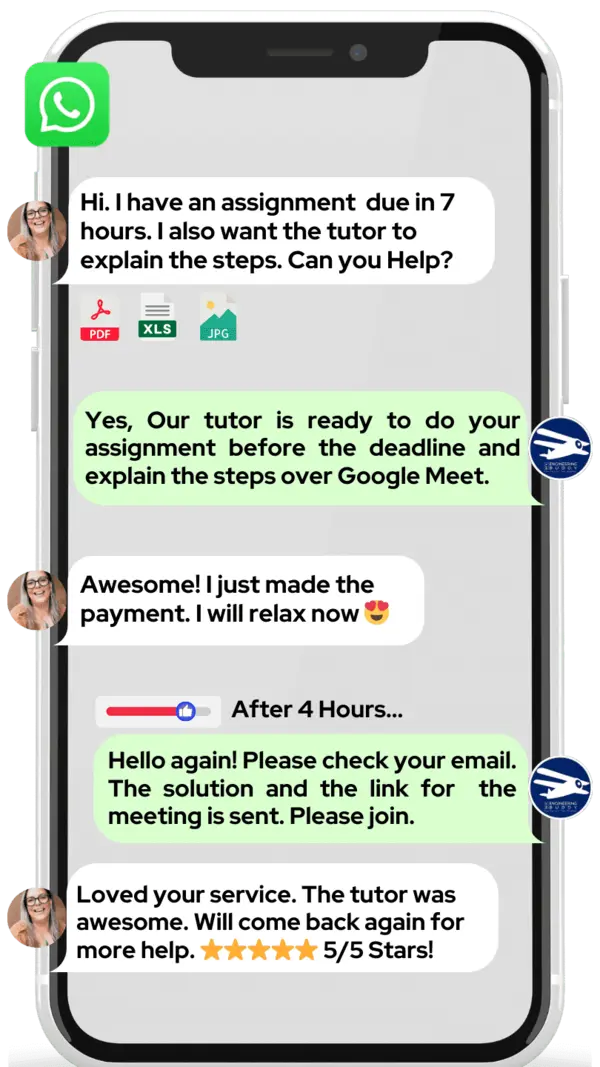
Unlike platforms where you fill out a form and wait, MEB responds in under a minute, 24/7. Tutor match takes under an hour. The $1 trial means you test before you commit. Everything runs over WhatsApp — no logins, no intake forms.
Study Plans (Pick One That Matches Your Goal)
After a diagnostic session, your tutor builds a specific session sequence. Three common plans: a catch-up plan (1–3 weeks) for students who are behind on a computational methods module and need to close gaps before coursework is due; an exam prep plan (4–8 weeks) for students with a structured revision schedule leading to an end-of-year or qualifying exam; and weekly ongoing support aligned to semester deadlines and dissertation milestones. The tutor does not use a generic template — the sequence is built from what the diagnostic reveals.
Pricing Guide
Standard computational chemistry sessions run $20–$40/hr for most undergraduate levels. Graduate-level and specialist tutor sessions — covering advanced DFT, periodic systems, or research-level ab initio methods — run $70–$100/hr. Rate factors include your level, the specific software and method involved, timeline urgency, and tutor availability.
Availability shrinks during end-of-semester periods and dissertation submission windows. If your deadline is within four weeks, book sooner rather than later.
For students targeting research positions, doctoral programmes, or roles in computational drug discovery, materials design, or quantum chemistry, tutors with active research backgrounds are available at higher rates — share your specific goal and MEB will match the tier to your ambition.
Start with the $1 trial — 30 minutes, no registration, no commitment. WhatsApp MEB for a quick quote.
A common pattern our tutors observe is students spending four or five sessions on the wrong method entirely — MP2 when DFT would serve them better, or the reverse. The diagnostic session exists to prevent exactly that kind of wasted time.
FAQ
Is computational chemistry hard?
It’s genuinely demanding — it requires solid quantum mechanics, familiarity with linear algebra, and the patience to debug software that gives cryptic error messages. Most students find the conceptual-to-software bridge the hardest part, not the underlying theory itself.
How many sessions are needed?
Students closing a specific gap — like understanding DFT functionals — often need 3–5 sessions. Students working through a full computational module or dissertation chapter typically need 10–20 hours across the semester. The diagnostic sets the realistic number.
Can you help with homework and assignments?
MEB tutoring is guided learning — you understand the work, then submit it yourself. The tutor explains the method, walks through a worked example, and checks your reasoning. See our Academic Integrity policy and Why MEB page for full details on what we help with and what we don’t.
Will the tutor match my exact syllabus or exam board?
Yes. Share your course outline, university, and the software specified by your course. MEB matches you with a tutor who has worked with that exact software stack and method set — not someone who knows chemistry in general.
What happens in the first session?
The tutor reviews your current understanding — usually by looking at something you’ve already attempted, such as an input file or an assignment question. From that, they map the gaps and build the session plan. No time is spent on topics you’ve already mastered.
Is online tutoring as effective as in-person?
For computational chemistry, online is often better. The tutor can share your screen, annotate your actual output files, and watch you modify input files in real time. That’s not possible at a whiteboard. The digital pen-pad replaces the board for theory explanations.
Can I get computational chemistry help at midnight?
Yes. MEB operates across all major time zones, and WhatsApp response times average under a minute around the clock. If you’re running a job at midnight and the output is throwing errors, a tutor can be matched within the hour.
What if I don’t understand my tutor’s explanation?
Tell them immediately — the session is yours. MEB tutors are trained to approach the same concept from a different angle when the first explanation doesn’t land. If the tutor fit still isn’t right after two sessions, MEB re-matches you at no cost.
Which is better for my course — DFT or ab initio methods?
It depends on your system size, accuracy requirement, and what your course specifies. DFT (B3LYP, M06-2X) is standard for most undergraduate and graduate work. Ab initio methods (MP2, CCSD) are used when higher accuracy is needed for small systems. Your tutor will clarify what’s appropriate for your specific assignment.
Do you support VASP for periodic DFT calculations?
Yes. MEB has tutors experienced in VASP, including INCAR tag selection, k-point mesh convergence, POSCAR structure setup, and interpreting OUTCAR and DOSCAR output. This is a specialist area — share your research context when you message MEB.
How do I get started?
Message MEB on WhatsApp — share your course level, the software you’re using, and your nearest deadline. You’ll be matched with a tutor within the hour. The $1 trial covers 30 minutes of live tutoring or one full question explained from start to finish.
Can you help with the computational section of a chemistry dissertation?
Yes — this is one of the most common requests. Tutors help with method selection, input file preparation, output interpretation, benchmarking against experimental data, and writing up the computational methodology section clearly and accurately. Share your dissertation chapter outline when you get in touch.
Trust & Quality at My Engineering Buddy
Every MEB tutor is screened through a multi-step process: application review, subject-area test, live demo session evaluated by a senior tutor, and ongoing performance review based on student feedback. For computational chemistry, this means the tutor must demonstrate hands-on experience with at least one major software package — Gaussian, ORCA, VASP, or GROMACS — not just theoretical knowledge. Rated 4.8/5 across 40,000+ verified reviews on Google.
MEB tutoring is guided learning — you understand the work, then submit it yourself. For full details on what we help with and what we don’t, read our Academic Integrity policy and Why MEB.
MEB has been serving students across the US, UK, Canada, Australia, the Gulf, and Europe since 2008 — across 2,800+ subjects. Chemistry is one of MEB’s deepest subject areas, with tutors covering everything from physical chemistry help and inorganic chemistry tutoring through to graduate-level simulation methods. The MEB tutoring methodology is built on diagnosis before instruction — no session starts without knowing where the student actually is.
MEB has operated since 2008. That’s 18 years of refining how to explain the hardest parts of computational chemistry — basis set selection, convergence behaviour, functional choice — to students who need to understand, not just copy.
Source: My Engineering Buddy, 2008–2025.
Try your first session for $1 — 30 minutes of live 1:1 tutoring or one homework question explained in full. No registration. No commitment. WhatsApp MEB now and get matched within the hour.
Explore Related Subjects
Students studying computational chemistry often also need support in:
- Analytical Chemistry
- Biophysical Chemistry
- Chemical Kinetics
- Thermochemistry
- Atomic Structure
- Organometallic Chemistry
- Surface Chemistry
- Astrochemistry
Next Steps
Getting started takes less than two minutes. Here’s what to do:
- Share your course level, the software you’re using (Gaussian, ORCA, VASP, or other), and your nearest deadline or exam date
- Share your time zone and available session windows
- MEB matches you with a verified computational chemistry tutor — usually within the hour
- Your first session opens with a diagnostic so every minute counts from the start
Before your first session, have ready: your course syllabus or assignment brief, an input file or output file you’re stuck on (if applicable), and your exam or submission date. The tutor handles the rest.
Visit www.myengineeringbuddy.com for more on how MEB works.
WhatsApp to get started or email meb@myengineeringbuddy.com.
Reviewed by Subject Expert
This page has been carefully reviewed and validated by our subject expert to ensure accuracy and relevance.