~1 min
Average Reply Time
~1 hour
To Be Matched With A Tutor
30 Min Trial
75% Find Their Tutor On The 1st Trial
$20-35+/hr
Premium Yet Affordable Learning
Most students who struggle with ethnobotany aren’t missing intelligence — they’re missing a tutor who actually knows the difference between pharmacognosy and phytochemistry.
Ethnobotany Tutor Online
Ethnobotany is the scientific study of relationships between human cultures and plants, examining how societies use, classify, and manage plant resources for food, medicine, ritual, and material culture across historical and contemporary contexts.
MEB connects you with a 1:1 online ethnobotany tutor who knows your course level, your syllabus, and the specific topics tripping you up. Whether you’re searching for an ethnobotany tutor near me or working from a different time zone entirely, sessions run live over Google Meet — no location barrier. MEB is part of the broader botany tutoring network covering 2,800+ advanced subjects since 2008. One focused session can shift how a whole module clicks.
- 1:1 online sessions tailored to your exact course and university syllabus
- Expert-verified tutors with field or research backgrounds in plant sciences
- Flexible time zones — US, UK, Canada, Australia, Gulf covered daily
- Structured learning plan built after a first diagnostic session
- Ethical academic guidance — you understand the work, then submit it yourself
52,000+ students across the US, UK, Canada, Australia, and the Gulf have used MEB since 2008 — including students in Botany subjects like Ethnobotany, Pharmacognosy, and Phytochemistry.
Source: My Engineering Buddy, 2008–2025.
How Much Does an Ethnobotany Tutor Cost?
Most ethnobotany tutoring sessions at MEB run $20–$40/hr depending on level and topic depth. Graduate-level or highly specialised ethnobotany — covering areas like bioprospecting ethics or indigenous intellectual property — can reach $70–$100/hr. Start with the $1 trial: 30 minutes live or one full homework question explained.
| Level / Need | Typical Rate | What’s Included |
|---|---|---|
| Undergraduate (most modules) | $20–$35/hr | 1:1 sessions, homework guidance |
| Graduate / Specialist | $35–$100/hr | Expert tutor, research-level depth |
| $1 Trial | $1 flat | 30 min live session or 1 homework question |
Tutor availability tightens around end-of-semester deadlines and dissertation submission windows. Book early if your timeline is tight.
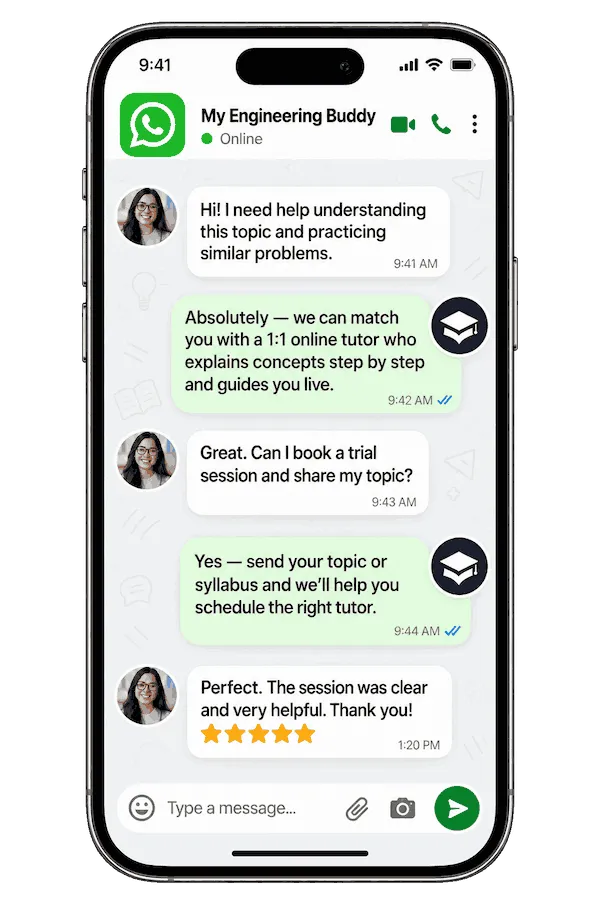
WhatsApp MEB for a quick quote — average response time under 1 minute.
Who This Ethnobotany Tutoring Is For
This is for students who need more than lecture slides. Ethnobotany sits at the intersection of ecology, anthropology, chemistry, and history — and most courses assume you’re already comfortable with plant taxonomy and cultural research methods before week three.
- Undergraduate students in biology, anthropology, or environmental science with ethnobotany as a core or elective module
- Graduate and PhD students working on fieldwork methodology, indigenous plant knowledge systems, or bioprospecting case studies
- Students retaking after a failed first attempt who need targeted gap-filling, not a full re-read of lecture notes
- Students with a coursework or dissertation chapter deadline approaching and specific sections still unresolved
- Parents watching a child’s confidence drop alongside their grades in a subject that feels dauntingly interdisciplinary
- Students at universities including Yale, UC Davis, University of Edinburgh, University of Amsterdam, and McGill who need support outside office hours
If you’re a graduate researcher at the stage of writing up ethnobotanical field data or designing an interview protocol for traditional ecological knowledge, MEB has tutors who’ve worked at that level. The $1 trial is there so you can check the fit before committing to a session block.
1:1 Tutoring vs Self-Study vs AI vs YouTube vs Online Courses
Self-study works if you’re disciplined — but ethnobotany’s interdisciplinary nature means a gap in plant taxonomy or anthropological theory can silently undermine your whole argument. AI tools give fast definitions but can’t assess whether your ethnographic framing is actually coherent. YouTube is good for overviews of traditional medicine systems; it stops short when your seminar question is more specific. Online courses follow a fixed syllabus that may not match your university module. A 1:1 online ethnobotany tutor from MEB works through your actual assignment, your actual data, your actual confusion — and corrects it before submission.
Outcomes: What You’ll Be Able To Do in Ethnobotany
After consistent 1:1 sessions, students can analyze the cultural logic behind plant-use classifications in a given society, apply appropriate ethnographic and botanical methods to field or literature-based research, explain the pharmacological basis for traditional remedies using phytochemical evidence, write structured critiques of bioprospecting cases using intellectual property and ethics frameworks, and present indigenous knowledge systems without misrepresenting or appropriating their cultural context. These are skills that directly determine essay grades, fieldwork assessments, and dissertation quality.
Based on feedback from 40,000+ sessions collected by MEB from 2022 to 2025, 58% of students improved by one full grade after approximately 20 hours of 1:1 tutoring in subjects like Ethnobotany. A further 23% achieved at least a half-grade improvement.
Source: MEB session feedback data, 2022–2025.
At MEB, we’ve found that ethnobotany students often arrive with strong interest in the subject but underestimate how much plant science background is assumed. The first session usually reveals two or three taxonomy or biochemistry gaps that, once filled, unlock the rest of the module. That’s exactly what the diagnostic is for.
What We Cover in Ethnobotany (Syllabus / Topics)

Track 1: Plant-Human Relationships and Cultural Ethnobotany
- Historical development of ethnobotany as a discipline
- Methods for documenting indigenous plant knowledge (interviews, voucher specimens, participatory mapping)
- Plant classification systems across cultures — folk taxonomy vs Linnaean taxonomy
- Food plants, famine foods, and agricultural ethnobotany
- Ritual, ceremonial, and sacred plant use across world cultures
- Ethnobotanical field ethics and research permissions
Core texts include Gary Paul Nabhan’s Enduring Seeds, Wade Davis’s One River, and Moerman’s Native American Ethnobotany.
Track 2: Medicinal Plants and Ethnopharmacology
- Traditional medicine systems: Ayurveda, TCM, Amazonian plant medicine, African herbalism
- Screening medicinal plants: bioassay-guided fractionation, ethnopharmacological leads
- Active compound classes: alkaloids, terpenes, flavonoids, glycosides
- From traditional use to clinical validation — research pathways
- Drug discovery case studies: quinine, artemisinin, aspirin origins
- Linking to phytochemistry tutoring and pharmacognosy help for deeper compound-level study
Key references include Heinrich et al.’s Fundamentals of Pharmacognosy and Phytotherapy and Bruneton’s Pharmacognosy.
Track 3: Conservation, Bioprospecting, and Intellectual Property
- Convention on Biological Diversity — access and benefit sharing (ABS) frameworks
- Bioprospecting controversies: case studies from neem, turmeric, rosy periwinkle
- Traditional knowledge databases and patent challenges
- Community-based conservation approaches
- Deforestation, habitat loss, and the erosion of ethnobotanical knowledge
- Ethics of publishing indigenous knowledge
Students regularly use Cox and Balick’s Plants, People, and Culture and Dutfield’s Intellectual Property, Biogenetic Resources and Traditional Knowledge.
Ethnobotany overlaps more with plant taxonomy tutoring and plant pathology help than most students expect — tutors at MEB draw on both when the module demands it.
Source: My Engineering Buddy, 2008–2025.
What a Typical Ethnobotany Session Looks Like
The tutor opens by checking where you left off — usually a specific topic like bioassay screening methods or the Nagoya Protocol’s ABS provisions. From there, you work through your actual problem: a confusing lecture on folk classification systems, a seminar question on bioprospecting ethics, or a dissertation paragraph you’ve rewritten three times without confidence. The tutor uses a digital pen-pad to annotate diagrams, draw plant-compound pathways, or mark up your written argument in real time. You then explain the reasoning back, or attempt a parallel problem. The session closes with a specific task — one past-paper question, one reading section, one argument structure to draft — and the next topic is flagged before you disconnect. Nothing abstract. Nothing generic.
How MEB Tutors Help You with Ethnobotany (The Learning Loop)
Diagnose: In the first session, the tutor identifies exactly where the knowledge breaks down — whether that’s plant biochemistry, ethnographic research methods, or how to structure a policy critique. Most students don’t know their own gaps until someone maps them.
Explain: The tutor works through a live example on screen — annotating a case study, walking through a phytochemical argument, or modelling an ethnographic analysis step by step. The digital pen-pad means nothing stays abstract.
Practice: You attempt the next problem or section with the tutor present. For ethnobotany this might mean drafting a critical review of a bioprospecting case, or answering a seminar question about traditional ecological knowledge.
Feedback: The tutor explains exactly where the reasoning went wrong and why those points cost marks. Not just “this is incorrect” — specifically which step failed and how to fix it before submission.
Plan: Each session ends with the next topic and a clear task. Over time the tutor adjusts the sequence based on what’s actually sticking.
Students consistently tell us that ethnobotany feels more manageable once they stop treating it as three separate subjects — plant science, anthropology, and law — and start seeing how each dimension informs the others. That’s a framing shift a tutor can produce in a single session. Lecture slides rarely make it happen.
Sessions run on Google Meet with a digital pen-pad or iPad and Apple Pencil. Before your first session, share your module handbook or assignment brief, a recent piece of work you weren’t happy with, and your submission or exam date. The first session covers the diagnostic and at least one full topic. Start with the $1 trial — 30 minutes of live tutoring that also serves as your first diagnostic.
Tutor Match Criteria (How We Pick Your Tutor)
Not every plant biologist can tutor ethnobotany. The match criteria are specific.
Subject depth: Tutors hold degrees in ethnobotany, botany with ethnopharmacology specialisation, or related fields like biological anthropology — and they know your syllabus level, whether undergraduate or graduate research.
Tools: Every tutor works over Google Meet with a digital pen-pad or iPad and Apple Pencil — no whiteboard photos, no static PDFs.
Time zone: Matched to your region. US evening, UK morning, Gulf afternoon — MEB runs 24/7 across all major regions.
Goals: Whether you need essay-level conceptual depth, help with plant anatomy homework, or research-level support for a dissertation chapter, the tutor is matched to that specific aim — not a general biology tutor assigned by availability.
Unlike platforms where you fill out a form and wait, MEB responds in under a minute, 24/7. Tutor match takes under an hour. The $1 trial means you test before you commit. Everything runs over WhatsApp — no logins, no intake forms.
Study Plans (Pick One That Matches Your Goal)
After the diagnostic, the tutor builds your session sequence from one of three patterns: a catch-up plan (1–3 weeks, closing specific gaps before a submission deadline), an exam prep plan (4–8 weeks of structured revision through ethnobotany topics and past questions), or ongoing weekly support aligned to your semester timetable and coursework deadlines. The right choice depends on how far out your deadline is and how many topics need work — the tutor determines this in session one.
Pricing Guide
Ethnobotany tutoring at MEB starts at $20/hr for standard undergraduate modules. Graduate-level support — particularly for dissertation methodology or bioprospecting policy analysis — runs $50–$100/hr depending on tutor background and topic complexity. Rate factors include your academic level, how specialist the topic area is, your timeline, and tutor availability in your time zone.
Availability tightens at end-of-semester and dissertation submission periods across US, UK, and Australian university calendars. If your deadline is within six weeks, start now.
For students targeting graduate research careers or roles in conservation policy and ethnopharmacology, tutors with professional field research or industry backgrounds are available at higher rates — share your specific goal and MEB will match the tier to your ambition.
Start with the $1 trial — 30 minutes, no registration, no commitment. WhatsApp MEB for a quick quote.
FAQ
Is ethnobotany hard?
It’s genuinely interdisciplinary — you need plant science, cultural theory, research methodology, and sometimes legal frameworks in the same module. Students find it manageable once they stop treating each dimension separately. A tutor helps you see how they connect.
How many sessions are needed?
Most students close a specific gap in 3–5 sessions. Full-semester support typically runs 8–15 sessions depending on assessment load and starting level. The tutor maps this after the first diagnostic so you’re not guessing at a number.
Can you help with practice exercises?
Yes. MEB tutoring is guided learning — you understand the work, then submit it yourself. See our Academic Integrity policy and Why MEB page for full details on what we help with and what we don’t. Tutors explain, model, and check your reasoning without writing your submissions.
Will the tutor match my exact syllabus or exam board?
Yes. Share your module handbook, university, and assignment brief before the first session. Tutors cover major university curricula across the US, UK, Canada, Australia, and Europe. If your syllabus has a specific ethnopharmacology or conservation policy component, flag it upfront.
What happens in the first session?
The tutor runs a short diagnostic — asking questions and reviewing a piece of your work — to map exactly where the gaps are. From there the session moves directly into the highest-priority topic. You leave with a clear plan for the next two to three sessions.
Is online tutoring as effective as in-person?
For ethnobotany, yes. The subject is primarily text, diagrams, and case analysis — all of which work well over Google Meet with a digital pen-pad. Students in rural or international locations consistently report equal or better outcomes than in-person alternatives with less specialist access.
Can I get ethnobotany help at midnight?
Yes. MEB operates 24/7. WhatsApp MEB at any hour and a response typically comes in under a minute. Tutor matching for an urgent session can happen within the hour, even outside standard business hours.
What if I don’t connect with my assigned tutor?
Tell MEB via WhatsApp and a new tutor is matched — usually within 24 hours. The $1 trial exists precisely so you don’t commit before you’ve confirmed the fit. No obligation to continue beyond a session that doesn’t work for you.
How do I find an ethnobotany tutor in my city?
You don’t need to. All MEB sessions are online. Students in New York, London, Toronto, Dubai, Sydney, and Amsterdam all access the same tutor pool. Time zone matching means your sessions fall at a reasonable local hour regardless of where you are.
What’s the difference between ethnobotany and pharmacognosy — and can MEB help with both?
Ethnobotany focuses on the cultural and ecological relationships between humans and plants. Pharmacognosy focuses on the chemical properties of plant-derived medicines. Many university modules overlap both. MEB has tutors covering each, and some who work across both disciplines fluently.
Can MEB help with ethnobotanical fieldwork methodology and research design?
Yes. Graduate students working on interview protocols for traditional ecological knowledge, voucher specimen documentation, or participatory ethnobotanical mapping can get 1:1 support from tutors with direct fieldwork or research supervision experience. Share your research question before the first session.
How do I get started?
WhatsApp MEB — you’ll be matched with a tutor typically within 24 hours. The first session starts with a diagnostic. Three steps: WhatsApp → matched → start the $1 trial. Thirty minutes live or one question explained in full. No registration, no commitment.
Trust & Quality at My Engineering Buddy
Every MEB tutor goes through subject-specific screening — a credentials check, a live demo evaluation, and ongoing review of session feedback. Ethnobotany tutors hold degrees in plant sciences, biological anthropology, or related fields, and many have active research or fieldwork experience. Rated 4.8/5 across 40,000+ verified reviews on Google.
MEB tutoring is guided learning — you understand the work, then submit it yourself. For full details on what we help with and what we don’t, read our Academic Integrity policy and Why MEB.
MEB has been running since 2008, now serving 52,000+ students across the US, UK, Canada, Australia, the Gulf, and Europe in 2,800+ subjects. Within Botany, that includes plant evolution tutoring, dendrology help, and ethnobotany. Find out more about how sessions are structured at MEB’s tutoring methodology page.
Try your first session for $1 — 30 minutes of live 1:1 tutoring or one homework question explained in full. No registration. No commitment. WhatsApp MEB now and get matched within the hour.
Explore Related Subjects
Students studying ethnobotany often also need support in:
MEB covers the full range of plant science disciplines — from plant taxonomy to horticulture — so students moving between related modules don’t need to find a new service each time.
Source: My Engineering Buddy, 2008–2025.
Next Steps
Here’s what to do now:
- Share your university, module name, and the specific topics or assignments giving you trouble
- Share your availability and time zone — MEB matches across US, UK, Gulf, Canada, and Australia
- MEB matches you with a verified ethnobotany tutor, usually within 24 hours
- First session opens with a diagnostic so every minute is targeted at your actual gaps
Before your first session, have ready:
- Your course or module handbook (or assignment brief)
- A recent piece of work or homework question you struggled with
- Your exam date, submission deadline, or dissertation milestone
Visit www.myengineeringbuddy.com for more on how MEB works.
WhatsApp to get started or email [email protected].
A common pattern our tutors observe is that ethnobotany students who book early in the semester — not two days before submission — consistently produce stronger, more confident written work. One diagnostic session at week two beats three panicked sessions at week eleven.
Reviewed by Subject Expert
This page has been carefully reviewed and validated by our subject expert to ensure accuracy and relevance.