~1 min
Average Reply Time
~1 hour
To Be Matched With A Tutor
30 Min Trial
75% Find Their Tutor On The 1st Trial
$20-35+/hr
Premium Yet Affordable Learning
Your Heroku deployment is failing at 2 a.m. and Stack Overflow has 47 conflicting answers — none of them yours.
Heroku Tutor Online
Heroku is a cloud platform-as-a-service (PaaS) that lets developers deploy, manage, and scale web applications without configuring server infrastructure. It supports multiple languages including Python, Ruby, Node.js, and Java, and equips students to ship production-ready apps.
If you’re searching for a Heroku tutor near me, MEB connects you with verified experts in software engineering who know Heroku’s deployment pipeline, buildpacks, dyno configuration, and add-on ecosystem inside out. One session can untangle the exact error blocking your project. No generic cloud lectures — your tutor works through your actual codebase.
- 1:1 online sessions tailored to your specific app stack and deployment goal
- Expert verified tutors with hands-on Heroku and cloud deployment experience
- Flexible time zones — US, UK, Canada, Australia, Gulf
- Structured learning plan built after a diagnostic of your project and gaps
- Guided project support — we explain the configuration, you build and deploy it
52,000+ students across the US, UK, Canada, Australia, and the Gulf have used MEB since 2008 — including students in Software Engineering subjects like Heroku, Docker tutoring, and Kubernetes help.
Source: My Engineering Buddy, 2008–2025.
How Much Does a Heroku Tutor Cost?
Most Heroku tutoring sessions run $20–$40/hr. Advanced topics — custom buildpacks, Heroku Private Spaces, enterprise pipeline configuration — reach up to $100/hr depending on tutor experience and urgency. The $1 trial gets you 30 minutes of live tutoring or one project problem explained in full.
| Level / Need | Typical Rate | What’s Included |
|---|---|---|
| Standard (most levels) | $20–$35/hr | 1:1 sessions, deployment guidance, project support |
| Advanced / Specialist | $35–$100/hr | Expert tutor, Private Spaces, CI/CD pipeline depth |
| $1 Trial | $1 flat | 30 min live session or 1 project question explained |
Tutor availability tightens around semester project deadlines and capstone submission windows — particularly in April and November. Book early if your deadline is fixed.
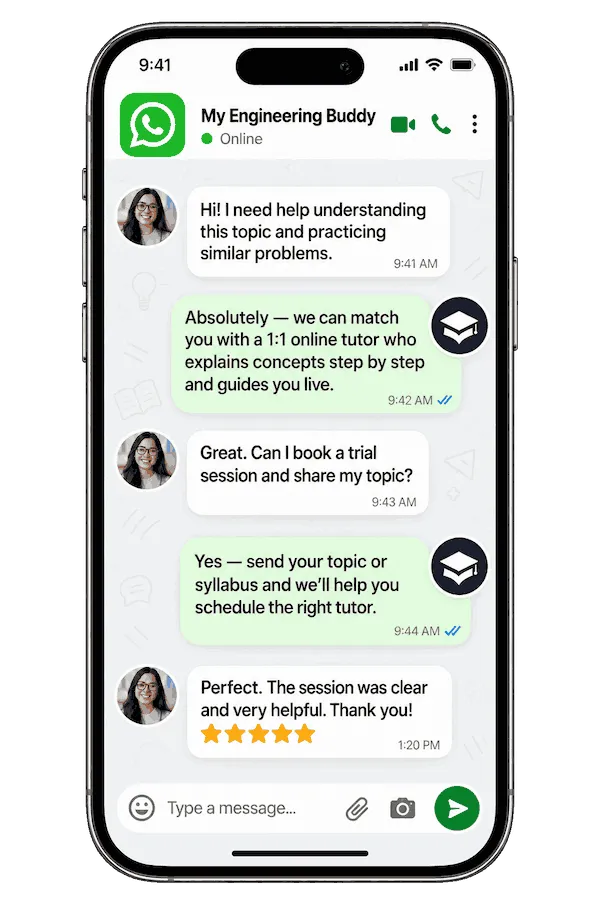
WhatsApp MEB for a quick quote — average response time under 1 minute.
Who This Heroku Tutoring Is For
Heroku looks simple until your dyno crashes on first push or your Postgres connection string refuses to bind. This is for students and developers who need someone to look at their actual setup, not another tutorial.
- Undergraduate and graduate computer science students with a deployment project due
- Students retaking a cloud computing or DevOps module after a failed first attempt
- Students with a university conditional offer depending on passing a software engineering course
- Bootcamp graduates building their first production-deployed portfolio app
- Developers transitioning from local development to cloud deployment for the first time
- Students 4–6 weeks from a capstone or portfolio deadline with significant gaps to close
Past MEB students have gone on to roles at companies and programmes including those at Carnegie Mellon, Georgia Tech, University of Toronto, University of Edinburgh, TU Delft, and KAUST — as well as bootcamp pipelines feeding into engineering teams across the Gulf and US tech sectors.
Get started with the $1 trial and let your tutor assess exactly where you’re stuck before session one proper begins.
1:1 Tutoring vs Self-Study vs AI vs YouTube vs Online Courses
Self-study works if you already know what you don’t know — but Heroku errors are notoriously cryptic without context. AI tools explain concepts fast but can’t see your Procfile, your requirements.txt, or the specific buildpack mismatch you’re fighting. YouTube covers the happy path; it stops when your environment differs by one config line. Online courses move at a fixed pace and assume a clean setup. 1:1 tutoring with MEB puts a tutor inside your actual repository, correcting the exact error in your specific stack in real time.
Outcomes: What You’ll Be Able To Do in Heroku
After working with an online Heroku tutor from MEB, you’ll be able to deploy a web application from a Git repository to a live Heroku dyno without errors. You’ll apply buildpack selection correctly for Python, Node.js, or Ruby stacks. You’ll solve config var mismatches and environment variable injection issues that stall most first deployments. You’ll configure a Heroku Postgres add-on, run migrations remotely, and connect your ORM. You’ll also set up a basic CI/CD pipeline using Heroku’s GitHub integration or an external tool like CircleCI.
Based on feedback from 40,000+ sessions collected by MEB from 2022 to 2025, 58% of students improved by one full grade after approximately 20 hours of 1:1 tutoring in subjects like Heroku. A further 23% achieved at least a half-grade improvement.
Source: MEB session feedback data, 2022–2025.
Try your first session for $1 — 30 minutes of live 1:1 tutoring or one project question explained in full. No registration. No commitment. WhatsApp MEB now and get matched within the hour.
What We Cover in Heroku (Topics)

Deployment and App Configuration
- Pushing apps to Heroku via Git and the Heroku CLI
- Procfile syntax and dyno type configuration (web, worker, release)
- Buildpack selection and custom buildpack creation
- Config vars and environment variable management
- Release phase commands and one-off dyno execution
- Slug compilation troubleshooting and boot timeout errors
Recommended references: The Heroku Hacker’s Guide (Schneeman), official Heroku Dev Center documentation, and platform-specific language guides for your chosen stack.
Data, Add-ons, and Integrations
- Heroku Postgres provisioning, connection strings, and remote
psqlaccess - Running database migrations on Heroku (Django, Rails, Node/Sequelize)
- Heroku Redis configuration for caching and background jobs
- Add-on marketplace — Papertrail, SendGrid, Cloudinary, Scheduler
- Connecting Heroku apps to external APIs and managing credentials safely
- Heroku Data Clips for lightweight database querying
Recommended references: Official Heroku Postgres documentation, Designing Data-Intensive Applications (Kleppmann) for broader data architecture context, and SendGrid API docs.
Scaling, CI/CD, and Production Readiness
- Dyno scaling — horizontal and vertical, free vs eco vs basic vs standard tiers
- Heroku Pipelines: development, staging, and production workflow
- GitHub Actions and CircleCI help integration with Heroku deployments
- Review Apps for pull request previews
- Log management with Datadog tutoring and Papertrail
- Heroku Private Spaces and network isolation for enterprise setups
- Performance monitoring and identifying memory quota exceeded errors
Recommended references: Site Reliability Engineering (Beyer et al., Google), Heroku’s own architecture documentation, and the DevOps help resources your programme recommends.
At MEB, we’ve found that most Heroku problems students bring us are not Heroku problems at all — they’re environment variable mismatches or dependency version conflicts that manifest as platform errors. Knowing the difference saves hours.
Platforms, Tools & Textbooks We Support
Heroku tutoring at MEB covers the full ecosystem students encounter in real projects. Tutors are familiar with all tools listed below and will work inside your existing setup rather than asking you to change it.
- Heroku CLI (all current versions)
- GitHub and GitHub Actions for Heroku deployment triggers
- Docker containers on Heroku (container stack)
- PostgreSQL tutoring via Heroku Postgres add-on
- Django project help, Rails, Express, and Flask deployment stacks
- Terraform help for infrastructure-as-code alongside Heroku
- Papertrail, Datadog, and New Relic for log management and monitoring
What a Typical Heroku Session Looks Like
The tutor opens by checking where the previous session left off — usually a specific error from your last deployment attempt, such as a failed release phase command or a Postgres migration that didn’t run. From there, the session moves into your actual project: the tutor shares a digital pen-pad via Google Meet and walks through your Procfile, requirements.txt or package.json, and config vars side by side. You replicate each fix in your own terminal and redeploy while the tutor watches the build log with you. By the end, you have a working deployment — or a clear diagnosis — and a concrete task: usually a specific add-on to configure or a staging pipeline to set up before next session.
How MEB Tutors Help You with Heroku (The Learning Loop)
Diagnose: In the first session, the tutor identifies whether you’re dealing with a buildpack issue, a dependency conflict, a config var problem, or a misunderstood dyno type. These four categories account for the majority of Heroku failures students bring to MEB.
Explain: The tutor uses a digital pen-pad to annotate your actual deployment log or error output. Every line gets a plain-language explanation — no assuming you already know what an H10 or R14 error code means.
Practice: You attempt the fix in your own terminal while the tutor is live on the call. Deploying once with guidance is worth more than reading three documentation pages alone.
Feedback: If the build fails again, the tutor stops and explains exactly why — not just what to change, but why that change matters. That’s what prevents the same error recurring in your next project.
Plan: At the end of each session, the tutor sets a specific next task — a pipeline stage to configure, an add-on to test, a migration to run — and notes which topic opens the following session.
Sessions run on Google Meet with screen sharing and a digital pen-pad or iPad and Apple Pencil. Before your first session, share your repository link (or the relevant files), your error output, and your deadline. The first session is your diagnostic — and the $1 trial counts as that first diagnostic, so no time is wasted.
Whether you need a 3-week sprint to get a capstone deployed, a structured 6-week CI/CD build, or weekly support through a full cloud computing module, the tutor maps the session plan after the first diagnostic.
Source: My Engineering Buddy, 2008–2025.
Tutor Match Criteria (How We Pick Your Tutor)
Not every cloud developer knows Heroku’s specific quirks. MEB matches on four criteria:
Subject depth: Tutors must have deployed production applications on Heroku — not just completed tutorials. We verify stack-specific experience (Python/Django, Node/Express, Ruby/Rails) relevant to your project.
Tools: All tutors work via Google Meet with a digital pen-pad or iPad and Apple Pencil — essential for annotating error logs and config files live.
Time zone: Matched to your region — US Eastern or Pacific, UK/Europe, Gulf, Canada, or Australia — so sessions happen at a time that doesn’t require you to stay up until 3 a.m.
Goals: Whether you need a project deployed by Friday, a conceptual understanding of dyno scaling for an exam, or ongoing weekly support through a cloud module, the match criteria filter accordingly.
Unlike platforms where you fill out a form and wait, MEB responds in under a minute, 24/7. Tutor match takes under an hour. The $1 trial means you test before you commit. Everything runs over WhatsApp — no logins, no intake forms.
Pricing Guide
Heroku tutoring starts at $20/hr for standard deployment and configuration sessions. Graduate-level cloud architecture work, enterprise pipeline design, or Heroku Private Spaces configuration can reach $100/hr depending on the tutor’s professional background.
Rate factors: your stack complexity, the urgency of your deadline, and whether your project requires a tutor with production DevOps experience versus academic familiarity. For students targeting roles at top-tier engineering teams or cloud-first companies, tutors with professional SRE and cloud architecture backgrounds are available at higher rates — share your specific goal and MEB will match the tier to your ambition.
Availability tightens at semester end and during capstone submission windows. Book your spot before the rush.
Start with the $1 trial — 30 minutes, no registration, no commitment. WhatsApp MEB for a quick quote.
Students consistently tell us that the first session is the one that pays for itself — not because it’s cheap, but because it tells them exactly what they’ve been doing wrong and why the fix they found online didn’t stick. That clarity is worth more than two weeks of forum posts.
FAQ
Is Heroku hard to learn?
The basics — pushing a Git repo, setting config vars, reading logs — take one to two sessions to get right. The complexity comes from debugging environment-specific errors and understanding how dynos, buildpacks, and add-ons interact. Most students hit a wall at the same three or four points.
How many sessions will I need?
Most students get a working deployment in one to three sessions. If you’re building a full CI/CD pipeline with staging, review apps, and database migrations, expect six to ten sessions over four to six weeks. Your tutor will give a clearer estimate after the first diagnostic session.
Can you help with projects and portfolio work?
MEB provides guided project support — the tutor explains what needs to change and why, and you make the changes and deploy. All project work is produced and submitted by you. See our Policies page for full details on what we help with and what we don’t.
Will the tutor match my exact tech stack?
Yes. When you contact MEB, share your language (Python, Node.js, Ruby, Java), your framework (Django, Express, Rails, Spring Boot), and your database. The tutor is matched specifically to that combination — not assigned generically as a “cloud tutor.”
What happens in the first session?
The tutor reviews your project setup, error logs, and current deployment state. They identify the root cause — whether it’s a buildpack issue, a missing environment variable, or a migration problem — and work through the fix with you live. You leave with a working next step.
Is online tutoring as effective as in-person for a tool like Heroku?
For cloud deployment work, online is actually more natural. The tutor can see your terminal, your build logs, and your code in real time via screen share. There’s no whiteboard advantage to being in the same room when the work lives in a browser and a CLI.
What’s the difference between Heroku’s free dynos and paid dynos — and does it affect my project?
Heroku removed its free dyno tier in 2022. Students still referencing tutorials built for free dynos hit configuration errors immediately. A tutor familiar with current Eco, Basic, and Standard dyno tiers will get your project running on the correct tier for your budget and performance needs.
Can a Heroku tutor help me if I’m using a framework like Django or Spring Boot specifically?
Yes. Framework-specific deployment — Django’s ALLOWED_HOSTS, static file handling with WhiteNoise, Spring Boot’s Spring Boot project help on Heroku — is one of the most common topics MEB tutors cover. The match specifically accounts for your framework, not just the platform.
Can I get Heroku help at midnight?
Yes. MEB operates 24/7 across time zones. WhatsApp response time averages under one minute. If you’re pushing a build at midnight before a morning deadline, that’s exactly the situation MEB was built for.
What if I don’t like my assigned tutor?
Tell MEB via WhatsApp and a different tutor is matched — usually within the hour. The $1 trial exists precisely so you test the fit before committing to a longer session block. No contract, no awkward cancellation process.
How do I get started?
WhatsApp MEB, share your stack and your deployment error or project goal, and you’re matched within the hour. The $1 trial is your first session — 30 minutes live or one project problem explained. Three steps: WhatsApp, match, start trial.
Trust & Quality at My Engineering Buddy
Every MEB tutor goes through a subject-specific screening process — not a generic tech interview. Heroku tutors are evaluated on their ability to diagnose real deployment errors, work across multiple language stacks, and explain platform-specific concepts without jargon. Tutors hold degrees in computer science, software engineering, or related fields and most have professional cloud deployment experience. Ongoing session feedback drives continuous review: tutors with declining ratings are replaced, not retained. Rated 4.8/5 across 40,000+ verified reviews on Google.
MEB tutoring is guided learning — you understand the work, then submit it yourself. For full details on what we help with and what we don’t, read our Academic Integrity policy and Why MEB.
MEB has served 52,000+ students across the US, UK, Canada, Australia, the Gulf, and Europe in 2,800+ subjects since 2008. In Software Engineering specifically, that includes students working on cloud architecture tutoring, microservices help, and deployment workflows that sit directly alongside Heroku in most university cloud computing modules. See our tutoring methodology for how sessions are structured from diagnostic through to review.
MEB has operated since 2008 with the same model: match a verified expert to one student, work through the actual problem, and track progress session by session. No cohorts, no pre-recorded content, no algorithms deciding your next step.
Source: My Engineering Buddy, 2008–2025.
Explore Related Subjects
Students studying Heroku often also need support in:
- Amazon Web Services (AWS)
- Google Cloud Platform (GCP)
- Microsoft Azure
- Kubernetes
- Jenkins
- Git
- Serverless
- Infrastructure as Code
Next Steps
Before your first session, have ready: your tech stack (language, framework, database), your current error output or deployment log, and your project deadline or submission date. The tutor handles the rest.
- Share your stack, your error, and your deadline via WhatsApp
- Share your availability and time zone
- MEB matches you with a verified Heroku tutor — usually within the hour
The first session opens with a diagnostic so every minute goes toward your actual blocker — not background context-setting.
Visit www.myengineeringbuddy.com for more on how MEB works.
WhatsApp to get started or email [email protected].
Reviewed by Subject Expert
This page has been carefully reviewed and validated by our subject expert to ensure accuracy and relevance.