Hire Verified & Experienced
ICT (Information and Communication Technology) Tutors
4.8/5 40K+ session ratings collected on the MEB platform
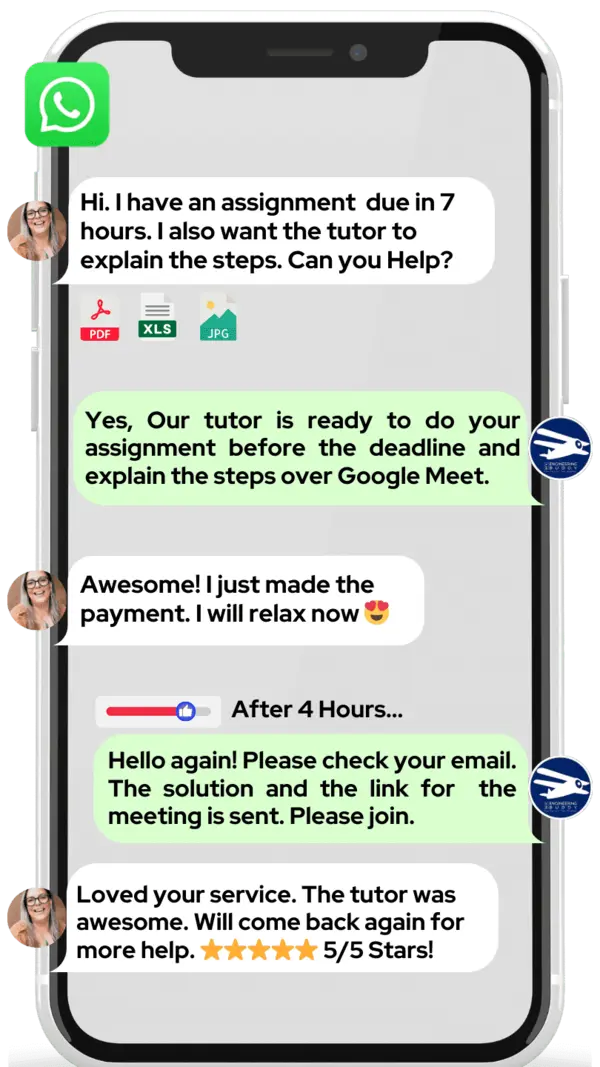



Hire The Best ICT (Information and Communication Technology) Tutor
Top Tutors, Top Grades. Without The Stress!
52,000+ Happy Students From Various Universities





How Much For Private 1:1 Tutoring & Hw Help?
Private 1:1 Tutoring and HW help Cost $20 – 35 per hour* on average.
Most ICT students hit the wall at the same three places: networking protocols, database normalisation, and system architecture diagrams. If any of those sound familiar, you’re not behind — you just haven’t had someone explain it the right way yet.
ICT (Information and Communication Technology) Tutor Online
ICT (Information and Communication Technology) is an academic and vocational discipline covering computer systems, networks, data management, software applications, and digital communication. It equips students to design, manage, and critically evaluate technology-based solutions across academic and professional contexts.
Finding a reliable ICT tutor online is harder than it sounds — most platforms match you with a generalist who knows Python but has never touched a GCSE or A Level ICT paper. MEB is different. Our tutors are matched to your exact syllabus, whether that’s Cambridge IGCSE, A Level, IB, or a first-year university module in Computer Science or a related discipline. If you’ve been searching for an ICT tutor near me and settling for whoever shows up, stop. Live online 1:1 sessions with a subject-matched expert are available from $20/hr, with a $1 trial to start.
- 1:1 online sessions tailored to your exact course or syllabus
- Expert-verified tutors with subject-specific ICT knowledge
- Flexible time zones — US, UK, Canada, Australia, Gulf
- Structured learning plan built after a diagnostic session
- Ethical homework and assignment guidance — you understand before you submit
52,000+ students across the US, UK, Canada, Australia, and the Gulf have used MEB since 2008 — including students in Computer Science subjects like ICT, Information Systems, and Computer Networking.
Source: My Engineering Buddy, 2008–2025.
How Much Does an ICT Tutor Cost?
Most ICT tutoring sessions at MEB run $20–$40/hr depending on level and topic depth. Graduate-level or highly specialised work can reach $100/hr. Not sure where you fit? Start with the $1 trial — 30 minutes live or one full homework question explained — before committing to anything.
| Level / Need | Typical Rate | What’s Included |
|---|---|---|
| Standard (GCSE, A Level, first-year uni) | $20–$35/hr | 1:1 sessions, homework guidance |
| Advanced / Specialist (grad-level, niche topics) | $35–$100/hr | Expert tutor, deep subject coverage |
| $1 Trial | $1 flat | 30 min live session or 1 homework question |
Tutor availability tightens significantly in the 4–6 weeks before major exam windows. Book early if your deadline is coming up.
WhatsApp MEB for a quick quote — average response time under 1 minute.
Who This ICT Tutoring Is For
This is for students who understand ICT well enough to get by in class but fall apart under exam conditions — or who haven’t understood a key concept since week three. It’s also for students building something and hitting a wall on the technical side.
- GCSE, IGCSE, A Level, and IB students working through the ICT or Computer Science syllabus
- First and second year undergraduates at universities including MIT, UCL, University of Toronto, University of Melbourne, and NYU
- Students with a university conditional offer that depends on this grade
- Students retaking after a failed first attempt in an ICT or computing module
- Students 4–6 weeks from an exam with gaps in networking, databases, or systems still to close
- Students needing guided homework and assignment support — explanation first, submission second
At MEB, we’ve found that most ICT students don’t have a broad knowledge gap — they have two or three specific topics they’ve never properly understood. Networking layers. Normalisation rules. Entity-relationship modelling. Fix those, and the rest of the paper becomes manageable.
1:1 Tutoring vs Self-Study vs AI vs YouTube vs Online Courses
Self-study works if you’re disciplined, but there’s no one to tell you when your understanding of TCP/IP is subtly wrong. AI tools give fast answers but can’t diagnose why you keep losing marks on the same question type. YouTube is good for an overview of database normalisation — it stops when you need to apply it to your specific coursework. Online courses move at a fixed pace regardless of where your actual gaps are. 1:1 tutoring with MEB is live, calibrated to your exact ICT syllabus, and corrects errors before they become exam-day habits.
Outcomes: What You’ll Be Able To Do in ICT
After a focused block of 1:1 ICT tutoring, students consistently report being able to explain the difference between circuit-switched and packet-switched networks with confidence, apply normalisation rules to a relational database schema from scratch, model a system using entity-relationship diagrams without prompting, write and trace through pseudocode for standard algorithms, and present a structured evaluation of an ICT solution against a given set of requirements. These aren’t vague goals — they’re the exact skills that separate a pass from a strong grade in most ICT exam papers.
Supporting a student through ICT? MEB works directly with parents to set up sessions, track progress, and keep coursework on schedule. WhatsApp MEB — average response time is under a minute, 24/7.
Based on feedback from 40,000+ sessions collected by MEB from 2022 to 2025, 58% of students improved by one full grade after approximately 20 hours of 1:1 tutoring in subjects like ICT (Information and Communication Technology). A further 23% achieved at least a half-grade improvement.
Source: MEB session feedback data, 2022–2025.
What We Cover in ICT (Syllabus / Topics)
Systems, Networks, and Infrastructure
- Computer hardware components and system architecture
- Network topologies, types, and transmission media
- TCP/IP model, OSI layers, and network protocols
- IP addressing, subnetting, and routing basics — see also IP addressing tutoring
- Security concepts: firewalls, encryption, and access control
- Cloud computing models: IaaS, PaaS, SaaS — for deeper coverage see cloud computing help
- Wireless networks and communication standards
Core texts include Sylvia Langfield’s Cambridge International AS & A Level IT and endorsed Cambridge IGCSE ICT texts by Graham Brown and David Watson.
Data, Databases, and Information Management
- Relational database concepts and database design
- Entity-relationship diagrams and data modelling
- Normalisation (1NF, 2NF, 3NF) — for focused work see normalisation tutoring
- SQL queries: SELECT, JOIN, GROUP BY, subqueries
- File types, data validation, and verification techniques
- Data storage: flat files vs relational systems — DBMS homework help available
Key references include Chris Date’s An Introduction to Database Systems and Cambridge-endorsed ICT revision guides for IGCSE and A Level.
Software, Programming, and Systems Development
- Programming fundamentals: variables, loops, conditions, functions
- Pseudocode, flowcharts, and algorithm tracing
- Object-oriented programming concepts: classes, inheritance, encapsulation
- Systems development lifecycle (SDLC) and project methodologies
- Testing strategies: black-box, white-box, acceptance testing
- User interface design and human-computer interaction principles
- Spreadsheet modelling and advanced formula construction
Useful alongside these topics: Computer Science: A Level by PM Heathcote and ICT for IGCSE by Brian Sargent.

What a Typical ICT Session Looks Like
The tutor opens by checking the previous session’s topic — usually normalisation rules or a network diagram the student attempted as practice. They pull up your most recent homework or past paper on a shared screen. If it’s a database question, you’ll work through the ER diagram together, with the tutor annotating using a digital pen-pad while you explain your reasoning out loud. If you can’t explain it, the tutor works back to where the logic broke down. You’ll then attempt a similar question independently while the tutor watches and steps in only when needed. The session closes with a specific practice task — for example, normalise this flat-file scenario to 3NF — and the next topic is noted before you disconnect.
Students consistently tell us that the moment things click in ICT is when they stop memorising definitions and start being asked to explain a concept as if to someone who’s never heard of it. That’s the test we use in every session — if you can explain it simply, you own it.
How MEB Tutors Help You with ICT (The Learning Loop)
Diagnose: In the first session, the tutor identifies exactly where your understanding breaks down — not just the topic, but the specific misconception. Most ICT students have a clear break point: they understand data types but can’t apply normalisation, or they know what a firewall does but can’t explain stateful vs stateless packet inspection.
Explain: The tutor works through a live example using a digital pen-pad — drawing a network topology, building an ER diagram step by step, or tracing pseudocode line by line. Not a slide. Not a video. A live worked problem built in front of you.
Practice: You attempt the next problem with the tutor present. No looking things up. No pausing. This is where the real learning happens — and where errors surface before the exam does.
Feedback: The tutor goes through every error step by step and explains exactly why marks would be lost on a real paper. ICT mark schemes are specific — one missing key term costs marks.
Plan: At the end of each session, the tutor sets the next topic and a concrete task. No vague “review chapter 5” — it’s “draw and annotate a star topology network with five nodes and label the collision domain.”
Sessions run over Google Meet. The tutor uses a digital pen-pad or iPad with Apple Pencil. Before your first session, share your exam board, the topic you’re currently stuck on, and any past paper or homework you’ve already attempted. Start with the $1 trial — 30 minutes of live ICT tutoring that also serves as your first diagnostic. Whether you need a quick catch-up before an exam, structured revision over 4–8 weeks, or ongoing weekly support through the semester, the tutor maps the session plan after that first diagnostic.
MEB tutors don’t just cover content — they identify the exact reasoning error that’s costing marks and correct it before it becomes a habit. That’s the difference between a student who revises and a student who improves.
Source: My Engineering Buddy, tutoring methodology overview.
Try your first session for $1 — 30 minutes of live 1:1 tutoring or one homework question explained in full. No registration. No commitment. WhatsApp MEB now and get matched within the hour.
Tutor Match Criteria (How We Pick Your Tutor)
Not every ICT tutor can cover every level. Here’s how MEB matches you.
Subject depth: The tutor must know your specific syllabus — IGCSE, A Level, IB, or university module — not just ICT in general. A Cambridge A Level ICT paper and a first-year university information systems module are different animals.
Tools: All tutors use Google Meet plus a digital pen-pad or iPad with Apple Pencil. Diagram work — network topologies, ER models, flowcharts — requires real annotation capability, not screen sharing alone.
Time zone: Matched to your region. Students in the US, UK, Gulf, Canada, and Australia are covered without unsociable session times.
Goals: Whether you need exam score improvement, conceptual depth on operating systems or cybersecurity, homework completion, or research support — the match reflects that.
Unlike platforms where you fill out a form and wait, MEB responds in under a minute, 24/7. Tutor match takes under an hour. The $1 trial means you test before you commit. Everything runs over WhatsApp — no logins, no intake forms.
Pricing Guide
ICT tutoring at MEB starts at $20/hr for standard GCSE and A Level work. First and second year university modules typically run $25–$40/hr. Advanced topics — distributed systems, compiler theory, network security — and graduate-level work can reach $100/hr.
Rate factors: your level, how specialised the topic is, how soon your exam or deadline falls, and tutor availability at your preferred times.
Availability narrows fast in the 4–6 weeks before major exam windows. If you’re reading this in March, April, or May, book sooner rather than later.
For students targeting top-ranked programmes at universities like Cambridge, MIT, or ETH Zürich, tutors with professional industry or research backgrounds in ICT are available at higher rates — share your specific goal and MEB will match the tier to your ambition.
Start with the $1 trial — 30 minutes, no registration, no commitment. WhatsApp MEB for a quick quote.
FAQ
Is ICT hard?
It depends on where you start. The theoretical parts — networking models, normalisation, algorithms — trip up most students. Practical application is often easier once concepts are clear. With the right tutor matching your exact syllabus, the hard parts become workable fast.
How many sessions are needed?
Most students close a specific topic gap in 3–5 sessions. Full exam preparation from scratch typically takes 15–25 hours spread over 6–8 weeks. The diagnostic in your first session gives a more accurate estimate for your situation.
Can you help with homework and assignments?
Yes — MEB tutoring is guided learning. The tutor explains the concept and method; you produce and submit the work yourself. See our Academic Integrity policy and Why MEB page for full details on what we help with and what we don’t.
Will the tutor match my exact syllabus or exam board?
Yes. Cambridge IGCSE ICT, Cambridge A Level IT, Edexcel, AQA, IB Computer Science, and first-year university modules are all covered. Share your exam board and unit when you message — the match is built around it.
What happens in the first session?
The tutor runs a diagnostic: a short set of questions covering your current topics to find exactly where your understanding breaks. From there, the session moves directly into guided work on the highest-priority gap. Nothing is wasted.
Is online ICT tutoring as effective as in-person?
For ICT specifically, online is often better. Screen sharing, live annotation, and collaborative diagram work on Google Meet replicate a whiteboard session without the commute. Students in remote locations or different time zones get access to specialist tutors they’d never find locally.
Can I get ICT help at short notice — even late at night?
Yes. MEB operates 24/7. WhatsApp response time is typically under a minute. If you have a submission due tomorrow morning or an exam in 48 hours, message now — tutors are available across multiple time zones around the clock.
What’s the difference between ICT and Computer Science at GCSE and A Level?
ICT focuses more on applied technology use, systems, and communication — spreadsheets, databases, networks in context. Computer Science goes deeper into programming, algorithms, and computational theory. Many students take one or the other; some boards offer both. Your tutor is matched to whichever you’re studying.
Do you cover the NEA or coursework component of ICT?
Yes. The non-examined assessment component is one of the areas where guided support makes the most difference. Tutors help you plan your approach, work through technical problems, and structure your write-up — while you produce and submit the final work yourself.
What if I don’t like my assigned tutor?
Message MEB on WhatsApp and ask for a rematch. It happens — different tutors suit different students. There’s no penalty, no form to fill in. MEB will have a new tutor matched to you, usually within a few hours.
How do I find an ICT tutor if I’m not near a major city?
Location is irrelevant. Every MEB session is online via Google Meet. Students in rural US, regional Australia, smaller Gulf cities, and remote UK areas all access the same pool of subject-specialist tutors. No geography constraint applies.
How do I get started?
Start with the $1 trial: 30 minutes of live ICT tutoring or one full homework question explained. Three steps — WhatsApp MEB, get matched within the hour, begin your trial session. No registration, no upfront commitment.
Trust & Quality at My Engineering Buddy
Every MEB ICT tutor goes through a multi-stage screening process: subject knowledge assessment, a live demo session, and ongoing review based on student feedback. Tutors hold relevant degrees and many have professional or academic backgrounds in computing, information systems, or network engineering. Rated 4.8/5 across 40,000+ verified reviews on Google.
MEB tutoring is guided learning — you understand the work, then submit it yourself. For full details on what we help with and what we don’t, read our Academic Integrity policy and Why MEB.
MEB has served 52,000+ students across the US, UK, Canada, Australia, the Gulf, and Europe since 2008, covering 2,800+ subjects. In Computer Science and related areas — including Information Technology tutoring, Digital Logic Design help, and Human-Computer Interaction tutoring — MEB tutors bring both academic and applied expertise. Find out more about how sessions are structured at MEB’s tutoring methodology.
MEB has been running since 2008. Tutors are screened, rated, and replaced when feedback drops. That feedback loop — 40,000+ reviews across platforms — is what keeps the quality standard consistent across 2,800+ subjects.
Source: My Engineering Buddy, platform data 2008–2025.
A common pattern our tutors observe is that students who come to us after self-studying for weeks have often locked in the wrong mental model. It takes one or two sessions to unlearn the error — but catching it early saves weeks of reinforcing something that will cost marks on the day.
Explore Related Subjects
Students studying ICT often also need support in:
- Algorithms
- Data Structures and Algorithms (DSA)
- Cryptography
- Distributed Systems
- Ethical Hacking
- Compiler Design
- Digital Humanities
- Health Informatics
Next Steps
When you message MEB, have these ready:
- Your exam board and syllabus (or course outline and module code)
- A recent past paper attempt or homework question you’re stuck on
- Your exam date or submission deadline
Share your availability and time zone. MEB matches you with a verified ICT tutor — usually within 24 hours. The first session starts with a diagnostic so every minute is used well. Visit www.myengineeringbuddy.com for more on how MEB works.
WhatsApp to get started or email meb@myengineeringbuddy.com.
Reviewed by Subject Expert
This page has been carefully reviewed and validated by our subject expert to ensure accuracy and relevance.