




~1 min
Average Reply Time
~1 hour
To Be Matched With A Tutor
1 Trial
75% Find Their Tutor On The 1st Trial
$1
Your First 30 Minutes
Hire The Best Information Systems Tutor
Top Tutors, Top Grades. Without The Stress!

Related Subjects
Most students don’t fail Information Systems because they can’t code. They fail because no one explained how databases, networks, and systems architecture actually connect.
Information Systems Tutor Online
Information Systems is an academic discipline studying how organisations collect, store, process, and distribute data using technology. It bridges computing and business, equipping students to design, manage, and analyse digital systems across enterprise and institutional contexts.
MEB provides 1:1 online tutoring and homework help in 2800+ advanced subjects, including Information Systems. Whether you’re searching for an Information Systems tutor near me or need remote help fast, MEB connects you with a verified subject specialist — usually within an hour. Our Computer Science tutoring network covers the full spectrum from foundational IS concepts to graduate-level systems design. One focused tutor, one clear plan, real progress.
- 1:1 online sessions tailored to your exact course or syllabus
- Expert-verified tutors with subject-specific IS knowledge
- Flexible time zones — US, UK, Canada, Australia, Gulf
- Structured learning plan built after a diagnostic session
- Ethical homework and assignment guidance — you understand before you submit
52,000+ students across the US, UK, Canada, Australia, and the Gulf have used MEB since 2008 — including students in Computer Science subjects like Information Systems, Database Management Systems, and Computer Networking.
Source: My Engineering Buddy, 2008–2025.
How Much Does an Information Systems Tutor Cost?
Most Information Systems tutoring with MEB runs $20–$40/hr. Graduate-level or highly specialised IS topics — enterprise architecture, ERP systems, advanced data warehousing — can reach up to $100/hr. Not sure where your topic falls? Start with the $1 trial and MEB will quote you directly.
| Level / Need | Typical Rate | What’s Included |
|---|---|---|
| Standard (undergrad, A Level, IB) | $20–$35/hr | 1:1 sessions, homework guidance |
| Advanced / Graduate / Specialist | $35–$100/hr | Expert tutor, niche IS depth |
| $1 Trial | $1 flat | 30 min live session or 1 homework question |
Tutor availability tightens around semester finals and coursework deadlines. If you need a specific exam date covered, book early.
WhatsApp MEB for a quick quote — average response time under 1 minute.
Who This Information Systems Tutoring Is For
Information Systems sits at the crossroads of technology and management. Students struggle when one side is stronger than the other — a programmer who can’t model a business process, or a business student who freezes when SQL appears on the exam.
- Undergraduate IS or MIS students hitting the database or networking modules hard
- Students with a university conditional offer depending on this grade
- Graduate students needing support with systems analysis, design methodologies, or research methods
- Students retaking after a failed first attempt at a core IS module
- Parents watching a child’s confidence drop alongside their grades in an IS or ICT course
- Students 4–6 weeks from an exam with significant topic gaps still to close
MEB has supported IS students at universities including the University of Michigan, University of Toronto, University of Edinburgh, UNSW Sydney, TU Delft, NYU Stern, and King’s College London — as well as A Level and IB students working toward Computer Science and IS programmes.
Supporting a student through Information Systems? MEB works directly with parents to set up sessions, track progress, and keep coursework on schedule. WhatsApp MEB — average response time is under a minute, 24/7.
1:1 Tutoring vs Self-Study vs AI vs YouTube vs Online Courses
Self-study works if you’re disciplined — but IS covers too much ground to navigate without a map. AI tools give fast definitions; they can’t tell you why your ER diagram is wrong or how your normalisation missed a dependency. YouTube handles overviews well and stops dead when the question gets specific. Online courses move at a fixed pace regardless of your syllabus week. 1:1 tutoring with MEB is live, calibrated to your exact IS course, and corrects the reasoning error — not just the answer.
In Information Systems, where a mistake in database design or system modelling can cascade through an entire assignment, that real-time correction matters more than in most subjects.
Outcomes: What You’ll Be Able To Do in Information Systems
Students who work through IS with a dedicated MEB tutor leave with more than course knowledge. You’ll solve relational database problems correctly — normalising to 3NF, writing joins, and debugging SQL queries that weren’t producing the right output. You’ll analyse an organisation’s information needs and model them using entity-relationship diagrams or UML. You’ll explain the difference between OLTP and OLAP architectures to an examiner or project supervisor without hesitation. You’ll apply systems development lifecycle (SDLC) frameworks to case study questions and present structured responses under timed conditions. Confidence follows clarity. Most students notice the shift within three or four sessions.
Start with the $1 trial — 30 minutes of live IS tutoring that doubles as your first diagnostic.
Based on feedback from 40,000+ sessions collected by MEB from 2022 to 2025, 58% of students improved by one full grade after approximately 20 hours of 1:1 tutoring in subjects like Information Systems. A further 23% achieved at least a half-grade improvement.
Source: MEB session feedback data, 2022–2025.
What We Cover in Information Systems (Syllabus / Topics)

Track 1: Database Systems and Data Management
- Relational database design and normalisation (1NF, 2NF, 3NF, BCNF)
- Entity-relationship modelling and ER diagrams
- SQL — queries, joins, stored procedures, and transactions
- OLTP vs OLAP architectures and use cases
- Data warehousing and data lakes
- Database security, access control, and integrity constraints
Core texts: Ramakrishnan & Gehrke, Database Management Systems; Elmasri & Navathe, Fundamentals of Database Systems; Connolly & Begg, Database Systems.
Track 2: Systems Analysis, Design and Architecture
- Systems Development Lifecycle (SDLC) — waterfall, agile, iterative models
- Requirements gathering, use case modelling, and class diagrams
- Object-oriented analysis using UML
- Information architecture and enterprise systems (ERP, CRM, SCM)
- Decision support systems and management information systems
- Cloud computing models (IaaS, PaaS, SaaS) and deployment strategies
- Human-computer interaction principles in IS design
Core texts: Laudon & Laudon, Management Information Systems; Dennis, Wixom & Roth, Systems Analysis and Design; Hoffer, George & Valacich, Modern Systems Analysis and Design.
Track 3: Networking, Security and Infrastructure
- Network topologies, protocols, and IP addressing
- Information security frameworks — CIA triad, risk management, compliance
- Cybersecurity threats and countermeasures relevant to IS environments
- Cryptography basics — symmetric, asymmetric, hashing, certificates
- Firewalls, VPNs, and access control in organisational contexts
- IT governance frameworks (COBIT, ITIL) and IS auditing
Core texts: Whitman & Mattord, Principles of Information Security; Tanenbaum & Wetherall, Computer Networks; O’Brien & Marakas, Introduction to Information Systems.
At MEB, we’ve found that Information Systems students who struggle the most are usually caught between two worlds — they understand the business logic or the technical layer, but not how to translate between them. That translation skill is exactly what the tutor focuses on in the first two sessions.
What a Typical Information Systems Session Looks Like
The tutor opens by reviewing the previous session’s topic — say, third normal form or a UML use case diagram the student attempted as practice. If something is still shaky, it gets fixed before moving on. The session then works through the current problem area: perhaps a case study requiring the student to design a relational schema for a retail management system. The tutor writes the solution steps live on a digital pen-pad, visible on screen. The student attempts a parallel version — same structure, different scenario — while the tutor watches and steps in the moment reasoning goes off track. The session closes with a named practice task and the topic that opens next time. No vague “review chapter 5.” A specific deliverable.
How MEB Tutors Help You with Information Systems (The Learning Loop)
Diagnose: In the first session, the tutor identifies exactly where understanding breaks down — whether that’s normalisation, ER modelling, systems lifecycle phases, or a security concept that appears on every past paper but never quite sticks.
Explain: The tutor works through a live example using a digital pen-pad — showing the full derivation of a relational schema or walking through a network diagram step by step, not just stating the answer.
Practice: The student attempts a comparable problem with the tutor present. This is where most tutoring platforms stop — MEB builds this stage into every session.
Feedback: Errors get corrected in real time, with the tutor explaining exactly which step failed and why. If it’s an exam subject, the tutor also explains where marks are lost under mark scheme logic.
Plan: Each session ends with a clear next topic and a specific task. Progress is tracked across sessions. Nothing is left to chance between meetings.
Sessions run over Google Meet. The tutor uses a digital pen-pad or iPad with Apple Pencil for live working. Before your first session, share your course outline or syllabus, a recent assignment or homework you found difficult, and your exam or deadline date. The first session covers the diagnostic and starts on the highest-priority gap immediately. Whether you need a quick catch-up before an exam, structured revision over 4–8 weeks, or ongoing weekly support through the semester, the tutor maps the session plan after the first diagnostic.
Start with the $1 trial — 30 minutes of live Information Systems tutoring that also serves as your first diagnostic session.
Students consistently tell us that the moment they stop copying example solutions and start building them from scratch — with a tutor watching and correcting in real time — is when Information Systems finally clicks. That shift usually happens in the second or third session.
Tutor Match Criteria (How We Pick Your Tutor)
Not every IS specialist is the right match for every student. MEB matches on four criteria.
Subject depth: The tutor’s background must align with your specific IS track — database-heavy modules need someone with hands-on SQL and schema design experience, not a general CS tutor.
Tools: Every MEB tutor uses Google Meet and a digital pen-pad or iPad with Apple Pencil — because IS problems need to be worked through visually, not described verbally.
Time zone: Matched to your region — US, UK, Gulf, Canada, or Australia — so sessions run when you’re actually available.
Goals: Exam score, assignment submission, dissertation chapter, or conceptual depth — the tutor’s approach shifts depending on what you actually need.
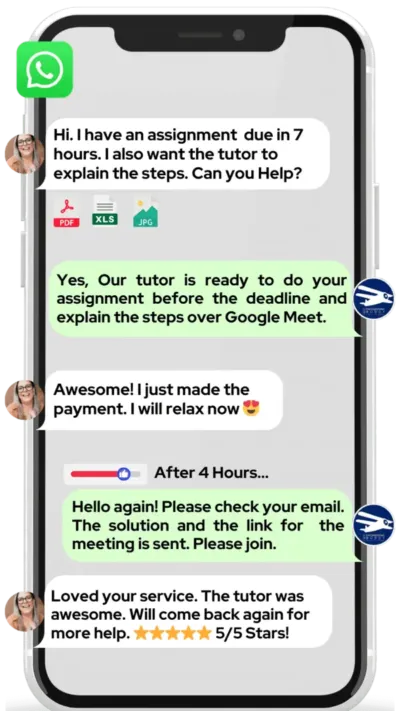
Unlike platforms where you fill out a form and wait, MEB responds in under a minute, 24/7. Tutor match takes under an hour. The $1 trial means you test before you commit. Everything runs over WhatsApp — no logins, no intake forms.
MEB tutors are screened on subject knowledge, live teaching ability, and student feedback scores — not just credentials. Every tutor passes a demo session evaluation before joining the platform.
Source: My Engineering Buddy, 2008–2025.
Study Plans (Pick One That Matches Your Goal)
Three plans cover most Information Systems situations. Catch-up (1–3 weeks): intensive focus on the two or three topics blocking your progress — database design, systems modelling, or security frameworks. Exam prep (4–8 weeks): structured topic rotation aligned to past paper patterns and your specific exam date. Weekly support: ongoing sessions timed to your semester, covering new material before it becomes a problem rather than after. The tutor sets the specific sequence after the first diagnostic session.
Pricing Guide
Information Systems tutoring runs $20–$40/hr at undergraduate and school level. Graduate modules, dissertation-stage IS research, or enterprise systems topics reach up to $100/hr. Rate factors include your level, the topic complexity, your timeline, and tutor availability.
Peak exam periods — December and May — see tighter availability. If you have a fixed exam date, book earlier rather than later.
For students targeting places at competitive programmes at LSE, Warwick Business School, Carnegie Mellon, MIT Sloan, or similar — tutors with professional IS and enterprise systems backgrounds are available at higher rates. Share your specific goal and MEB will match accordingly.
Start with the $1 trial — 30 minutes, no registration, no commitment. WhatsApp MEB for a quick quote.
FAQ
Is Information Systems hard?
It depends on your background. Students from a pure business background find the database and networking content steep. Students from CS find the organisational and management theory unfamiliar. Most people have one side weaker — the tutor identifies which and focuses there first.
How many sessions are needed?
Most students see clear improvement in 4–6 sessions for a specific module or exam. A full semester of weekly support is more appropriate for students who want to stay ahead rather than catch up. The diagnostic session gives a clearer estimate for your situation.
Can you help with homework and assignments?
MEB tutoring is guided learning — you understand the work, then submit it yourself. The tutor works through the concepts and approach with you; you produce and submit the final work. See our Academic Integrity policy and Why MEB page for full details on what we help with and what we don’t.
Will the tutor match my exact syllabus or exam board?
Yes. Share your course outline, exam board, or university module code when you contact MEB. Tutors are matched to your specific IS syllabus — not assigned generically. This matters more in IS than most subjects because module content varies significantly between institutions.
What happens in the first session?
The tutor reviews your syllabus, recent work, and exam date. They identify the highest-priority gap and start on it immediately. You leave with a clear plan and a specific practice task. No generic introductions — the diagnostic starts in the first 10 minutes.
Is online tutoring as effective as in-person?
For Information Systems, often more so. The tutor shares live diagrams, annotated schemas, and worked SQL on screen. Students in the US, UK, Canada, Australia, and the Gulf consistently report that the visual workflow on Google Meet works better than a whiteboard in a room.
What’s the difference between Information Systems and Computer Science — and can MEB help with both?
IS focuses on how organisations use technology to manage information — it includes management theory, systems design, and data governance alongside technical skills. CS is more algorithm and theory-heavy. MEB covers both. Get Information Technology tutoring or computer science support through the same platform.
Can I get Information Systems help at midnight?
Yes. MEB operates across time zones 24/7. WhatsApp response time is under a minute regardless of when you contact. Tutors span US, UK, Gulf, and Asia-Pacific time zones, so a session at midnight in New York or 2am in Dubai is genuinely available — not just listed as available.
What if I don’t like my assigned tutor?
Request a switch over WhatsApp. MEB reassigns without friction — no forms, no waiting period. The $1 trial exists specifically so you can assess fit before committing to paid sessions. If it’s not the right match, say so and MEB finds another within the hour.
Do you offer group Information Systems sessions?
No. MEB is 1:1 only. Group sessions dilute the diagnostic precision that makes the model work — a tutor who’s tracking three students can’t catch the specific reasoning error one student makes in step four of a normalisation problem. One student, one tutor, one focus.
What IS topics come up most in university exams and which should I prioritise?
Database design and SQL, systems analysis and SDLC, and information security frameworks appear on nearly every undergraduate IS exam. ER diagrams and normalisation questions are almost universal. The tutor reviews your past papers in the first session and builds the priority list from actual exam patterns — not a generic topic list.
How do I get started?
Three steps: WhatsApp MEB, get matched to a verified Information Systems tutor within the hour, then start your $1 trial — 30 minutes of live tutoring or one homework question explained in full. No registration, no commitment required before you try.
Try your first session for $1 — 30 minutes of live 1:1 tutoring or one homework question explained in full. No registration. No commitment. WhatsApp MEB now and get matched within the hour.
Trust & Quality at My Engineering Buddy
Every MEB tutor is screened for subject-specific knowledge before being assigned to students. Screening includes a live demo session evaluation, degree and professional background verification, and ongoing review against student feedback scores. Rated 4.8/5 across 40,000+ verified reviews on Google. Tutors covering Information Systems are assessed on database design, systems modelling, IS security frameworks, and familiarity with the major undergraduate and graduate IS syllabuses used in the US, UK, Canada, and Australia.
MEB tutoring is guided learning — you understand the work, then submit it yourself. For full details on what we help with and what we don’t, read our Academic Integrity policy and Why MEB.
MEB has served 52,000+ students across 2,800+ subjects since 2008 — including Computer Science, Information Systems, Health Informatics tutoring, and ICT tutoring. Students come from the US, UK, Canada, Australia, Gulf, and Europe. The platform is built around one principle: you get a tutor who knows your exact topic, not the nearest available generalist. Read more about how sessions are structured at our tutoring methodology page.
MEB has been running since 2008. Over 18 years, the platform has refined one thing consistently: matching the right IS specialist to the right student — not just the nearest available tutor with a CS degree.
Source: My Engineering Buddy, 2008–2025.
Explore Related Subjects
Students studying Information Systems often also need support in:
- Algorithms
- Distributed Systems
- Object-Oriented Programming
- Operating Systems
- Relational Databases
- Network Protocols
- Digital Humanities
- Design Patterns
Next Steps
When you contact MEB, share your exam board or course outline, the topic or assignment you’re stuck on, your exam or deadline date, and your available time zone. MEB matches you with a verified Information Systems tutor — usually within 24 hours, often faster.
Before your first session, have ready: your syllabus or course outline, a recent past paper attempt or homework you struggled with, and your exam or deadline date. The tutor handles the rest.
- Share your exam board, hardest IS component, and current timeline
- Share your availability and time zone
- MEB matches you with a verified tutor — usually within 24 hours
Visit www.myengineeringbuddy.com for more on how MEB works.
WhatsApp to get started or email [email protected].
52,000+ Happy Students From Various Universities



Reviewed by Subject Expert
This page has been carefully reviewed and validated by our subject expert to ensure accuracy and relevance.

