Contact MEB Today To Get The Best
IGCSE Information and Communication Technology (0417) ICT Tutoring Online
Email: [email protected]



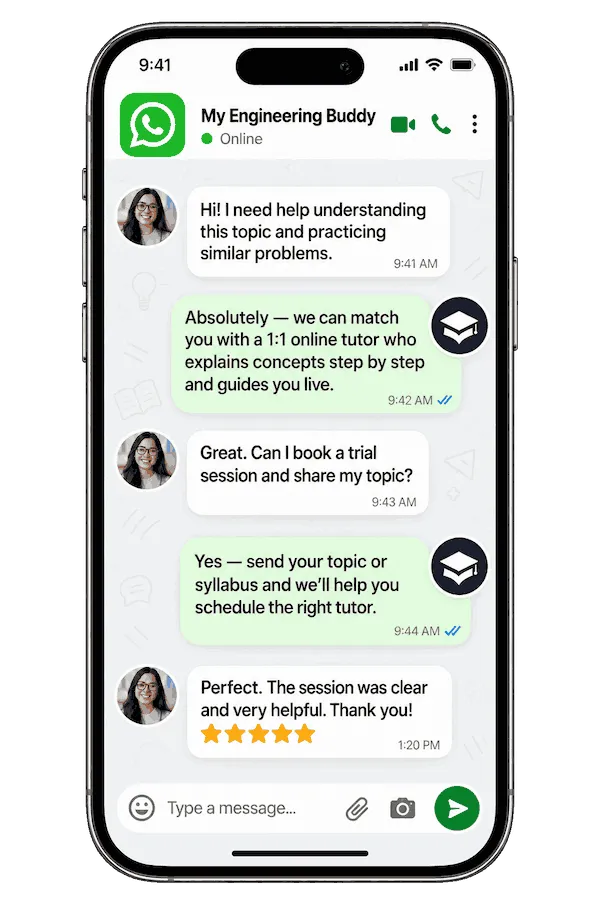
~1 min
Average Reply Time
~1 hour
To Be Matched With A Tutor
30 Min Trial
75% Find Their Tutor On The 1st Trial
$20-35+/hr
Premium Yet Affordable Learning
Your child scored a C when they needed a B — and the ICT paper was the one they thought they had covered.
IGCSE Information and Communication Technology (0417) ICT Tutor Online
IGCSE Information and Communication Technology (0417) ICT, awarded by Cambridge Assessment International Education, is a secondary-level qualification covering digital systems, data handling, networking, and software applications — equipping students with both theoretical and practical ICT skills.
MEB provides 1:1 online tutoring and academic guidance in Cambridge IGCSE subjects, including ICT 0417. If you’ve been searching for an IGCSE ICT tutor near me, MEB connects you with a verified subject specialist — usually within the hour. Sessions are built around your exact syllabus components, your weakest topics, and your exam date. No generic lessons.
- 1:1 online sessions matched to the Cambridge 0417 syllabus
- Verified tutors with hands-on ICT subject knowledge
- Flexible time zones — US, UK, Canada, Australia, Gulf
- Structured learning plan built after a diagnostic session
- Ethical academic guidance — you understand before you submit
52,000+ students across the US, UK, Canada, Australia, and the Gulf have used MEB since 2008 — including students in Cambridge IGCSE subjects like IGCSE ICT 0417, IGCSE Computer Science, and IGCSE Mathematics.
Source: My Engineering Buddy, 2008–2025.
How Much Does an IGCSE ICT Tutor Cost?
Most IGCSE ICT tutoring sessions run $20–$40/hr. Not sure yet? Start with the $1 trial — 30 minutes of live tutoring or one homework question explained in full, no registration required.
| Level / Need | Typical Rate | What’s Included |
|---|---|---|
| Standard IGCSE ICT | $20–$35/hr | 1:1 sessions, homework guidance |
| Advanced / Specialist | $35–$70/hr | Expert tutor, niche topic depth |
| $1 Trial | $1 flat | 30 min live session or 1 homework question |
Tutor availability tightens in April and October — the main Cambridge exam windows. Book early if your exam is within six weeks.
WhatsApp MEB for a quick quote — average response time under 1 minute.
Who This IGCSE ICT Tutoring Is For
This is for students who need more than a textbook and a YouTube video. It’s also for parents who want someone accountable — a tutor who knows the 0417 paper format and can explain exactly why marks were dropped.
- Students who passed Paper 1 (theory) but are struggling with the practical paper components
- Students retaking after a failed first attempt who need targeted gap-filling
- Students with a university conditional offer depending on this grade
- Students 4–6 weeks from the Cambridge exam with significant gaps still to close
- Parents watching a child’s confidence drop alongside their ICT grades
- Students who need academic guidance — explained, not just answered
Students who go on to study Computer Science, Information Systems, or Software Engineering at universities including the University of Toronto, University of Edinburgh, University of New South Wales, Imperial College London, and NYU often cite IGCSE ICT as their first structured exposure to digital systems thinking.
1:1 Tutoring vs Self-Study vs AI vs YouTube vs Online Courses
Self-study works if you’re disciplined — but there’s no one to tell you when your database design logic is wrong. AI tools give fast answers; they can’t watch you work through a spreadsheet task and catch the formula error in real time. YouTube is useful for overviews of networking topologies or binary arithmetic — it stops when you’re stuck. Online courses move at a fixed pace with no adaptation to your Cambridge 0417 paper. 1:1 tutoring with MEB is live, calibrated to your exact syllabus components, and corrects errors before they become exam habits. For IGCSE ICT, where Paper 2 and Paper 3 demand applied accuracy, that real-time correction matters.
Outcomes: What You’ll Be Able To Do in IGCSE ICT
After structured 1:1 IGCSE ICT tutoring, students can apply spreadsheet functions and database query logic to unseen data sets without hesitation. They can explain how data is transmitted across networks — including protocols, packet switching, and error checking — in the structured written style the Cambridge mark scheme rewards. Students learn to analyse real-world ICT systems and identify their advantages, limitations, and ethical implications. They can present worked solutions for the practical paper components with the accuracy and layout that examiners expect. Confidence in the theory paper builds naturally once the underlying concepts are clear rather than memorised.
Based on feedback from 40,000+ sessions collected by MEB from 2022 to 2025, 58% of students improved by one full grade after approximately 20 hours of 1:1 tutoring in subjects like IGCSE Information and Communication Technology (0417) ICT. A further 23% achieved at least a half-grade improvement.
Source: MEB session feedback data, 2022–2025.
Supporting a student through IGCSE ICT? MEB works directly with parents to set up sessions, track progress, and keep coursework on schedule. WhatsApp MEB — average response time is under a minute, 24/7.
What We Cover in IGCSE ICT 0417 (Syllabus / Topics)
The Cambridge 0417 syllabus is examined through Paper 1 (written theory), Paper 2 (practical data handling — spreadsheet and database), and Paper 3 (practical document production and data manipulation). MEB tutors cover all three.
| Component | Format | Weighting |
|---|---|---|
| Paper 1 — Theory | Written short-answer and extended response | 40% |
| Paper 2 — Practical (Data Handling) | Spreadsheet and database tasks on computer | 30% |
| Paper 3 — Practical (Document Production) | Document and data manipulation tasks on computer | 30% |
Track 1: Theory — Digital Systems, Networks, and Data
- Types of storage: primary, secondary, and off-line — with real use-case comparisons
- Input and output devices — exam-style descriptions with advantages and limitations
- Network types: LAN, WAN, client-server vs peer-to-peer
- Data transmission: protocols, packet switching, error detection methods
- Security threats — malware types, phishing, and countermeasures
- Binary arithmetic, hexadecimal, and data representation (text, images, sound)
- Environmental and ethical issues — how ICT affects society and the environment
Recommended texts: Cambridge IGCSE ICT by Graham Brown and David Watson (Hodder Education); Complete ICT for Cambridge IGCSE by Stephen Doyle (Oxford University Press).
Track 2: Paper 2 — Spreadsheets and Databases
- Spreadsheet functions: IF, VLOOKUP, SUMIF, COUNTIF, nested formulas
- Absolute and relative cell referencing — a common source of dropped marks
- Charts and graphs: selecting the right type, formatting to mark scheme requirements
- Database design: field types, primary keys, validation rules
- Querying: multi-criteria searches, sorting, and report generation
- Exporting and formatting output to exact specifications
Tutors work directly in Microsoft Excel and Access or LibreOffice equivalents, mirroring the software environment students face in the exam.
Track 3: Paper 3 — Document Production and Data Manipulation
- Mail merge — setting up data sources and linking fields correctly
- Document formatting: headers, footers, styles, and column layouts
- Web page creation: basic HTML structure and formatting commands
- Data manipulation: importing, sorting, and presenting data from external files
- Presentation software: slide design and layout to specification
- Proofreading for accuracy — a skill that directly affects marks at this level
Recommended text: Cambridge IGCSE and O Level ICT Coursebook by Victoria Ellis and Sarah Lawrey (Cambridge University Press).

What a Typical IGCSE ICT Session Looks Like
The tutor opens by checking the previous session’s task — usually a past-paper spreadsheet or a set of theory questions on network security. If the student struggled with a VLOOKUP returning errors, that gets resolved first, with the tutor tracing exactly where the formula logic broke down. The session then moves into the planned topic — often Paper 2 database queries or a Paper 1 written-response drill. The student works on screen while the tutor watches in real time via Google Meet. The tutor uses a digital pen-pad to annotate mark scheme language directly. The student then explains their own reasoning back — this is where gaps surface. The session ends with one specific practice task and the topic earmarked for next time. Nothing is left vague.
At MEB, we’ve found that IGCSE ICT students lose the most marks not because they don’t understand the concepts, but because their answers don’t use the vocabulary the Cambridge mark scheme is looking for. That gap between knowing and writing correctly is exactly what 1:1 sessions close.
How MEB Tutors Help You with IGCSE ICT (The Learning Loop)
Diagnose: In the first session, the tutor works through a short past-paper exercise with the student — covering both a theory question and a practical task. This surfaces the specific weak points: is it spreadsheet formula logic, network theory definitions, or the format of exam written responses?
Explain: The tutor works through a live example using a digital pen-pad, annotating directly on screen. For Paper 2, this means building a formula step by step. For Paper 1, it means marking up a student’s answer against the Cambridge mark scheme language in real time.
Practice: The student attempts the next problem independently while the tutor watches. No jumping in early — the tutor waits to see where the student’s process goes wrong, not just whether the final answer is correct.
Feedback: The tutor explains exactly which step cost marks and why. For written theory answers, this often means replacing vague descriptions with the specific terminology Cambridge examiners reward.
Plan: Before the session closes, the tutor sets one focused task — a past-paper question or a structured practice exercise — and confirms the next topic. Progress is tracked across sessions so nothing gets skipped.
Sessions run on Google Meet with a digital pen-pad or iPad + Apple Pencil. Before the first session, share your 0417 syllabus or a past paper you’ve attempted, your exam date, and the component you find hardest. Start with the $1 trial — 30 minutes of live tutoring that also serves as your first diagnostic.
Students consistently tell us that the practical papers feel much more manageable once they’ve worked through two or three past tasks with a tutor watching — not because the tasks get easier, but because the student finally knows what “correct” looks like at IGCSE level.
Tutor Match Criteria (How We Pick Your Tutor)
Every tutor matched to an IGCSE ICT student is selected against four criteria.
Subject depth: The tutor must know the Cambridge 0417 syllabus specifically — Paper 2 and Paper 3 practical formats, not just general ICT knowledge. Tutors are vetted for this.
Tools: All sessions use Google Meet with a digital pen-pad or iPad + Apple Pencil. Tutors can annotate student work, mark up past papers, and demonstrate spreadsheet logic on screen.
Time zone: Matched to your region — US, UK, Gulf, Canada, or Australia. Evening and weekend slots are standard.
Goals: The match accounts for whether you need exam score improvement, coursework guidance, or ongoing weekly support through the semester.
Unlike platforms where you fill out a form and wait, MEB responds in under a minute, 24/7. Tutor match takes under an hour. The $1 trial means you test before you commit. Everything runs over WhatsApp — no logins, no intake forms.
Study Plans (Pick One That Matches Your Goal)
After the first diagnostic session, the tutor builds a plan specific to your exam date and weakest components. For most IGCSE ICT students: a catch-up plan (1–3 weeks) focuses on the highest-mark practical paper gaps; an exam prep plan (4–8 weeks) works through all three papers systematically with past-paper practice built in; weekly support runs alongside the school term, aligned to upcoming tests and homework deadlines. The tutor adjusts the sequence as you progress — no fixed script.
Pricing Guide
IGCSE ICT tutoring starts at $20/hr for standard syllabus coverage. Specialist tutors with deeper practical software expertise or significant exam coaching experience are available at $35–$70/hr. Rate factors include the component focus (theory vs practical), proximity to your exam date, and tutor availability.
For students targeting places at competitive universities where IGCSE grades form part of a portfolio — including institutions like the University of British Columbia, University of Melbourne, and University of Amsterdam — tutors with professional ICT and digital systems backgrounds are available at higher rates. Share your specific goal and MEB will match the tier to your target.
Availability is limited during the April–May and October–November Cambridge exam windows. Start with the $1 trial — 30 minutes, no registration, no commitment. WhatsApp MEB for a quick quote.
18 years. 52,000+ students. 2,800+ subjects. MEB has been running since 2008 — long enough to know what the Cambridge 0417 paper rewards, and what it doesn’t.
Source: My Engineering Buddy, 2008–2025.
Try your first session for $1 — 30 minutes of live 1:1 tutoring or one homework question explained in full. No registration. No commitment. WhatsApp MEB now and get matched within the hour.
FAQ
Is IGCSE ICT hard?
It has two distinct challenges: the theory paper demands precise, mark-scheme-specific language, and the practical papers require accuracy under timed conditions using spreadsheet and database software. Students who struggle usually have gaps in one area specifically — which is exactly what a diagnostic session identifies.
How many sessions are needed?
Most students working toward a grade improvement in IGCSE ICT need 10–20 hours of 1:1 tutoring. Students close to their exam with specific gaps can see measurable progress in 5–8 focused sessions. The tutor sets a realistic estimate after the diagnostic.
Can you help with practice exercises?
Yes. MEB tutoring is guided learning — you understand the work, then submit it yourself. See our Academic Integrity policy and Why MEB page for full details on what we help with and what we don’t.
Will the tutor match my exact syllabus or exam board?
Yes. MEB tutors are matched specifically to Cambridge IGCSE ICT 0417. If you’re sitting a different variant or year group, share that when you contact us and MEB will confirm the right match before you start.
What happens in the first session?
The tutor works through a short diagnostic — usually a past-paper theory question and one practical task. This identifies where marks are being lost. By the end of the first session, you’ll have a clear picture of what to work on and in what order.
Is online tutoring as effective as in-person?
For IGCSE ICT, online is often better — the tutor can watch your screen in real time as you work through spreadsheet or database tasks, which is closer to the actual exam environment. Annotation via digital pen-pad makes marking up theory answers precise and immediate.
Can I get IGCSE ICT help at midnight or on weekends?
Yes. MEB tutors cover multiple time zones, and sessions can be arranged for evenings and weekends across the US, UK, Gulf, Canada, and Australia. WhatsApp response times are typically under a minute regardless of when you message.
What if I don’t get on with my assigned tutor?
Let MEB know via WhatsApp. Tutor switches are handled quickly — usually within 24 hours. There’s no lock-in and no penalty. The goal is a productive match, not a fixed assignment.
What is the difference between Paper 2 and Paper 3 in IGCSE ICT 0417?
Paper 2 focuses on data handling — spreadsheets and databases. Paper 3 covers document production, mail merge, and data manipulation tasks. Both are practical, computer-based papers. Many students underestimate Paper 3’s precision requirements — MEB tutors cover both components explicitly.
Do I need to install specific software before sessions?
You’ll need access to a spreadsheet and database application — Microsoft Excel and Access are standard, but LibreOffice equivalents work fine. The tutor will confirm what you have and adjust accordingly. Google Meet is used for all sessions; no additional software is required.
How do I get started?
WhatsApp MEB, share your exam board and the component you find hardest, and you’ll be matched with a tutor — usually within an hour. The first session is the $1 trial: 30 minutes of live tutoring or one full homework question explained. Three steps: WhatsApp → matched → start trial.
Does IGCSE ICT count toward university entry requirements?
In most cases, IGCSE ICT contributes to a student’s overall qualification profile rather than meeting specific subject requirements. Some technology-related programmes at institutions including the University of Warwick and University of Queensland note ICT as a supporting subject. Confirm entry criteria directly with your target institution.
Trust & Quality at My Engineering Buddy
Every MEB tutor goes through subject-specific screening before working with students. This includes a live demo evaluation, degree and credential verification, and subject knowledge assessment specific to the syllabus they’ll be teaching. For IGCSE ICT, tutors are tested on both Paper 2 practical tasks and Paper 1 theory content — not just general ICT knowledge. Rated 4.8/5 across 40,000+ verified reviews on Google.
MEB tutoring is guided learning — you understand the work, then submit it yourself. For full details on what we help with and what we don’t, read our Academic Integrity policy and Why MEB.
MEB has served 52,000+ students across the US, UK, Canada, Australia, the Gulf, and Europe since 2008 — covering 2,800+ subjects. Within the Cambridge IGCSE category, MEB supports students in ICT 0417 alongside IGCSE Computer Science 9-1 tutoring and IGCSE Mathematics help. Tutor quality is reviewed continuously through session feedback — low-rated sessions are investigated and acted on. You can read more about the approach on our tutoring methodology page.
MEB has been operating since 2008 — which means tutors have seen the Cambridge 0417 syllabus across multiple revision cycles. That history shows in how sessions are structured.
Source: My Engineering Buddy, 2008–2025.
A common pattern our tutors observe is that students who practise Paper 2 tasks without checking their output against the mark scheme formatting requirements consistently drop avoidable marks. The fix is straightforward — but only if someone shows you what examiners are actually looking for.
Explore Related Subjects
Students studying IGCSE ICT 0417 often also need support in:
- IGCSE Information and Communication Technology (9-1) 0983
- IGCSE Additional Mathematics
- IGCSE Design and Technology
- IGCSE Business Studies
- IGCSE Economics
- IGCSE Global Perspectives
Next Steps
Getting started takes under five minutes.
- Share your exam board (Cambridge 0417), your hardest component, and your exam date
- Share your availability and time zone — MEB covers the US, UK, Gulf, Canada, and Australia
- MEB matches you with a verified IGCSE ICT tutor — usually within 24 hours
- Your first session starts with a diagnostic so every minute is used on what actually matters
Before your first session, have ready:
- Your Cambridge 0417 syllabus or a recent past paper you’ve attempted
- A homework question or past-paper task you found difficult
- Your exam date or upcoming deadline
The tutor handles the rest.
Visit www.myengineeringbuddy.com for more on how MEB works.
WhatsApp to get started or email [email protected].
Reviewed by Subject Expert
This page has been carefully reviewed and validated by our subject expert to ensure accuracy and relevance.