Contact MEB Today To Get The Best
IGCSE Art & Design (9-1) (0989) Tutoring Online
Email: [email protected]



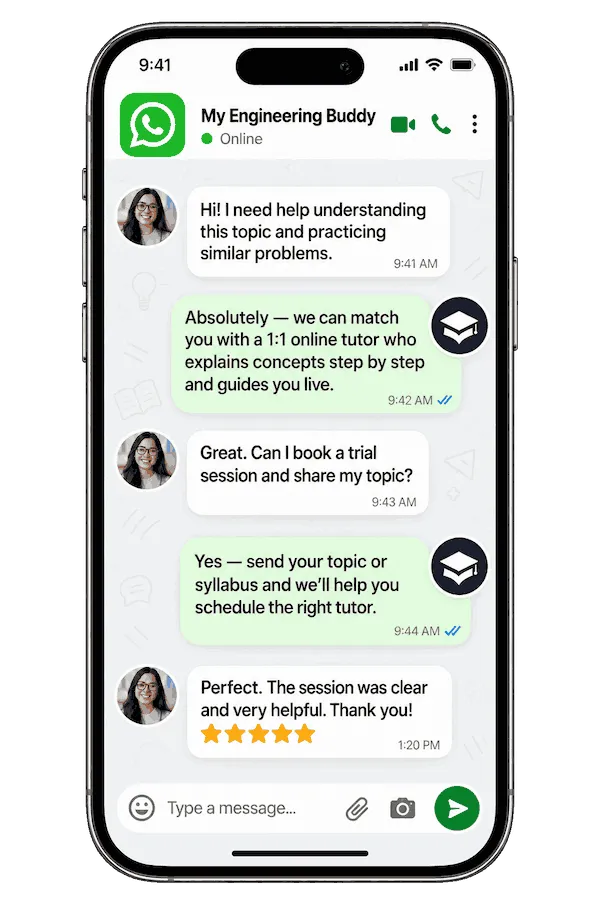
~1 min
Average Reply Time
~1 hour
To Be Matched With A Tutor
30 Min Trial
75% Find Their Tutor On The 1st Trial
$20-35+/hr
Premium Yet Affordable Learning
Most students don’t fail IGCSE Art & Design (9-1) (0989) because they lack creativity — they lose marks on annotation, contextual studies, and not understanding what examiners want from the portfolio.
IGCSE Art & Design (9-1) (0989) Tutor Online
IGCSE Art & Design (9-1) (0989) is a Cambridge International qualification assessing students’ creative and practical skills across drawing, painting, and mixed media, equipping them to produce a coursework portfolio and complete a timed examination piece.
Finding a qualified IGCSE Art & Design (9-1) (0989) tutor is harder than it sounds. Most online platforms list generic art tutors — few understand Cambridge’s specific assessment objectives, the 9-1 grade scale, or how to coach a student through both the portfolio and the timed test. MEB has tutors who know this syllabus from the inside, including the criteria examiners use to differentiate a 7 from a 9. If you’ve been searching for an IGCSE Art & Design (9-1) (0989) tutor near me and coming up empty, 1:1 online tutoring removes the geography problem entirely. Sessions run over Google Meet, your tutor uses a digital pen-pad for visual demos, and you can be in the US, UK, Gulf, Canada, or Australia. One good outcome to expect: a portfolio that genuinely reflects your best work, annotated in a way examiners reward.
- 1:1 online sessions tailored to the Cambridge 0989 syllabus and assessment objectives
- Expert-verified tutors with subject-specific knowledge of the 9-1 grade scale
- Flexible time zones — US, UK, Canada, Australia, Gulf
- Structured learning plan built after a diagnostic session covering your current portfolio stage
- Ethical academic guidance — you understand the work, then submit it yourself
52,000+ students across the US, UK, Canada, Australia, and the Gulf have used MEB since 2008 — including students in Cambridge IGCSE subjects like IGCSE Art & Design (9-1) (0989), IGCSE Drama (9-1) tutoring, and IGCSE Music.
Source: My Engineering Buddy, 2008–2025.
How Much Does an IGCSE Art & Design (9-1) (0989) Tutor Cost?
Most IGCSE Art & Design (9-1) (0989) tutoring sessions at MEB run $20–$40 per hour. Specialist tutors with examiner experience or advanced fine art backgrounds may reach $70/hr. Before committing to a package, you can test the match with the $1 trial — 30 minutes of live 1:1 tutoring or one homework question explained in full, no registration required.
| Level / Need | Typical Rate | What’s Included |
|---|---|---|
| Standard (most students) | $20–$40/hr | 1:1 sessions, portfolio and annotation guidance |
| Advanced / Examiner-experienced | $40–$70/hr | Deep syllabus knowledge, timed test coaching |
| $1 Trial | $1 flat | 30 min live session or 1 homework question explained |
Tutor availability tightens sharply in the months before Cambridge submission deadlines — typically March and October. Book early if your portfolio deadline is approaching.
WhatsApp MEB for a quick quote — average response time under 1 minute.
Who This IGCSE Art & Design (9-1) (0989) Tutoring Is For
This is for students who know they can make good work but aren’t sure how to present it in a way Cambridge rewards. It’s also for students who freeze on annotation or haven’t started their contextual studies yet and have eight weeks until submission.
- Students whose portfolio is underway but lacks the annotation depth examiners expect
- Students with a coursework or portfolio submission deadline approaching — this is the most common reason students come to MEB for IGCSE Art & Design help
- Students who struggle with the timed test component and haven’t practised under exam conditions
- Students retaking after a grade that didn’t reflect the work they put in
- Parents watching a child’s confidence drop because feedback from school has been vague
- Students at international schools in the US, UK, UAE, Canada, or Australia following the Cambridge 0989 syllabus
MEB tutors have worked with students progressing to art foundation courses, A Level Art & Design, and degree programmes at universities including Goldsmiths, Central Saint Martins, RISD, the Savannah College of Art and Design, and Parsons School of Design.
At MEB, we’ve found that IGCSE Art & Design students often come to us not because their artwork is weak — but because no one has ever clearly explained the assessment criteria to them. Once they see exactly what the examiner is looking for in annotation and contextual studies, the path to a higher grade becomes obvious.
1:1 Tutoring vs Self-Study vs AI vs YouTube vs Online Courses
Self-study works if you’re disciplined, but there’s no feedback on whether your annotation actually meets Cambridge’s criteria. AI tools can explain assessment objectives in seconds — they can’t look at your sketchbook page and tell you what’s missing. YouTube has solid technique videos, but stops the moment you need specific feedback on your own work. Online courses are structured but fixed-pace and generic. 1:1 tutoring with MEB is calibrated to your actual portfolio, your specific exam board (Cambridge 0989), and the gap between where your work is now and what a grade 7, 8, or 9 looks like.
Outcomes: What You’ll Be Able To Do in IGCSE Art & Design (9-1) (0989)
After working with an MEB tutor, students can analyse artist influences and write annotation that directly references Cambridge’s assessment objectives rather than describing what they did. They can apply formal elements — line, tone, texture, and composition — deliberately, with written justification that examiners can credit. Students learn to present a portfolio journey that shows clear development from initial research through to final outcome, which is exactly the progression Cambridge rewards at the top grade boundary. They gain the ability to perform under timed test conditions, selecting and executing a response to the set theme without freezing. And they can contextualise their own work within art history and contemporary practice in a way that satisfies the cultural and contextual studies component.
Based on feedback from 40,000+ sessions collected by MEB from 2022 to 2025, 58% of students improved by one full grade after approximately 20 hours of 1:1 tutoring in subjects like IGCSE Art & Design (9-1) (0989). A further 23% achieved at least a half-grade improvement.
Source: MEB session feedback data, 2022–2025.
Supporting a student through IGCSE Art & Design (9-1) (0989)? MEB works directly with parents to set up sessions, track portfolio progress, and keep coursework on schedule. WhatsApp MEB — average response time is under a minute, 24/7.
Try your first session for $1 — 30 minutes of live 1:1 tutoring or one homework question explained in full. No registration. No commitment. WhatsApp MEB now and get matched within the hour.
What We Cover in IGCSE Art & Design (9-1) (0989) (Syllabus / Topics)
The Cambridge 0989 syllabus is assessed through two components: a coursework portfolio (Component 1, 60%) and a timed test (Component 2, 40%). Tutors cover both in depth, including the specific endorsement options: Fine Art, Graphic Communication, Photography, Textiles, and 3D Design. Sessions are matched to whichever endorsement the student is entered for.
Component 1 — Coursework Portfolio
- Initial research and artist influence studies — how to select and reference sources that examiners value
- Annotation technique — writing that demonstrates personal response, not just description
- Formal elements: line, tone, texture, colour, form, and space in practice
- Development work — showing experimentation and informed decision-making through the sketchbook
- Final outcome presentation — scale, medium choice, and how to photograph and present work
- Assessment objective mapping — checking every page against AO1 (critical understanding), AO2 (creative making), AO3 (recording), and AO4 (presenting)
Recommended reference: Cambridge IGCSE Art and Design Coursework Guide (Cambridge Assessment International Education); Drawing on the Right Side of the Brain by Betty Edwards for foundational observational drawing.
Component 2 — Timed Test (15 Hours)
- Interpreting the set theme — how to generate relevant and personal starting points from the Cambridge paper
- Preparation period — building a preparatory study booklet that supports the timed response
- Time management across the 15-hour supervised session
- Medium and technique selection under exam conditions
- Connecting the timed outcome visually and conceptually to the preparatory studies
Tutors reference the Cambridge Assessment International Education syllabus documents and past timed test themes to build realistic practice conditions.
Contextual Studies and Art History
- Key movements: Expressionism, Cubism, Surrealism, Abstract Expressionism, and contemporary practice
- How to write about artists in a way that shows genuine critical engagement, not surface-level description
- Selecting artist references that are relevant to the student’s own chosen theme and medium
- Cross-cultural references — work from non-Western traditions for students whose themes call for it
- Visual analysis: reading an artwork and writing a structured response for the annotation and supporting studies
Useful reference: The Story of Art by E.H. Gombrich; Ways of Seeing by John Berger for critical and contextual language.

What a Typical IGCSE Art & Design (9-1) (0989) Session Looks Like
The tutor opens by reviewing what the student shared before the session — usually photos of recent sketchbook pages or a draft annotation. They look at the annotation first: is it descriptive or analytical? Does it reference a specific artist’s technique and connect it back to the student’s own formal choices? The student talks through their thinking while the tutor identifies where the Cambridge assessment objectives are being met and where marks are being left behind. The tutor then demonstrates on screen — using a digital pen-pad — how to restructure an annotation paragraph or how to approach the tonal study the student has been avoiding. The student attempts a revision or a new study while the tutor watches and comments in real time. The session closes with a clear task: annotate two more pages by Thursday, photograph them, and send ahead of the next session.
How MEB Tutors Help You with IGCSE Art & Design (9-1) (0989) (The Learning Loop)
Diagnose: In the first session, the tutor reviews the student’s current portfolio stage — which assessment objectives are being addressed, which are absent, and whether the work is paced to meet the submission deadline. This is not a general conversation. It’s a structured review against the Cambridge 0989 mark scheme.
Explain: The tutor works through live examples on screen using a digital pen-pad — showing what a grade 9 annotation looks like versus a grade 5, or demonstrating a compositional technique the student has been applying incorrectly. Nothing is left abstract.
Practice: The student attempts the task — annotating, sketching, or working on a preparatory study — while the tutor watches and responds in real time. The attempt happens during the session, not as homework that disappears into a void.
Feedback: Error correction is specific and referenced to the mark scheme. “This doesn’t show development” is replaced with “Add a sentence here explaining why you moved from the charcoal study to the acrylic response — that transition is what AO2 is looking for.”
Plan: Each session ends with a concrete next step tied to a deadline. The tutor tracks progress across sessions and adjusts the plan if the portfolio falls behind or if a particular component needs more time.
Sessions run over Google Meet. The tutor uses a digital pen-pad or iPad with Apple Pencil for visual demonstrations. Before the first session, share photos of your current portfolio work, your exam board confirmation (Cambridge 0989), and your submission or timed test date. The first session is both diagnostic and productive — students leave with actionable direction, not a list of vague suggestions. Start with the $1 trial — 30 minutes of live tutoring that also serves as your first diagnostic.
Students consistently tell us that the biggest shift in their IGCSE Art & Design work comes when they stop thinking about the portfolio as a collection of finished pieces and start thinking about it as documented evidence of a thinking process. That reframe alone can move a grade boundary.
Tutor Match Criteria (How We Pick Your Tutor)
MEB doesn’t assign the first available tutor. Match is based on four things.
Subject depth: The tutor must know the Cambridge 0989 syllabus specifically — including the endorsement the student is entered for (Fine Art, Graphic Communication, Photography, Textiles, or 3D Design) and the current grade boundaries.
Tools: Every IGCSE Art & Design tutor uses Google Meet plus a digital pen-pad or iPad with Apple Pencil. Visual feedback is not optional for an art subject.
Time zone: Matched to the student’s region — US, UK, Gulf, Canada, Australia — so sessions happen at workable hours without late-night compromises.
Goals: Whether the student needs portfolio rescue four weeks from deadline, steady weekly support through the year, or intensive timed test preparation, the match reflects that goal.
Unlike platforms where you fill out a form and wait, MEB responds in under a minute, 24/7. Tutor match takes under an hour. The $1 trial means you test before you commit. Everything runs over WhatsApp — no logins, no intake forms.
Study Plans (Pick One That Matches Your Goal)
The tutor builds a specific sequence after the diagnostic session, but most students fall into one of three patterns. Catch-up (1–3 weeks): the portfolio exists but annotation, development work, or contextual studies are missing — the focus is on closing specific gaps before the submission deadline. Exam prep (4–8 weeks): structured approach to both the portfolio final stages and the timed test preparation period, including mock timed conditions. Weekly support: ongoing sessions aligned to the coursework calendar, building the portfolio systematically from initial research through to final outcome. The tutor adjusts the plan as the work develops.
Pricing Guide
IGCSE Art & Design (9-1) (0989) tutoring runs $20–$40/hr for most students. Tutors with Cambridge examiner backgrounds or specialist endorsement experience (Photography, Textiles, 3D Design) are available at higher rates — up to $70/hr. Rate depends on the endorsement, the timeline, and how far the portfolio has progressed.
For students targeting art foundation year admission, A Level Art progression, or portfolio entry to competitive degree programmes at schools like Central Saint Martins, RISD, or Parsons, tutors with professional studio and teaching backgrounds are available at higher rates — share your specific goal and MEB will match the tier to your ambition.
Availability drops in February–March and September–October when Cambridge submission windows approach. Start with the $1 trial — 30 minutes, no registration, no commitment. WhatsApp MEB for a quick quote.
FAQ
Is IGCSE Art & Design (9-1) (0989) hard?
It’s demanding in a specific way. The artwork itself isn’t the only challenge — annotation, contextual studies, and demonstrating a clear developmental journey through the portfolio are where students most often lose marks. With guidance on what Cambridge’s assessment objectives actually require, it becomes much more manageable.
How many sessions do students typically need?
Students with a portfolio already underway and a deadline in 4–6 weeks usually need 8–12 sessions. Students starting from the beginning of Year 10 or 11 benefit from weekly sessions throughout the course. The tutor gives a clearer estimate after the first diagnostic session.
Can you help with practice exercises?
MEB tutoring is guided learning — you understand the work, then submit it yourself. Tutors help with annotation drafts, contextual study planning, and portfolio sequencing by explaining what’s needed and why, not by producing the work for the student. See our Academic Integrity policy and Why MEB page for full details on what we help with and what we don’t.
Will the tutor match my exact syllabus or exam board?
Yes. MEB tutors are matched specifically to Cambridge IGCSE 0989, including the 9-1 grade scale and the specific endorsement the student is entered for. If you’re unsure which endorsement applies, share your school’s confirmation letter and the tutor will identify it from that.
What happens in the first session?
The tutor reviews your current portfolio work — photos shared in advance — and identifies which assessment objectives are being met, which are missing, and what the priority gaps are. You leave with a clear plan and at least one concrete task to complete before the next session.
Is online tutoring as effective as in-person for an art subject?
For IGCSE Art & Design, yes — when the tutor uses a digital pen-pad for visual demonstrations. Students share photos of sketchbook pages and portfolio work via Google Meet. The tutor annotates and demonstrates on screen in real time. Feedback is as specific as sitting across a table, and the session recording is available to review.
What’s the difference between IGCSE Art & Design 0400 and 0989?
0400 is the traditional Cambridge IGCSE Art & Design qualification. 0989 is the 9-1 graded version, aligned with the reformed grading scale used in England. The core syllabus structure is similar, but the grade boundaries and mark scheme language differ. MEB tutors are matched to whichever version the student is entered for.
How do I know which endorsement I’m entered for?
Your school confirms the endorsement — Fine Art, Graphic Communication, Photography, Textiles, or 3D Design — when they register you with Cambridge. Check your timetable or ask your art teacher. Share this with MEB when you make contact and the tutor matched will have specific experience in that endorsement.
Can I get IGCSE Art & Design help at short notice — even a day before my timed test?
MEB tutors are available 24/7 and matching typically happens within an hour. Day-before timed test prep sessions are possible and can focus specifically on theme interpretation, preparation booklet review, and time management strategy. WhatsApp MEB and state your test date immediately.
Do you offer group IGCSE Art & Design sessions?
No. All MEB sessions are 1:1. Portfolio work is personal — feedback on annotation, development, and final outcomes needs to be specific to the individual student’s work, not generic to a group. Group sessions wouldn’t serve the Cambridge assessment model.
How do I get started?
Start with the $1 trial — 30 minutes of live 1:1 tutoring or one homework question explained in full. Three steps: WhatsApp MEB, get matched with a verified IGCSE Art & Design tutor within the hour, and begin your trial session. No registration, no commitment beyond the first dollar.
Trust & Quality at My Engineering Buddy
Every MEB tutor goes through a multi-stage screening process: subject knowledge review, a live demo session evaluated against MEB’s internal standards, and ongoing feedback analysis from student sessions. Tutors hold relevant degrees and many have professional studio practice or teaching experience in art and design. Rated 4.8/5 across 40,000+ verified reviews on Google. MEB has been operating since 2008 — 18 years of consistent delivery across 52,000+ students in the US, UK, Canada, Australia, and the Gulf.
MEB tutoring is guided learning — you understand the work, then submit it yourself. For full details on what we help with and what we don’t, read our Academic Integrity policy and Why MEB.
MEB covers 2,800+ subjects across Cambridge IGCSE, A Level, IB, AP, and undergraduate programmes. Within the Cambridge IGCSE category specifically, MEB supports students in IGCSE Art & Design (9-1) (0989) alongside IGCSE Design Technology (9-1) tutoring, IGCSE Drama help, and dozens of other IGCSE subjects. Tutors are matched to level, syllabus, and region — not assigned at random from a pool.
A common pattern our tutors observe is that IGCSE Art & Design students spend most of their time on making and almost none on written annotation — then are surprised when the portfolio grade doesn’t reflect the quality of the artwork itself. Cambridge marks the whole journey, not just the final piece.
Explore Related Subjects
Students studying IGCSE Art & Design (9-1) (0989) often also need support in:
- IGCSE Art & Design (0400)
- IGCSE Design & Technology (0445)
- IGCSE Music
- IGCSE Drama (9-1) (0994)
- IGCSE English Literature in English (9-1) (0992)
- IGCSE Global Perspectives (0457)
- IGCSE World Literature
Next Steps
Share your Cambridge 0989 endorsement, your hardest component (portfolio annotation, contextual studies, or timed test), and your submission or exam date. Share your availability and time zone. MEB matches you with a verified IGCSE Art & Design tutor — usually within 24 hours.
Before your first session, have ready:
- Your Cambridge 0989 endorsement confirmation and syllabus (or your school’s course outline)
- Photos of your current portfolio or sketchbook pages, even if they’re incomplete
- Your submission deadline or timed test date
The tutor handles the rest. Visit www.myengineeringbuddy.com for more on how MEB works.
WhatsApp to get started or email [email protected].
Reviewed by Subject Expert
This page has been carefully reviewed and validated by our subject expert to ensure accuracy and relevance.