




~1 min
Average Reply Time
~1 hour
To Be Matched With A Tutor
30 Min Trial
75% Find Their Tutor On The 1st Trial
$20-35+/hr
Premium Yet Affordable Learning
Hire The Best IGCSE Agriculture (0600) Tutor


Most students who struggle with IGCSE Agriculture (0600) aren’t bad at science — they’ve never had the soil science and crop physiology explained together, in sequence, by someone who knows the Cambridge 0600 syllabus cold.
IGCSE Agriculture (0600) Tutor Online
IGCSE Agriculture (0600) is a Cambridge International qualification examining crop science, animal husbandry, soil management, and farm systems. It equips students to analyse agricultural practices and apply scientific principles to food production challenges.
If you’re searching for an IGCSE Agriculture (0600) tutor near me, MEB matches you with a verified, syllabus-fluent tutor — usually within 24 hours. Our Cambridge IGCSE tutoring covers every component of the 0600 syllabus, from Theory Paper 1 to the Alternative to Practical. Sessions are live, 1:1, and built around your exact gaps — not a generic revision deck.
- 1:1 online sessions mapped directly to the Cambridge 0600 syllabus
- Expert-verified tutors with subject-specific agricultural science knowledge
- Flexible time zones — US, UK, Canada, Australia, Gulf
- Structured learning plan built after a diagnostic session
- Ethical academic guidance — you understand the work before you submit
52,000+ students across the US, UK, Canada, Australia, and the Gulf have used MEB since 2008 — including students in Cambridge IGCSE subjects like IGCSE Biology, IGCSE Environmental Management, and IGCSE Agriculture (0600).
Source: My Engineering Buddy, 2008–2025.
How Much Does an IGCSE Agriculture (0600) Tutor Cost?
Most IGCSE Agriculture (0600) tutoring sessions run $20–$40 per hour. The $1 trial gets you 30 minutes of live 1:1 tutoring or one full homework question explained — no registration required.
| Level / Need | Typical Rate | What’s Included |
|---|---|---|
| Standard (most levels) | $20–$35/hr | 1:1 sessions, homework guidance |
| Advanced / Specialist | $35–$70/hr | Expert tutor, niche syllabus depth |
| $1 Trial | $1 flat | 30 min live session or 1 homework question |
Tutor availability tightens sharply in the weeks before the May/June Cambridge exam window. Book early.
WhatsApp MEB for a quick quote — average response time under 1 minute.
Who This IGCSE Agriculture (0600) Tutoring Is For
This isn’t a course for students who want passive revision videos. It’s for students who have real gaps — in soil chemistry, farming systems, or the Alternative to Practical — and need those gaps closed by someone who knows exactly where Cambridge examiners look for marks.
- Students retaking after a failed first attempt at the 0600 paper
- Students with a university conditional offer depending on their IGCSE science profile
- Students 4–6 weeks from the Cambridge exam with significant topic gaps still to close
- Parents watching a child’s confidence drop alongside their grades — MEB works directly with parents to set up sessions and track progress
- Students who find farming systems and crop management abstract without real worked examples
- International school students in the Gulf, UK, or Australia sitting the Cambridge 0600 syllabus
Universities including the University of Exeter, University of Edinburgh, Wageningen University, University of Queensland, and Michigan State University regularly admit students with strong IGCSE science profiles. A tutor who knows the 0600 syllabus helps you build exactly that profile.
At MEB, we’ve found that IGCSE Agriculture students most often lose marks not because they don’t understand farming — it’s because they can’t connect field-level observations to the scientific vocabulary Cambridge examiners expect. That gap closes quickly with a tutor who knows both sides.
1:1 Tutoring vs Self-Study vs AI vs YouTube vs Online Courses
Self-study works if you’re disciplined, but the 0600 syllabus has enough cross-topic links — soil pH affecting nutrient uptake, irrigation method affecting crop yield — that gaps compound fast without feedback. AI tools give quick definitions but can’t diagnose why you’re dropping marks on Paper 2 structured questions. YouTube covers broad concepts well and stops short when you’re stuck on a specific Cambridge mark scheme point. Online courses run at a fixed pace with no personalisation. 1:1 tutoring with MEB is calibrated to your exact version of the Cambridge 0600 syllabus, corrects errors in real time, and builds the exam technique Cambridge actually rewards.
Outcomes: What You’ll Be Able To Do in IGCSE Agriculture (0600)
After working through IGCSE Agriculture (0600) with a MEB tutor, you’ll be able to analyse soil profiles and explain how texture, structure, and pH directly affect crop selection decisions. You’ll apply knowledge of NPK fertilisers and organic matter to justify sustainable soil management strategies. You’ll explain the physiological basis of irrigation scheduling — why water stress at flowering costs yield more than stress at vegetative stage. You’ll present structured arguments in Paper 2 extended-response questions using the precise scientific language Cambridge mark schemes require. You’ll also work through the Alternative to Practical confidently, interpreting data from field experiments without having conducted them in person.
Supporting a student through IGCSE Agriculture (0600)? MEB works directly with parents to set up sessions, track progress, and keep coursework on schedule. WhatsApp MEB — average response time is under a minute, 24/7.
Based on feedback from 40,000+ sessions collected by MEB from 2022 to 2025, 58% of students improved by one full grade after approximately 20 hours of 1:1 tutoring in subjects like IGCSE Agriculture (0600). A further 23% achieved at least a half-grade improvement.
Source: MEB session feedback data, 2022–2025.
What We Cover in IGCSE Agriculture (0600) (Syllabus / Topics)

Track 1: Soils, Nutrients, and Land Management
- Soil formation, composition, texture, and structure
- Soil pH — measurement, effect on nutrient availability, liming
- Organic matter, humus, and the nitrogen cycle in agricultural soils
- Fertilisers: NPK ratios, application timing, and environmental risks
- Irrigation methods — surface, sprinkler, drip — and water use efficiency
- Soil erosion causes, prevention measures, and conservation strategies
- Land preparation techniques and their effect on soil structure
Recommended texts: Agriculture for IGCSE by Michael Scott (Hodder Education); Soil Science Simplified by Helmut Kohnke and D.P. Franzmeier for background depth.
Track 2: Crops, Plant Science, and Farm Systems
- Photosynthesis, respiration, and transpiration as they apply to crop production
- Plant nutrients — deficiency symptoms and visual diagnosis
- Crop growth stages and the effect of environmental factors on yield
- Weed, pest, and disease management — chemical and integrated approaches
- Arable vs pastoral vs mixed farming systems
- Crop rotation principles and benefits for soil health and pest control
- Seed germination requirements and seedbed preparation
Recommended texts: Agriculture for IGCSE by Michael Scott; Crop Production Science in Horticulture by George Seymour for extension reading on plant physiology.
Track 3: Animal Husbandry and Assessment Technique
- Livestock nutrition — digestive systems in ruminants vs monogastrics
- Animal health: disease prevention, vaccination, and biosecurity principles
- Livestock housing requirements — space, ventilation, hygiene standards
- Dairy, beef, and poultry production systems compared
- Reproduction in farm animals — oestrus cycle, pregnancy, neonatal care
- Cambridge 0600 Paper 1 (multiple choice) and Paper 2 (structured questions) technique
- Alternative to Practical (Paper 3): data interpretation, graph reading, experimental design questions
Recommended texts: Agriculture for IGCSE by Michael Scott; Cambridge 0600 past papers from the Cambridge Assessment International Education resource portal.
| Paper | Format | Weighting |
|---|---|---|
| Paper 1 — Multiple Choice | 40 MCQ, 45 minutes | 30% |
| Paper 2 — Theory | Structured questions, 1 hr 45 min | 50% |
| Paper 3 — Alternative to Practical | Data/experimental questions, 1 hr | 20% |
Cambridge Assessment International Education sets and moderates the 0600 syllabus. For the official subject page and specimen papers, visit Khan Academy for supplementary agricultural science revision, or go directly to Cambridge’s own site for past papers.
What a Typical IGCSE Agriculture (0600) Session Looks Like
The tutor opens by checking what happened with soil nutrient cycling from the previous session — not a vague “how did it go?” but a direct question on something specific, like why high soil pH locks out manganese. From there, you move to the day’s focus: say, Paper 2 structured questions on irrigation methods. The tutor works through a past-paper question on screen using a digital pen-pad, annotating the mark scheme live so you see exactly what the examiner credited and why. You then attempt a parallel question while the tutor watches. If you miss a command word like “explain” and write “describe” instead, that gets caught and corrected in real time — not two weeks later when your marked paper comes back. The session closes with one focused practice task and a note of the next topic in sequence.
How MEB Tutors Help You with IGCSE Agriculture (0600) (The Learning Loop)
Diagnose: In the first session, the tutor runs a short diagnostic — past-paper questions across soils, crops, and animal husbandry — to find exactly where marks are being lost. Not a general chat. A structured check that produces a gap list.
Explain: The tutor works live problems on screen, using a digital pen-pad to annotate diagrams — soil profiles, nitrogen cycle pathways, livestock digestive systems — as they would appear in the actual Cambridge paper.
Practice: You attempt questions while the tutor is present. The tutor doesn’t step in immediately — you work, then the correction happens with you watching.
Feedback: Every error gets a specific explanation: which mark point was missed, which command word was misread, which piece of terminology Cambridge expects. Not “good try.” Exact, step-by-step.
Plan: Each session ends with a topic sequence for the next two weeks, tied to your exam date. The tutor tracks what’s been covered and what still needs attention.
Sessions run on Google Meet. The tutor uses a digital pen-pad or iPad with Apple Pencil. Before your first session, have a recent past paper attempt or homework question ready — that’s what the diagnostic uses. Start with the $1 trial — 30 minutes of live tutoring that also serves as your first diagnostic.
Students consistently tell us that the Alternative to Practical catches them off guard — they’ve revised the theory but never practised interpreting unfamiliar field data under timed conditions. That’s exactly what we drill in the weeks before the Cambridge window.
Tutor Match Criteria (How We Pick Your Tutor)
The match isn’t random. It’s based on four criteria:
Subject depth: The tutor must know the Cambridge 0600 syllabus specifically — not just general biology or general environmental science. That means familiarity with the exact paper structure, mark scheme conventions, and how examiners award method versus recall marks.
Tools: Every MEB tutor uses Google Meet with a digital pen-pad or iPad and Apple Pencil. If a tutor can’t annotate live, they’re not matched to this subject.
Time zone: Matched to your region — UK, Gulf, Australia, Canada, or US. No awkward scheduling.
Goals: Whether you need exam technique, conceptual depth on soil science, or structured homework guidance, the tutor is briefed on your specific target before session one.
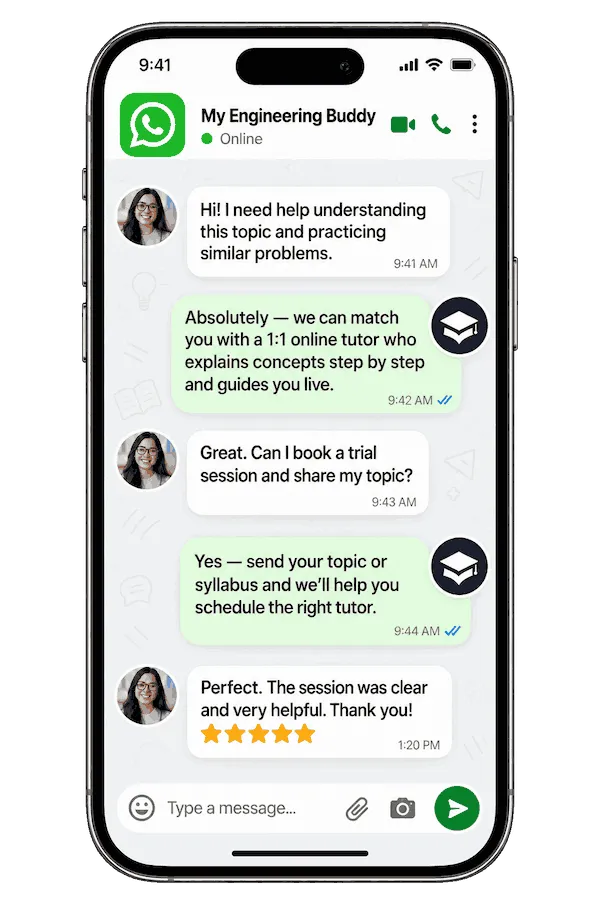
Unlike platforms where you fill out a form and wait days, MEB responds in under a minute, 24/7. Tutor match takes under an hour. The $1 trial means you test before you commit. Everything runs over WhatsApp — no logins, no intake forms.
Study Plans (Pick One That Matches Your Goal)
Once the diagnostic is done, the tutor builds one of three sequences: a catch-up plan for students 1–3 weeks from the exam with specific topic gaps — fast, targeted, paper-focused; an exam prep plan for students 4–8 weeks out — systematic coverage of all three tracks, past-paper practice, and mark scheme drilling for Papers 1, 2, and 3; or weekly ongoing support aligned to your school’s term schedule and internal assessment deadlines. The tutor adjusts the plan after every session based on what’s landing and what isn’t.
Pricing Guide
IGCSE Agriculture (0600) tutoring runs $20–$40 per hour for most students. Graduate-level or highly specialised agricultural science tutoring runs up to $100 per hour. Rate factors include syllabus complexity, tutor experience with Cambridge exam boards, and how tight the timeline is.
Availability narrows fast in April and May as the Cambridge exam window approaches. Students who book in February or March get more tutor choice and more consistent scheduling.
For students targeting agriculture-linked university programmes at institutions like Wageningen, Edinburgh, or Queensland, MEB can match tutors with professional agricultural research or farm science backgrounds — share your target programme and MEB will match the right tier.
Start with the $1 trial — 30 minutes, no registration, no commitment. WhatsApp MEB for a quick quote.
MEB tutors are matched by syllabus, not just subject name. An IGCSE Agriculture (0600) tutor knows the Cambridge 0600 paper structure, the mark scheme language, and the exact topics that separate a C from an A.
Source: My Engineering Buddy, 2008–2025.
FAQ
Is IGCSE Agriculture (0600) hard?
It’s manageable if you treat it as a science subject, not a memory exercise. Students who struggle usually lose marks on Paper 2 extended questions because they use everyday language instead of Cambridge’s scientific vocabulary. A tutor fixes that pattern quickly.
How many sessions are needed?
Most students see measurable improvement in 6–10 sessions. Students starting 4–8 weeks before the Cambridge exam typically book 2 sessions per week and work through all three paper types systematically. The tutor sets the exact sequence after the first diagnostic.
Can you help with practice exercises?
MEB tutoring is guided learning — you understand the work, then submit it yourself. The tutor explains the agricultural science behind each question so you can answer it confidently and independently. See our Academic Integrity policy and Why MEB page for full details on what we help with and what we don’t.
Will the tutor match my exact syllabus or exam board?
Yes. MEB tutors are matched to the Cambridge 0600 syllabus specifically — not a generic agriculture curriculum. If you’re sitting the May/June or October/November series, the tutor knows which past papers and specimen materials apply to your sitting.
What happens in the first session?
The tutor runs a short diagnostic using past-paper questions across the three main topic areas — soils, crops, and animal husbandry. This produces a gap list. Session one covers the most urgent gap, and the rest of the plan follows from there.
Is online tutoring as effective as in-person?
For a subject like IGCSE Agriculture (0600), yes — the tutor annotates diagrams, mark schemes, and soil profiles live on screen. Students in the UK, Gulf, and Australia consistently report the same quality as face-to-face. The digital pen-pad replicates a whiteboard session exactly.
Can I get IGCSE Agriculture (0600) help at midnight?
WhatsApp MEB at any hour and someone responds within a minute. Tutors span multiple time zones, so late-night sessions for students in the Gulf, Australia, or North America are standard — not an exception.
What if I don’t like my assigned tutor?
Tell MEB via WhatsApp and you’re rematched. No forms, no waiting. Most rematch requests happen within the hour. The $1 trial exists specifically so you can test fit before committing to a package of sessions.
Does IGCSE Agriculture (0600) count toward university entry requirements?
It can, particularly for agricultural science, environmental science, or biology-linked degree programmes. Students at universities including Wageningen, Edinburgh, and Queensland have cited strong IGCSE science profiles as part of their entry. Check your specific programme’s requirements directly.
How do I find an IGCSE Agriculture (0600) tutor in my city?
You don’t need to. All sessions are online via Google Meet, and tutors are matched by syllabus expertise and time zone — not location. Students in Dubai, London, Sydney, and Toronto all receive the same quality of 1:1 IGCSE Agriculture tutoring.
What’s the difference between Paper 2 and Paper 3, and which should I focus on?
Paper 2 tests structured written responses across the full syllabus — it carries 50% of your grade. Paper 3 (Alternative to Practical) tests data interpretation and experimental reasoning — worth 20%. Most students underestimate Paper 3. A tutor drills both, starting with wherever your marks are weakest.
How do I get started?
Start with the $1 trial — 30 minutes of live 1:1 tutoring or one homework question explained in full. Three steps: WhatsApp MEB, get matched to a 0600-specialist tutor, start your trial session. No registration, no commitment.
Trust & Quality at My Engineering Buddy
MEB tutors go through a structured vetting process: subject knowledge screening, a live demo session observed by MEB, and ongoing review of student feedback. Every IGCSE Agriculture (0600) tutor must demonstrate specific familiarity with the Cambridge 0600 syllabus — not just general science. Rated 4.8/5 across 40,000+ verified reviews on Google.
MEB tutoring is guided learning — you understand the work, then submit it yourself. For full details on what we help with and what we don’t, read our Academic Integrity policy and Why MEB.
MEB has served 52,000+ students across the US, UK, Canada, Australia, the Gulf, and Europe since 2008 — across 2,800+ subjects including Cambridge IGCSE, with particular depth in sciences like IGCSE Biology tutoring, IGCSE Environmental Management help, and IGCSE Chemistry tutoring. If your child is sitting multiple Cambridge sciences, MEB can coordinate tutors across subjects.
A common pattern our tutors observe is that IGCSE Agriculture students arrive thinking they need to memorise more content. Usually the real issue is exam technique — specifically, how to structure a six-mark answer so every mark point lands where the examiner looks for it.
MEB has operated since 2008 across 2,800+ subjects. For IGCSE sciences, that depth matters — tutors know not just the content but the exact Cambridge marking conventions that separate passing grades from top grades.
Source: My Engineering Buddy, 2008–2025.
Try your first session for $1 — 30 minutes of live 1:1 tutoring or one homework question explained in full. No registration. No commitment. WhatsApp MEB now and get matched within the hour.
Explore Related Subjects
Students studying IGCSE Agriculture (0600) often also need support in:
- IGCSE Biology (9-1)
- IGCSE Geography
- IGCSE Food & Nutrition
- IGCSE Chemistry (9-1)
- IGCSE Global Perspectives
- IGCSE Economics
Next Steps
Getting started takes two minutes. Share your Cambridge 0600 exam date, your hardest topic or paper, and your time zone. MEB matches you with a verified, syllabus-specific tutor — usually within 24 hours. The first session starts with a diagnostic, so every minute is spent on what will actually move your grade.
Before your first session, have ready:
- Your Cambridge 0600 syllabus or school course outline
- A recent past paper attempt or homework question you struggled with
- Your exam date or internal deadline
The tutor handles the rest. Visit www.myengineeringbuddy.com for more on how MEB works.
WhatsApp to get started or email [email protected].
Reviewed by Subject Expert
This page has been carefully reviewed and validated by our subject expert to ensure accuracy and relevance.




