

Hire Verified & Experienced
CI/CD (Continuous Integration & Continuous Delivery) Tutors Online
Email: [email protected]



~1 min
Average Reply Time
~1 hour
To Be Matched With A Tutor
1 Trial
75% Find Their Tutor On The 1st Trial
$1
Your First 30 Minutes
Hire The Best CI/CD (Continuous Integration & Continuous Delivery) Tutor
Top Tutors, Top Grades. Without The Stress!


Related Subjects
Your Jenkins pipeline failed at 2 AM and the deployment is due in six hours. That’s exactly when you need a CI/CD tutor.
CI/CD (Continuous Integration & Continuous Delivery) Tutor Online
CI/CD (Continuous Integration & Continuous Delivery) is a software engineering practice that automates building, testing, and deploying code. It uses pipelines — typically with tools like Jenkins, GitHub Actions, or GitLab CI — to ship reliable software faster and with fewer manual errors.
MEB offers 1:1 online tutoring and homework help in 2,800+ advanced subjects — including CI/CD tutor online sessions for students and developers working through course assignments, capstone projects, or real pipeline builds. If you’ve searched for a CI/CD tutor near me and hit a wall of generic platforms, MEB gives you a verified expert matched to your exact stack and syllabus. One session can close the gap between a broken build and a working deployment.
As part of MEB’s Computer Science tutoring track, CI/CD sits alongside distributed systems, cloud computing, and DevOps — all covered by the same pool of industry-experienced tutors.
- 1:1 online sessions tailored to your course, lab assignments, or capstone project
- Expert-verified tutors with hands-on CI/CD pipeline experience
- Flexible time zones — US, UK, Canada, Australia, Gulf
- Structured learning plan built after a diagnostic session
- Ethical homework and assignment guidance — you understand the work, then submit it yourself
52,000+ students across the US, UK, Canada, Australia, and the Gulf have used MEB since 2008 — including students in Computer Science subjects like CI/CD, distributed systems tutoring, and cloud computing help.
Source: My Engineering Buddy, 2008–2025.
How Much Does a CI/CD Tutor Cost?
Most CI/CD tutoring sessions run $20–$40/hr. Graduate-level or DevOps-specialist sessions involving niche toolchains (Argo CD, Spinnaker, Tekton) can reach up to $100/hr. The $1 trial gets you 30 minutes of live 1:1 tutoring or one homework question explained in full — no registration required.
| Level / Need | Typical Rate | What’s Included |
|---|---|---|
| Undergraduate / Standard | $20–$35/hr | 1:1 sessions, pipeline walkthroughs, assignment guidance |
| Advanced / Specialist (niche tools) | $35–$100/hr | Expert tutor, niche stack depth, DevOps architecture |
| $1 Trial | $1 flat | 30 min live session or one full homework question explained |
Tutor availability tightens around semester-end project deadlines and capstone submission windows. Book early if your timeline is fixed.
WhatsApp MEB for a quick quote — average response time under 1 minute.
Who This CI/CD Tutoring Is For
CI/CD trips up students who can write code fluently but have never owned a pipeline end-to-end. If your course suddenly expects you to configure GitHub Actions, write a working Jenkinsfile, or debug a failing Docker build in a CI environment, the leap feels sharp. MEB tutors bridge that gap directly.
- Undergraduate and graduate computer science students with a DevOps or software engineering module
- Students whose capstone or final project requires a working CI/CD pipeline they’ve never built before
- Students retaking after a failed first attempt at a software engineering or cloud computing course
- Developers moving into an academic programme who need to formalise their practical knowledge
- Students with a project submission deadline approaching and significant pipeline gaps still open
- Parents supporting a student whose assignment grades have dropped alongside their confidence in the course
Students who’ve come through MEB in this area have gone on to programmes at MIT, Carnegie Mellon, Georgia Tech, Imperial College London, University of Toronto, UNSW Sydney, and TU Delft — or into roles where CI/CD proficiency was the deciding factor.
Start with the $1 trial — one session is enough to diagnose exactly what’s blocking your pipeline.
1:1 Tutoring vs Self-Study vs AI vs YouTube vs Online Courses
Self-study works if you’re disciplined, but CI/CD has too many moving parts — a misconfigured environment variable breaks everything and you won’t know why. AI tools give fast syntax fixes but can’t watch you misread the pipeline log and correct the actual misunderstanding. YouTube covers “hello world” Jenkins setups well, then stops when your multi-stage Docker build fails in a specific way. Online courses are structured but assume the same stack for everyone — your course uses GitLab and the course uses GitHub. 1:1 tutoring with MEB is live, matched to your exact tools and assignment brief, and corrects the error you’re actually making — not a generalised version of it.
Outcomes: What You’ll Be Able To Do in CI/CD
After focused 1:1 CI/CD tutoring, you’ll be able to build and debug a multi-stage pipeline in Jenkins or GitHub Actions from scratch. You’ll apply branching strategies — feature branches, trunk-based development — and explain how they affect your build triggers. You’ll configure automated test stages, interpret test failure output, and fix the build without restarting from zero. You’ll write Dockerfiles and compose deployment steps that work in a CI context, not just locally. You’ll present your pipeline architecture to a marker or panel and defend your design choices.
Based on feedback from 40,000+ sessions collected by MEB from 2022 to 2025, 58% of students improved by one full grade after approximately 20 hours of 1:1 tutoring in subjects like CI/CD (Continuous Integration & Continuous Delivery). A further 23% achieved at least a half-grade improvement.
Source: MEB session feedback data, 2022–2025.
At MEB, we’ve found that CI/CD students waste the most time on environment issues — wrong Docker version, misconfigured runner, port conflict — rather than actual pipeline logic. A tutor who’s seen those errors a hundred times cuts through that noise in minutes, not hours.
What We Cover in CI/CD (Continuous Integration & Continuous Delivery) — Syllabus & Topics

Track 1: Core CI/CD Concepts & Pipeline Architecture
- Continuous Integration principles: commit frequency, build triggers, fast feedback
- Continuous Delivery vs Continuous Deployment — the distinction and when each applies
- Pipeline stages: source → build → test → deploy → monitor
- Branching strategies: Gitflow, trunk-based development, feature flags
- Artifact management: what gets built, stored, and versioned between stages
- Rollback strategies and blue-green / canary deployments
Recommended reading: Continuous Delivery by Jez Humble & David Farley; The DevOps Handbook by Kim, Humble, Debois & Willis.
Track 2: Tools & Platform Implementation
- Jenkins: Jenkinsfile syntax, agents, shared libraries, multi-branch pipelines
- GitHub Actions: workflow YAML, triggers, secrets, matrix builds, reusable workflows
- GitLab CI/CD: .gitlab-ci.yml structure, runners, stages, environments
- Docker in CI: building images in pipeline, layer caching, multi-stage builds
- Container registries: pushing and pulling images in a pipeline context
- Environment variables, secrets management, and secure credential injection
- Cloud computing integration: deploying to AWS, GCP, or Azure from a CI/CD pipeline
Recommended reading: Jenkins documentation; GitHub Actions official docs; Docker Deep Dive by Nigel Poulton.
Track 3: Testing, Quality Gates & DevOps Culture
- Automated testing in CI: unit, integration, and end-to-end test stages
- Test failure diagnosis: reading logs, identifying flaky tests, fixing build-breaking failures
- Code quality gates: linting, static analysis, coverage thresholds in the pipeline
- Infrastructure as Code (IaC) basics in a CI/CD context: Terraform, Ansible triggers
- Monitoring and alerting post-deploy: what CI/CD hands off to observability tools
- DevOps culture: shared ownership, blameless post-mortems, lead time reduction
Recommended reading: Site Reliability Engineering by Beyer et al. (Google); Accelerate by Forsgren, Humble & Kim.
Platforms, Tools & Textbooks We Support
CI/CD is entirely tool-dependent. MEB tutors work directly inside the same environment you’re using — not a generic walkthrough. Sessions cover the following platforms and toolchains:
- Jenkins (including pipelines, shared libraries, and Blue Ocean)
- GitHub Actions (workflow YAML, self-hosted runners, secrets)
- GitLab CI/CD (.gitlab-ci.yml, GitLab runners, environments)
- CircleCI, Travis CI, Bitbucket Pipelines
- Docker and Docker Compose in CI contexts
- Kubernetes basics for deployment stages (kubectl, Helm)
- Terraform and Ansible for IaC-triggered pipelines
- AWS CodePipeline, Azure DevOps, Google Cloud Build
What a Typical CI/CD Session Looks Like
The tutor opens by checking where the previous session left off — usually a specific pipeline stage that was failing, such as a Docker image build step or a failing test gate. You share your screen or paste your Jenkinsfile and pipeline logs directly into Google Meet. The tutor reads the error output with you, identifies the root cause — whether it’s a misconfigured agent, a missing environment variable, or a test that passes locally but fails in the container — and walks you through the fix while you apply it. You’re not watching; you’re doing. After the fix holds, the tutor introduces the next layer: maybe branching strategy, or how to add a deployment stage that only runs on main. The session closes with a concrete task — “get your test stage green before next time” — and a note on what comes next.
How MEB Tutors Help You with CI/CD (The Learning Loop)
Diagnose: In the first session, the tutor identifies exactly where your understanding breaks down — whether that’s the pipeline syntax, the toolchain configuration, the testing setup, or the deployment logic. Most students come in thinking the problem is one thing; it’s usually something earlier in the chain.
Explain: The tutor works through the relevant concept live — writing pipeline YAML, tracing a build log, or drawing the stage sequence on a digital pen-pad — so you see the logic, not just the fix.
Practice: You build or modify the pipeline yourself while the tutor watches. This is where the real learning happens. Watching someone else configure a runner teaches you nothing you’ll remember under exam pressure.
Feedback: Every mistake gets addressed in the moment — why the step failed, what the error message was actually telling you, and what the correct mental model is. No vague corrections.
Plan: At the end of each session, the tutor sets the next topic and a specific task. If you’re three weeks from a submission, the plan is mapped to that deadline.
Sessions run on Google Meet with a digital pen-pad or iPad + Apple Pencil for diagram work. Before your first session, share your assignment brief, your current pipeline file (even if broken), and your deadline. Start with the $1 trial — 30 minutes of live tutoring that also functions as your first diagnostic.
Students consistently tell us that the moment CI/CD clicks is when they stop treating the pipeline as a black box and start reading error logs as a conversation. A good tutor teaches you to listen to what the build is telling you — not just fix and move on.
Tutor Match Criteria (How We Pick Your Tutor)
Every CI/CD tutor at MEB is matched on four criteria before your first session.
Subject depth: The tutor must have demonstrable experience with your specific tools — Jenkins, GitHub Actions, GitLab CI — not just general DevOps knowledge. Course-level requirements are checked against the tutor’s background before matching.
Tools: All sessions run on Google Meet with a digital pen-pad or iPad + Apple Pencil. No exceptions — the live annotation capability is part of how the methodology works.
Time zone: Tutors are matched to your region — US, UK, Canada, Australia, Gulf — so sessions don’t require either party to work at 3 AM.
Goals: Whether you need to pass a module, complete a capstone, or understand CI/CD deeply enough to defend your choices in a viva, the tutor is briefed on your specific goal before session one.
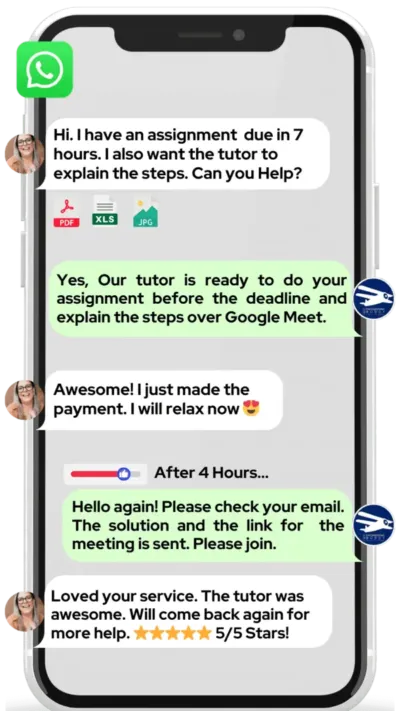
Unlike platforms where you fill out a form and wait, MEB responds in under a minute, 24/7. Tutor match takes under an hour. The $1 trial means you test the fit before you commit. Everything runs over WhatsApp — no logins, no intake forms.
Study Plans (Pick One That Matches Your Goal)
The tutor builds the exact sequence after your diagnostic, but here’s how most CI/CD students structure their sessions. Catch-up (1–3 weeks): Tight deadline, broken pipeline, missing core concepts — sessions are daily or every other day, focused on the specific component due. Exam or submission prep (4–8 weeks): Full pipeline build from scratch, testing integration, deployment stage, and architecture documentation — mapped to your submission rubric. Weekly support: Ongoing sessions aligned to semester milestones, covering new tooling as the course introduces it. The tutor adapts as your needs shift.
Pricing Guide
CI/CD tutoring runs $20–$40/hr for most undergraduate and graduate-level course requirements. Sessions involving specialist toolchains — Argo CD, Spinnaker, Tekton, or enterprise Jenkins configurations — are available up to $100/hr through tutors with professional DevOps or SRE backgrounds.
Rate factors include your level, the complexity of the tool stack, your deadline pressure, and tutor availability. Availability tightens at semester end — if your capstone is due in six weeks, don’t wait four of them.
For students targeting roles at top engineering firms or pursuing advanced DevOps certifications, tutors with professional industry backgrounds are available at higher rates — share your specific goal and MEB will match the tier to it.
Start with the $1 trial — 30 minutes, no registration, no commitment. WhatsApp MEB for a quick quote.
A common pattern our tutors observe is that students who debug CI/CD pipeline failures with a tutor present — rather than alone — fix the root cause rather than patching symptoms. That difference shows up clearly in final project marks.
Source: MEB tutor observation data, 2022–2025.
FAQ
Is CI/CD hard?
The concepts are logical, but the tooling is unforgiving. A missing comma in a YAML file or a wrong Docker base image breaks the whole pipeline with an error message that points nowhere obvious. Students who struggle aren’t weak at programming — they’ve just never had to own an automated pipeline before.
How many sessions are needed?
Most students close a specific assignment gap in 3–5 sessions. Building full CI/CD proficiency — to the point where you can architect and defend a pipeline — typically takes 10–15 hours of 1:1 work, depending on your starting point and how much you practice between sessions.
Can you help with homework and assignments?
Yes — MEB tutoring is guided learning. You understand the work, then submit it yourself. Tutors walk through the pipeline logic, explain what’s failing and why, and make sure you can replicate the solution independently. See our Academic Integrity policy and Why MEB page for full details on what we help with and what we don’t.
Will the tutor match my exact syllabus or exam board?
Yes. Before matching, MEB reviews your course outline, assignment brief, and the specific tools your module requires. Tutors are not assigned generically — they’re matched to your exact stack and learning outcomes, whether your course uses GitHub Actions, Jenkins, or GitLab CI.
What happens in the first session?
The tutor runs a diagnostic: you share your current pipeline file, describe what’s failing, and the tutor identifies the actual gap — which is often different from what you think it is. The session plan for all subsequent sessions is built from that first conversation and your deadline.
Is online tutoring as effective as in-person?
For CI/CD specifically, online is often better — you’re already working in a terminal and browser, so screen-sharing is natural. The tutor sees exactly what you see, including the build logs, the pipeline output, and your configuration files. There’s no whiteboard advantage that in-person offers here.
Jenkins vs GitHub Actions — which should I learn first?
That depends on your course. Jenkins remains the dominant tool in enterprise environments and appears in most DevOps modules at US and UK universities. GitHub Actions is faster to pick up and increasingly common in newer curricula. Tell MEB which tool your assignment specifies and the tutor will be matched accordingly.
My pipeline works locally but fails in CI — can a tutor help with that?
This is the most common CI/CD problem MEB tutors see, and it has a short list of usual causes: environment variable differences, Docker image mismatches, dependency caching issues, or a test that relies on a local file path. A tutor can diagnose it from your logs in one session.
Can I get CI/CD help at midnight?
Yes. MEB operates 24/7 across all time zones. If you’re in the US, UK, Australia, or the Gulf and your pipeline breaks late at night before a morning submission, WhatsApp MEB and a tutor can be matched within the hour. Response time averages under one minute.
What if I don’t like my assigned tutor?
Request a replacement immediately via WhatsApp. MEB will match you with a different tutor, typically within the same day. No explanation required — the fit has to be right for the sessions to work.
Do you cover DevOps certifications like AWS DevOps Engineer or CKA?
MEB tutors cover CI/CD content relevant to AWS DevOps Engineer Professional, Certified Kubernetes Administrator (CKA), and related certifications. Share the specific exam and domain you’re working on — the tutor will be matched to the exact content area, not just general DevOps knowledge.
How do I get started?
Three steps: WhatsApp MEB with your course details and deadline → get matched with a verified CI/CD tutor within the hour → start your $1 trial session, which runs 30 minutes of live tutoring or one full assignment question explained. No registration, no commitment beyond that first session.
Trust & Quality at My Engineering Buddy
Every MEB tutor goes through subject-specific vetting — not just a CV review. For CI/CD, that means demonstrating real pipeline experience: live demo sessions, tool-specific questioning, and feedback review after early sessions. Tutors hold degrees in computer science, software engineering, or related fields, and many have professional DevOps or SRE backgrounds alongside academic experience. Rated 4.8/5 across 40,000+ verified reviews on Google.
MEB tutoring is guided learning — you understand the work, then submit it yourself. For full details on what we help with and what we don’t, read our Academic Integrity policy and Why MEB.
MEB has been serving students across the US, UK, Canada, Australia, the Gulf, and Europe since 2008 — covering 2,800+ subjects in Computer Science and adjacent fields. Students working on operating systems tutoring, concurrent programming help, and cybersecurity tutoring regularly cross into CI/CD as their coursework integrates these disciplines. That breadth means MEB can cover the full stack when your assignment touches multiple subjects at once.
Our experience across thousands of sessions shows that the students who improve fastest in CI/CD are the ones who treat broken pipelines as learning data — not failure. We build that mindset from session one. The $1 trial is enough to start that shift.
Try your first session for $1 — 30 minutes of live 1:1 tutoring or one homework question explained in full. No registration. No commitment. WhatsApp MEB now and get matched within the hour.
Explore Related Subjects
Students studying CI/CD (Continuous Integration & Continuous Delivery) often also need support in:
- Distributed Algorithms
- Design Patterns
- Systems Programming
- High Performance Computing (HPC)
- Object-Oriented Programming (OOP)
- Parallel Computing & Processing
- Information Technology
Next Steps
When you contact MEB, have these ready:
- Your course outline or assignment brief — including which CI/CD tools are required
- Your current pipeline file (even a broken one) or the homework question you’re stuck on
- Your submission or exam deadline, and your available time zones for sessions
Before your first session, have ready: your exam board and syllabus (or course outline), a recent past paper attempt or homework you struggled with, and your exam or deadline date. The tutor handles the rest.
MEB matches you with a verified CI/CD tutor — usually within the hour, never more than 24 hours. The first session starts with a diagnostic so every minute is used on the right thing.
Visit www.myengineeringbuddy.com for more on how MEB works.
WhatsApp to get started or email [email protected].
52,000+ Happy Students From Various Universities





Reviewed by Subject Expert
This page has been carefully reviewed and validated by our subject expert to ensure accuracy and relevance.

