

Contact MEB Today To Get The Best
Parallel Computing Processing & Programming Tutoring Online
Email: [email protected]



~1 min
Average Reply Time
~1 hour
To Be Matched With A Tutor
30 Min Trial
75% Find Their Tutor On The 1st Trial
$20-35+/hr
Premium Yet Affordable Learning
Hire The Best Parallel Computing Processing & Programming Tutor

Threads deadlocking at 2 a.m., MPI scatter-gather logic that won’t scale, CUDA kernels that compile but run in 40 seconds instead of 4 — parallel computing has a very specific way of breaking students.
Parallel Computing Processing & Programming Tutor Online
Parallel Computing Processing & Programming covers the design and implementation of programs that execute multiple computations simultaneously using threads, processes, or distributed nodes — equipping students to write scalable, high-performance code across multi-core and cluster architectures.
If you’ve searched for a Parallel Computing Processing & Programming tutor near me and found little that matches your actual coursework — OpenMP labs, MPI assignments, CUDA projects, or distributed algorithm analysis — MEB covers all of it. Our Computer Science tutoring network includes specialists who work with students on exactly these topics, at undergraduate and graduate level. One well-placed session before a submission deadline can be the difference between a working parallel program and a race condition you can’t explain.
- 1:1 online sessions matched to your exact course syllabus and assignment stack
- Expert-verified tutors with hands-on parallel programming experience (OpenMP, MPI, CUDA, Pthreads)
- Flexible time zones — US, UK, Canada, Australia, Gulf covered
- Structured learning plan built after a diagnostic session on your current gaps
- Ethical homework and assignment guidance — you understand the work, then submit it yourself
52,000+ students across the US, UK, Canada, Australia, and the Gulf have used MEB since 2008 — including students in Computer Science subjects like Parallel Computing Processing & Programming, Distributed Systems tutoring, and High Performance Computing help.
Source: My Engineering Buddy, 2008–2025.
How Much Does a Parallel Computing Processing & Programming Tutor Cost?
Most students pay $20–$40/hr for Parallel Computing Processing & Programming tutoring. Graduate-level work involving CUDA optimisation, HPC cluster design, or distributed algorithm proofs can run up to $100/hr depending on the tutor’s specialisation. Not sure if it fits your budget? Start with the $1 trial — 30 minutes of live 1:1 tutoring or one full homework question explained, before you commit to anything.
| Level / Need | Typical Rate | What’s Included |
|---|---|---|
| Undergraduate (intro parallel) | $20–$35/hr | 1:1 sessions, assignment guidance, debugging walkthroughs |
| Advanced / Graduate (CUDA, MPI, HPC) | $40–$100/hr | Expert tutor, niche depth, research-level problems |
| $1 Trial | $1 flat | 30 min live session or one full homework question explained |
Tutor availability tightens significantly during final exam periods and semester-end project deadlines. Book early if your submission is within four weeks.
WhatsApp MEB for a quick quote — average response time under 1 minute.
Who This Parallel Computing Processing & Programming Tutoring Is For
This isn’t a course for students who are mildly curious about threading. It’s for students who are actively stuck — on a specific assignment, a concept that isn’t clicking, or an exam that covers material their lectures barely touched.
- Undergraduate CS and engineering students taking a parallel computing or HPC module
- Graduate students working on distributed systems, GPU computing, or performance analysis
- Students who failed or near-failed a parallel programming assignment and are retaking
- Students with a conditional offer from a graduate programme who need this grade to hold it
- Students 4–6 weeks from finals with significant gaps in thread management, MPI communication, or CUDA memory models
- Parents watching a student’s confidence drop as parallel labs get harder each week
Students in this subject come from programmes at Georgia Tech, MIT, Carnegie Mellon, University of Michigan, Imperial College London, ETH Zurich, University of Toronto, and the University of New South Wales, among others.
1:1 Tutoring vs Self-Study vs AI vs YouTube vs Online Courses
Self-study works if you’re disciplined — but parallel bugs are often silent, and without a second set of eyes, you’ll fix the symptom and miss the root cause. AI tools explain concepts quickly but can’t watch you run a race condition live and tell you exactly where your thread synchronisation is wrong. YouTube is solid for conceptual overviews of Amdahl’s Law or fork-join models, but stops the moment you have a 200-line MPI program that hangs on large inputs. Online courses give you structure at a fixed pace — they won’t adjust because your exam is in three weeks and you still don’t understand cache coherence. One-to-one tutoring with MEB is live, calibrated to your exact course stack, and corrects errors in the moment — which matters in a subject where a single misplaced barrier can invalidate an entire benchmark.
Outcomes: What You’ll Be Able To Do in Parallel Computing Processing & Programming
After working with an MEB tutor, you’ll be able to write and debug multi-threaded programs using Pthreads and OpenMP with confidence. You’ll analyze speedup and efficiency using Amdahl’s and Gustafson’s laws, and apply them to real benchmark results. You’ll explain and implement MPI send/receive, collective operations, and scatter-gather patterns across distributed processes. You’ll design and profile CUDA kernels, manage device memory correctly, and avoid the thread divergence and warp inefficiency problems that kill GPU performance. You’ll also present a parallel algorithm’s complexity and scalability in an exam or research setting without guessing.
Based on feedback from 40,000+ sessions collected by MEB from 2022 to 2025, 58% of students improved by one full grade after approximately 20 hours of 1:1 tutoring in subjects like Parallel Computing Processing & Programming. A further 23% achieved at least a half-grade improvement.
Source: MEB session feedback data, 2022–2025.
At MEB, we’ve found that parallel computing students almost always know more than they think they do — the real gap is usually in how they reason about execution order under concurrency. Once a tutor walks through one concrete example of a race condition from start to fix, the underlying logic for the next five problems opens up fast.
What We Cover in Parallel Computing Processing & Programming (Syllabus / Topics)

Track 1: Shared-Memory Programming (OpenMP & Pthreads)
- Thread creation, joining, and lifecycle management with Pthreads
- OpenMP directives: parallel regions, loop parallelism, sections
- Race conditions: identification, reproduction, and elimination
- Synchronisation primitives: mutexes, semaphores, barriers, condition variables
- False sharing, cache-line alignment, and memory access optimisation
- Work-sharing constructs and scheduling strategies (static, dynamic, guided)
- Reduction clauses and thread-private variables
Core texts: Introduction to Parallel Computing by Ananth Grama et al.; Parallel Programming in C with MPI and OpenMP by Michael Quinn.
Track 2: Distributed-Memory Programming (MPI)
- Point-to-point communication: MPI_Send, MPI_Recv, blocking vs non-blocking
- Collective operations: broadcast, reduce, scatter, gather, alltoall
- Communicators, process topology (Cartesian, graph), and rank management
- Distributed algorithms and message-passing design patterns
- Deadlock avoidance in MPI programs
- Performance measurement: latency, bandwidth, and scalability profiling
- Hybrid MPI+OpenMP programming models
Core texts: Using MPI by Gropp, Lusk & Skjellum; Parallel Programming with MPI by Peter Pacheco.
Track 3: GPU Computing (CUDA)
- GPU architecture: SMs, warps, thread blocks, and the CUDA execution model
- Memory hierarchy: global, shared, constant, texture, and register memory
- Kernel design: grid/block dimensions, occupancy, and thread indexing
- Memory coalescing, warp divergence, and occupancy optimisation
- CUDA streams and asynchronous execution for pipeline overlapping
- Profiling with Nsight and nvprof; interpreting bottleneck data
Core texts: Programming Massively Parallel Processors by Kirk & Hwu; CUDA by Example by Sanders & Kandrot.
Track 4: Parallel Algorithm Design & Performance Theory
- Amdahl’s Law and Gustafson’s Law — speedup limits and scalability ceilings
- PRAM model: EREW, CREW, CRCW variants and their implications
- Parallel algorithm design: divide-and-conquer, pipeline, data-parallel patterns
- Algorithm analysis for parallel complexity: work, span, and parallelism ratio
- Load balancing strategies: static partitioning vs dynamic task queues
- Communication complexity and network topology effects on performance
Core texts: Algorithm Design by Kleinberg & Tardos (parallel chapters); The Art of Multiprocessor Programming by Herlihy & Shavit.
Platforms, Tools & Textbooks We Support
Parallel computing coursework runs across a specific set of environments. MEB tutors are comfortable working through problems in all of the following:
- Languages & APIs: C, C++, Fortran (OpenMP/MPI), CUDA C/C++, Python (multiprocessing, concurrent.futures, Dask)
- Cluster & HPC environments: SLURM job schedulers, PBS, Linux terminal, SSH workflows
- Profiling tools: Nsight Systems, nvprof, gprof, Intel VTune, Valgrind Helgrind
- IDEs & editors: VS Code with remote SSH, CLion, Jupyter for Python parallelism
- Frameworks: OpenCL (for non-NVIDIA GPU work), Intel oneAPI, RAJA, Kokkos
- Reference: NIST and the NASA Jet Propulsion Laboratory education resources are useful starting points for students working on scientific HPC applications.
What a Typical Parallel Computing Processing & Programming Session Looks Like
The tutor opens by checking what happened since the last session — usually a specific OpenMP loop or MPI collective that didn’t behave as expected. From there, the session moves into the core problem: the student shares their screen, the tutor pulls up the same code or algorithm, and they work through it together. If it’s a CUDA kernel that’s running slow, the tutor uses a digital pen-pad to annotate the thread-block grid and memory access pattern while explaining exactly why coalescing is failing. The student then rewrites the relevant section with the tutor present, explains their reasoning aloud, and catches their own errors before they’re pointed out. The session closes with one concrete task — a specific function to rewrite or a performance profiling run to complete — and the next topic is noted so the following session doesn’t lose ten minutes finding focus.
How MEB Tutors Help You with Parallel Computing Processing & Programming (The Learning Loop)
Diagnose: In the first session, the tutor identifies where your understanding actually breaks down — not just where your code fails. For most students, it’s one of three places: thread lifecycle and synchronisation, MPI communication ordering, or CUDA memory hierarchy. Knowing which one means the next session doesn’t waste time on topics you already understand.
Explain: The tutor works through a live example using a digital pen-pad — annotating execution timelines, drawing process communication diagrams, or marking up a CUDA thread-block grid as they talk. No slides. No recorded lectures. Live and adjustable.
Practice: You attempt the next problem while the tutor watches. This is the part that self-study and YouTube can’t replicate. The tutor sees exactly where your reasoning drifts before you reach a wrong answer.
Feedback: Every error gets a specific explanation — not “that’s wrong” but “here’s why the barrier placement there causes a deadlock, and here’s the rule that tells you where it should go.” Assignment marking criteria are factored in where relevant.
Plan: After each session, the tutor notes which topics are solid and which need another pass. The plan adapts based on your next deadline — exam in three weeks, lab due Friday, or an ongoing research project with no fixed end.
Sessions run over Google Meet with a digital pen-pad or iPad and Apple Pencil. Before your first session, have your course outline or assignment brief ready, the specific code or problem you’re stuck on, and your deadline date. The tutor takes it from there. Start with the $1 trial — 30 minutes of live tutoring that also serves as your first diagnostic.
Students consistently tell us that parallel computing is the first CS course where reading the textbook and running the examples isn’t enough. The bugs are real and the execution model is genuinely counterintuitive until someone walks you through it live. That’s exactly what 1:1 sessions are for.
Tutor Match Criteria (How We Pick Your Tutor)
Not every CS tutor can handle parallel programming. MEB matches on four criteria specifically:
Subject depth: Tutors are matched to your level — intro shared-memory courses, advanced MPI/CUDA work, or graduate-level distributed computing research. They know the difference between a first-year parallel lab and an HPC thesis project.
Tools: Every tutor uses Google Meet with a digital pen-pad or iPad and Apple Pencil — standard across all MEB sessions for this subject.
Time zone: Matched to your region. Students in the US, UK, Gulf, Canada, and Australia all get tutors in overlapping hours — not someone asking you to log on at 4 a.m.
Goals: Whether you need to fix one assignment, pass an end-of-semester exam, or get conceptual depth for a research project, the tutor is briefed on your specific goal before session one.
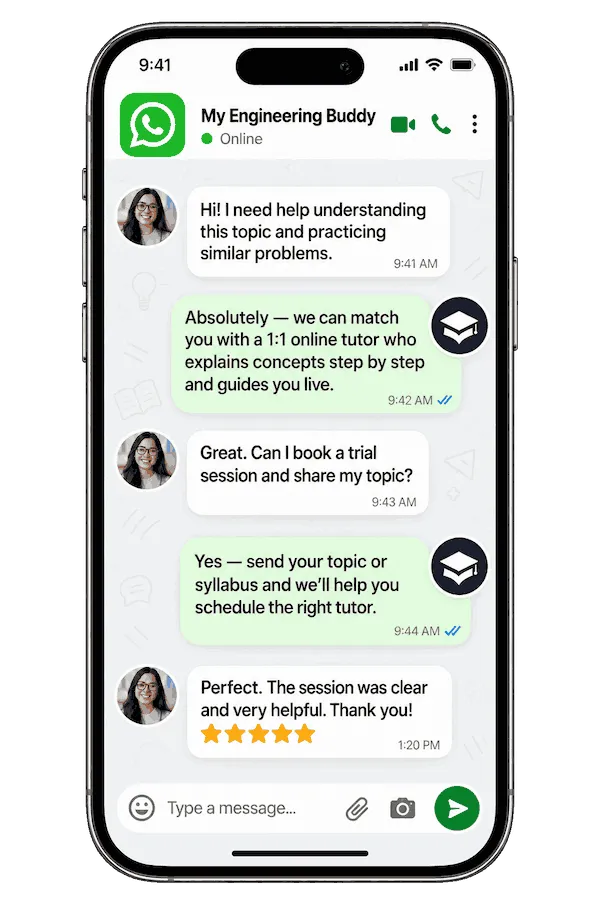
Unlike platforms where you fill out a form and wait, MEB responds in under a minute, 24/7. Tutor match takes under an hour. The $1 trial means you test before you commit. Everything runs over WhatsApp — no logins, no intake forms.
Study Plans (Pick One That Matches Your Goal)
After a diagnostic session, your tutor builds the sequence. Three plans fit most students: a catch-up plan (1–3 weeks) for students behind on thread management, MPI, or CUDA fundamentals before an exam or lab submission; an exam prep plan (4–8 weeks) covering the full syllabus with worked examples and past problem sets; or weekly ongoing support aligned to your semester schedule, covering each new topic before it becomes an assignment problem. The tutor adjusts pace and depth based on what each diagnostic session reveals.
Pricing Guide
Parallel Computing Processing & Programming tutoring starts at $20/hr for standard undergraduate courses. Rates reach $40–$100/hr for CUDA optimisation, MPI performance tuning, or graduate research support, depending on the tutor’s depth and the specificity of the work.
Rate factors include: course level, topic complexity (shared-memory vs distributed vs GPU), how soon your deadline is, and tutor availability during peak periods. Availability tightens noticeably in the four weeks before semester finals.
For students targeting top graduate programmes or research roles in HPC, scientific computing, or GPU systems, tutors with professional industry or research backgrounds are available at higher rates — share your goal and MEB will match the tier to your ambition.
Start with the $1 trial — 30 minutes, no registration, no commitment. WhatsApp MEB for a quick quote.
MEB has been running since 2008. 18 years of 1:1 online tutoring across 2,800+ subjects — including every major area of Operating Systems tutoring, Concurrent Programming help, and parallel computing — means the matching and quality systems are not improvised.
Source: My Engineering Buddy, 2008–2025.
Try your first session for $1 — 30 minutes of live 1:1 tutoring or one homework question explained in full. No registration. No commitment.
WhatsApp MEB now
and get matched within the hour.
FAQ
Is Parallel Computing Processing & Programming hard?
Yes — consistently rated one of the more difficult upper-division CS courses. The execution model is counterintuitive: correct sequential code becomes incorrect parallel code. Race conditions, deadlocks, and GPU memory errors don’t always reproduce reliably, which makes debugging significantly harder than standard programming courses.
How many sessions are needed?
Most students need 6–12 sessions for meaningful improvement across the main topics — shared memory, MPI, and CUDA. Students with a single specific assignment gap can often resolve it in 2–3 targeted sessions. The tutor builds a realistic plan after the first diagnostic.
Can you help with homework and assignments?
Yes. MEB tutoring is guided learning — you understand the work, then submit it yourself. The tutor explains the concept, walks through a similar example, and supports your reasoning. See our Academic Integrity policy and Why MEB page for full details on what we help with and what we don’t.
Will the tutor match my exact syllabus or exam board?
Yes. Before matching, MEB asks for your course outline, university, and specific topics. Tutors are selected based on their familiarity with your exact syllabus stack — whether that’s an OpenMP-only intro course or a full HPC module covering MPI, CUDA, and performance analysis.
What happens in the first session?
The tutor runs a short diagnostic — usually 10–15 minutes — to locate exactly where your understanding breaks down. Then the session moves straight into the highest-priority gap. You leave with a specific task and a session plan for what comes next.
Is online tutoring as effective as in-person?
For parallel computing specifically, online works well. Code is already on a screen. The tutor can annotate directly over your terminal output or profiling results using a digital pen-pad, which is often clearer than pointing at a physical whiteboard. Most students adapt within the first 20 minutes.
What’s the difference between OpenMP and MPI, and which should I focus on first?
OpenMP targets shared-memory systems — multiple cores on one machine. MPI targets distributed-memory systems — separate processes on different nodes. Most courses introduce OpenMP first because the mental model is simpler. Your tutor assesses which is creating the current bottleneck and starts there.
Can I get help specifically with CUDA and GPU programming?
Yes. MEB has tutors who specialise in CUDA — kernel design, memory coalescing, warp occupancy, and Nsight profiling. GPU programming has its own failure patterns that differ completely from CPU parallelism, and the tutor is matched to that specific depth if that’s your need.
Do you offer group Parallel Computing sessions?
No — all MEB sessions are 1:1. Group sessions create a fixed pace that rarely matches every participant’s gap. For a subject as individually specific as parallel debugging, one-to-one is the only format that reliably moves the needle.
What if I don’t understand why my parallel program is slower than the sequential version?
This is one of the most common issues in the subject. The tutor will look at your thread count, communication overhead, synchronisation cost, and whether Amdahl’s Law caps your potential speedup given the serial fraction of your code. It’s almost always diagnosable within one session.
Can I get Parallel Computing help at midnight or over the weekend?
Yes. MEB operates 24/7 across time zones. WhatsApp response time is under a minute on average. If your lab is due at 8 a.m. and it’s currently midnight, message now — tutors in compatible time zones are available and can often start within the hour.
How do I get started?
Three steps: WhatsApp MEB with your topic and deadline, get matched to a verified tutor within the hour, then start your $1 trial — 30 minutes live or one full assignment question explained. No forms, no registration, no waiting.
Trust & Quality at My Engineering Buddy
Every MEB tutor in parallel computing and Systems Programming goes through subject-specific screening: a live demo session evaluated against technical depth, code explanation clarity, and ability to explain parallel execution models without vagueness. Tutors hold degrees in computer science, electrical engineering, or applied mathematics — many with postgraduate specialisations in HPC or GPU computing. Rated 4.8/5 across 40,000+ verified reviews on Google. Ongoing feedback from every session feeds back into tutor assignment decisions.
MEB tutoring is guided learning — you understand the work, then submit it yourself. For full details on what we help with and what we don’t, read our Academic Integrity policy and Why MEB.
MEB has served 52,000+ students across the US, UK, Canada, Australia, the Gulf, and Europe in 2,800+ subjects since 2008. Within Computer Science, that includes Parallel Computing Processing & Programming, Memory Management & Allocation tutoring, and Cloud Computing help — the subjects that sit alongside parallel computing in most CS programmes. See our tutoring methodology for how sessions are structured and how progress is tracked.
18 years. 52,000+ students. 2,800+ subjects. MEB’s track record in advanced Computer Science subjects — from Algorithms tutoring to GPU parallel programming — is built on session quality, not marketing claims.
Source: My Engineering Buddy, 2008–2025.
A common pattern our tutors observe is this: students arrive having re-read the same chapter three times and still can’t find the bug. In almost every case, the issue isn’t knowledge — it’s that parallel errors require a different kind of reading than sequential ones. One session with a tutor who has seen that pattern before resets the whole approach.
Explore Related Subjects
Students studying Parallel Computing Processing & Programming often also need support in:
- Quantum Computing
- Data Structures and Algorithms (DSA)
- Computer Organisation & Architecture
- Object-Oriented Programming (OOP)
- Compiler Design
- Automata Theory
- Theory of Computation
Next Steps
When you message MEB, have these ready:
- Your course outline or assignment brief, and the specific topic or code you’re stuck on
- Your exam or submission deadline date
- Your availability and time zone
MEB matches you with a verified tutor — usually within 24 hours, often faster. The first session starts with a diagnostic so every minute is used on what actually matters.
Before your first session, also have ready: a recent past paper attempt or the homework question you struggled with most. The tutor handles the rest.
Visit www.myengineeringbuddy.com for more on how MEB works.
WhatsApp to get started or email [email protected].
Reviewed by Subject Expert
This page has been carefully reviewed and validated by our subject expert to ensure accuracy and relevance.




