




~1 min
Average Reply Time
~1 hour
To Be Matched With A Tutor
30 Min Trial
75% Find Their Tutor On The 1st Trial
$20-35+/hr
Premium Yet Affordable Learning
Most students who struggle with Marvelous Designer aren’t bad at software — they just never had someone explain the simulation logic behind the tools.
Marvelous Designer Tutor Online
Marvelous Designer is a 3D garment simulation software used in fashion, game design, and film production, enabling users to create realistic fabric behaviour, pattern construction, and virtual clothing prototypes through physics-based simulation.
MEB connects you with a specialist Marvelous Designer tutor online for 1:1 sessions built around your exact project, course module, or software version. Whether you’re a fashion student building a digital portfolio, a game artist simulating cloth dynamics, or a designer transitioning from flat pattern to 3D, finding a Marvelous Designer tutor near me has never been easier — sessions run over Google Meet with a digital pen-pad, wherever you are. Our tutors cover fashion studies and software subjects across the US, UK, Canada, Australia, and Gulf. One targeted session can shift your understanding faster than days of trial and error.
- 1:1 online sessions tailored to your specific project brief or course module
- Expert-verified tutors with hands-on Marvelous Designer and garment construction experience
- Flexible time zones — US, UK, Canada, Australia, Gulf covered
- Structured learning plan built after a diagnostic session
- Guided project support — we explain the workflow, you build the garment
52,000+ students across the US, UK, Canada, Australia, and the Gulf have used MEB since 2008 — including students in Fashion Studies subjects like Marvelous Designer, Fashion CAD, and Style3D.
Source: My Engineering Buddy, 2008–2025.
How Much Does a Marvelous Designer Tutor Cost?
Sessions start at $20/hr for most levels, with specialist or advanced project support up to $70/hr for complex garment simulation or film/game production pipelines. The $1 trial gives you 30 minutes of live 1:1 tutoring to test the fit before you commit to anything further.
| Level / Need | Typical Rate | What’s Included |
|---|---|---|
| Standard (fashion students, beginners) | $20–$35/hr | 1:1 sessions, workflow guidance |
| Advanced / Specialist (game, film, portfolio) | $35–$70/hr | Expert tutor, simulation depth |
| $1 Trial | $1 flat | 30 min live session or 1 project question |
Tutor availability tightens during end-of-semester portfolio deadlines and graduate show seasons. Book early if your submission is within four weeks.
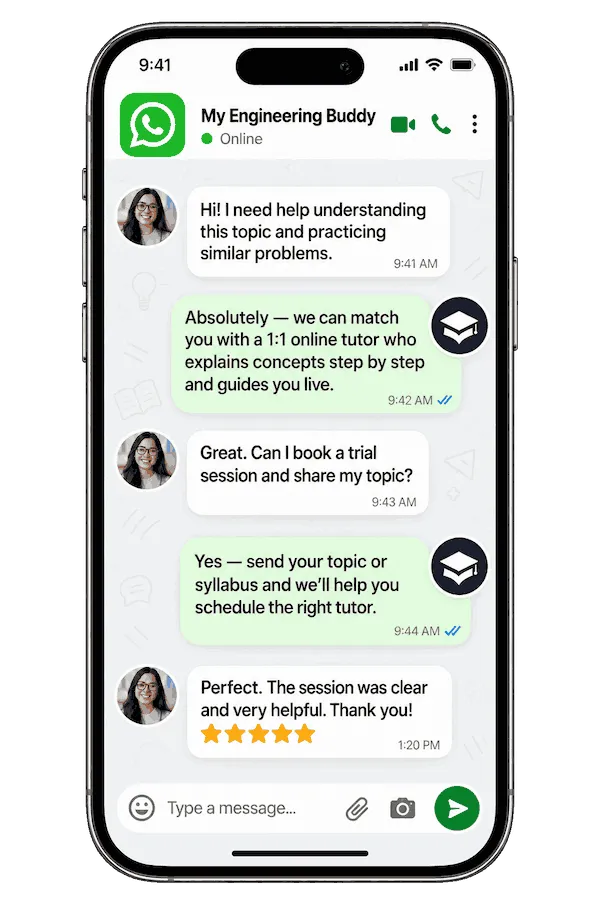
WhatsApp MEB for a quick quote — average response time under 1 minute.
Who This Marvelous Designer Tutoring Is For
Marvelous Designer draws students from fashion design, game art, VFX, and product development — and the gaps they arrive with vary just as widely. Some can’t get a pattern to sit correctly on the avatar; others understand the drape but can’t translate it back to a flat pattern. MEB tutors have seen both.
- Fashion design students building a digital garment portfolio for graduate shows or internship applications
- Game artists and character designers adding realistic cloth simulation to 3D character rigs
- VFX and film production students working with cloth dynamics in pipeline projects
- Students retaking a module after a failed first attempt at garment simulation
- Professionals from flat pattern backgrounds transitioning to 3D virtual prototyping
- Students with a portfolio or project submission deadline approaching and significant gaps still to close
MEB has worked with students at programmes including Parsons School of Design, London College of Fashion, FIDM, SCAD, Central Saint Martins, Istituto Marangoni, and Royal Melbourne Institute of Technology.
1:1 Tutoring vs Self-Study vs AI vs YouTube vs Online Courses
Self-study works if you’re methodical, but Marvelous Designer’s simulation logic trips people up in ways a manual won’t catch. AI tools can answer isolated questions — they can’t watch you set particle distance wrong and fix it live. YouTube covers the basics well; it stops being useful the moment your specific fabric isn’t behaving as expected. Online courses move at a fixed pace with no one checking whether your avatar fit is actually correct. 1:1 tutoring with MEB is live, calibrated to your exact brief or module, and corrects simulation errors the moment they appear — before they become habits that ruin an entire project file.
Outcomes: What You’ll Be Able To Do in Marvelous Designer
After working with an MEB Marvelous Designer tutor, students can apply physics-based simulation settings — particle distance, fabric weight, and collision layers — with enough control to achieve consistent, realistic drape across different fabric types. They can model structured garments like tailored jackets and draped evening wear in the same session pipeline. They can explain the relationship between 2D pattern panels and 3D avatar placement, and troubleshoot clipping, penetration errors, and avatar fit issues independently. They can present export-ready files in formats compatible with CLO3D pipelines, game engines, or film production workflows.
Based on feedback from 40,000+ sessions collected by MEB from 2022 to 2025, 58% of students improved by one full grade after approximately 20 hours of 1:1 tutoring in subjects like Marvelous Designer. A further 23% achieved at least a half-grade improvement.
Source: MEB session feedback data, 2022–2025.
At MEB, we’ve found that most Marvelous Designer errors aren’t creative failures — they’re simulation parameter mistakes. A tutor who can watch your screen, catch a wrong particle distance setting, and explain why the fabric is collapsing saves students hours of frustrated trial-and-error before a submission deadline.
What We Cover in Marvelous Designer (Syllabus / Topics)

Track 1: Pattern Construction and Avatar Fit
- Creating and importing 2D pattern pieces from flat templates
- Sewing lines, seam configuration, and panel arrangement around the avatar
- Avatar selection, sizing customisation, and body proportion adjustments
- Pin tools, arrangement points, and initial simulation setup
- Identifying and correcting fit issues — pulling, gaping, and poor drape
- Layering garments on a single avatar without collision errors
Recommended reference: Patternmaking for Fashion Design by Helen Joseph-Armstrong; Marvelous Designer official documentation (CLO Virtual Fashion).
Track 2: Fabric Simulation and Material Properties
- Particle distance settings and their effect on simulation accuracy and render weight
- Fabric presets — woven, knit, leather, and custom property configuration
- Bending, stretching, buckling, and shear resistance parameters
- Wind, gravity, and environmental simulation controls
- Applying and adjusting textures, normal maps, and displacement maps
- Simulation quality settings and performance optimisation for complex scenes
Recommended reference: CLO3D fabric property documentation; Digital Fashion Pro: 3D Design supplementary materials.
Track 3: Export, Pipeline Integration, and Portfolio Presentation
- Exporting OBJ, FBX, and Alembic files for game engine and VFX pipeline use
- UV mapping and baking workflows for Unreal Engine and Unity integration
- Turntable animation and render setup for portfolio presentation
- CLO3D interoperability — file transfer between Marvelous Designer and CLO3D
- Organising garment files, layers, and colorways for client or academic submission
- Common errors at export and how to resolve them before final handoff
Recommended reference: Unreal Engine documentation on cloth simulation; The Complete Guide to Digital Fashion by Sandra Burke.
Platforms, Tools & Textbooks We Support
Marvelous Designer tutoring at MEB covers all current software versions (Marvelous Designer 12 and earlier), integration with CLO3D, Blender, Unreal Engine, Unity, Maya, and Cinema 4D. Tutors support students working across Windows and macOS and can advise on hardware performance requirements for complex simulations. Sessions run on Google Meet with screen share and digital pen annotation.
- Marvelous Designer 12, 11, 10 (all current versions)
- CLO3D — file transfer and interoperability
- Blender cloth modifier comparison and import workflow
- Unreal Engine 5 / Unity — cloth asset integration
- Autodesk Maya — FBX export and rigging handoff
- Adobe Illustrator — flat pattern import preparation
What a Typical Marvelous Designer Session Looks Like
The tutor opens by checking the garment file from the previous session — specifically reviewing whether the fabric collision settings held correctly and whether the fit adjustments on the bodice or sleeve head are sitting as expected. From there, the student shares their screen and works through the current task — often a specific component like a collar draft, a pleated skirt panel, or an export workflow for a game engine. The tutor annotates directly using a digital pen-pad, marking exactly where the sewing line is misaligned or why the particle distance is too coarse for the fabric type being simulated. The student replicates the correction in real time, explains the reasoning back, then the tutor sets a concrete task — finish the trouser leg simulation with specific particle and bending settings — and notes the next topic for the following session.
How MEB Tutors Help You with Marvelous Designer (The Learning Loop)
Diagnose: In the first session, the tutor reviews your current project file or asks you to walk through a basic simulation task. This immediately surfaces whether the issue is pattern construction, simulation parameter misunderstanding, or pipeline-level workflow gaps — all three require different fixes.
Explain: The tutor works through the problem live — setting up a fabric property comparison, demonstrating why a lower particle distance changes drape quality, or showing exactly how sewing lines control garment structure around the avatar. Every explanation is tied to your specific garment, not a generic example.
Practice: You attempt the task with the tutor present. This is where the real learning happens. Watching doesn’t build muscle memory in software — doing it, with someone catching errors in the moment, does.
Feedback: The tutor identifies exactly where the simulation went wrong — wrong bending resistance for a structured fabric, incorrect arrangement points causing clipping, or a UV unwrap that will cause texture distortion at render. Errors are corrected with a clear explanation of why they occurred.
Plan: Each session ends with a defined next task, specific parameters to experiment with, and a clear topic for the next session — so no time is wasted at the start of the following meeting deciding what to do.
Sessions run on Google Meet. Tutors use a digital pen-pad or iPad with Apple Pencil to annotate directly over your screen. Before your first session, share your current project file or a screenshot of where you’re stuck, your software version, and your submission deadline if you have one. The first session doubles as your diagnostic — the tutor assesses where you are and maps the rest of the plan from there. Start with the $1 trial — 30 minutes of live tutoring that also serves as your first diagnostic.
Students consistently tell us that Marvelous Designer clicked for them only when someone explained simulation as physics — not as a software setting. Once that connection lands, the parameters stop feeling arbitrary and the garment starts behaving the way the student intended.
Tutor Match Criteria (How We Pick Your Tutor)
Not every Marvelous Designer tutor is the right fit for every project. MEB matches on four criteria.
Subject depth: tutors are matched by use-case — fashion design students get a tutor with garment construction and pattern knowledge; game artists get someone with pipeline export and engine integration experience.
Tools: all tutors use Google Meet with screen share and a digital pen-pad or iPad with Apple Pencil for live annotation — no exceptions.
Time zone: matched to your region — US, UK, Gulf, Canada, or Australia — so scheduling doesn’t become its own obstacle.
Goals: portfolio submission, module pass, professional pipeline transition, or conceptual depth — the tutor’s approach changes depending on which one you’re working toward.
Unlike platforms where you fill out a form and wait, MEB responds in under a minute, 24/7. Tutor match takes under an hour. The $1 trial means you test before you commit. Everything runs over WhatsApp — no logins, no intake forms.
MEB has been matching students with specialist software tutors since 2008 — across Marvelous Designer, Optitex tutoring, and Tuka3D tutoring, with the same 4.8/5 standard applied across every subject.
Source: My Engineering Buddy, 2008–2025.
Pricing Guide
Marvelous Designer tutoring runs from $20–$40/hr for most student levels. Complex simulation projects, graduate-level portfolio work, or game/film pipeline integration can reach up to $100/hr depending on the tutor’s background and the technical depth required.
Rate factors include your current skill level, the complexity of the garment or scene, your timeline, and tutor availability in your region. For students targeting roles at top fashion houses, game studios, or VFX companies, tutors with direct industry experience in digital garment production are available at higher rates — share your specific goal and MEB will match the tier to your ambition.
Availability tightens during end-of-semester portfolio crunch periods and graduate show seasons across UK and US programmes. Start with the $1 trial — 30 minutes, no registration, no commitment. WhatsApp MEB for a quick quote.
Try your first session for $1 — 30 minutes of live 1:1 tutoring or one project question explained in full. No registration. No commitment. WhatsApp MEB now and get matched within the hour.
FAQ
Is Marvelous Designer hard to learn?
The interface is learnable in a few sessions. The difficulty is understanding the physics logic behind simulation parameters. Students who struggle usually don’t know why their fabric behaves a certain way — a tutor explains the underlying mechanics, not just the button to press.
How many sessions will I need?
Students with a specific project or deadline typically need 4–8 sessions. Those building from scratch toward a full portfolio or professional pipeline integration work over 10–20 sessions. The tutor maps a realistic plan after the first diagnostic session.
Can you help with project and portfolio work?
MEB provides guided project support — the tutor explains the workflow, demonstrates techniques, and helps you troubleshoot simulation errors. You do the work and submit it yourself. See our Policies page for full details on what we help with and what we don’t.
Will the tutor match my exact software version and project type?
Yes. MEB matches tutors by software version and use-case — fashion design projects are handled differently from game art or VFX pipelines. Share your version, brief, and submission context when you make contact and the match reflects all three.
What happens in the first session?
The tutor reviews your current project file or asks you to walk through a simulation task live. This identifies whether the issue is pattern construction, simulation settings, or export workflow. From there, the tutor builds a session plan specific to your gap and your deadline.
Are online Marvelous Designer lessons as effective as in-person?
For software tutoring, online is often better. Screen share means the tutor sees exactly what you see. Digital pen annotation on a live Marvelous Designer file is more precise than pointing at a monitor in the same room. Students consistently report faster progress than in-person lab sessions.
Can I get Marvelous Designer help at midnight or on weekends?
Yes. MEB operates 24/7 across all major time zones. WhatsApp response averages under a minute at any hour. Session scheduling adapts to US, UK, Gulf, Canada, and Australia time zones — late-night sessions before a submission deadline are common.
What’s the difference between Marvelous Designer and CLO3D — and do you cover both?
Marvelous Designer and CLO3D share the same simulation engine but differ in workflow focus — Marvelous Designer is widely used in game and VFX production, CLO3D is more common in fashion industry prototyping. MEB tutors cover both and can help with file transfer between the two platforms.
Do you offer group Marvelous Designer sessions?
MEB specialises in 1:1 sessions only. Group sessions reduce the ability to diagnose individual errors — and in simulation software, one student’s wrong particle distance setting won’t be the same as another’s. Personalised sessions get results faster.
Can I switch tutors if the first match isn’t right?
Yes. WhatsApp MEB and a new match is arranged, usually within the same day. There is no fee for switching. The $1 trial is specifically designed so you can test the tutor fit before committing to a regular schedule.
How do I get started?
Three steps: WhatsApp MEB, share your software version, project brief, and deadline. MEB matches you with a verified tutor — usually within an hour. Your first session is the $1 trial: 30 minutes live or one project question explained in full, no registration required.
Can Marvelous Designer simulate knitwear and stretch fabrics accurately?
Yes, with the right settings. Stretch fabrics require specific shear resistance and buckling values — these are not intuitive from the default presets. A tutor walks you through custom fabric property configuration for jersey, ribbing, and technical stretch materials so the simulation reflects the fabric’s real behaviour.
Trust & Quality at My Engineering Buddy
Every MEB tutor goes through a subject-specific vetting process — degree verification, a live demo session evaluated against a marking rubric, and ongoing review based on student feedback after every session. Tutors covering Marvelous Designer hold backgrounds in fashion design technology, game art, VFX production, or digital garment engineering. Rated 4.8/5 across 40,000+ verified reviews on Google.
MEB tutoring is guided learning — you understand the work, then submit it yourself. For full details on what we help with and what we don’t, read our Academic Integrity policy and Why MEB.
MEB has served 52,000+ students across the US, UK, Canada, Australia, Gulf, and Europe in 2,800+ subjects since 2008. In Fashion Studies and related software subjects — including fashion design tutoring, textile design tutoring, and fashion sketching help — the same tutor quality standard applies. Every match is made by a human coordinator, not an algorithm. See our tutoring methodology for how it works.
MEB has operated since 2008 with a single standard: if the tutor can’t demonstrate subject-specific depth in a live evaluation, they don’t teach on the platform. That standard covers every subject — from Marvelous Designer to Style3D tutoring.
Source: My Engineering Buddy, 2008–2025.
A common pattern our tutors observe is that students arrive with a Marvelous Designer file that looks fine at a glance but has simulation baked in incorrectly — the garment was frozen rather than properly simulated. Catching that in session one saves the student from rebuilding the entire project the night before a deadline.
Explore Related Subjects
Students studying Marvelous Designer often also need support in:
Next Steps
Getting started takes three minutes. Share your current software version, your project brief or module description, and your submission deadline or exam date. Share your availability and time zone. MEB matches you with a verified Marvelous Designer tutor — usually within 24 hours, often the same day.
Before your first session, have ready:
- Your current Marvelous Designer project file or a screenshot of the specific issue
- Your software version and the platform you’re exporting to (if applicable)
- Your submission deadline or the date you need to be at a certain skill level
The tutor handles the rest. The first session starts with a diagnostic so every minute is used well.
Visit www.myengineeringbuddy.com for more on how MEB works.
WhatsApp to get started or email [email protected].
Reviewed by Subject Expert
This page has been carefully reviewed and validated by our subject expert to ensure accuracy and relevance.




