~1 min
Average Reply Time
~1 hour
To Be Matched With A Tutor
30 Min Trial
75% Find Their Tutor On The 1st Trial
$20-35+/hr
Premium Yet Affordable Learning
Most students who struggle with GCSE Media Studies aren’t bad at it — they’ve never been shown how to decode a media text under exam pressure.
GCSE Media Studies Tutor Online
GCSE Media Studies is a UK secondary qualification examining how media products — film, advertising, newspapers, social media — are constructed, consumed, and regulated. Students analyse media language, representation, audience, and industry contexts across set products specified by the exam board.
MEB offers 1:1 online tutoring and homework help in 2,800+ advanced subjects, including GCSE tutoring across the full subject range. If you’ve searched for a GCSE Media Studies tutor near me and want live, personalised help — not a video to rewatch — this is where that starts. Tutors work through your specific exam board’s set products, help you structure essay responses, and build your NEA project from brief to finished piece.
- 1:1 online sessions mapped to your exact exam board — AQA, Eduqas, OCR, WJEC
- Expert-verified tutors with subject-specific GCSE Media Studies knowledge
- Flexible time zones — US, UK, Canada, Australia, Gulf
- Structured learning plan built after a diagnostic session
- Ethical homework and assignment guidance — you understand the work, then submit it yourself
52,000+ students across the US, UK, Canada, Australia, and the Gulf have used MEB since 2008 — including students in GCSE subjects like GCSE Media Studies, GCSE English Literature tutoring, and GCSE Sociology.
Source: My Engineering Buddy, 2008–2025.
How Much Does a GCSE Media Studies Tutor Cost?
Most GCSE Media Studies sessions run at $20–$40/hr. Specialist tutors for NEA-heavy support or higher-tier exam preparation may fall toward the upper end. A $1 trial gets you 30 minutes of live 1:1 tutoring or one homework question explained in full — before you commit to anything.
| Level / Need | Typical Rate | What’s Included |
|---|---|---|
| Standard GCSE level | $20–$35/hr | 1:1 sessions, exam technique, homework guidance |
| NEA / Coursework specialist | $35–$55/hr | Production planning, research, written commentary |
| $1 Trial | $1 flat | 30 min live session or 1 homework question explained |
Spots fill fast in the April–June exam window. WhatsApp MEB for a quick quote — average response time under 1 minute.
Who This GCSE Media Studies Tutoring Is For
This tutoring suits students who know the content exists but can’t yet apply it — students who read a media text and go blank when asked to write about representation or audience positioning. It also suits parents who can see the grade gap but don’t know how to bridge it.
- Students with NEA submission deadlines approaching and no clear production plan
- Students retaking after a failed first attempt at GCSE Media Studies
- Students with a university conditional offer depending on this grade
- Students 4–6 weeks from exams with significant gaps in set product knowledge
- Parents watching a child’s confidence drop alongside their grades
- Students confused by the difference between media language and media representation questions
Students studying at schools across the UK, and international students following UK-curriculum programmes in the Gulf, Canada, and Australia, regularly work with MEB on GCSE English help and GCSE Media Studies side by side.
1:1 Tutoring vs Self-Study vs AI vs YouTube vs Online Courses
Self-study works if you’re disciplined — but GCSE Media Studies requires specific frameworks (CSPs, media language terms) applied precisely, and most students self-study the wrong things. AI tools can explain a concept but can’t tell you why your paragraph on representation lost marks. YouTube covers the basics but stops when you’re trying to decode a specific unseen text under timed conditions. Online courses move at a fixed pace with no feedback on your actual written responses. With 1:1 tutoring at MEB, a tutor reads your exam answers in real time, marks where you’ve missed the theory link, and rebuilds the paragraph with you — specific to your board’s mark scheme.
Outcomes: What You’ll Be Able To Do in GCSE Media Studies
After working with an online GCSE Media Studies tutor from MEB, students can analyse an unseen media text using media language terminology with confidence, apply representation theory to products like film posters or magazine covers, explain how audience positioning works across different media forms, write structured responses that hit the mark scheme criteria for their specific board, and manage the NEA from initial research through to production and written commentary. These aren’t vague skills — they map directly to the components your exam board awards marks for.
Supporting a student through GCSE Media Studies? MEB works directly with parents to set up sessions, track progress, and keep coursework on schedule. WhatsApp MEB — average response time is under a minute, 24/7.
Based on feedback from 40,000+ sessions collected by MEB from 2022 to 2025, 58% of students improved by one full grade after approximately 20 hours of 1:1 tutoring in subjects like GCSE Media Studies. A further 23% achieved at least a half-grade improvement.
Source: MEB session feedback data, 2022–2025.
What We Cover in GCSE Media Studies (Syllabus / Topics)
Coverage depends on your exam board. AQA, Eduqas, OCR, and WJEC each specify different close study products (CSPs) and weight the components differently. Tutors work from your board’s specification — not a generic syllabus. The three tracks below reflect the core areas common across boards.
Media Language and Representation
- Semiotics: signs, codes, and conventions across print and audio-visual media
- Genre theory and how genre shapes audience expectation
- Representation of identity: gender, race, class, age, sexuality
- Reading media texts using Stuart Hall’s encoding/decoding model
- Applying representation theory to set products (e.g. film posters, music videos, newspaper front pages)
- Comparing representations across different media forms
Key texts: Media Studies: The Essential Introduction (Rayner, Wall & Kruger), GCSE Media Studies (AQA/Eduqas revision guides from Hodder Education).
Audience and Industries
- How media industries are structured: ownership, regulation, convergence
- Audience theory: Blumler & Katz uses and gratifications, reception theory
- How audiences are targeted and constructed by media producers
- The role of Ofcom and BBFC in media regulation in the UK
- Online and social media industries: algorithms, data, participatory culture
- Global and local media production contexts
Key texts: GCSE Media Studies for AQA (Illuminate Publishing), board-specific CSP guidance documents from your exam board’s website.
NEA: Non-Examined Assessment (Coursework)
- Choosing and researching a media brief
- Planning and pre-production: storyboards, flat plans, mood boards
- Production: creating a media product (e.g. magazine, trailer, website)
- Written statement of intent (600–1,000 words depending on board)
- Evaluating your production against the brief and target audience
- Meeting assessment objectives for each NEA component
Key texts: A Level and GCSE Media Studies NEA Guide (BFI Education resources), exam-board-specific NEA briefs (updated annually).
| Component | Format | Typical Weighting |
|---|---|---|
| Component 1: Exploring the Media | Written exam (1.5–2 hrs) | ~35–40% |
| Component 2: Understanding Media Forms and Products | Written exam (1.5–2 hrs) | ~35–40% |
| NEA: Creating Media Products | Coursework + statement | ~30% |
Weightings vary by board. Confirm with your exam board’s current specification.

What a Typical GCSE Media Studies Session Looks Like
The tutor opens by checking the previous session’s topic — usually a set product like the Kiss of the Vampire film poster or a specific newspaper front page. If there was a practice question set, the student shares their written response via screen share. The tutor reads it in real time, identifies where the media language terminology is vague or where the theory link is missing, and marks up the paragraph. They then work through a second example together — student drafts a sentence, tutor corrects it live using a digital pen-pad, student rewrites. By the end of the session, the student has a corrected model response and a specific practice task: one timed paragraph on a different CSP using the same theory framework, to bring back next time.
How MEB Tutors Help You with GCSE Media Studies (The Learning Loop)
Diagnose: In the first session, the tutor asks you to attempt a short exam-style question — usually a representation or media language question — without preparation. This shows exactly where your knowledge breaks down: is it terminology, theory application, essay structure, or CSP knowledge gaps?
Explain: The tutor works through the concept live, annotating media texts on screen with a digital pen-pad. You don’t watch a pre-recorded clip — you ask questions in real time until the framework makes sense in context.
Practice: You attempt a question or paragraph while the tutor is present. This is where most students discover that understanding a concept and applying it under timed pressure are two different things.
Feedback: The tutor marks your response against the actual mark scheme criteria — not general feedback like “add more detail.” You find out exactly which assessment objective was missed and why marks were dropped.
Plan: Every session ends with a clear next topic, a specific practice task, and a note on which CSPs to review before you meet again. Progress is tracked across sessions so nothing is left to chance.
Sessions run on Google Meet. The tutor uses a digital pen-pad or iPad with Apple Pencil to annotate texts and model essay structures on screen. Before your first session, share your exam board, which component you’re weakest on, and any marked work or past paper attempts you have. Start with the $1 trial — 30 minutes of live tutoring that also serves as your first diagnostic.
At MEB, we’ve found that GCSE Media Studies students often know the theory names — uses and gratifications, Hall’s encoding/decoding — but can’t connect them to a specific product in an exam answer. The gap isn’t knowledge. It’s application under time pressure. That’s exactly what 1:1 sessions fix.
MEB has served students in GCSE Drama tutoring, GCSE Media Studies, and related creative and humanities subjects since 2008 — across the UK, Gulf, and international UK-curriculum schools worldwide.
Source: My Engineering Buddy, 2008–2025.
Tutor Match Criteria (How We Pick Your Tutor)
Not every Media Studies tutor knows your board’s CSPs. MEB matches on specifics.
Subject depth: Tutors are matched to your exact exam board — AQA, Eduqas, OCR, or WJEC — and confirmed knowledge of the current CSP set. A tutor who last taught a 2019 specification isn’t matched to a 2024 cohort.
Tools: Every tutor uses Google Meet with a digital pen-pad or iPad and Apple Pencil — required for annotating media texts and marking up written responses in real time.
Time zone: Matched to your region: UK, US East/West, Gulf, Canada, or Australia. No scheduling across a 10-hour gap.
Goals: Whether you need NEA coursework support, exam essay technique, CSP knowledge building, or urgent catch-up before a submission deadline — the tutor brief is written around your actual need.
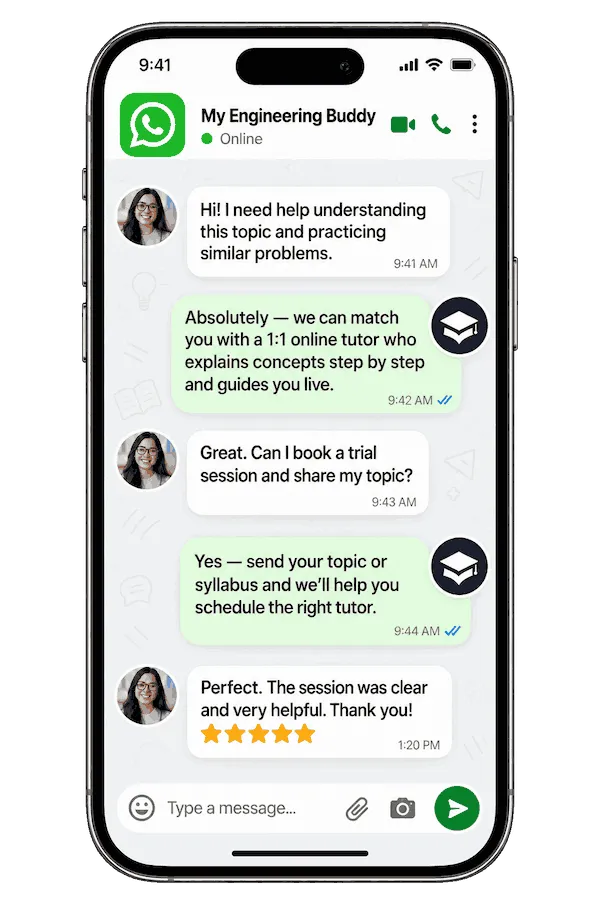
Unlike platforms where you fill out a form and wait, MEB responds in under a minute, 24/7. Tutor match takes under an hour. The $1 trial means you test before you commit. Everything runs over WhatsApp — no logins, no intake forms.
Study Plans (Pick One That Matches Your Goal)
Catch-up (1–3 weeks): for students with a submission or exam date close and clear gaps in one component. Tutor prioritises the highest-yield topics for that deadline. Exam prep (4–8 weeks): structured revision across both written components, timed practice, and mark-scheme feedback on every response. Weekly support: ongoing through the school year, aligned to your teacher’s scheme of work and NEA milestones. The tutor builds the specific sequence after the first diagnostic — not before.
Pricing Guide
GCSE Media Studies tutoring runs at $20–$40/hr for most students. NEA-specialist support or tutors with professional media industry backgrounds may reach higher rates. Rate factors include your exam board, how close your deadline is, and tutor availability in your time zone.
Peak demand runs from February through May. Availability in that window is limited — students who book early get consistent weekly slots.
For students targeting competitive sixth forms or A Level Media Studies progression, tutors with production and media industry experience are available at higher rates. Share your specific goal when you WhatsApp MEB and they’ll match the tier to what you’re working toward.
Start with the $1 trial — 30 minutes, no registration, no commitment. WhatsApp MEB for a quick quote.
Try your first session for $1 — 30 minutes of live 1:1 tutoring or one homework question explained in full. No registration. No commitment. WhatsApp MEB now and get matched within the hour.
FAQ
Is GCSE Media Studies hard?
It’s harder than most students expect. The content isn’t complex — but applying theory frameworks (representation, audience, industry) precisely to specific set products under timed exam conditions trips up students who’ve only studied passively. Structured practice makes the difference.
How many sessions are needed?
Most students see clear improvement in exam technique within 6–10 sessions. Students using MEB for full NEA support typically work across 10–20 sessions spread over the production period. The first diagnostic session sets the right number for your situation.
Can you help with homework and assignments?
MEB tutoring is guided learning — you understand the work, then submit it yourself. For essay planning, set product analysis, or NEA research guidance, tutors explain the approach and check your reasoning. See our Academic Integrity policy and Why MEB page for full details on what we help with and what we don’t.
Will the tutor match my exact syllabus or exam board?
Yes. AQA, Eduqas, OCR, and WJEC each specify different close study products and assessment structures. Tutors are matched to your board specifically — not a generic GCSE Media Studies overview. Share your board when you contact MEB.
What happens in the first session?
The tutor runs a short diagnostic — usually a timed exam-style question — to find exactly where your knowledge or technique breaks down. From that point, every session is built around your actual gaps, not a generic topic list.
Is online tutoring as effective as in-person?
For GCSE Media Studies specifically, online is often better — tutors annotate media texts, mark up your written responses, and share mark schemes live on screen. The digital pen-pad workflow replicates what a physical lesson does, without the commute.
Can I get GCSE Media Studies help at midnight?
Yes. MEB operates across time zones and tutors are available in evening and late-night slots for UK, Gulf, and international students. WhatsApp MEB with your time zone and availability — a match is usually confirmed within the hour.
What if I don’t like my assigned tutor?
Request a change via WhatsApp. MEB will rematch you, usually within 24 hours. There’s no penalty and no lengthy process. The $1 trial is specifically designed so you can test the match before committing to a block of sessions.
What’s the difference between the two written exam components in GCSE Media Studies?
This varies by board, but typically one component focuses on media language and representation across set products, while the second covers media industries, audience theory, and a wider range of media forms. Your tutor will clarify exactly what your board requires for each paper.
How do I approach the NEA if I have no production experience?
Most students don’t — and the NEA is designed for that. Your tutor helps you choose a realistic brief, plan your production within your technical means, and structure the written statement of intent. No prior production skills are assumed. The research and planning stages are where marks are most accessible.
Do you offer group GCSE Media Studies sessions?
MEB focuses on 1:1 tutoring. Group sessions aren’t available. The reason: GCSE Media Studies essay technique and NEA feedback are highly individual — a group format can’t give the per-student mark-scheme feedback that drives grade improvement.
How do I get started?
WhatsApp MEB with your exam board, your weakest component, and your deadline date. MEB matches you with a verified tutor — usually within 24 hours. Your first session is the $1 trial: 30 minutes live or one question explained in full. No registration needed.
Trust & Quality at My Engineering Buddy
Every MEB tutor goes through subject-specific vetting — not a generic application review. For GCSE Media Studies, that means confirmed knowledge of current set products, exam board experience, and a live demo session before they’re matched to any student. Rated 4.8/5 across 40,000+ verified reviews on Google. Tutors hold degrees in media studies, film studies, communications, or adjacent fields — and several have worked in UK media production or journalism. Ongoing student feedback is reviewed after sessions to catch any issues before they become patterns. You can also find GCSE Sociology tutoring and related humanities support through the same vetted pool.
MEB tutoring is guided learning — you understand the work, then submit it yourself. For full details on what we help with and what we don’t, read our Academic Integrity policy and Why MEB.
MEB has been running since 2008, serving 52,000+ students across the US, UK, Canada, Australia, Gulf, and Europe in 2,800+ subjects. GCSE subjects — including Media Studies, GCSE History help, and GCSE Psychology tutoring — are among the most requested. See how MEB’s tutoring methodology works for more on the diagnostic and feedback structure behind every session.
The Australian Curriculum, Assessment and Reporting Authority notes that media literacy — the ability to analyse, create, and critically evaluate media texts — is a core component of modern secondary education frameworks worldwide.
Source: Australian Curriculum, Assessment and Reporting Authority.
Students consistently tell us that GCSE Media Studies essays feel different from English essays — and they’re right. You’re not analysing plot or character. You’re applying a theoretical framework to a product. Our tutors teach that distinction in the first session, and most students say it’s the moment things click.
Explore Related Subjects
Students studying GCSE Media Studies often also need support in:
- GCSE Art and Design
- GCSE Music
- GCSE Computer Science
- GCSE Citizenship Studies
- GCSE Business Studies
- GCSE Design and Technology
A common pattern our tutors observe is that students who struggle with GCSE Media Studies unseen texts are actually struggling with essay structure — not media knowledge. Once the structure is fixed and applied consistently, the content falls into place. It’s one of the fastest turnarounds we see.
Next Steps
When you WhatsApp MEB, share three things: your exam board and which component you’re weakest on, your current timeline or deadline, and your availability and time zone. MEB matches you with a verified tutor — usually within 24 hours.
Before your first session, have ready:
- Your exam board and specification (or course outline from your teacher)
- A recent past paper attempt or homework question you struggled with
- Your exam date or NEA submission deadline
The tutor handles the rest. First session starts with a diagnostic so every minute is used well.
Visit www.myengineeringbuddy.com for more on how MEB works.
WhatsApp to get started or email [email protected].
Reviewed by Subject Expert
This page has been carefully reviewed and validated by our subject expert to ensure accuracy and relevance.