Abstract Algebra Explained: A Student’s Guide to Structures and Proofs

- Abstract algebra studies groups, rings, and fields — structures far more theoretical than high school algebra.
- The shift to proof-based reasoning is the biggest hurdle most students face.
- Online tutoring averages $35–60/hr, significantly less than in-person sessions at $50–75/hr.
- Vetting a tutor’s credentials, reviews, and communication style before committing saves time.
- Step-by-step guidance on proofs builds skills for exams, not just single assignments.
Understanding Abstract Algebra
To navigate this subject, you need to visualize how the core concepts relate to one another. Here is a simplified view of the primary algebraic structures.
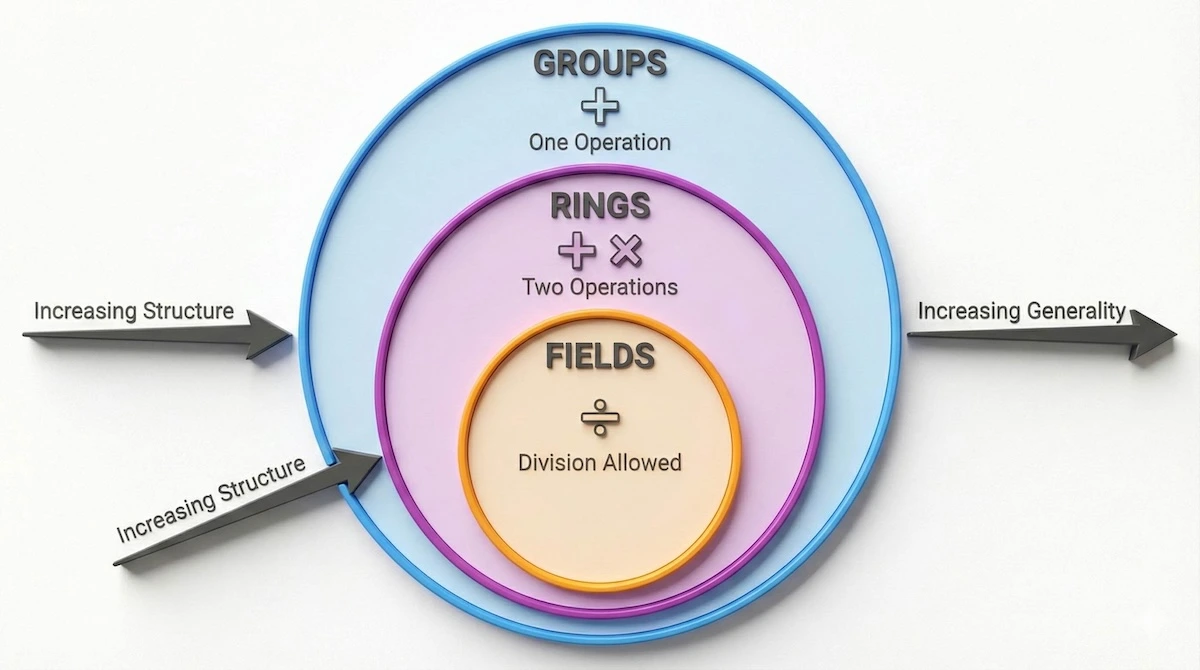
As you can see, Fields are specific types of Rings, which are themselves specific types of Groups.
Abstract algebra is a branch of mathematics that studies algebraic structures such as groups, rings, and fields; unlike basic algebra, it focuses on the underlying structure and axioms of this system. This field underpins modern mathematics and has real-world applications in areas like cryptography, coding theory, and physics. For many college-level math students, abstract algebra is the gateway to advanced topics, but its highly theoretical nature can make it challenging. If you are also working through foundational material, a solid grasp of algebra tutor resources can help bridge the gap before diving into abstract structures.
Challenges in Learning Abstract Algebra
Moving from high school algebra to abstract algebra often means encountering entirely new ideas. Students suddenly face a lot of abstract vocabulary and definitions (for example, group or field) and must learn to prove statements rigorously. Without concrete or numerical examples, some learners find it hard to grasp these concepts. In fact, experts note that understanding abstract algebra is often a significant hurdle for students. Many students struggle to see how the pieces fit together, leading to frustration and falling behind in class.
- Abstract concepts: Terms like group and ring require formal definitions and examples. Mastering these ideas is essential for progress.
- Proof-based learning: Much of abstract algebra is built around mathematical proofs. Learning to read and write proofs is a new skill that many students need extra time and practice to develop.
- Reduced concreteness: Unlike arithmetic or elementary algebra, abstract algebra rarely uses simple numbers. The lack of concrete examples can be disorienting for beginners.
The transition from high school math to this subject can feel like learning a new language. The table below outlines the key differences that often catch students off guard.
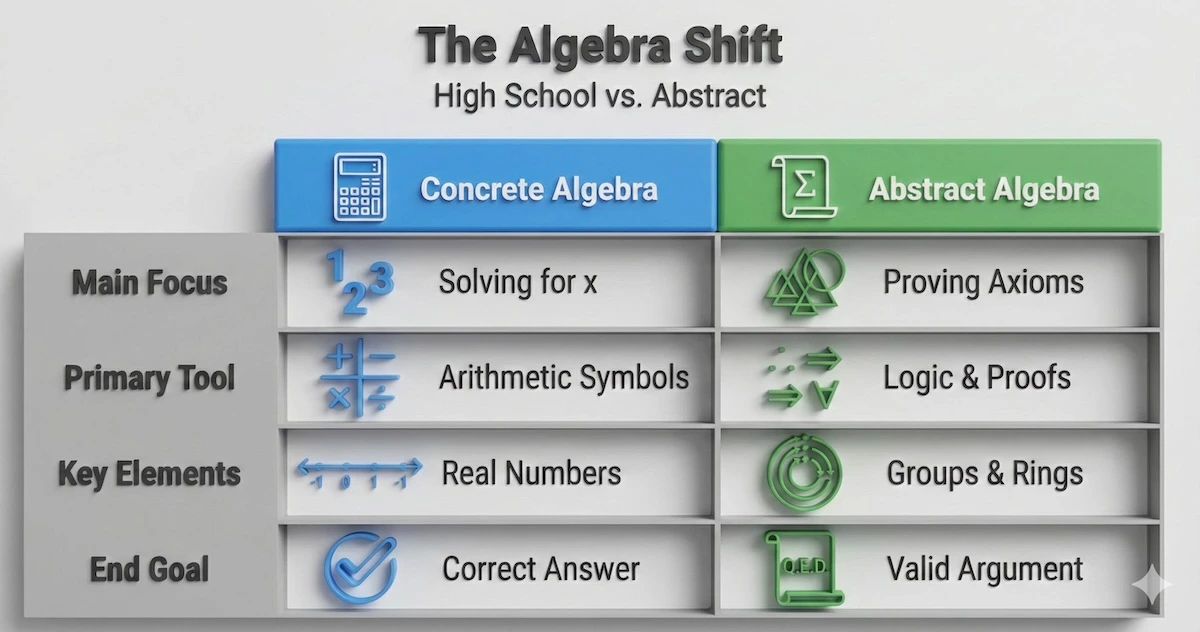
Recognizing these fundamental shifts is the first step toward adjusting your study strategy.
- Prerequisite knowledge: A solid foundation in earlier algebra, geometry, or online linear algebra tutoring is often needed. Any gaps in this background can make abstract topics confusing.
Because of these challenges, students often need additional study and guidance outside of class. Tutors and instructors recommend spending extra time reviewing definitions and practicing problems. For instance, one source advises setting aside study time and using online lectures or books to strengthen understanding of abstract algebra concepts.
How Tutoring Helps with Abstract Algebra
Personalized tutoring can make a big difference for students struggling with abstract algebra. A one-on-one abstract algebra tutor works with a student, offering explanations tailored to the student’s needs. Research on math tutoring shows that individualized attention helps students build confidence and master difficult subjects. A tutor can adjust the pace and focus on exactly the areas where the student needs the most help, making abstract lessons more accessible.
- Personalized learning: A tutor adapts the teaching style and pace to the student. This personalized attention allows the tutor to address specific weaknesses (for example, difficulty with a particular theorem).
- Stronger foundations: Tutors can identify and fill gaps in prerequisite knowledge. By reinforcing fundamentals, students build a solid base for understanding advanced topics.
- Confidence building: Regular support from a tutor helps reduce anxiety about tough subjects. Students often see their confidence and motivation improve as they master challenging concepts.
- Homework support: Tutors provide targeted guidance on assignments and coach students through proofs and problem-solving techniques, not just give out answers.
- Flexible pacing: With private tutoring, sessions can focus only on what the student needs most. This one-on-one approach is often faster and more effective than a one-size-fits-all classroom lecture.
For students who want to understand how tutoring costs compare across different services, this guide on how to compare math tutoring services using a cost vs. value framework is a useful starting point.
Abstract Algebra Online and Traditional Tutoring
There are two main ways to get help: in-person or online tutoring. Online tutoring has become very popular because it offers extra convenience. Modern platforms connect students with qualified tutors using tools like live video conferencing, interactive whiteboards, and shared screens. An online abstract algebra tutor can teach concepts just as effectively over the internet as in person, with the added flexibility of learning from home.
- Broad tutor selection: Online platforms let you find tutors who specialize in abstract algebra topics (like group theory or ring theory) that may not be available locally.
- Cost-effectiveness: Online tutoring can be more affordable. For example, one analysis found that online math tutoring averages about $35–60 per hour, compared to $50–75 for in-person sessions.
Budget is often a major factor for students. The chart below compares the average hourly rates to help you decide which option fits your finances.
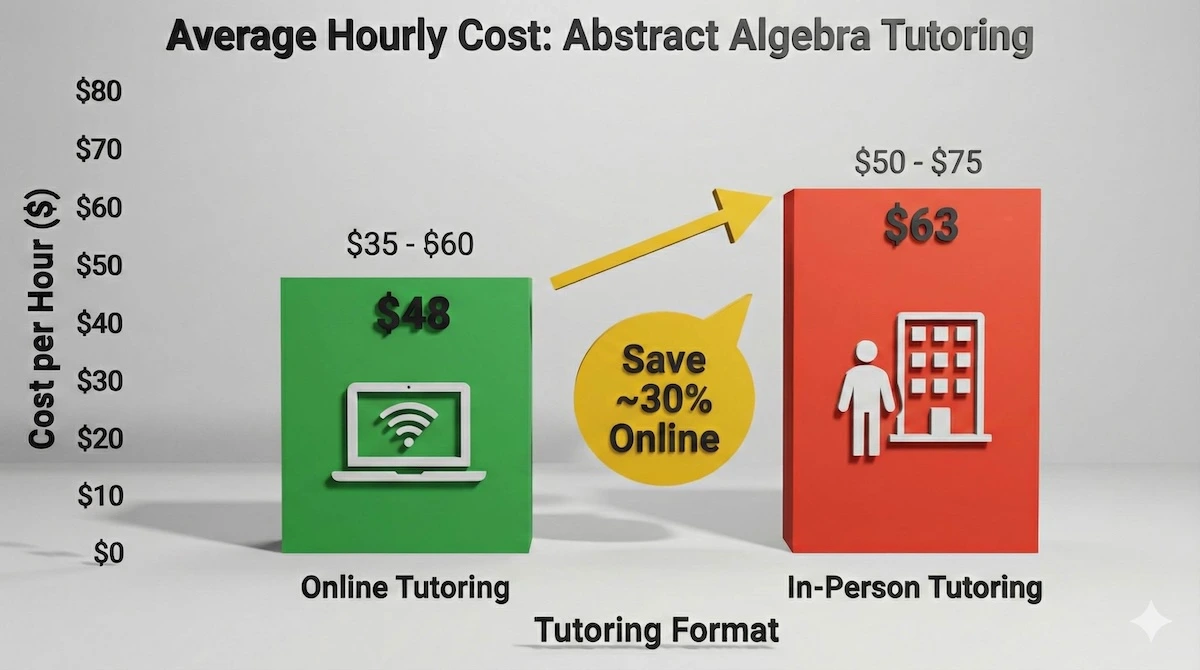
While online options offer significant savings, the right choice ultimately depends on your personal learning preference.
- Anytime access: Many students can get help outside of normal hours. Online services often provide 24/7 support for abstract algebra homework questions or urgent assignments.
- Recorded sessions: Sessions are often recorded, so students can review the lesson later and reinforce learning. Such “spaced review” has been shown to improve retention of material.
- Flexibility: You can schedule online tutoring around your classes or activities. No commute is needed, which saves time and reduces stress.
Traditional face-to-face tutoring may benefit students who prefer in-person interaction. Some learners focus better when meeting a tutor at home or in a library. However, online tutoring often matches or exceeds in-person effectiveness due to its flexibility and the wealth of available resources. Whether you choose online or local help, a structured tutor can provide guidance tailored to your course curriculum.
Students who are also weighing the full cost picture may find this complete algebra tutor cost guide for engineering students helpful when budgeting for sessions.
Finding the Right Abstract Algebra Tutor
Don’t just hire the first tutor you find. Use this vetting process to ensure you get quality help for your specific needs.
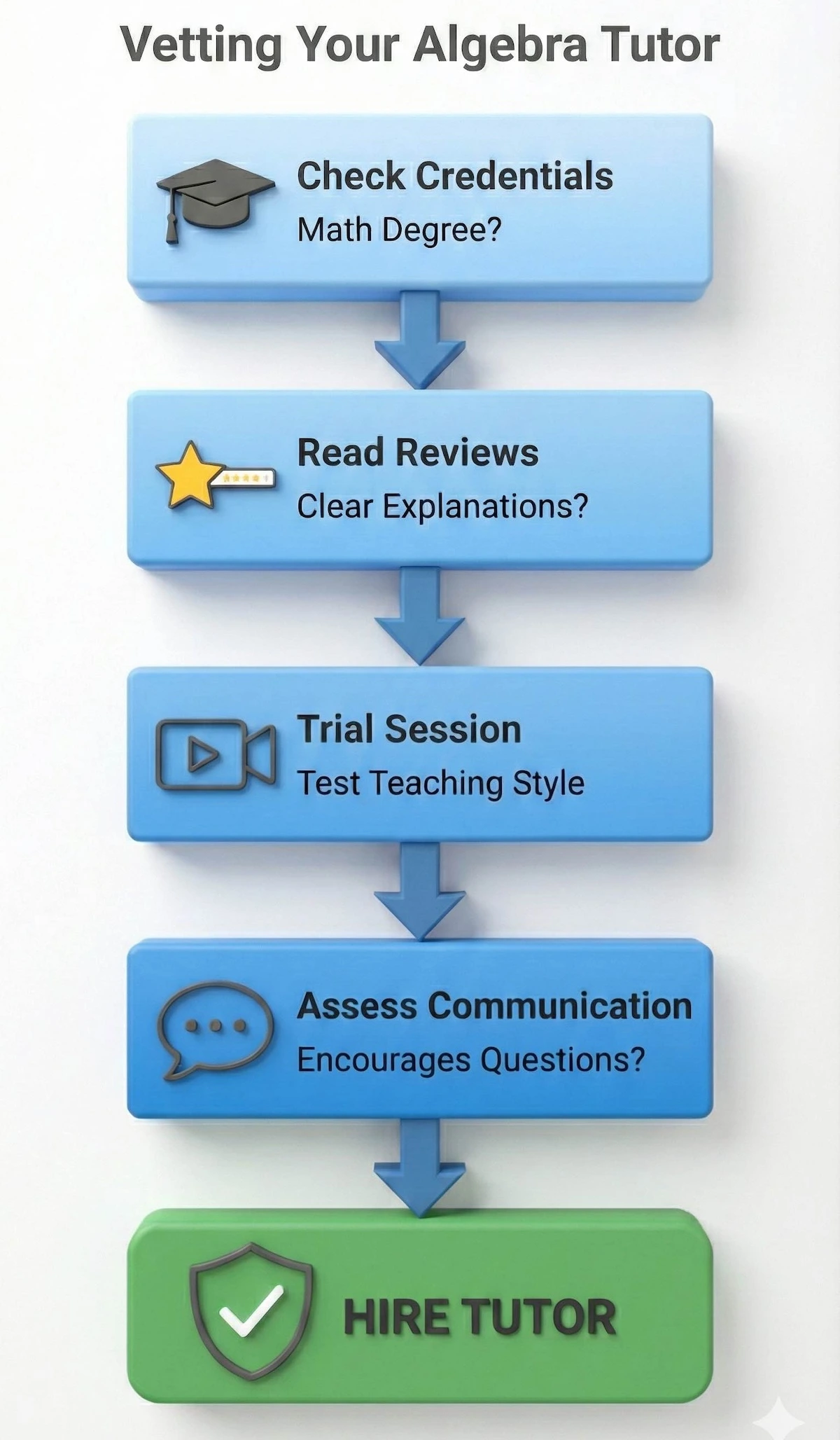
Taking these steps before your first paid session can save you time and ensure a better academic match.
When looking for help, consider the tutor’s qualifications and teaching style. Ideal tutors have a strong math background (for example, a degree in mathematics) and experience teaching or tutoring higher-level algebra. It helps if the tutor has taken abstract algebra courses or taught similar content before.
- Check credentials: Look for tutors with relevant education or experience, such as a degree in mathematics or prior teaching experience in upper-level math.
- Read reviews: See what past students say about the tutor’s ability to explain concepts clearly and improve understanding.
- Trial sessions: Many services offer a free or low-cost trial lesson. Use this to see if the tutor’s style works for you.
- Communication skills: A good tutor will be patient, explain ideas in multiple ways, and encourage you to ask questions. Clear teaching is as important as subject knowledge.
- Practical factors: Confirm the tutor’s hourly rate and availability fit your needs. Online tutoring often costs less (about $35–60/hr on average) and can fit around busy schedules.
Once you find a suitable tutor, you can begin regular sessions through a tutoring agency, university program, or online marketplace — make sure the tutor offers the support you need. A good match can make abstract algebra feel much more approachable. For a thorough walkthrough of what to look for, this complete verification checklist for choosing an algebra tutor covers every key step.
If cost is a concern, there are practical strategies worth knowing — this overview of how to find affordable math tutoring outlines seven approaches students actually use. Students who also need support in related quantitative areas may benefit from working with a probability tutor alongside their abstract algebra sessions.
Homework and Assignment Help in Abstract Algebra
Beyond general tutoring, many students specifically need homework or assignment assistance. Searching for abstract algebra homework guidance is common when tackling tricky problem sets. Effective tutors do more than provide answers — they walk through solutions step-by-step, helping students understand the reasoning behind each step. This way, you build skills for future problems, not just a single assignment.
A great tutor doesn’t just give you the answer; they guide you through a learning cycle. Here is how that process leads to long-term mastery.
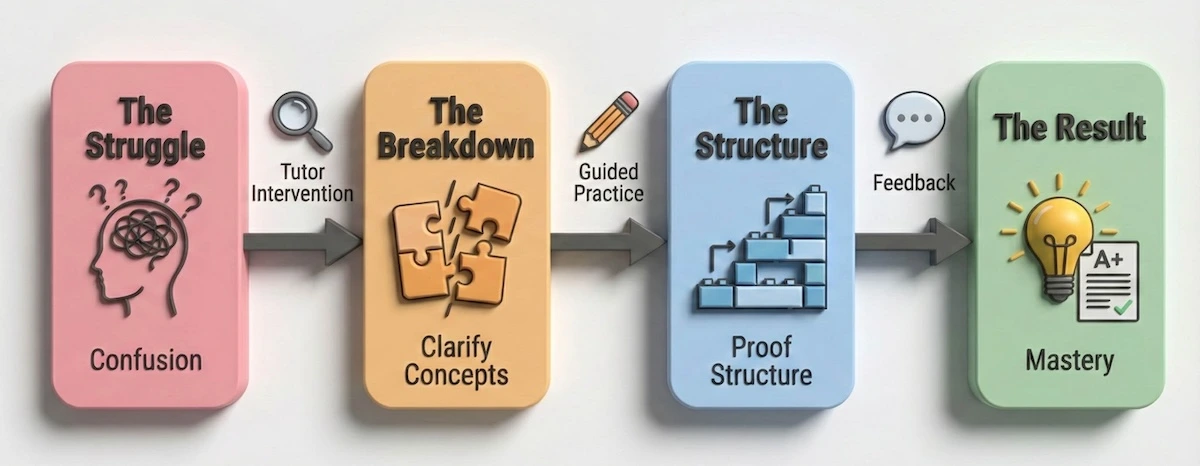
This structured approach helps you build the confidence to tackle similar problems on your own during exams.
- Clarifying problems: A tutor can break down homework questions into manageable parts, ensuring you understand exactly what each problem is asking.
- Proof guidance: For theoretical assignments, tutors can explain how to structure a proof, demonstrate proof techniques, and give feedback on your logic.
- Feedback on work: Tutors review your solutions and point out mistakes or misconceptions, so you learn from errors and improve.
- Exam preparation: Consistent help with homework and assignments leads to better test performance by reinforcing key concepts over time.
- Anytime Q&A: Many online platforms allow submitting questions at any time (even late at night), so you can get help exactly when you need it.
According to experts, tutoring not only helps with immediate homework but also “unlocks the path to academic success” by reinforcing learning, boosting confidence, and teaching problem-solving skills. In a challenging subject like abstract algebra, having a knowledgeable guide can make difficult coursework much more manageable.
Wrapping Up
Abstract algebra is a critical but challenging subject for many students. Its abstract nature and emphasis on theory can create hurdles. Fortunately, targeted support is available. Whether through a patient teacher or a specialized tutor, students can get the help they need. Abstract algebra tutoring, online or in-person, provides personalized assistance that adapts to each learner’s pace. This extra guidance can clarify concepts, boost confidence, and lead to better grades.
Parents and students should remember that seeking help is a smart strategy, not a weakness. With the right tutor or resources (like online study tools and recorded lessons), even tough topics like group theory and ring theory become understandable. Many students report significant improvements when they work with a knowledgeable tutor.
By taking advantage of tutoring and homework guidance, students can master abstract algebra and build a strong foundation in mathematics. Ultimately, working with a skilled abstract algebra tutor or teacher can turn a difficult course into a success story. Personalized instruction demystifies advanced concepts, making abstract algebra feel much more achievable. If you or someone you know is struggling, consider reaching out for tutoring support. With dedication and the right help, students can excel in abstract algebra and beyond.
Related Reading
******************************
This article provides general educational guidance only. It is NOT official exam policy, professional academic advice, or guaranteed results. Always verify information with your school, official exam boards (College Board, Cambridge, IB), or qualified professionals before making decisions. Read Full Policies & Disclaimer , Contact Us To Report An Error