Law Tutoring Explained: A Complete Student Guide for 2025

- Law tutoring provides personalized, one-on-one support that classroom lectures cannot replicate.
- Online law tutoring removes geographic limits, connecting students with specialists worldwide.
- Tutors guide students through legal reasoning rather than completing work for them.
- The global online tutoring market was $10.4 billion in 2024, projected to reach $23.7 billion by 2030.
- Law tutors typically charge $20–$40 per hour depending on expertise and specialization.

Why Law Tutoring Matters
Imagine a first-year law student named Alex juggling case readings, briefs, and exam prep. Feeling overwhelmed, Alex tried a law tutor and saw a big turnaround. This experience is common: personalized law tutoring can make hard topics like contracts or constitutional law feel more manageable. Tutors adapt to a student’s pace, unlike large lectures, so learners can ask questions and review material until it clicks.Research confirms tutoring’s impact: OECD experts note tutoring yields “large, positive effects” on student learning across all grade levels, and a meta-analysis of 96 studies found tutoring programs produce “consistent and substantial positive impacts” on outcomes.- Personalized support. Law tutors break down tricky legal concepts (like IRAC method or case precedents) in ways tailored to your needs.
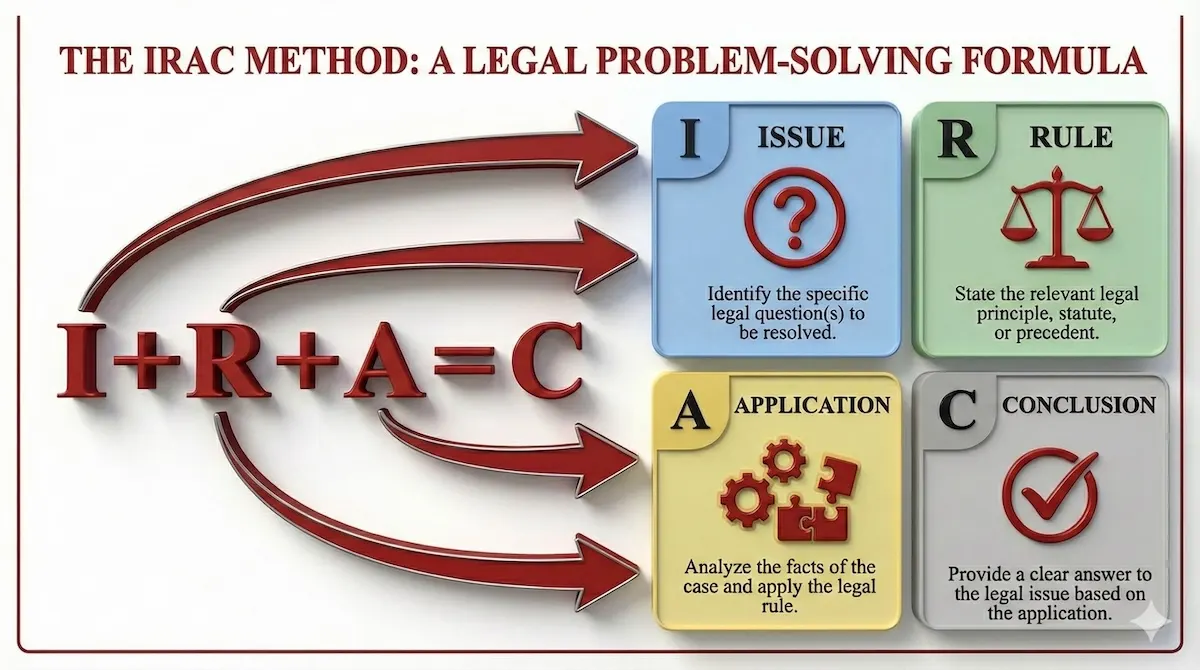
Mastering the IRAC method (Issue, Rule, Application, Conclusion) is essential for writing successful legal exams and memos.
- Clearer understanding. One-on-one help fills gaps left by classroom lectures, reducing confusion about dense material.
- Confidence boost. Working with a tutor eases exam anxiety as students master subjects gradually and celebrate small wins.
- Improved grades. Studies and educators agree: tutoring programs significantly raise student performance.
Law Teaching vs Tutoring
A law teacher in a class typically covers broad topics for many students, while a law tutor focuses on one student’s needs. A law teacher presents lectures on themes like civil rights or business law. By contrast, a law tutor reviews specific homework problems, essay drafts, or case analyses with a student. Tutors can re-explain hard chapters, practice exam questions, or guide research projects.This tailored attention helps students absorb material at their own pace and style. In essence, law teaching and law tutoring complement each other: school classes introduce content, and private tutoring reinforces it.To help you decide which support system you need right now, here is a breakdown of the key differences between a standard university lecture and a private tutoring session.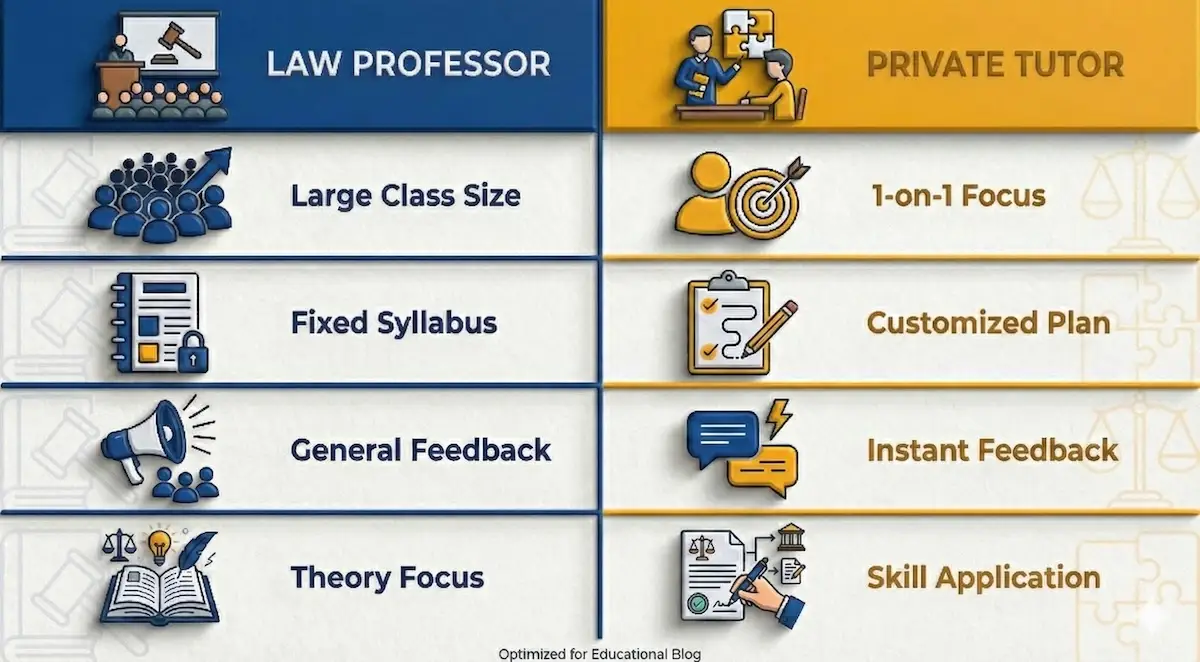
Understanding the difference between classroom teaching and private law tutoring helps you set the right expectations for your learning.
- Classroom size vs. one-on-one. Teachers often juggle dozens of students, but a tutor works individually or in a very small group (1–3 students), so you get more focus.
- Curriculum vs. customization. Teachers follow a set syllabus; tutors adjust lessons to your weak spots—whether it’s understanding a case or writing a brief.
- Feedback. Tutors give immediate feedback on your writing or reasoning, which is harder in large classes.
Benefits of Online Law Tutoring
Online law tutoring brings all the above benefits to a virtual classroom. A live video session lets you ask questions in real time, share screens or documents, and even record lessons for review. This flexibility is increasingly popular: the global online tutoring market was about $10.4 billion in 2024 and is projected to reach $23.7 billion by 2030, reflecting how students and parents value remote tutoring.For law students in the USA, UK, Gulf countries or anywhere, online tutoring means access to experts anywhere in the world. You’re not limited to local tutors; you can learn from law graduates or professors internationally. Students exploring interdisciplinary fields such as biomedical engineering similarly benefit from the flexibility of online expert access.- Flexible scheduling. No need to commute; meet a tutor from home and fit sessions into your busy calendar.
- Wide tutor pool. Find specialists in constitutional law, criminal law, or any area, often at different price points.
- Interactive tools. Use virtual whiteboards, shared notes, or chat to make learning engaging and keep track of materials.
- Consistent support. With an online tutor, you can meet weekly or as needed to build a routine, something shown to greatly boost learning.
How to Find a Law Tutor
Wondering where to find a law tutor? There are many options. You can search tutoring platforms, university tutoring centers, or private services. Look for tutors with strong legal backgrounds—ideally, those who have excelled in law courses or have legal degrees.Reading reviews or getting recommendations helps ensure quality. Rates vary by experience and location; many law tutors charge around $20–$40 per hour (higher for very specialized expertise). Remember, the cheapest tutor isn’t always best. Weigh the tutor’s knowledge, teaching style, and your comfort with them.Platforms like those reviewed in our Varsity Tutors review and our Wyzant review can help you compare options before committing.The hiring process doesn’t have to be overwhelming. Follow this simple four-step roadmap to ensure you find a mentor who matches your specific academic goals.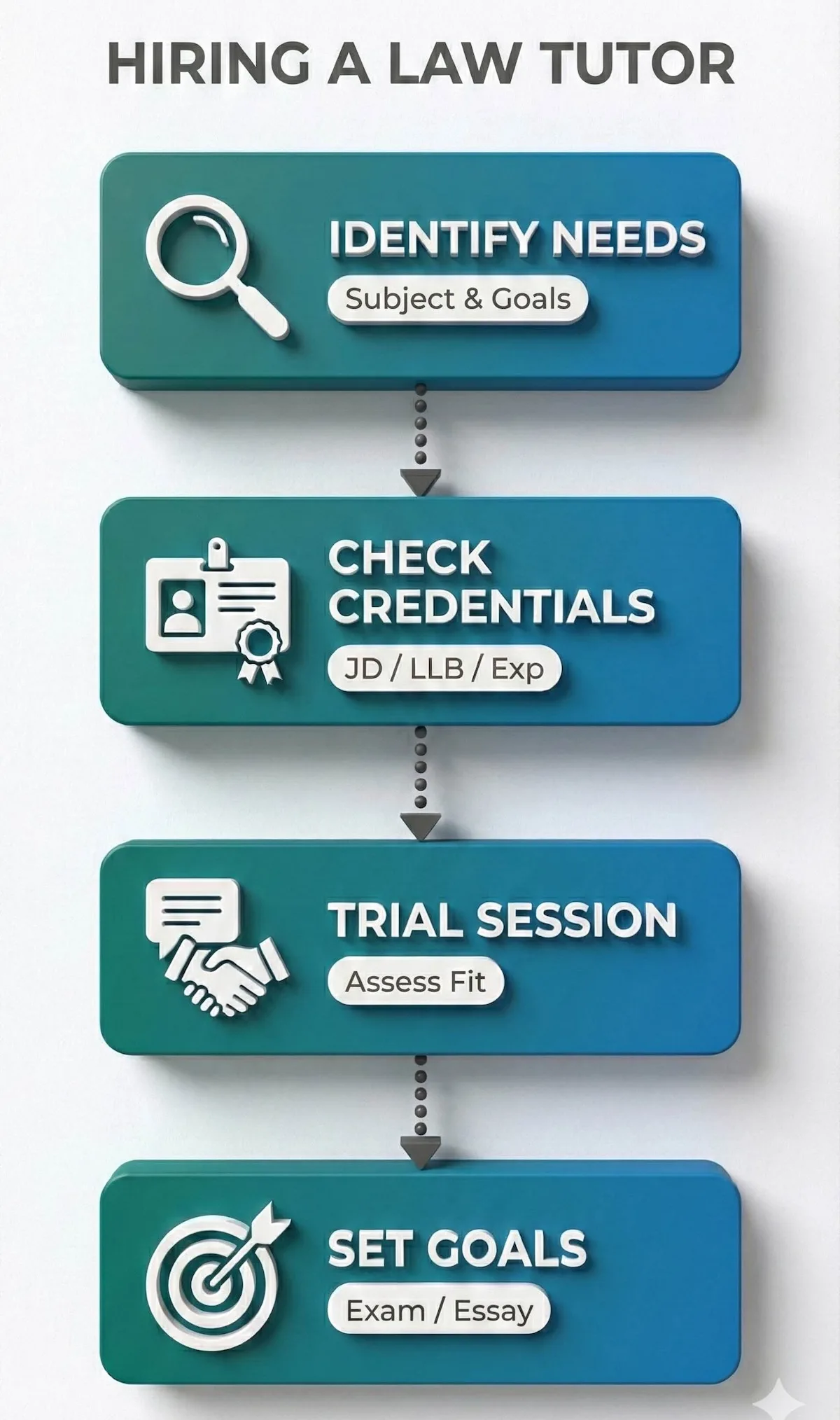
Follow this simple 4-step process to find a qualified law tutor who matches your specific learning style and academic goals.
- Check credentials. Good tutors often have a degree in law or related field (JD, LLB) and teaching or tutoring experience in law.
- Trial sessions. Many tutors offer a first lesson at a lower cost. Use it to see if their style fits how you learn.
- Set clear goals. Before hiring, know what you need help with (e.g. exam prep, writing legal memos, understanding cases) and ensure the tutor is strong in those areas.
- Ask about methods. Good tutors often guide you to solve problems (like IRAC cases) rather than just giving answers, fostering skills for exams and assignments.
Maximizing Your Tutoring Sessions
Once you have a tutor, get the most from each session. Come prepared with specific questions or assignments to tackle. Share your syllabus or past exams so the tutor knows what’s important. Try to actively participate—answer practice questions and explain your thinking while the tutor listens.Take notes on new strategies or examples your tutor provides. After the session, review what you learned and practice on your own. Over time, you’ll see steady improvements. Remember, tutors succeed when you also put in effort between meetings. Regular sessions (studies suggest at least 2–3 times per week for high-impact tutoring) can help knowledge stick.Success isn’t just about showing up; it requires a continuous cycle of engagement. Use this workflow to get the most value out of every dollar you spend on tutoring.
Treating your tutoring sessions as a continuous cycle of preparation, participation, and review ensures you retain information long-term.
- Be proactive. Don’t wait until the last minute to ask for help. Tackle difficult topics early so you have time to master them.
- Clarify homework. If you have legal essays or problem sets, walk through them with your tutor rather than copying answers. Understanding the reasoning is key.
- Stay organized. Keep all session notes and resource links in one place. This way, you build a study guide over time.
- Practice regularly. Law exams often test writing and analysis. Have your tutor quiz you on cases or facts to prepare for timed conditions.
Law Homework and Assignment Guidance
Tutors often assist with law homework and assignments in an ethical way. They won’t do your work for you, but they’ll guide you through it. For example, a tutor can explain how to outline a legal argument for an essay, suggest resources for research, or proofread your draft.If you’re working on a contract analysis or moot court preparation, a tutor can role-play opposing arguments or test your brief. Law assignment guidance might also include practice quizzes or flashcards for terms. In all cases, the goal is to help you understand the material so you can complete assignments yourself. This support can be a lifeline for students balancing heavy workloads, and ultimately leads to better outcomes in class.You can also read our reviews of University Tutor and Tutor House to compare platforms that offer academic guidance across subjects. For students studying languages alongside law, resources for a Gujarati tutor or support in human anatomy tutoring are also available through specialist platforms. For students interested in the intersection of law and science, chemical engineering tutors can provide grounding in the technical side of regulatory and environmental law contexts.FAQs About Law Tutoring
What is law tutoring?
Law tutoring is personalized academic support from an experienced tutor who helps students understand legal concepts, prepare assignments, and improve their performance in law-related courses.
How can online law tutoring help students?
Online law tutoring offers flexibility and access to expert tutors anywhere, allowing for interactive lessons and personalized attention without commuting to a physical location.
How does a law tutor differ from a law teacher?
A law teacher instructs a class of many students following a curriculum, while a law tutor works one-on-one (or in a small group) to focus on a student’s individual needs and questions.
When should students seek law homework or assignment help?
Students should seek help when struggling with understanding course material, managing workload, or preparing for exams; a tutor can clarify concepts and guide homework effort.
How do students hire a law tutor?
Students can hire a law tutor through tutoring websites, university programs, or local tutoring services; look for tutors with law qualifications and check their reviews or testimonials.
Are law tutoring services expensive?
Prices vary, but many law tutors charge moderate rates (often $20–$40 per hour depending on expertise); consider this an investment in improving grades and understanding.
Whether you are struggling with foundational private law or navigating complex international regulations, expert help is available across the entire legal spectrum.
Law tutoring covers a vast array of specializations, from foundational private law to complex international regulations.
Related Reading
******************************
This article provides general educational guidance only. It is NOT official exam policy, professional academic advice, or guaranteed results. Always verify information with your school, official exam boards (College Board, Cambridge, IB), or qualified professionals before making decisions. Read Full Policies & Disclaimer , Contact Us To Report An Error