Boost GCSE Grades & Confidence with Expert Tutoring Support

GCSE stands for General Certificate of Secondary Education, which is the main academic qualification taken by students around age 16 in England, Wales and Northern Ireland. These exams cover core subjects like English, Maths, and Science, along with a range of electives. Most universities and employers expect students to have passes (usually grade 4/C or above) in at least five GCSEs, including English and Maths. In fact, official statistics show that 16-year-olds in England sit an average of about eight GCSEs, highlighting how broad the syllabus is each year. Because these exams are often gatekeepers for further study or careers, support during this stage is often crucial.

Common Challenges in GCSE Studies
Many students find GCSE subjects challenging due to complex concepts, exam pressure, and differences in learning pace. Class sizes can be large, which means teachers may not have time to help every student individually. As one analysis notes, “in crowded classrooms teachers are not armed with the tools needed to tailor the curriculum to every child”. This can leave some students struggling to keep up. The difficulty shows in exam results: for example, in 2024 only about 67% of GCSE entries earned a passing grade (4/C or above), underlining how high the standards are.
The statistics reveal a stark reality about the competitive nature of these exams. The chart below highlights the significant portion of students who struggle to meet the passing threshold.
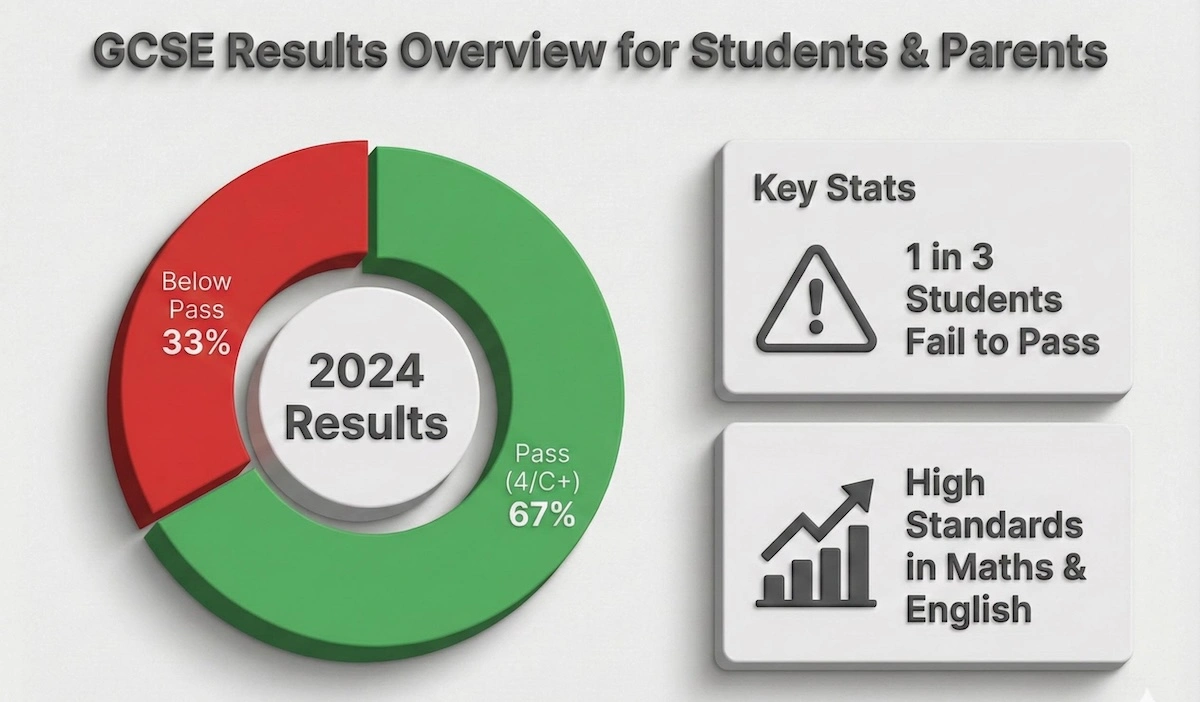
Official 2024 statistics show that 1 in 3 entries did not achieve a standard passing grade.
With one in three students falling behind, early intervention through tutoring can be the deciding factor.
The Role of a GCSE Tutor
A GCSE tutor provides personalized one-on-one teaching to address a student’s specific needs. Unlike classroom teachers who must follow the curriculum for the whole class, tutors can adjust their methods to the learner’s style and weaknesses. The Education Endowment Foundation notes that tutoring is one of “the best-evidenced interventions” to help students improve their attainment. In practice, a tutor will revisit topics a student finds difficult, work through exam-style problems, and offer custom study strategies tailored to the individual. This extra help can close knowledge gaps and build the student’s confidence.
GCSE Teacher vs. GCSE Tutor
It helps to know the difference between a school teacher and a private tutor. A GCSE teacher in school delivers the curriculum to many students at once, which may limit the time they can spend with each student. A private GCSE tutor, however, concentrates on one student at a time, adapting explanations and practice to that student’s level. Research highlights the advantages: tutoring provides “an enhanced learning experience” by tailoring lessons to each student’s needs and offering faster feedback. This means students can ask questions and address misunderstandings immediately, often making steady progress and gaining confidence more quickly.
Understanding the distinct advantages of private tuition versus classroom learning is crucial. This comparison breaks down exactly where a tutor adds unique value.
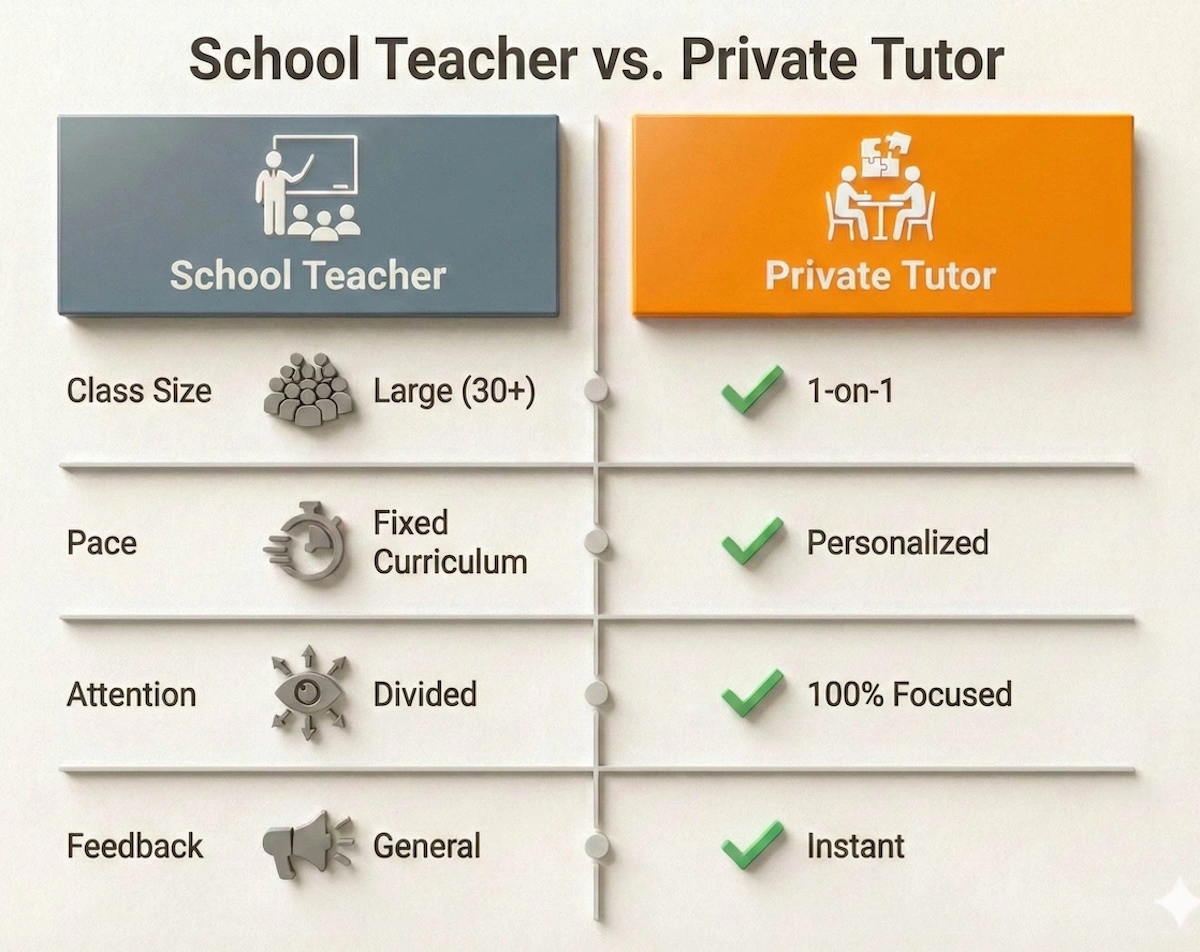
See how private tutoring fills the gaps left by traditional classroom teaching.
As shown, the personalized attention and instant feedback from a tutor provide a support system that schools often cannot match.
Subjects and Homework Support
GCSE tutors can help across all academic subjects. Whether it’s math problem-solving, science experiments, or essay writing in English and history, tutors provide subject-matter expertise. They often offer GCSE homework help and GCSE assignment help by guiding students through challenging tasks. For example, if a student struggles with a physics assignment, a tutor can walk through each step until it is clear. These sessions not only improve homework performance but also deepen understanding of the material.
- Reviewing core concepts: covering key topics and exam techniques.
- Exam preparation: practicing questions from past papers and sample tests.
- Homework support: providing detailed feedback on assignments and projects.
- Study skills: building skills like time management and stress management for exams.
Benefits of One-to-One and Online Tutoring
Personalized tutoring has a track record of making a difference. For instance, a recent study found 3 in 4 students who received sustained one-to-one tutoring improved by up to three grade levels. Those gains often come with a confidence boost too: 90% of students who raised their grades also reported feeling more confident. Tutoring effectively turns weaknesses into strengths by giving instant, focused help.
Does this personalized approach actually translate to results? The data paints a very clear picture of the benefits.
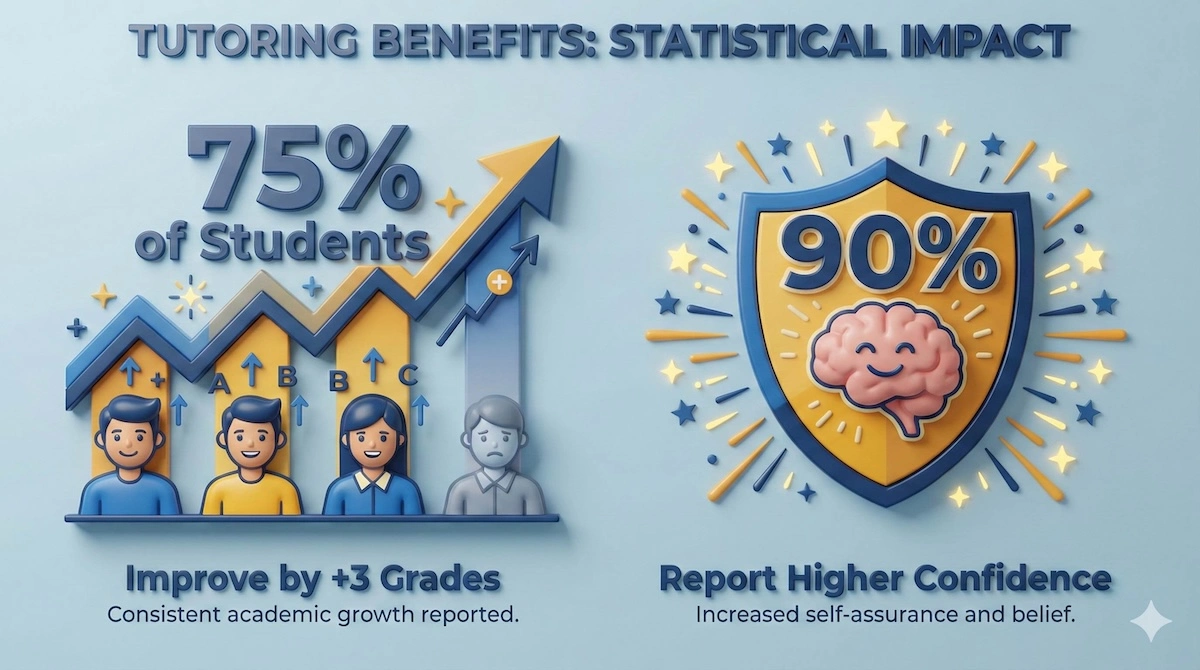
Research confirms that sustained one-to-one tutoring significantly boosts both grades and self-belief.
Beyond just grades, the 90% boost in confidence often becomes the catalyst for lifelong learning skills.
Additionally, tutoring is highly flexible: many families now use GCSE tutoring online, which lets students learn from home at convenient times. In fact, one market report shows the global online tutoring market was about $10.4 billion in 2024 and is set to more than double by 2030. Even in places like Dubai, roughly half of students receive some form of private tutoring, illustrating how common extra help has become globally. Technology like video chat and interactive whiteboards makes online sessions nearly as interactive as in-person ones. In either format, effective tutors build rapport and encourage each student.
For students who need structured support for GCSE tutoring, using a dedicated online learning platform can be highly effective.
PiAcademy’s GCSE revision courses are designed to complement tutoring by offering exam-board-aligned lessons, topic-by-topic revision, and targeted practice that help students strengthen key skills, improve exam technique, and revise with confidence.
Choosing the Right GCSE Tutor
When looking to hire a GCSE tutor, consider a few key factors. Check their qualifications and experience: many effective tutors have strong backgrounds in the subject (often they are former teachers or top graduates). Compatibility is also important: a patient, encouraging tutor might be needed for some students, while others thrive with a more intensive style. You should ensure the tutor covers the right level (GCSE versus higher levels) and exam board. Availability and format matter too: decide if you need in-person help near home or remote sessions online. A good approach is to try a session to see if the tutor’s style clicks with the student.
Finding the right match doesn’t have to be a guessing game. Follow this simple step-by-step process to vet potential tutors effectively.
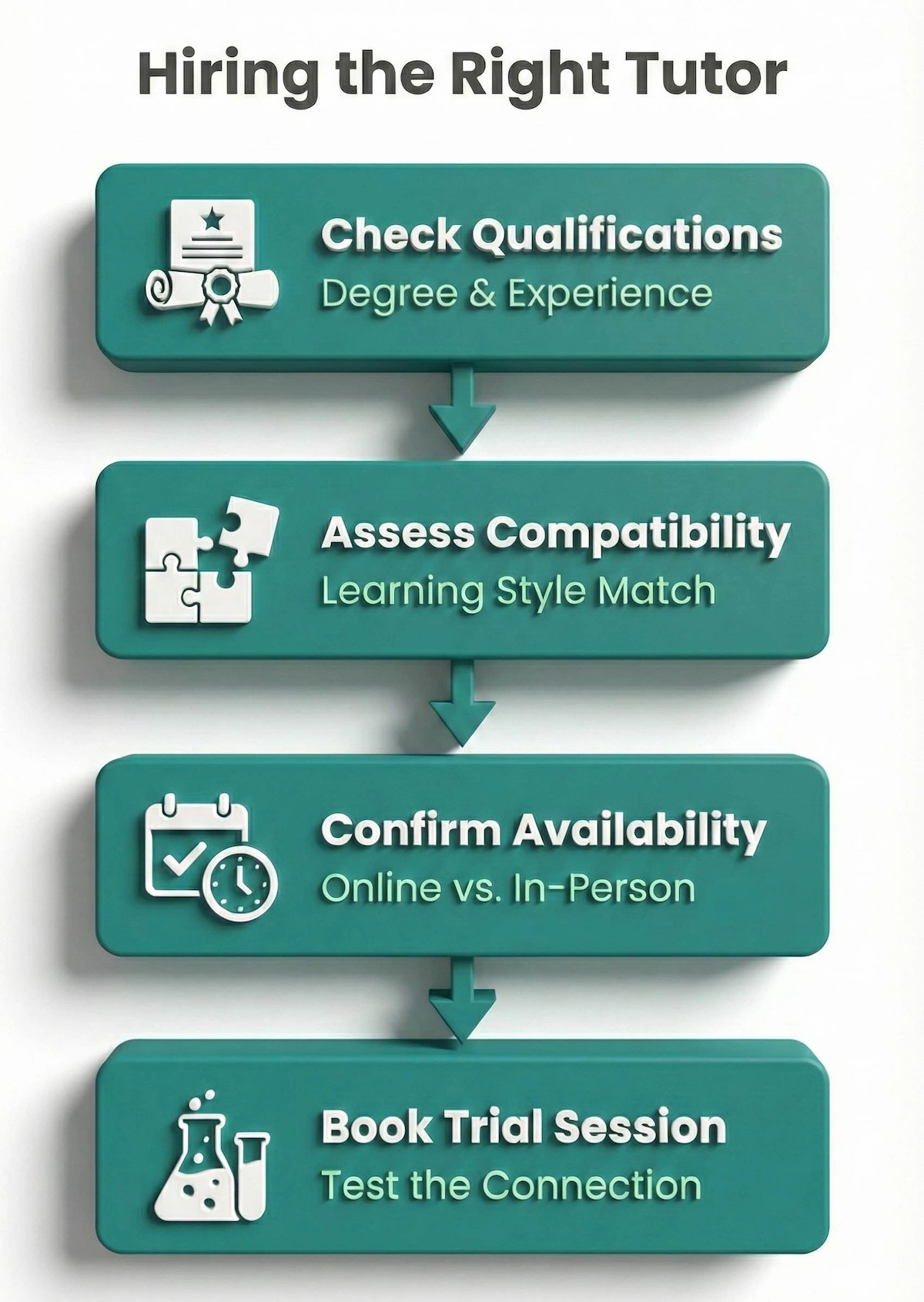
Follow this four-step process to ensure you find the perfect educational match for your child.
Taking the time to book a trial session is the most important step to ensure the chemistry is right.
- Qualifications: Degrees, teaching certificates, or tutoring credentials in the subject.
- Teaching style: An approach that matches the student’s learning style (visual, auditory, practice-based, etc.).
- Subject expertise: A tutor focused on the specific GCSE subject (maths, science, languages, etc.).
- Availability: Scheduling that fits both tutor and student (after school, evenings, weekends).
- Trial lesson: Take a trial session to see if explanations click and the student feels comfortable.
Tips for Success with GCSE Tutoring
To make the most of tutoring, students should be active participants. Here are some practical tips:
- Set clear goals: Work with the tutor to identify target grades or topics to improve.
- Regular practice: Keep up with suggested exercises between sessions to reinforce learning.
- Ask questions: Encourage students to speak up whenever they’re confused during the lesson.
- Use multiple resources: Combine tutoring with class notes and reputable study guides.
- Review progress: Periodically take practice exams to see how grades improve over time.
Consistent effort and communication with the tutor will help students gain the full benefit of each session.
To get the best return on your investment, students need to be active participants. Here is a roadmap of habits that lead to success.
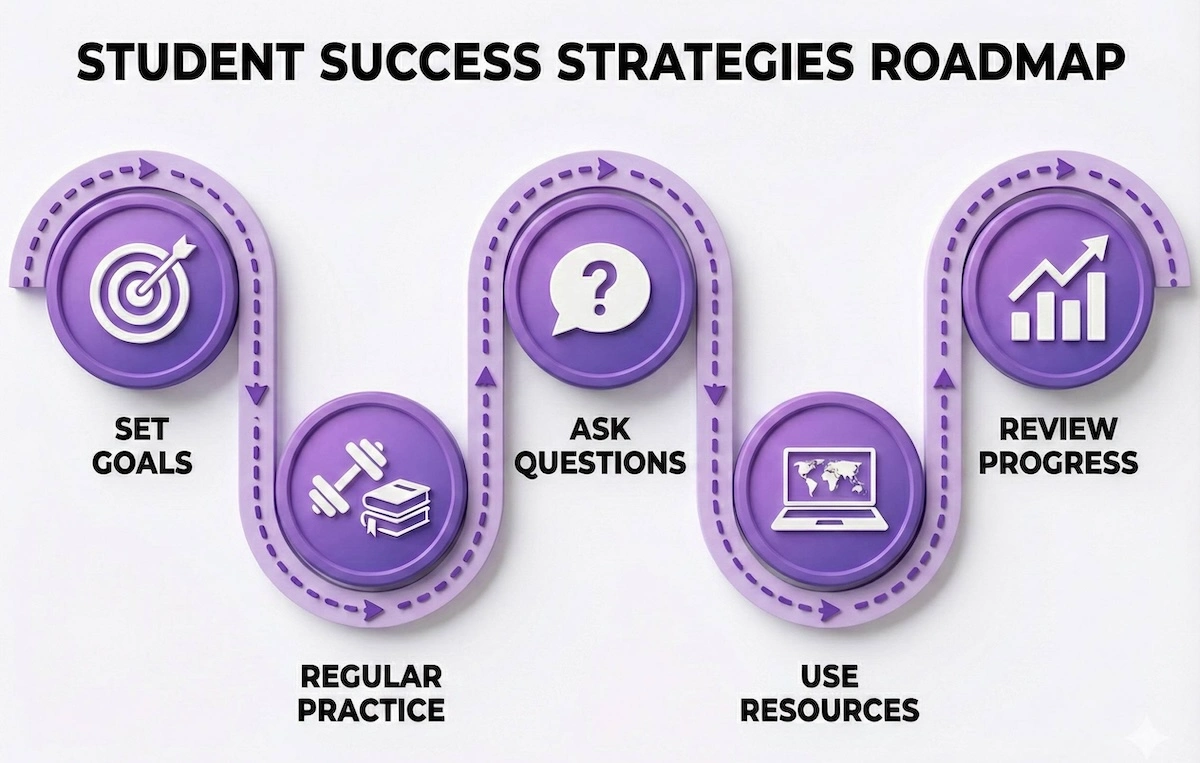
Active participation is key—use this roadmap to maximize the value of every tutoring session.
Integrating these five simple habits into your weekly routine will dramatically accelerate your progress.
Conclusion
GCSE years are a critical stage in education, and tutoring can be a powerful supplement to classroom learning. Whether online or in person, a qualified tutor provides tailored instruction that complements school lessons. With personalized help, students often conquer their toughest subjects, improve grades, and build confidence. Expert reviews confirm that tutoring is one of the most effective ways to boost student outcomes. For many families, especially those juggling busy schedules, hiring a GCSE tutor can make extra support convenient and affordable. In the end, the right tutoring can give a student the edge they need to succeed in GCSE exams and beyond.
Frequently Asked Questions
Q1 What is the role of a GCSE tutor?
A GCSE tutor provides one-on-one academic support to help students understand concepts and prepare for exams.
Q2 Can online GCSE tutoring really help improve my grades?
Yes, personalized online tutoring has been shown to significantly raise grades and confidence for many students.
Q3 How do I find a good GCSE tutor?
Look for experienced tutors with strong subject knowledge and positive reviews or references and consider a trial session.
Q4 Which subjects can I get GCSE homework help for?
GCSE tutors typically offer help in all core subjects (Maths, English, Science) as well as many optional subjects, providing support with homework and assignments in each.
Q5 Is it better to hire a private GCSE tutor or rely on school teaching?
Private tutors offer tailored lessons beyond the classroom, which can be especially helpful if a student is struggling in a specific subject.
Q6 How often should I schedule tutoring sessions?
Regular weekly or biweekly sessions tend to work best, but the exact schedule should fit the student’s needs and allow time for practice.
Related Subjects
GCSE Art and Design
GCSE Astronomy
GCSE Biology
GCSE Business Studies
GCSE Chemistry
GCSE Citizenship Studies
GCSE Classical Greek
GCSE Combined Science
GCSE Computer Science
GCSE Design and Technology
GCSE Drama
GCSE Economics
GCSE Electronics
GCSE English
GCSE English Literature
GCSE Food Preparation and Nutrition
GCSE French
GCSE Geography
GCSE Geology
GCSE German
GCSE History
GCSE Home Economics
GCSE Italian
GCSE Latin
GCSE Mathematics
GCSE Media Studies
GCSE Music
GCSE Physical Education
GCSE Physics
GCSE Psychology
GCSE Religious Studies
GCSE Sociology
GCSE Spanish
GCSE Statistics
******************************
This article provides general educational guidance only. It is NOT official exam policy, professional academic advice, or guaranteed results. Always verify information with your school, official exam boards (College Board, Cambridge, IB), or qualified professionals before making decisions. Read Full Policies & Disclaimer , Contact Us To Report An Error