Hire Verified & Experienced
GCSE Biology Tutors
4.8/5 40K+ session ratings collected on the MEB platform



Hire The Best GCSE Biology Tutor
Top Tutors, Top Grades. Without The Stress!



52,000+ Happy Students From Various Universities






How Much For Private 1:1 Tutoring & Hw Help?
Private 1:1 Tutoring and HW help Cost $20 – 35 per hour* on average.
Three students in every class will drop a grade on GCSE Biology Paper 2 because they never properly understood cell division or homeostasis. If your child is one of them — or if you are — a 1:1 GCSE Biology tutor online changes that faster than any revision guide.
GCSE Biology Tutor Online
GCSE Biology is a core science qualification for 14–16 year-olds in England, Wales, and Northern Ireland, assessed by exam boards such as AQA, Edexcel, and OCR. It covers cell biology, genetics, ecology, and human physiology, equipping students for A Level science and beyond.
MEB provides 1:1 online tutoring and homework help in 2,800+ advanced subjects — and GCSE Biology is one of the most requested. Whether you’re searching for a GCSE Biology tutor near me or need live online sessions that match your exact exam board, MEB connects you with a verified specialist within the hour. Our tutors work to your syllabus, your pace, and your exam date. You understand the material — results follow from that. Explore our full GCSE tutoring offering for every subject in the qualification.
- 1:1 online sessions tailored to your AQA, Edexcel, or OCR Biology syllabus
- Expert-verified tutors with subject-specific Biology knowledge and exam board experience
- Flexible time zones — US, UK, Canada, Australia, Gulf
- Structured learning plan built after a diagnostic session in the first hour
- Ethical homework and assignment guidance — you understand the work, then submit it yourself
52,000+ students across the US, UK, Canada, Australia, and the Gulf have used MEB since 2008 — including students in GCSE subjects like GCSE Biology, GCSE Chemistry tutoring, and GCSE Physics help.
Source: My Engineering Buddy, 2008–2025.
How Much Does a GCSE Biology Tutor Cost?
Most GCSE Biology tutoring sessions with MEB run between $20 and $40 per hour. Not sure if it’s worth committing? Start with the $1 trial — 30 minutes of live 1:1 tutoring or one homework question explained in full, no registration required.
| Level / Need | Typical Rate | What’s Included |
|---|---|---|
| Standard GCSE (most students) | $20–$35/hr | 1:1 sessions, homework guidance, past paper review |
| Advanced / Triple Science | $35–$60/hr | Expert tutor, deeper topic coverage, exam strategy |
| $1 Trial | $1 flat | 30 min live session or one homework question explained |
Tutor availability tightens significantly in April and May during the main GCSE exam window. Book early if your exams are approaching.
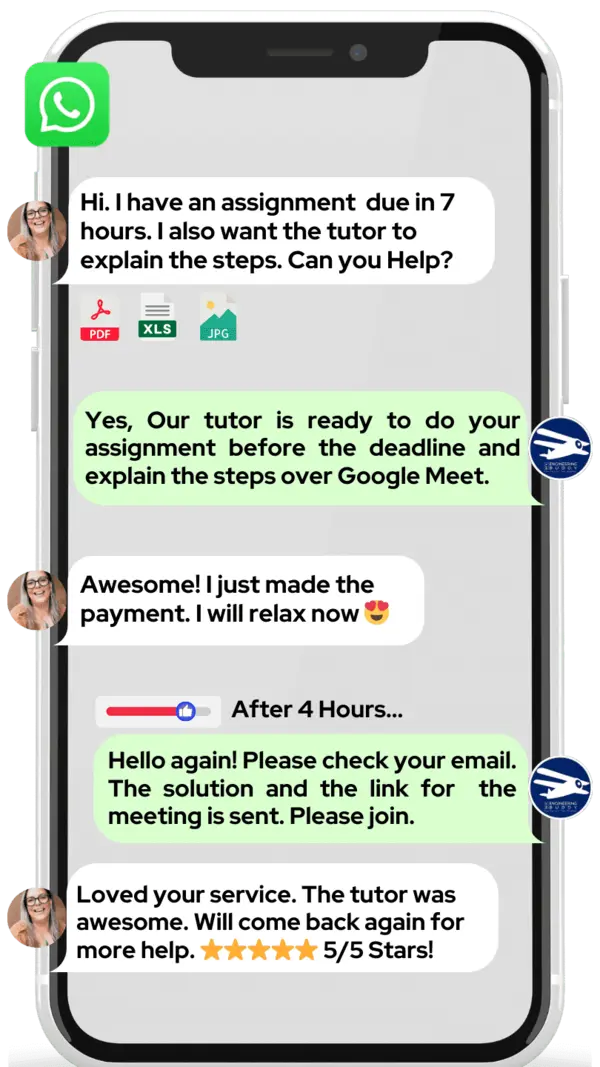
WhatsApp MEB for a quick quote — average response time under 1 minute.
Who This GCSE Biology Tutoring Is For
GCSE Biology catches students out in predictable ways: paper 2 topics covered too quickly in class, required practical write-ups that need structure, and six-mark questions that lose marks for missing the exact command word. MEB tutoring is built for students in exactly those situations.
- Students retaking after a failed first attempt who need to close specific gaps fast
- Students with a university conditional offer depending on their GCSE science grade
- Students 4–6 weeks from an exam with homeostasis, genetics, or ecology still unclear
- Students who need help structuring required practical reports and six-mark extended answers
- Parents watching a child’s confidence drop alongside their Biology grades
- Students in the US, UK, Canada, Australia, or Gulf sitting AQA, Edexcel, OCR, or WJEC specifications
Students who go on to study Biology, Medicine, Nursing, or Environmental Science at institutions like the University of Edinburgh, Imperial College London, University of Toronto, University of Melbourne, or King’s College London benefit from GCSE Biology as a foundation. Getting the grade right here matters for what comes next.
At MEB, we’ve found that the students who improve most quickly aren’t always the ones who work the hardest — they’re the ones who get corrected on the right mistake at the right time. A tutor who has marked GCSE Biology papers knows exactly which answers lose a mark and why.
1:1 Tutoring vs Self-Study vs AI vs YouTube vs Online Courses
Self-study works if you’re disciplined, but GCSE Biology has enough diagram-heavy topics — transport in cells, the nervous system, photosynthesis — that most students hit a wall without feedback. AI tools give fast explanations but can’t watch you draw a reflex arc and tell you what you drew wrong. YouTube covers the overview; it stops when you need someone to explain why your osmosis answer got two marks instead of four. Online courses are fixed-pace and don’t adjust when you’re strong on genetics but weak on hormones. 1:1 tutoring with MEB is live, calibrated to your exact exam board specification, and corrects your errors in the moment — which is what GCSE Biology mark schemes actually reward.
Outcomes: What You’ll Be Able To Do in GCSE Biology
After consistent 1:1 sessions, students solve six-mark required practical questions by structuring observations, variables, and conclusions in the order mark schemes reward. They analyse inheritance diagrams and explain genetic crosses using correct terminology without prompting. They apply knowledge of homeostasis — specifically insulin regulation and thermoregulation — to unfamiliar exam scenarios. They explain the relationship between mitosis and cell growth in extended written answers with the precision GCSE Biology examiners look for. They write clear evaluations of biological experiments, identifying independent variables, anomalies, and sources of error. No guarantees on grades — but these are the skills that separate a grade 5 from a grade 7.
Supporting a student through GCSE Biology? MEB works directly with parents to set up sessions, track progress, and keep coursework on schedule. WhatsApp MEB — average response time is under a minute, 24/7.
Based on feedback from 40,000+ sessions collected by MEB from 2022 to 2025, 58% of students improved by one full grade after approximately 20 hours of 1:1 tutoring in subjects like GCSE Biology. A further 23% achieved at least a half-grade improvement.
Source: MEB session feedback data, 2022–2025.
Try your first session for $1 — 30 minutes of live 1:1 tutoring or one homework question explained in full. No registration. No commitment. WhatsApp MEB now and get matched within the hour.
What We Cover in GCSE Biology (Syllabus / Topics)
MEB tutors cover all major exam board specifications — AQA, Edexcel, OCR (21st Century and Gateway), and WJEC. Sessions are structured around your specific paper and topic sequence, not a generic biology curriculum. See also GCSE Combined Science tutoring if you’re sitting the double award pathway.
Cell Biology, Organisation & Infection
- Prokaryotic vs eukaryotic cell structure and function
- Cell division: mitosis, meiosis, and the cell cycle
- Diffusion, osmosis, and active transport — required practical applications
- Levels of organisation: cells → tissues → organs → systems
- Pathogens, immune response, and vaccination
- Non-communicable diseases: cancer, cardiovascular disease
- Required practical: microscopy and osmosis investigations
Key texts: AQA GCSE Biology Student Book (Collins), Edexcel GCSE (9–1) Biology (Pearson), OCR Gateway GCSE Biology (Oxford).
Bioenergetics, Homeostasis & Genetics
- Photosynthesis: light-dependent and independent reactions, limiting factors
- Aerobic and anaerobic respiration; required practical: rate of respiration
- Homeostasis: blood glucose regulation, insulin, glucagon, thermoregulation
- The nervous system: reflex arc, synaptic transmission, hormonal control
- DNA structure, protein synthesis, and mutation
- Mendelian genetics: monohybrid crosses, Punnett squares, genetic disorders
- Inheritance of sex, codominance, and incomplete dominance
Key texts: AQA GCSE Biology (Hodder Education), WJEC GCSE Biology (Illuminate Publishing).
Ecology, Evolution & Plant Biology
- Ecosystems, food webs, energy transfer, and efficiency calculations
- Biodiversity, sampling techniques, and fieldwork required practicals
- The carbon cycle, water cycle, and decomposition
- Natural selection, evolution, and speciation — including antibiotic resistance
- Plant cell structure, transport, and tropisms
- Translocation and transpiration; stomata function
Key texts: GCSE Biology Complete Revision & Practice (CGP), New Grade 9–1 GCSE Biology for AQA: Student Book (CGP).
For GCSE Biology, the formal assessment structure across most boards is as follows:
| Component | Description | Typical Weighting |
|---|---|---|
| Paper 1 | Cell biology, organisation, infection, bioenergetics | 50% |
| Paper 2 | Homeostasis, inheritance, ecology, evolution | 50% |
| Required Practicals | Examined within both papers (not separate coursework) | Embedded — varies by board |

What a Typical GCSE Biology Session Looks Like
The tutor opens by checking the previous session’s topic — say, osmosis and the potato cylinder practical — asking the student to explain the result without notes. If the explanation holds, the session moves forward. If it doesn’t, the tutor identifies exactly where the reasoning broke down. From there, the session works through the current topic: the tutor models the approach using a digital pen-pad, annotating diagrams of the nervous system or drawing Punnett squares step by step, then asks the student to replicate and explain. Six-mark questions get special attention — the tutor marks a student’s draft answer live, notes the missing points, and has the student rewrite it. The session closes with a specific practice task: two past paper questions on the same topic, to be attempted before the next session.
How MEB Tutors Help You with GCSE Biology (The Learning Loop)
Diagnose: In the first session, the tutor asks the student to attempt a past paper question and talk through their reasoning. This reveals not just knowledge gaps but the pattern of mistakes — whether the student loses marks on command words, on missing scientific terminology, or on incomplete experimental evaluations.
Explain: The tutor works through the correct approach on screen using a digital pen-pad. Diagrams of cell structures, reflex arcs, or food webs are built in real time, not copied from a textbook slide. The student sees the thinking, not just the answer.
Practice: The student attempts the next question while the tutor watches. Silence is informative. A long pause on “describe and explain how insulin controls blood glucose” tells the tutor more than a written test ever would.
Feedback: Every error gets corrected with a reason. “You said glucose is broken down — the mark scheme says oxidised. That word is worth a mark. Here’s why examiners use it.” Specific, not general.
Plan: At the end of each session, the tutor notes which topics are solid, which need one more pass, and what the student should attempt independently before the next session. Progress is tracked across sessions.
Sessions run on Google Meet. The tutor uses a digital pen-pad or iPad with Apple Pencil to annotate live. Before your first session, have your exam board and a recent past paper question ready — even an unattempted one works. The first session is both diagnostic and productive. Start with the $1 trial — 30 minutes of live tutoring that also serves as your first diagnostic. Whether you need a quick catch-up before an exam, structured revision over 4–8 weeks, or ongoing weekly support through the semester, the tutor maps the session plan after the first diagnostic.
Students consistently tell us that what changes first isn’t their grade — it’s that they stop guessing on six-mark questions. Once they know the structure the mark scheme rewards, every paper feels different.
Source: MEB tutor feedback summary, 2022–2025.
Tutor Match Criteria (How We Pick Your Tutor)
Not every Biology graduate makes a good GCSE tutor. MEB screens specifically for exam board knowledge and teaching ability, not just subject credentials.
Subject depth: Tutors are matched by exam board — AQA, Edexcel, OCR, or WJEC — and by the student’s specific paper and topic gaps. A tutor who has taught or marked AQA Biology will approach Paper 2 differently from one who hasn’t. For students also needing support in related areas, we can connect you with GCSE Mathematics tutoring for the quantitative biology questions that appear in both papers.
Tools: All tutors use Google Meet and a digital pen-pad or iPad with Apple Pencil. No whiteboard screenshots or static PDFs — the working is live.
Time zone: Matched to the student’s region — UK, US, Canada, Australia, Gulf. Evening and weekend slots available across all time zones.
Goals: Whether the priority is exam grade improvement, required practical understanding, homework completion, or building foundational knowledge for A Level Biology, the tutor is briefed before the first session.
Unlike platforms where you fill out a form and wait, MEB responds in under a minute, 24/7. Tutor match takes under an hour. The $1 trial means you test before you commit. Everything runs over WhatsApp — no logins, no intake forms.
Study Plans (Pick One That Matches Your Goal)
The tutor builds the exact topic sequence after the diagnostic session, but here are the three most common patterns MEB sees for GCSE Biology students. Catch-up (1–3 weeks): identifying the two or three topics most likely to appear on the next paper and going deep fast. Exam prep (4–8 weeks): systematic coverage of both papers, past paper practice, and mark scheme training. Weekly support: one session per week aligned to what’s being taught in school, keeping the student one step ahead of the class.
Pricing Guide
GCSE Biology tutoring starts at $20/hr for standard level sessions. Most students pay between $20 and $40 per hour. Rate factors include topic complexity, tutor experience, and how much lead time exists before the exam — last-minute bookings in April and May cost more and availability drops sharply.
For students targeting medicine, dentistry, or veterinary science entry requirements where GCSE Biology grade matters, tutors with professional science or clinical backgrounds are available at higher rates — share your specific goal and MEB will match the tier to your ambition.
Start with the $1 trial — 30 minutes, no registration, no commitment. WhatsApp MEB for a quick quote.
Students consistently tell us that the first session feels different from revision they’ve done alone — because the tutor is responding to them, not delivering a fixed lesson. That responsiveness is what makes the hour count.
FAQ
Is GCSE Biology hard?
For most students, the challenge isn’t the concepts — it’s the volume and the precision the mark scheme demands. Topics like homeostasis, genetics, and required practical evaluations trip students up because they require specific scientific language, not general understanding. Targeted 1:1 tutoring addresses this directly.
How many sessions are needed?
Most students see meaningful progress within 6–10 sessions. Students starting 4–6 weeks before exams typically need 2–3 sessions per week. Students using MEB for ongoing support through the academic year usually do one session weekly, aligned to their school’s topic sequence.
Can you help with homework and assignments?
MEB tutoring is guided learning — you understand the work, then submit it yourself. Tutors explain concepts, work through similar examples, and help you structure your answers. See our Academic Integrity policy and Why MEB page for full details on what we help with and what we don’t.
Will the tutor match my exact syllabus or exam board?
Yes. MEB matches tutors by exam board — AQA, Edexcel, OCR (Gateway or 21st Century), or WJEC. Share your board when you contact us and the tutor assigned will know your specific paper structure, required practicals, and mark scheme conventions.
What happens in the first session?
The first session is diagnostic. The tutor asks the student to work through a past paper question and explain their reasoning. This identifies knowledge gaps, mark scheme blind spots, and the topics to prioritise. The session is productive from minute one — not just an intake form in disguise.
Is online tutoring as effective as in-person?
For GCSE Biology, yes — especially for diagram work. Tutors use a digital pen-pad to annotate cell diagrams, reflex arcs, and genetic cross tables in real time. Students report that watching the tutor build a diagram step by step on screen is often clearer than watching it on a whiteboard from a desk.
Can I get GCSE Biology help late at night or on weekends?
Yes. MEB operates across multiple time zones and tutors are available evenings, weekends, and school holidays. WhatsApp response time is under a minute, 24/7. If you’re cramming the night before a mock exam, that’s exactly the kind of session MEB can run.
What if I’m doing Triple Science — does this cover separate Biology?
Yes. MEB tutors are matched to Triple Science (separate GCSE Biology) as well as Combined Science double award. Triple Science students typically need more depth on topics like hormonal coordination, genetics of disease, and ecology — tutors are briefed on your specific tier before session one.
What’s the difference between AQA and Edexcel GCSE Biology?
Both cover the same core content, but the required practicals differ slightly, and the question style varies. AQA Paper 2 is heavier on homeostasis and genetics; Edexcel uses a different practical set. MEB tutors know both and adjust their approach from the first session based on your board.
Do you offer group GCSE Biology sessions?
No. MEB provides 1:1 tutoring only. Group sessions dilute the feedback loop that makes tutoring effective — the tutor can’t watch one student’s reasoning while explaining to three others. Every session is one student, one tutor, full attention.
How do I get started?
Start with the $1 trial: 30 minutes of live 1:1 tutoring or one Biology question explained in full. Three steps: WhatsApp MEB, get matched with a verified tutor within the hour, and start your trial session. No forms, no delay.
Trust & Quality at My Engineering Buddy
Every MEB tutor goes through a subject-specific screening process — not a general teaching test. For GCSE Biology, that means demonstrating knowledge of the relevant exam board specification, the required practical format, and the six-mark question structure. Tutors complete a live demo evaluation before joining the platform, and ongoing session feedback is reviewed to maintain standards. Rated 4.8/5 across 40,000+ verified reviews on Google. MEB has served 52,000+ students across the US, UK, Canada, Australia, and the Gulf since 2008.
MEB tutoring is guided learning — you understand the work, then submit it yourself. For full details on what we help with and what we don’t, read our Academic Integrity policy and Why MEB.
MEB covers 2,800+ subjects — from GCSE Geography tutoring to GCSE Psychology help to GCSE Statistics tutoring. The platform’s tutoring methodology is built around diagnostic-first sessions, live pen-pad explanation, and structured feedback — applied consistently across all subjects. GCSE Biology sits within a broader GCSE science cohort, and many students combine Biology support with sessions in GCSE Astronomy help or GCSE Geology tutoring as their interest in the sciences deepens.
Explore Related Subjects
Students studying GCSE Biology often also need support in:
- GCSE English
- GCSE Mathematics
- GCSE History
- GCSE Computer Science
- GCSE Design and Technology
- GCSE Food Preparation and Nutrition
- GCSE Sociology
Next Steps
Ready to get started? Here’s what to do:
- Share your exam board (AQA, Edexcel, OCR, or WJEC), your hardest topics, and your exam date
- Share your availability and time zone — MEB matches across all major regions
- MEB matches you with a verified GCSE Biology tutor, usually within the hour
Before your first session, have ready:
- Your exam board and syllabus (or school’s topic list)
- A recent past paper attempt or homework question you struggled with
- Your exam or mock exam date
The tutor handles the rest from there.
Visit www.myengineeringbuddy.com for more on how MEB works.
WhatsApp to get started or email meb@myengineeringbuddy.com.
Reviewed by Subject Expert
This page has been carefully reviewed and validated by our subject expert to ensure accuracy and relevance.