Computer Programming: A Student’s Guide to Learning Code in 2025

- Software development jobs are projected to grow 17% from 2023 to 2033.
- High-quality tutoring can deliver the equivalent of 3–15 extra months of learning.
- Online programming tutors use screen-sharing and video to debug code in real time.
- Skilled programming tutors typically charge around $20–$40 per hour.
- Preparing goals and questions before each session maximises what you learn.
Personalised computer programming tutoring helps students overcome coding challenges, build confidence, and improve grades on assignments. If you are working through low-level languages, a C programming tutor can help you master memory management and pointers from the ground up. Tutors adapt lessons to each learner, making tricky homework manageable for busy students.

Why Programming Skills Matter
Coding is more than just a class subject – it’s a key skill in today’s world. Apps, games, and even AI are built with code, so students who learn programming can turn hobbies into careers. The U.S. Bureau of Labor Statistics projects a 17% growth in software development jobs from 2023 to 2033, much faster than the average. These are also well-paying roles: the median salary for software developers was about $133,000 per year in 2024.
For high school and college students around the globe (USA, UK, Gulf and beyond), mastering computer programming opens doors to careers in game design, robotics, web development, and other high-demand fields. In short, coding skills can provide a pathway to creative projects and a lucrative career.
The demand for coding expertise is accelerating rapidly compared to other fields, as shown in the market data below.
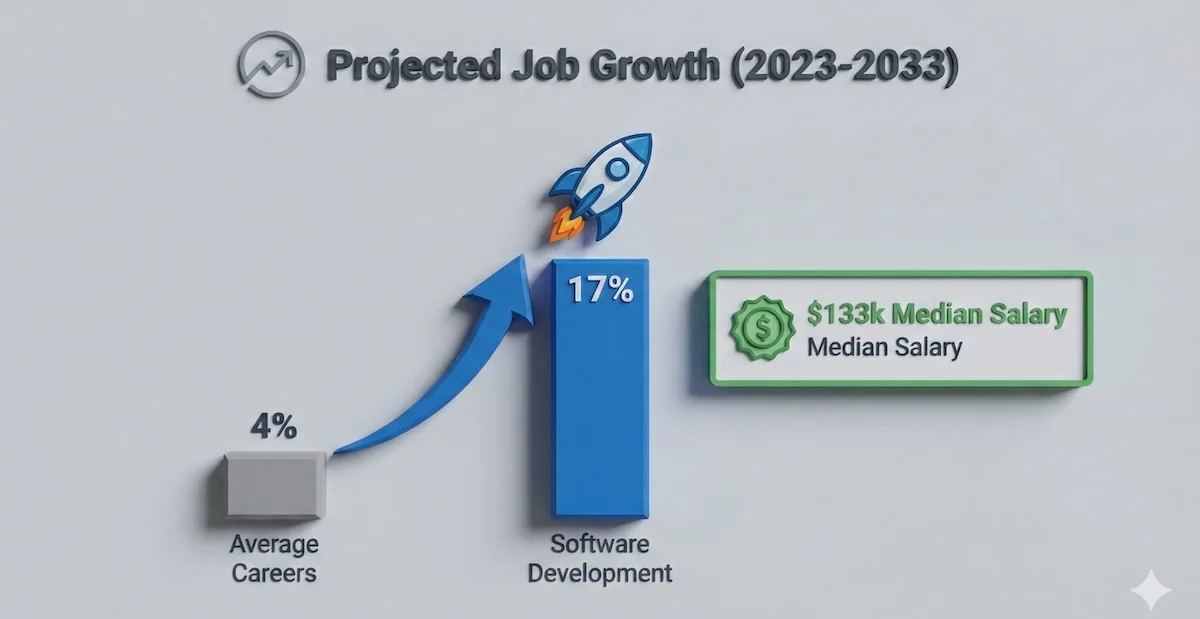
Data confirms that mastering computer programming skills opens doors to one of the fastest-growing career paths today.
With a projected 17% growth rate, investing in these skills today secures your professional future for the next decade.
Common Challenges Learning to Code
Learning to code can be rewarding, but it often feels frustrating at first. Students frequently hit roadblocks understanding syntax, algorithms, or how to fix a bug. In a busy classroom, a computer programming teacher can’t always stop and help every student with a tricky line of code.
One student might spend hours hunting for a missing semicolon that is causing the program to crash, feeling helpless along the way. Without guidance, these mistakes multiply. This is a familiar story: a teen can understand a lesson in theory but struggle to apply it on homework.
After a long night debugging, confidence can plummet. That’s where tutoring steps in, filling the gap between class learning and homework practice.
Many students get stuck in a frustrating cycle of errors. The diagram below illustrates exactly where this breakdown happens and how a tutor intervenes.
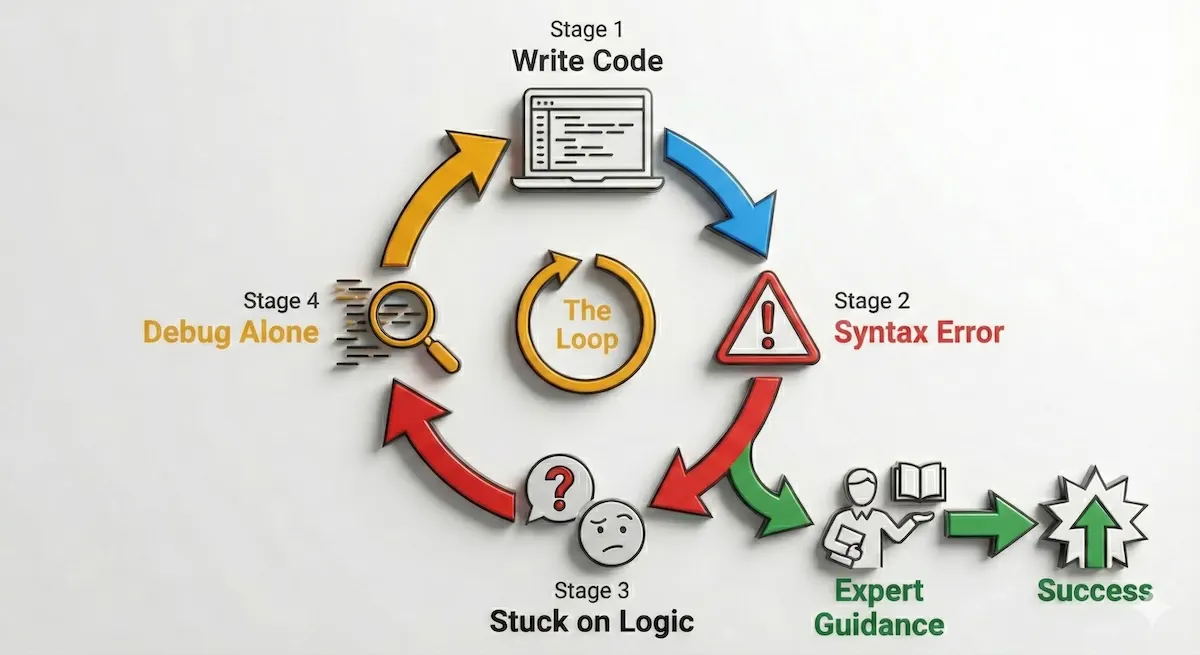
Breaking the frustrating loop of syntax errors and logic gaps is faster with expert guidance than debugging alone.
By breaking this loop early, you avoid the burnout that often leads students to drop out of programming courses.
How Tutoring Helps with Computer Programming
A good tutor can transform a student’s learning experience. Unlike large classes, tutoring provides one-on-one attention where lessons can be tailored to a student’s pace and interests. Research shows that intensive tutoring dramatically boosts learning outcomes: for example, students receiving high-quality tutoring can gain the equivalent of 3–15 extra months of learning.
In practical terms, this means a coding concept that once took hours to grasp can click in minutes with the right explanation. Tutors often use real-world examples or step-by-step coding demos that make abstract ideas concrete. They’ll walk through problems together, catching misunderstandings early.
One student who was stuck on a complex C++ programming project found clarity after a tutor broke the problem into smaller parts. Within a few sessions, not only was the assignment done, but the student understood the logic deeply. These “aha” moments build confidence.
Over time, personalized tutoring turns confusion into success, making programming homework feel less like a chore and more like a challenge you can conquer.
Is private tutoring really different from your college lectures? Let’s compare the two learning environments side-by-side.
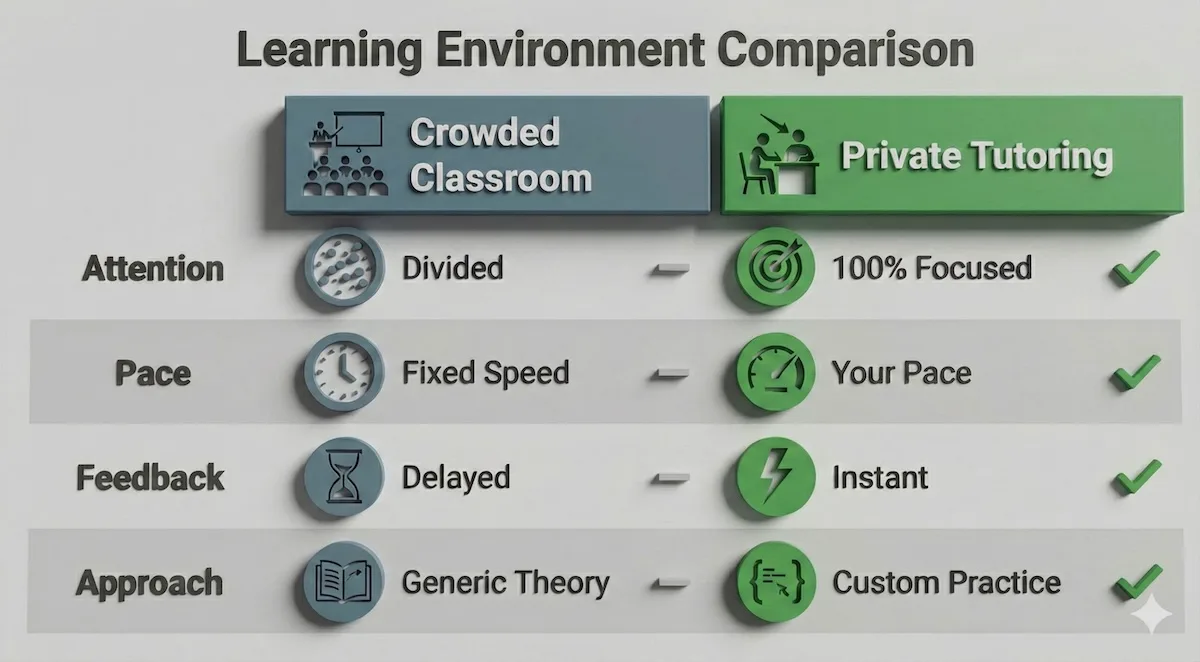
See the difference: Private tutoring offers personalized pacing and instant feedback that crowded lecture halls cannot match.
That shift from ‘generic theory’ to ‘custom practice’ is why students often see grades improve within just a few sessions.
Computer Programming Tutoring Online: Flexibility and Reach
Today’s technology makes it easy to connect with expert tutors from anywhere. Computer programming tutoring online uses video chat, screen-sharing, and digital whiteboards so you can learn coding from home, after school, or wherever you have internet. This flexibility is a game-changer: a student in Dubai can study with a tutor in London, or a UK teen can learn from an engineer in Silicon Valley, all in real time.
Online tutoring platforms are growing rapidly – the global market was $10.4 billion in 2024 and is expected to more than double by 2030 – reflecting how many families value remote learning. There are platforms specializing in STEM and coding, so finding a tutor for any language or topic is easier than ever.
In addition to tutoring, many students use online education platforms (like Codeacademy or Khan Academy) and forums (such as Stack Overflow) for extra practice. However, while forums provide answers, they lack personal explanation. A live tutor offers real-time feedback on your code and keeps you on track.
Students who want to go deeper into algorithmic thinking can also work with an online tutor for data structures and algorithms, which underpins almost every serious programming course. Best of all, many online tutors charge reasonable rates (around $20–$40 per hour) so that personalized help is within reach.
For a broader look at how specialist support works across the discipline, the guide on computer science tutoring covers the wider landscape of subjects and approaches.
Finding the Right Computer Programming Tutor
Finding the perfect match doesn’t have to be a guessing game. Follow this systematic process to vet potential tutors effectively.
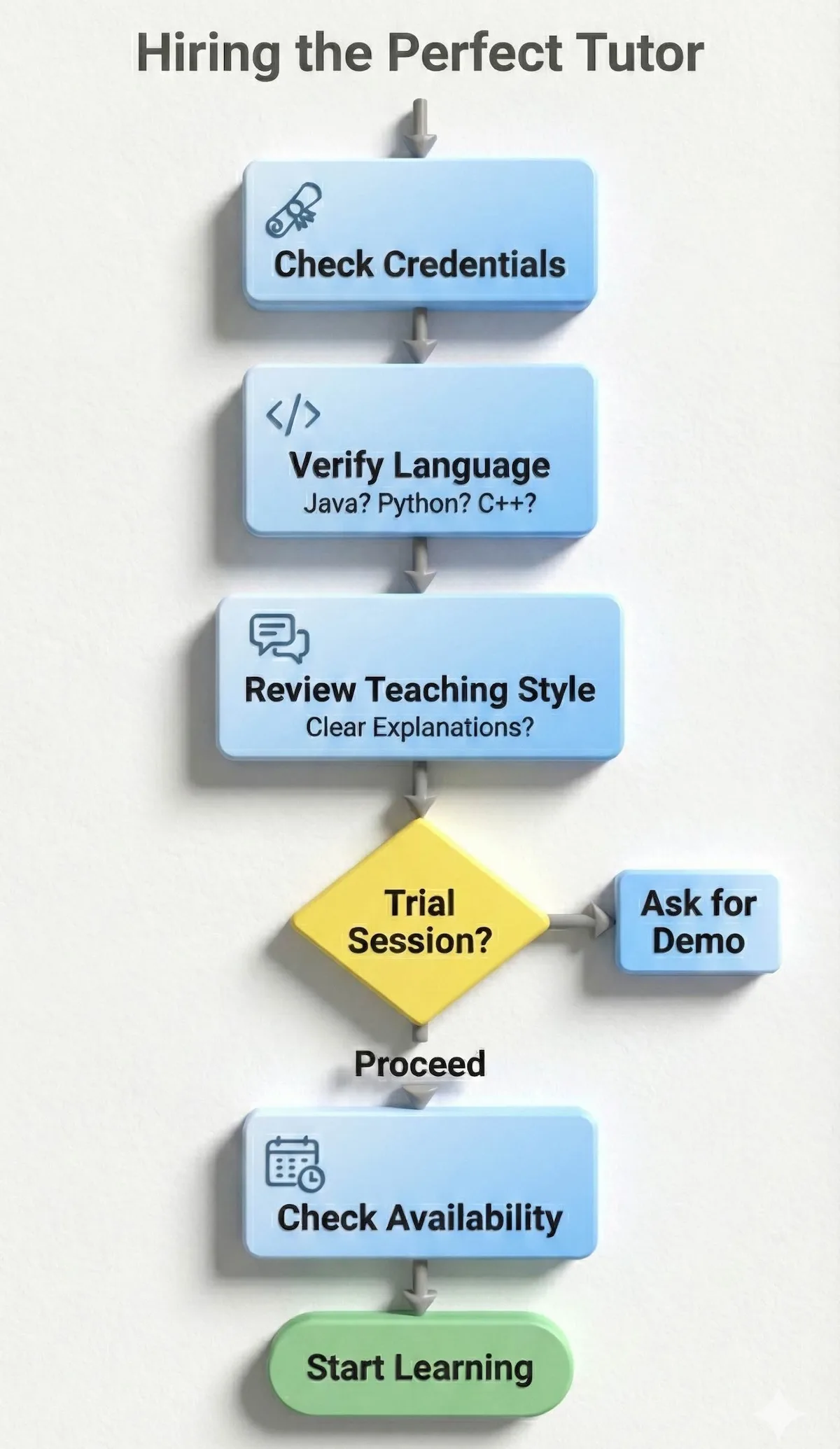
Follow this simple flowchart to ensure you select a tutor who matches your specific language needs and learning style.
Using a structured approach like this ensures you find a mentor who understands your specific coding language and goals.
Choosing a good tutor is key. Here are some tips to hire the best Computer Programming Tutor:
- Credentials: Look for tutors with experience in the exact programming language or course level you need (Java, Python, C++, web development, etc.). Check if they have a background in computer science or related projects.
- Teaching Style: A great tutor explains concepts in clear, relatable ways. They might use practical examples, interactive coding sessions, or visuals. It’s okay to ask a potential tutor about how they teach and whether they can tailor lessons to your goals.
- Compatibility: The tutor should be patient and encouraging. It often helps if they have worked with students your age. Many tutors offer a trial session – use this to see if their personality and pace fit your learning style.
- Reviews & References: Read testimonials from other students or parents. Consistent feedback about a tutor’s reliability and effectiveness is a good sign they know how to help.
- Logistics: Ensure their availability matches your schedule. If online, make sure they use user-friendly tools (like Zoom or specialized tutoring software). Also, consider cost: experienced tutors may charge more, but even many skilled tutors keep rates affordable for families.
- Hiring Platforms: You can find tutors on dedicated tutoring websites, local academic centers, or even student forums. Stick to reputable platforms that verify tutor qualifications.
Preparing for Tutoring Sessions
Getting ready for each session helps you learn more. Here’s how to make the most of tutoring:
- Set Goals: Before the session, decide what you want to accomplish. Is it solving a particular homework problem, understanding a tricky concept, or preparing for an exam?
- Gather Materials: Bring your textbooks, notes, and any code or assignments you’ve been working on. This way, the tutor can see exactly where you’re at and help you practice with the right problems.
- List Questions: Write down specific questions or error messages that have been confusing you. Having a list ensures nothing important is forgotten during the session.
To get the best value for your time and money, run through this quick preparation checklist before every session.
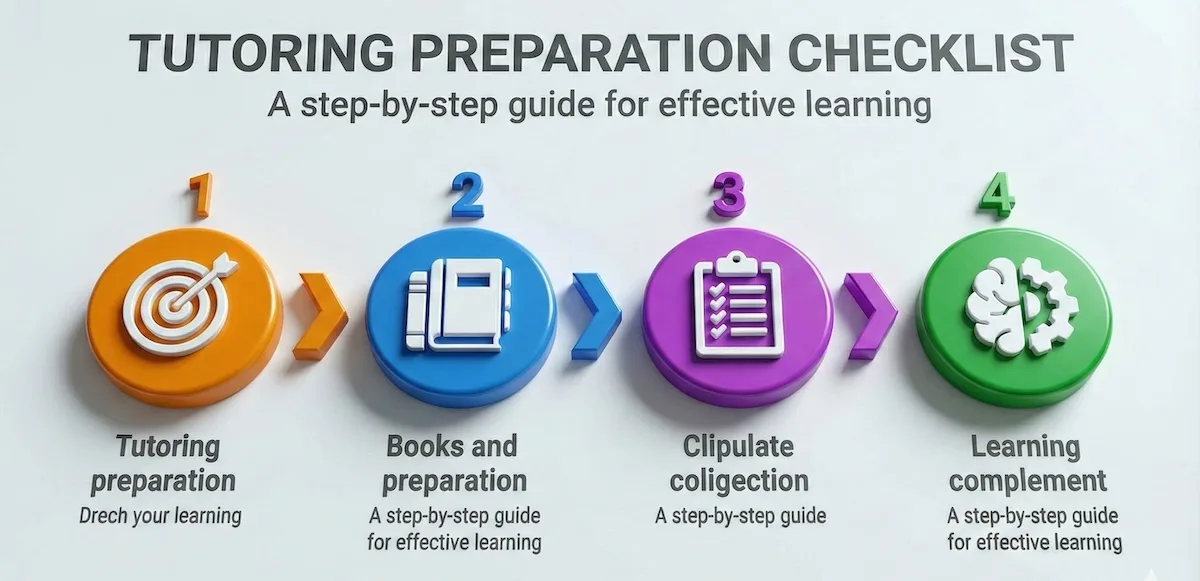
Maximize every minute of your tutoring session by following this 4-step preparation routine before you log in.
Coming prepared allows your tutor to focus immediately on solving your specific blockers rather than organizing your materials.
- Try First: Spend a little time on your own attempting problems. Even if you get stuck, your initial work gives the tutor a starting point, so you can learn more effectively from where you struggled.
- Stay Engaged: Actively participate by asking questions and following along with the tutor’s explanations. Don’t be afraid to pause and get clarification if a step doesn’t make sense right away.
- Review Afterward: Right after the session, quickly review what you learned. Note any new tips the tutor shared, and practice a bit on your own to reinforce the lesson.
Turning Struggles into Success Stories
Many students and parents see dramatic improvements after tutoring. For example, a college freshman named Anjali was overwhelmed by her first data structures assignment. With a computer programming tutor’s help, she broke the assignment into smaller tasks.
The tutor showed her how to trace her code and explained pointers step by step. By the end of their sessions, Anjali not only finished the assignment but also felt proud of understanding what was happening under the hood.
Stories like this are common: personalized tutoring can transform a student’s experience from stress to achievement. In fact, even a short session can make tough problems suddenly clear. This success builds confidence – after a few positive sessions, students often tackle new challenges eagerly.
Students who want to strengthen their analytical foundations alongside programming will find the post on habits to improve probability and data skills a useful companion read.
Those considering how programming fits into broader technology career paths may also find value in exploring evening MBA programs in Silicon Valley, where technical and business skills increasingly converge. Similarly, understanding how analytical roles intersect with policy is covered in the guide to master’s programs in labor, employment law, and HR.
For students exploring statistical computing as part of their programming journey, working with an R programming tutor can bridge the gap between data analysis and software development. Those studying embedded systems or low-level architecture may benefit from working with an assembly language programming expert.
Wrapping Up
For high school and college students (and their parents) eager to master coding, computer programming tutoring is a smart investment. Experienced tutors bring expertise and flexibility that complement school teaching. They make complex concepts simple and give students the confidence to tackle assignments.
Whether you need computer programming homework guidance, assignment support, or just want to go beyond the classroom curriculum, a good tutor can guide the way. With affordable online options and proven learning gains, hiring a computer programming tutor can turn coding from a headache into a hobby. Investing in tutoring now often pays off in better grades, deeper understanding, and a stronger foundation for future STEM success.
Frequently Asked Questions About Computer Programming Tutoring
What is computer programming tutoring?
Computer programming tutoring is personalized instruction where an expert helps a student understand coding concepts and tackle programming assignments one-on-one.
How much does it cost to hire a computer programming tutor?
Rates vary, but many skilled programming tutors charge around $20–$40 per hour, depending on their experience and the topic.
Can an online tutor really help with programming?
Yes, through video calls and screen-sharing, an online tutor can walk you through code, explain concepts, and debug problems just as effectively as in-person tutoring.
What topics can a programming tutor help with?
A programming tutor can assist with any programming topic – from beginner languages like Python or Java to advanced subjects like algorithms, data structures, databases, or web development.
Is computer programming tutoring only for students who are struggling?
Not at all – computer programming tutors help all levels. Even high-achieving students use tutors to deepen skills, prepare for contests, or get ahead in difficult courses.
How can I get computer programming homework guidance?
You can get computer programming homework guidance by hiring a tutor or using an online tutoring service – the tutor will guide you through each homework problem so you understand how to solve it.
Subjects Under Computer Programming
Apex (Salesforce) Programming
Assembly Language Programming
Bash Scripting Programming
C Programming
C# Programming
C++ Programming
COBOL Programming
ColdFusion Programming
Dart Programming
Delphi Programming
Excel VBA Programming
F# Programming
Fortran Programming
Go Programming
Haskell Programming
Java
JavaScript
Julia Programming
Kotlin Programming
Lisp Programming
Objective-C Programming
Perl Programming
PHP
PL/SQL Programming
PowerShell Programming
Prolog Programming
Python
Ruby Programming
Rust Programming
Scala Programming
Scripting Languages Programming
Shell Scripting Programming
SQL
Swift Programming
VB.NET Programming
Visual Basic Programming
Related Reading
******************************
This article provides general educational guidance only. It is NOT official exam policy, professional academic advice, or guaranteed results. Always verify information with your school, official exam boards (College Board, Cambridge, IB), or qualified professionals before making decisions. Read Full Policies & Disclaimer , Contact Us To Report An Error