Maximize Your ACT Score with Tutoring and Homework Help

Personalized ACT tutoring – including online sessions and targeted homework help – can reduce test anxiety and sharpen skills; research finds even focused prep leads to modest score gains.

Why ACT Scores Matter
The ACT is one of the main college admissions tests in the USA, and many international students (in the UK, Gulf, and beyond) take it when applying to American universities. In 2023 about 37% of U.S. high school graduates took the ACT, with an average composite score of only 19.5. Even a few points of improvement can be meaningful. For perspective, a 30 on the ACT is roughly the 95th percentile (better than 95% of test-takers), while a perfect 36 is at 100th percentile. In competitive college admissions, every point counts – a higher ACT can open doors to more selective schools and scholarships. That’s why many students and parents seek extra help to boost their scores.
Understanding how scores translate to percentiles highlights why every single point of improvement is crucial.
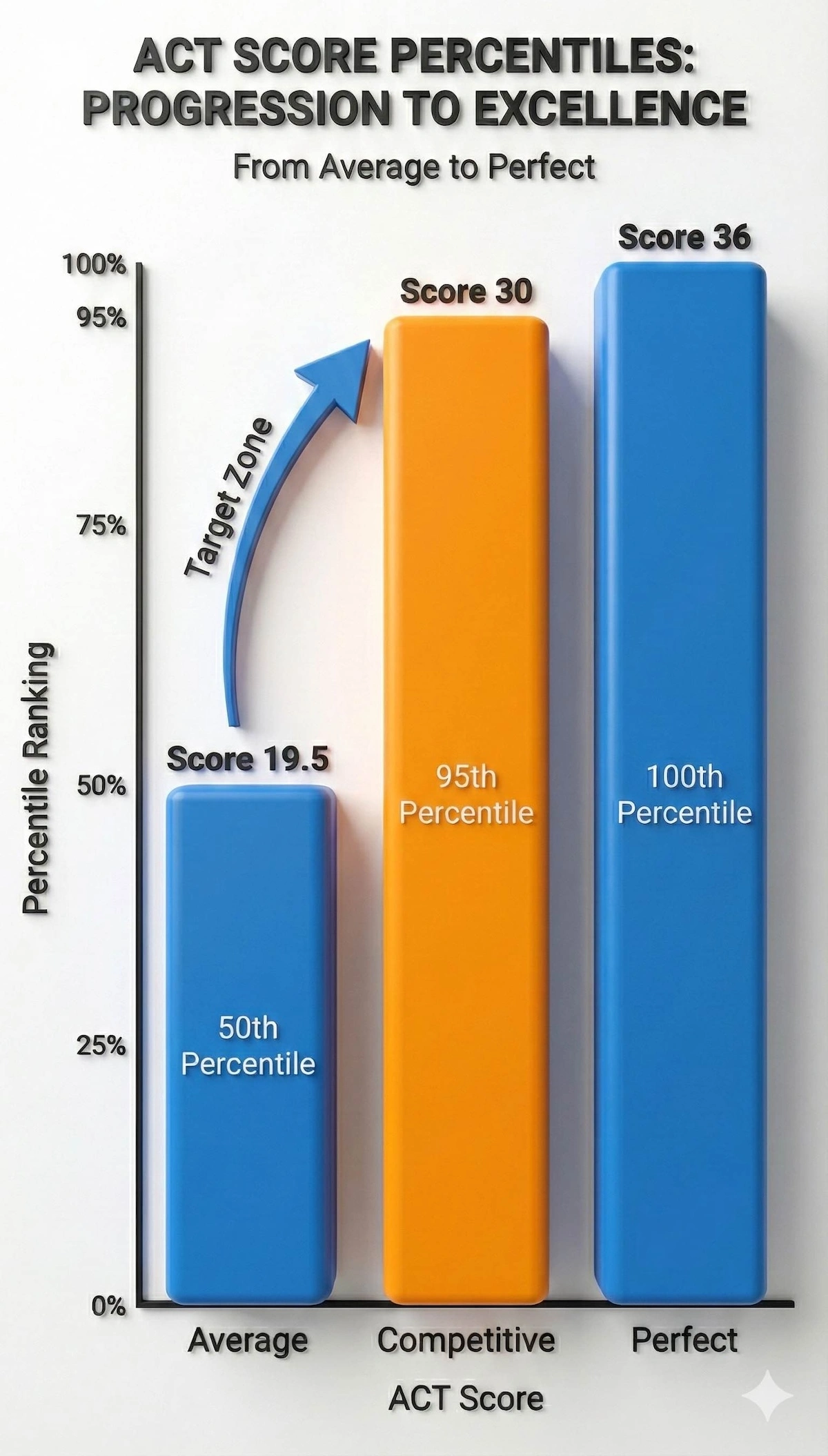
Every point matters—jumping from an average score to a 30 puts you in the top 5% of all test-takers.
As the chart shows, moving from an average score to a 30 propels you into the top 5% of applicants.
Consider a typical student story: a high school junior juggling AP classes and extracurriculars. She takes a practice ACT and scores a 20 in math and 18 in reading – below her goals. Feeling overwhelmed, she finds a specialized ACT tutor who diagnoses her weakest areas and develops a study plan. Over several months of weekly sessions, her scores steadily climb. This scenario illustrates how targeted support can make test prep more efficient and less stressful. As the ACT organization notes, students who familiarize themselves with the test through practice and preparation tend to be “less anxious and more successful” on test day.
What Is ACT Tutoring?
ACT tutoring is one-on-one instruction specifically focused on preparing for the ACT exam. A tutor (sometimes called an ACT teacher or ACT coach) works with the student to review relevant academic content (math, English, reading, science, writing) and teach test-taking strategies. Tutors often have strong credentials: they might be experienced teachers, high-scoring test-takers, or professionals trained in standardized test prep. In contrast to a general classroom or self-study, tutoring offers personalized attention. The tutor can pace the lessons to the student’s needs, spending extra time on difficult topics like algebra or reading comprehension. This personalized instruction tailors the learning plan so the student can focus on exactly what she needs to improve.
To visualize how this tailored approach works, let’s look at the continuous feedback loop a private tutor uses.
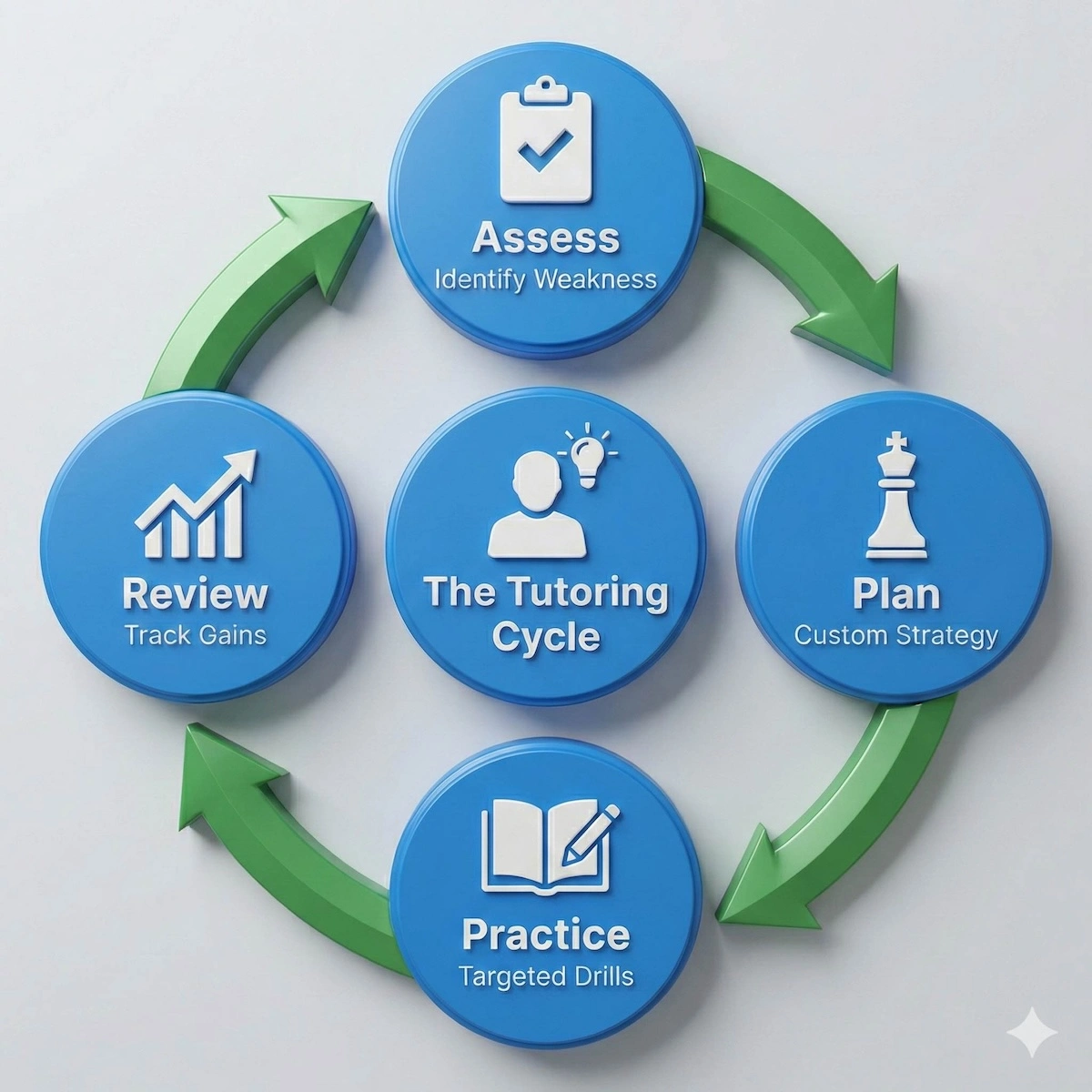
Unlike rigid classroom learning, personalized tutoring follows a continuous cycle of assessment and targeted improvement.
This cycle ensures that no time is wasted on concepts you have already mastered.
Personalized Instruction
In private tutoring, every lesson can be customized. For example, if a student struggles with ACT Math, the tutor can begin with those concepts and use targeted practice problems. If reading speed is an issue, the tutor might use shorter passages at first. Over time, the tutor adjusts the focus based on progress. This one-on-one approach is very different from a fixed group class or simply reading a book: it means adaptive teaching that matches the student’s pace.
Focused Test Strategies
ACT tutors also teach effective strategies that go beyond content. They might train you in time management (like how long to spend on each math problem), educated guessing when answers are uncertain, or how to annotate a passage efficiently for reading. Tutors often give practice tests and simulate test-day conditions so the student becomes comfortable with the format. By honing test skills and covering all question types, the tutor builds confidence. Research shows that investing more study time generally yields higher scores: students who prepared for over 20 hours on their second ACT gained on average about 0.7 points more than those who studied only 3–6 hours. Even a modest increase like this can raise a student’s percentile ranking.
Is the time investment worth it? Data shows a direct correlation between dedicated study hours and score increases.
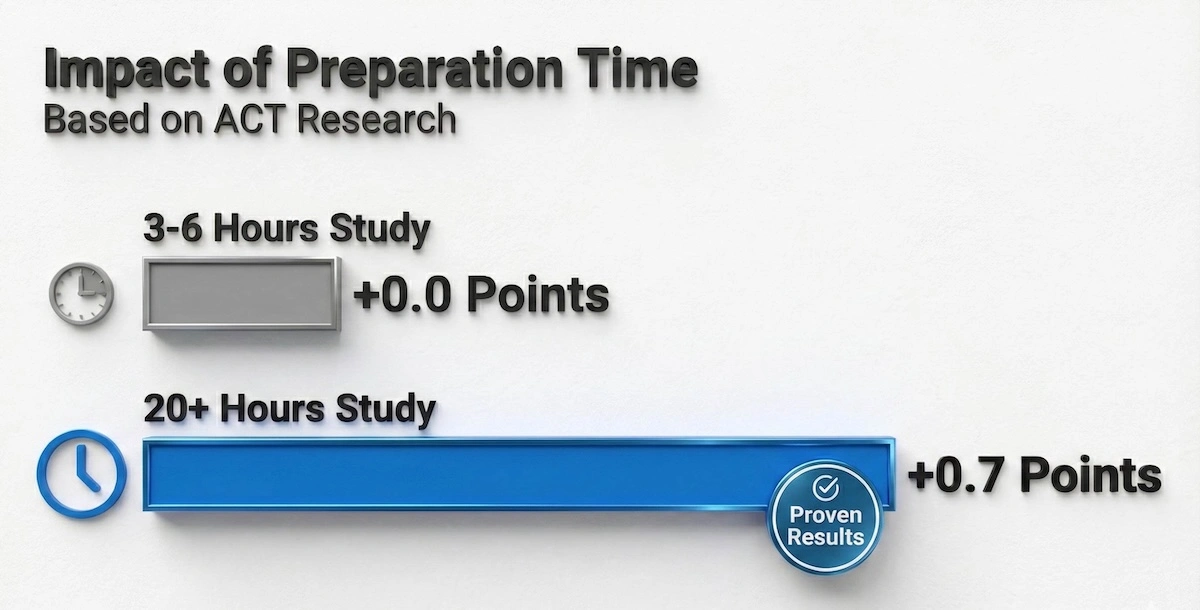
Research confirms that committing 20+ hours to focused preparation leads to measurable score improvements.
Investing over 20 hours yields significantly better results than a quick last-minute review.
Benefits of ACT Tutoring
There are several advantages to working with an ACT tutor:
- Targeted Review: A tutor identifies your specific weaknesses (for example, pre-calculus topics or English grammar rules) and creates a focused study plan. This efficient approach ensures you spend time on what you need most, rather than wasting hours on topics you already know.
- Expert Strategies: Tutors bring insider knowledge of the ACT. They teach techniques for different sections – such as skimming science passages in the optimal way or eliminating wrong answer traps in math – that aren’t obvious from self-study.
- Structured Accountability: Regular tutoring sessions provide structure and motivation. The tutor assigns practice problems (homework) and checks progress, so students are more likely to follow through on studying instead of procrastinating.
- Confidence and Stress Reduction: As students improve in practice tests and become familiar with the exam format, their anxiety decreases. The ACT organization notes that prepared students tend to be less anxious and more successful. Going into the test confident and calm can itself improve performance.
- Homework and Practice Help: Tutors don’t just cover test strategies; they also help with ACT homework and assignments, especially in math and science subjects. By reinforcing coursework and solving practice problems together, students build stronger foundations that translate to better ACT skills.
- Demonstrated Learning Gains: High-quality tutoring is proven to work. A systematic review of 96 studies found that tutoring consistently yields “substantial positive impacts” on learning outcomes. In other words, students who regularly receive personalized tutoring tend to improve their academic performance in tested subjects – including standardized tests like the ACT.
Online vs. In-Person Tutoring
Both in-person and online ACT tutoring can be effective, but online tutoring has grown very popular and convenient. With online tutoring, students can connect with qualified ACT teachers anywhere in the world via video chat. This means you can hire a top tutor even if none are nearby. Online sessions often use digital whiteboards or screen-sharing, so tutors can walk students through problems in real time, just as they would on paper. For students in the UK, Gulf countries, or remote areas, online tutoring provides access that might otherwise be unavailable.
Deciding between online and in-person formats depends on your specific needs and constraints.
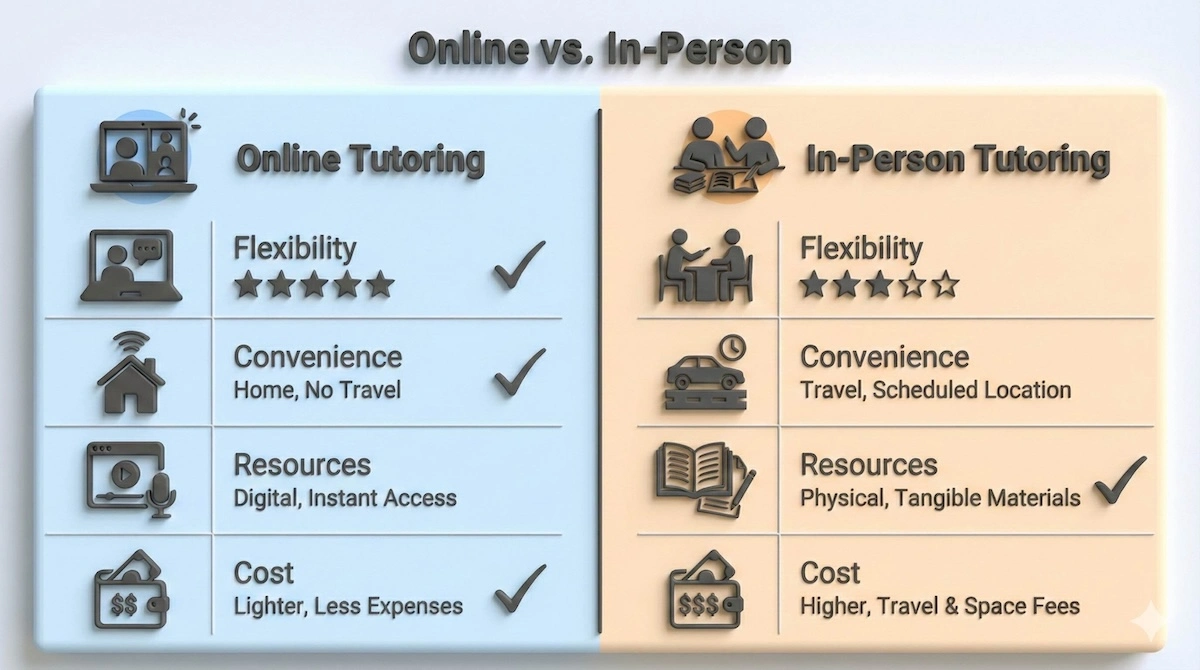
Online tutoring offers superior flexibility and recording tools, while in-person sessions provide traditional face-to-face interaction.
While in-person offers physical presence, online tutoring often provides better flexibility and digital resources.
Importantly, research indicates that online tutoring can significantly boost learning outcomes. For example, a Harvard study of an online tutoring program found it “substantially increased students’ academic performance” during pandemic school closures. While that study focused on middle school subjects, the principle holds: a dedicated tutor (even a virtual one) can help improve test performance. Many families have discovered that the flexibility of scheduling and the rich resources (recorded sessions, digital practice tests) make online ACT tutoring an effective way to prepare.
ACT Homework and Assignment Help
In addition to live tutoring sessions, an ACT tutor often provides homework help and assistance with assignments related to ACT prep. This might include reviewing practice quizzes, working through tough math and science problems, or editing practice writing prompts. For example, if a student’s school assignment covers quadratic equations, the tutor can link it to similar ACT math questions. By connecting schoolwork to ACT-style problems, tutors reinforce key concepts. Offering this kind of homework help ensures that students continually practice outside of tutoring sessions. Over time, this steady practice on ACT-like exercises builds fluency and confidence for the test.
Choosing the Right ACT Tutor
When hiring an ACT tutor, consider these factors:
- Qualifications: Look for tutors with proven expertise. This could mean a high ACT score themselves or experience teaching standardized tests. Some tutors are current teachers (an ACT teacher who knows the curriculum) or graduates of strong programs. A tutor with relevant credentials or training can explain concepts clearly and share test-taking insights.
- Teaching Style: Every student learns differently. Make sure the tutor’s style matches the student’s needs. For instance, some students do better with a friendly coach who keeps sessions upbeat, while others prefer a more structured, drill-based approach. Many tutoring platforms allow trial sessions so you can see if the tutor’s style clicks.
- Reviews and Track Record: When possible, check feedback from other students. A tutor recommended by former students or one who can show measurable score improvements is a good sign. While not foolproof, a track record of success can give confidence in the tutor’s methods.
- Compatibility: The student should feel comfortable asking questions. Personal rapport matters. A friendly, patient tutor often leads to better learning. Some families even prefer a same-gender tutor or someone with similar background for easier communication.
- Trial Lesson: Many tutoring services (including our own) offer a free first lesson. Use it to gauge if the tutor addresses your concerns and if you feel at ease. A short trial can reveal a lot about whether the tutor’s expertise and personality fit the student.
Use this simple checklist to guide your hiring process and ensure a good match.
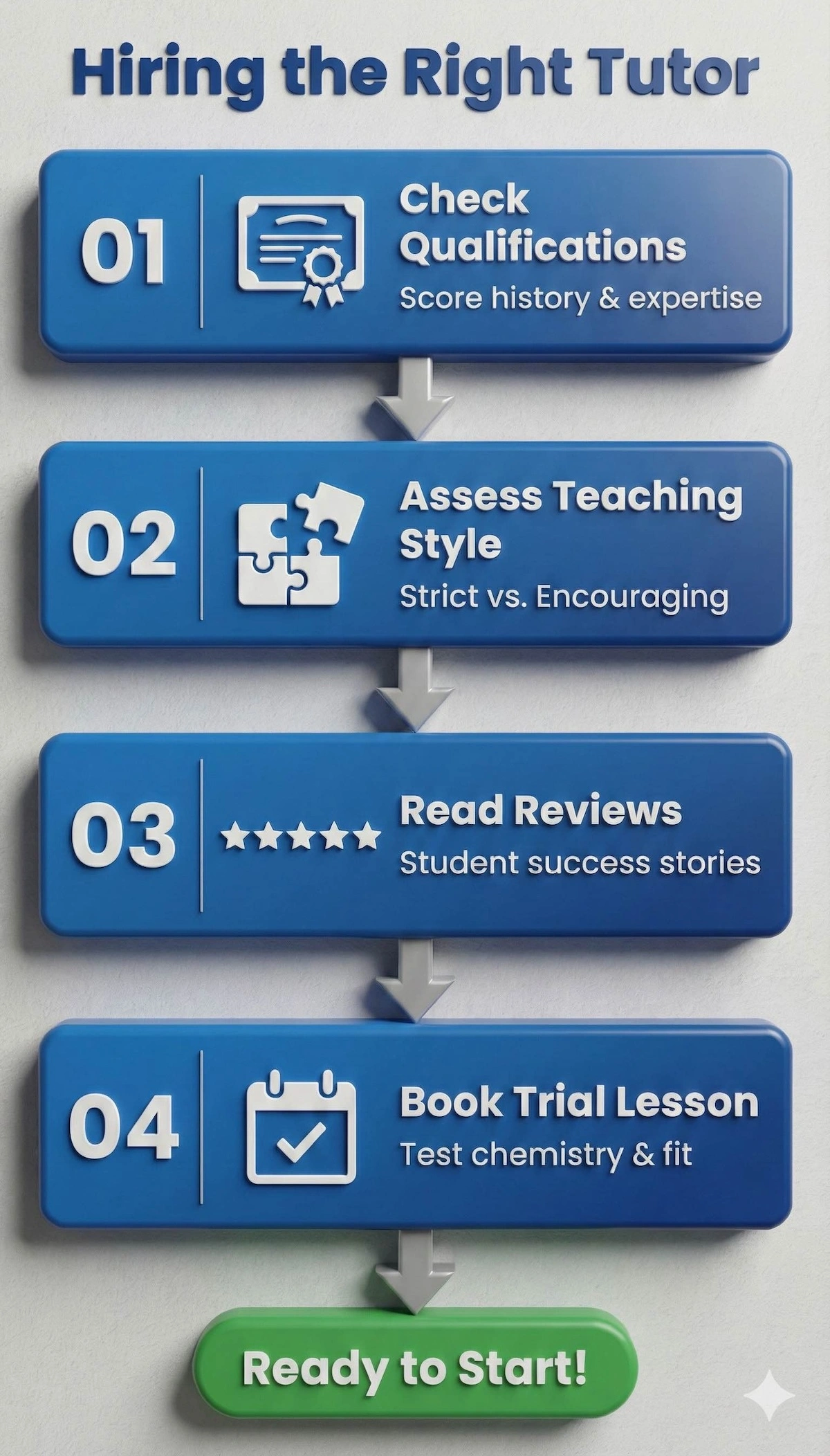
Follow this four-step checklist to ensure you find a tutor who matches your learning style and academic goals.
Don’t skip the trial lesson—it is the most effective way to gauge compatibility before committing.
Cost and Scheduling
ACT tutoring prices vary. Experienced tutors often charge between $20 and $40 per hour, depending on location and credentials. Group classes or programs may cost more overall but split the price among students. Despite the cost, many parents view tutoring as an investment: even a small score increase can qualify a student for more scholarships or a spot at a preferred college. Scheduling is flexible; tutors can meet weekly, intensively before the test, or as needed. It’s generally best to start tutoring several months in advance, so there’s time to address weaknesses, take practice tests, and even retest if necessary.
When to Start Preparation
Ideally, begin ACT prep early. Many students start tutoring in the spring or summer of junior year, so they have a plan well before fall of their senior year. This allows for steady study rather than last-minute cramming. Even a consistent pace of one session per week can make a difference. If the first test didn’t meet goals, use tutoring to prepare for a retake; ACT research shows that students who prepare more see higher score gains on retests. Ultimately, the earlier and more thoroughly you prepare, the more confident and ready you’ll feel on test day.
Frequently Asked Questions (FAQs)
What is ACT tutoring? Personalized instruction aimed at improving a student’s performance on the ACT exam through targeted review and practice.
How does ACT tutoring online help me? Online ACT tutoring connects you with an expert tutor via video sessions, offering flexible scheduling and live guidance on practice problems.
What is ACT homework help? It means assistance with practice questions and assignments related to ACT subjects (math, science, English, etc.) to reinforce learning outside of tutoring sessions.
How much does ACT tutoring cost? One-on-one ACT tutoring typically runs about $20–$40 per hour, depending on the tutor’s experience and your location.
Who should hire an ACT tutor? Any student who wants personalized help addressing weaknesses, learning test strategies, or boosting their ACT score can benefit from an ACT tutor.
How do I find a qualified ACT tutor? You can look for experienced ACT tutors through reputable tutoring companies or online platforms, often starting with a free consultation to ensure a good fit.
Related subjects:
******************************
This article provides general educational guidance only. It is NOT official exam policy, professional academic advice, or guaranteed results. Always verify information with your school, official exam boards (College Board, Cambridge, IB), or qualified professionals before making decisions. Read Full Policies & Disclaimer , Contact Us To Report An Error