How to Find Tutors for Food and Nutritional Sciences

Food and nutritional sciences is a field that blends biology, chemistry, and health. It allows students to understand how food and nutrition impact the human body.
For students entering this discipline, the coursework can feel overwhelming, especially when dealing with technical concepts and applied science. Having a skilled tutor can make a dramatic difference. The right mentor not only clarifies complex theories but also bridges the gap between academic learning and practical understanding. Whether you’re preparing for school exams like IGCSE Food & Nutrition (0648), O-Level Food & Nutrition (6065), or GCSE Food Preparation and Nutrition, personalized guidance can make all the difference.
Finding a tutor who aligns with your goals requires thoughtful consideration of their teaching approach, background, and ability to personalize lessons—whether through traditional sessions or online tutoring.
Look for Tutors with Strong Academic Foundations
When seeking tutors in food and nutritional sciences, academic qualifications should never be overlooked. Across the US, over a hundred colleges offer programs in this field. A tutor with a degree in nutrition, dietetics, or food science has already navigated the challenges you face. They can explain difficult topics like metabolism, food chemistry, or dietary analysis with authority.
While experience is important, having a solid academic background ensures that you are learning from someone who understands the scientific accuracy behind every concept.
To truly excel in this field, a tutor needs more than just a degree. The visualization below breaks down the four essential pillars that make up a complete, high-quality mentor.
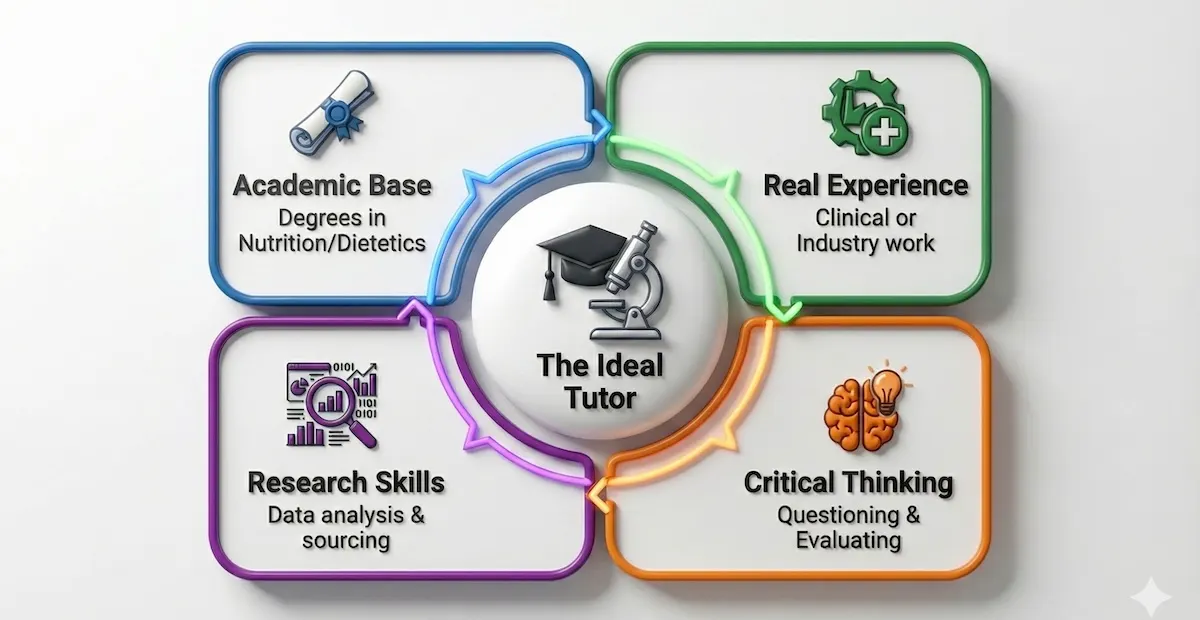
A balanced tutor combines strong academics with real-world industry and research experience.
As you can see, the ideal tutor balances their academic base with real-world experience and critical thinking skills.
At the same time, credentials alone are not enough. A tutor should also be able to adjust their approach depending on your level of study. For example, a high school student might need guidance in understanding the basics of nutrition. A college student, however, may require in-depth help with research methodology.
The best tutors recognize these differences and adapt their teaching accordingly.
Find Experts Who Use Real-Life Examples
Textbooks provide theory, but real understanding often comes from connecting concepts to real-life situations. Tutors who use current examples make learning memorable and engaging. These references help students appreciate how food and nutritional sciences impact daily living and public health.
A lesson about food safety, for instance, becomes more meaningful when linked to recent cases of contamination or recalls. An example worth mentioning is how some tutors use the NEC lawsuit to demonstrate the consequences of poor nutritional practices. Parents of premature infants have filed claims against companies like Enfamil over the risks of toxic baby formula.
According to TorHoerman Law, the NEC baby formula lawsuit highlights how baby formula lawsuits are more than legal cases. They reflect real health outcomes tied to nutrition science. When tutors use such cases, including the broader baby formula lawsuit discussions, students gain a deeper understanding of why safe nutrition matters.
Why does this practical approach matter so much? Let’s compare the difference between standard textbook teaching and the expert, real-world approach found in professional tutoring.
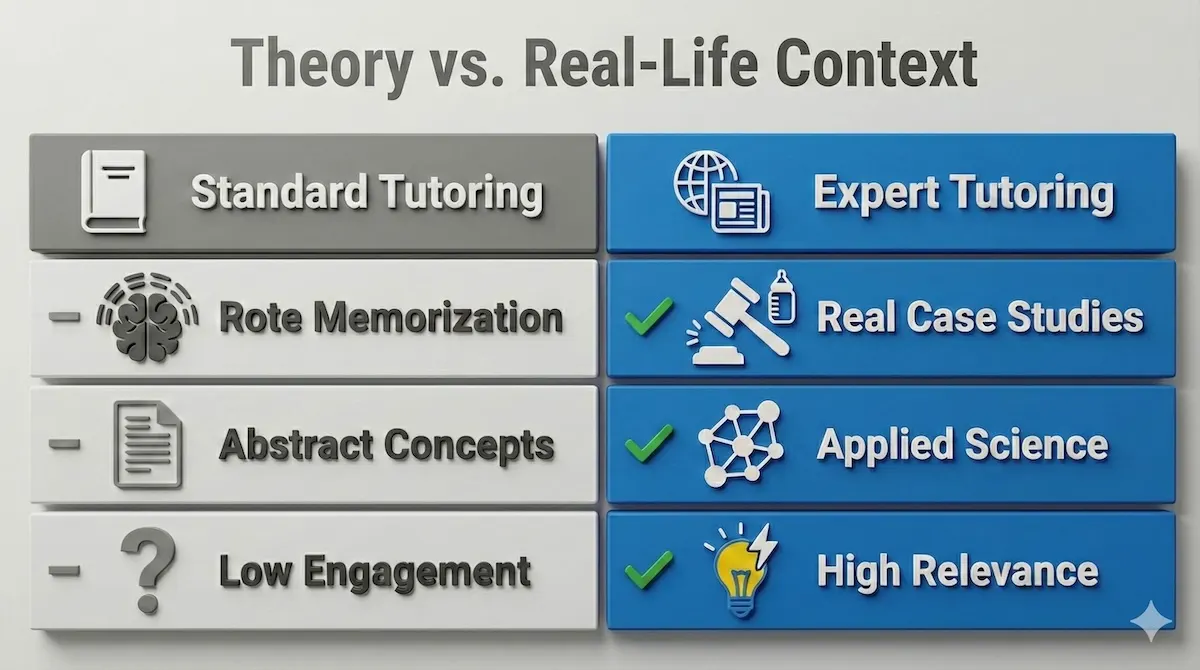
Connecting theory to real-world cases, like food safety lawsuits, improves retention and understanding.
By moving beyond rote memorization to applied science, you prepare yourself for professional challenges, not just exams.
Explore Professionals with Practical Experience
Food and nutritional sciences extend beyond the classroom. Professionals in hospitals, research labs, or food safety organizations often tutor students on the side. These individuals bring invaluable hands-on insights that purely academic instructors might lack.
Food safety organizations, in particular, have staff members with an MA in culinary arts, making their experience all the more vital.
A dietitian can explain how patient counseling works in practice. A food scientist can share experiences from product development or laboratory testing. Learning from such tutors gives students a clearer vision of how their education translates into careers.
Practical experience also helps students prepare for professional challenges. When a tutor has been part of food safety inspections or clinical nutrition planning, they can share the complexities of these roles.
These details go beyond textbook definitions and provide a nuanced understanding. For many students, this makes learning both practical and inspiring.
Consider Tutors Who Focus on Research Skills
As food and nutritional sciences evolve, research is central to progress. Tutors with strong research skills can guide students in structuring papers, analyzing data, and evaluating sources. They teach how to approach peer-reviewed studies critically rather than relying on surface-level knowledge.
For students who aim to pursue higher education or contribute to the scientific community, such skills are vital.
Research-driven tutors also help with building confidence in presenting findings. They can review drafts, highlight weak arguments, and suggest stronger evidence.
Research is a step-by-step process, not a single task. Here is the progression path a skilled tutor will guide you through to build your academic confidence.
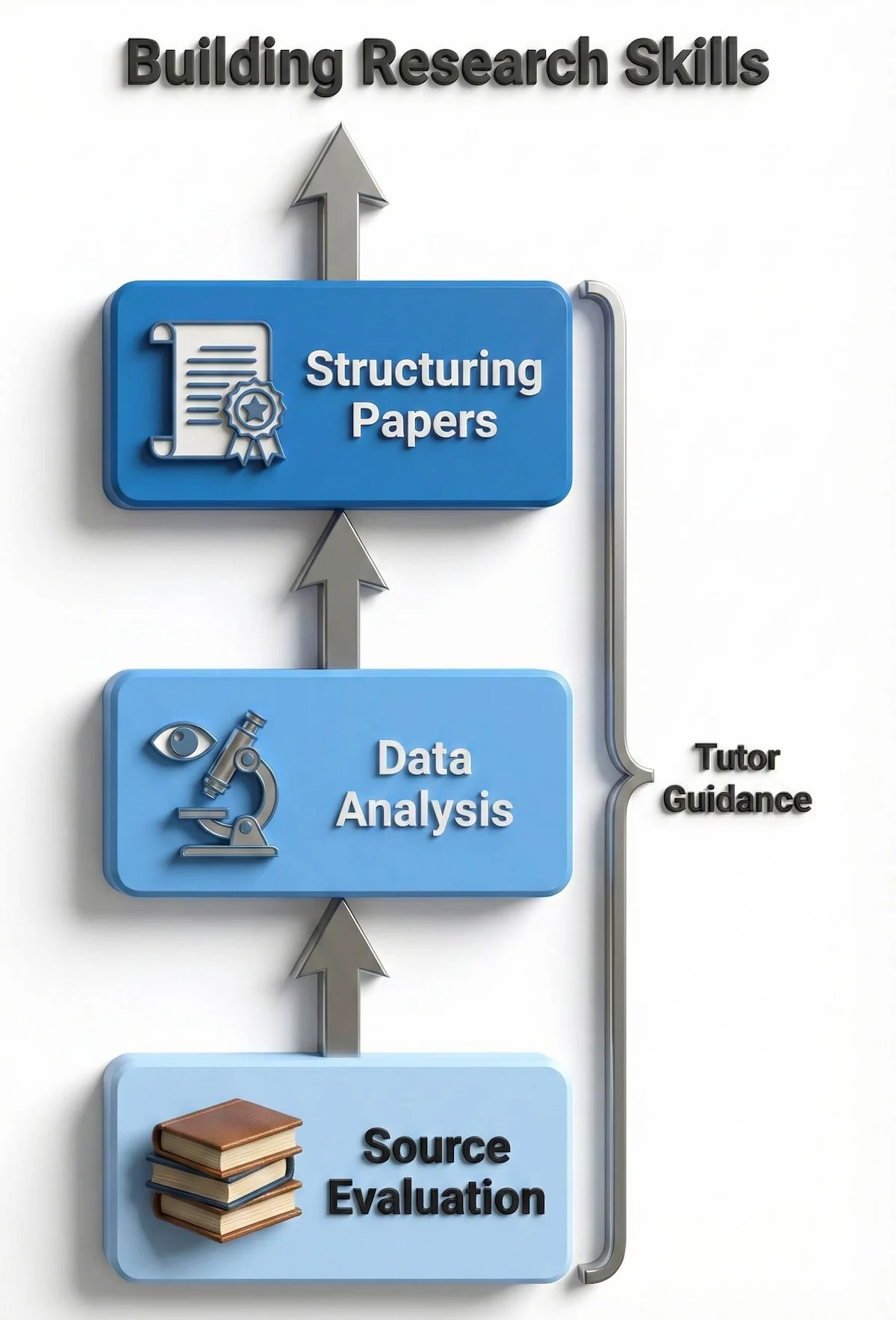
A skilled tutor guides you through the essential stages of academic research, from sourcing to final presentation.
Mastering these stages—from source evaluation to final structure—is often the difference between a passing grade and top marks.
Seek Tutors Who Encourage Critical Thinking
Food and nutritional sciences deal with debates and evolving theories. For instance, discussions about processed foods, sustainable diets, or supplements require critical thinking.
Tutors who encourage students to question evidence and weigh perspectives create stronger learners. Rather than memorizing facts, students learn to analyze and form reasoned judgments.
A tutor who fosters critical thinking can also prepare students for unpredictable exam questions or real-life professional challenges. Instead of being thrown off by unfamiliar material, students become equipped to apply their analytical skills across contexts.
Value Tutors Who Adapt to Your Learning Style
Every student learns differently. Some need visual explanations, others prefer hands-on practice, and some thrive with discussion-based sessions. Tutors who recognize these differences and adjust their methods provide a more effective learning experience. A skilled tutor will identify your strengths and weaknesses and tailor their teaching approach accordingly.
Adaptability also means being flexible with scheduling and lesson plans. Busy students often juggle multiple commitments. Tutors who accommodate this reality without compromising quality are often the most valued by learners.
FAQs
How do I know if a tutor is qualified in food and nutritional sciences?
You should check for degrees in nutrition, dietetics, or food science. Professional experience in clinical or research settings adds further credibility. Reviewing their teaching track record and asking for references can also confirm their expertise before committing to lessons.
Still not sure if a candidate is the right fit? Use this simple ‘Yes/No’ decision tree to quickly vet any potential tutor before you hire them.
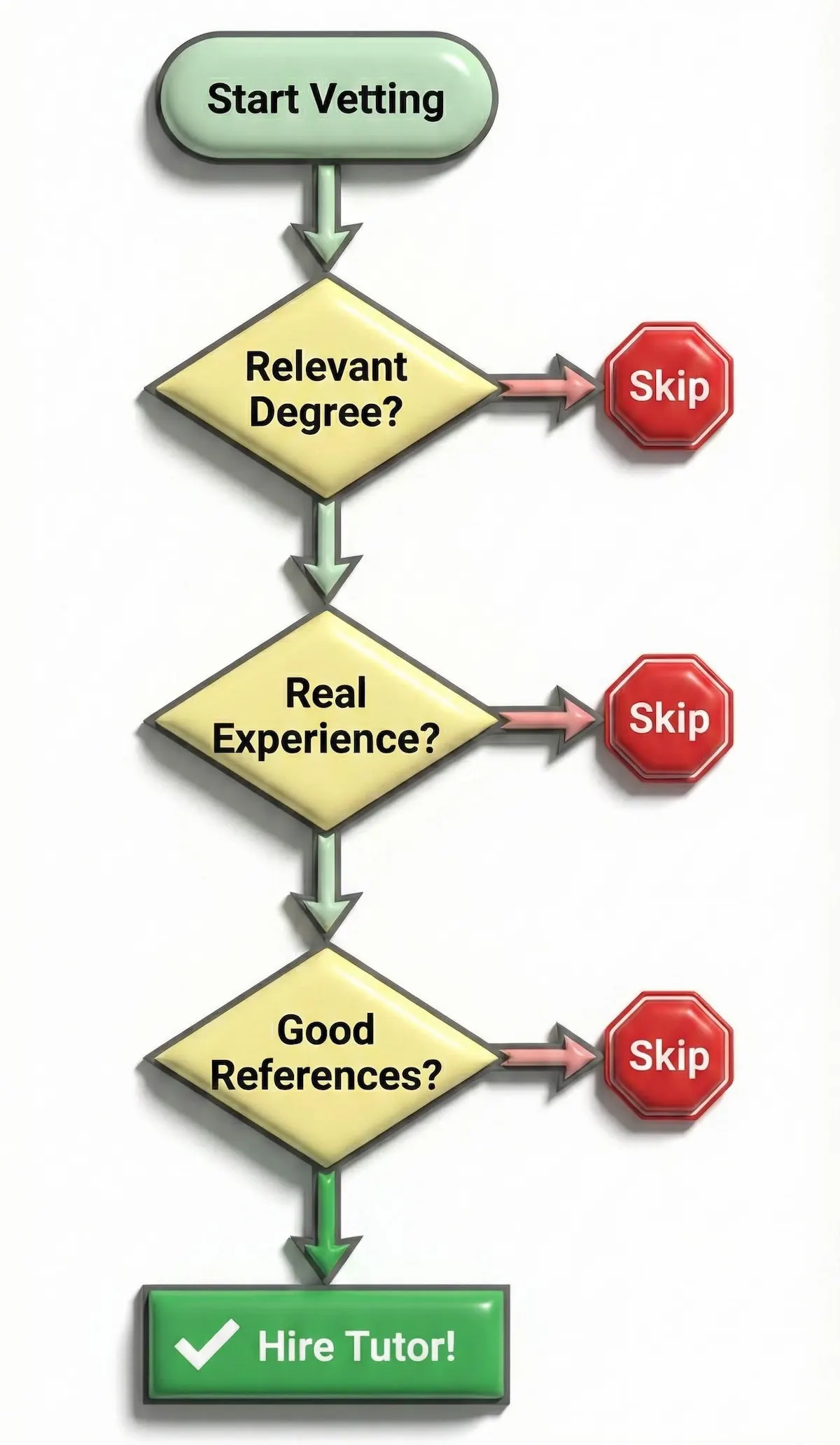
Use this simple checklist to verify a tutor’s qualifications before starting lessons.
If a tutor passes all three checks in this workflow, you can be confident they have the expertise to help you succeed.
Can tutors help with both academic success and career preparation?
Yes, many tutors offer guidance that goes beyond coursework. They can help with research skills, practical case discussions, professional insights and Homework help. These lessons often support career growth in addition to boosting grades, especially when the tutor has real-world experience in the field.
Why are real-life examples important in food and nutritional science tutoring?
Real-life examples make abstract theories concrete and relatable. They help students see how food science impacts health, safety, and society. Whether in online tutoring sessions or in-person, tutors who connect lessons to real cases help create lasting knowledge.
Finding the right tutor in food and nutritional sciences requires looking beyond basic qualifications. A truly effective tutor combines academic expertise, practical experience, and the ability to adapt to your learning style. Those who use real-life examples, encourage critical thinking, and build research skills bring added value to your education.
The process may take time, but the reward is a richer, more practical understanding of nutrition science and its role in shaping healthier futures.
******************************
This article provides general educational guidance only. It is NOT official exam policy, professional academic advice, or guaranteed results. Always verify information with your school, official exam boards (College Board, Cambridge, IB), or qualified professionals before making decisions. Read Full Policies & Disclaimer , Contact Us To Report An Error