3 Common Themes Legal Students Need to Be Very Comfortable With

Becoming a lawyer is a dream career for many Americans. Everyone knows it’s a challenging path to take, but every year, people still study law and hopefully pass the Bar exam one day.

Of course, if you live in a State like Utah, Oregon, Washington, or Arizona, you might be lucky enough to have an alternate way besides writing the Bar exam. Aspiring lawyers in these states can also become lawyers by passing certain courses and putting in 240 hours of legal practice with experienced attorneys.
However, for the rest of the country, preparation for the Bar happens way earlier than you might expect. The earlier you get familiar with different themes in law, the better your chance of passing the exam. This is why, in this article, we will look at three of the most common legal themes that all aspiring lawyers need to start researching and getting familiar with.
Navigating law school requires focusing on the right areas. The illustration below outlines the three foundational themes we will cover.
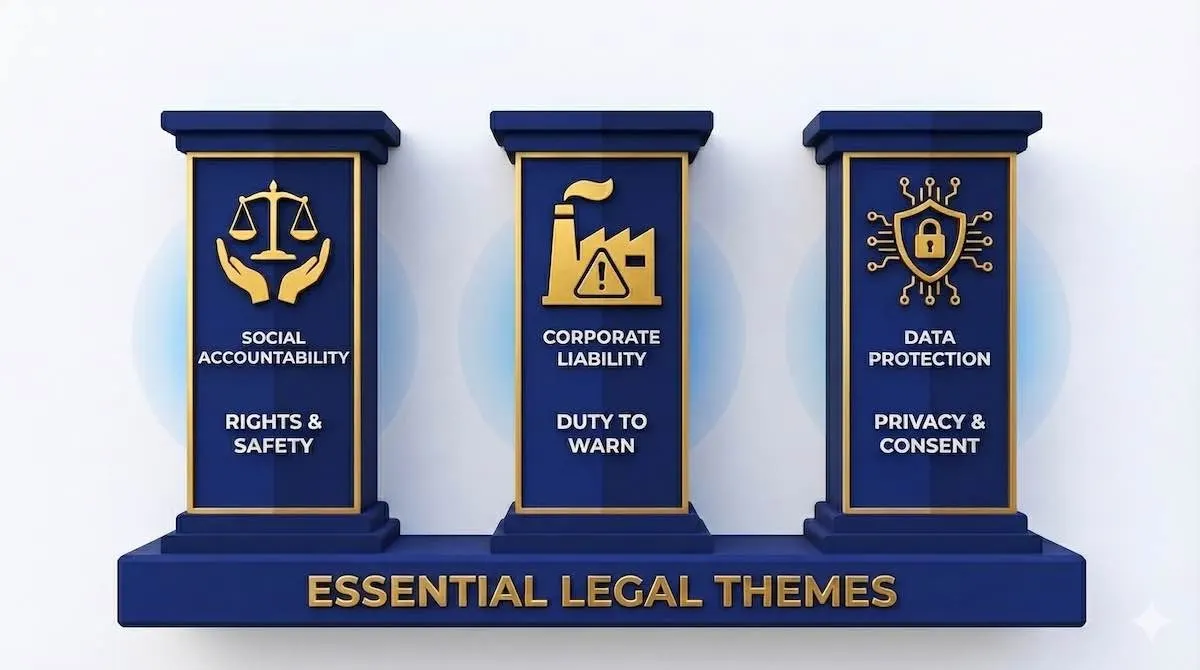
Mastering these three pillars—Accountability, Liability, and Privacy—is essential for modern legal practice.
Let’s examine the first of these critical pillars: Social Accountability.
If you’re struggling to grasp these complex legal ideas, My Engineering Buddy’s expert law tutors can make your learning journey smoother. Our law assignment help ensures you understand every concept clearly and score better in your exams.
Social and Criminal Accountability in The Context of Violence Toward Women
Few legal topics demand as much attention as the protection of human rights. Violence against women continues to be a recurring issue that crosses cultural and jurisdictional boundaries.
One of the most common themes that all lawyers will eventually face is violence against women. The World Health Organization states that about 1 in 3 women has been the victim of some form of violence. This can be either physical, sexual, from their partner, or from non-partners.
This data is not only tragic but also central to how future lawyers will engage with justice. Women are often the subject of unwanted harassment and abuse, with incidents even occurring in cabs. That’s right. You may have heard news of the recent Uber sexual assault lawsuit cases.
The numbers behind these cases are staggering and highlight the urgency of the issue. Here is a snapshot of the current data regarding violence and liability.
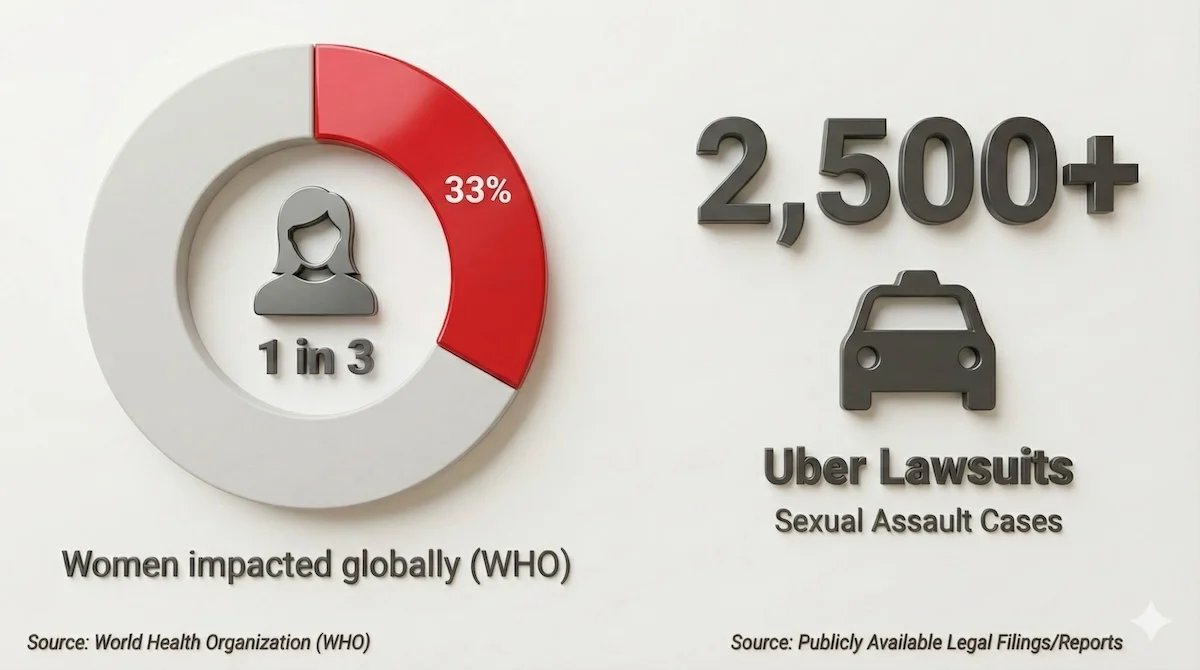
Global data and recent lawsuits highlight the urgent legal focus needed on safety and accountability.
These statistics represent real liability challenges that future lawyers must be prepared to handle.
According to TruLaw, there are over 2,500 lawsuits involving sexual assaults on women during Uber trips. As a lawyer, these cases involve understanding the liability and obligations of the offending company.
You will want to get familiar with aspects like duty of care, individual liability, and how victims’ rights are safeguarded during legal proceedings. A useful exercise is to review how evidence handling, privacy protection, and settlement decisions influence the direction of similar cases. Each element reveals the delicate balance between procedural fairness and empathy for victims.
Corporate Negligence and Product Liability
Corporate misconduct is another area that lawyers will often deal with. Data shows that since the year 2000, corporations in the United States have paid out over $1 trillion in fines, criminal penalties, or class action settlements. In the early 2000s, payouts averaged $7 billion/year. However, in recent years, that figure has risen 300% or about $50 billion/year. This data clearly shows how the expectations placed on corporations are growing.
Financial penalties have skyrocketed, signaling a shift in how courts view corporate responsibility. The chart below illustrates this dramatic trend.

The 300% surge in corporate penalties reflects stricter legal standards and higher accountability.
With fines hitting $50 billion annually, the cost of negligence has never been higher.
Future lawyers will want to study these cases to see how negligence and accountability are evolving. This is mainly because product liability suits, misleading advertisements, and environmental violations all reflect how the law continues to respond to changing standards of care. Legal students can study doctrines such as “foreseeable harm” and “duty to warn” to see how these concepts guide decision-making.
Corporate law also challenges students to think about the limits of compliance. At what point does a company’s internal culture become part of its liability? How does a lawyer balance protecting a client’s interests with ethical obligations to the public? These are questions that turn routine cases into defining moments of legal judgment.
Digital Privacy and Data Protection
As technology takes center stage in modern life, privacy and data protection are becoming central to legal education. In one survey, nearly half of the respondents expected to see more litigation in 2025, and sectors like cybersecurity and data privacy claims are now among the biggest priorities for organizations. Likewise, 45% of respondents also expected to see more litigation in healthcare, and 41% believed financial services litigation would rise.
Data breaches, cyberattacks, and the misuse of personal information bring unique challenges. Questions about jurisdiction, informed consent, and regulatory compliance all emerge from the same incident, making these cases particularly difficult. Law students studying these topics gain insight into how laws influence business conduct and individual protections across borders.
To prepare, students can explore mock cases on AI liability, algorithmic bias, or cross-border data transfers. Such exercises reveal how deeply the digital world and the legal system now depend on each other.
Lawyers who understand the logic of data protection can help design a future where technology and accountability progress together. Even if it’s hard and you hate studying the subject, stick with it, because those who have said they’re glad they didn’t switch majors.
If you need personalized tutoring or expert help with law assignments, visit My Engineering Buddy. Our tutors simplify complex legal topics and help students achieve academic success.
Frequently Asked Questions
1. How to study as a law student?
Break down your workload into smaller daily goals and focus on understanding concepts instead of just memorizing them. Read case summaries, join study groups, and practice writing arguments. Consistency matters more than cramming right before exams.
To manage this workload effectively, you need a structured approach. Use the following workflow to streamline your daily study routine.
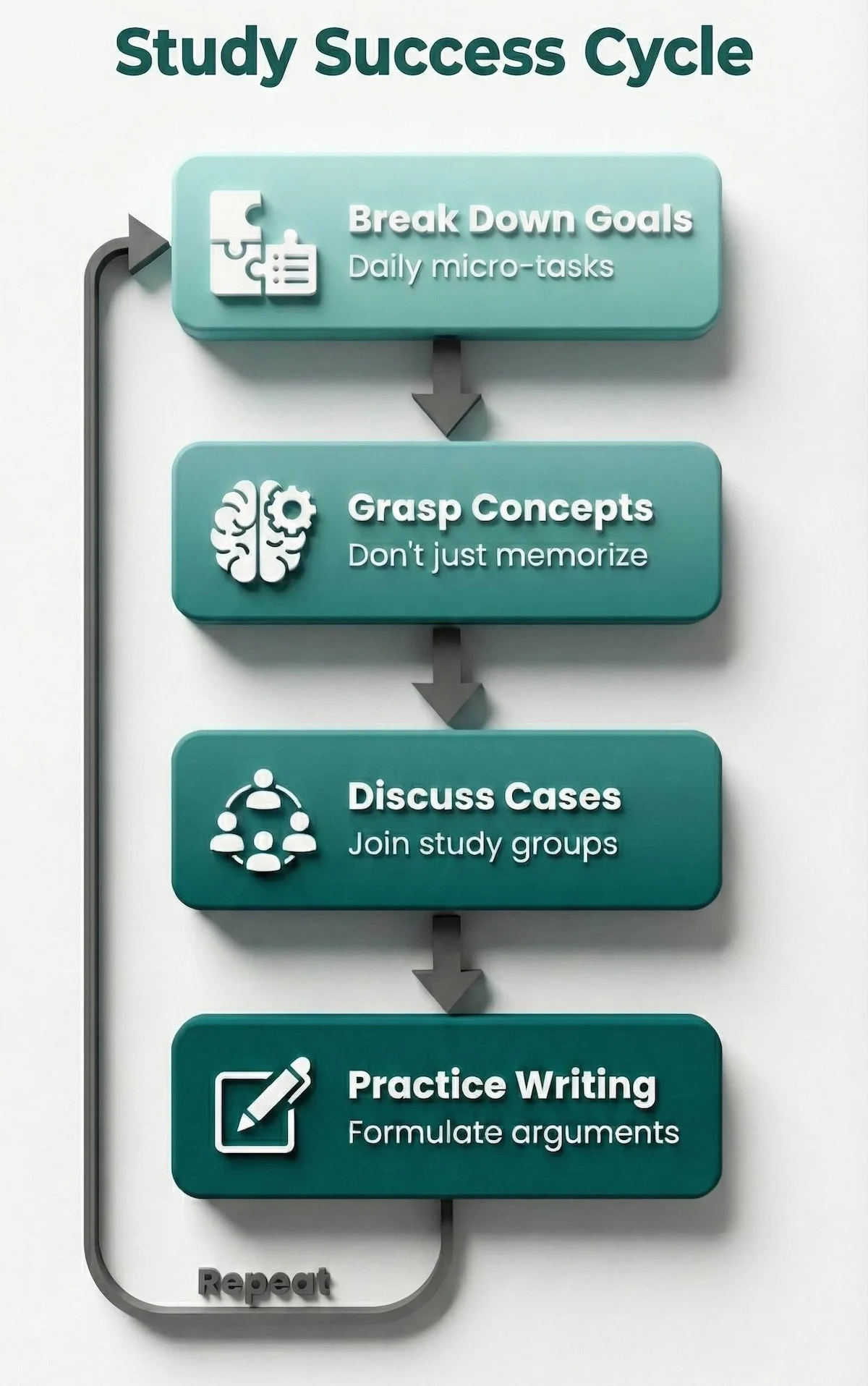
Follow this cyclical workflow to move from memorization to deep legal understanding.
Consistency with this process will yield better results than last-minute cramming.
2. What kind of lawyer makes the most money?
Corporate lawyers and those in mergers, intellectual property, or medical malpractice tend to earn the most. But high pay often comes with long hours and heavy responsibility, so it’s worth choosing a specialty you genuinely enjoy rather than chasing money alone.
3. Which subject is most important for law?
Constitutional law forms the foundation of everything else. It shapes how rights, government powers, and justice systems function. But subjects like contracts, torts, and criminal law are just as vital for understanding how laws apply to real-world conflicts and decisions.
Essentially, the path to becoming a capable lawyer involves more than academic preparation. It requires developing an instinct for the issues that define the times. Whether a student is studying social accountability, corporate negligence, or digital privacy, each theme encourages the kind of reasoning that will always remain valuable in law.
The more students connect their education to real cases, data, and ethical questions, the more prepared they become for professional life. It’s safe to say that the future of law belongs to those who can combine technical precision with social awareness.
******************************
This article provides general educational guidance only. It is NOT official exam policy, professional academic advice, or guaranteed results. Always verify information with your school, official exam boards (College Board, Cambridge, IB), or qualified professionals before making decisions. Read Full Policies & Disclaimer , Contact Us To Report An Error