Pluralsight in 2026: What Reviews Actually Say About Cost, Quality, and Alternatives

Key Takeaways
Pluralsight is a subscription-based online learning platform founded in 2004 that focuses exclusively on technology skills — software development, cloud computing, cybersecurity, data science, and IT operations. Students who need structured support in engineering mechanics can work with a fluid mechanics tutor for the kind of personalised, subject-specific help that self-paced video platforms do not provide.At $29–$45 per month depending on plan, it sits in a mid-range price bracket for self-paced learning. The platform earns strong scores on B2B review sites but a striking 1.6 out of 5 on Trustpilot, a gap that reveals two very different user populations and two very different complaints.This review covers what each rating platform actually measures, a full pricing table for 2026 plans, the no-refund policy you need to know before subscribing, and five alternatives from budget-friendly options like Udemy to live one-on-one tutoring through My Engineering Buddy for students who need more than video content.Check Out: Get Personalized Online Tutoring- Pluralsight scores 4.6/5 on B2B platforms but only 1.6/5 on Trustpilot, driven by billing complaints.
- Standard plan is $29/mo; Premium is $45/mo; no refunds exist on any individual subscription.
- The 10-day free trial auto-charges on day 11 — cancel by day 9 to avoid unexpected fees.
- Pluralsight covers tech skills only; it does not cover engineering mechanics, mathematics, or general STEM.
- Udemy, Coursera, Codecademy, and LinkedIn Learning each serve different needs Pluralsight does not.

Pluralsight Reviews and Testimonials
Pluralsight’s review profile splits sharply across platforms, and the split is not random — it reflects who is reviewing and what they care about. On B2B software platforms where IT managers and enterprise buyers rate tools, scores are consistently high. On consumer-facing platforms where individual subscribers evaluate billing and support experiences, scores collapse. Understanding which population you belong to determines how much weight to give each rating.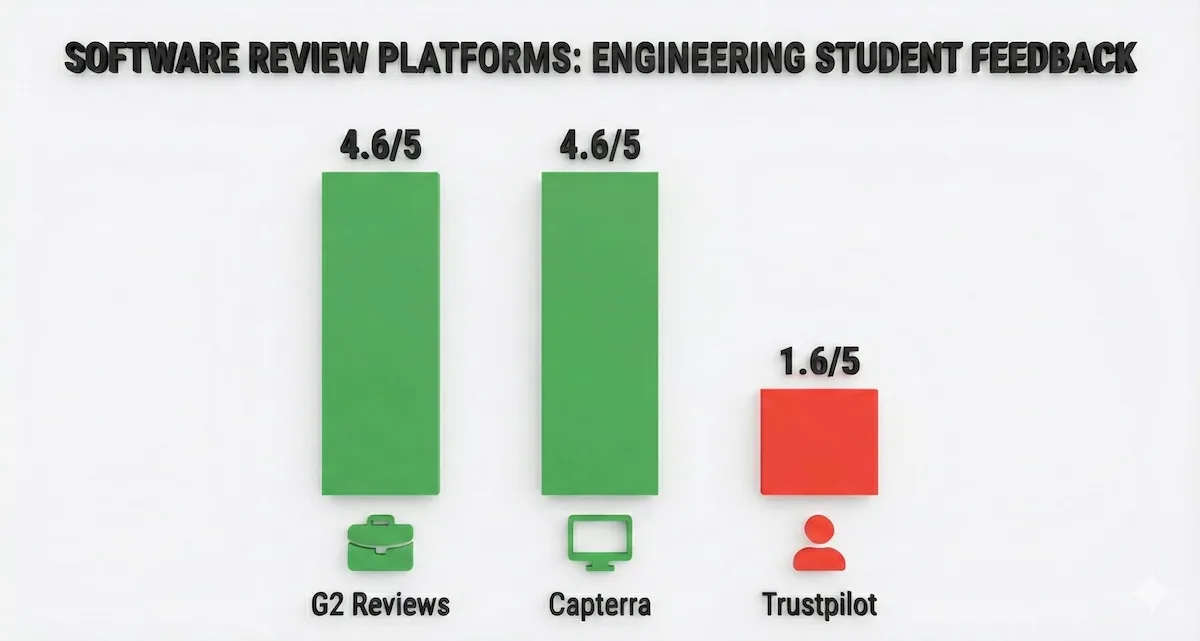
G2
On G2, Pluralsight Skills holds a 4.6 out of 5 rating. G2 reviewers are predominantly IT professionals and L&D managers evaluating the platform as a business tool. They consistently cite the skill assessments, structured learning paths, and breadth of cloud and DevOps content as standout features. Common criticisms include a course library that can feel uneven in depth — some tracks are comprehensive, others have not been updated since 2023.Trustpilot
On Trustpilot, Pluralsight holds a 1.6 out of 5 based on consumer reviews — one of the starkest contrasts in online learning platforms. The majority of low-rated reviews describe billing complaints: unexpected charges after the free trial, difficulty canceling, and the no-refund policy applied strictly to annual subscribers who changed their minds shortly after purchase. Trustpilot reviews do not reflect course quality; they reflect the subscription and billing experience for individual consumers.Capterra
On Capterra, Pluralsight receives a 4.6 out of 5, consistent with its G2 score. Capterra’s audience is also business software buyers. Reviewers here highlight the skills assessments as a recruitment and onboarding tool, noting that the IQ assessment feature helps managers identify skill gaps across teams. A recurring limitation noted at Capterra is that non-tech content (leadership, design, business skills) feels thin compared to the depth of the software development catalog.TrustRadius
On TrustRadius, Pluralsight’s scores align with G2 and Capterra, with reviewers noting strong value for teams that need structured technical upskilling at scale. Individual reviewers note that the video-only format limits the platform for learners who need to apply knowledge under pressure, work through custom problems, or get feedback on their specific mistakes.Pluralsight Official Website
Pluralsight’s own testimonials focus on career outcomes. One learner states that “Pluralsight is solely responsible for getting me from practically minimum wage to over six figures a year.” These outcomes are real for motivated self-directed learners in tech careers, but they represent the ceiling, not the average result. Official testimonials are selected and do not reflect users who subscribed and disengaged after the first month.How to get 2x more value from every tutoring hour in 2026Pluralsight Pricing
Pluralsight operates on a subscription model with no permanent free tier. All paid plans include access to the full course library, but the two individual plan tiers differ on hands-on labs, certification prep, and the depth of skill assessments available. The pricing below reflects 2026 individual plan rates as published on Pluralsight’s pricing page.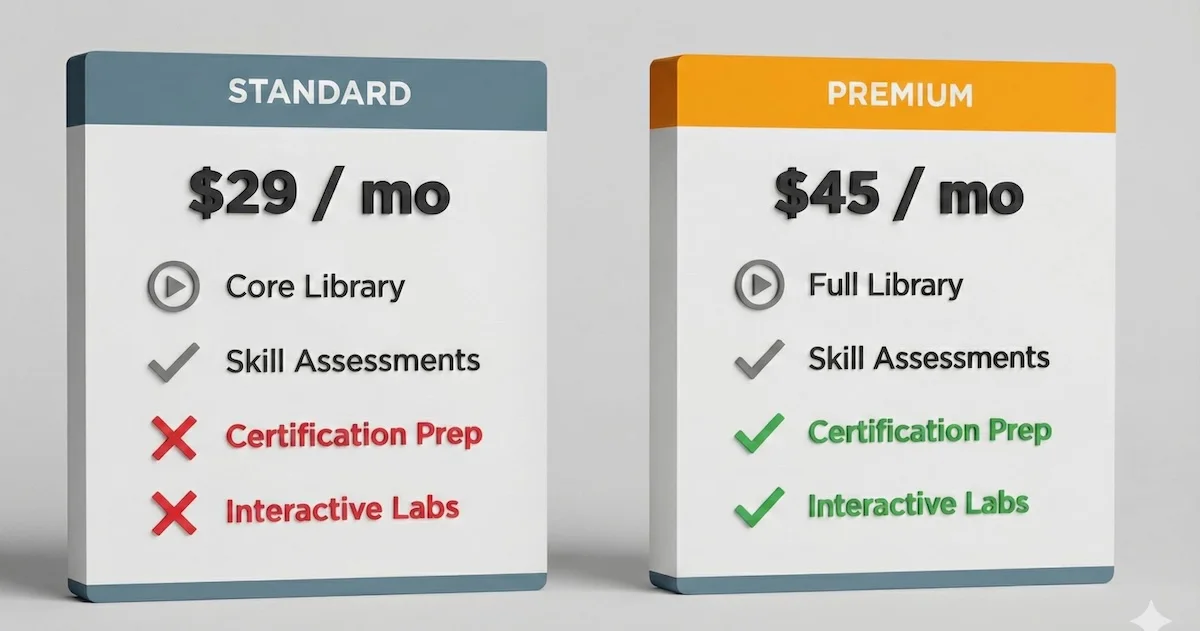
Pricing Range
The Standard plan costs $29 per month billed monthly, or $299 per year billed annually ($24.92/mo). The Premium plan costs $45 per month billed monthly, or $499 per year billed annually ($41.58/mo). Business and enterprise plans are priced per seat and require a sales conversation. The table below summarises the key differences across plans.| Plan | Monthly Price | Annual Price | Key Inclusions | Hands-On Labs |
|---|---|---|---|---|
| Standard | $29/mo | $299/yr ($24.92/mo) | Full course library, skill assessments, learning paths | No |
| Premium | $45/mo | $499/yr ($41.58/mo) | All Standard features plus hands-on labs, certification prep, exam practice | Yes |
| Business | Contact sales | Annual, per seat | All Premium features plus admin analytics, SSO, team management | Yes |
| Enterprise | Contact sales | Annual, per seat | All Business features plus custom integrations, dedicated support | Yes |

What Students Say About Pricing
Students who pay monthly report that the $29 Standard plan feels reasonable for the first month when actively consuming content, but becomes hard to justify during exam periods or breaks when usage drops. The monthly flexibility comes at a 16% premium over the annual Standard rate. Students who pay annually to save money and then need to cancel report frustration with the no-refund policy, which Pluralsight applies strictly to all individual subscriptions regardless of how recently the plan was purchased.Hidden Costs
The primary hidden cost is the auto-renewal on annual plans. Pluralsight charges the full annual fee on the renewal date with minimal advance notice. Students who forget the renewal date and want out after being charged have no recourse under current policy.There are no separate fees for accessing assessments, downloading content for offline viewing (mobile app), or using the AI-powered coding assistant included in Premium. The cost you see at sign-up is the cost you pay — the issue is what happens when you want to leave an annual plan early.How Pluralsight’s Pricing Works
Pluralsight prices are denominated in USD. International students pay in their local currency at conversion rates set by Pluralsight, which may vary from real-time exchange rates. Students in some regions report paying effectively more than the USD list price due to currency markups. There is no student discount published for individual subscriptions; the only verified discount mechanism is the annual billing rate versus monthly billing.Free Trial
Pluralsight offers a 10-day free trial for new individual subscribers. The trial provides approximately 200 minutes of learning access across the course library. A credit card is required to start the trial. If the trial is not canceled before day 11, it auto-converts to the selected paid plan and the card on file is charged immediately.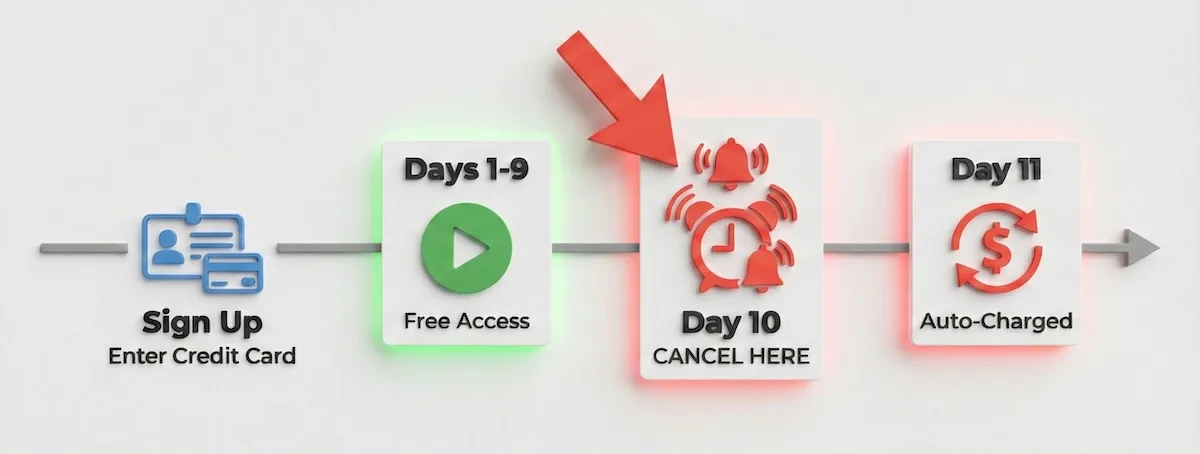 The practical recommendation: set a calendar reminder for day 9 if you are evaluating the platform. Most of the Trustpilot complaints referencing unexpected charges trace back to trial-to-paid conversions that the user did not notice.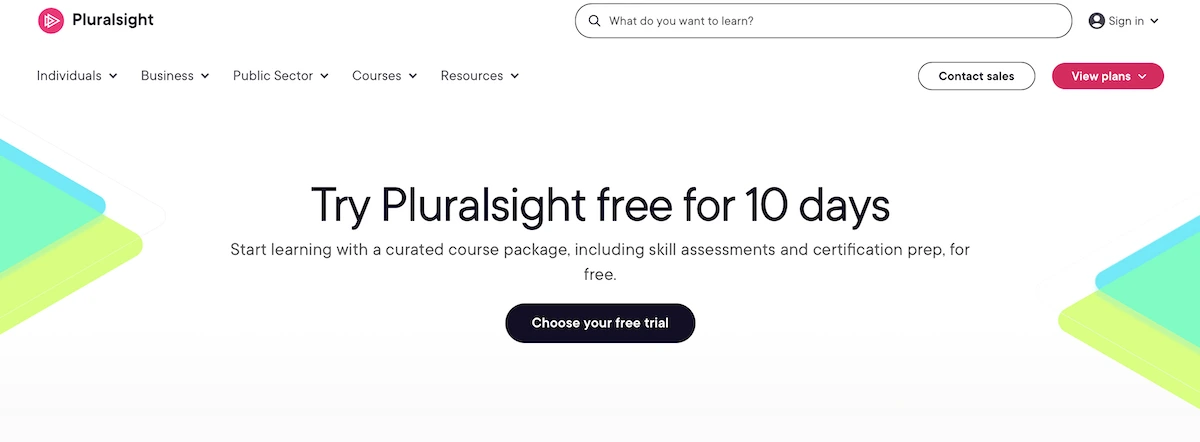
Refund Policy
Per Pluralsight’s own help documentation, Pluralsight does not offer refunds on individual subscriptions. This applies to both monthly and annual plans. If you subscribe for a year, pay the annual fee, and decide to cancel the next day, you will not receive a refund. Access continues until the end of the paid period, but the fee is non-recoverable. This is the most frequently cited complaint across consumer review platforms and is worth treating as a firm constraint when deciding between monthly and annual billing.AI summarizer tools: features, hands-on experience, and use cases reviewedPluralsight Alternatives
Five platforms directly compete with Pluralsight across price, content type, and learning model. The right alternative depends on whether you need structured video courses, academic coursework help, live interaction, or a lower-cost entry point into tech skills. For students working through engineering coursework, an engineering statics tutor offers the kind of real-time, problem-specific support that no self-paced platform provides.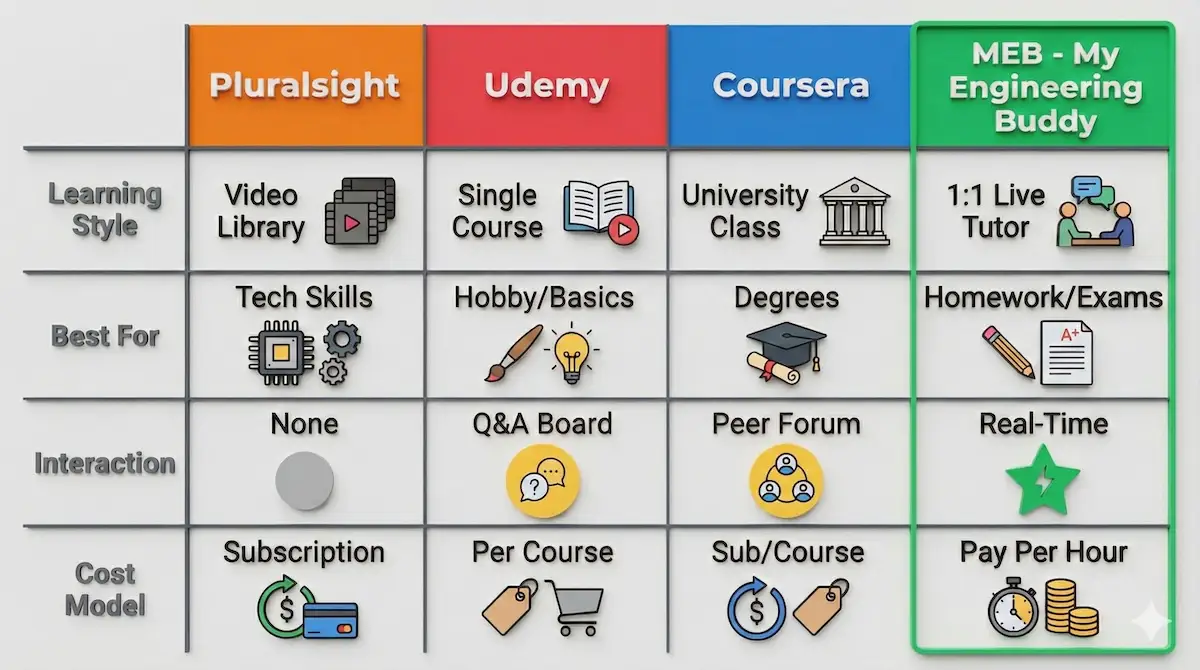
Alternatives Comparison Table
| Platform | Learning Model | Pricing | Best For | Live Interaction | Certificates |
|---|---|---|---|---|---|
| Pluralsight | Self-paced video | $29–$45/mo | Tech upskilling, IT teams | No | Completion only |
| Udemy | Self-paced video | $10–$30/course | Budget learners, wide topics | Q&A forum only | Completion only |
| Coursera | Structured video plus graded assignments | Free audit / $49/mo Plus | Credentials, university content | Peer grading only | Accredited certificates |
| LinkedIn Learning | Self-paced video | $39.99/mo or LinkedIn Premium | Career development, soft skills | No | LinkedIn badge |
| Codecademy | Interactive coding exercises | Free / $17.49–$29.99/mo Pro | Coding beginners, web dev | No | Career certificates (Pro) |
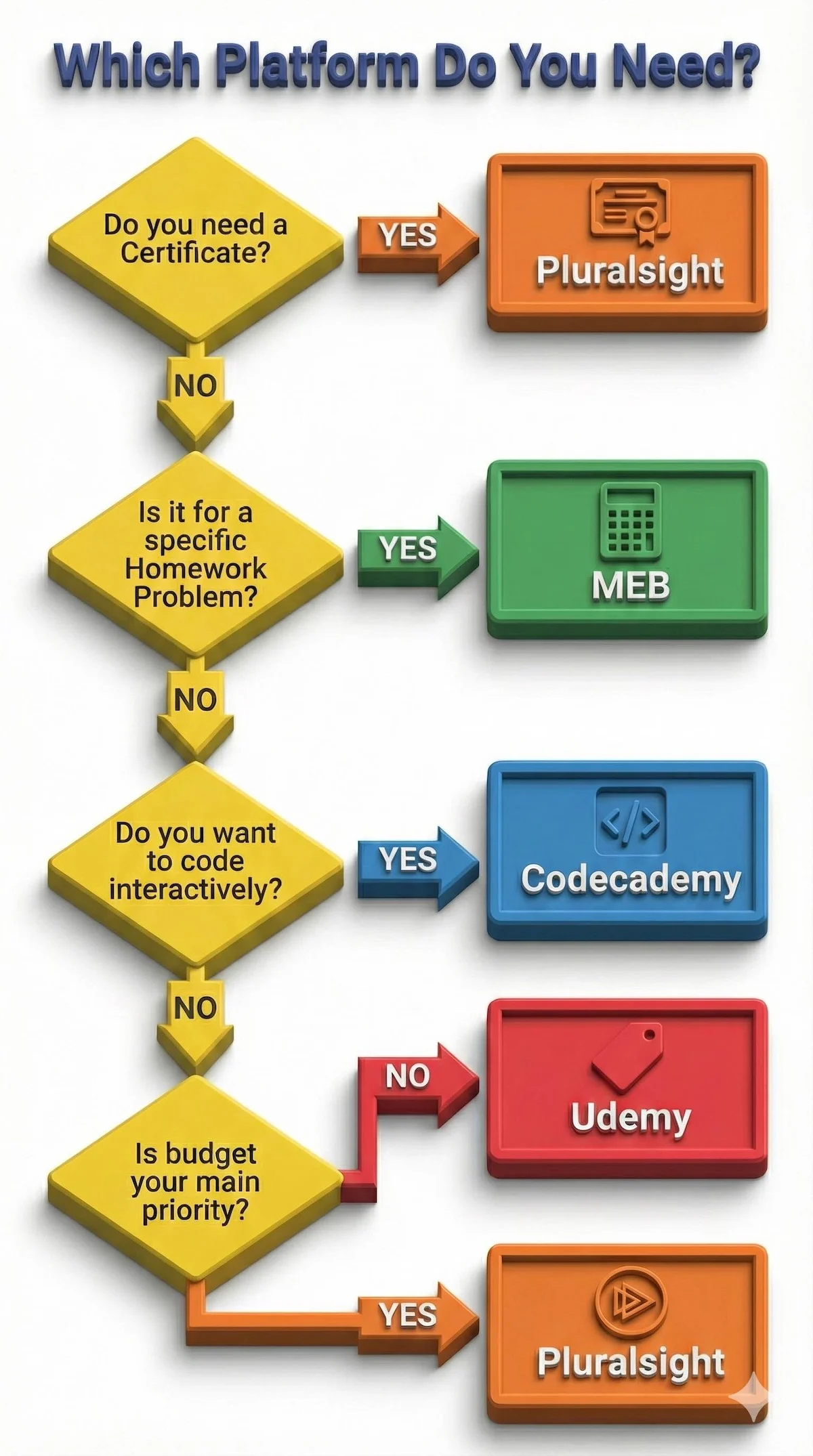
| My Engineering Buddy | Live 1:1 tutoring | Pay per session | Engineering/STEM coursework | Yes — real-time with expert | N/A |
Udemy
Udemy operates on a per-course purchase model rather than a subscription. Individual courses typically sell for $10–$30 during frequent promotions, making it the lowest-cost entry point for learners who want a specific skill without committing to a monthly fee. Content quality varies because Udemy’s marketplace allows any qualified instructor to publish. The strongest Udemy courses in web development, Python, and data science have millions of enrollments and are kept current by active instructors.The platform lacks structured skill assessment and does not offer hands-on lab environments. For students who know exactly what they want to learn and want to pay once, Udemy is the more economical choice versus a Pluralsight subscription.
Coursera
Coursera is the only platform in this comparison that offers accredited certificates through partnerships with universities and professional bodies including Google, IBM, and Duke University. The free audit option allows access to video content without paying; graded assignments and certificates require either a course purchase or a Coursera Plus subscription at $49/month. For students who need credentials that carry weight with employers or graduate programs, Coursera’s professional certificates are meaningfully stronger than Pluralsight’s completion certificates. The platform covers a wider range of disciplines including business, data science, and some foundational STEM content that Pluralsight does not offer.
LinkedIn Learning
LinkedIn Learning costs $39.99 per month as a standalone subscription, but it is included with LinkedIn Premium, which many professionals already pay for. The platform’s strongest feature is not its content depth — it is the direct integration with LinkedIn profiles, where completed course badges display publicly and can be seen by recruiters. For learners focused on career visibility rather than deep technical mastery, LinkedIn Learning adds resume value that Pluralsight’s completion certificates do not. The technical content is shallower than Pluralsight’s and better suited to business and leadership topics than cloud architecture or cybersecurity depth.
Codecademy
Codecademy is the strongest alternative for students beginning to code, because it is built around interactive browser-based coding exercises rather than passive video. The free tier covers core programming fundamentals in Python, HTML/CSS, SQL, and JavaScript. Codecademy Pro, priced at $17.49–$29.99 per month depending on the plan, adds career paths, portfolio projects, and certificate programs. Learners who find Pluralsight’s video-heavy format difficult to stay engaged with often find Codecademy’s active-learning structure more effective for actually building coding habits. The limitation is depth: Codecademy does not cover cloud architecture, cybersecurity, or advanced DevOps at the level Pluralsight does.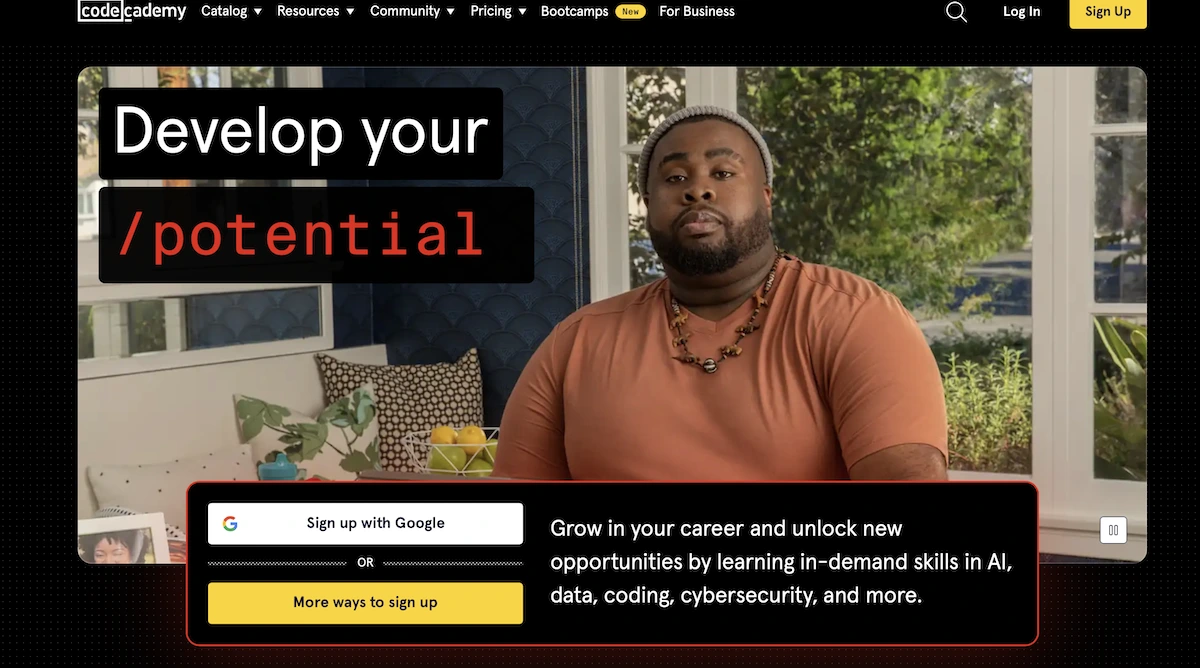
My Engineering Buddy
My Engineering Buddy (MEB) is a live 1:1 tutoring platform serving engineering and STEM students across 2,800+ subjects. Unlike all other platforms in this comparison, MEB connects students directly with subject-matter expert tutors in real time — covering engineering mechanics, thermodynamics, circuits, mathematics, programming, and advanced STEM subjects that Pluralsight’s video catalog does not address. MEB is the appropriate choice for students who need immediate help with a specific coursework problem or exam concept that a pre-recorded video cannot resolve.
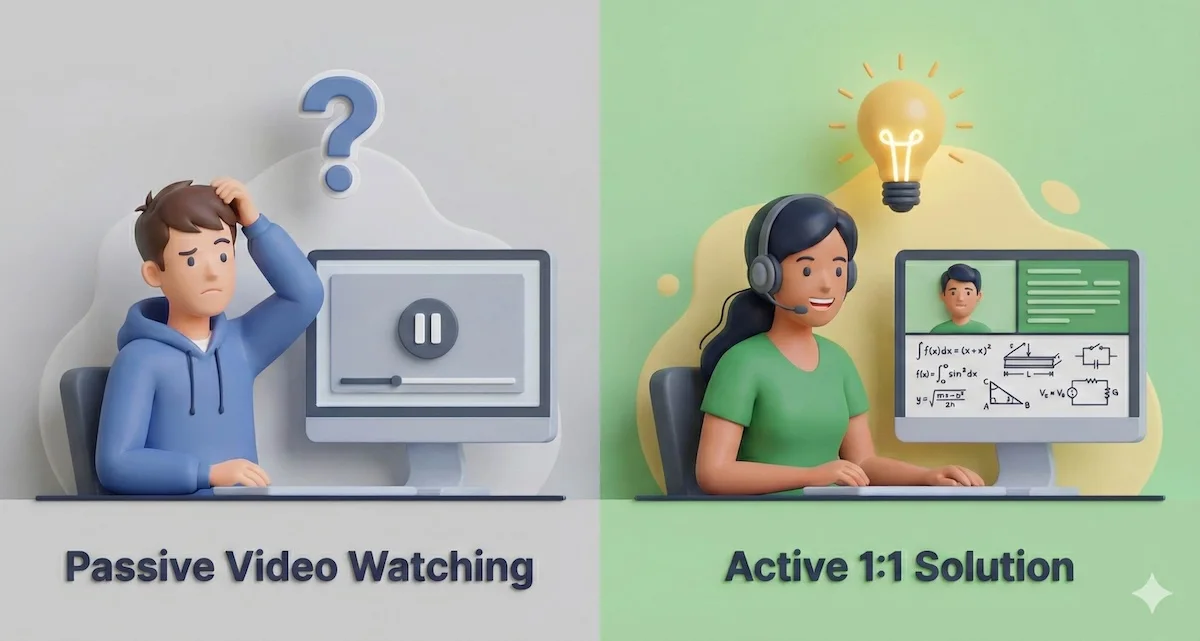 The critical difference students who struggle with self-paced video encounter: watching a lecture on Pluralsight does not tell you where your reasoning is wrong. A live MEB session does. For students who have tried video courses and found themselves still stuck after watching the relevant module, live tutoring fills the gap that structured video learning leaves open. Learn more about how online engineering tutoring works and what to expect from a first session.
 How university enrollment automation moves applicants through the funnel in 2026
How Pluralsight Works
Pluralsight delivers all learning through a browser or mobile app using pre-recorded video. There is no live instruction, no instructor Q&A in real time, and no class schedule. Students work through courses at their own pace and can pause, rewind, or skip sections freely. The platform’s core differentiation from a YouTube playlist is the structured skill assessment layer and curated learning paths.
For Students
Students signing up select a role or skill goal, take a baseline skill assessment (called Skill IQ), and receive a recommended learning path. The Skill IQ score places learners on a scale from Novice to Expert and updates as they complete courses. Learning paths typically combine 8–15 courses from multiple authors and take 30–80 hours to complete, depending on depth. Mobile offline viewing is supported on iOS and Android for learners who need to study without a consistent internet connection.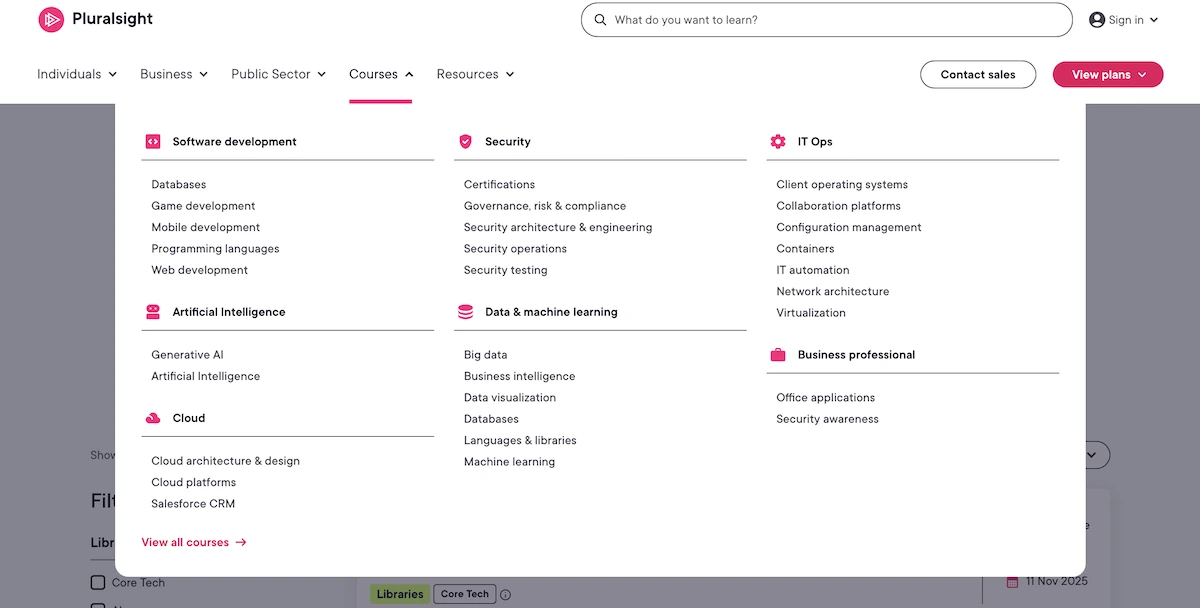
For Tutors (Authors)
Pluralsight publishes courses exclusively through an author program with a high acceptance threshold. Per Pluralsight’s own documentation, only about 10% of author applicants are accepted. This selective vetting is the quality control mechanism behind Pluralsight’s content consistency compared to open marketplace platforms like Udemy. Authors receive royalties based on viewership. They are not tutors in the traditional sense; they record courses once and the content is then available to all subscribers.Drawbacks of Pluralsight
The four most common structural limitations reported by learners across verified review platforms are: (1) no live interaction or personalised feedback on mistakes; (2) the no-refund policy that makes commitment financially risky, especially on annual plans; (3) technology-only content coverage that excludes broader engineering, science, and mathematics subjects; and (4) content currency issues in older tracks, where courses covering fast-moving technologies like machine learning frameworks may reference libraries or practices that have changed since production. These are structural features of the platform model, not edge cases.Comparison with My Engineering Buddy
The functional difference between Pluralsight and My Engineering Buddy is the direction of learning. Pluralsight delivers fixed content that you adapt to; MEB adapts to the specific problem you are stuck on. A student using Pluralsight to learn Python is watching a course designed for a general audience. A student using MEB to understand why their MATLAB code is producing unexpected output gets a tutor who looks at that specific code and explains that specific error.For engineering coursework where problems are specific, graded, and deadline-driven — the live model resolves what the video model cannot. Students working through dynamics coursework can find targeted support from an online engineering dynamics tutor. Explore MEB’s full range of engineering and STEM subject coverage to see whether your coursework is supported.Customer Support and Policies
Pluralsight offers email and chat support through its help center. Response times are not published, and multiple reviewer accounts describe delays during peak periods. The cancellation process is self-service through account settings and does not require speaking to an agent, which is a positive. The no-refund policy, however, means that support staff cannot resolve the most common complaint even if they respond promptly. Students on monthly plans have a lower-risk exit: they can cancel before the next billing date and lose only one month’s fee if they decide the platform is not working for them.Global Reach and Localization
Pluralsight serves learners in more than 150 countries. The platform interface and all course content are currently in English only; there are no subtitles in languages other than English for most courses. Pricing is charged in USD, with currency conversion handled by the payment processor. Students outside the United States should verify their region’s payment options and any potential additional charges from their bank or card provider for foreign currency transactions before committing to an annual plan.PapersOwl review: an honest breakdown for studentsPluralsight: Company Information
Pluralsight was founded in 2004 in Draper, Utah, initially as an in-person training company before pivoting to online delivery. The company went public in 2018 and was acquired by Vista Equity Partners in 2021. As of 2026, Pluralsight operates primarily as a B2B learning platform, with enterprise and business subscribers representing the majority of its revenue base. Individual subscriptions remain available but are not the company’s primary commercial focus, which partly explains the gap between its business-facing reputation and its consumer review scores.Pluralsight’s Future Plans
Pluralsight has announced continued investment in AI-powered learning features, including AI-generated skill paths and a coding assistant integrated into the Premium plan. The company has also expanded its cloud sandbox lab environments, with hands-on lab hours included in Premium subscriptions growing year over year. Whether these features change the core self-paced video model substantially or address the personalization gap that structured video learning inherits remains to be seen in 2026 platform updates.For learners exploring adjacent technical fields, those studying financial planning concepts can find support from a Certified Financial Planner (CFP) tutor, while students tackling programming theory can work with a compiler design tutor for subject-specific guidance.FAQs About Pluralsight
How does Pluralsight compare to My Engineering Buddy?
Pluralsight is a video-based learning platform for tech skills, while My Engineering Buddy offers live 1:1 tutoring across 2,800+ engineering and STEM subjects. Pluralsight works for self-paced learning in software, cloud, and data; MEB provides personalised, real-time help for engineering, math, and science coursework and homework problems that a pre-recorded course cannot resolve.Does Pluralsight offer a free trial?
Yes. New individual subscribers receive a 10-day free trial with access to the full course library and approximately 200 minutes of learning. A credit card is required at sign-up. If you do not cancel before day 11, the trial auto-converts to the paid plan selected at registration and the card is charged immediately.How much does Pluralsight cost in 2026?
Individual plans are $29/mo (Standard) or $45/mo (Premium) billed monthly. Annual billing reduces this to $299/yr ($24.92/mo) for Standard and $499/yr ($41.58/mo) for Premium. Business and enterprise plans are priced per seat and require contacting Pluralsight’s sales team. All prices are in USD.What subjects does Pluralsight cover?
Pluralsight covers technology and professional skills: software development, IT operations, networking, cloud computing (AWS, Azure, Google Cloud), cybersecurity, data science, and UX/design. It does not cover general engineering coursework, university-level mathematics, physics, or sciences.Can I cancel Pluralsight anytime?
Monthly subscribers can cancel at any time through account settings without speaking to an agent. Annual subscribers can also cancel, but the fee paid is non-refundable per Pluralsight’s published policy. Access continues until the end of the paid billing period after cancellation on both plan types.Does Pluralsight issue certificates?
Pluralsight issues completion certificates for finished courses, but these are not accredited degrees or industry certifications. The Premium plan includes practice exams to help prepare for official certification tests (AWS, Microsoft, CompTIA), but passing those tests requires registering and sitting the exam separately through the certifying body.How do Pluralsight’s business and enterprise plans differ from individual plans?
Business and enterprise plans add admin features to everything in individual plans: team analytics dashboards, single sign-on (SSO), user management, and dedicated support. Pricing is per seat and requires annual commitment. Individual plans are available month-to-month or annually and are self-service from signup.Disclaimer: This article is for educational and informational purposes only. Pricing, platform features, and policies are subject to change. Verify current details directly with each platform before making a subscription decision.Related Reading
******************************
This article provides general educational guidance only. It is NOT official exam policy, professional academic advice, or guaranteed results. Always verify information with your school, official exam boards (College Board, Cambridge, IB), or qualified professionals before making decisions. Read Full Policies & Disclaimer , Contact Us To Report An Error