
How to Choose the Right Leadership Training Program for Your Team

Strong leadership plays a key role in any organization’s success. Teams perform better when guided by capable leaders who know how to motivate, communicate, and make clear decisions. As businesses grow, leadership development becomes essential to maintain performance and employee satisfaction.

The right leadership training programs help shape leaders who can manage challenges with confidence. With so many options available, finding the perfect fit requires careful thought. The following sections outline practical steps to select a program that fits your team’s unique goals and values.
To explore curated leadership resources specifically for technical teams, check out My Engineering Buddy website.
Packed with practical guides and templates, it’s a helpful companion when choosing and implementing leadership training.
To pick the right program quickly, use this visual roadmap — it outlines every decision step from needs assessment to measurement.

Follow this sequence to avoid common selection mistakes and create a repeatable process.
Identify Your Team’s Development Needs
The first step in choosing a leadership course is to understand your team’s development areas. Look at where your current leaders excel and where improvement is needed. Use feedback sessions, performance data, and direct conversations to find patterns that reveal skill gaps. Once you know what areas require attention, it becomes easier to select a program that focuses on those skills. For instance, a team that struggles with communication might need training in interpersonal communication, while another might need stronger strategic thinking tools.
Align Training Goals with Organizational Objectives
Leadership development works best when it supports company objectives. Before selecting a program, define what outcomes you expect. Whether you want better collaboration, higher engagement, or improved productivity, those goals will shape your choice. When training aligns with company priorities, it strengthens purpose and focus. A program that reflects your organization’s mission ensures leaders can apply what they learn to real business situations.
Evaluate the Program’s Structure
Program structure matters because people learn in different ways. Some leaders prefer hands-on sessions, while others benefit from online or blended formats. Evaluate whether the program offers workshops, case studies, or simulations that encourage practical learning. Interactive approaches help participants connect theory to real scenarios. A program that balances classroom instruction with application ensures lasting skill development and more confident leaders.
Different delivery formats suit different teams — compare them at a glance below.
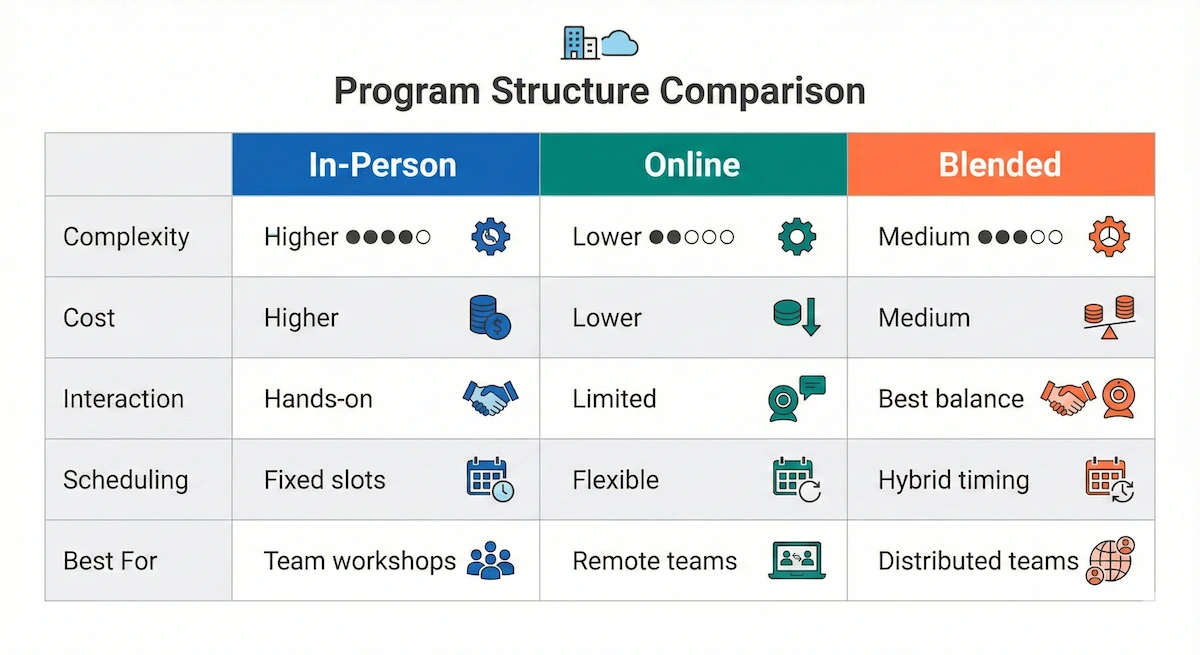
Pick the format that best balances interaction, cost, and scheduling.
Key Elements to Review
Learning Format: Choose between in-person, online, or blended sessions depending on your team’s availability and preferences.
Duration: Select a program with a timeline that fits work commitments without overwhelming participants.
Interactive Features: Look for activities such as workshops, discussions, or simulations that reinforce skill application.
Use this checklist to compare program candidates across essential features.
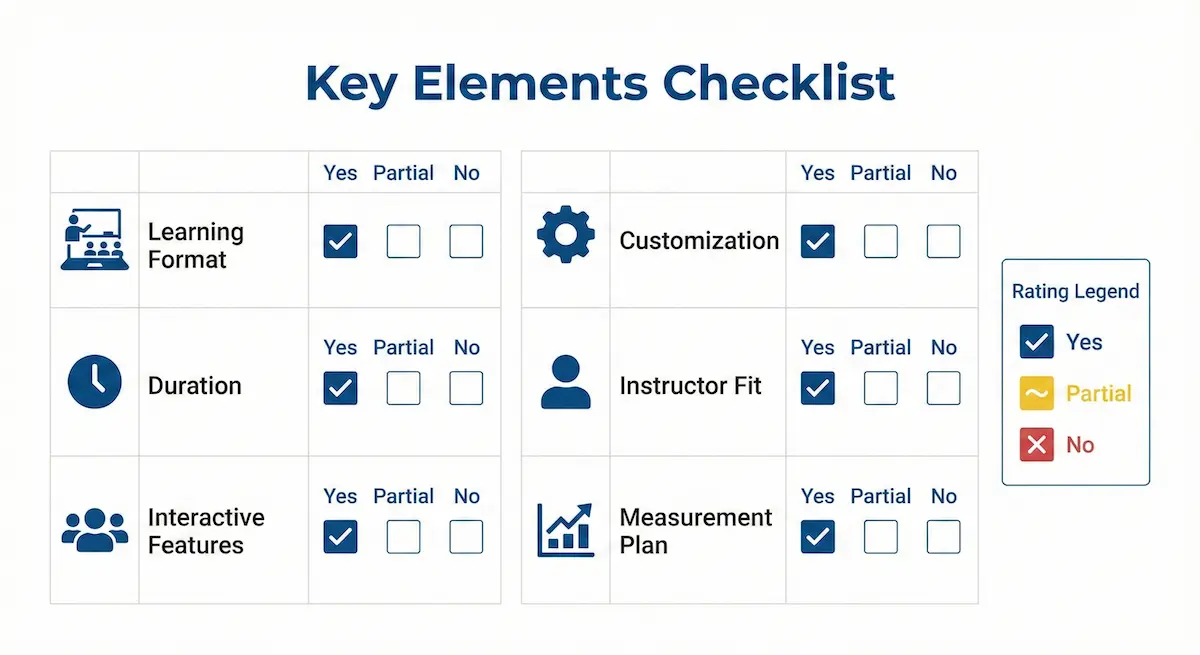
Mark Yes/Partial/No and rank options quickly to shortlist vendors.
Assess the Quality and Expertise of Instructors
The experience and teaching style of instructors directly influence the program’s impact. Look for trainers with both academic and practical leadership backgrounds. Their ability to relate lessons to actual challenges adds value to the learning experience. Qualified instructors inspire trust and engagement. When they combine expertise with clear communication, participants gain useful insights they can apply in their roles immediately.
Here’s a quick scorecard to evaluate trainers objectively on practical measures.
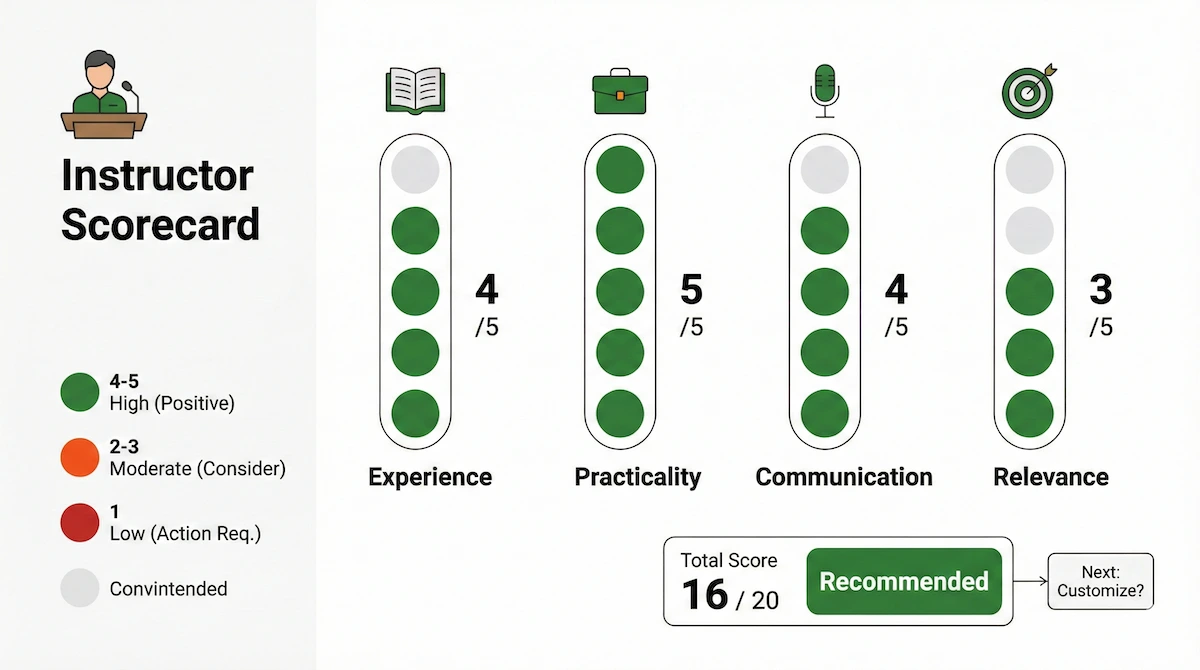
Use this score as one of your decision inputs when comparing providers.
Consider Customization and Flexibility
A program tailored to your organization delivers better results than a generic one. Customization allows the training to reflect your company culture and address specific leadership needs. Review if the provider offers modules that can adapt to your team’s goals and schedule. Flexibility also supports consistent participation. When sessions fit within work routines, employees stay committed and benefit more from the material.
Measure Outcomes and Long-Term Impact
The success of leadership development depends on measurable results. Track progress before and after the program through assessments and feedback tools. Look for visible changes in behavior, communication, and decision-making within teams. Monitoring outcomes shows whether the training delivered its intended value.
Ways to Track Effectiveness
Pre- and Post-Assessments: Compare knowledge and confidence levels before and after the training.
Feedback Surveys: Collect opinions from participants and their supervisors to identify practical improvements.
Performance Metrics: Observe measurable shifts in productivity, communication, and problem-solving.
Measurement is everything — here’s a sample KPI dashboard you can adapt.
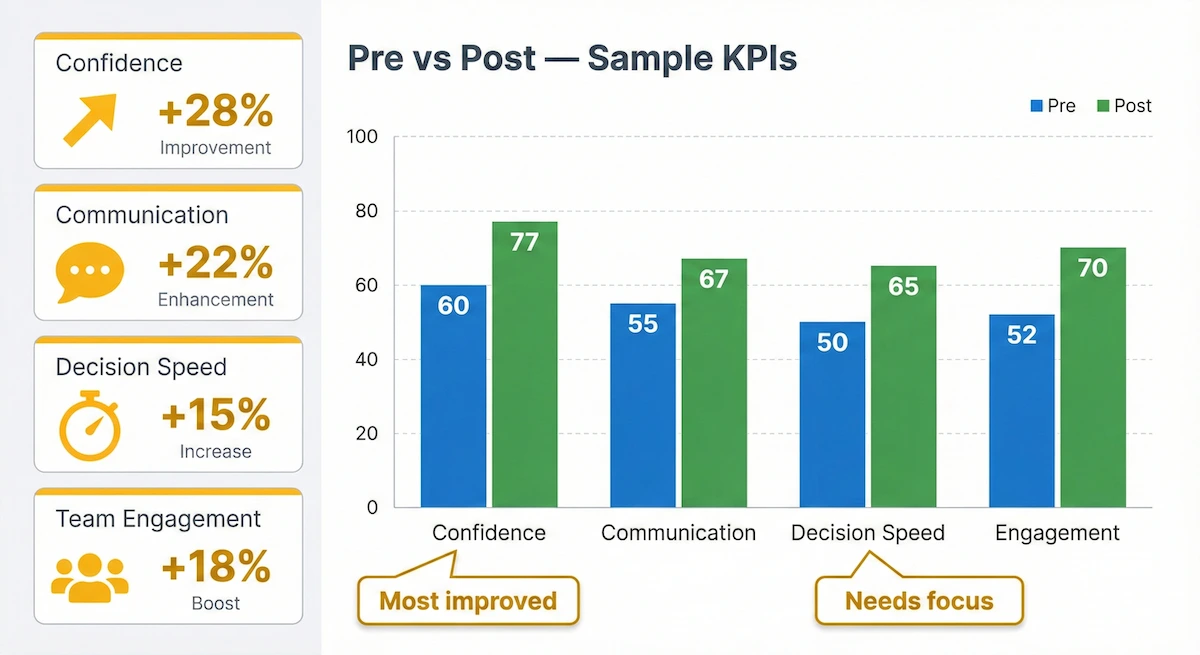
Track these KPIs to demonstrate ROI and refine future programs.
Leadership training programs create stronger, more capable leaders who inspire their teams to achieve success. Selecting the right one involves understanding development needs, aligning goals, evaluating instructors, and ensuring measurable outcomes. With a thoughtful choice, organizations can cultivate leadership that drives lasting progress and builds a culture of excellence.
******************************
This article provides general educational guidance only. It is NOT official exam policy, professional academic advice, or guaranteed results. Always verify information with your school, official exam boards (College Board, Cambridge, IB), or qualified professionals before making decisions. Read Full Policies & Disclaimer , Contact Us To Report An Error