
Overcoming A-Level Exam Anxiety: Proven Strategies for Engineering Students

Exam anxiety is not weakness; it’s a predictable physiological response to perceived threat. For A-Level engineering students juggling mechanics, electricity, thermal physics, and materials science simultaneously, that threat feels genuine. The gap between your actual capability and exam-day performance where forgotten formulas, time pressure, and negative self-talk collide is not random. It’s a recognizable pattern that evidence-based techniques directly address.
This guide breaks down what triggers anxiety in engineering contexts, provides specific breathing and scheduling tools backed by peer-reviewed research, and walks you through the practical reality of post-exam decisions. Whether you’re three months away from exams or in the final week, these strategies convert anxiety management into actionable technique.
Hire Verified & Experienced Engineering Tutors
Section 1: Recognizing Anxiety Triggers Before They Derail You
Understanding Your Anxiety Pattern
Anxiety doesn’t arrive randomly. It emerges from specific triggers, manifests as recognizable warning signs, and produces measurable impacts on exam performance. The ABC model explains why: different students face identical test situations but evaluate them differently.
A = Activating Moment (the exam looms)
B = Belief System (how your mind interprets: “manageable” vs. “catastrophic”)
C = Consequences (your resulting emotions, physical reactions, behavior)
Two students facing the same mechanics paper react differently. One thinks: “I’ve practiced this; I’ll work through carefully.” The other: “I’ll forget everything; I’ll fail.” The exam didn’t change the cognitive evaluation did. This matters because it’s the belief system you can control.
Read More: Best Digital Tools Engineering Students Need for College & Projects
Engineering-Specific Anxiety Triggers
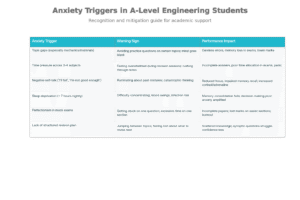
Anxiety Triggers in A-Level Engineering: Recognition, Warning Signs, and Performance Impact
Topic Gaps as Anxiety Amplifiers
The most common trigger for engineering students is incomplete mastery of mechanics, materials, or synoptic questions (those combining two topics). When you avoid practicing certain question types, your brain registers “threat.” This avoidance becomes a self-fulfilling prophecy: skipped topics on mock exams then appear on real exams, triggering panic.
Time Pressure Across Multiple Subjects
Unlike single-subject exams, A-Level engineering requires balancing 3-4 subjects across 6-8 weeks of intense revision. The overwhelm “How do I cover everything?” leads to scattered studying, incomplete topic mastery, and exam-day time management failures.
Sleep Deprivation as an Anxiety Catalyst
Students often reduce sleep during exam prep, believing extra revision hours justify sleep loss. This is neurologically backward. Sleep is when your brain consolidates memory. Lack of sleep doesn’t just reduce focus during studying it amplifies anxiety itself. Your baseline stress level rises, and moderate exam pressure becomes excessive anxiety.
Read More: AI for STEM Learning Using Generative Tools to Make Math and Engineering Concepts Easier
Warning Signs Before Crisis Point
Physical signs your anxiety is escalating:
- Heart palpitations, sweating, or shaking during practice exams
- Difficulty concentrating for more than 10-15 minutes
- Avoidance of certain topics or question types
- Sleep disruption (racing thoughts, early waking)
- Frequent mood swings or irritability
Behavioral signs:
- Procrastination despite deadlines
- Jumping between topics without completing any
- Perfectionism on mock exams (stuck on one question for 20+ minutes)
- Negative self-talk: “I’m not smart enough for this”
The key insight: these warning signs are not personal failings. They’re your nervous system sending a clear signal that your revision system needs adjustment.
Section 2: Building a Balanced Revision Schedule
Why Multi-Subject Balance Matters
Engineering students often fall into a trap: completing all mechanics topics before touching electricity. This sequential approach means you revise electricity while forgetting mechanics (the spacing effect working against you). Instead, interleaving mixing subjects daily dramatically improves retention and prevents monotony-induced anxiety.
Research shows that switching between different topics in revision sessions keeps your brain more engaged than blocking all “mechanics” together.
The Pomodoro Technique: Structure as Anxiety Antidote
The Pomodoro Technique works not because it’s trendy but because it respects how your brain actually works: attention naturally declines after 20-30 minutes of mental effort. By building in breaks, you prevent cognitive fatigue and reduce the overwhelm that triggers anxiety.
The Standard Protocol:
- 25 minutes focused study (one Pomodoro)
- 5-minute break (movement, hydration, breathe)
- Repeat four times, then take a 15-30 minute longer break
- 8-12 Pomodoros daily = 4-6 hours of high-efficiency study
Why this prevents anxiety:
- Manageability: “Four Pomodoros on mechanics” feels achievable; “three hours of revision” feels overwhelming.
- Built-in recovery: Breaks reset your attention and prevent burnout.
- Subject rotation: Switching subjects between Pomodoros prevents monotony and keeps engagement high.
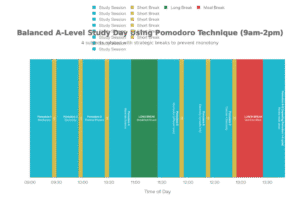
Daily Pomodoro Schedule: Balancing 3-4 A-Level Subjects with Subject Rotation and Recovery Breaks
Check Out: Solving Real Engineering Problems with AI Math Solvers
Implementing Pomodoro Across 3-4 Subjects
A typical 8-hour revision day using Pomodoro:
- Morning (09:00-13:00): Pomodoros 1-8, rotating subjects (mechanics → electricity → thermal → materials → back to mechanics with different topic)
- Lunch/longer break: 30 minutes (nutrition + full mental reset)
- Afternoon (14:00-18:00): Pomodoros 9-12, targeting weak areas identified in morning
This structure achieves:
- No single subject overwhelms (max 25 mins per topic before switch)
- Spaced repetition (mechanics revisited multiple times in one day, hours apart)
- Psychological relief (every Pomodoro completed = visible progress)
Section 3: Past Paper Practice for Confidence
The Progression: Untimed → Timed → Full Mocks
Anxiety during exams often stems from lack of familiarity. Your brain interprets unfamiliar exam conditions as threat. The solution is systematic exposure.
Phase 1 (Weeks 1-3 of revision): Untimed Practice
Take past paper questions without time pressure. Focus entirely on understanding the mark scheme. Why did the exemplar answer get full marks? What reasoning steps did it include? This phase builds conceptual confidence before speed becomes a factor.
Phase 2 (Weeks 4-8): Timed Individual Questions
Now add time pressure, but only to specific questions. Take a 4-mark “Explain” question and give yourself 5 minutes (as a rule of thumb, approximately 1.5 minutes per mark). This builds speed on familiar material.
Phase 3 (Weeks 9-12): Full Timed Mocks
Finally, take complete 2-hour or 2.5-hour papers under exam conditions: timed, no notes, single sitting. This is anxiety’s ultimate test, but by now your brain has thousands of hours of successful practice with the same material. The anxiety is manageable because success is familiar.
Reviewing Errors Positively
The mental shift most students miss: reviewing a wrong answer is a victory, not a failure. You caught an error before the real exam. That’s the entire point of practice papers.
When reviewing a question you got wrong:
- Identify the error type: Calculation mistake? Conceptual misunderstanding? Time management (skipped a question)?
- Fix it specifically: Not vague review solve the same question again correctly.
- Note the pattern: If you make the same error across multiple papers, it’s a systematic weakness to target.
This positive framing “I found something to fix” prevents anxiety and keeps motivation high.
Read More: Cambridge Engineering: What Makes the Course Unique?
Section 4: Physical and Mental Prep Techniques
Evidence-Based Breathing Techniques
Breathing directly activates your parasympathetic nervous system (the “calm” response). Unlike willpower-based anxiety reduction, breathing is physiological and fast-acting.
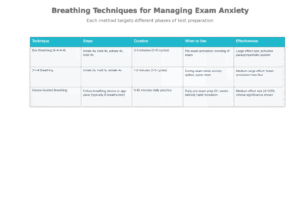
Breathing Techniques for Exam Anxiety: Timing, Effectiveness, and When to Use
Box Breathing: Pre-Exam Activation (4-4-4-4 Method)
Best used: 5-10 minutes before entering the exam hall.
Steps:
- Inhale slowly through your nose for 4 seconds
- Hold the breath for 4 seconds
- Exhale slowly through your mouth for 4 seconds
- Hold empty for 4 seconds
- Repeat 5-10 cycles
Why it works: The 4-second hold activates the vagus nerve, signaling safety to your amygdala. By the time you enter the exam, your nervous system has already shifted from “threat mode” to “ready mode.”
2-1-4 Breathing: During-Exam Quick Reset
Best used: If anxiety spikes mid-exam (you forget a formula, encounter an unexpected question).
Steps:
- Inhale for 2 seconds
- Hold for 1 second
- Exhale for 4 seconds (the key: longer exhale than inhale)
- Repeat 3-5 times (takes 1-2 minutes)
Why the longer exhale: Extended exhalation directly activates the parasympathetic system faster than other breathing ratios. You’ll notice physical changes (heart rate drops, hand steadies) within 60-90 seconds.
Read More: How Engineering Students Can Earn Money Online Using Their Skills
Device-Guided Breathing: Long-Term Anxiety Reduction
Best used: Daily practice for 3+ weeks before exams (not a quick fix).
Use an app like Breathwrk, Calm, or Headspace for guided breathing at 5-6 breaths per minute, 5-10 minutes daily. Research shows 95% of students successfully implement this with just written instructions. Three weeks of daily practice produces medium effect sizes in anxiety reduction, with clinical improvements in blood pressure and reported anxiety levels.
Sleep Optimization for May-June Exam Season
Sleep is revision’s hardest worker. During sleep, your brain consolidates memories moving material from short-term to long-term storage. Late-night cramming prevents this consolidation, meaning information learned at midnight evaporates by morning.
Non-Negotiable Sleep Standards During Revision:
- 8-10 hours nightly (not negotiable for teenagers; research shows this is biological need, not preference)
- Consistent bedtime (even weekends; regularity signals your brain to produce melatonin on schedule)
- No screens after 8 PM (blue light suppresses melatonin production, delaying sleep onset)
- No caffeine after 2 PM (has 5-6 hour half-life; interferes with sleep quality)
- Separate sleep from study (brain associates bed with rest; studying in bed creates cognitive conflict)
Sleep’s direct link to exam anxiety:
Sleep deprivation increases cortisol (stress hormone) and impairs prefrontal cortex function (reasoning, memory recall). Students running on 5-6 hours sleep perform worse on exams AND experience amplified anxiety during exams. It’s not willpower that fails it’s neurology.
Nutrition for Sustained Focus
Your brain requires steady glucose and protein for focus. The common exam-prep diet coffee and energy drinks creates blood sugar spikes and crashes, amplifying anxiety.
During revision sessions:
- Slow-release carbohydrates: Oats, brown rice, wholegrain bread (steady glucose over 3-4 hours)
- Protein: Eggs, yogurt, nuts, lean meat (supports concentration and sustained attention)
- Omega-3s: Fatty fish, flax, walnuts (brain function and mood regulation)
- Hydration: 2-3 liters water daily (dehydration impairs cognition and increases anxiety)
Avoid:
- Excess caffeine or energy drinks (create jitteriness, worsen anxiety, disrupt sleep)
- Sugary foods (blood sugar crash → focus loss → anxiety spike)
- Skipped meals (low blood glucose → irritability, poor concentration)
Movement and Mindfulness: Active Anxiety Reduction
Exercise reduces anxiety through multiple mechanisms: endorphin release (mood boost), cortisol reduction (stress hormone), and proprioceptive feedback (body awareness). During revision weeks:
- 15-minute walks every 90 minutes (breaks between Pomodoro blocks)
- Yoga or stretching (releases physical tension accumulated during studying)
- 10-minute daily mindfulness (meditation apps like Headspace; proven to lower stress levels and improve focus)
Research shows even brief movement a short walk between study sessions significantly improves focus and reduces anxiety accumulation.
Section 5: Seeking Support Networks
Building an Effective Study Group
Study groups address anxiety through multiple pathways: peer accountability, diverse perspectives, and emotional support. The key is structure.
Forming Your Group:
- 4-6 members (larger groups become social; smaller groups lack diversity)
- Similar goals (everyone aiming for A/A*, or everyone targeting B—mixed goals create friction)
- Different strengths (one person excels at mechanics, another at electricity; you learn from each other)
- Consistent meeting schedule (weekly, same time, 90-120 minutes; consistency builds habit)
Effective Group Activities:
- Topic teaching: Each member researches one subtopic and teaches others (explaining solidifies understanding and reveals gaps)
- Peer testing: Quiz each other without notes (active recall beats passive review)
- Mock exam marking: Take a past paper together, mark each other’s work against the mark scheme, discuss discrepancies
- Problem-solving: Tackle exam-style questions together, discussing multiple approaches
Critical caveat: Group study works best as supplement to solo study. Research suggests 70% individual study + 30% group study maximizes retention. Groups prevent isolation and boost motivation, but individual work builds the core knowledge group sessions reinforce.
Teacher and Counselor Support
Don’t underestimate your school’s resources:
- Teachers: Schedule one-to-one sessions specifically to review past paper errors. Teachers see patterns across hundreds of students; they know which mistakes cost the most marks.
- School counselors: If anxiety is severe (panic attacks, sleep disruption, avoidance), counselors offer cognitive behavioral therapy (CBT) techniques specifically for test anxiety. This is not “weakness”—it’s accessing tools designed for your situation.
When to Escalate to Professional Support
Reach out to your school counselor or GP if:
- Panic attacks during or before exams (physical symptoms: chest pain, shortness of breath, dissociation)
- Persistent insomnia affecting daily functioning
- Intrusive negative thoughts you can’t interrupt
- Physical symptoms: significant weight changes, persistent headaches or stomach issues
These are not exam stress; they’re clinical anxiety requiring professional support. Early intervention (12+ weeks before exams) allows time for therapy to take effect.
Section 6: Post-Exam Mindset Shift and Pathways
The Mindset Shift: Redefining Results
Results day anxiety often exceeds exam-day anxiety. The uncertainty is finally resolved, but the outcome might not match expectations. The mindset shift: your A-Level results are one data point, not a life verdict.
What A-Level Results Actually Determine:
- University course admission (specific to that institution’s requirements)
- Scholarship eligibility (for some programs)
- Career pathways (some require specific grades, many don’t)
What A-Level Results Don’t Determine:
- Your intelligence or capability
- Career success (employers care more about skills than grades)
- Personal worth
Results Day Pathways
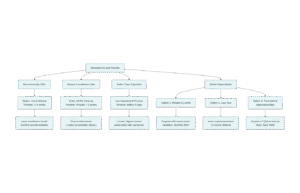
A-Level Results Day: Decision Pathways and Next Steps
If You Met Your University Offer
UCAS converts your status to “Unconditional.” Wait for enrollment details from your university you’re done. This is the endpoint of your A-Level journey.
If You Missed Your Offer (Common Outcome)
You now have two immediate options:
Option 1: Clearing
UCAS Clearing opens on results day. Hundreds of universities have unfilled places. You contact universities directly (not through UCAS initially), discuss available courses, and apply. This sounds chaotic, but it’s genuinely functional many students find better-suited courses through clearing than their original offers. Timeline: 2 weeks from results day.
Option 2: Adjustment (If Results Exceed Offer)
If you exceeded your offer grades, you can approach higher-ranked universities with vacancies within 5 days of results day. Adjustment is often overlooked but valuable if your results exceeded expectations.
If Results Are Below Expectations
Three main pathways:
Pathway 1: Retake A-Levels
- School repeat: Return to Year 13 at your school (most support: regular feedback, structured lessons, peer group)
- Online provider: Study remotely with tutor support (moderate support; you direct your own pace)
- Private candidate: Self-study (maximum flexibility, requires high self-discipline)
- Timeline: Register by Jan/Feb 2027 for May-June 2027 exams
- Success rate: Many students improve significantly on retakes because they know what to expect and target weak areas specifically
Pathway 2: Gap Year
Take 12 months to work, travel, gain skills, or reassess your university direction. You can reapply to the next cycle (2027 entry). Gap years are increasingly valued by universities relevant work experience often impresses admissions teams more than raw grades.
Pathway 3: Alternative Qualifications
- Foundation Year: One-year program bringing you to university entry level, then three-year degree (often at same institution)
- Higher Technical Qualifications (HTQs): Industry-recognized two-year qualifications equivalent to A-Levels; many universities accept HTQ → degree pathways
- Degree Apprenticeships: Earn while you study; combine work with degree study
Each pathway is legitimate. The UK education system explicitly supports multiple routes into higher education. Your A-Level results are not a binary pass/fail.
Check Out: Automotive Engineering Tutoring: Expert Help for Vehicle Design and Mechanics
Managing Results-Day Emotions
Results day is emotionally volatile regardless of outcomes. Strategies:
- Have a plan before results day: Decide in advance what you’ll do depending on outcomes (this reduces decision-making pressure when emotions are high)
- Discuss with parents/guardians first: Not to get permission, but to ensure you’re not having the conversation in public while upset
- Take 24-48 hours before major decisions: You don’t need to apply to clearing immediately; universities have spaces for weeks after results day
- Reframe: If results are disappointing, immediate actions (retake planning, clearing research, alternative qualification exploration) restore sense of agency and reduce helplessness
Key Takeaways
Exam anxiety is not something that happens to you it’s a pattern you can interrupt.
- Recognize triggers early: Topic gaps, time pressure, sleep loss, and negative self-talk are specific, addressable causes.
- Structure prevents panic: Pomodoro scheduling, interleaved subjects, and progression from untimed → timed → full mocks convert overwhelming revision into manageable chunks.
- Breathing and sleep are not luxuries: They’re neurobiology. Box breathing activates your calm response within 5 minutes; sleep deprivation directly amplifies anxiety.
- Support networks work: Study groups and teacher feedback provide both practical help and psychological reassurance.
- Results day is not final: Clearing, retakes, alternative qualifications, and gap years are all legitimate pathways with real success stories.
The engineering students who score A* are not immune to anxiety. They’ve just developed systems to manage it systematically.
******************************
This article provides general educational guidance only. It is NOT official exam policy, professional academic advice, or guaranteed results. Always verify information with your school, official exam boards (College Board, Cambridge, IB), or qualified professionals before making decisions. Read Full Policies & Disclaimer , Contact Us To Report An Error